
Watching an interest charge eat into your monthly payment is frustrating, especially when you have been a loyal Discover cardholder who pays on time. Many people assume the APR on their card is fixed and non-negotiable, but that’s a common misconception. In reality, a short phone call or chat can sometimes lead to a lower Discover interest rate, and the process is far simpler than most people expect.
The fastest way to reduce your APR is to call the number on the back of your card, ask directly for a rate reduction, and back your request with your on-time payment history.
In this guide, we show you the eligibility checks, scripts, escalation moves, and follow-up steps. These will help you get the best chance at a real rate cut.
Key Takeaways
This guide explains how to get Discover to lower your interest rate, including eligibility factors, a call script, the difference between a permanent reduction and a hardship program, and escalation steps if denied.
Core Facts:
- A Discover interest rate reduction is typically requested by calling 1-800-347-2683 or the number on the back of the card and asking to speak with a representative.
- Strong eligibility factors include no missed payments in the last 12 months, low credit utilization, and a card held for at least six months to one year.
- A permanent goodwill rate reduction lowers the ongoing purchase APR indefinitely and does not require enrolling in a special program.
- A temporary hardship program can lower APR for six to twelve months but may restrict new purchases and typically reverts to the prior rate afterward.
- Requesting a rate reduction on an existing account is usually handled with a soft credit pull, which does not affect a credit score.
- If a frontline agent denies the request, cardholders can ask to be transferred to a supervisor or retention specialist for more flexible options.
Best for:
- Discover cardholders with a strong on-time payment history who want a lower APR without enrolling in a hardship program.
- People who received a competing balance transfer or lower-APR offer from another issuer and want leverage for their request.
- Cardholders who were denied a rate reduction on a first attempt and want next steps, including escalation and reapplying later.
Check Your Eligibility Before You Call
Before you pick up the phone, take a few minutes to review your account. Discover is more likely to approve a rate cut for cardholders in strong account standing. That means no missed payments in the last 12 months, no charge-offs, and a card that has been open long enough to build a track record.
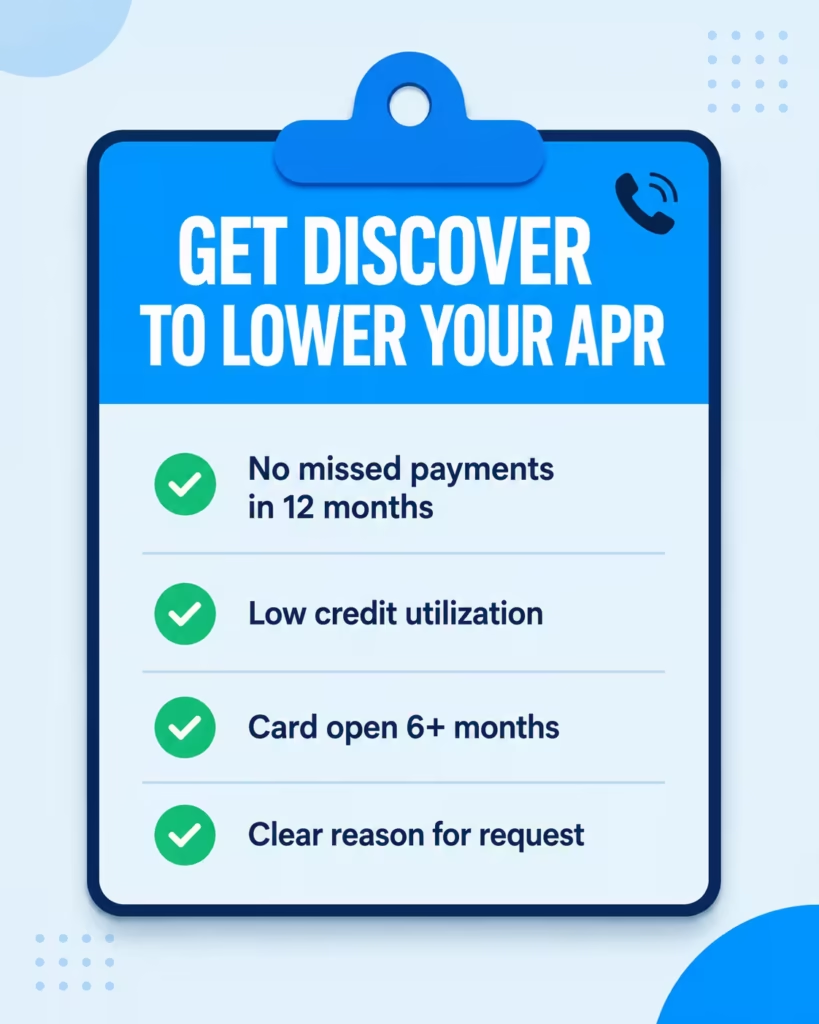
A clean payment history is the single strongest factor working in your favor. If you have paid on time every month for the past year or two, you have real leverage. Also look at your credit utilization. Keeping your balance low, well below your credit limit, shows responsible use. This can help make a strong case for a permanent rate reduction.
Card age matters too. If your card is less than six months old, a Discover interest rate decrease is unlikely because Discover has too little data on your account. Cardholders with at least one year of history tend to see better results.
Gather Your Account Information and Reasoning
Before you dial, collect a few key details so you sound prepared and confident:
- Your account number and the last four digits of your card
- Your current APR (look on your latest billing statement)
- Your current balance and average monthly payment
- Any competing offers you have received, such as balance transfer deals from other issuers
- The length of time you have held the card
Write down one clear reason for your request. Good reasons include a strong payment record, a rising average APR across the market, or a specific offer from another bank.
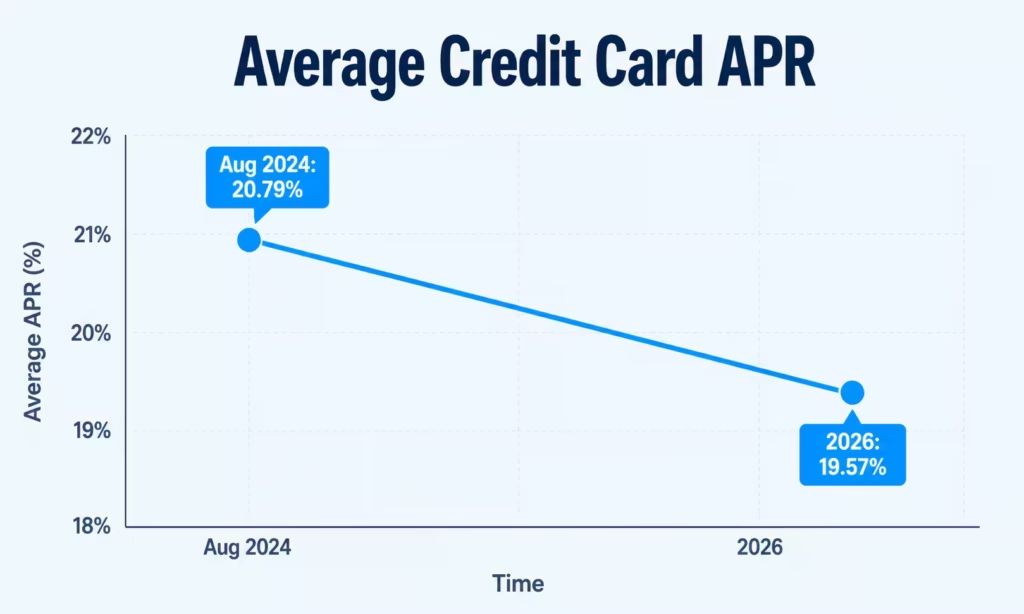
Bankrate says the average credit card interest rate is about 19.57% in 2026. This is lower than the peak of 20.79% in August 2024. You can use this as a market benchmark during the call.
💡 Pro Tip: Pull up your last three billing statements before you call. Being able to quote your exact APR, balance, and payment dates in real time makes your case sound polished and hard to dismiss.
Choose Your Contact Channel: Phone or Chat
Discover offers two main ways to make an APR reduction request: a phone call or a message through the Discover mobile app chat. Each has trade-offs, and picking the right one can shape your experience.
Phone calls tend to work best for rate reduction talks. You get a real person, can respond to questions in the moment, and can push back politely if the first answer is no. Most successful stories on personal finance forums involve a phone call, not a chat.
An online chat request through the app or website works well if you get anxious on the phone, or if you want a written record of what was said. The trade-off is that chat agents sometimes have less authority to bend on rates and may need to transfer you anyway.
If you have never done this before, a Discover lower my rate call by phone gives you the best odds. If you feel strongly about avoiding calls, use chat but be ready to escalate.
Call the Right Number and Navigate the Menu
Use the customer service number printed on the back of your Discover card, or dial 1-800-DISCOVER (1-800-347-2683). The Discover customer service page also lists this number if you don’t have your card in hand.
When the automated menu starts, you can usually say “representative” or press “0” to skip to a live agent. You do not need to select a specialty department. A general customer service rep can either handle your request or transfer you to the right team. Be patient. Wait times can stretch during weekday afternoons, so mornings often connect faster.
What to Say: The Opening Script
The words you use shape the outcome. When you ask Discover for a lower APR, keep the tone polite, confident, and direct. Do not sound desperate, and do not threaten to close the card unless you truly plan to.
Try this opening script when you connect with an agent:
“Hi, I’ve been a Discover cardmember for [X] years and I’ve made every payment on time. My current APR is [X]%, which feels high given my history with the account. I’d like to request a permanent reduction to my interest rate. Can you review my account for a rate decrease today?”
If the agent asks why, respond with something like:
“I’ve received balance transfer offers from other issuers with much lower rates, and I’d prefer to keep my Discover card as my primary. A competing offer at [X]% would save me a meaningful amount on interest, and I’d rather stay with Discover if you can help.”
Pause after each ask. Silence is powerful. Let the agent talk next. If they ask about hardship, clarify that you are not in hardship. You want a Discover APR reduction request based on your track record, not an emergency program.
Permanent Goodwill Rate Reduction Explained
A permanent rate reduction is exactly what it sounds like. Discover lowers your ongoing purchase APR, and the new rate stays in place indefinitely, subject to the card’s variable rate terms. This is often called a goodwill adjustment because the bank offers it as a courtesy for loyal cardholders in good standing.
There is no set formula for how much Discover will cut. Some cardholders report drops of 2 to 4 percentage points. Others get smaller adjustments, and some are denied outright. The reduction usually applies to your purchase APR only. Cash advance APR and penalty APR are typically not affected.
A Discover interest rate decrease through this path does not require you to enroll in any special program. Your account keeps working normally. You can still earn rewards, use the card for purchases, and pay your balance on your normal schedule.
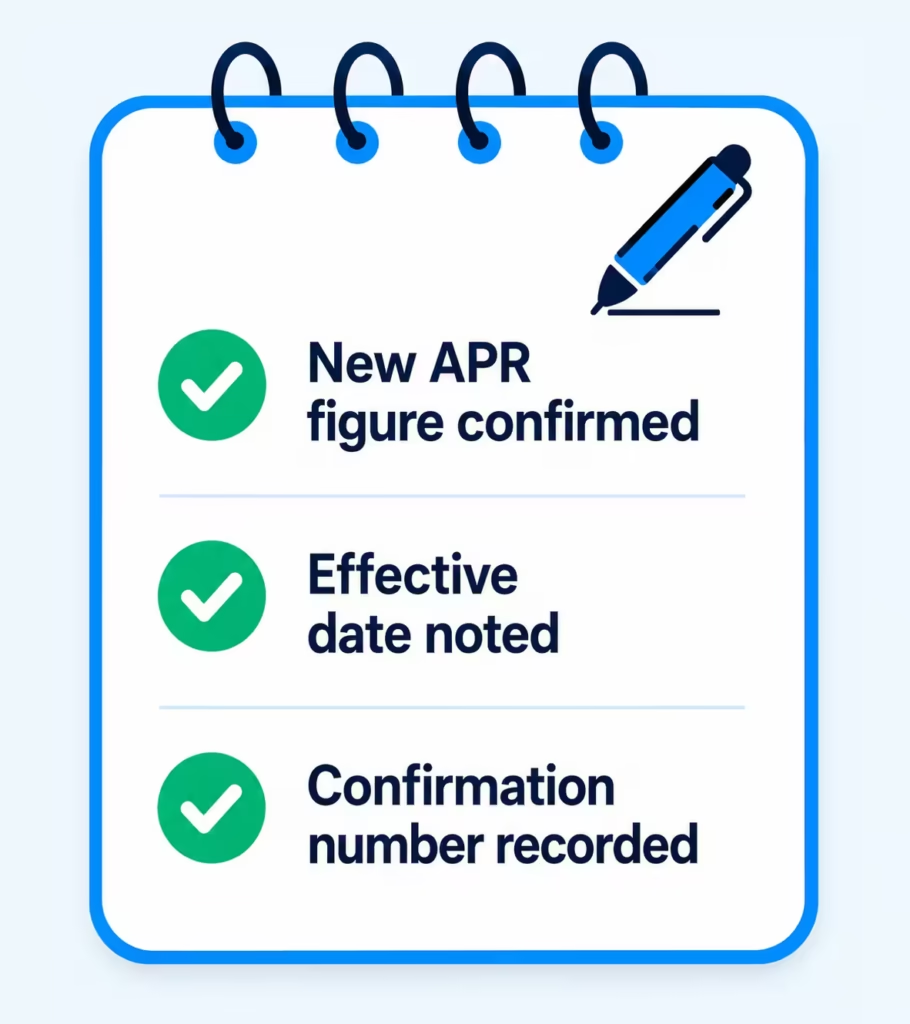
Ask the agent to confirm three things before ending the call:
- The new APR figure
- The effective date
- Whether the reduction is permanent or set to expire
Get the confirmation number for the change and write it down.
Temporary Hardship Program Rate Explained
If you are struggling to keep up with payments, the Discover financial hardship program is a separate option. This is not the same as a goodwill rate cut. A temporary hardship rate offers short-term relief for six to twelve months. During this time, Discover may lower your APR, reduce your minimum payment, or waive some fees.
According to Discover’s official financial hardship page, these programs are designed for cardmembers facing job loss, medical bills, or other real financial stress. You will need to explain your situation and may need to document it.
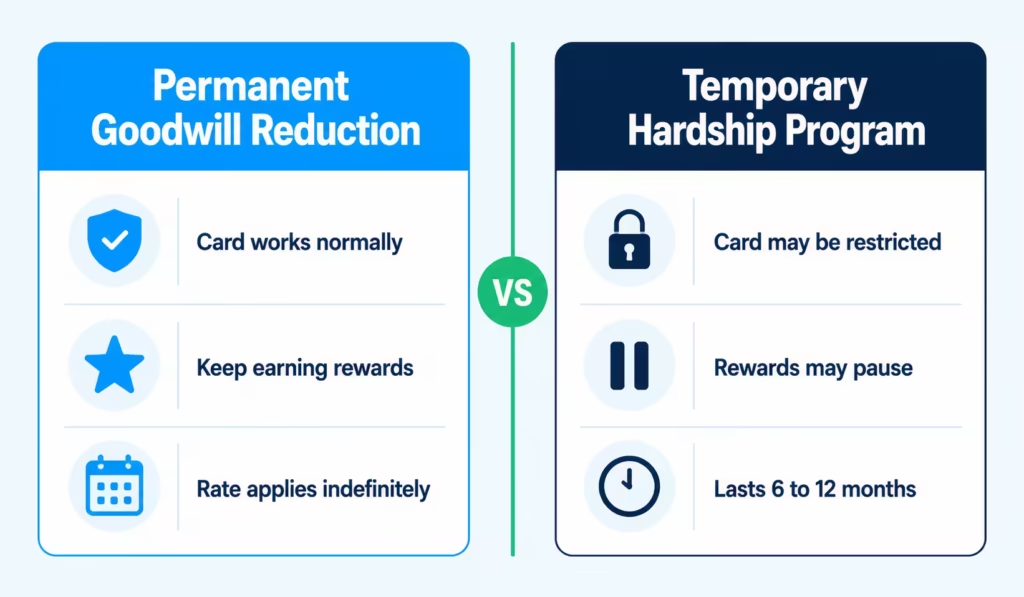
The trade-off is that during the program, your card may be restricted or frozen. You will not be able to make new purchases in most cases, and enrolling can be noted on your account internally. Once the hardship period ends, your APR usually returns to its previous level, so this is a bridge, not a long-term fix.
Hardship Program Tradeoffs to Know Before You Enroll
Before you agree to a hardship arrangement, know what you are trading:
- Card access: Your account may be closed to new purchases during the program.
- Rewards: You may lose the ability to earn cashback while enrolled.
- Credit reports: Discover may report the account as being in a special program, though this varies. Ask the agent directly how it will show up.
- Rate reset: When the program ends, your APR usually returns to the prior level, not the discounted one.
- Future eligibility: Being on a hardship plan once may affect future credit line increases or product changes.
If you can afford your regular payments and just want a lower rate, request a permanent goodwill reduction instead. Save the hardship program for real emergencies.
What Improves Your Odds of Approval
Several concrete factors move the needle when you negotiate Discover APR. Focus on these before the call:
- Length of relationship: Cardholders with two or more years of history generally have better luck than newer accounts.
- On-time payment record: Zero late payments in the last 12 to 24 months carry real weight.
- Low utilization: Using less than 30% of your credit limit signals control. Using less than 10% is even better.
- Stable income: If Discover asks about your income, be ready with a current figure. A recent raise helps your case.
- A real competing offer: A written balance transfer promotion or a lower-APR card offer you actually received gives your competing offer claim real substance.
- Clean account standing: No returned payments, no over-limit fees, no disputes in the last year.
⚠️ Mistake to Avoid: Don’t inflate your story. If you claim you’ll close the card unless you get a lower rate, be prepared for the agent to say “OK” and process that request. Bluffing rarely works and can leave you worse off.
Does This Affect Your Credit Score or Trigger a Hard Inquiry
This is one of the most common worries, and the answer is reassuring. Asking for a rate reduction on an existing Discover card usually does not trigger a hard inquiry, and it does not directly hurt your credit score.
Discover does not need to pull your credit report to review your on-file account history. Soft pulls have no impact on your FICO score, but hard pulls can reduce it by several points. A Discover APR reduction request on an account you already have is typically handled with a soft review, not a hard pull.
If Discover ever needs to do a hard inquiry for any reason, they must ask for your permission first. So if the agent starts asking about pulling credit, you can decline and end the call with no impact.
Your credit score is not affected by the rate itself either. A lower APR does not show up on your credit report. Only balances, payments, and credit limits do.
What to Do If Discover Says No
A “no” on your first try is not the end of the road. Many cardholders get a rate cut on the second or third attempt. Here is what to do next.
First, ask the agent why the request was denied. Common reasons include the account being too new, recent late payments, or a policy freeze on rate changes. Knowing the reason tells you what to fix.
Second, ask if there is another program you might qualify for. An agent might not approve a permanent cut. However, they can offer a short-term promotional APR for new purchases or a balance transfer with a low intro rate.
Third, try again in three to six months. Rate policies change often, and a new agent may see your file differently. Keep your APR reduction request polite each time. Aggressive callers get shorter conversations.
Escalating to a Supervisor or Retention Specialist
If a frontline agent denies your request, politely ask to speak with a supervisor or a retention specialist. Retention teams have more flexibility because their job is to keep cardholders from leaving.
Try this line:
“I understand you can’t approve this at your level. Could you transfer me to a supervisor or the retention team so I can discuss my options for keeping this card active?”
An account manager escalation often surfaces offers that are not available to frontline agents. Even if the answer is still no, you may get a temporary promotional rate, a statement credit, or a balance transfer offer. A second Discover lower my rate call through the escalation path is often more productive than the first.
Confirming the New Rate Applied Correctly
If Discover approves your request, your work is not done. You still need to verify the change lands correctly on your account.
Wait for your next billing statement after the effective date. Open the statement and look for the Interest Charge Calculation section, usually near the bottom of the statement. This section lists your purchase APR, cash advance APR, and any promotional rates. Confirm the number matches what the agent quoted you.
If the rate is wrong, call Discover back within the same billing cycle. Reference the confirmation number from your original call. Ask them to correct the APR and, if you were charged interest at the higher rate, request a refund of the difference.
Also check your online account and the mobile app. The current APR is usually shown under account details. If the numbers don’t match, contact support right away. A permanent rate reduction should show consistently across every channel.
📌 Did You Know: Federal Reserve data referenced by Bankrate shows the average credit card APR sitting near 19.57% in mid-2026, meaningfully below the 20.79% record high set in August 2024. Cardholders who never ask for a reduction miss out on savings tied directly to this softer market.
Alternatives If Discover Won’t Lower Your Rate
If every attempt fails, other paths can still help you reduce Discover credit card interest.
A balance transfer offer from another issuer is often the fastest way to cut interest costs. Many cards offer an introductory 0% APR on transferred balances for 15 to 21 months. Even with a transfer fee of 3% to 5%, the math often favors moving the balance if you can pay it down during the promotional window.
A personal loan is another option. Fixed-rate personal loans usually have lower rates than the average credit card APR. Plus, the fixed monthly payment helps you plan your payoff better.
A nonprofit credit counseling agency can also help. Reputable agencies can sometimes negotiate lower rates on your behalf through a debt management plan. Look for agencies accredited by the National Foundation for Credit Counseling.
Whichever path you choose, keep making at least the minimum payment on your Discover card while you sort out the alternative. Missing a payment while you shop for options can hurt your credit and remove leverage for future negotiations.
Frequently Asked Questions (FAQs)
Can I negotiate a lower interest rate with Discover?
Yes, you can call the number on your card and ask for a permanent rate reduction. Cardholders with on-time payments and low utilization have the best odds of approval.
Can I call Discover to lower my interest rate?
Yes, call 1-800-347-2683 or the number on the back of your card and ask to speak with a representative. Phone calls tend to work better than chat because you can respond in real time and push back if needed.
What should I say when asking for lower APR?
Tell the agent how long you’ve been a cardholder, mention your on-time payment history, and directly ask for a rate reduction. Mentioning a real competing offer from another issuer, if you have one, strengthens your request.
Can negotiating a lower APR hurt my credit?
No, asking Discover for a rate reduction on an existing account typically uses a soft pull, which doesn’t affect your credit score. Discover must ask permission before running a hard inquiry, so you can decline if one is mentioned.
Does Discover have a hardship program?
Yes, Discover offers a temporary hardship program for cardholders facing job loss or medical bills. It can lower your APR for six to twelve months, but your card may be restricted from new purchases and the rate typically returns to normal once the program ends.
What percentage will Discover settle for?
Discover has no fixed formula, but reported permanent rate cuts typically range from 2 to 4 percentage points. Some cardholders are denied entirely, so results vary based on payment history and account standing.
What’s the average interest rate on a Discover card?
The average credit card interest rate was about 19.57% in 2026, according to Bankrate. That’s down from a peak of 20.79% in August 2024, giving cardholders a market benchmark to reference during negotiations.
How can I avoid paying interest on my Discover card?
Paying your full statement balance each month avoids interest charges entirely. If a rate cut isn’t approved, a balance transfer with an introductory 0% APR for 15 to 21 months can also help reduce interest costs.
What should I do if Discover says no to a rate reduction?
Ask the agent why you were denied, then request a supervisor or retention specialist, who often has more flexibility to approve a cut. You can also try again in three to six months since policies and agents can change.
How do I confirm my new Discover APR was applied correctly?
Check your next billing statement’s Interest Charge Calculation section and compare it to what the agent quoted. If the rate is wrong, call back within the same billing cycle with your confirmation number to get it corrected.
The Bottom Line
Cutting your APR on a Discover card comes down to preparation, a clear script, and a willingness to escalate when needed. In 2026, the Federal Reserve and Bankrate noted softer credit card rates. This gives cardholders with good payment histories a real chance to get a lower Discover interest rate. There’s no credit score risk involved
The best way is to begin with a polite phone call. Support your request with real account data. If the first answer is no, then ask to speak with a retention specialist.
If Discover doesn’t budge, a balance transfer or personal loan can still cut your interest costs. If you know someone carrying a Discover balance, share this guide so they can save real money too.