
If you’ve been staring at credit card offers and feeling lost, you’re not alone. Many people get stuck trying to figure out what an unsecured credit card really is, especially when they see it next to “secured” options. It can feel confusing, and one wrong pick can slow your credit journey.
An unsecured credit card is a card that gives you a credit line based on your credit profile, not a cash deposit.
In this guide, we’ll walk you through how these cards work, who they fit best, and what to do if you get denied. You’ll get clear tips, honest advice, and a smart plan for your next step.
Key Takeaways
This guide explains what an unsecured credit card is, how it differs from a secured card, the credit score and income needed to qualify, and what to do if your application is denied.
Core Facts:
- An unsecured credit card sets your credit line using your credit profile instead of a cash deposit, unlike a secured card where the deposit equals your limit.
- Most banks require a FICO score of 630 to 670 for a basic unsecured card, 690 or higher for rewards cards, and 720 or higher for premium cards.
- Applying triggers a hard inquiry that can lower your score by 5 to 10 points and stays on your credit report for two years.
- Starter unsecured cards often begin with limits of $300 to $1,000, while mid-tier cards can start at $1,500 to $5,000.
- Missing a payment by 30 days or more can drop your credit score by 60 to 110 points and stay on your report for up to seven years.
- Both card types report to Experian, Equifax, and TransUnion, so on-time payments on either can help build your credit history.
Best for:
- Readers deciding whether to apply for an unsecured card now, wait, or choose a secured card based on their current credit score.
- People who were recently denied an unsecured card and need a clear next step, such as pulling credit reports or fixing errors.
- Anyone comparing unsecured and secured cards to understand deposit requirements, credit limits, and approval difficulty before applying.
What Does “Unsecured Credit Card” Mean
An unsecured credit card is a regular credit card that does not require a security deposit or any collateral. The issuer evaluates your creditworthiness and decides whether you can borrow money. If they say yes, you get a credit line you can use, pay back, and use again. This is called revolving credit.
The word “unsecured” means there is no asset backing the loan. With a secured card, you put down cash, often $200 or more, and that deposit becomes your credit limit. With this type of card, the bank trusts you based on your credit history, income, and payment habits.
When you swipe the card, the bank is basically loaning you money for a short time. You pay it back each month, either in full or over time with interest. Because there’s no deposit to fall back on, the bank takes on more risk. That’s why approval depends so much on your credit score and income.
Most of the cards you see advertised, like a Chase Freedom, a Discover it, or a Capital One Quicksilver, fall into this group. They’re the “regular” cards most people think of when they hear the words “credit card.”
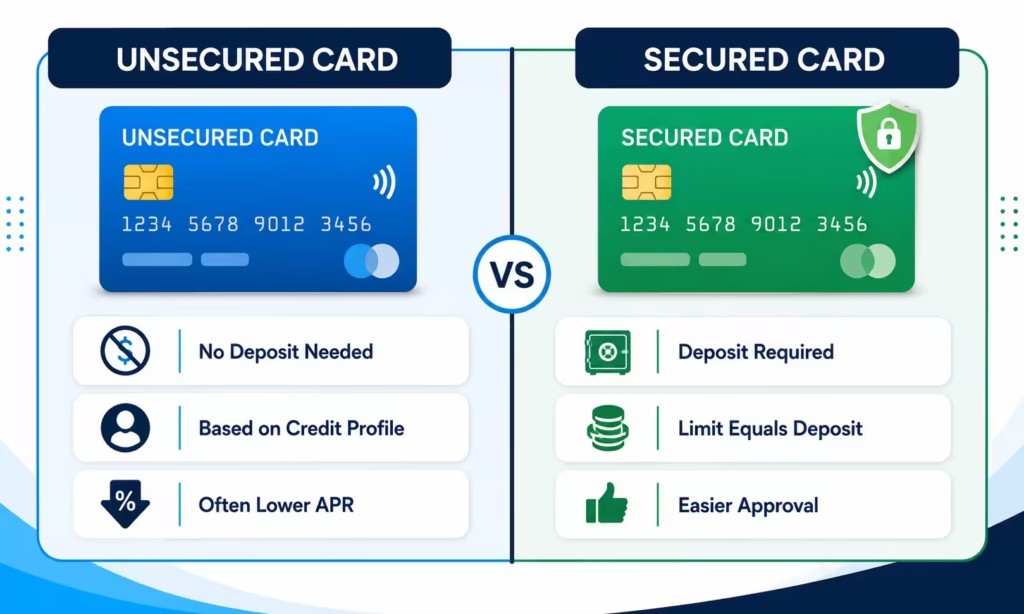
Unsecured vs. Secured Credit Cards: Key Differences
The main gap between these two card types comes down to one thing: a security deposit. A secured card needs cash upfront. A regular card does not. But the differences go deeper than that.
Here’s a quick side-by-side look:
| Feature | Unsecured Card | Secured Card |
|---|---|---|
| Deposit needed | None | Yes, often $200–$500 |
| Credit limit source | Based on credit profile | Equal to your deposit |
| Approval bar | Fair to excellent credit | Low or no credit okay |
| Interest rates | Wide range, often lower | Often higher APRs |
| Rewards | Common | Rare or limited |
| Best for | Building or growing credit | Starting or rebuilding |
With a secured card, your deposit acts as a safety net for the bank. If you stop paying, they keep your money. With a regular card, there’s no safety net, so the bank checks your credit more carefully.
Credit limits also work differently. On a secured card, your limit is usually just what you deposit. On a regular card, the bank sets your limit based on your income, debts, and score. That means you could get $500 or $15,000, depending on your profile.
Both cards report to the three main credit bureaus, Experian, Equifax, and TransUnion. So both can help you build credit if you pay on time. The key gap is cost, access, and how much room you get to grow.
How Issuers Decide Whether to Approve You
Banks don’t hand out credit lines by luck. They use a mix of data points to guess how risky you are as a borrower. They look at your credit score, your income, your debts, and how long you’ve had credit. Each bank has its own recipe, but the core ingredients are the same.
The main things they check are:
- Credit score: Shows how you’ve handled credit in the past.
- Income: Proves you can pay the bill each month.
- Debt-to-income ratio (DTI): Compares what you owe to what you earn.
- Credit history length: How long you’ve been using credit.
- Recent applications: Too many can be a red flag.
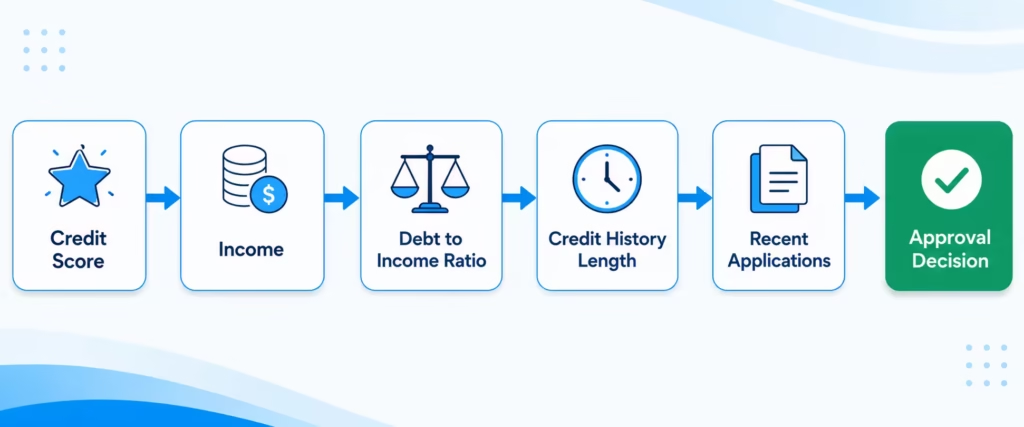
A short credit file or a low score can push you toward a secured card. A strong file with steady income opens the door to better offers, higher limits, and rewards.
Credit Score and Income Requirements
Most banks want to see a FICO score of at least 630 to 670 for a basic regular card. For cards with rewards or perks, you often need 690 or higher. Premium travel or cash back cards usually ask for 720 and up. According to FICO, scores range from 300 to 850, with higher numbers meaning less risk.
Income rules are less strict, but you still need enough to cover the payments. Some banks ask for at least $12,000 to $15,000 a year for basic cards. Premium cards can ask for $60,000 or more. Your DTI ratio matters too. Most banks want your total monthly debts to stay under 40% of your gross income.
VantageScore is another model banks may use. It also runs from 300 to 850, but it can score people with shorter credit files. So even if FICO can’t score you yet, VantageScore might, giving you a shot at approval.
How Applying Affects Your Credit Score
When you apply for a card, the bank pulls your credit report. This is called a hard inquiry. It can drop your score by a few points, often 5 to 10, and stays on your report for two years. One inquiry is no big deal. But three or four in a short time can worry future lenders.
Some banks let you pre-qualify with a soft pull, which does not hurt your score. This is a smart way to check your odds before you apply. Just remember, pre-qualified is not the same as approved. The full application still triggers a hard pull.
How Credit Limits Work on Unsecured Cards
Your credit limit is the most money you can borrow on the card at one time. On a regular card, the bank sets this number based on your credit profile. There’s no deposit to match, so the bank analyzes your data to estimate the amount you can safely manage.
A few things shape your starting limit:
- Your credit score and history.
- Your yearly income.
- Your other debts and monthly bills.
- The type of card you picked.
- The bank’s own rules.
Starter cards often begin with limits of $300 to $1,000. Mid-tier cards can start at $1,500 to $5,000. Premium cards can go much higher, sometimes with no set cap at all. If you’re new to credit, expect a lower limit at first. That’s normal, and it can grow.
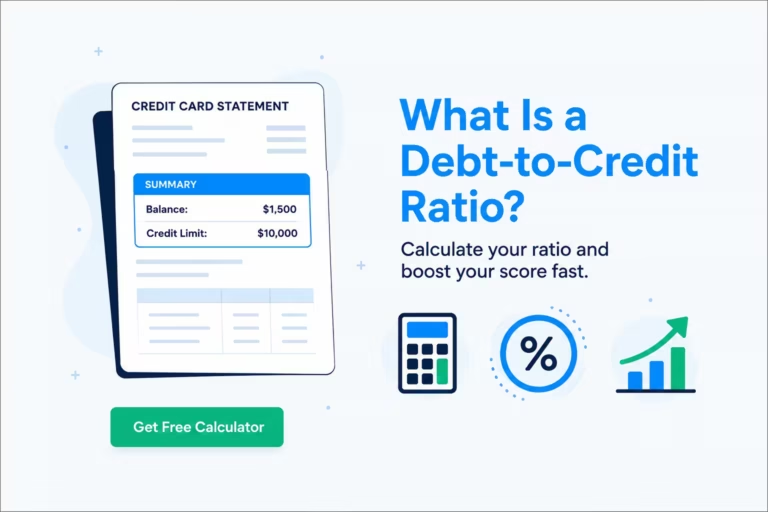
💡 Pro Tip: Try to keep your card balance under 30% of your limit each month. This is called credit utilization, and it’s one of the biggest factors in your FICO score.
How Your Credit Limit Can Change Over Time
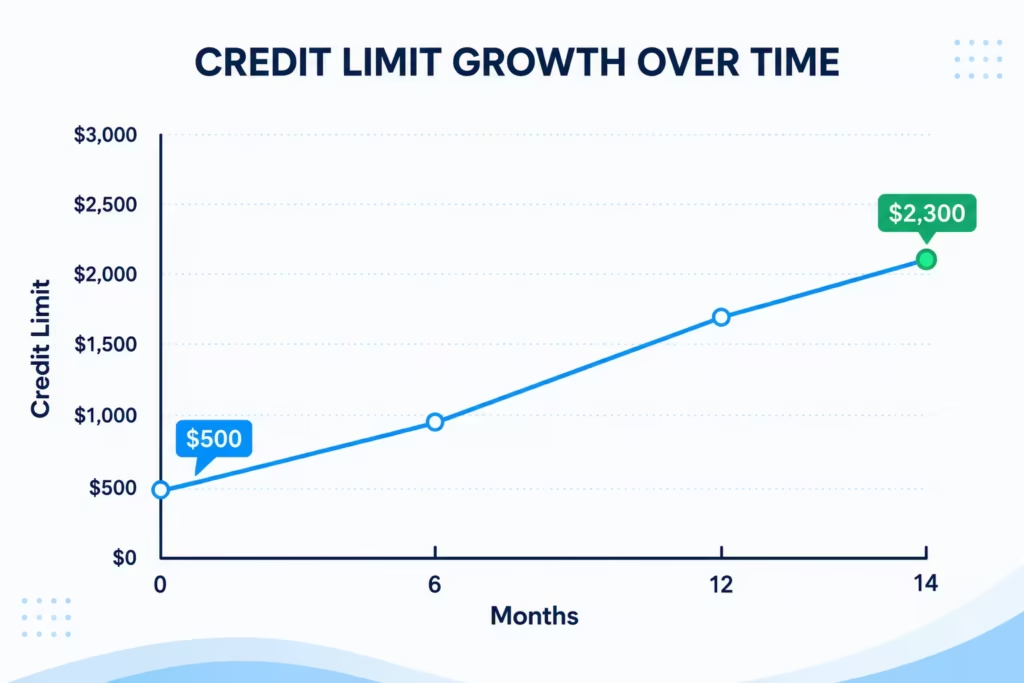
Banks often review your account every 6 to 12 months. If you pay on time and keep your balance low, they may raise your limit on their own. They call this an automatic credit line increase. It can also help your score by lowering your utilization ratio.
You can also ask for a bump yourself. Most banks let you request one online, by app, or by phone. Sarah, a marketing coordinator in Denver, started with a $500 limit on her first card. After 14 months of on-time payments and steady income, she asked for a raise and got bumped to $2,300. Requests can be a soft pull or a hard pull, depending on the bank, so ask first.
On the flip side, banks can also lower your limit. If you miss payments, run up big balances, or your credit score drops, they might cut your limit to protect themselves. That’s rare for good customers, but it happens.
Types of Unsecured Credit Cards
Not all regular credit cards are the same. They come in many flavors, each built for a different kind of user. Picking the right type helps you get more value and skip fees you don’t need.
Here are the most common types you’ll see:
- Rewards cards: Give you cash back, points, or miles on every purchase. Good for people who pay in full each month.
- Low-APR cards: Focus on low interest rates. Great if you sometimes carry a balance.
- Student cards: Made for college students with little or no credit history. Often have lower limits and simple rewards.
- Starter or credit builder cards: Aimed at people with fair credit. They may have small fees but no deposit.
- Balance transfer cards: Offer 0% intro APR to move debt from a high-rate card.
- Travel cards: Earn miles or points for flights, hotels, and travel perks.
Some cards charge an annual fee, from $25 to $695 or more. Others are free. As a rule, fee cards should give back more in rewards than they cost. If they don’t, a no-fee option is smarter.
Michael, a college junior at UT Austin, picked a student rewards card with a $500 limit and no annual fee. He earned 1% back on books and food, paid the bill in full each month, and built a 720 score by graduation.
The Real Risks of an Unsecured Credit Card
Just because there’s no deposit does not mean there’s no risk. In fact, the risk is often bigger with a regular card than with a secured one. The debt is real, and so are the results if you don’t pay it back.
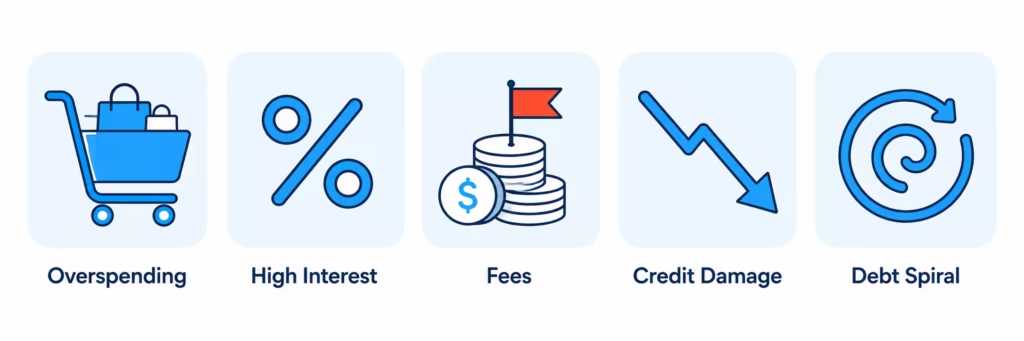
The main risks include:
- Overspending: It’s easy to swipe more than you can pay back.
- High interest: Average APRs are around 20% to 25%, and they add up fast.
- Fees: Late fees, over-limit fees, and cash advance fees can pile on.
- Credit damage: Late or missed payments hurt your score for years.
- Debt spiral: Paying only the minimum can trap you in years of interest.
⚠️ Mistake to Avoid: Paying only the minimum each month feels safe, but it can turn a $2,000 balance into $5,000 or more over time. Always pay as much as you can, ideally the full statement balance.
What Happens If You Miss Payments
Miss one payment by 30 days or more, and the bank reports it to the credit bureaus. Your score can drop by 60 to 110 points. That drop can stay on your report for up to seven years.
If you keep missing payments, the bank may charge off the account after about 180 days. Then they can sell your unsecured debt to a collections agency. That agency will call, write, and may even sue you for the money. They come after you directly due to the absence of a deposit, which can lead to stress and prolonged effects.
Late fees can be $25 to $41 per missed payment. Your APR can also jump to a penalty rate near 29.99%. All of this makes it much harder to pay off the balance, and much harder to get new credit later.
Advantages of Unsecured Credit Cards
Regular credit cards come with real perks, which is why so many people want them. If you use them the right way, they can save you money and grow your credit at the same time.
Key benefits include:
- No deposit needed: You don’t have to tie up cash to get a card.
- Higher limits: Starting limits are often bigger than secured cards.
- Rewards: Many offer cash back, points, or travel miles.
- Perks: Purchase protection, rental car coverage, and travel insurance.
- Path to premium cards: They open the door to top-tier products later.
- Sign-up bonuses: Some offer $200 or more just for meeting a spend goal.
Regular cards also give you more flexibility. You can move your balance, ask for a limit raise, or upgrade to a better card without closing the old one. That kind of freedom is harder to get with a secured card.
Building Credit With an Unsecured Card
One of the best uses of a regular card is credit building. As a form of revolving credit, it reports to all three bureaus each month. Your on-time payments and low balances show up in your credit file. Over time, that data can push your score up fast.
Payment history is the biggest part of your FICO score, at 35%. Credit utilization is next, at 30%. So if you pay on time and keep your balance under 30% of your limit, you can build a strong score in 6 to 12 months. A credit builder card works well for this, since it’s made for people who need a simple, low-cost tool.
Jennifer, an operations manager at a Chicago logistics firm, went from a 640 score to a 748 in just 11 months. She used one regular card, paid it in full each cycle, and kept her utilization near 8%.
Drawbacks to Consider
Regular cards aren’t perfect. They come with trade-offs, and it helps to know them before you apply. The biggest drawback is that they’re harder to get if your credit is thin or bruised.
Common downsides include:
- Tough approval: Fair or poor credit may lead to a denial.
- Higher APRs for fair credit: Rates can top 28% for lower scores.
- Annual fees: Some fair-credit cards charge $75 to $99 a year.
- Low starting limits: New users may only get $300 to $500.
- Hard inquiry: Applying can ding your score by a few points.
- Overspending temptation: No deposit means no built-in ceiling.
If you get approved with fair credit, the terms may not be great. You might pay more in fees and interest than the card gives back in perks. In that case, a secured card can actually save you money while you build your score.
Can You Get an Unsecured Card With No Credit History?
Yes, but your options are smaller. Most regular cards need at least some credit history. If you’re brand new to credit, you’ll need to pick a card built for beginners.
Your best paths include:
- Student credit cards: Made for college students, even with no credit file. Some just ask for proof of school enrollment.
- Starter cards: Aimed at people with thin files. They often have low limits and few perks, but they’re easier to get.
- Authorized user status: Ask a parent or partner to add you to their card. Their good history can help build yours.
- Credit builder loans: Not a card, but they help build a score you can use to qualify later.
- Alternative-data cards: Some cards use bank data, not credit scores, to approve you. Products like Petal or Upgrade look at your cash flow.
If none of these work, a secured card is still a solid first step. After 6 to 12 months of good use, you can often move up to a regular card and get your deposit back.
What to Do If You’re Denied
A denial stings, but it’s not the end of the road. Every applicant has the right to know why they were turned down. Banks must send you an adverse action notice within 30 days, as required by the Consumer Financial Protection Bureau. This letter tells you the top reasons for the denial.
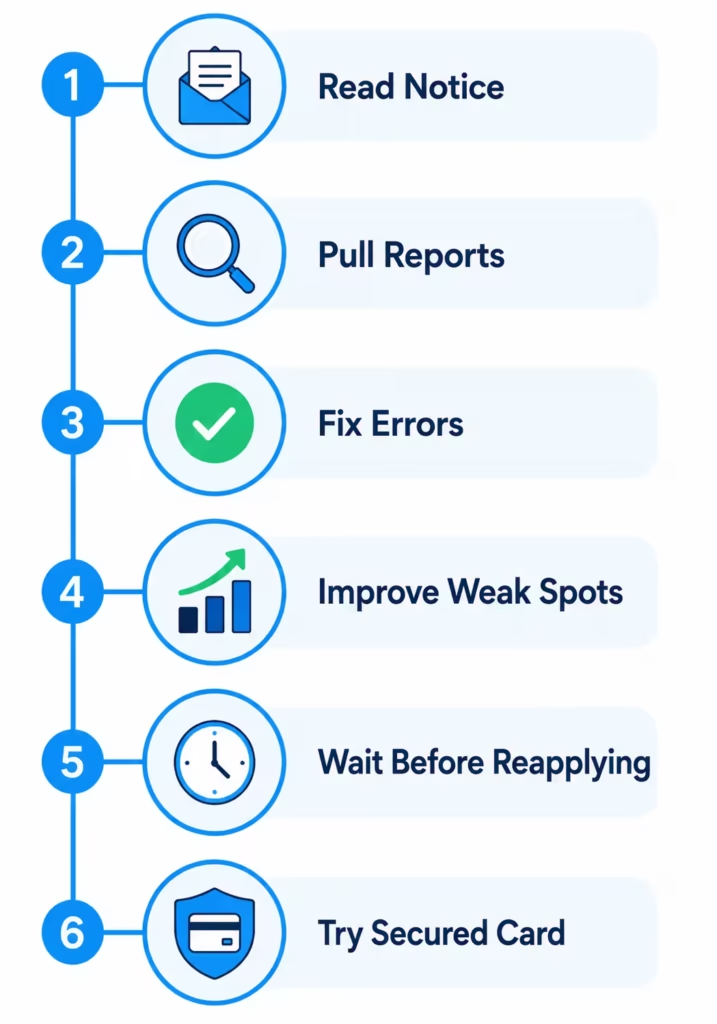
Follow these steps after a denial:
- Read your adverse action notice. It lists the main reasons, like a low score or high DTI.
- Pull your free credit reports. You can get them at AnnualCreditReport.com from all three bureaus.
- Fix any errors. Dispute wrong info with the bureau that has it.
- Work on the weak spots. Pay down debt, catch up on late bills, or add income.
- Wait before you reapply. Six months is a safe gap. Some banks make you wait 30 to 90 days by rule.
- Try a secured card in the meantime. Use it well for six months to build your file.
David, a finance director at a Miami startup, got denied twice for a rewards card. He waited six months, paid down $3,200 in credit card debt, and dropped his utilization from 62% to 14%. On his third try, they approved him with a $6,500 limit.
Should You Apply Now, Wait, or Choose a Secured Card Instead?
The right move depends on your credit profile. There’s no single answer that fits everyone. Use the framework below to guide your choice.
Apply now if you:
- Have a FICO score of 670 or higher.
- Have steady income that covers your bills.
- Have a DTI under 40%.
- Haven’t had a hard inquiry in the last 3 to 6 months.
Wait a few months if you:
- Have a score between 620 and 669.
- Have recent late payments or new debts.
- Just had a hard inquiry.
- Are close to fixing errors on your report.
Choose a secured card if you:
- Have a score under 620 or no score yet.
- Have a recent bankruptcy or charge-off.
- Have been denied for a regular card twice or more.
- Can put down a $200 deposit without stress.
📌 Did You Know: Many secured cards now graduate you to a regular card in as little as 6 to 12 months, and they refund your deposit when you do. So a secured card is often a short bridge, not a long-term stop.
The smartest path is the one that matches where you are today. Rushing into a card you can’t get, or that costs too much, sets your credit back. A steady, patient plan almost always wins.
Frequently Asked Questions (FAQs)
What is an unsecured credit card?
An unsecured credit card gives you a credit line based on your credit profile instead of a cash deposit. The bank evaluates your credit history, income, and debts to decide your limit, unlike secured cards where your deposit sets the limit.
Is it better to have a secured or unsecured credit card?
An unsecured card is better if your FICO score is 670 or higher and your debt-to-income ratio is under 40%. A secured card makes more sense with a score under 620, since it requires only a refundable deposit like $200 instead of a tough approval process.
Do you have to pay back unsecured credit cards?
Yes, unsecured credit card balances are real debt you must repay. There’s no deposit backing the card, so missed payments can lead to collections calls, lawsuits, and a score drop of 60 to 110 points.
What credit score is needed for an unsecured credit card?
Most banks want a FICO score of at least 630 to 670 for a basic unsecured card. Cards with rewards typically require 690 or higher, while premium travel cards often ask for 720 and up.
Can I go from secured to unsecured credit card?
Yes, many secured cards graduate you to an unsecured card after 6 to 12 months of on-time payments. When that happens, the issuer typically refunds your original deposit.
What are the downsides of an unsecured credit card?
Approval is tougher with fair or poor credit, and APRs can top 28% for lower scores. Some fair-credit cards also charge annual fees of $75 to $99, and new users often start with limits as low as $300 to $500.
Can I get an unsecured credit card with a 500 credit score?
A 500 score falls well below the 630 to 670 range most banks require for basic unsecured cards. Alternative-data cards that use bank cash flow instead of credit scores, like Petal or Upgrade, may still approve you.
What is the easiest unsecured credit card to get approved for?
Student cards and starter cards are the easiest to get, since they’re built for thin or no credit files. Alternative-data cards that evaluate bank account cash flow instead of credit scores are another accessible option.
How fast will my credit score go up with an unsecured card?
Paying on time and keeping utilization low can raise your score meaningfully within 6 to 12 months. One example in the data showed a score moving from 640 to 748 in 11 months by keeping utilization near 8%.
What happens if you miss a payment on an unsecured credit card?
Missing a payment by 30 days or more gets reported to the credit bureaus and can drop your score by 60 to 110 points. Late fees run $25 to $41, and your APR can jump to a penalty rate near 29.99%.
Wrapping Up
We’ve walked through what an unsecured credit card is, how it stacks up against secured options, how banks approve you, and what to do when the answer is no. We also covered the risks, rewards, and the smartest path if you’re just starting out.
Based on the credit-building data covered above, the most effective approach for most readers is to match the card type to your current score band, keep utilization under 30%, and always pay on time.
If you know a friend or family member trying to move past a secured card or start fresh with credit, share this guide with them. It could save them months of trial and error.