
Starting out as a freelancer or a brand-new business owner, you keep hearing that you “should” get a business credit card. But you’re not sure if you even qualify without an LLC, whether it will hurt your personal credit, or what you’re actually signing up for legally. That worry is fair. Most guides skip the parts that matter most.
A business credit card is a revolving line of credit meant for business spending, and most solo owners can qualify using their SSN alone.
Below, we’ll walk through how these cards work, who can get one, what a personal guarantee really means, and the protections you quietly give up. By the end, you’ll know if it’s the right move for you right now.
Key Takeaways
This guide explains what a business credit card is, who qualifies to apply, what a personal guarantee legally means, and how signing one affects your personal assets and credit if the business can’t pay.
Core Facts:
- A business credit card is a revolving line of credit for business purchases, and most sole proprietors can qualify using their SSN alone without forming an LLC.
- Applying as an LLC or corporation usually still requires signing a personal guarantee, which makes the owner personally liable for the debt despite the LLC’s liability protection.
- The Credit CARD Act of 2009 does not apply to business credit cards, so protections like 45-day rate change notices and payment allocation rules are not guaranteed.
- Whether a business card affects personal credit depends on the issuer: most major banks do not report on-time payments to personal bureaus, but American Express and Capital One may report balances that raise personal utilization.
- A missed payment typically triggers a late fee and a penalty APR, and an account can move toward default at around 60 to 90 days past due.
- Under an unlimited personal guarantee, the issuer can pursue the full balance plus interest and legal fees from the cardholder’s personal assets after business collection attempts fail.
Best for:
- Freelancers and new business owners deciding whether they qualify for a business credit card without a formal LLC.
- Sole proprietors or LLC owners who want to understand what a personal guarantee actually commits them to before signing.
- Anyone weighing the rewards and bookkeeping benefits of a business card against the personal liability risk if the business can’t pay.
What Is a Business Credit Card?
A business credit card is a revolving line of credit issued to a business, or to a business owner on behalf of that business, for business purchases only. It works a lot like a personal card. You get a spending limit. You can carry a balance. You pay interest on what you don’t pay off each month. The main difference is purpose. The card is designed to fund and track business spend, not groceries or vacations.
Banks issue most of these cards. Think Chase, Citibank, Capital One, and American Express. Card networks like Visa, Mastercard, and Amex handle the payment rails. Newer fintech issuers like Brex and Ramp also offer business cards, though they often work under different rules.
The core purpose is simple. You want to keep business spend separate from personal spend. That makes taxes easier. It makes bookkeeping cleaner. And over time, it can help you build a credit profile in the business’s name.
How Business Credit Cards Work
The day-to-day mechanics feel familiar if you’ve used a personal card. But a few pieces work a little differently.
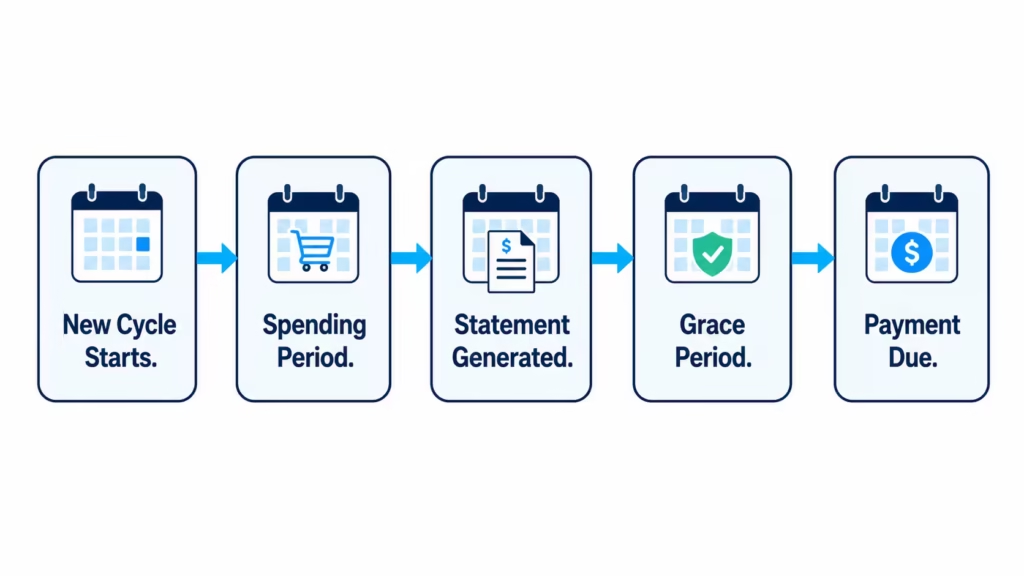
Every card has a billing cycle. That’s usually about 30 days long. During that time, you can make purchases up to your credit limit. At the end of the cycle, the issuer sends a statement. It shows what you spent, what you owe, and when it’s due. You then have a grace period, often around 21 to 25 days, to pay the full balance without paying interest.
If you don’t pay in full, the leftover balance starts collecting interest at the card’s APR. Business card APRs often run higher than personal cards, sometimes in the 18% to 29% range. So carrying a balance gets expensive fast.
Credit limits on business cards tend to be higher than personal cards. That’s because issuers factor in expected business spending, not just your personal income. A new sole proprietor might start with a $2,000 limit. An established LLC with steady revenue might get $25,000 or more.
Most business cards come with rewards, too. They’re built for business spend. So you’ll see extra points on things like office supplies, gas, internet bills, ads, and travel. Some cards offer flat cash back on every purchase.
Here’s a quick look at a normal billing cycle:
| Day | What Happens |
|---|---|
| Day 1 | New billing cycle starts |
| Day 1-30 | You spend on the card |
| Day 30 | Cycle closes, statement is generated |
| Day 30-51 | Grace period; pay in full to avoid interest |
| Day 51 | Payment due date |
Employee and Additional Cards
One nice feature of a business card is that you can add extra cards for your team. These are tied to the main account. You stay responsible for the balance. But each user gets their own card and their own tracked spending.
Most issuers let the owner set an individual spending limit for each employee card. So a sales rep might get a $1,500 monthly cap while an operations lead gets $5,000. You can often shut a card off instantly if someone leaves the company.
This makes expense tracking much easier. Instead of collecting receipts and reimbursing people, each purchase shows up on your account in real time. Many issuers also let you sort spend by employee or category, which saves hours at tax time.
Business Credit Card vs. Personal Credit Card
At a glance, both cards do the same thing. You swipe, you owe, you pay. But under the hood, they behave differently in ways that matter.
Credit limits are usually higher on business cards. That’s because issuers expect business spend to be larger and more consistent.
Reporting is where it gets interesting. Personal cards report every month to consumer credit bureaus like Experian, Equifax, and TransUnion. Business cards usually report to business credit bureaus. These include Dun & Bradstreet, Experian Business, and Equifax Business. Some report to both. Some barely report anywhere. This affects both your personal credit and your future ability to build business credit history.
Application requirements differ, too. A personal card asks for your income, housing costs, and SSN. A business card asks for your business name, business type, estimated revenue, years in business, and sometimes an EIN.
Rewards categories are tailored to business needs. So instead of extra points at grocery stores, you’ll see bonuses on ad spend, shipping, cloud software, and business travel.
Here’s a side-by-side comparison:
| Feature | Personal Credit Card | Business Credit Card |
|---|---|---|
| Purpose | Personal spending | Business spending |
| Credit limit | Lower, tied to personal income | Often higher, tied to business finances |
| Reports to | Consumer credit bureaus | Business credit bureaus (sometimes both) |
| Application asks for | SSN, personal income | Business info, EIN or SSN, revenue |
| Rewards | Groceries, gas, dining | Office, ads, travel, shipping |
| CARD Act protections | Yes, full | No, limited |
| Personal guarantee | No | Yes, in most cases |
Who Is Eligible for a Business Credit Card?
This is where many freelancers stop before they even start. They assume they need a formal company, years of revenue, and a lawyer. That’s not true.
Sole proprietors, freelancers, gig workers, LLCs, partnerships, S-corps, and C-corps can all apply for a business credit card. If you earn money outside of a W-2 job, you very likely qualify as a “business” in the eyes of a card issuer. That includes rideshare drivers, Etsy sellers, part-time consultants, and folks who freelance nights and weekends.
The word “business” is broad here. You don’t need a state-filed LLC. You don’t need an office. You don’t need employees. You just need real activity, even if it’s small and side-income only.
That said, issuers still look at several things before approving you. Your personal credit score matters most, especially early on. Time in business helps if you have it, but many issuers approve brand-new businesses. Estimated revenue plays a role, and honest numbers are fine, even if they’re modest.
Applying as a Sole Proprietor or Freelancer
You can apply for a business credit card as a sole proprietor using just your Social Security Number. You don’t need an EIN. You don’t need to file paperwork with your state. If you don’t have a formal business name, you can list your legal name or a DBA (“doing business as”) name on the application.
At this stage, approval is based mostly on your personal credit. The issuer treats the application a lot like a personal card application, with a few extra business-related questions. Your credit score, income, and payment history do most of the work.
Getting an EIN is still a smart move once you’re serious. It’s free and takes a few minutes on the IRS website. Some issuers may offer better terms or higher limits if you have one. But it’s not required to get approved.
Applying as an LLC or Corporation
If your business is formally set up as an LLC, S-corp, or C-corp, the process shifts a bit. You’ll usually apply with the business’s EIN instead of your SSN. But most issuers will still ask for your personal SSN as well, mostly to run a personal credit check and to hold you personally responsible for the debt.
Even as an LLC, you’ll almost always sign a personal guarantee. We’ll cover why that matters shortly. Business credit history starts to carry more weight once your company is a few years old and has trade lines with vendors. Early on, though, your personal credit still does most of the lifting.
What Issuers Look At When You Apply
Knowing what an issuer wants makes the application go smoother and lowers the odds of a surprise denial.
Personal credit score is the biggest factor. For most business cards, issuers look for a FICO score of 670 or higher, though premium cards may want 720 or above. A lower score doesn’t always mean a rejection, but it may mean a lower limit or a higher APR.
Business revenue matters, though not as much as you’d think for new businesses. Issuers ask for an annual revenue estimate. If you made $8,000 last year freelancing, that’s a valid number. Padding it isn’t smart, since a personal guarantee ties you to the debt either way.
Time in business is helpful if you have it. If you don’t, “less than 1 year” or even “startup” is a normal answer that many issuers still approve. You’ll list either your EIN or SSN depending on your business structure.
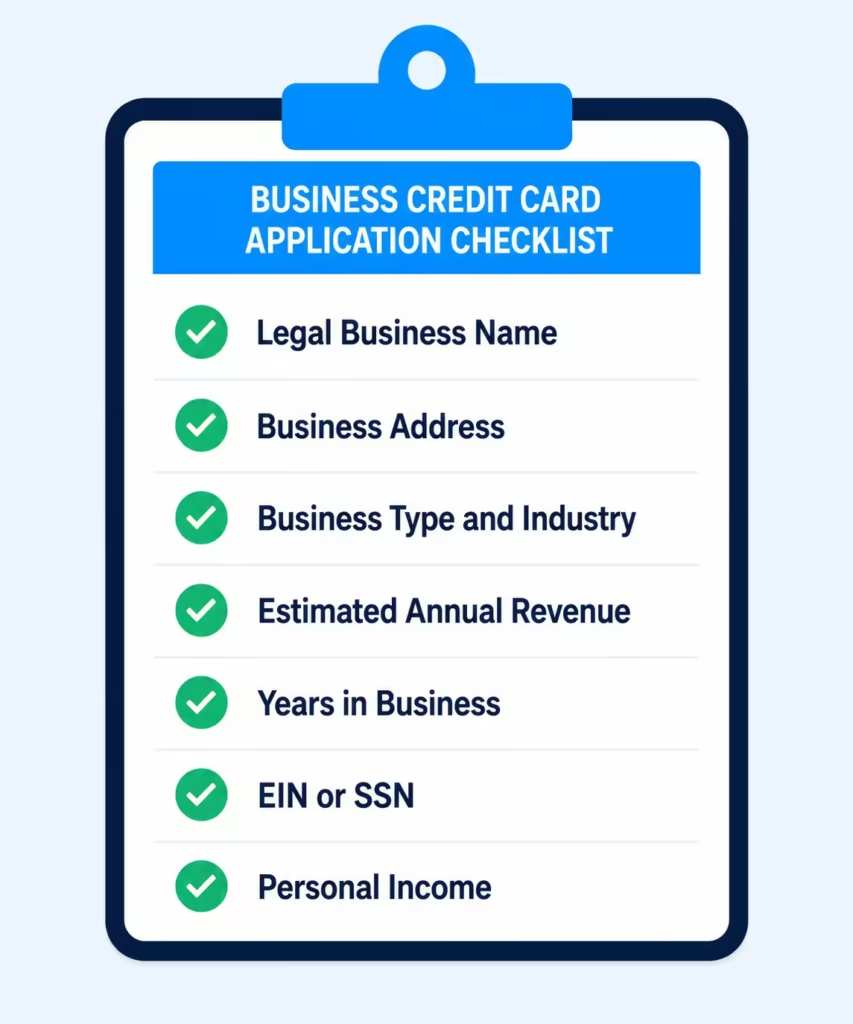
Expect them to ask for:
- Legal business name (or your name for a sole proprietorship)
- Business address (a home address is fine)
- Business type and industry
- Estimated annual revenue
- Years in business
- EIN or SSN
- Personal income (yes, both business and personal)
Business Credit Card vs. Corporate Card
You may hear about “corporate cards” that don’t require a personal guarantee. These are real, but they’re not the same product as a small business credit card.
Corporate cards are aimed at larger, well-funded companies. Many require millions in annual revenue, significant cash reserves in the bank, or venture funding. Fintechs like Brex and Ramp offer corporate cards to startups, but even those often want a healthy bank balance or investor backing.
For most sole proprietors, freelancers, and early-stage businesses, a corporate card isn’t within reach. A standard business credit card, personal guarantee and all, is the realistic path.
The Personal Guarantee: What You’re Actually Agreeing To
This is the part most articles glaze over. But it may be the single most important thing to understand before you sign.
A personal guarantee is a legal promise you sign as part of the application. It says that if your business can’t pay the credit card bill, you personally will. That means your personal savings, your paycheck, and in some cases your home or car can be pursued to cover the debt.
Almost every small business credit card requires one. It doesn’t matter if you’re an LLC, an S-corp, a sole proprietor, or a partnership. If you’re applying for a mainstream business card, expect a personal guarantee in the fine print.
There are two main types. A limited guarantee caps your personal liability at a set dollar amount or a percentage of the balance. This is common when there are multiple owners, so each one is only on the hook for their share. An unlimited guarantee means you’re on the hook for the full balance, no cap. Most solo owners and small partnerships sign unlimited guarantees.
The guarantee is triggered when the account defaults, which usually means several missed payments in a row. The issuer will typically try to collect from the business first. If that fails, they come after you personally.
⚠️ Mistake to Avoid: Don’t assume that forming an LLC before you apply will shield you from card debt. The personal guarantee is a separate contract that overrides your LLC’s liability protection for that specific debt.
Does an LLC or Corporation Protect You From This?
Short answer: no, not for personally guaranteed debt.
Forming an LLC or corporation does protect your personal assets from most business debts and lawsuits. If a vendor sues your LLC, or if your business defaults on an unsecured loan without a personal guarantee, the LLC veil usually holds. That’s the whole point of forming one.
But a personal guarantee is a separate agreement between you and the card issuer. When you sign it, you’re stepping outside the LLC’s protection for this specific debt. In legal terms, the guarantee “pierces” that shield on its own, without needing to prove fraud or anything else.
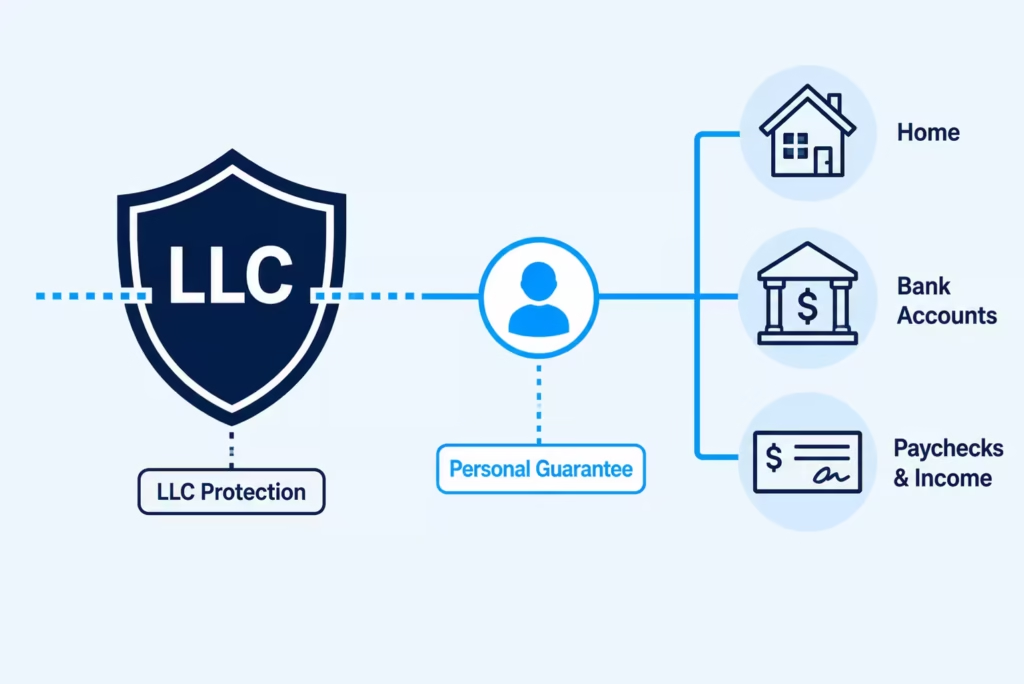
A small number of true corporate cards skip the personal guarantee. But as noted above, most of those aren’t accessible to freelancers or new small businesses. If you’re applying for a standard business credit card, plan on being personally liable.
Consumer Protections You Lose With a Business Card
Here’s a fact that catches many new owners off guard. The Credit CARD Act of 2009, which added strong protections to personal credit cards, doesn’t apply to business credit cards. According to the Consumer Financial Protection Bureau, the CARD Act delivered billions in savings and cleaner terms to personal cardholders. Business cards were largely left out of that reform.
That gap creates real differences in your day-to-day experience.
On a personal card, your issuer must give you 45 days’ notice before raising your interest rate. On a business card, they often can raise rates with much less warning, sometimes just a short notice on your next statement.
On a personal card, if you pay more than the minimum, the extra must go toward your highest-APR balance first. That saves you money. On a business card, the issuer can apply your payment however they want. This often means it goes to the lowest-APR balance first, so your higher-rate debt keeps growing.
Personal cards must keep your due date the same each month. Business cards can move the due date around, which makes it easier to miss a payment.
Late fee caps, over-limit protections, and clear disclosures about ending promotional APRs apply to personal cards. However, they do not apply to business cards.
None of this means business cards are bad. Many issuers voluntarily apply some of these consumer-friendly practices anyway. But you can’t count on it. You need to read the terms carefully because protections vary a lot by issuer.
How a Business Credit Card Affects Your Personal Credit
This is one of the biggest fears for new owners, and honestly it’s a mixed picture. Here’s the truth, without the vague hedging most articles use.
When you apply, the issuer runs a hard inquiry on your personal credit report. That drops your score by a small amount, usually 5 to 10 points, and the effect fades within a few months. So yes, applying does touch your personal credit, but only a little.
Whether your ongoing activity shows up on your personal credit report depends on the issuer. Most big banks, such as Chase, Bank of America, and Wells Fargo, do not report business card payments to personal credit bureaus.
This means on-time payments won’t affect your personal credit score. So your good behavior stays invisible to your personal FICO score. That may sound unfair, and it kind of is.
American Express and Capital One take a different approach. They may report business card activity to your personal credit report, including balances. That can push up your credit utilization on the personal side and lower your score, even if you’re paying on time.
Where it hurts most is with negative activity. Most issuers will report serious defaults, major delinquencies, or account closures to your credit report. This is especially true because you signed a personal guarantee. A late payment of 60 or 90 days can drop your score by 50 to 100 points and stay on your report for up to seven years.
So the pattern is: a light bruise on the way in, invisible good behavior for many cards, and a heavy hit if things go badly.
What Happens If Your Business Can’t Pay
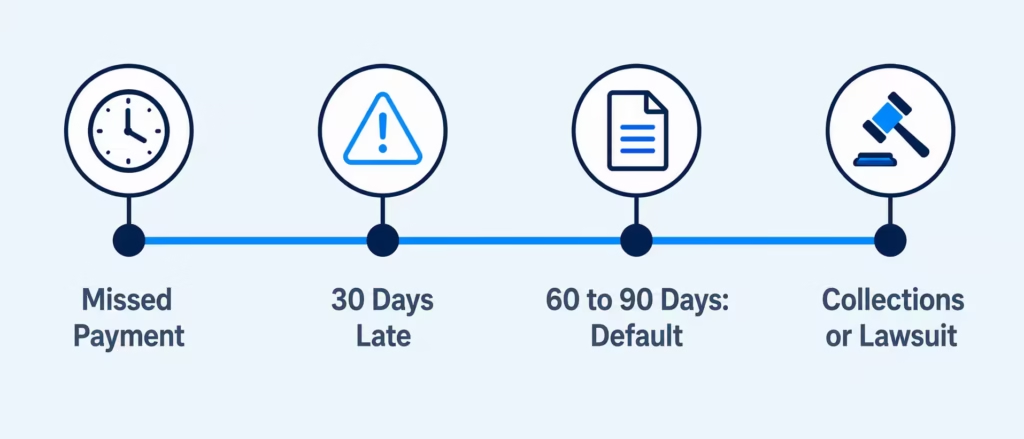
Let’s walk through what actually happens if the card bill can’t be paid, since this is the risk sitting behind that personal guarantee.
First comes the missed payment. Most issuers charge a late fee, which can be $29 to $40. Your APR may also jump to a “penalty APR,” often around 29%. If the missed payment goes 30 days past due, most issuers will report it, sometimes to business bureaus, sometimes to personal bureaus.
At around 60 to 90 days late, the account slides toward default. The issuer may freeze the card, close the account, and demand the full balance at once. This is called “acceleration.”
Once the account is in default, the issuer typically hands it to their internal collections team or sells the debt to a third-party collections agency. They can call, email, and mail you. They can also file a lawsuit.
This is where the personal guarantee becomes very real. If a judge sides with the issuer, they can pursue your personal assets to satisfy the debt. Your state’s laws may allow for wage garnishment, bank account levies, and sometimes liens on personal property.
The difference between an unlimited guarantee and a limited guarantee shows up here. With a limited guarantee, the issuer can only come after you up to the capped amount, and the rest becomes uncollected business debt. With an unlimited guarantee, they can pursue the full balance, plus interest, plus legal fees.
Bankruptcy can discharge this debt in many cases, but it comes with its own long-term costs. The most important takeaway: the personal guarantee turns “business debt” into “personal debt” the moment the business can’t pay.
Should You Get a Business Credit Card?
You’ve now seen the mechanics, the risks, and the trade-offs. The last step is a simple self-check.
A business card likely makes sense for you if:
- You’re already using a personal card for business purchases, and it’s making bookkeeping messy.
- You have a steady flow of business expenses, even a small one, and you want the rewards on that spend.
- You want to start building a credit profile in the business’s name for future loans or vendor accounts.
- Your personal credit is in decent shape (around 670 or higher).
- You’ve read the personal guarantee section, and you’re comfortable with the risk.
It may be too early if:
- Your business has no consistent revenue yet, or the amounts are very small.
- The idea of a personal guarantee makes you deeply uncomfortable given your current savings and safety net.
- You’re already carrying high-interest debt on other cards and would likely revolve a balance here too.
- Your personal credit score is currently under 600, and you’re actively repairing it.
Being eligible does not mean you should apply today. Plenty of small business owners wait a year or two while they build revenue, watch their spending patterns, and grow their credit score. That’s a fine choice.
Is the convenience, rewards, and chance to build credit worth the risk of signing a personal guarantee in your name? Only you can answer that. But now you can answer it with your eyes open.
📌 Did You Know: You can often discharge business credit card debt through bankruptcy. However, this can harm your business and personal credit for years. So, it should be a last resort.
Frequently Asked Questions (FAQs)
What is a business credit card?
A business credit card is a revolving line of credit issued for business purchases only. You get a spending limit, can carry a balance, and pay interest on what isn’t paid off each month, similar to a personal card.
What qualifies you for a business credit card?
Sole proprietors, freelancers, LLCs, and corporations can all qualify, often using just an SSN with no formal business required. Issuers mainly look at your personal credit score, along with estimated revenue and time in business.
Can an LLC get a business credit card?
Yes, LLCs can apply using their EIN, though most issuers still request the owner’s SSN for a personal credit check. Almost every LLC owner will also be asked to sign a personal guarantee for the debt.
Is it hard for a new LLC to get a credit card?
Not usually. Many issuers approve brand-new businesses with little or no revenue history, treating “less than 1 year” as a normal answer. Personal credit score, typically 670 or higher, matters more than business age.
Do I need an EIN to apply for a business credit card?
No, sole proprietors can apply with just their SSN, and no EIN is required. Getting an EIN is free and may help with better terms later, but it isn’t necessary for approval.
What are the downsides of using a business credit card?
Business cards aren’t protected by the Credit CARD Act of 2009, so issuers can raise rates with little notice and apply payments however they choose. Most also require a personal guarantee, making you personally liable if the business can’t pay.
Do business credit cards hurt your credit score?
Applying causes a small hard inquiry drop, usually 5 to 10 points, that fades within a few months. Most major banks don’t report on-time payments to personal bureaus, but a serious default can drop your score 50 to 100 points and stay for up to seven years.
What’s the difference between a credit card and a business credit card?
Personal cards report monthly to consumer bureaus like Experian and Equifax, while business cards usually report to business bureaus like Dun & Bradstreet. Business cards also typically carry higher credit limits and rewards tailored to spending like ads and shipping.
Is it smart to get a business credit card?
It can be, if you have steady business spending, decent personal credit around 670 or higher, and you’re comfortable with the risk of a personal guarantee. It may be too early if your revenue is inconsistent or you’re already carrying high-interest debt elsewhere.
What happens if I don’t pay my business credit card bill?
A missed payment brings a late fee and often a penalty APR near 29%. At 60 to 90 days late, the account can default, and under a personal guarantee, the issuer can pursue your personal assets, including wages or bank accounts, for the full balance.
Wrapping Up
We’ve covered what a business credit card really is, how the billing and rewards work, who qualifies, and what issuers actually check. We’ve also unpacked the personal guarantee, the missing CARD Act protections, and the honest impact on your personal credit and assets if things go wrong.
The best choice for new owners is to wait. They should ensure their business spending is steady, their personal credit is good, and the personal guarantee seems like a manageable risk. Then apply with clear eyes.
If you know a freelancer or new founder who’s about to apply for their first business credit card, share this guide with them. It could save them from signing something they didn’t fully understand.