
I know the shock of logging in and seeing “Account Closed” next to your Chase card. One minute your card works, and the next it’s declined at the checkout counter. Most people don’t get a clear reason, which makes it worse.
You start wondering if your credit score is ruined, if your points are gone, and whether your other Chase accounts are next. This guide breaks down why did Chase closed my credit card, what it means for your money, and the exact steps to take right now.
The short answer: Chase closes cards mostly for inactivity, risk changes, missed payments, fraud flags, too many new cards, or rewards misuse, and most closures are final.
We’ll cover each trigger, how to find out the real reason from Chase, if you can reopen it, what happens to your points, and how to safeguard your credit score.
Key Takeaways
This guide explains why Chase closes credit card accounts, covering the six most common triggers, how to request the exact closure reason, what happens to Ultimate Rewards points, and the immediate steps to protect your credit score.
Core Facts:
- Chase most often closes accounts due to inactivity of about 12 months or more, a sharp credit score drop, suspected fraud, missed or late payments, too many recent card applications, or rewards program misuse.
- Under the Equal Credit Opportunity Act, cardholders can request the specific closure reason within 60 days of the notice by calling the reconsideration line.
- Ultimate Rewards points tied to a closed card are usually forfeited, though a window of around 30 days may apply if the closure was not for cause; fraud or misuse closures can forfeit points the same day.
- Chase’s unwritten 5/24 rule generally denies new card applications if five or more cards from any bank were opened in the last 24 months.
- A closed account can raise credit utilization immediately, for example moving a ratio from 10 percent to 20 percent, which can lower a FICO score by 20 to 40 points or more.
- Closed accounts in good standing stay on a credit report for about 10 years, while accounts closed due to late payments fall off after seven years.
Best for:
- People who received an unexpected Chase account closure notice and want to identify the specific cause.
- Cardholders trying to save Ultimate Rewards points before a forfeiture deadline.
- Anyone planning to reapply for a Chase card after a prior closure and wanting to understand approval odds.
Common Reasons Chase Closes a Credit Card Account
Chase doesn’t close accounts on a whim. Every closure ties back to a risk rule, a policy trigger, or a behavior flag. The tricky part is that causes often overlap. You might get closed for inactivity, and a recent credit score drop at the same time. Chase groups these signals together in its risk-based reviews, so one issue can make another look worse.
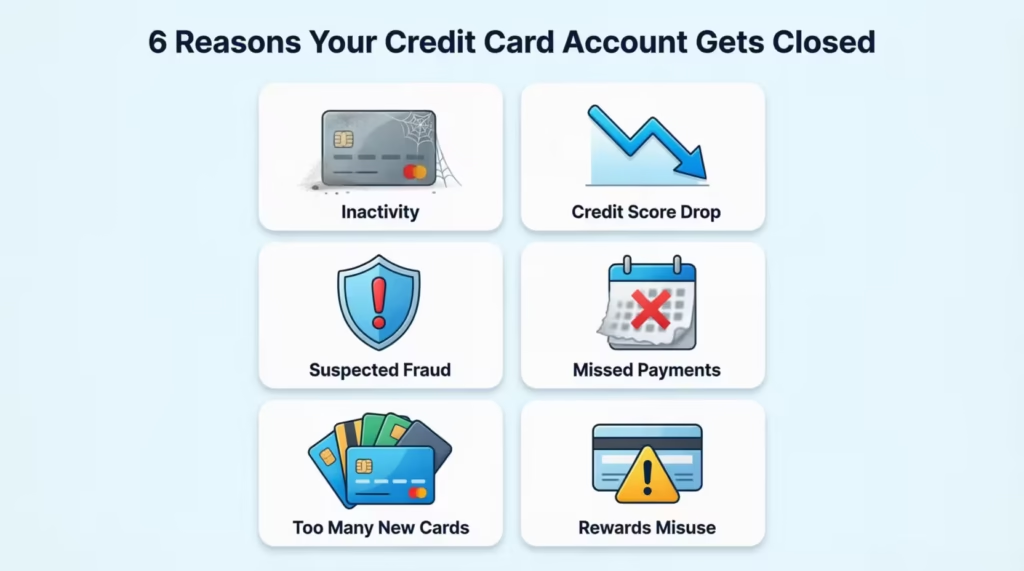
Here are the most common reasons a Chase card gets shut down without warning.
Account Inactivity
If you don’t use a Chase card for about 12 months or more, Chase can close it. Card issuers pay fees to keep an open line of credit on their books. If you never swipe, they lose money on that account.
Chase often sends a notice first, but not always. Small “keep alive” charges, like a $5 streaming bill on autopay, are usually enough to prevent this kind of unexpected account activity shutdown. This is one of the easiest closures to avoid.
A Significant Drop in Your Credit Score
Chase doesn’t only check your credit when you apply. They run soft pulls on current cardholders too. If your FICO score drops sharply, say from 760 down to 640, Chase may see you as a higher risk.
A big new loan, a maxed-out card at another bank, or a new collection can all trigger this review. When the risk looks too high, Chase can lower your limit or close the account. You often get an account closure letter in the mail a few days later.
Suspected Fraud or Suspicious Activity
Chase watches for spending that doesn’t match your normal pattern. A sudden $4,200 charge in another country, ten small test charges in one hour, or a login from a new device can all raise a fraud flag. Sometimes Chase freezes the card first and closes it later if they can’t confirm it was really you. If you travel a lot or shop overseas, this trigger is more common than you’d think.
Missed or Late Payments
One late payment usually gets you a fee, not a closure. But a pattern of 30, 60, or 90-day late payments tells Chase you can’t keep up. If you also owe more than your limit or bounce a payment, closure risk climbs fast.
Chase may also close a card if a payment gets returned for insufficient funds more than once. Late payments hurt more than just the closed account, since they stay on your credit report for up to seven years.
Too Many Recent Card Applications
Chase uses an unwritten rule known as 5/24. If you’ve opened five or more credit cards from any bank in the last 24 months, Chase often denies new applications.
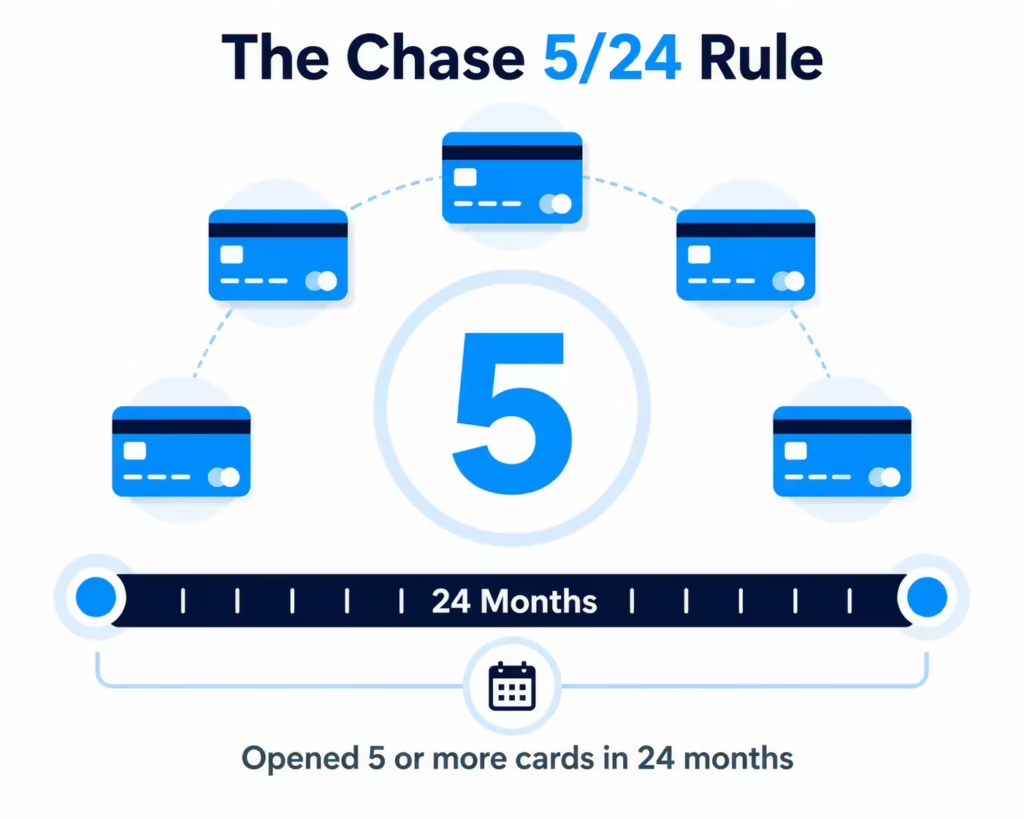
If you’re already a cardholder and you go on a card-opening spree, Chase can view you as a rewards chaser and close your account. Signing up for many cards in a short window also tanks your average account age and shows up as risky behavior.
Program Misuse (Rewards or Offer Abuse)
Chase runs targeted offers, welcome bonuses, and Chase Offers cash-back deals. If Chase thinks you’re gaming the system, they can close you fast.
Common triggers are:
- Buying gift cards for a sign-up bonus.
- Running purchases through your business for cash back.
- Using tricks to activate the same Chase Offer twice.
These closures are often permanent and can affect your whole Chase relationship.
⚠️ Mistake to Avoid: Don’t try to “manufacture spend” to hit a bonus by cycling money through gift cards or payment apps. Chase’s fraud team spots these patterns quickly, and the account closure that follows is almost always final.
Why Is My Chase Credit Card Account Closed? How to Get the Exact Reason
Chase is legally required to tell you why they closed your account, but the first letter is often vague. Under the Equal Credit Opportunity Act, you have the right to request the specific reason within 60 days of the notice, as explained by the Consumer Financial Protection Bureau.
To get the real answer, call the number on the back of your closed card or dial Chase customer service at 1-800-432-3117. Ask for the “credit card reconsideration line” or the “backdoor” recon team. Use this simple script:
“Hi, my account ending in [last four digits] was closed on [date].
I received a letter, but the reason wasn’t clear. Can you tell me the specific factor that triggered the closure and whether it’s tied to my account behavior, my credit report, or a bank-wide review?”
Stay calm and polite. If the first agent won’t share details, thank them and call back. Different agents give different levels of detail. Take notes on the date, agent name, and reason. You’ll need this if you plan to appeal or reapply later.
Can You Get a Closed Chase Credit Card Account Reopened?
Most Chase closures are permanent. Once the account is shut, Chase treats it as final in the system. Reopening can happen in certain cases. This usually occurs when the closure was based on incorrect information.
Examples include a mix-up in identity or a fraud alert on a legitimate purchase that you can prove is yours. In those cases, Chase’s fraud or reconsideration team can restore the account without a new application.
For most other closures, you’ll need to apply for a brand new card. That means a hard credit inquiry, a fresh account number, and a new credit line. Your old account age won’t come back either, which can lower your average account age on your credit report.
If the closure was due to missed payments, misuse, or a bank-wide risk exit, reopening is almost never granted. Chase may also add your name to an internal “do not do business” list, which blocks future applications too.
Applying for a New Chase Card After a Closure
If you want to try again, wait at least 6 to 12 months. Pay down other balances so your utilization stays under 30%. Make sure you’re under the 5/24 limit, since Chase enforces this on almost all popular cards.
Check your credit report at AnnualCreditReport.com first, so you know what Chase will see. If your closure was for cause, like misuse, expect a denial. If it was for inactivity or a soft trigger, your odds are much better after some clean months of payment history.
What Happens to Your Chase Ultimate Rewards Points When Your Card Is Closed
This is where many people lose the most money. When Chase closes your card, your Chase Ultimate Rewards points tied to that card are usually forfeited right away. You typically have a very short window, often around 30 days if the closure wasn’t for cause, to redeem or transfer them. If the closure was for suspected fraud, misuse, or a policy breach, Chase can wipe the points the same day with no grace period.
To protect your balance, act fast. If you have another Chase card that earns Ultimate Rewards, like a Chase Freedom or Sapphire card, you can move points to that card. Do this before the closure locks you out.
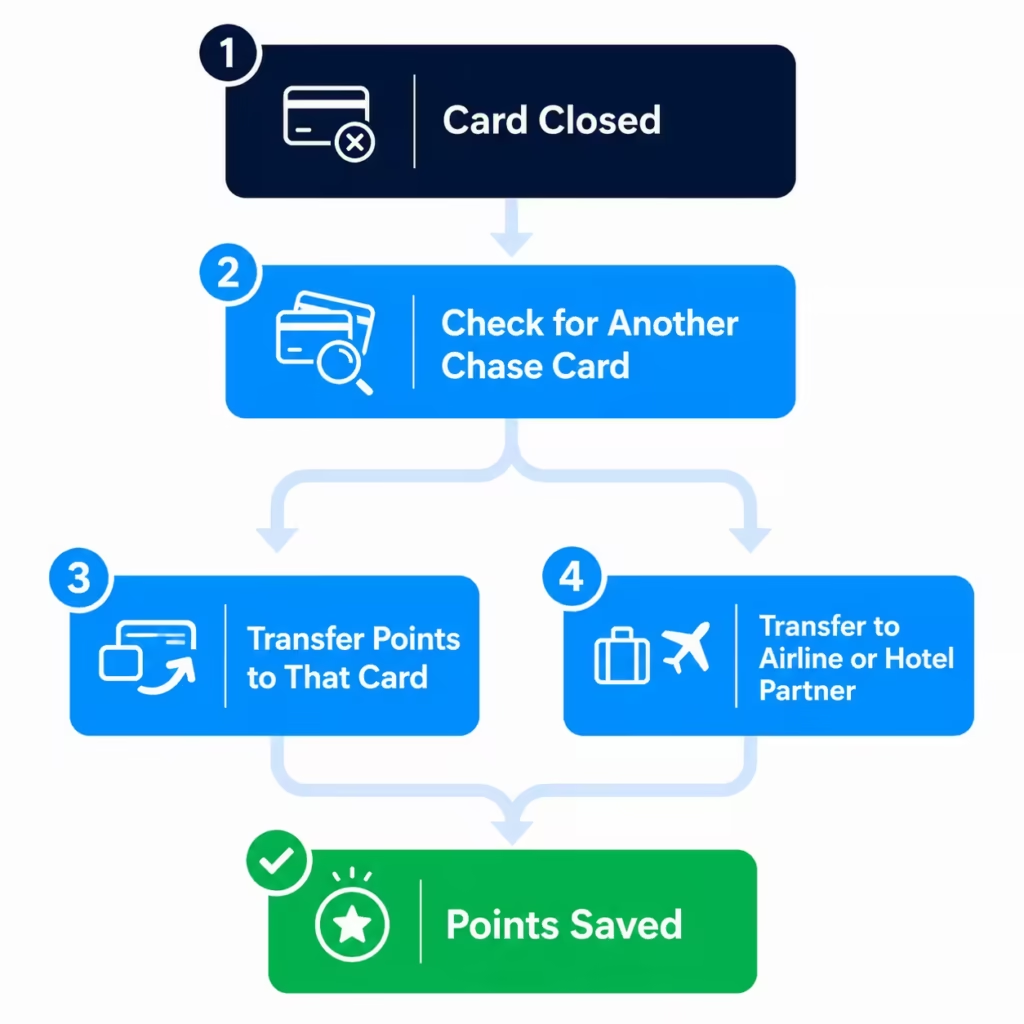
If you don’t have another eligible card, transfer points to an airline or hotel partner like United, Hyatt, or Southwest right away. Once transferred, those miles or points sit safely with the partner program, not with Chase.
💡 Pro Tip: If you think a closure might happen, act fast. A freeze, sudden limit drop, or security review can signal trouble. Transfer your Ultimate Rewards points to a hotel or airline partner that same day. Once points leave Chase’s system, no closure can claw them back.
Cash back earned on non-Sapphire cards is often paid out as a statement credit or check if your balance is zero, but this isn’t guaranteed. Check your account terms and ask Chase directly during your call.
Will a Chase-Initiated Closure Hurt Your Credit Score?
Yes, but the damage depends on how you used the card. A Chase closure can hit your score in two main ways: your credit utilization ratio and your average account age.
Here’s the math. Say you have three cards with total limits of $30,000 and a balance of $3,000. Your utilization is 10%, which is healthy. Chase closes a card with a $15,000 limit. Now your total limit is $15,000, but your balance is still $3,000. Your utilization jumps to 20%. That alone can drop your FICO score by 20 to 40 points, sometimes more.
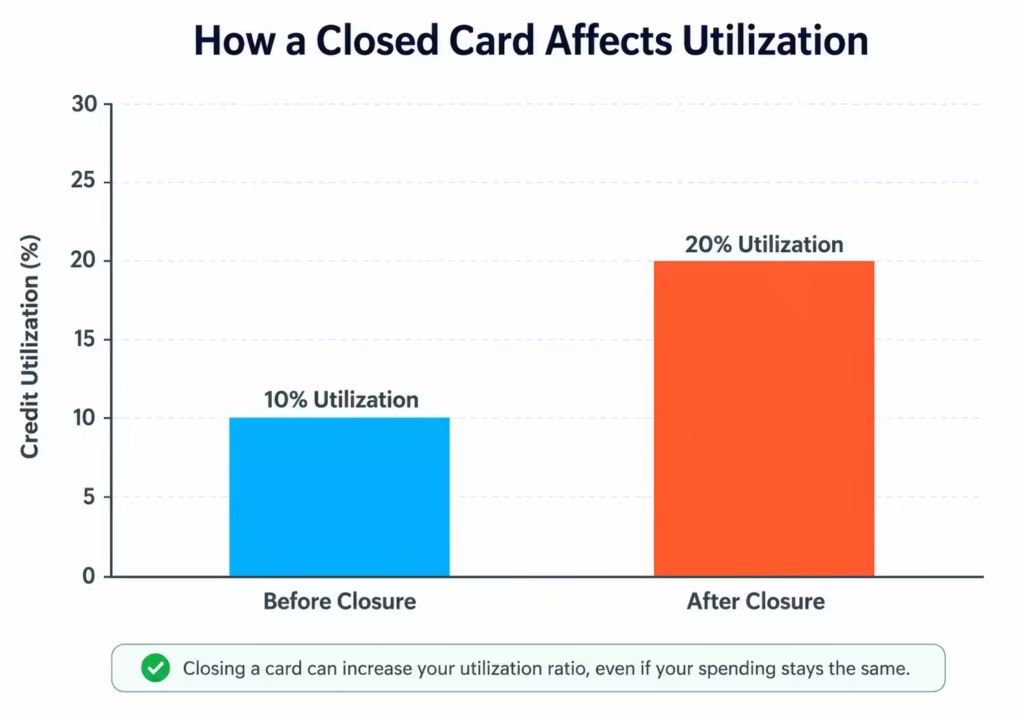
The second hit comes later. Closed accounts in good standing stay on your report for about 10 years. Once they fall off, your average account age drops, which is another factor in your credit score drop. Closed accounts with late payments fall off after seven years and hurt more in the meantime.
To soften the blow, pay down balances on your other cards fast. Even a $500 payment on another card can move your utilization back into safe territory.
Does a Closed Chase Card Affect Your Other Chase Accounts?
It depends on the reason. If Chase closed one card for a single, narrow trigger like inactivity, your other Chase accounts are usually safe. Checking, savings, mortgage, and other credit cards keep working as if nothing happened.
But if the closure was tied to a bank-wide risk review, fraud, or misuse, you’re at risk of a full relationship exit. In these cases, people often report seeing “Chase closed all my credit cards” in online forums the same week. Chase can shut down every card, freeze your checking account, and give you 10 to 60 days to move your money.
Warning signs your other accounts may follow:
- Multiple cards frozen at once
- A written notice referring to “your relationship with Chase” instead of one account
- A branch or phone agent unable to open new products for you
- A denied application soon after the first closure
If you see any of these signs, pull cash from your Chase checking, redirect direct deposits, and cancel autopay tied to Chase accounts right away. Move your emergency fund to another bank before the freeze arrives.
What to Do Immediately After Chase Closes Your Credit Card
The first 72 hours matter most. Fast action can save your points, protect your credit, and keep bills flowing. If you’re wondering “why is my Chase credit card not working” at the store or online, first confirm it’s truly closed by logging into the Chase app or calling the number on the back of the card.
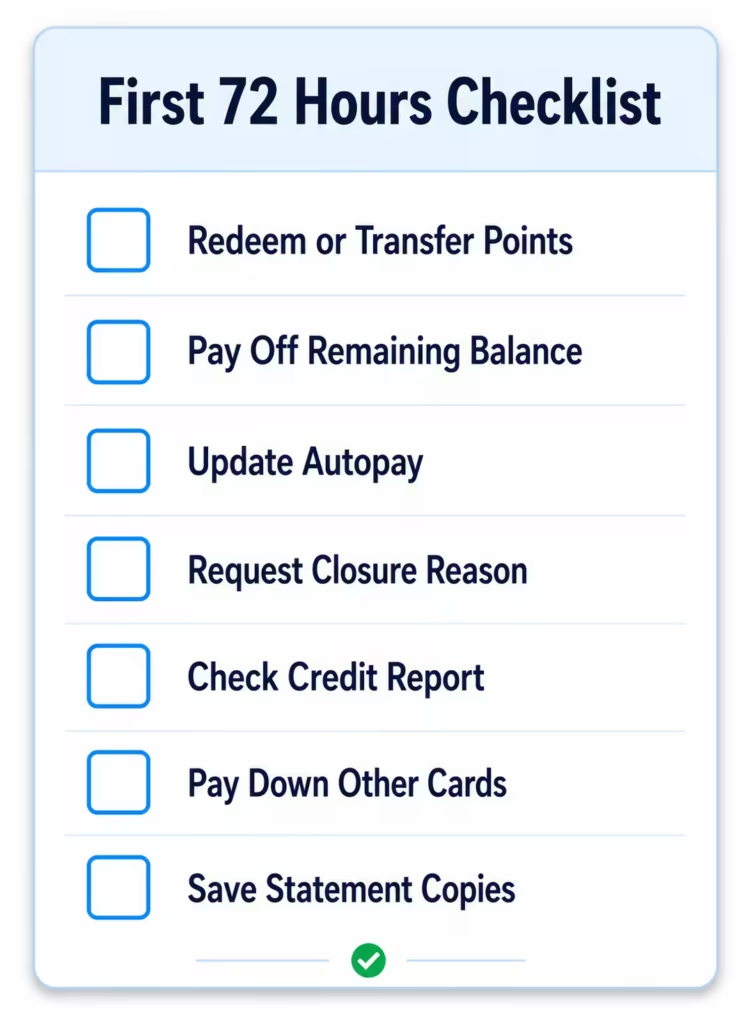
Then take these steps in order:
- Redeem or transfer your Ultimate Rewards points the same day you learn about the closure. Move points to another Chase card, an airline partner, or a hotel partner. Don’t wait.
- Pay off any remaining balance. A closed card still needs to be paid. Interest keeps building until the balance hits zero. Set up a final payment from your bank.
- Update autopay and subscriptions. Netflix, gym memberships, insurance, and utility bills often run on your closed card. Switch each one to a working card to avoid missed payments.
- Ask Chase for the closure reason in writing. Federal rules give you 60 days to request this. Keep the letter for your records.
- Check your credit report at all three bureaus. Make sure the closure shows as “closed by creditor” and not “closed by consumer” or “charge-off.”
- Pay down other cards to lower your utilization ratio and cushion your credit score.
- Save any statement copies you might need for taxes, disputes, or a future application.
Don’t apply for a new card in a panic. A fresh hard inquiry right after a closure looks bad to other lenders and won’t fix your score.
How to Avoid Getting Your Chase Credit Card Closed in the Future
Most closures can be prevented with a few simple habits. If Chase already closed your card once, these steps also help you protect any remaining accounts.
Use each card at least once every three months. A small charge, like a coffee or a streaming bill, keeps the account active and avoids an inactivity closure. Set a reminder on your phone so no card goes cold. Autopay a tiny recurring charge if you can, so it happens without thinking.
Pay on time, every time. Even one 30-day late payment can put a target on your account. Turn on autopay for at least the minimum due. Keep your utilization under 30% on each card and under 10% overall for the best score protection.
Don’t chase too many sign-up bonuses at once. Stay under the 5/24 limit. Space out new card applications by at least three months. Avoid buying gift cards or using payment apps to hit spending bonuses, which is one of the fastest ways to get flagged.
Keep your contact info current. If Chase can’t reach you about a fraud review or a policy question, they may close first and ask questions later. Update your address, phone, and email in the Chase app any time they change.
Watch your credit report every quarter. A sudden score drop, a new collection, or a mystery account can prompt Chase to run a review. Catching problems early gives you time to fix them before Chase notices.
If you sense a Chase closed my credit card suddenly situation brewing, call in and ask if there’s a review pending. A calm, proactive conversation can sometimes stop a closure before it happens.
📌 Did You Know: Chase reviews cardholder credit reports on a rolling basis, often every 3 to 6 months, not just when you apply. A quiet credit report is one of the best ways to stay off their review radar.
Frequently Asked Questions (FAQs)
Will Chase reopen a closed credit card account?
Reopening is rare. Chase may restore an account only if the closure was based on a mistake, like identity confusion or a fraud flag on a purchase you can prove was yours.
Can a permanently closed credit card be reopened?
No, most permanent closures are final in Chase’s system. You’ll need to apply for a brand new card with a fresh account number and a new hard inquiry.
Should I pay off a closed credit card account?
Yes, a closed card still requires payment. Interest keeps accruing until you pay off the balance, so set up a final payment right away.
Will Chase close a credit card if not used?
Yes, Chase can close a card after about 12 months of inactivity. A small recurring charge, like a $5 streaming subscription, is usually enough to keep the account active.
How long does a closed credit card stay on your credit report?
A closed account in good standing stays on your report for about 10 years. Accounts closed with late payments fall off after seven years.
Is it bad if Chase closes your account?
It can hurt your credit score by raising your utilization ratio and eventually shortening your average account age. A closure from a $15,000 limit card can drop your FICO score by 20 to 40 points or more.
Why did Chase close my account without any apparent reason?
Common hidden triggers include a sharp credit score drop, a fraud flag from unusual spending, or a bank-wide risk review. Calling the reconsideration line and asking directly is the fastest way to get a specific reason.
How long does Chase give you before they close your account?
Chase typically sends a notice first, especially for inactivity, but not always. For fraud or risk-based closures, the account can be frozen or shut down with no warning.
I paid off my credit card, but they closed my account. What should I do?
Redeem or transfer any Ultimate Rewards points immediately, since they’re often forfeited or given only a short window, like 30 days. Then check your credit report to confirm it shows as “closed by creditor.”
How many times can you apply for a Chase credit card?
Chase’s 5/24 rule generally blocks approval if you’ve opened five or more cards from any bank in the last 24 months. Waiting 6 to 12 months after a closure and staying under this limit improves your odds.
Wrapping Up
A Chase card closure feels sudden, but it almost always ties back to inactivity, risk changes, late payments, fraud flags, too many new cards, or rewards misuse.
To improve your credit score, try these steps:
- Redeem your Ultimate Rewards points today.
- Pay off your balance.
- Update your autopay settings.
- Lower your utilization on other cards.
Do this before applying for anything new. Knowing the trigger gives you a real plan, not panic.
If you know a friend or family member juggling Chase cards, share this guide. It could save their points, their score, and hours of stress.