
Your tracking says “delivered,” but your porch is empty. It’s a sinking feeling. If you’re asking “does Chase cover stolen packages,” you’re probably worried about two things: getting your money back and missing some hidden deadline to file.
The short answer is yes. Chase purchase protection treats a package stolen after delivery as theft, so you can file a claim for the loss.
Keep reading for your exact card’s coverage limit, the deadlines that matter, the documents to gather, and a simple step-by-step claim process you can start today.
Key Takeaways
This guide explains whether Chase covers stolen packages, including which cards qualify, exact coverage limits per card, filing deadlines, required documents, and the step-by-step claims process.
Core Facts:
- Chase purchase protection treats a package stolen after delivery as theft, and all Chase credit cards include this benefit.
- Coverage applies only to new purchases made within 120 days of the theft, or 90 days for New York residents.
- Sapphire Preferred and Freedom cards cover theft up to $500 per item, while Sapphire Reserve covers up to $10,000 per claim.
- All Chase purchase protection claims share a combined $50,000 cap per account across all claims filed.
- Cardholders must notify the Benefit Administrator within 90 days of the theft and submit all required documents within 120 days.
- Required documents include an itemized receipt, card statement, proof of delivery, a police report, and any available photo or video evidence.
Best for:
- Chase cardholders whose tracking shows “delivered” but the package was never received at their address.
- Readers who need to confirm their specific card’s coverage limit before filing a purchase protection claim.
- Anyone preparing to file a claim who needs the exact document checklist and deadline windows.
Does Chase Purchase Protection Cover Stolen Packages?
Yes. A stolen package is generally covered because Chase’s benefit language protects new purchases against theft, damage, and what’s called “involuntary and accidental parting.” Porch piracy falls squarely into the theft category. It’s not a gray area.
You’re far from alone in this. Data published by Security.org shows package thieves stole about $8.2 billion worth of online orders in a single year, with the average stolen package worth around $222. In that report’s October 2025 survey of 3,307 adults, 9 million people had a package stolen in just the prior three months.
But coverage is not automatic. Three things decide whether your Chase purchase protection stolen package claim pays out:
- Your card. Every Chase card includes the benefit, but dollar limits vary by card.
- The item. It must be an eligible new purchase, and some categories are excluded.
- Your timing. Strict notification and documentation deadlines apply.
Find your specific card and situation in the sections below.
Theft vs. “Involuntary and Accidental Parting”
Chase’s policy language uses three terms, and each one is simple in plain English:
- Theft means someone took your item without permission. A stranger grabbing a box off your porch is theft.
- Damage means the item was accidentally broken, like a laptop that arrives fine but gets dropped a week later.
- Involuntary and accidental parting means you know where you left the item, but you can’t get it back. Chase’s own example is a purchase left behind at a vacation spot.
A package stolen from your doorstep fits the first term. Chase package theft protection covers porch piracy. This applies if the item was bought within 120 days. For New York residents, the timeframe is 90 days.
Which Chase Cards Include Purchase Protection
Here’s good news: Chase confirms that all of its credit cards include this benefit, across the Sapphire, Freedom, and Ink business card families. What changes from card to card is the dollar amount. The table below shows the published limits for the major card families.
| Card | Limit per item or claim | Account cap | Coverage window |
|---|---|---|---|
| Chase Sapphire Preferred | $500 | $50,000 | 120 days |
| Chase Sapphire Reserve | $10,000 | $50,000 per year | 120 days |
| Chase Freedom Unlimited | $500 | $50,000 | 120 days |
| Chase Freedom Flex | $500 | $50,000 | 120 days |
| Chase Freedom Rise | $500 | $50,000 | 120 days |
| Ink Business cards (Preferred, Unlimited, Cash, Premier) | $10,000 | $50,000 per year | 120 days |
Two details matter here. First, the coverage limit per item caps what any single stolen package can pay out, no matter what you paid. Second, the $50,000 account cap applies across all your claims, not per purchase. Your card’s Guide to Benefits is the final word on exact terms, since limits can change over time.
📌 Did You Know: New York residents get a shorter coverage window. For them, purchase protection covers only 90 days from the purchase date instead of 120.
Does Chase Sapphire Cover Stolen Packages?
Yes. Both Sapphire cards include purchase protection, but they pay out very differently.
The Chase Sapphire Preferred covers theft up to $500 per item, with a $50,000 account cap. The Chase Sapphire Reserve covers up to $10,000 per claim, with a $50,000 yearly cap. Both protect purchases for 120 days from the purchase date.
What does that mean in real life? The average stolen package is worth about $222, so both cards can cover a typical loss in full. The gap shows up on big orders. Say a $1,200 laptop gets stolen off your porch. Sapphire Preferred would reimburse up to $500. Sapphire Reserve could cover the whole $1,200.
So if you’re asking, does Chase Sapphire Reserve cover stolen items, or does Chase Sapphire Preferred cover stolen packages, the answer is yes to both. The only question is how much.
Does Chase Freedom Cover Stolen Packages?
Yes. The Chase Freedom Unlimited, Freedom Flex, and Freedom Rise cards all include purchase protection. Each covers eligible new purchases against damage or theft for 120 days from the purchase date, up to $500 per item and $50,000 per account.
One thing worth clearing up: the Freedom Flex also comes with cell phone protection. That’s a totally separate benefit with its own rules, and it doesn’t change how package theft claims work. Your stolen package claim runs through standard purchase protection either way.
The practical takeaway is simple. If your stolen order cost $500 or less, a Freedom card can likely make you whole, as long as you file on time with the right documents.
Package Marked “Delivered” But You Never Received It – Does That Count?
Yes, and this is the scenario that brings most people here. A carrier’s “delivered” scan does not give Chase a reason to deny your claim. If the item was dropped at your address and then taken, it’s still treated as theft.
Here’s the key concept. Chase’s exclusions include items lost while under a common carrier’s control, like the Postal Service, an airline, or a delivery company. That exclusion covers packages lost or misdelivered in transit. Once the box reaches your address, the carrier’s control ends. Anything that happens after that point is your loss to claim, not the carrier’s.
Sarah, a nurse in Tampa, learned this firsthand. Her doorbell camera caught a stranger walking off with a $210 order just 12 minutes after the courier’s delivery photo was taken. Because the package had reached her address, her claim was handled as theft, not a shipping problem.
One honest limit: if tracking never showed delivery at all, that’s a carrier issue. Take it up with the seller or shipping company first, since purchase protection doesn’t cover items lost in transit.
What’s Excluded From Chase Purchase Protection
Knowing the exclusions saves you from filing a claim that was never going to pay. Based on Chase’s published guidance, these common categories aren’t covered:
- Used or pre-owned items
- Antiques and collectibles
- Animals and living plants
- Motor vehicles, boats, aircraft, and their parts or accessories
- Computer software
- Items bought for resale, professional, or commercial use
- Medical equipment
- Perishables and consumables, like cosmetics, perfume, and rechargeable batteries
- Cash, traveler’s checks, tickets, and credit or debit cards
- Items still in a common carrier’s care
Value caps matter too. If your stolen item costs more than your coverage limit per item, you’ll only be reimbursed up to that cap. The Sapphire Preferred cardholder with the stolen $1,200 laptop gets $500, not $1,200.
Your card’s Guide to Benefits carries the complete, current exclusion list. When in doubt, check it before you file.
Chase Travel Insurance vs. Purchase Protection for Stolen Items
These two benefits get mixed up all the time, so let’s separate them clearly.
Chase travel insurance covers your trips. Think canceled flights, interrupted travel, and luggage that disappears while you’re on the road. If your suitcase is stolen from an airport carousel, that’s a travel benefit claim.
Purchase protection covers everyday purchases, including things you buy online. A package stolen from your porch is a purchase protection claim, full stop. So does Chase travel insurance cover stolen items at home? No. That benefit only kicks in for covered travel situations.
Filing under the wrong benefit wastes time. For a stolen delivery, go straight to purchase protection.
How Long You Have to File a Stolen Package Claim
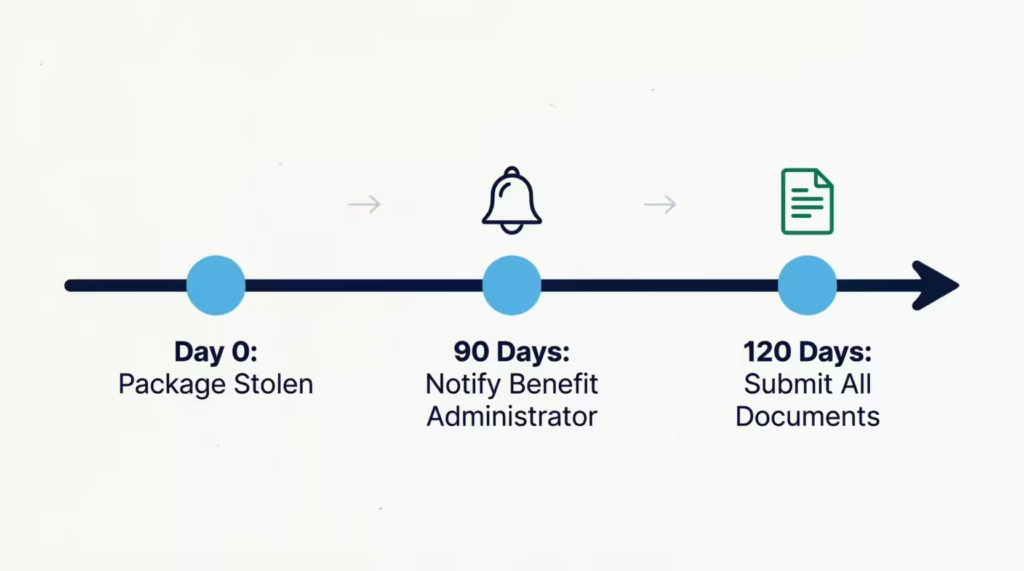
Two clocks start ticking the day your package is stolen.
- 90 days to notify. You must tell the Benefit Administrator about the theft within 90 days of the incident.
- 120 days to document. All requested paperwork must be submitted within 120 days of the theft.
There’s also the coverage window itself: the item must have been purchased within 120 days of the theft (90 days in New York).
Don’t wait on any of this. Start the process the same week you discover the loss, even if you’re still gathering documents.
⚠️ Mistake to Avoid: Don’t wait for the retailer or carrier to respond before notifying the Benefit Administrator. The 90-day clock doesn’t pause while you wait on hold with customer service.
What You’ll Need to File a Stolen Package Claim
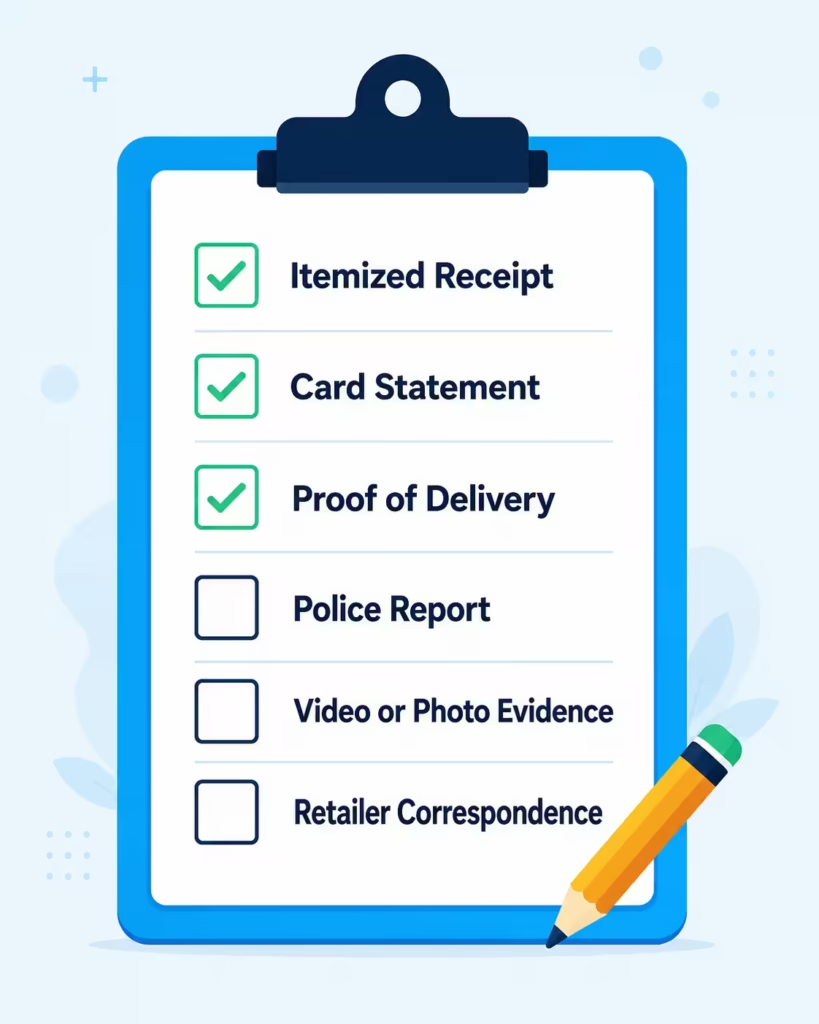
Gather everything on this checklist before you start. Missing documents are one of the top reasons claims get denied.
- Itemized receipt or order confirmation showing what you bought and what you paid
- Card statement proving the purchase went on your Chase card
- Proof of delivery, meaning the tracking page showing “delivered” plus the courier’s delivery photo if one exists
- Police report for the theft, filed within 48 hours of discovering the loss, or as soon as possible after
- Video or photo evidence, like doorbell camera footage
- Retailer and carrier correspondence, including any emails or claim numbers from contacting them
About the police report: for theft claims, expect the Benefit Administrator to ask for one. Most city police departments let you file online in about 15 minutes for a non-emergency property theft. It’s a small step that protects your whole claim.
💡 Pro Tip: Screenshot the tracking page and the courier’s delivery photo right away. Tracking pages can update or expire, and that “delivered” proof is central to your claim.
How to File a Chase Stolen Package Claim (Step-by-Step)
Filing is easier than most people expect. Chase handles claims through a third-party benefit administrator, and the whole process starts online or by phone.
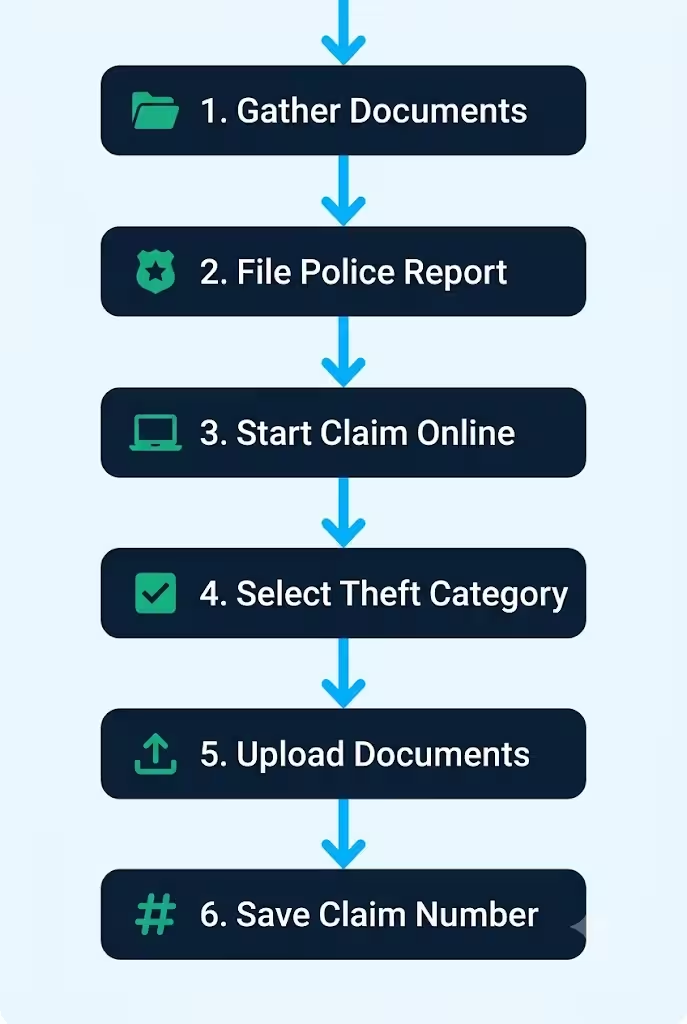
- Gather your documents. Use the checklist above so you’re not hunting for files mid-claim.
- File a police report. Do this within 48 hours if you can, since it’s required for theft claims.
- Start your claim. Personal cardholders file at chasecardbenefits.com. Business cardholders file at cardbenefitservices.com. You can also call the number on the back of your card to be connected to the Benefit Administrator.
- Choose Purchase Protection and select “theft.” Fill out the claim form with the purchase date, price, and what happened.
- Upload your documents. Receipt, statement, tracking proof, police report, and any footage.
- Save your claim number. You’ll need it for every follow-up.
Should You Contact the Retailer or Carrier First?
Purchase protection is typically secondary coverage, meaning it’s there to catch what other parties won’t fix. A logical order looks like this:
- Contact the retailer first. Many will reship or refund a stolen order with a quick chat, no claim needed.
- Try the carrier next. UPS, FedEx, and USPS all have their own claim processes.
- File with Chase for whatever’s left. Filing elsewhere first does not disqualify your card claim.
One hard rule: never collect reimbursement for the same loss twice. Submitting duplicate claims to multiple parties for one package can be treated as fraud. Keep a record of each conversation. The Benefit Administrator might ask what the retailer or carrier offered you.
What Happens After You Submit Your Claim
The Benefit Administrator reviews your claim form and documents, then reaches out by email or mail. Simple claims are often decided within a few weeks, though a request for extra documents can add time.
Three outcomes are possible: the administrator can choose to repair, replace, or reimburse the item, up to your card’s limit. For a stolen package, repair and replacement rarely apply, so expect reimbursement based on the price on your receipt. If anything’s missing from your file, respond fast. Slow replies are an easy way to stall or sink an otherwise valid claim.
What to Do If Your Chase Stolen Package Claim Is Denied
A denial isn’t always the end. First, figure out why it happened. The most common reasons are:
- The Benefit Administrator wasn’t notified within 90 days
- Documents arrived after the 120-day window
- The item sits in an excluded category
- No police report was filed for a theft claim
- The purchase fell outside the coverage window
If the problem can be fixed, call the Benefit Administrator. Ask for the denial reason in writing. Then, send the missing piece with a request for reconsideration. Claims do get reversed when documentation gaps are closed.
If the denial sticks, you still have options. Ask the retailer for a goodwill refund; many will help a loyal customer once. If the package was never truly delivered to your address, push the carrier’s claim process.
And if you have renters or homeowners insurance, package theft is often covered there too. Just check the deductible first, since a $500 deductible makes a $222 claim pointless.
Frequently Asked Questions (FAQs)
Does Chase refund stolen packages?
Yes. Chase purchase protection treats a package stolen after delivery as theft, so you can file a claim and get reimbursed up to your card’s coverage limit.
Does Chase Bank have purchase protection?
Yes, every Chase credit card has purchase protection. It covers theft and damage on new purchases for 120 days from the purchase date. For New York residents, it lasts 90 days.
What is the Chase Sapphire Preferred package protection?
The Chase Sapphire Preferred covers stolen items up to $500 per item, with a $50,000 cap per account, for purchases made within 120 days of the theft.
Do credit cards cover stolen packages?
Many credit cards, including all Chase cards, include purchase protection that covers packages stolen after delivery, though limits and terms vary by issuer and card.
Are stolen packages insured?
You might cover stolen packages with your credit card’s purchase protection. Sometimes, renters or homeowners insurance can help too. But remember, a high deductible might make a small claim not worth it.
Which credit cards offer theft protection?
All Chase credit cards provide theft protection through purchase protection. This includes the Sapphire, Freedom, and Ink business card families. Coverage limits vary from $500 to $10,000 for each item.
Does Chase Sapphire have liability protection?
Chase Sapphire Reserve covers theft up to $10,000 per claim and has a yearly cap of $50,000. In contrast, Sapphire Preferred covers up to $500 per item, with the same account cap.
What happens if my Chase stolen package claim gets denied?
You can ask for the denial reason in writing. Also, submit any missing documents for reconsideration. Claims often get reversed when documentation gaps are filled.
Should I contact the retailer before filing a Chase claim?
Yes, contact the retailer first. Many will reship or refund a stolen order. Then, reach out to the carrier. Filing elsewhere won’t disqualify your Chase claim.
The Bottom Line
So, does Chase cover stolen packages? Yes, through purchase protection that treats porch theft as a covered theft event. Know your card’s limit. Notify the Benefit Administrator within 90 days. Send complete documents within 120 days.
For most readers, the best step is to file the police report today. Then, start the claim this week. The notification deadline is easy to miss.
If you know someone who shops online with a Chase card, share this with them before their next delivery goes missing. It could save them hundreds of dollars.