
I know how annoying it feels to sit at your laptop, ready to book a flight, and suddenly wonder if you should also pay that $78 TSA PreCheck fee out of pocket. Maybe you already have a Chase card in your wallet, and you’re not sure if it will quietly cover the cost or leave you stuck with the bill. That’s exactly why so many travelers ask, “does a Chase credit card cover TSA PreCheck?” before they apply or renew.
Some Chase cards do cover it, but only a few, and only when you pay the fee with that specific card.
In this guide, we’ll walk you through which Chase cards qualify, how to trigger the credit, how often it renews, and what to do if your card doesn’t include this perk. You’ll get clear, step-by-step help.
Key Takeaways
This guide explains which Chase credit cards reimburse the TSA PreCheck fee, including qualifying cards, the claim process, renewal timing, and how the credit compares to Global Entry.
Core Facts:
- Only select Chase cards cover TSA PreCheck, including the Sapphire Reserve, Sapphire Preferred (added June 2026), Ink Business Preferred, and the Southwest Rapid Rewards Performance Business Card.
- The Sapphire Reserve and Sapphire Preferred offer up to $120 in statement credit every four years toward TSA PreCheck, Global Entry, or NEXUS.
- Chase Freedom, Freedom Unlimited, Freedom Flex, and most personal Southwest cards do not offer any TSA PreCheck reimbursement.
- The fee must be paid with the exact qualifying card through an official government site; third-party sites or other payment methods block the credit.
- The statement credit posts automatically within one to two billing cycles, with no form or phone call required.
- The four-year renewal window starts from the date of the last reimbursed payment, not the calendar year or card anniversary.
Best for:
- Chase cardholders deciding which card to use before applying for TSA PreCheck or Global Entry.
- Travelers who already hold a Sapphire Reserve or Sapphire Preferred and want to confirm how to trigger the credit correctly.
- Readers comparing TSA PreCheck against Global Entry to decide which program offers better value with their Chase credit.
Which Chase Credit Cards Cover TSA PreCheck
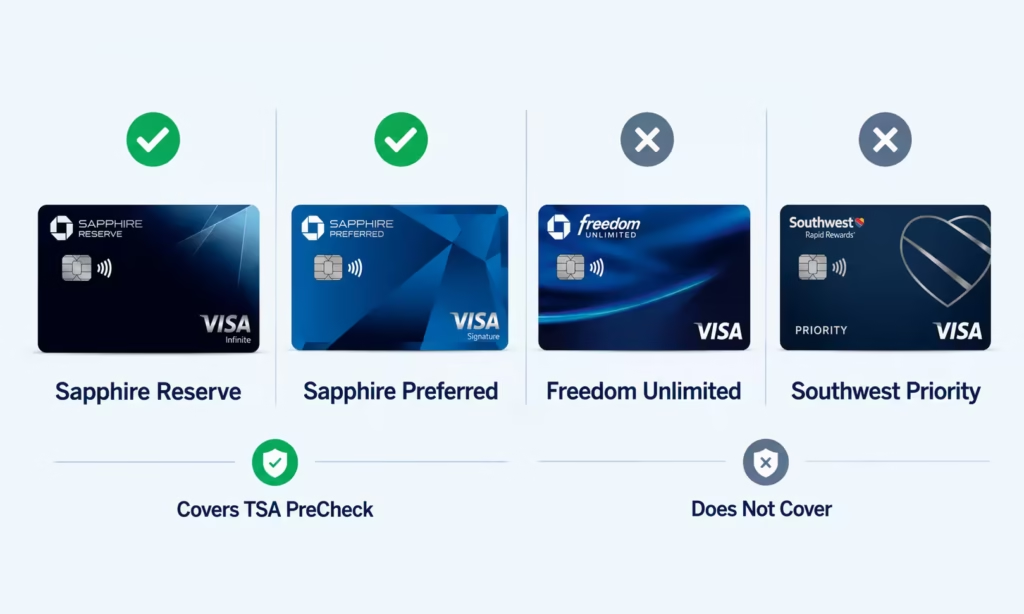
Not every Chase card gives you this travel perk. In fact, most Chase cards do not cover the TSA PreCheck fee at all. The benefit is tied to a small group of travel and premium cards. If you pay the $78 TSA PreCheck fee with the wrong Chase card, you’ll simply pay the fee like anyone else, with no reimbursement.
Here is the short version. The Chase Sapphire Reserve and Chase Sapphire Preferred both offer this credit. Some Chase business travel cards also include it. The Freedom family and most personal Southwest cards do not.
The typical credit amount ranges from $100 to $120 per cardholder every four years. That covers TSA PreCheck ($78) with room to spare, and it also covers the full $120 Global Entry fee for cards that include that benefit.
| Chase Card | Covers TSA PreCheck? | Credit Amount |
|---|---|---|
| Chase Sapphire Reserve | Yes | Up to $120 every 4 years |
| Chase Sapphire Preferred | Yes (added June 2026) | Up to $120 every 4 years |
| Ink Business Preferred | Yes | Up to $100 every 4 years |
| Southwest Rapid Rewards Performance Business | Yes | Up to $100 every 4 years |
| Chase Freedom / Freedom Unlimited | No | None |
| Chase Freedom Flex | No | None |
| Southwest personal cards | No | None |
| United Explorer (basic) | Varies by card | Up to $100 on select cards |
Chase Sapphire Reserve
The Chase Sapphire Reserve is the flagship travel card for this benefit. It offers a statement credit of up to $120 every four years when you use the card to pay for Global Entry, TSA PreCheck, or NEXUS. You don’t need to call Chase or fill out a form. Pay the fee with your Reserve card, and the credit will post to your next statement or two.
Because the credit reaches $120, it fully wipes out either the $78 TSA PreCheck fee or the $120 Global Entry fee. Most Reserve cardholders choose Global Entry because it includes PreCheck by default. The card does carry a high annual fee, so this perk is best viewed as a nice bonus, not the main reason to hold the card.
💡 Pro Tip: If two people share travel plans, one can pay with a Sapphire Reserve while the other uses a different qualifying Chase card. That way, both applications can get reimbursed.
Chase Sapphire Preferred
Great news for Sapphire Preferred holders. As of June 2026, Chase added this benefit to the Preferred card. You now get up to $120 every four years toward Global Entry, TSA PreCheck, or NEXUS when you pay with your Preferred card.
This is a big shift. The Preferred has a lower annual fee than the Reserve. This update makes it one of the best mid-tier travel cards for this perk. The reimbursement works the same way. Pay the fee with your Sapphire Preferred, wait one or two billing cycles, and the credit shows up on your statement automatically.
Chase Freedom and Freedom Unlimited
If you carry a Chase Freedom, Freedom Unlimited, or Freedom Flex, the answer is simple. These cards do not cover TSA PreCheck. They are cash-back cards with no annual fee. They don’t offer travel perks, like statement credits for trusted traveler programs.
Paying the TSA PreCheck fee with a Freedom card is fine if you want to earn some cash back on the charge. But you won’t get the fee reimbursed. If TSA PreCheck reimbursement matters to you, you’ll need to look at Chase’s travel cards or apply the credit through a different issuer’s card.
Chase Southwest Cards
Southwest cardholders often get confused here. Chase issues several Southwest Rapid Rewards cards, and most of them do not include the TSA PreCheck credit. That includes the Southwest Plus, Premier, and Priority personal cards.
The one exception is the Southwest Rapid Rewards Performance Business Card. This business card includes a statement credit of up to $100 every four years for Global Entry or TSA PreCheck. If you have this card, pay the fee with it to get the reimbursement.
For personal Southwest cardholders, you’ll need to pay out of pocket or use a different qualifying card.
Chase Business Cards With This Credit
A few Chase business cards also offer the trusted traveler credit. The main ones to know are:
- Ink Business Preferred: Offers up to $100 in statement credit every four years for Global Entry, TSA PreCheck, or NEXUS.
- Southwest Rapid Rewards Performance Business: Same benefit, up to $100 every four years.
- IHG One Rewards Premier Business: Includes a Global Entry or TSA PreCheck credit for select cardholders.
These credits work the same way as the personal card credits. Pay the fee with the business card, and the reimbursement posts within one or two billing cycles.
How to Claim Your Chase TSA PreCheck Credit
The good news is you don’t need to jump through hoops. There is no form, no phone call, and no receipt to upload. The statement credit is fully automatic once you meet the conditions.
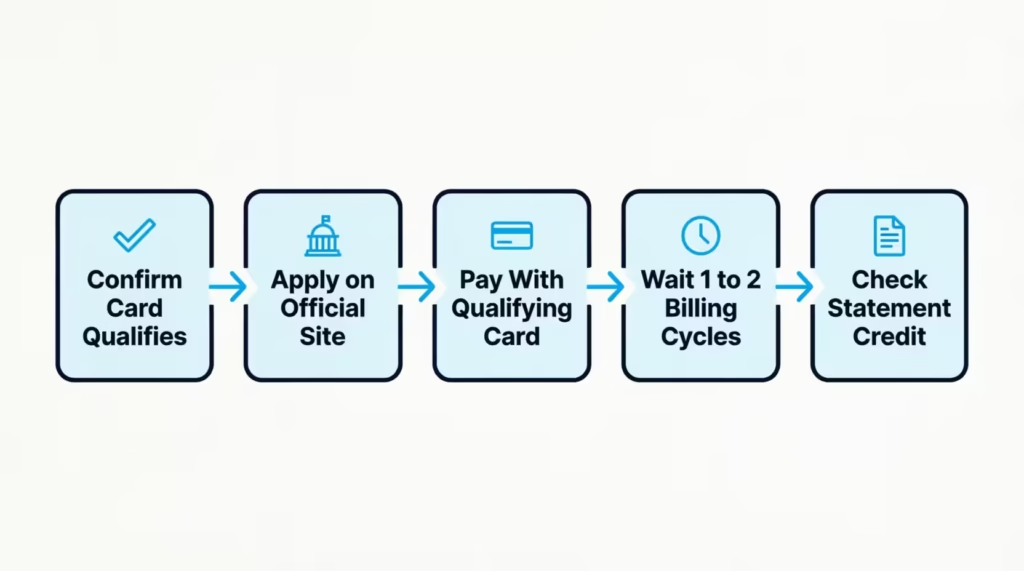
Follow these steps to make sure the credit posts correctly:
- Confirm your card qualifies. Check the list above or look at your card’s benefits page on the Chase site to confirm the credit is included.
- Apply through an official program. Go directly to the official TSA PreCheck site or the Global Entry site run by U.S. Customs and Border Protection. Do not use third-party sites, since those charges may not trigger the credit.
- Pay the application fee with your qualifying Chase card. This is the key step. The fee must be paid with the exact card that carries the benefit. If you pay with a debit card or a different credit card, no credit will post.
- Wait one to two billing cycles. The automatic statement credit usually shows up within 4 to 8 weeks after you pay. You’ll see it as a line item like “TSA PreCheck Fee Credit” or “Global Entry Credit.”
- Check your statement. If the credit hasn’t posted after two full billing cycles, call the number on the back of your Chase card and ask them to look into it.
The application fee reimbursement is the same whether you sign up for the first time or renew. Just remember that it counts toward your four-year window either way.
How Often the Chase TSA PreCheck Credit Renews
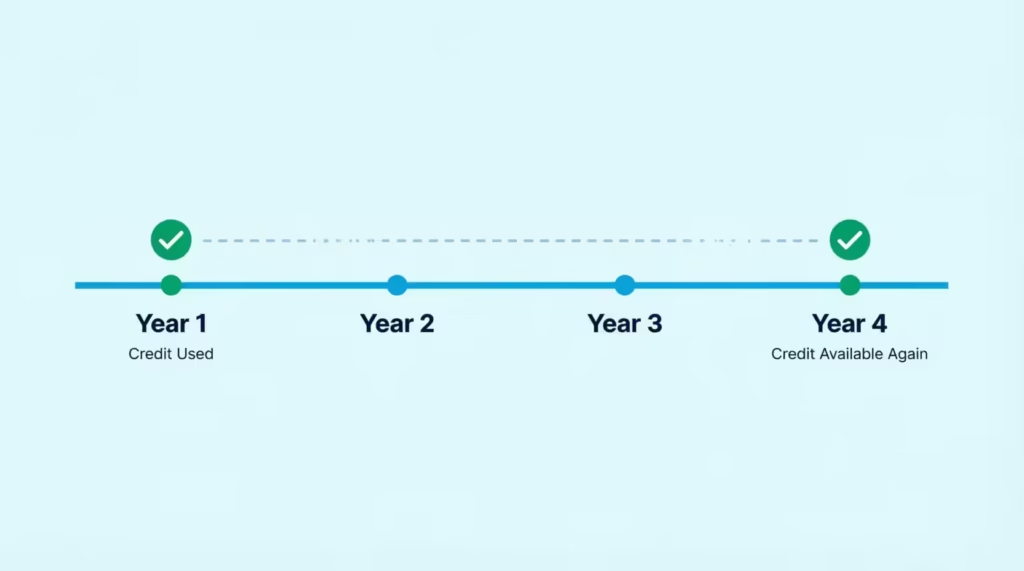
This is where many cardholders get tripped up. The credit does not renew every year. It renews once every four years per cardholder.
The clock starts the moment you use the credit. So if you pay for Global Entry in March 2026 and get reimbursed, your next credit won’t be available until March 2030. It’s tied to the date of your last covered payment, not the calendar year or your card anniversary.
TSA PreCheck and Global Entry memberships last five years. This four-year window means you can likely use the credit again when you renew. That’s how the program is designed to work.
📌 Did You Know: The four-year clock follows the cardholder, not the card. If you close your Chase card and open a new one two years later, you’ll need to wait for the rest of the four-year window before the credit posts again.
TSA PreCheck vs Global Entry: Which to Choose With Your Chase Credit
If your Chase card offers the credit, Global Entry is almost always the smarter choice. Here’s why.
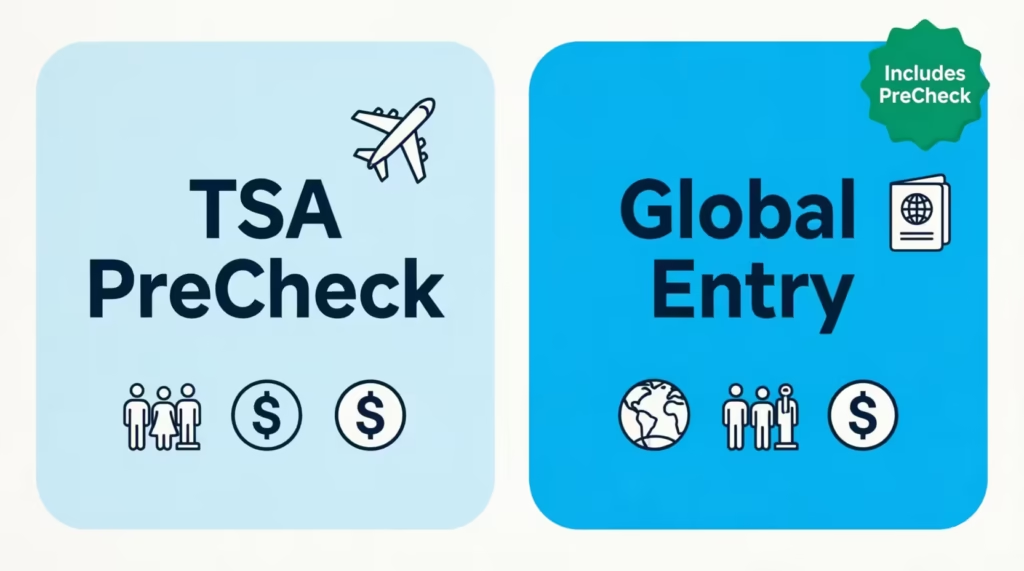
TSA PreCheck costs $78 and only helps with domestic security lines in the U.S. Global Entry costs $120 and includes:
- TSA PreCheck for free (all five years)
- Faster reentry to the U.S. from international trips
- Access to shorter passport control lines
- Available at major airports and land borders
Since your Chase statement credit reaches up to $120 on cards like the Sapphire Reserve and Sapphire Preferred, it covers the full Global Entry fee. You get more value for the same reimbursement.
The only time TSA PreCheck alone makes sense is if you never travel abroad and can’t pass the Global Entry background check. Otherwise, apply for Global Entry and enjoy both benefits for one credit.
Global Entry is a trusted traveler program run by U.S. Customs and Border Protection, and it works alongside TSA PreCheck for a smoother travel experience overall.
Can Authorized Users Use the Chase TSA PreCheck Credit
This is a common question, and the answer depends on the card. On most Chase cards, the statement credit is tied to the primary account, not to each user on the card.
Here’s the general rule: If an authorized user pays for TSA PreCheck or Global Entry with the card, the charge posts to the primary cardholder’s account. The credit then applies to the primary account too. That means the primary and the authorized user share one credit, not two.
If you and a family member both want reimbursement, you’ll usually need to hold two separate qualifying Chase cards. Some households handle this by having each adult carry their own Sapphire Reserve or Preferred card. This way, both can claim the authorized user benefit as a primary on their accounts.
Always check the current terms on Chase’s website since the rules can shift with card updates.
Is It Worth Upgrading a Chase Card Just for the TSA PreCheck Credit
Short answer: no. The credit alone is not enough reason to upgrade to an annual fee card.
Here’s the math. The Chase Sapphire Reserve has a high annual fee, and the Sapphire Preferred also has an annual fee. The TSA PreCheck credit is worth only $78 to $120 every four years, which averages out to about $20 to $30 per year in value.
If you have the Chase Sapphire Reserve or Chase Sapphire Preferred, that’s great. You might already enjoy travel points, purchase protection, or lounge access. The TSA PreCheck credit is a bonus. But upgrading just for this perk rarely pays off.
⚠️ Mistake to Avoid: Don’t switch to a high annual fee card just to save $78 on a one-time fee. The math rarely works unless you’ll use the card’s other benefits too.
Instead, think about the total value of the card. If the travel points, insurance, and other perks justify the fee, then great, treat the TSA PreCheck credit as extra value. If not, stick with your current card and pay the fee out of pocket.
What to Do If Your Chase Card Doesn’t Cover TSA PreCheck
If you’re holding a Chase Freedom or a personal Southwest card, don’t worry. You still have solid options.
First, you can pay the fee directly on the official TSA PreCheck enrollment page. It costs $78 and lasts five years, which works out to less than $16 a year. That’s a small price for skipping long security lines.
Second, check if you have another credit card that offers the application fee reimbursement. Many travel cards from other issuers include this credit. Examples are Capital One Venture, American Express Platinum, and some United and Delta cards. If you have one of those, pay with that card instead.
Third, consider whether it’s time to add a new travel card. If you fly a few times each year, consider the Chase Sapphire Preferred. Its lower annual fee makes it appealing. You’ll benefit from points, travel perks, and a new TSA PreCheck credit.
Common Mistakes That Cause the Credit Not to Post
Even when you do everything right, small errors can block the statement credit. Watch out for these common slip-ups:
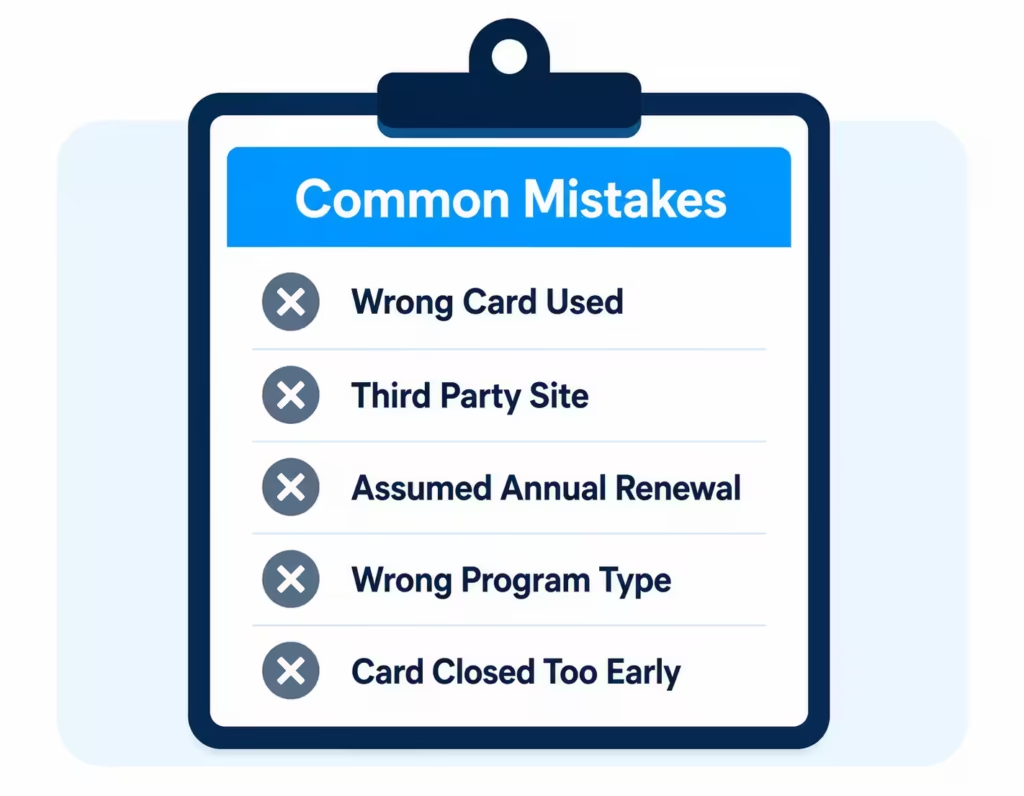
- Paying with the wrong card. The fee must be charged to the specific qualifying Chase card. Using a debit card, a Freedom card, or a spouse’s card blocks the credit.
- Booking through a third-party site. Some travel sites or brokers offer help with TSA PreCheck sign-up for an extra fee. Those charges usually don’t count. Always go through the official U.S. government sites.
- Assuming annual renewal. The credit renews every four years, not every year. If you try to use it within the four-year window, no credit will post.
- Misreading the terms. Some cardholders think the credit works on any airport program or expedited service. It only covers TSA PreCheck, Global Entry, and NEXUS.
- Not checking the card benefits page. Chase updates card perks over time. Confirm your card still offers the credit before you apply. The Sapphire Preferred, for example, only gained this benefit in June 2026.
- Closing the card before the credit posts. If you cancel the card in the same billing cycle as the payment, you may lose the credit entirely.
Avoiding these mistakes is easy once you know the rules. Always use the right Chase card. Apply through official channels. Give the credit one or two billing cycles to show up.
Frequently Asked Questions (FAQs)
Does Chase reimburse TSA PreCheck?
Yes, but only on select cards like the Sapphire Reserve and Sapphire Preferred. You must pay the fee with the qualifying card to get the statement credit.
Which Chase credit cards give free TSA PreCheck?
The Chase Sapphire Reserve, Chase Sapphire Preferred, and Ink Business Preferred all offer this credit. The Southwest Rapid Rewards Performance Business Card also qualifies, giving up to $100 every four years.
How do I get reimbursed for TSA PreCheck with Chase?
Pay the TSA PreCheck fee directly through the official TSA site using your qualifying Chase card. The statement credit posts automatically within one to two billing cycles, no form required.
What cards pay you back for TSA PreCheck?
Chase Sapphire Reserve and Sapphire Preferred both reimburse up to $120 every four years. Other issuers like Capital One Venture and American Express Platinum offer similar credits on their travel cards.
Which credit cards offer reimbursement for TSA PreCheck?
Chase’s Sapphire Reserve, Sapphire Preferred, and Ink Business Preferred all reimburse the fee. Capital One Venture and American Express Platinum are common alternatives outside the Chase lineup.
What is the downside of TSA PreCheck?
It only speeds up domestic security lines and does nothing for international reentry into the U.S. Global Entry costs a bit more at $120 but includes TSA PreCheck plus faster customs processing.
How to get TSA PreCheck fee waived?
There’s no true waiver, but you can get it fully reimbursed by paying with a qualifying Chase card like the Sapphire Reserve or Preferred. The $78 fee posts as a statement credit within a few weeks.
Is it worth upgrading a Chase card just for the TSA PreCheck credit?
No, the credit only averages $20 to $30 per year given the four-year renewal cycle. It’s only worth it if the card’s other perks like travel points or lounge access justify the annual fee.
Can authorized users use the Chase TSA PreCheck credit?
Usually not separately. The charge and credit both apply to the primary cardholder’s account, so an authorized user’s payment doesn’t earn a second credit.
How often does the Chase TSA PreCheck credit renew?
It renews once every four years per cardholder, not annually. The clock starts from the date of your last reimbursed payment, not your card anniversary.
The Bottom Line
To wrap it up, only a few Chase cards cover the TSA PreCheck fee. The Chase Sapphire Reserve, Chase Sapphire Preferred (starting June 2026), and some business cards like the Ink Business Preferred all provide this credit. Freedom cards and most personal Southwest cards do not. The credit posts automatically when you pay the fee with a qualifying card and renews every four years.
Based on the numbers, Global Entry is the better pick since the credit covers its full $120 cost and includes TSA PreCheck too.
If you know a friend or family member who travels a few times a year, share this guide with them. It could save them $78 or more the next time they renew their trusted traveler membership.