
I’ve been there too. You book a flight, life throws a wrench in your plans, and suddenly you’re staring at a nonrefundable ticket wondering if your credit card can save you. Many travelers assume every Chase card offers the same help, or mix up airline refunds with insurance perks. If you’re asking Does Chase cover flight cancellation, the answer depends on the specific card you hold.
Yes, some Chase cards include trip cancellation insurance that reimburses nonrefundable flight costs for covered reasons.
Below, we’ll break down which cards qualify, dollar limits, covered reasons, claim steps, and what to do if your card isn’t eligible.
Key Takeaways
This guide explains which Chase credit cards cover flight cancellation through trip cancellation insurance, including coverage limits, covered cancellation reasons, payment requirements, and the claim filing process with key deadlines.
Core Facts:
- Only the Chase Sapphire Reserve, Sapphire Preferred, and Ink Business Preferred include trip cancellation insurance; the Freedom Unlimited, Freedom Flex, and Freedom Rise do not offer this coverage.
- The Sapphire Reserve and Sapphire Preferred offer coverage up to $10,000 per person and $20,000 per trip, while the Ink Business Preferred covers up to $5,000 per person and $10,000 per trip.
- The nonrefundable trip cost must be charged to the eligible Chase card itself; paying with a different card, cash, or gift card makes the claim ineligible.
- Covered cancellation reasons include sudden illness or injury, death of the traveler or a family member, severe weather, jury duty, military orders, and home damage from fire or flood.
- Excluded reasons include a simple change of plans, work obligations, pre-existing medical conditions, normal pregnancy, fear of travel, and financial hardship.
- Claimants must notify Chase’s benefits administrator within 20 days of the cancellation event and submit full documentation within 90 days, with claims typically reviewed in 10 to 15 business days.
Best for:
- Cardholders deciding which Chase card to use when booking a nonrefundable flight or trip.
- Travelers who already canceled a trip for a covered reason and need to understand the claim filing process and deadlines.
- Anyone comparing Chase cards to determine whether upgrading to a Sapphire or Ink Business Preferred card is worthwhile for travel protection.
Trip Cancellation Insurance vs. a Canceled Flight: What Chase Actually Covers
Many people mix up two very different things. Knowing the difference can save you time, money, and stress.
A canceled flight is when the airline itself scraps the flight. Maybe there’s a storm, a mechanical issue, or a staffing problem. In this case, the airline is the one that owes you. You get a refund, a rebooking, or credit straight from the airline. Chase does not step in here because you have not lost money.
Trip cancellation insurance is different. This kicks in when you have to cancel your own trip for a reason outside your control. Think sudden illness, a family emergency, or jury duty. You booked the ticket, you paid for it, and now you cannot go. The airline may not refund you. That is where Chase’s trip cancellation insurance can help by paying back your nonrefundable costs.
Here’s the simple rule to remember:
- Airline cancels the flight: deal with the airline.
- You cancel the trip for a covered reason: file a claim with Chase.
Chase’s flight cancellation protection is not a refund program. It is an insurance benefit tied to certain cards. It only pays when you meet the rules, use the right card to book, and cancel for a reason the policy lists.
📌 Did You Know: Chase trip cancellation insurance is secondary in some cases. That means it pays only after any airline refund, travel credit, or other coverage kicks in first.
Which Chase Cards Offer Trip Cancellation Insurance
Not every Chase card comes with this perk. In fact, most do not. Coverage lives mainly on the premium travel cards and one small business card. Below is a clear look at which cards help and which do not.
Chase Sapphire Reserve and Sapphire Preferred
These two cards are the stars of Chase trip cancellation coverage. Both include trip cancellation and trip interruption insurance as a built-in benefit. You do not have to sign up or pay extra. The benefit is there the moment you charge a trip to the card.
- Chase Sapphire Reserve: Offers the strongest coverage in the Chase lineup. It also comes with trip delay, baggage delay, and primary rental car coverage.
- Chase Sapphire Preferred: Offers the same type of trip cancellation insurance but with lower dollar limits. It’s still a strong option for casual travelers who want peace of mind.
If travel is a big part of your life, one of these two cards is likely your best pick for built-in protection.
Chase Freedom Unlimited, Flex, and Rise
Here’s where many readers get surprised. The Chase Freedom Unlimited, Chase Freedom Flex, and Chase Freedom Rise do not offer trip cancellation insurance. These are cash-back cards, not travel cards. They give great rewards on everyday spending, but they do not include travel insurance benefits.
If you booked your flight with one of these cards and need to cancel, Chase will not step in. Your only options are the airline’s refund rules, your travel provider’s policy, or a separate travel insurance plan.
Ink Business Preferred
The Ink Business Preferred card is the only small business card from Chase. It includes trip cancellation and interruption insurance. Coverage is similar to the Sapphire Preferred. Business owners who travel for work often pick this card just for the built-in protection.
Other Chase business cards, like the Ink Business Cash or Ink Business Unlimited, do not include this benefit.
Coverage Limits: How Much Chase Will Reimburse
Coverage limits set how much money Chase will pay back if your claim is approved. These limits vary by card and by trip.
| Chase Card | Per-Person Limit | Per-Trip Limit |
|---|---|---|
| Chase Sapphire Reserve | Up to $10,000 | Up to $20,000 |
| Chase Sapphire Preferred | Up to $10,000 | Up to $20,000 |
| Ink Business Preferred | Up to $5,000 | Up to $10,000 |
| Chase Freedom family | Not covered | Not covered |
These caps apply to nonrefundable travel expenses only. That means the parts of your trip you paid for and cannot get back. Flights, hotels, tours, and cruise deposits often qualify. Refundable items do not.
Here’s a quick example. Sarah, a marketing manager at a Boston tech startup, booked a $2,400 flight to Tokyo on her Sapphire Preferred. She got sick two days before her trip and had to cancel. The airline offered only a $200 credit. Chase reviewed her claim and reimbursed the remaining $2,200 because her illness qualified as a covered reason.
Keep in mind:
- The limit is the maximum, not a guarantee. Chase pays only the amount you actually lost.
- If you used points, the reimbursement covers the cash value of the redemption rules.
- Taxes and fees paid on award flights may also count as nonrefundable costs.
What Counts as a Covered Reason for Cancellation
Chase trip cancellation insurance is strict about why you cancel. You cannot get a refund just because you changed your mind. The reason must be listed in the policy and must be out of your control.
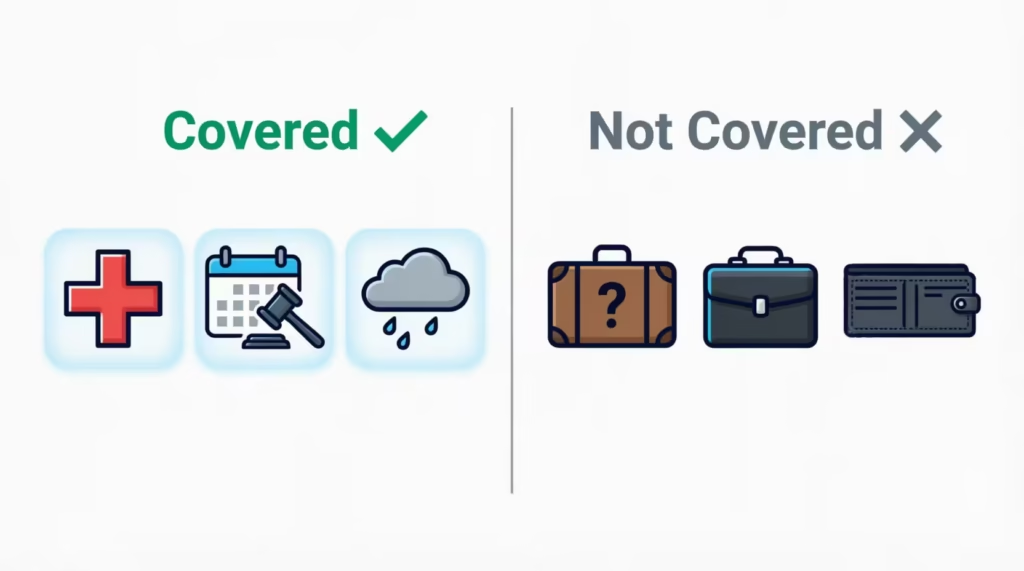
Common covered reasons include:
- Sudden illness or injury: You, a family member, or your travel companion becomes too sick to travel. A doctor’s note is usually required.
- Death: The death of you, a family member, or a travel companion.
- Severe weather: A storm, hurricane, or natural event that stops travel.
- Jury duty or court subpoena: You are legally required to stay.
- Military orders: You are called to active duty or your leave is canceled.
- Home damage: Your home becomes unlivable due to fire, flood, or vandalism.
- Terrorist action: A terrorist event at your destination within 30 days of your trip.
Each reason has fine print. For example, a mild cold likely will not qualify. The illness must be serious enough that a doctor advises you not to travel. Chase may ask for medical records or other proof.
What Chase Will NOT Cover
Just as important as what’s covered is what’s not. Many claims get denied because people assume the policy is broader than it is.
Chase will not cover flight cancellations for:
- Change of plans: You decided you no longer want to go.
- Work or business reasons: Your boss made you cancel, or a meeting popped up. Business obligations are excluded on personal cards.
- Pre-existing medical conditions: A condition that was already known and being treated before you booked, unless the policy states otherwise.
- Pregnancy: A normal pregnancy is not a covered reason. Complications may be, with medical proof.
- Fear of travel: Even during major world events, general fear or worry is not covered.
- Financial trouble: You cannot afford to go anymore.
- Traveling against medical advice: Booking a trip your doctor already told you not to take.
- Illegal acts: If the trip involves anything against the law.
- Missed connections due to your own delay: Sleeping in and missing your flight is not covered.
Reading the benefit guide for your specific card is the best way to see the full exclusion list.
The Payment Requirement: Why the Card You Booked With Matters
This is the rule people miss most often. To get Chase trip cancellation insurance, you must have paid for the trip with the eligible Chase card. It’s not enough to just own the card.
Here’s how the payment rule works:
- The full nonrefundable cost, or at least a big part of it, must be charged to the eligible Chase card.
- You can also use Chase Ultimate Rewards points through the Chase Travel portal. Points redemptions from an eligible card count as a qualifying payment.
- If you paid with a different card, cash, or a third-party gift card, the coverage does not apply.
Let’s say David, an operations manager at a Denver consulting firm, has both a Sapphire Preferred and a Freedom Unlimited. He books a $1,800 flight on his Freedom Unlimited by mistake.
When he needs to cancel due to illness, Chase denies the claim. Why? The Freedom Unlimited has no trip cancellation insurance. Had he used the Sapphire Preferred, his claim likely would have been approved.
The lesson is simple. Before every trip, double-check which card you’re using. It’s the easiest way to protect your money.
⚠️ Mistake to Avoid: Paying part of a trip with a non-eligible card. Some claims get reduced or denied because only a portion of the trip was charged to the qualifying Chase card.
Who Is Covered: Yourself, Family, and Travel Companions
Trip cancellation insurance does not stop at just you. It often extends to certain people who travel with you or are close to you. Knowing who’s covered helps you decide when to file.
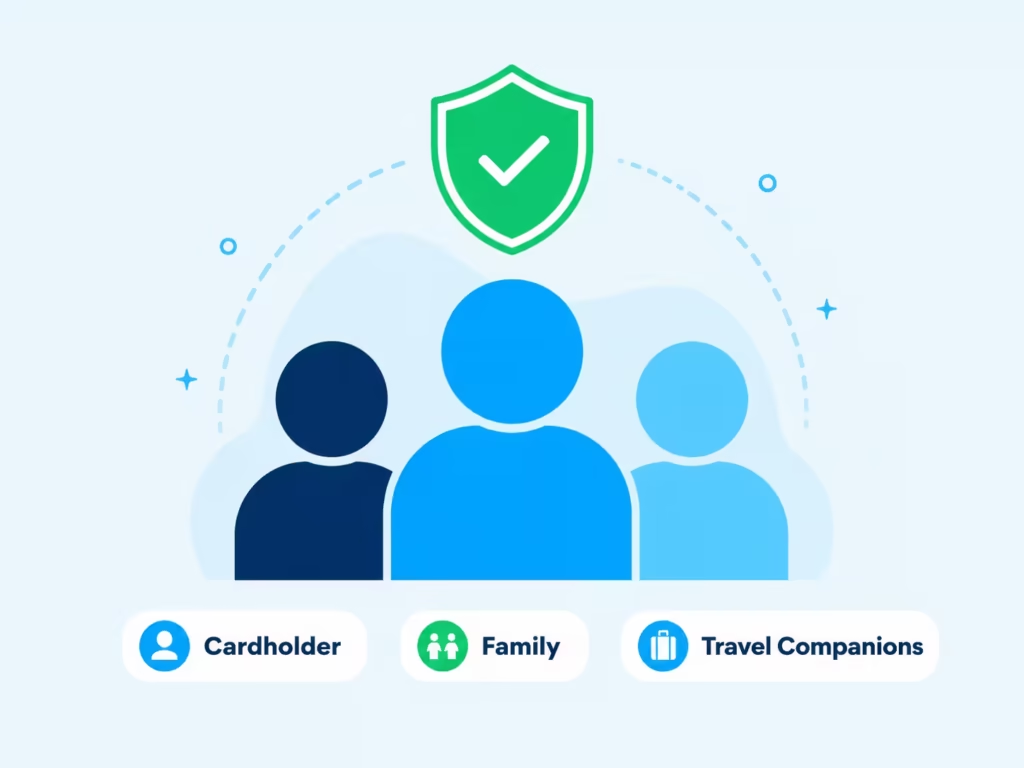
Chase generally covers:
- The cardholder: You, the person whose name is on the card.
- Immediate family: This usually means spouses, domestic partners, children, stepchildren, parents, siblings, grandparents, grandchildren, and in-laws.
- Travel companions: People traveling with you on the same trip, as long as their portion was also charged to the eligible Chase card.
For example, if your mother suddenly becomes seriously ill and you cannot go, that counts even if she was not traveling with you. That’s because she qualifies as immediate family.
If your travel companion is not a relative, their part of the trip still needs to be paid with the same Chase card to qualify for reimbursement. Coverage limits also apply per person, so read your card’s benefit guide for exact caps.
Trip Cancellation vs. Trip Interruption vs. Trip Delay
These three benefits sound alike but pay out in different ways. Mixing them up can lead to filing the wrong claim.
| Benefit | When It Applies | What It Covers |
|---|---|---|
| Trip Cancellation | Before your trip begins | Nonrefundable costs when you cannot start your trip |
| Trip Interruption | After your trip has started | Nonrefundable costs and extra costs to return home or continue |
| Trip Delay | When travel is delayed a set number of hours | Meals, hotel, and small essentials during the wait |
Here’s how to tell them apart:
- Trip Cancellation: You have not left home yet. Something happens that stops the trip from starting.
- Trip Interruption: You are already on the trip. Something forces you to cut it short or change plans.
- Trip Delay: Your flight is delayed for a covered reason. Chase pays for meals, a hotel room, toiletries, and other small needs during the wait.
For the Sapphire Reserve, trip delay kicks in after 6 hours or an overnight stay. For the Sapphire Preferred and Ink Business Preferred, the delay must last more than 12 hours or require an overnight stay. Payment caps and rules are listed in each card’s benefit guide.
How to File a Chase Trip Cancellation Claim
Filing a claim is easier than most people think, but it does have steps. Doing them in the right order helps you avoid delays.
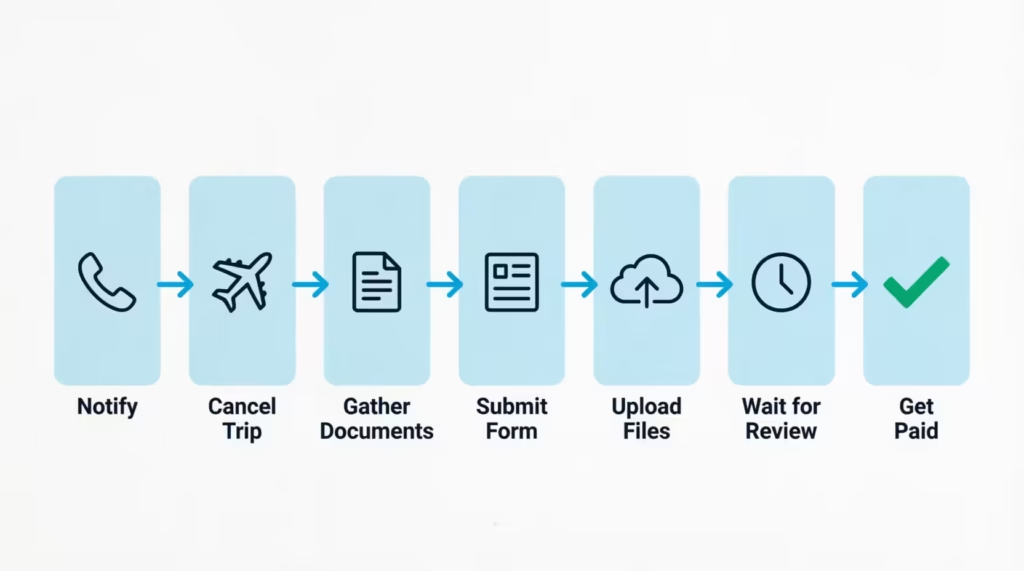
Follow these steps:
- Notify Chase’s benefits administrator right away: Call the number on the back of your card or visit eClaimsLine to start your claim. The benefits administrator handles all Chase travel insurance claims.
- Cancel your trip with the airline and travel providers: Get any refund you can first. Chase pays only for what you cannot recover.
- Gather your documents: You’ll need proof of the covered reason (doctor’s note, death certificate, court order), booking confirmations, receipts, and proof that you paid with the eligible Chase card.
- Fill out the claim form: The benefits administrator gives you a claim form. Complete every section fully.
- Submit your documents: Upload or mail everything by the deadline.
- Wait for review: Claims often take 10 to 15 business days once all documents are in. You may be asked for more info.
- Receive payment: If approved, Chase reimburses you by check or direct deposit.
Deadlines You Cannot Miss
Missing a deadline is the fastest way to lose a valid claim. Chase sets clear windows for both notice and paperwork.
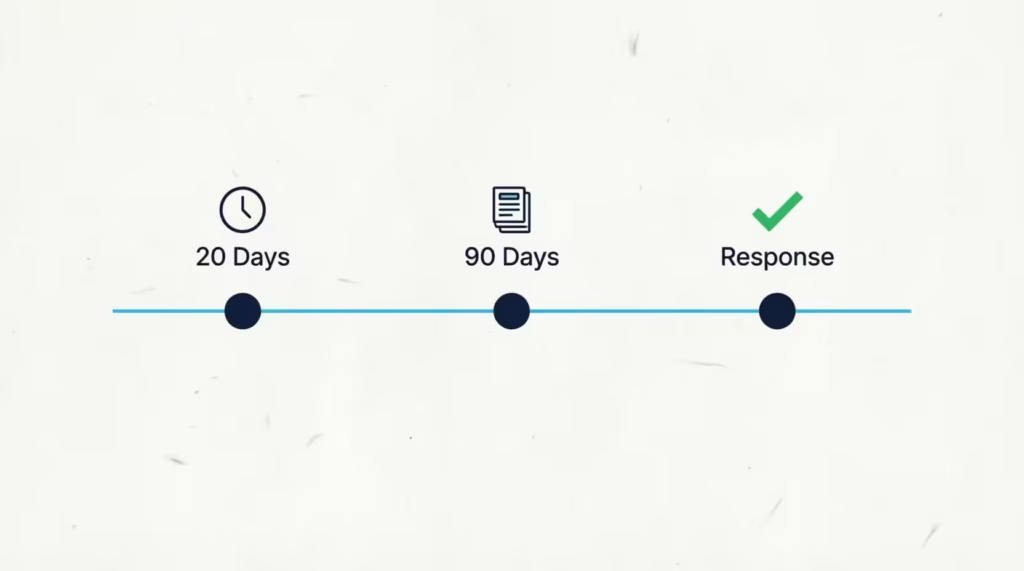
Keep these dates in mind:
- Initial notice: Report the claim within 20 days of the event that caused the cancellation. Do this even if you do not have all your documents yet.
- Full documentation: Send in all supporting papers within 90 days of the event. Some cards allow up to 180 days, but do not risk it. Aim for the earliest window.
- Response to requests: If Chase asks for more info, reply as soon as possible. Long delays can lead to denial.
Set a reminder the moment you know you need to cancel. A late claim is often a denied claim.
If Your Chase Card Doesn’t Cover Flight Cancellation
If your Chase card does not include this benefit, you still have options. Losing a nonrefundable ticket is not always the end of the story.
Try these steps in order:
- Check the airline’s refund rules first: Many airlines now offer 24-hour full refunds after booking. Some also allow free changes or credits, especially for basic economy exceptions or elite status holders.
- Look at your travel provider: If you booked through a site like Expedia, Priceline, or a travel agent, they may have their own cancellation policy or refund program.
- Ask about travel credit: Even if you cannot get cash back, you may get a voucher good for a future flight.
- File with a separate travel insurance policy: If you bought a standalone plan, use it. Standalone plans often cover more reasons than credit card insurance.
- Consider upgrading your card: If you travel often, moving to the Sapphire Preferred, Sapphire Reserve, or Ink Business Preferred gives you built-in trip cancellation insurance for future trips.
- Look at other travel cards: Some non-Chase cards, like certain American Express or Capital One travel cards, also include trip cancellation coverage.
Do not throw away your ticket. Even nonrefundable fares can often be turned into travel credit or partially recovered through other means.
Frequently Asked Questions (FAQs)
Does a Chase credit card cover flight cancellation?
Only certain Chase cards include this benefit. The Sapphire Reserve, Sapphire Preferred, and Ink Business Preferred provide trip cancellation insurance. However, the Freedom cards do not.
What are covered reasons for trip cancellation in Chase?
Covered reasons include sudden illness or injury, death of you or a family member, severe weather, jury duty, military orders, and home damage from fire or flood. A terrorist event at your destination within 30 days of travel also qualifies.
Do credit cards reimburse for cancelled flights?
Some premium travel credit cards will reimburse nonrefundable flight costs. But this only happens if you cancel for a covered reason and paid with an eligible card. A flight the airline itself cancels is handled by the airline, not the credit card.
Which credit cards have flight cancellation insurance?
Within the Chase lineup, the Sapphire Reserve, Sapphire Preferred, and Ink Business Preferred include trip cancellation insurance. The Sapphire Reserve offers the highest limits, up to $10,000 per person and $20,000 per trip.
Does Chase cover non-refundable flights?
Chase can reimburse you for nonrefundable flight costs. This applies if you cancel for a covered reason and used an eligible card, like the Sapphire Preferred or Reserve. Coverage caps out at $10,000 per person on those two cards.
Can I get a refund if I cancel my flight within 24 hours?
This depends on the airline’s own policy rather than Chase’s insurance. Many airlines offer a full refund within 24 hours of booking, separate from any credit card trip cancellation benefit.
Is Chase Travel insurance automatic?
Yes, on eligible cards, the trip cancellation benefit is automatic with no enrollment needed. You just need to charge the nonrefundable trip cost to the qualifying card, such as the Sapphire Reserve or Sapphire Preferred.
How do I know if my Chase credit card has travel insurance?
Check your card’s benefit guide, since coverage is not standard across the Chase lineup. Cards like Sapphire Reserve, Sapphire Preferred, and Ink Business Preferred have it. But Freedom Unlimited, Flex, and Rise do not.
What qualifies as trip cancellation?
Trip cancellation happens if you haven’t left home and something you can’t control stops your trip. This could be sudden illness or a family death. It’s different from trip interruption, which happens once you’re already traveling.
How do I file a Chase trip cancellation claim?
Report the claim to Chase’s benefits administrator within 20 days of the event. Then, gather proof, such as a doctor’s note, along with your booking and payment records. Full documentation is generally due within 90 days, and approved claims are usually processed in 10 to 15 business days.
Wrapping Up
Chase trip cancellation insurance is a powerful perk, but only on the right cards. The Sapphire Reserve, Sapphire Preferred, and Ink Business Preferred offer this protection, while the Freedom family does not.
The best way is to book with an eligible card. Always save your receipts. If something goes wrong, file within 20 days. Knowing the covered reasons, dollar caps, and claim steps means fewer surprises when life changes your plans.
If you know a friend or family member planning a trip soon, share this guide with them. It could save them hundreds or even thousands of dollars in nonrefundable costs.