
I know how heavy a growing Chase balance can feel, especially when the minimum payment is climbing, and your paycheck won’t stretch. Missed due dates, worried phone calls, and that quiet fear of a lawsuit can wear anyone down. If you’re searching for how to settle credit card debt with Chase, you’re not alone, and you do have real options short of bankruptcy.
Yes, Chase will often settle for less than the full balance, usually after the account becomes seriously past due.
I’ll walk you through timing, scripts, paperwork, tax traps, and the mistakes that quietly ruin a good deal.
Key Takeaways
This guide explains how to settle credit card debt with Chase, including delinquency timelines, realistic settlement percentages by stage, negotiation scripts, tax consequences, and credit score recovery.
Core Facts:
- Chase typically settles for 50% to 75% of the balance before charge-off, 35% to 55% after charge-off, and 20% to 40% if the debt is sold to a debt buyer.
- Chase performs a charge-off around 180 days past due, after which the account may move to a recovery department, collection agency, or debt buyer.
- The IRS treats forgiven debt of $600 or more as taxable income, reported on a 1099-C form sent early the following year.
- The insolvency exclusion, claimed on IRS Form 982, can reduce or eliminate taxes owed if total debts exceeded total assets before the settlement.
- A settled account stays on a credit report for seven years from the first missed payment, though scoring models weight recent behavior more after 24 months.
- Lump sum settlements typically get bigger discounts than payment plans, which can carry discounts 10 to 20 percentage points smaller and void if a payment is missed.
Best for:
- Readers with a Chase credit card account that is 90 or more days past due and considering settlement instead of bankruptcy.
- People who want to negotiate directly with Chase rather than hire a debt settlement company.
- Anyone who has received or expects a 1099-C form and needs to understand the potential tax impact of a settled Chase debt.
Does Chase Actually Settle Credit Card Debt
Yes, Chase does settle credit card debt, but rarely on day one of delinquency. Chase is a large issuer that manages millions of accounts, and it uses a predictable internal playbook once a balance stops getting paid. Early on, the bank pushes hardship programs and payment plans. It won’t slash your balance while you’re only 10 or 20 days late.
Once the account slides deeper into delinquency, the tone changes. Chase begins to view the account as a possible loss on its books. At that point, accepting 40 to 70 cents on the dollar looks better than chasing a full payment that may never come. The Chase debt settlement process often begins with their internal recovery team. After a charge-off, which happens around 180 days late, the process may change.
So the honest answer is this. Chase settles, but only when the math works in their favor. Your job is to time your offer so it lines up with the point where Chase would rather take partial cash than keep waiting. Most readers researching whether Chase will settle for less are closer to that window than they think.
📌 Did You Know: Chase writes off billions in card losses each year. That means your account, once charged off, is only one line item in a very large spreadsheet. This is why steep discounts become possible.
Chase’s Settlement Timeline by Delinquency Stage
The Chase debt settlement process moves in stages, and each stage changes the size of the discount you can realistically get. Knowing where you sit on the timeline is the single biggest factor in your leverage.
Days 1 to 90 past due. Chase treats this as an early hardship window. Expect calls, letters, and offers to enroll in a short-term hardship program. These programs may lower your interest rate or waive a fee, but they do not cut your principal. Asking for a 40% settlement here almost always fails. The account is still too “healthy” from Chase’s point of view.
Days 90 to 180 past due. This is the real negotiation window. Your account is now flagged as at risk, and Chase’s internal team starts to weigh partial recovery against a full loss. Written settlement offers become far more common. You can also call and open the door yourself.
Days 180 and beyond. At about 180 days, Chase performs a charge-off. This is an accounting move, not debt forgiveness. You still owe the money. But the account now moves to the recovery department or gets assigned to a collection agency. In some cases, Chase sells the debt to a debt buyer for pennies. Each shift changes who you talk to and what discount you can win.
Here is a simple view of how the stages line up.
| Delinquency Stage | Who Handles It | Likely Response |
|---|---|---|
| 1 to 90 days late | Chase collections | Hardship plans, not settlements |
| 90 to 180 days late | Chase pre charge-off team | Real settlement offers begin |
| 180+ days (charged off) | Chase recovery or agency | Deeper settlement discounts |
| Sold to debt buyer | Third-party buyer | Steepest discounts, more risk |
Realistic Settlement Percentages to Expect
Numbers matter more than promises. The settlement offer percentage you can expect swings widely based on where you are on the timeline.
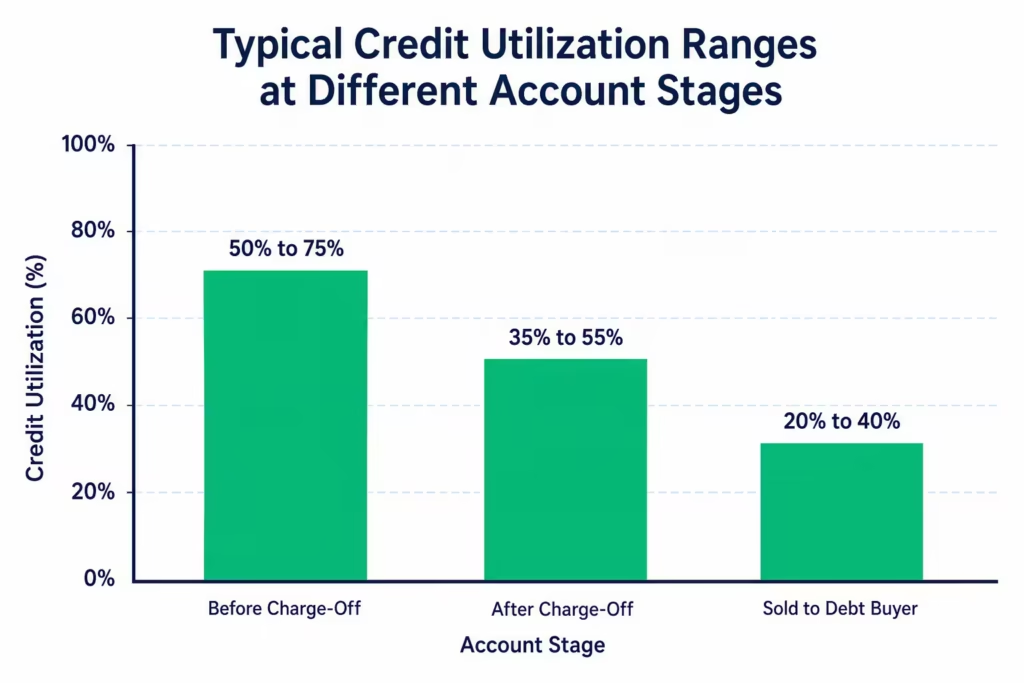
Before charge-off, most successful deals with Chase land in the 50% to 75% range of the current balance. Chase still owns the debt and still hopes to collect a big chunk, so its discount is smaller.
After charge-off, when the account sits with Chase’s internal recovery team, settlements often fall to the 35% to 55% range. The bank has already booked the loss, so anything they collect is a bonus.
If Chase has sold the debt to a debt buyer, the range drops again, often to 20% to 40%. Debt buyers paid only a few cents on the dollar, so even a small recovery is profit.
These ranges are not guarantees. Your hardship story, the age of the account, and the size of the balance all shape the final number. Still, if you’re offered 90% after charge-off, you should keep negotiating. That number does not match how the market actually works.
Who You’re Actually Negotiating With
Before you dial a number, know who is on the other end. The wrong assumption here can cost you thousands.
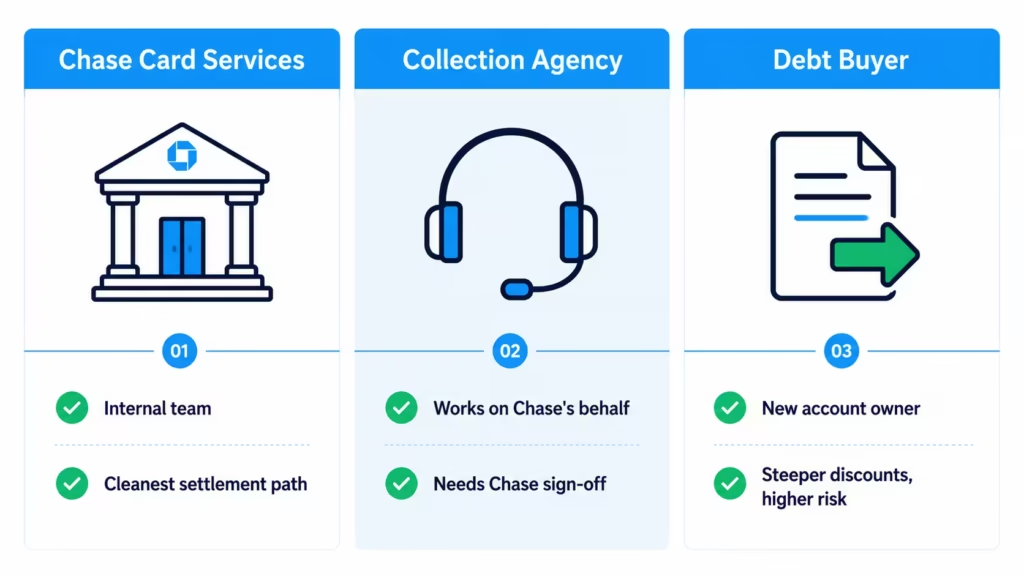
Chase Card Services (internal). If your account has not been charged off, or if it has been charged off but not sold, you’re likely dealing with Chase Card Services or its internal recovery team. These reps follow Chase’s rules and often have set discount tiers they can approve. This is usually the cleanest path to a real settlement letter on Chase letterhead.
Assigned collection agency. Sometimes Chase keeps ownership but hands the file to a third party for collection. In this setup, the agency is working on Chase’s behalf. Any deal usually still needs Chase’s sign-off. You want the final letter to show the debt is settled with Chase, not just with the agency.
Debt buyer. After a sale, the account is owned by someone else, often a company like Midland Credit Management, Portfolio Recovery Associates, or Jefferson Capital. Debt collector negotiation with a debt buyer follows different rules. Discounts can be steeper, but risks are higher too. A buyer may sue if you go silent, and paperwork errors are common.
To find out who owns your debt, pull your credit report at AnnualCreditReport.com. The tradeline should show either Chase as the current creditor or a new company. If the account was sold, the Chase entry may show a zero balance with a note like “transferred” or “sold.” That’s your signal that you’re now working with a debt buyer, not the bank.
How to Prepare Before Contacting Chase
Preparation is where most people lose the deal before they even speak. A calm, prepared caller wins better terms than a rushed one.
Start by gathering your account details. You’ll need your full account number, the current balance, the date of your last payment, and any recent letters from Chase. Keep them in one folder or one open browser tab.
Next, figure out your real affordable lump sum. Not a hopeful number. A number you could wire tomorrow if the deal closed. Add up cash in checking, savings, and any money a family member has firmly offered. That total is your ceiling. Plan to open your negotiation below it so you have room to move up.
Then document your hardship in writing. A short one-page summary is enough. List what happened (job loss, medical bills, reduced hours, divorce), when it happened, and how it changed your income. This becomes the backbone of your debt-to-income hardship case. Chase reps hear vague stories all day. Specific facts get more traction.
Finally, decide your walk-away number. If Chase won’t go below 70% and you can only pay 40%, you need to know that before you pick up the phone. Emotions run high in these calls. A written plan keeps you steady.
💡 Pro Tip: Save at least the first offer in cash before you call. A funded settlement closes faster and gets a better settlement offer percentage than a promise to save up over six months.
How to Make the Call and Negotiate
Once you’re prepared, the call itself is short. The goal isn’t to win an argument. The goal is to negotiate with Chase in a way that ends with a signed letter.
Dial the number on the back of your card or on your latest statement. Ask to be transferred to the hardship program team, the loss mitigation team, or the recovery department, depending on how late your account is. If the first rep can’t help, politely ask for a supervisor or the settlement desk.
Open with a calm script. Something like:
“I want to resolve this account. I can’t pay the full balance, but I have some funds available, and I’d like to discuss a settlement.” Do not lead with a number. Let the rep talk first. Often the first offer they float is higher than what they can actually approve.
When you do share a number, aim low but stay believable. If your balance is $12,000 and your ceiling is 45%, open at 25% or 30%. That leaves room to move up. Repeat your hardship in one or two sentences. Then pause and let silence do the work.
If they refuse your first offer, ask, “What’s the lowest amount Chase would accept today to close this account?” That question shifts the burden back to them. Take notes. Write down the rep’s name, the date, and every number discussed.
Never agree to a deal on the call without seeing it in writing first. A verbal “yes” from a rep means very little without a settlement agreement in writing on Chase letterhead.
Lump Sum vs. Payment Plan Offers

Chase will often offer two paths. A lump sum settlement is one payment, usually due within 30 to 90 days. A structured plan spreads the reduced balance over three, six, or twelve months.
Lump sums get the biggest discounts because Chase gets its money fast and closes the file. If you can raise the cash, this is almost always the better route financially.
Payment plans are easier on cash flow but often carry a smaller discount, sometimes 10 to 20 percentage points less. Miss a single payment and the deal can void, snapping the full balance back into place. If you go the plan route, set up autopay from a dedicated account so nothing slips.
Getting the Settlement Agreement in Writing
Here is where deals live or die. A phone promise is not enforceable, and reps change roles constantly. You want the deal locked in paper before a single dollar moves.
Ask for a Chase credit card settlement letter by mail, email, or secure message.
Your letter must include:
- Your account number
- The current balance
- The exact amount you will pay
- The due date
- Clear wording stating this payment settles the account in full.
Look for the phrase “settlement in full” or “account will be reported as settled” so there is no ambiguity later.
Read every line before you pay. Confirm the payee, the mailing address, and any wire or check instructions. Check that the letter matches what the rep said on the call. If anything is off, do not pay. Call back and ask for a corrected letter.
After you pay, keep proof for at least seven years. Save the letter, your payment confirmation, the bank statement showing the money from your account, and any notes from Chase. If you ever face a dispute, a debt collector picking up an old file, or a credit report error, this file is your defense.
⚠️ Mistake to Avoid: Never wire funds before the settlement letter arrives. Some scammers pose as Chase reps and vanish once the money moves. If a caller pressures you to pay immediately, hang up and dial the number on the back of your card.
What Happens If Chase Sues You First
The fear of a lawsuit is real, and Chase does file suits, mostly through law firms it partners with. But a lawsuit is not the end of the story. It changes the shape of your Chase debt settlement, not the possibility of one.
If you’re served, do not ignore the papers. Ignoring a summons is the single most common way people lose these cases. Missing the response deadline, which is usually 20 to 30 days depending on your state, can lead to a default judgment. This may result in wage garnishment or bank levies if state law permits.
File an answer with the court by the deadline, even if it’s a short one. Then reach out to the law firm listed on the complaint. Settlement is still very much on the table. In many cases, a lawsuit actually speeds up a deal because the law firm wants to close the file too.
Also check the statute of limitations on credit card debt in your state. It usually runs three to six years from the date of the last payment. If the account is past that window, the debt may be time-barred, meaning it can’t be legally enforced. A charged-off account is not automatically past the statute, so verify the dates carefully before you speak with any collector. Making a small payment on a time-barred debt can restart the clock in some states, so tread carefully.
If the numbers or the legal steps feel confusing, a one-hour consult with a consumer rights attorney can be worth every dollar. Many offer free initial calls.
Tax Consequences of Settled Chase Debt
Settling debt can trigger a tax bill, and this catches many readers off guard. The IRS treats forgiven debt of $600 or more as taxable income. So if Chase forgives $8,000 of a $12,000 balance, the IRS may consider that $8,000 as income you earned that year.
You’ll usually get a 1099-C cancellation of debt form from Chase early the following year. This form reports the forgiven amount to both you and the IRS. Skipping it on your return is not an option. The IRS already has a copy.
Depending on your tax bracket, the extra “income” could add hundreds or even a few thousand dollars to your bill. Plan for this before you settle. Set aside a portion of what you saved to cover the possible tax cost.
The good news is there are legal ways to reduce or erase that tax hit, and most people who settle credit card debt qualify for at least one of them.
The Insolvency Exclusion and Form 982
The IRS insolvency exclusion is the biggest tool most settlers use. In simple terms, if your total debts were more than your total assets right before the debt was canceled, you were “insolvent” in the eyes of the IRS. Up to the amount you were insolvent by, the forgiven debt is not taxable.
Here is how it works in plain numbers: Say Chase forgave $8,000. Right before the settlement, you owed $30,000 total across all debts. Your assets (bank accounts, car, retirement) totaled $25,000. You were insolvent by $5,000. That means $5,000 of the $8,000 forgiven debt is excluded from income. You’d owe tax only on the remaining $3,000.
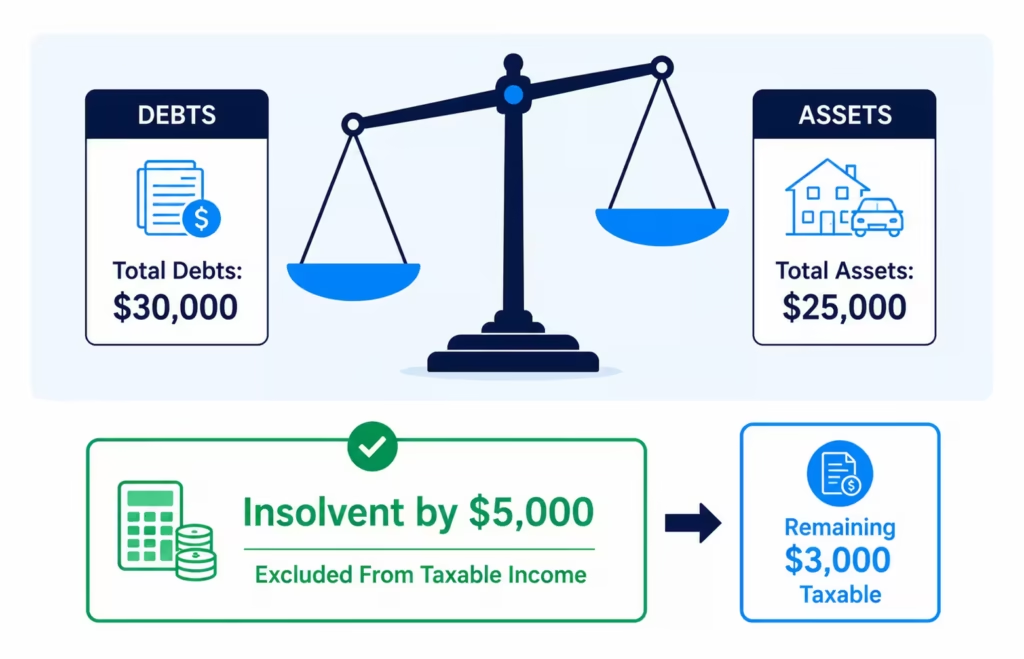
To claim this, you file IRS Form 982 with your tax return. Fill out an insolvency worksheet, keep it in your files, and check the right box on the form.
Many people who settle credit card debt qualify for full or partial relief this way. If your finances are messy, a CPA or tax preparer familiar with 1099-C reporting is worth the fee.
Impact on Your Credit Score and Recovery Timeline
Settlement affects credit, but so does letting the debt spiral. It helps to see the trade honestly.
Missed payments already hurt your credit score before you settle. Each 30, 60, 90, 120, and 150-day-late mark lowers your score. A charged-off account is one of the most damaging entries, often causing a 100+ point drop for people with previously strong credit.
When Chase reports the account as “settled” or “paid, settled for less than the full amount,” lenders can see it. That notation can lower approval odds for a couple of years. That said, the biggest damage already happened when you first fell behind. Settling itself does not double the harm. It closes the wound.
The tradeline stays on your credit report for seven years from the date of the first missed payment that led to the charge-off. It won’t be there forever. And its weight drops over time. After 24 months, most scoring models put more weight on your recent behavior than on the old settlement.
To rebuild, focus on three things. First, keep every other account current, especially any remaining cards, auto loans, or student loans. Second, keep utilization low on any open cards, ideally under 10%. Third, consider a secured card or a credit-builder loan to add fresh positive history. Many people see meaningful score recovery within 12 to 24 months of settling.
DIY Settlement vs. Hiring a Debt Settlement Company
The choice between doing it yourself and hiring help is really a choice about time, stress, and cost.
Doing it yourself works well for one or two Chase accounts if you’re organized and calm on the phone. You keep 100% of the discount. You control the timing. You avoid the fees that eat into the savings.
A debt settlement company takes over the calls and the paperwork. They typically ask you to stop paying, save money into an escrow account, and then negotiate for you. Fees usually run 15% to 25% of the enrolled debt or of the savings, depending on the firm and state rules. On a $20,000 balance, that fee can be several thousand dollars.
There are real downsides. Settlement companies almost always require you to fall behind on purpose, which pounds your credit. Some accounts get sued while sitting in the program. And you still owe taxes on forgiven amounts, minus any insolvency exclusion.
A credit counseling agency is a different animal. Nonprofit credit counselors, often listed with the National Foundation for Credit Counseling, typically set up a debt management plan with lower interest rates and one monthly payment. They rarely negotiate principal reductions, but they don’t tank your credit either.
Choose based on your situation. If you have the cash and the nerves, DIY is usually the best value. If you have many accounts, complex hardships, or lawsuits in progress, professional help can be worth the fee.
Avoid companies that promise guaranteed percentages. Don’t trust those that ask for fees upfront before finalizing anything. Also, steer clear of anyone who tells you to stop opening Chase’s mail.
Common Mistakes That Blow Up a Chase Settlement
Even great deals fall apart in the final steps. These are the failure points to watch.
Offering too early. Calling Chase on day 15 with a 40% offer teaches you nothing except that Chase says no. Wait until at least the 90-day window when real settlement talks are possible.
Overshooting your ceiling. Agreeing to a payment you can’t actually make is worse than not settling at all. A missed settlement payment can void the whole deal, and Chase can revert to the full balance.
Paying without a settlement agreement in writing. A verbal promise from a friendly rep is not a contract. Get the letter, read every line, then pay.
Ignoring the 1099-C. Filing a return that doesn’t match the 1099-C Chase sent triggers an IRS notice. Report the form and use the insolvency exclusion if you qualify.
Falling for a “settlement” from a stranger. If someone calls out of the blue claiming to settle your Chase account, verify. Call Chase directly using the number on your card. Scam calls spike during hardship.
Restarting the clock on old debt. On a very old charged-off account, a small “good faith” payment can revive the debt under some state statutes. Confirm the age of the debt before you send a dime.
Skipping legal help when sued. Trying to handle a lawsuit alone, especially from a debt buyer, often ends in a default judgment. A short consult with an attorney can change the outcome fast.
Enrolling in a hardship program too casually. A hardship program can be useful, but read the terms. Some plans require you to stay current for months before Chase will discuss settlement, which can trap you if a lump sum is your real goal.
Avoiding these traps keeps the deal clean, the paperwork solid, and the savings in your pocket.
Frequently Asked Questions (FAQs)
Will Chase settle my credit card debt?
Yes, Chase settles credit card debt, but usually only after an account is 90 to 180 days past due. Early delinquency rarely gets a discount since Chase pushes hardship programs first.
How much does Chase usually settle for?
Before charge-off, most deals land between 50% and 75% of the balance. After charge-off, settlements often drop to 35% to 55%, and debt sold to a buyer can settle for 20% to 40%.
Will creditors accept a 50% settlement offer?
A 50% offer is realistic once your Chase account is past charge-off, which happens around 180 days late. Before charge-off, Chase typically holds out for 50% to 75%, so a 50% offer may need to wait.
Does Chase usually sue for credit card debt?
Chase can file suit through partner law firms, often when an account stays unresolved for a long time. A lawsuit doesn’t end settlement talks, and it can even speed up a deal since the firm wants to close the file too.
Does Chase have a hardship program?
Yes, Chase offers early hardship programs that can lower your interest rate or waive fees. These programs don’t cut your principal balance, so they work best in the first 90 days rather than as a replacement for settlement.
Does settling a debt hurt credit?
Settling adds a “settled for less than full amount” notation that can lower approval odds for a couple of years. Most of the credit damage already happened from the missed payments and charge-off before you ever settle.
How to get rid of $30,000 in credit card debt?
A lump sum settlement offer between day 90 and day 180 of delinquency typically gets the deepest discount, often 35% to 55% after charge-off. Pairing this with a written hardship summary and IRS Form 982 for insolvency can reduce both the balance and the resulting tax bill.
What happens if I can’t pay my Chase credit card?
Missed payments trigger hardship program offers first, then move toward charge-off around 180 days late. After that, the account goes to Chase’s recovery team, a collection agency, or gets sold to a debt buyer, each changing who you negotiate with.
How to contact Chase to settle credit card debt?
Call the number on the back of your card or on your latest statement. Then, ask for the hardship, loss mitigation, or recovery department. Choose based on how late your account is. Open with a calm hardship statement and let the rep name a number first.
Will negotiating credit card debt hurt my future approval odds?
A settled account can lower your approval chances for about two years. However, after 24 months, scoring models focus more on recent behavior. Keeping other accounts current and utilization low during that window speeds up recovery.
Wrapping Up
Settling with Chase is possible when you time the offer, prepare your numbers, and put every promise in writing. The article covered Chase’s delinquency timeline, realistic percentages, negotiation scripts, tax fallout, and credit impact. It also highlighted mistakes that can quietly kill deals.
The best option for most readers is to make a lump sum offer. This should be done between day 90 and day 180. It needs to include a written hardship summary and a signed settlement letter before any payment.
If you know someone drowning in Chase payments or dreading a lawsuit, share this guide. One clear plan can save them thousands and years of stress.