
If you’re falling behind on a Discover card balance, you already know the feeling. The calls keep coming, the interest keeps growing, and full payment just isn’t possible right now. A job loss, medical bill, or divorce might have set you back. Now, you may be asking if Discover credit card debt settlement offers a way out, without bankruptcy or a lawsuit.
The short answer is yes. Discover often takes a lower lump-sum payment. This is usually between 30% and 60% of the total balance. They offer this option when the account is significantly overdue.
Below, you’ll get a step-by-step plan, real timing rules, a negotiation script, and every follow-up detail Discover cardholders keep missing.
Key Takeaways
This guide explains how to settle credit card debt with Discover, including the delinquency timeline that unlocks discounts, realistic settlement percentages, a step-by-step negotiation process, and the credit and tax effects of settling.
Core Facts:
- Discover typically settles for 30% to 60% of the total balance, but only after an account is significantly overdue rather than current or newly late.
- Settlement offers strengthen as an account approaches charge-off around day 180, with the most favorable range of 30% to 50% appearing shortly after charge-off.
- The recommended negotiation window is between day 150 and day 210, since earlier attempts are usually met with hardship programs instead of balance reductions.
- A verbal settlement agreement is not binding; the agreed amount, due date, and “paid in full” terms must be confirmed in writing before any payment is sent.
- Settled accounts are reported to credit bureaus as “settled” or “settled for less than full balance,” and this notation remains on a credit report for seven years from the original delinquency date.
- Forgiven debt of $600 or more can trigger a 1099-C form and count as taxable income, though an insolvency exclusion under IRS Form 982 may reduce or eliminate that tax liability.
Best for:
- Cardholders with a Discover balance who are significantly behind on payments and cannot pay the full amount.
- Readers deciding whether to negotiate directly with Discover instead of using a debt settlement company.
- Anyone who has received a letter from a Discover-affiliated collection law firm and wants to understand settlement options before a lawsuit is filed.
What It Means to Settle Credit Card Debt With Discover
Debt settlement means paying less than what you owe to close the account. You send Discover a one-time lump-sum payment, or a short series of payments, and the remaining balance is forgiven. The account is then marked as “settled” on your credit report.
This is not the same as a debt management plan. A debt management plan, usually run through a nonprofit credit counseling agency, keeps the full principal in place. It only lowers your interest rate and stretches out the payments. You still repay every dollar you borrowed.
Discover is also different from many other issuers in one key way. It tends to handle settlements in-house for longer instead of selling the debt to third-party buyers right away.
That means you’re often negotiating directly with Discover Bank staff who have real authority to approve a deal. This gives you a better shot at a clean settlement than you’d get with an issuer that offloads accounts fast.
Will Discover Actually Settle Your Debt?
Yes, Discover does settle. But not on day one, and not with every cardholder.
Discover weighs a few things before agreeing to reduce a balance. The main one is how far behind you are. A current account or one only 30 days late is very unlikely to get a settlement offer. The bank still expects normal payment at that point. Real settlement talks usually start once the account is closer to charge-off.
The second factor is financial hardship. Discover wants to see a clear reason you can’t pay in full. Job loss, reduced hours, medical bills, disability, and divorce all count. Simple overspending does not carry the same weight.
The third factor is your ability to actually fund a lump-sum offer. Discover would rather take 40 cents on the dollar today than chase you for years. If you can show the money is ready, you’ll get a more serious response.
Discover’s Delinquency and Charge-Off Timeline
Knowing where you sit on Discover’s internal clock is the single most useful piece of information for a settlement. Every stage changes how flexible the bank will be.
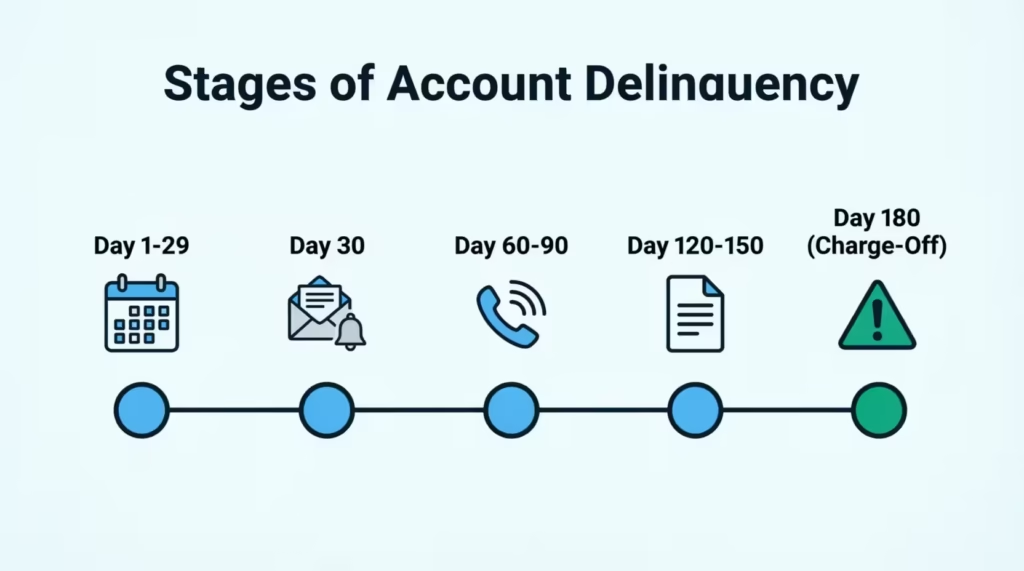
Days 1 to 29 (current or grace period): No late fee yet. Interest keeps building. No settlement talks.
Day 30 (first missed payment): A late fee posts. Your APR may jump to a penalty rate. This is reported to the credit bureaus. Settlement is not on the table yet.
Days 60 to 90: The account moves into Discover’s internal collections team. Calls and letters increase. The account is still owned by Discover. Small hardship programs may be offered, but real balance reductions are still rare.
Days 120 to 150: The tone shifts. Discover collectors may start floating settlement language. Offers here are usually weaker, around 60% to 70% of the balance.
Around Day 180 (charge-off): Discover writes the debt off its books as a loss. Interest stops piling up. This is a major reporting event on your credit file. It also unlocks the deepest discounts.
Post charge-off (Day 180 and beyond): The account may stay with Discover’s recovery team, or it can be placed with a collection law firm. Settlement percentages open up here, sometimes down to 30% to 50%.
For the official rules on how long charge-offs stay on your file, the Consumer Financial Protection Bureau explains the reporting side clearly.
The Best Time to Negotiate a Settlement
Timing decides the discount. Push too early, and Discover won’t budge. Wait too long, and you may be dealing with a lawsuit.
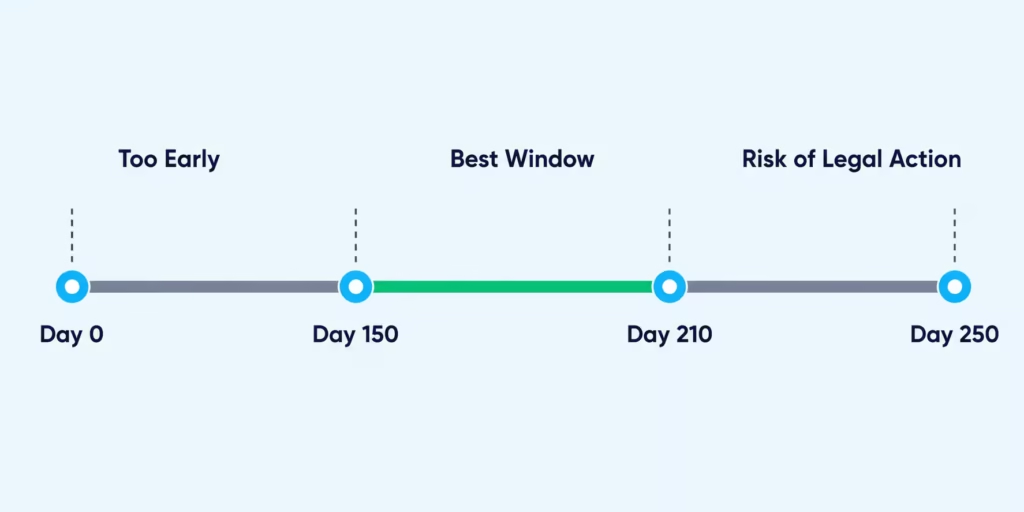
The sweet spot for most Discover accounts is between day 150 and day 210. By day 150, the account is nearly charged off, and the collectors have real motivation to close it. By day 210, you’re just past charge-off, when the biggest cuts are usually approved but before the file has moved to outside legal counsel.
Trying to settle at day 30 or day 60 rarely works. Discover still sees you as a paying customer who is slipping. Their standard play at that stage is a short-term hardship program, not a balance cut.
There is a real trade-off. Waiting for a bigger discount also means more late marks on your credit file, a charge-off notation, and a higher risk of a lawsuit. You’re choosing between saving more money and protecting your credit. If your credit is already damaged, waiting usually wins. If your credit is still mostly clean, moving earlier may protect more of it.
💡 Pro Tip: Save the money you plan to use for the lump sum in a separate account starting today. When Discover asks how quickly you can pay, “I have the funds ready now” is the strongest phrase in the entire call.
Realistic Settlement Percentages With Discover
Cardholders often walk in expecting to pay 10% or 20% of the balance. That almost never happens with Discover. The bank has a reputation for being firmer than issuers like Capital One or Citi.
Here’s what real Discover settlement ranges tend to look like by stage:
| Account Stage | Typical Settlement Range | Notes |
|---|---|---|
| 90 to 120 days late | 65% to 80% of balance | Small hardship reductions only |
| 150 to 180 days late (pre charge-off) | 50% to 65% | Best window for a strong deal |
| Just past charge-off | 40% to 55% | Deepest in-house discounts |
| With outside collection firm | 35% to 50% | Third party has more room to move |
| With a law firm or lawsuit filed | 50% to 70% | Lawsuit pressure raises the number |
So if you owe $10,000 and you’re 190 days late, a realistic lump-sum payment target is somewhere between $4,000 and $5,500. Anything under 30% is unlikely with Discover. Anything over 70% at the charge-off stage is a bad deal and worth pushing back on.
How to Contact Discover About Settlement
If your account is still current or only 30 days behind, call the number on the back of your card and ask for the hardship team. That’s the standard Discover customer service line at 1-800-347-2683.
Once the account is 60 days late or more, you’ll usually be routed to the Discover collections department automatically when you call. If you’re not, ask the agent directly: “Please transfer me to the collections or recovery team that can discuss a settlement.”
If your account has already charged off, the file may sit with Discover’s internal recovery group, or it may have been placed with an outside firm. Any letters you’ve received recently will tell you who is currently handling the debt. Call the number on the most recent letter, not the number on the old card.
A few ground rules for the call:
- Call during weekday business hours. You reach senior collectors then.
- Do not call from a shared phone line where you can be overheard.
- Have your account number, the balance, and your proposed offer written down before you dial.
- Never give bank account or debit card numbers on the first call. That’s for the final agreed step, not the negotiation.
How to Negotiate the Settlement (Step-by-Step)
A Discover settlement call has a fairly predictable shape. Follow these steps in order.
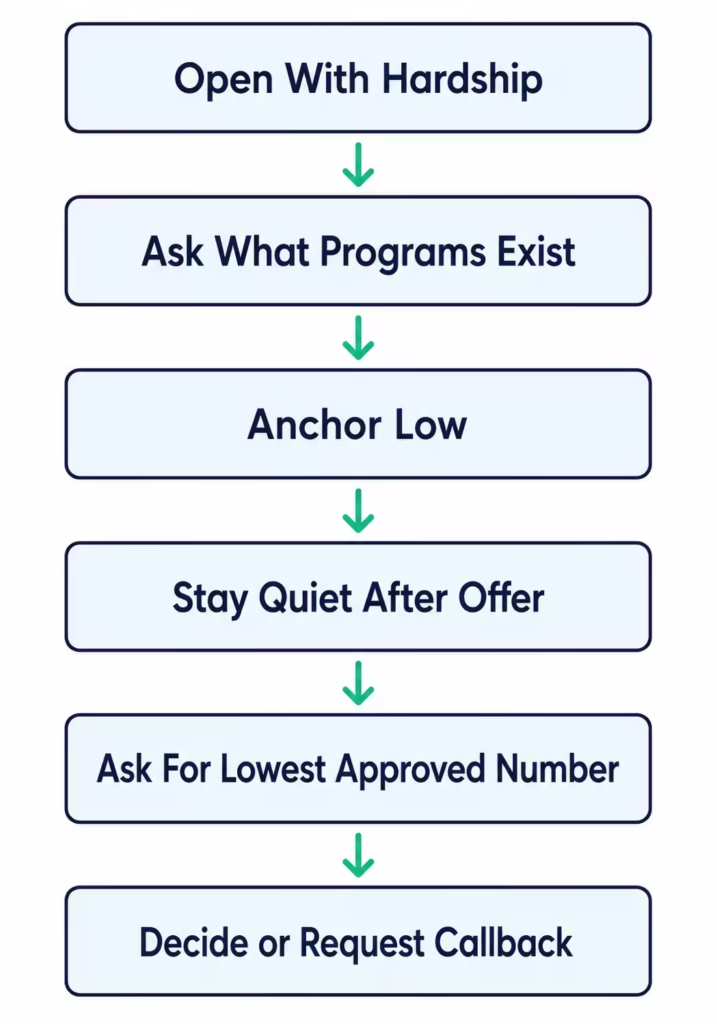
Step 1: Open with hardship, not with a number. Start the call by explaining your situation in one or two sentences. Something like: “I’ve been out of work since March, and I can’t keep up with the minimum payments. I want to resolve this account, but I can only do that with a reduced lump sum.”
Step 2: Ask what programs they have. Before you name a number, ask: “What settlement or hardship options do you have on this account today?” Sometimes the collector will float an offer first. If they do, it becomes the ceiling, not the floor.
Step 3: Anchor low, but not insulting. If your balance is $10,000 and you’re past charge-off, open at around 25% to 30%, so roughly $2,500 to $3,000. That gives you room to move up while still landing in the 40% to 50% range.
Step 4: Stay quiet after your offer. Say the number, then stop talking. Collectors are trained to fill silence. Let them respond first.
Step 5: Ask for the highest they can approve. If the counteroffer is too high, ask directly: “What’s the lowest number you’re authorized to accept today? If it’s higher than that, I’d like to speak with a supervisor.”
Step 6: Don’t commit on the spot if you’re unsure. You’re allowed to say, “I need to check my budget; can you call me back tomorrow?” A real offer will still be there in 24 hours.
What to Say If Discover Refuses Your First Offer
Rejection is normal. It doesn’t mean the deal is dead.
If Discover pushes back, don’t raise your offer right away. Ask why the number doesn’t work and listen. Often the collector will reveal what range would be approved. That’s free information.
Try one of these responses:
- “I understand that’s below your range. Can you tell me what number would get approved today?”
- “That’s more than I can pull together. The lump sum I have available is $X. If I can’t settle, this account is going to stay unpaid because I don’t have any other funds.”
- “Would a slightly higher amount work if I can pay within 7 days instead of 30?”
If two agents in a row refuse, hang up politely and call back in a week. Different collectors have different approval limits. A “no” on Monday can become a “yes” on Friday.
⚠️ Mistake to Avoid: Never admit on the phone that you have savings, a 401(k), home equity, or a working spouse who could cover the debt. Anything you disclose can be used to argue you don’t really have a hardship.
Getting the Agreement in Writing Before You Pay
A verbal settlement is not a settlement. If you send money based on a phone call alone, Discover can legally apply it to your balance as a partial payment and still come after you for the rest.
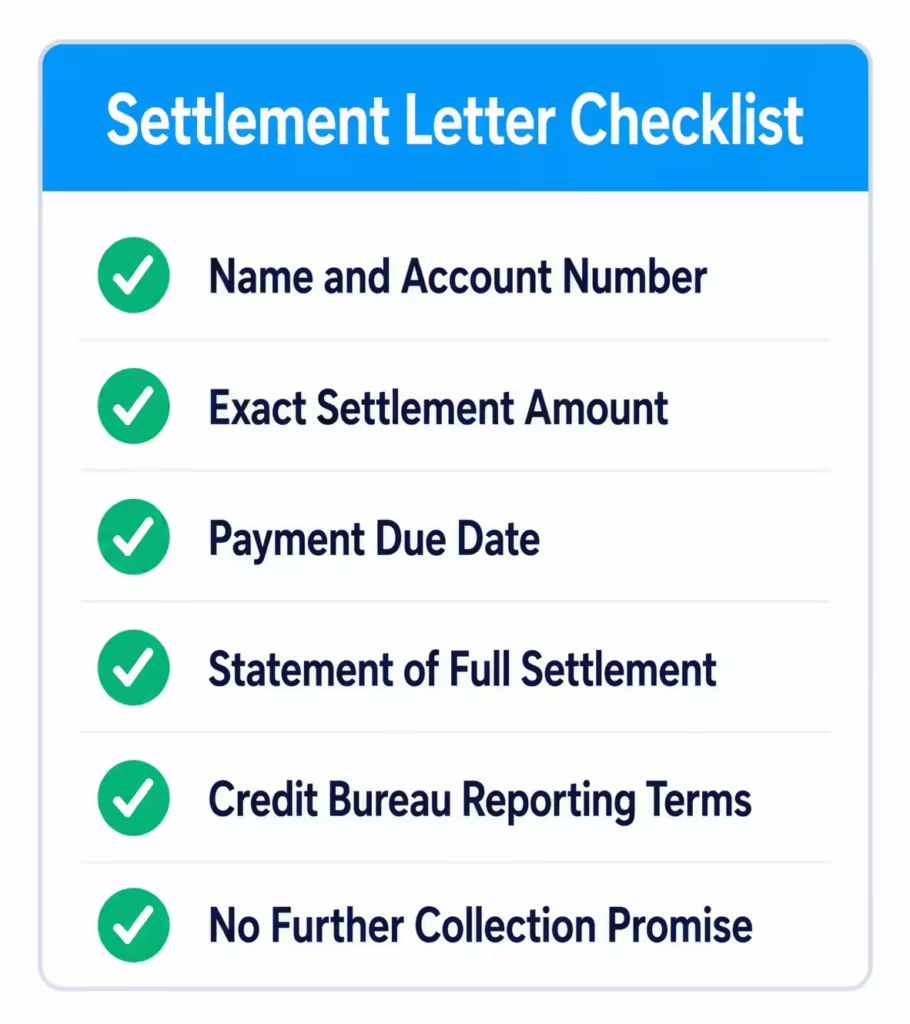
Before you pay a single dollar, get the deal in writing. Ask the collector to email or mail you a settlement agreement letter on Discover letterhead. The letter must include:
- Your name and the full account number
- The exact settlement amount agreed to
- The due date for the payment
- The clear statement that this amount settles the account “in full”
- How the account will be reported to the credit bureaus, ideally as “settled” or “account paid, zero balance”
- A promise that no further collection activity will happen after payment
If Discover only offers to read the terms over the phone, refuse and ask for written confirmation. Every legitimate creditor, including Discover Bank, will send this. If they won’t, that’s a serious red flag, and you should not send money.
Save the letter as a PDF, print a paper copy, and keep both for at least seven years. You may need it if the account is ever resold or if the “settled” mark shows up wrong on your credit report.
How to Make the Settlement Payment Safely
Once the written agreement is in hand, the last step is paying it in a way you can prove.
The safest settlement payment options with Discover are:
- A one-time ACH debit set up during a recorded call, using the exact amount and date on the letter.
- A cashier’s check or money order mailed with tracking to the payment address printed in the settlement letter.
- Discover’s online portal, if the letter directs you to make a one-time online payment and lists the exact amount.
Avoid a few things. Do not give access to your primary checking account for recurring debits. Do not wire money. Do not send cash. Do not pay a third party who says they’ll “pass it along” to Discover unless that party is named directly in your written agreement.
After payment clears, ask Discover for a paid-in-full letter that confirms the balance is zero. Check your credit reports 30 to 60 days later at AnnualCreditReport.com to make sure the account shows “settled” or “paid” and not still open with a balance.
Negotiating Directly vs. Hiring a Debt Settlement Company
Doing this yourself is almost always better than hiring a debt settlement company, especially with Discover.
Here’s why. A settlement company usually charges 15% to 25% of the enrolled debt as a fee. They also advise you to stop paying Discover. Instead, send money to an escrow account. This can last for two to four years, until you have enough to negotiate. During those years:
- Your account charges off.
- Late marks pile up every month.
- Discover is much more likely to sue, because they’re not hearing from you at all.
- The final settlement is often no better than what you could get in a 20-minute call yourself.
The Federal Trade Commission has been direct about this. The FTC’s guide on settling credit card debt warns that these programs are risky and that most people don’t complete them.
There are two narrow cases where a third party helps. If you have five or more accounts with different issuers, a nonprofit credit counselor can help. They typically suggest a debt management plan instead of settlement. And if you’ve already been sued, a consumer rights attorney (not a settlement company) is worth the money.
For a single Discover account, calling Discover yourself is faster, cheaper, and safer.
If Your Discover Debt Has Gone to a Law Firm or Lawsuit
Once a Discover debt is placed with a collection law firm, the rules change. Firms such as Stenger & Stenger, Phillips & Cohen Associates, and Zwicker & Associates often manage post-charge-off Discover accounts. Getting a letter from one of them is not the same as being sued, but it means a lawsuit is possible.
If you’ve only received a letter, you can still settle. Call the firm, not Discover, and use the same script. Law firms often accept 40% to 60%, and they can settle faster than Discover because their job is closing files.
If you’ve been served with a lawsuit, the timing is critical. In most states, you have 20 to 30 days to file a formal Answer with the court. Miss that deadline, and the court can enter a default judgment, which can lead to wage garnishment or a bank account levy.
Do three things right away:
- File an Answer, even a simple one, before the deadline. This alone stops a default judgment.
- Send a debt validation letter within 30 days of first contact. Federal law under the Fair Debt Collection Practices Act requires the collector to prove the debt is yours and the amount is correct.
- Consider a short consult with a consumer defense attorney. Many offer free first calls, and settlement leverage jumps once the plaintiff knows you have counsel.
Even after a lawsuit is filed, most Discover-related cases still settle before trial. The percentage just shifts up, usually to 50% to 70% of the balance, plus court costs.
How Settling Discover Debt Affects Your Credit
Settlement helps your finances, but it does leave a mark. Being honest about that mark helps you plan the recovery.
When Discover accepts a settlement, the account is reported to the three major credit bureaus with a status of “settled,” “settled for less than full balance,” or “account paid, zero balance, settled.” All three are considered negative marks compared to “paid in full.”
That notation stays on your report for seven years from the original date of first delinquency. It does not reset. If you were 180 days late in early 2026, the charge-off and settled entry both drop off around early 2033.
A few points cardholders often miss:
- The credit score drop from settling is usually smaller than the drop from the charge-off itself. If the account is already charged off, settling doesn’t make things much worse.
- Rebuilding starts fast. Many people see their score climb 40 to 80 points within 12 months of settling, if they’re paying other accounts on time.
- A secured card or a credit-builder loan is the usual next step. You can qualify for either while a settled Discover account is still on your report.
Don’t let the credit hit alone stop you. A settled account with a clear plan beats an active, growing charge-off every time.
Tax Implications of a Settled Discover Debt
Forgiven debt can be taxable income. This is the part most people are blindsided by.
If Discover cancels $600 or more of debt in a single year, the bank is required to send you and the IRS a 1099-C, Cancellation of Debt form. The forgiven portion is the difference between what you owed and what you paid. This amount usually counts as ordinary income on your federal return.
So if you owed $10,000 and settled for $4,000, the $6,000 that was written off could be taxed. At a 22% federal tax rate, that’s around $1,320 in extra tax.
Some exceptions can reduce or wipe out that tax bill. The main one is insolvency. If your debts were more than your assets just before the settlement, you might exclude some or all of the canceled amount from your income under IRS rules. This is reported on IRS Form 982. The IRS page on canceled debt explains the exclusions in plain language.
Two practical steps:
- Set aside 15% to 25% of the forgiven amount in savings until you file taxes for the year the settlement closed.
- If a 1099-C is likely, talk to a CPA or a tax preparer before filing. The insolvency exclusion is easy to miss without help.
📌 Did You Know: Discover doesn’t have to wait until you settle to issue a 1099-C. If they simply stop trying to collect for a long enough period, the IRS may still consider the debt “canceled” and a form can be issued anyway. Settling gives you a documented number, which actually makes tax filing cleaner.
Alternatives if Discover Won’t Settle
If Discover refuses every offer, or if you’re not deep enough into delinquency for a real deal, other tools can still get you out of the hole.
Debt management plan through a nonprofit credit counselor. A debt management plan rolls your Discover balance and other cards into one monthly payment. Interest is usually cut to somewhere between 6% and 10%. You pay off the full principal, but over three to five years instead of decades. Look for agencies accredited by the National Foundation for Credit Counseling.
Discover’s own hardship program. For short-term issues, like a three-month income gap, Discover can help. They might lower your APR, waive late fees, and cut your minimum payment for six to twelve months. This does not cut the balance, but it stops the bleeding while you regroup.
Balance transfer to a 0% card. This only works if your credit is still decent, usually a score of 670 or higher. A balance transfer card with a 15 to 21 month 0% intro APR lets you attack the principal without new interest. Watch for the 3% to 5% transfer fee.
Personal consolidation loan. A fixed-rate installment loan replaces the revolving Discover balance. Rates in 2026 typically run from 8% to 20% depending on credit. Predictable payments, defined payoff date.
Chapter 7 or Chapter 13 bankruptcy. This is a last resort, but it exists for a reason. Chapter 7 can wipe unsecured credit card debt completely in a few months. Chapter 13 sets a court-ordered repayment plan. Speak with a bankruptcy attorney before ruling it out, especially if you’re facing a lawsuit or wage garnishment.
The right alternative depends on how deep the shortfall is and how much of your income is already committed. A quick call with a nonprofit credit counselor can sort that out in 30 minutes, and it costs nothing.
Frequently Asked Questions
Does Discover ever settle credit card debt?
Yes, Discover settles credit card debt, typically once an account is significantly overdue. Offers usually range from 30% to 60% of the total balance, depending on how delinquent the account is.
Will Discover sue you for credit card debt?
Yes, Discover can sue, especially after an account charges off and gets placed with a collection law firm. Most cases still settle before trial, usually at 50% to 70% of the balance plus court costs.
How long before Discover sues you?
There’s no fixed timeline, but risk rises sharply after charge-off around day 180. Accounts with outside law firms, like Zwicker & Associates or Phillips & Cohen Associates, mean a lawsuit might happen.
What percentage will Discover settle for?
Discover typically settles between 30% and 70% of the balance, depending on delinquency stage. The best offers, around 30% to 50%, usually come just after charge-off, near day 180 to 210.
Does Discover have a hardship program?
Yes, Discover offers a hardship program for short-term issues like a temporary income gap. It can lower your APR, waive late fees, and reduce minimum payments for six to twelve months, though it doesn’t cut your principal balance.
What happens if I don’t pay my Discover credit card?
Your account moves through delinquency stages: a late fee and penalty APR at day 30, internal collections by day 60 to 90, and charge-off around day 180. After charge-off, the debt may go to a collection law firm or lawsuit.
Is it better to pay off or settle debt?
Paying in full avoids credit damage and tax consequences, since settled debt can trigger a 1099-C for the forgiven amount. Settling makes sense when full payment truly isn’t possible, and you need a faster way out of a growing charge-off.
Does Discover forgive charge-offs?
Charge-off means Discover writes the debt off as a loss internally, but you still legally owe it. The debt can then be settled, sent to recovery, or placed with a law firm, so charge-off itself isn’t automatic forgiveness.
Wrapping Up
Getting out of a Discover balance you can’t pay in full isn’t easy, but it’s very doable. The playbook is clear. Wait until you’re close to charge-off, ask for the collections or recovery team, open with hardship, anchor low, and never send a dollar until the deal is in writing.
A smart lump-sum offer usually beats the 30% to 60% settlement range from Discover. It’s often better than using a debt settlement company or making years of minimum payments.
If this guide could help a friend, coworker, or family member facing calls from Discover, share it so they don’t have to figure it out alone.