
If you’re staring at a Citibank credit card balance you can’t pay, you’re not alone. Many people fall behind after a job loss, medical bill, or family emergency, and the idea of Citibank credit card debt settlement feels scary because you don’t know what to say or what Citi will actually accept.
The short answer: yes, Citibank will often accept a lump-sum payment for less than what you owe, especially once your account is 90 to 180 days late.
Below, we’ll walk you through the exact steps, real settlement percentages, tax rules, and how to protect your credit and your wallet along the way.
Key Takeaways
This guide explains how to settle credit card debt with Citibank, including delinquency-based settlement percentages, who to contact, how to secure a written agreement, and the tax and credit score effects of settling.
Core Facts:
- Citibank settlement offers generally start around 80% to 90% of the balance at 60 to 89 days delinquent and can drop to 30% to 50% once an account reaches charge-off at day 180 or beyond.
- Accounts that are current or only 30 days late are usually directed to a hardship program that lowers payments rather than reducing the balance owed.
- Settled debt of $600 or more triggers a Form 1099-C from the creditor, and the forgiven amount may count as taxable income unless the insolvency exclusion applies.
- The insolvency exclusion allows forgiven debt to be excluded from taxable income up to the amount by which total debts exceeded total assets before the settlement.
- A written settlement agreement should specify the exact payment amount, deadline, credit bureau reporting language, and confirmation that no remaining balance will be sold or pursued.
- Settled accounts remain on a credit report for seven years from the date of first delinquency but generally cause less long-term damage than an unpaid charge-off.
Best for:
- Readers whose Citibank account is significantly delinquent and considering a lump-sum settlement instead of continued nonpayment.
- Readers who want to negotiate directly with Citibank rather than hire a third-party debt settlement company.
- Readers concerned about tax consequences or credit score impact before agreeing to a settlement.
Is Citibank Likely to Settle Your Credit Card Debt
Citibank does settle credit card debt, but not for every customer and not on day one. Settlement is a business choice for the bank. When Citi believes it will get less by suing or waiting than by taking a partial payment now, it says yes.
A few things decide if your account is a good fit:
- How late you are. Accounts that are current or only 30 days past due rarely receive a real settlement offer. Citi will push you into a hardship program first, which lowers your interest rate or minimum payment but keeps the full balance in place.
- Your payment history. A long record of on-time payments followed by a sudden drop signals real hardship. That helps your case.
- Your balance size. Very small balances (under $1,000) are usually not worth Citi’s time to negotiate. Larger balances between $3,000 and $40,000 are the sweet spot.
- Your story. Job loss, medical bills, divorce, or a death in the family are all real hardships Citi hears every day. You must be able to explain yours in one or two clear sentences.
If you are still current on your card, Citi will almost always steer you toward its hardship plan rather than a true reduction. That plan can be helpful, but it is not the same as wiping out part of the debt. Understand the difference before you call, so you know which door you are knocking on.
💡 Pro Tip: If you can still make minimum payments, ask about the hardship plan first. Save the settlement conversation for when you truly cannot pay the full balance, because settlement will hurt your credit more than a hardship plan.
Citibank’s Delinquency Timeline and Your Settlement Leverage
Your leverage with Citibank grows as your account ages. The later you are, the more Citi worries about getting nothing at all, and the more flexible it becomes. Here is how the delinquency clock usually moves.
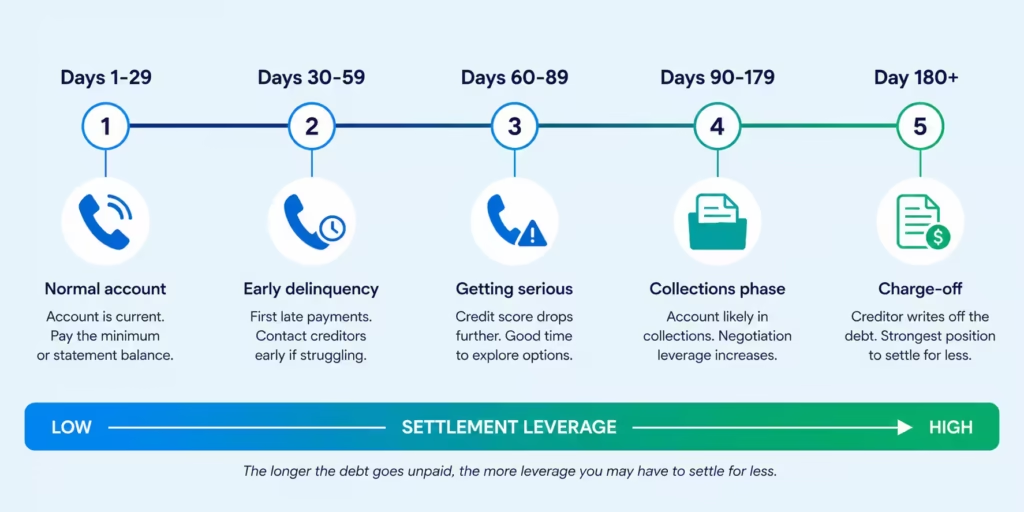
Days 1 to 29 (Current or Just Late): Citi treats you as a normal customer. You may get a late fee and a phone call, but no settlement talk. Focus on a hardship plan here.
Days 30 to 59 (First Missed Payment Reported): Citi reports the late payment to the three credit bureaus. Your score drops. Collections calls start. Settlement is still very hard to get, but hardship options are open.
Days 60 to 89 (Second Missed Payment): The tone changes. Citi’s internal collections team now handles your account. Some reps have limited power to discuss reduced payoffs, but offers are still small (often 80% to 90% of balance).
Days 90 to 179 (Serious Delinquency): This is when real settlement talks begin. Citi knows the account is heading toward charge-off. Reps in the loss mitigation department can approve deeper cuts. Offers of 40% to 60% become realistic here.
Day 180 and Beyond (Charge-Off): Citi writes the debt off its books as a loss. This is a big accounting event, and it also shows on your credit report as a charge-off. Even so, Citi (or the collector who buys the debt) is now most willing to deal. Settlements in the 30% to 50% range are common at this stage.
Timing is everything. Calling too early means smaller savings. Waiting too long can invite a lawsuit. The 90 to 180-day window is often the sweet spot.
Realistic Settlement Percentages at Each Stage
Real numbers help you plan a fair offer. These ranges reflect what borrowers and financial counselors commonly report for Citibank accounts:
| Account Stage | Days Past Due | Typical Settlement Range | Notes |
|---|---|---|---|
| Early delinquency | 30 to 60 days | 80% to 90% of balance | Rare; Citi prefers hardship plan |
| Mid delinquency | 60 to 90 days | 60% to 80% | Some flexibility begins |
| Pre charge-off | 90 to 179 days | 40% to 60% | Best window for direct talks |
| Charge-off | 180+ days (Citi) | 30% to 50% | Deepest cuts available |
| Sold to collector | Post charge-off | 20% to 40% | Buyer paid pennies on the dollar |
Remember, these are ranges, not promises. Your final deal depends on your hardship story, your lump-sum size, and the rep you get.
Who to Contact at Citibank to Start Settlement
Getting to the right person at Citi saves time and stress. You have three main paths.
Option 1: Call the number on the back of your card or your latest statement. This is the fastest route. Say clearly, “I am facing financial hardship, and I would like to discuss options to resolve my account.” Ask to be transferred to the hardship or collections department. Front-line reps cannot approve big reductions, so getting to the right team matters.
Option 2: Call Citibank’s general customer service line. You can reach Citi at 1-800-950-5114 for consumer credit cards. Follow the prompts for account help or hardship, and again ask for the loss mitigation or collections team.
Option 3: Send a secure message through your Citi online account. Log in at Citibank.com or the Citi Mobile App (Apple App Store / Google Play). Under the messages tab, request a call back from the hardship or collections team. This creates a written trail, which is helpful later.
If your account is already past 180 days and has been charged off, the department name changes to “recovery.” Ask for the recovery department by name if the rep sounds confused.
Call between Tuesday and Thursday, mid-morning. Reps are less rushed then, and you are more likely to reach someone with authority to approve a deal.
How to Prepare Before You Call
Preparation is what separates a good outcome from a bad one. Walk into the call knowing your numbers cold.
Gather your account details. Have your Citibank card number, current balance, minimum payment, and the date of your last payment written down. Note how many days delinquent you are.
Know your real budget. Sit down and figure out exactly how much cash you can pull together as a lump sum. Include help from family, a tax refund, or a small retirement withdrawal if you must. Never promise more than you can actually pay within 30 to 90 days.
Write your hardship story in two sentences. For example: “I lost my job in March 2026 and have been unable to find full-time work. I have exhausted my savings and cannot pay the full balance.”
Set two numbers before you dial:
- Your target offer: The percentage you would love to pay (often 30% to 40%).
- Your walk-away number: The most you can afford (often 50% to 60%).
Never share your walk-away number with the rep. Start below your target so you have room to negotiate up.
Practice a mini-script. Something like: “I want to resolve this account. I can offer $3,500 as a one-time lump-sum settlement to close out my $10,000 balance. I can pay within 15 days if we can agree today.”
Keep a notepad open during the call. Write down the rep’s name, employee ID, the date, the time, and every number they say.
Step-by-Step: Making the Settlement Offer
Once you have your prep done, the call itself is short. Here is the flow.
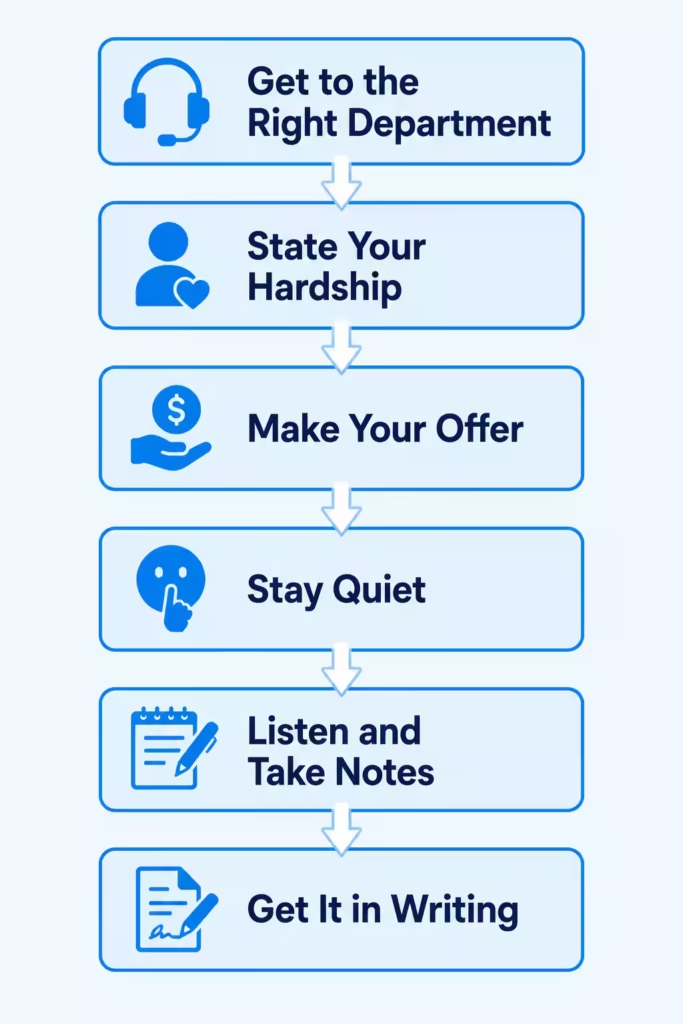
Step 1: Get to the right department. Ask for hardship, collections, or loss mitigation, depending on your account stage.
Step 2: State your hardship in one or two sentences. Keep it factual. Do not overshare or beg. Reps hear stories all day, so short and clear works best.
Step 3: Make your offer. Say the dollar amount and the timeline. Example: “I can pay $3,500 as a lump sum within 14 days to settle this account in full.”
Step 4: Stay quiet. After you make the offer, do not fill the silence. Let the rep respond first. This is one of the most important negotiation tips.
Step 5: Listen and take notes. The rep will either accept, counter, or reject. Write down every number and every term.
Step 6: If accepted, ask for it in writing before you pay. More on this below. Never send money based on a verbal promise.
The rep may ask about your income, other debts, and assets. Answer honestly but briefly. If they push you for more than you offered, use phrases like, “That is truly the most I can gather,” or “I have already stretched to reach this amount.”
If Citi Counters or Rejects Your Offer
Counters are normal. If Citi says no or comes back with a higher number, you have options.
- Raise your offer slightly, but slowly. If you offered 30% and they say 60%, come back with 35% or 40%.
- Ask for a payment plan settlement. Citi sometimes accepts a smaller total spread over 3 to 6 months.
- Ask to speak with a supervisor. Front-line reps often have less flexibility than their managers.
- Hang up and try again in 2 to 4 weeks. Different reps have different daily targets. Time can also grow your leverage as the account ages.
- Do not accept anything just to end the call. A bad deal is worse than no deal.
If they flatly refuse and your account is under 90 days late, that is a strong sign you need to wait longer. Leverage grows with time.
Getting the Settlement Agreement in Writing
A verbal deal is not a deal. Anything not in writing can be denied later, and a rep who leaves the company cannot back up your claim. Protect yourself before any money changes hands.
Ask the rep, “Can you send me the settlement agreement in writing before I send payment?” Every honest rep will say yes. This can come by mail, secure message inside your Citi account, or email in some cases. Wait for that document to arrive. Read every line.
What the Settlement Letter Must Include
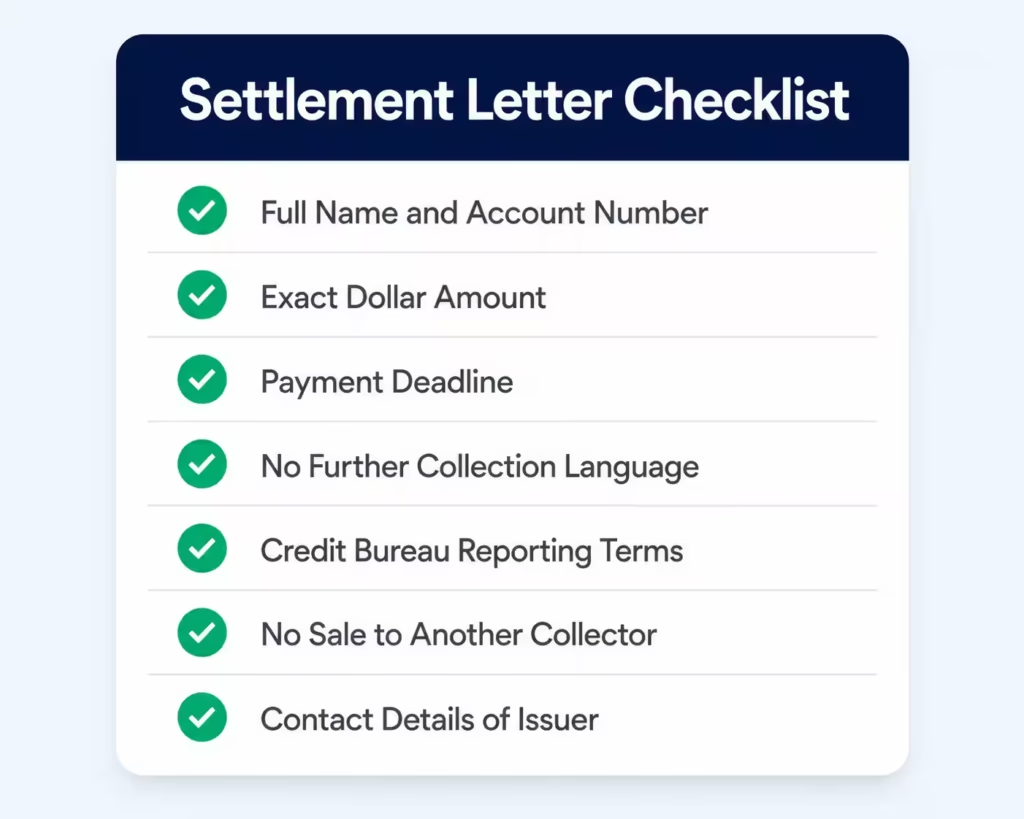
Your written agreement must clearly state:
- Your full name and the last four digits of your Citibank account number.
- The exact dollar amount you will pay.
- The payment deadline (usually 14 to 30 days).
- Clear language that the payment will settle the account in full and Citi will not pursue the remaining balance.
- How Citi will report the account to the credit bureaus after payment. The best language is “paid in full” or “account closed, settled for less than the full balance.”
- A statement that Citi will not sell or transfer the remaining unpaid amount to another collector.
- The name, title, and contact details of the person or department issuing the letter.
If any of these are missing, ask for a revised letter. Do not send payment until it is right.
⚠️ Mistake to Avoid: Do not pay a settlement based on a phone call and a promise that “the letter is on the way.” Once Citi has your money, your leverage is gone. Written first, payment second, always.
How to Make the Payment Safely
Use a payment method that leaves a clear paper trail:
- Bank wire transfer to the account listed in the settlement letter.
- Cashier’s check sent by tracked mail (USPS Certified or FedEx).
- Citi’s official payment portal if the letter directs you there.
Never send cash. Never share your debit card PIN. Never pay through a third-party app that Citi did not name in writing.
Keep copies of the settlement letter, the payment receipt, and your bank statement showing the funds cleared. Store these for at least seven years. You will need them if the debt ever shows up again by mistake.
Check your credit report about 45 days after the payment clears. Confirm the account shows the correct settled status on all three bureaus, Experian, Equifax, and TransUnion. Free reports are available at AnnualCreditReport.com.
If Your Debt Has Already Been Charged Off or Sold to a Collector
Once Citi hits 180 days past due, it charges off the account. Sometimes Citi keeps the debt and works it internally through its recovery team. Other times, Citi sells the account to a third-party debt buyer, often for pennies on the dollar.
You need to find out which one you are dealing with. Pull a fresh copy of your credit report. Look under the account. If Citibank is still listed as the current creditor, you are still negotiating with Citi. If a new company name appears (Midland Credit Management, Portfolio Recovery Associates, LVNV Funding, and similar names are common), the debt has been sold.
If Citi still owns it: Contact Citi’s recovery department. Deals in the 25% to 40% range are common at this stage.
If a collector owns it: Your rights change slightly. Before you offer anything, send a debt validation letter within 30 days of first contact. This forces the collector to prove they own the debt and that the amount is correct. This is your right under the Fair Debt Collection Practices Act, or FDCPA.
Collectors often settle for even less than Citi would, sometimes 20% to 30%, because they bought the debt cheap. Also ask about “pay for delete,” a request that the collector remove the tradeline from your credit report in exchange for payment. Some collectors agree. Get any deletion promise in writing before you pay.
Could You Be Sued While Negotiating
This is the fear that keeps people up at night. Yes, you can be sued while trying to negotiate. Talking to Citi does not pause any legal clock. Here is what you need to know.
When lawsuits usually happen: Most lawsuits against unpaid credit card holders start 6 to 24 months after the last payment. It is more common when the debt has been sold to a collector who specializes in suing.
The statute of limitations: Every state has a time limit on how long a creditor can sue you for unpaid credit card debt. It ranges from 3 to 10 years depending on where you live. You can check your state’s rule through the Federal Trade Commission.
What to do if you receive a summons:
- Do not ignore it. Missing court is the most costly mistake. The court will enter a default judgment against you, which can lead to wage garnishment.
- Respond by the deadline listed in the summons, usually 20 to 30 days.
- Ask for proof of debt. The plaintiff must show they own the account and that the amount is correct.
- Consider a consultation with a consumer rights attorney. Many offer free first calls.
Even during a lawsuit, settlement is still possible and often gets easier because both sides want to avoid a trial. Do not stop talking, but do get legal help.
Tax Consequences of Settling Citibank Debt
Here is the surprise that trips up many people. Forgiven debt is generally treated as income by the IRS. If Citi cancels $600 or more of your debt, it will send you and the IRS a Form 1099-C, Cancellation of Debt. That means you may owe income tax on the amount forgiven.
For example, if you owed $10,000 and settled for $3,500, the $6,500 that was wiped away could show up as taxable income for the year.
But there is good news. Many people who settle debt qualify for the insolvency exclusion, which can reduce or wipe out this tax. You are insolvent for tax purposes when your total debts are greater than the fair market value of everything you own on the day before the debt was forgiven.
To claim the exclusion, you file IRS Form 982 with your tax return that year. The IRS explains the rule in Publication 4681, which walks through cancellation of debt income and the insolvency test in detail.
📌 Did You Know: The insolvency exclusion can save many people the entire tax bill on forgiven debt. If your debts were higher than your assets when the settlement happened, you may owe nothing on the canceled amount.
Talk to a tax professional the year you settle. This is not the moment to guess.
Worked Example: How the Insolvency Exclusion Works
Take Sarah, a 42-year-old operations manager at a small consulting firm. She lost her job in early 2026 and settled a $12,000 Citibank balance for $4,200.
- Forgiven amount: $12,000 minus $4,200 equals $7,800.
- Citi sends her a 1099-C for $7,800.
- The day before the settlement, Sarah’s situation looked like this:
- Total debts: $32,000 (credit cards, car loan, medical bills).
- Total assets: $18,000 (car, checking, retirement).
- Insolvent amount: $32,000 minus $18,000 equals $14,000.
- Because her insolvency amount ($14,000) is greater than her canceled debt ($7,800), Sarah can exclude the entire $7,800 from taxable income.
- She files Form 982 with her tax return and owes zero tax on the forgiven debt.
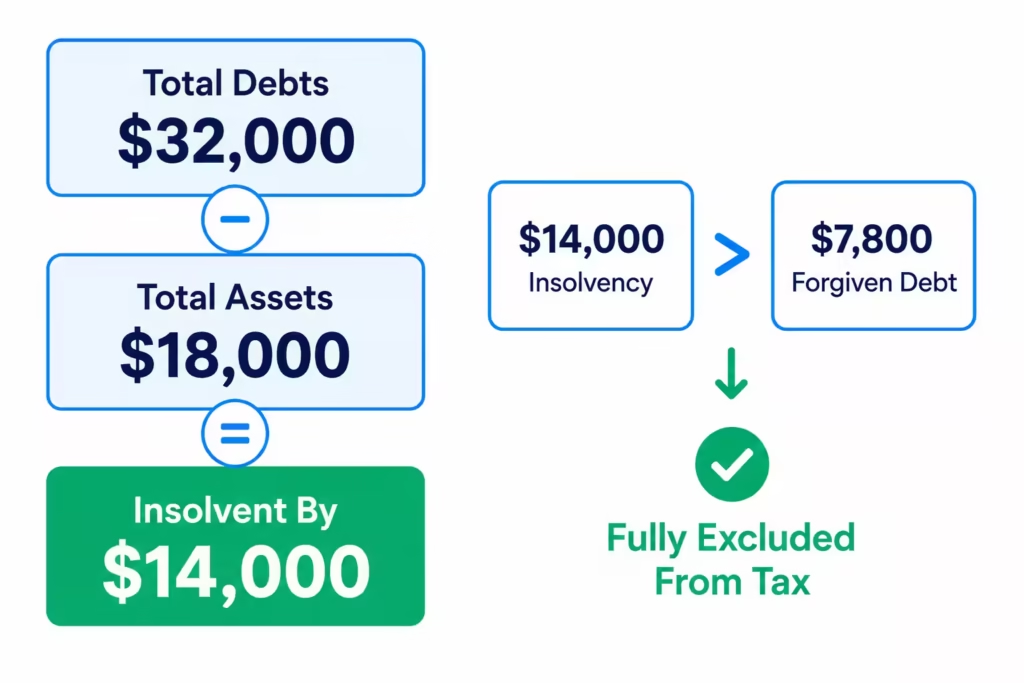
If Sarah had been insolvent by only $3,000, she could exclude only $3,000. The remaining $4,800 would be taxable.
How Settlement Affects Your Credit Score
Settlement helps your finances, but it does hurt your credit report. How much and for how long depends on where your account stood when you settled.
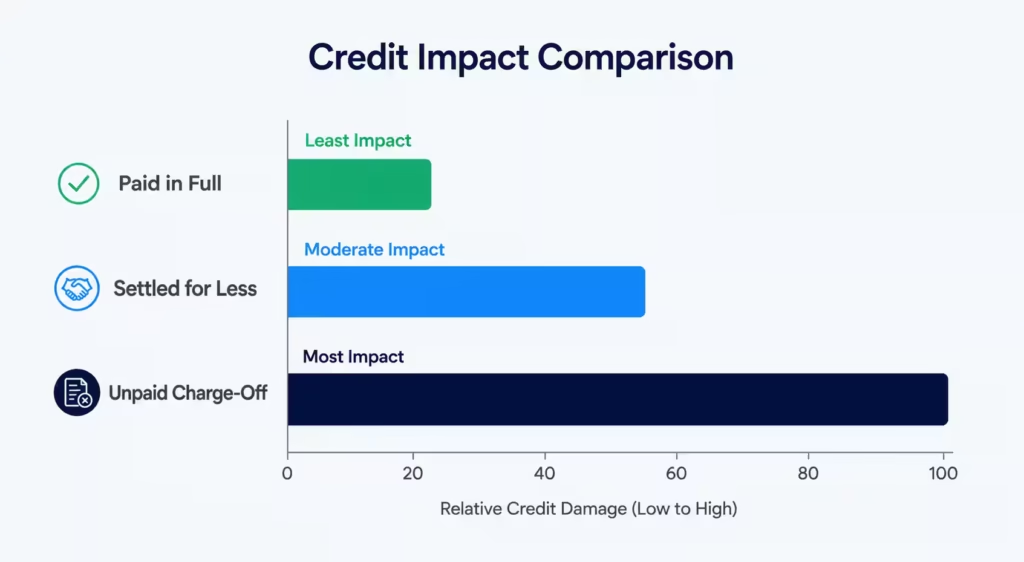
The report notation matters. After settlement, Citi usually reports the account as “settled for less than the full balance” or “paid, settled.” This is worse than “paid in full” but far better than a charge-off that sits unpaid.
Score drop range: Most people see their FICO score drop between 45 and 125 points during and after settlement, based on data from the credit scoring model. The exact hit depends on your starting score. Higher scores fall more; lower scores fall less.
How long it stays: A settled account remains on your credit report for seven years from the date of first delinquency. That does not mean seven years of pain. The damage fades over time, especially after two to three years of clean, on-time behavior on other accounts.
Settlement vs. paying in full: Paying the full balance protects your score more, but that is not always possible. Settlement is almost always better for your score than doing nothing, because an unpaid charge-off with a collector still shows for seven years and looks much worse to future lenders.
Rebuilding after settlement:
- Keep other accounts current every month.
- Open a secured credit card if you cannot get an unsecured one.
- Keep credit utilization under 30% on any new cards.
- Watch your report every few months for errors.
Most people who settle and rebuild carefully see their scores return to the fair or good range within 18 to 36 months.
DIY Negotiation vs. Hiring a Debt Settlement Company
You have two ways to reach a deal with Citi: do it yourself, or hire a debt settlement company. Both can work. Both have real trade-offs.
Doing It Yourself (DIY):
- Cost: Free, other than the settlement itself.
- Control: You choose the offer, the timing, and the terms.
- Speed: Fast. Some deals close in one or two calls.
- Downside: You must handle the calls, the paperwork, and the stress.
Hiring a Debt Settlement Company:
- Cost: Fees usually range from 15% to 25% of the enrolled debt. On a $10,000 balance, that can be $1,500 to $2,500 in fees, on top of what you pay to Citi.
- Control: The firm advises you to stop paying Citi and pay into an escrow account instead. This can trigger charge-off and lawsuit risk earlier.
- Speed: Slower, often 24 to 48 months.
- Upside: Someone else handles the calls. This may be worth it if you have many accounts across many creditors.
FTC rules to know: A settlement firm cannot legally charge you any fee before it actually settles a debt for you. If any company asks for upfront fees, walk away. The FTC’s Telemarketing Sales Rule makes advance fees illegal.
Red flags in a debt settlement company:
- Promises to settle for a fixed low percentage before reviewing your account.
- Requests for upfront fees or monthly payments before results.
- No physical address, no license in your state, or a new business with no history.
- Pressure to sign the same day.
Bottom line: If you have one or two Citi accounts and can handle a phone call, DIY almost always saves money.
If you have five or more creditors and feel overwhelmed, a reputable settlement company may help, but check its record with the Better Business Bureau and your state attorney general first.
Frequently Asked Questions (FAQs)
What is the percentage of Citibank credit card settlement?
Citibank settlements typically range from 25% to 90% of your balance depending on how delinquent your account is. Early delinquency settlements run 80% to 90%, while accounts past 180 days often settle for 30% to 50%.
Will Citibank settle for less?
Yes, Citibank often accepts less as your account ages further into delinquency. Accounts in the 90 to 180 day range see offers of 40% to 60%, and charged-off accounts can drop to 30% to 50%.
Does Citi offer a hardship program?
Yes, Citi offers a hardship program that lowers your interest rate or minimum payment while keeping the full balance intact. This differs from settlement, which reduces the actual amount you owe.
Can you negotiate with Citibank?
Yes, you can negotiate directly with Citibank by calling and asking for the hardship, collections, or loss mitigation department. Preparing your hardship story and target offer beforehand improves your chances of a lower settlement.
Is credit card settlement a good idea?
Settlement can be a smart move if you truly cannot pay the full balance, since it resolves the debt for less money than owed. It does hurt your credit score more than a hardship plan, so it works best after other payment options are exhausted.
Does Citibank sue for credit card debt?
Yes, Citibank or a collector that purchased the debt can sue, usually 6 to 24 months after your last payment. Responding to any court summons by the listed deadline is critical, since ignoring it can lead to a default judgment and wage garnishment.
How much will credit card companies usually settle for?
Most credit card settlements land between 30% and 60% of the balance owed. The exact figure depends on how late the account is, the balance size, and your documented hardship.
What is a good settlement offer for a credit card debt?
A good opening offer is 30% to 40% of your balance, leaving room to negotiate upward if needed. Set a private walk-away number around 50% to 60% and never reveal it to the representative.
What debt collection agency does Citibank use?
Citibank often sells charged-off debt to third-party collectors such as Midland Credit Management, Portfolio Recovery Associates, or LVNV Funding. Check your credit report to see which company currently lists the account as the creditor.
How can I settle my credit card debt with no money?
You’ll need at least a partial lump sum to settle, which some people gather from a tax refund, family help, or a small retirement withdrawal. If you truly have no funds available, ask Citi about a hardship plan or a payment-plan settlement spread over 3 to 6 months instead.
The Bottom Line
Settling a Citibank credit card balance can be challenging, but it’s manageable with the right knowledge.
This guide discusses Citi’s settlement approach. It includes topics like:
- Delinquency stages for leverage
- Preparing for offers
- Securing agreements in writing
- Handling sold debts
- Lawsuit risks
- Tax implications of Form 1099-C
- Credit report impacts
The best method for most readers is to negotiate directly. This works best when your account is 90 to 180 days past due. Make sure to support it with a written agreement and a tax check from a professional.
If you know a friend or family member drowning in card balances, please share this guide on social media. It could save them thousands of dollars and years of stress.