
If you’re staring at an American Express bill you can’t pay, you’re not alone, and you’re not out of options. Missing payments feels scary, especially when Amex has a reputation for being tough. Many people wonder if they can really settle Amex debt for less without filing bankruptcy or ruining their finances forever.
Yes, American Express does settle debt, usually for 30% to 60% of the balance, but the timing, paperwork, and approach all matter.
This guide walks you through the full process, from the collections timeline to the tax paperwork, so you know exactly what to do next.
Key Takeaways
This guide explains how to settle credit card debt with American Express, including the collections timeline, realistic settlement percentages, negotiation steps, and tax consequences of forgiven debt.
Core Facts:
- American Express typically settles for 30% to 60% of the balance, with the strongest negotiating window occurring after the account charges off at 180 days past due.
- Amex often keeps debt in-house through its Advanced Collections Mitigation Unit rather than selling it, though accounts can also be placed with outside agencies or law firms like Zwicker & Associates.
- A written settlement agreement must be received and reviewed before any payment is sent, since a verbal promise alone provides no protection.
- If sued, a written answer must typically be filed within 20 to 30 days, depending on the state, or Amex can win by default judgment.
- A settled account is reported as “Settled” and stays on the credit report for seven years from the date of first delinquency.
- Forgiven debt of $600 or more can trigger a Form 1099-C and be treated as taxable income, though the insolvency exclusion may eliminate that tax if debts exceeded assets before the settlement.
Best for:
- Readers who have missed Amex payments and cannot afford the minimum but have or can raise a lump sum to offer as settlement.
- People weighing whether to negotiate directly with Amex, use a debt settlement company, or consider bankruptcy based on their balance size.
- Anyone who has been sued by American Express and needs to understand their options before a court deadline.
Does American Express Actually Settle Debt?
American Express does settle debt, but it plays harder than most other big card issuers. Chase and Citi are known to move quicker on lower percentages. Amex, on the other hand, tends to hold its ground longer and push for higher payoff amounts.
The reason comes down to how Amex handles collections. Unlike many issuers that quickly sell charged-off debt to third-party junk debt buyers, Amex keeps a lot of its debt in-house. Its own internal team, along with law firms it hires, works to collect the balance directly. This gives Amex more control, more patience, and more willingness to sue if talks break down.
So the answer is yes, you can negotiate an American Express settlement. Just know that you’ll likely face a firmer negotiator than you would with other card companies. Being prepared, patient, and having a real lump sum ready will move the conversation forward faster than empty promises.
💡 Pro Tip: Amex remembers customers. If you have other Amex products, closing or settling one account can affect your standing across all of them. Weigh this before making a first offer.
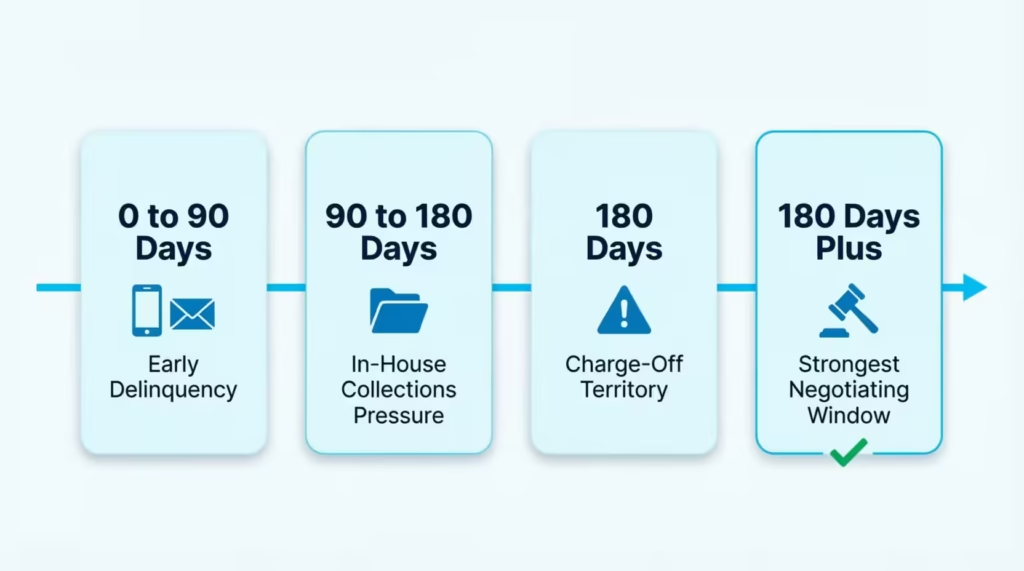
Amex’s Collections Timeline (0–180+ Days)
Understanding where you sit in the delinquency timeline is the single biggest factor in your leverage. Amex treats a 45-day-late account very differently from a 150-day-late account. Each phase opens or closes certain doors, and knowing which door is open helps you plan your next move.
Days 0 to 90: Early Delinquency
In the first three months, Amex is not usually open to a lump-sum discount. During this stage, the company assumes you can still catch up. You’ll get phone calls, emails, and letters asking you to bring the account current. Late fees and higher interest may kick in, and the account will start showing as delinquent on your credit report after 30 days.
At this point, your best option is not settlement. It’s the hardship program, covered below.
Days 90 to 180: In-House Collections Pressure
Between 90 and 180 days late, Amex ramps up the pressure. Calls come more often. Letters get sharper. You might hear from Amex’s recovery team. They’re also known as the Advanced Collections Mitigation Unit.
Settlement talks can begin here, but offers are usually met with pushback. Amex often waits until closer to charge-off to accept meaningful discounts. Expect them to ask for 70% or more during this window.
Day 180 and Beyond: Charge-Off Territory
Once an account hits 180 days past due, federal banking rules require Amex to charge it off, meaning they write it off as a loss on their books. This is when real settlement talks usually happen. Amex still owns the debt in many cases, but now they know full recovery is unlikely.
This is your strongest negotiating window. Offers in the 30% to 50% range become realistic. But there’s a downside: after charge-off, Amex is also more likely to file a lawsuit if you go silent.
Amex’s Financial Hardship Program (Before Charge-Off)
If you’re not yet at charge-off but know you can’t keep up with payments, Amex offers a financial hardship program. This isn’t the same as a settlement. It’s a temporary plan that lowers your interest rate, waives fees, and sets a fixed monthly payment for 6 to 12 months.
To qualify, you’ll need to call Amex directly and explain your situation. Job loss, medical bills, divorce, and reduced income are all valid reasons. The account often gets closed as part of the deal, and you must stick to the payment schedule, or you lose the arrangement.
The hardship program is a better fit if you can afford some payment but not the full minimum. Settlement is a better fit if you truly cannot pay and have a lump sum ready.
Who You’re Actually Negotiating With
One of the most confusing parts of this process is figuring out who’s on the other end of the phone. With Amex, it depends on how old the debt is.
For accounts still with American Express, you’ll talk to the Advanced Collections Mitigation Unit or a similar team inside the company. This team has real authority to approve or deny settlement offers. They follow internal guidelines but can move on price if you push politely.
If your account has been placed with an outside collection agency, you might deal with a third party. Amex commonly rotates accounts between agencies like Gatestone & Co. and others. These agencies work on commission, so they want a deal, but their approval limits are set by Amex.
If Amex has already sent your file to a law firm for legal action, you’ll be dealing with attorneys. The most common name here is Zwicker & Associates, which handles a large share of Amex’s litigation work across the country. These firms can still settle, but the tone is more formal, and any deal must be tied to the lawsuit paperwork.
Knowing who you’re talking to helps you frame your offer. Ask upfront: “Is this account still owned by American Express, or has it been placed for collection?” You have a right to know.
What Percentage Amex Will Realistically Accept
The most common question people ask is: how much will Amex actually settle for? The honest answer sits between 30% and 60% of the balance, depending on where you are in the timeline and how strong your hardship story is.
Here’s a general breakdown of what to expect:
| Debt Stage | Typical Settlement Range | Notes |
|---|---|---|
| 90 to 180 days late | 60% to 80% | Amex is still hopeful for full recovery |
| Just after charge-off (180+ days) | 40% to 60% | The best sweet spot for most people |
| With a collection agency | 30% to 50% | Agencies want quick wins |
| After a lawsuit is filed | 50% to 70% | Legal fees push the number up |
Several factors move the needle. A documented hardship, like a recent job loss or medical event, helps. So does a clean lump sum, ready to send today. Larger balances sometimes get better percentages because Amex would rather recover 40% of $30,000 than fight for years. Smaller balances under $3,000 sometimes get worse percentages because Amex has less to lose by holding out.
Start your first offer low, around 25% to 30%. Amex will counter higher. Meeting in the middle at 40% to 50% is a fair result for most people.
How to Fund a Lump-Sum Settlement Offer
Amex almost always wants a lump sum. Payment plans are possible but rare, and the discount is much smaller when you spread payments out. So the real question is: where do you find the cash?
Common funding sources include:
- Tax refunds. A refund is often the cleanest source. If you file early and expect a decent return, time your settlement talks around that money hitting your account.
- 401(k) or retirement loans. Borrowing from your own retirement is possible, though there are downsides. Talk to a financial advisor first, since early withdrawals can trigger tax penalties.
- Family loans. A parent, sibling, or spouse may help if the terms are clear and written down. Family loans work best when both sides treat it like a real loan, with a simple written agreement.
- Selling an asset. A second car, electronics, jewelry, or collectibles can turn into settlement cash within days.
- Home equity. A HELOC is possible but risky. You’re trading unsecured credit card debt for debt tied to your home. Only use this option if you’re sure you can pay the HELOC back on time.
- Side income or overtime. Saving up over 2 to 3 months of extra work is slow but safe. Amex will usually wait if they know a serious offer is coming.
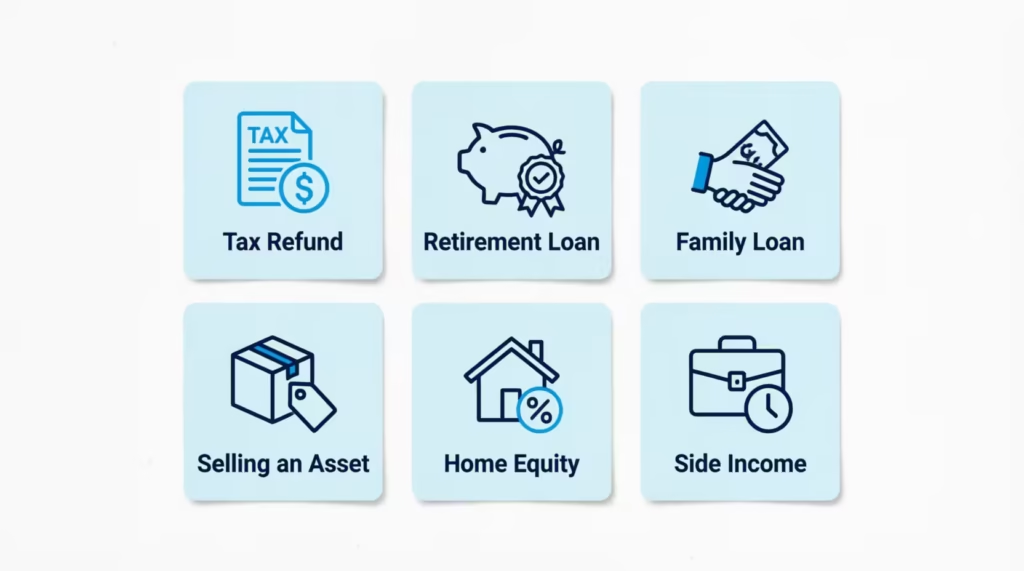
Whatever the source, keep the money separate. Open a small savings account just for the settlement fund. That way, you’re not tempted to spend it, and you can prove to Amex that the money is real when they ask.
⚠️ Mistake to Avoid: Don’t send a partial deposit before you get a written settlement agreement. Money sent without written terms can be applied to the balance as a regular payment, and you lose your leverage.
Step-by-Step: How to Negotiate a Settlement with Amex
A clear plan turns a scary phone call into a business conversation. Follow these steps in order.
Step 1: Gather your documents. Get your last three Amex statements, your latest credit report, and proof of hardship if you have it. This can be a layoff letter, medical bills, or bank statements. Access your Amex account at americanexpress.com to download statements.
Step 2: Know your numbers. Write down the full balance, the charge-off date if any, and the maximum lump sum you can pay. Never offer more than 60% on your first call.
Step 3: Call the right number. For accounts still with Amex, call the number on the back of your card or on your most recent statement. Ask to be transferred to the settlement or hardship team.
Step 4: Open with your story. Explain your hardship in plain language. Keep it short and true. No begging, no drama, just facts.
Step 5: Make your first offer low. Start at 25% to 30% of the balance. Expect a counter. Do not accept the first counter.
Step 6: Negotiate calmly. Push back once or twice, but stay polite. If they refuse to move below 60%, ask to speak with a supervisor or say you’ll need to call back.
Step 7: Get the deal in writing. Never send money based on a phone promise.
Step 8: Pay on time and keep proof. Once you have the written agreement, send payment exactly as agreed and save the confirmation.
What to Say on the Call
The words you use matter. Here’s a script that works for most Amex hardship calls:
“Hello. I have an Amex account with a balance of about $[amount]. I’ve had a serious financial hardship. [Explain briefly.] I don’t want to file bankruptcy, and I have a small amount of money from [source] that I could offer as a one-time lump sum to close this account. I’d like to offer $[25% of balance] to settle the account in full. Is that something we can work toward today?”
If the rep pushes back, stay calm:
“I understand. That’s the most I can pay right now. I’m calling other creditors too, and I have to spread the money I have. Can you talk with a supervisor about this offer?”
If they still refuse, don’t panic. Thank them, hang up, and try again in a week. Different reps have different approval limits.
Getting the Settlement Agreement in Writing
This is the single most important step in the entire process. A verbal deal means nothing.
Your written settlement agreement, sometimes called a settlement letter, must clearly include:
- The exact settlement amount you’ll pay
- The account number being settled
- A clear statement that the payment settles the debt in full
- The payment method and deadline
- How the account will be reported to the credit bureaus (usually “Settled” or “Settled for less than full balance”)
- Confirmation that no future collection will happen on the remaining balance
- Signatures or an official letterhead from Amex or its representative
Ask for the letter to be emailed or mailed before you send a dime. Review it carefully. If anything is missing, ask for changes. Only after you have the signed letter in hand should you make the payment.
If Amex Has Already Sued You
Getting sued feels terrifying, but a lawsuit doesn’t end your ability to settle. In fact, many Amex settlements happen after a lawsuit is filed. The key is to respond, not ignore.
If you get a court summons, you usually have 20 to 30 days to file an answer, depending on your state. If you miss this window, Amex wins automatically. This means they can garnish wages, freeze bank accounts, or place liens.
Steps to take right away:
- File a written answer with the court. Even a simple denial keeps your case alive.
- Contact the law firm listed on the summons. Firms like Zwicker & Associates handle Amex cases and will often talk about settlement.
- Request debt validation. Ask them to prove the debt is yours and the amount is correct.
- Talk to a consumer attorney. Many offer free first consultations, and some take cases on contingency.
Settlement offers after a lawsuit tend to be higher, usually 50% to 70%, because legal fees have piled up. But settling still beats a judgment on your record.
Your Rights During Negotiation (FDCPA Basics)
The Fair Debt Collection Practices Act protects you from abusive tactics by third-party collectors. The full law is available on the FTC website.
Under the FDCPA, collectors cannot:
- Call before 8 a.m. or after 9 p.m. in your local time
- Contact you at work if you’ve told them not to
- Use threats, profanity, or harassment
- Tell your family, friends, or coworkers about the debt
- Lie about the amount owed or the consequences of not paying
You also have the right to demand debt validation in writing within 30 days of first contact. When you make that request, the collector must stop calling until they send proof of the debt.
Note that the FDCPA applies to third-party collectors and law firms, not to Amex when it collects its own debt. Still, Amex generally follows similar rules to avoid state-level consumer protection lawsuits.
Credit Score and Credit Report Impact of a Settlement
A settlement can hurt your credit, but it may not be as bad as you think. This is especially true if your credit is already struggling from missed payments.
A settled account gets reported as “Settled” or “Settled for less than the full amount.” That notation stays on your report for seven years from the date of first delinquency. The clock starts from your first missed payment, not from the settlement date.
Here’s what to expect in terms of credit damage:
- If your score was already low from months of missed payments, a settlement adds a small extra dent, maybe 20 to 50 points.
- If your score was still good when you settled, expect a bigger drop, sometimes 100 points or more.
- Charge-off notations, if present, remain the biggest drag on your report.
The good news: over time, the impact fades. Most people who settle rebuild their scores in 12 to 24 months. They do this by paying bills on time, keeping credit card use low, and adding a secured card or credit-builder loan. After seven years, the account falls off the report entirely.
Also, ask Amex during negotiation if they’ll report the account as “Paid in Full” instead of “Settled.” Most refuse, but a few reps have flexibility. It never hurts to ask.
Tax Consequences: The 1099-C and How to Handle It
Many people don’t realize forgiven debt can be taxed as income. If Amex forgives $600 or more, they’ll send you a Form 1099-C, which they also send to the IRS. Details are on the IRS Form 1099-C page.
Here’s how it works. Say you owed $10,000 and settled for $4,000. The $6,000 Amex wrote off may count as taxable income on that year’s tax return. If you’re in the 22% federal tax bracket, that could mean an extra $1,320 owed to the IRS.
But there’s a critical escape hatch: the insolvency exclusion. If your total debts were more than your total assets right before the debt was forgiven, you may not owe tax on the forgiven amount.
Here’s a simple way to check insolvency:
- Add up everything you own: bank accounts, retirement, cars, home value, personal items.
- Add up everything you owe: mortgages, car loans, credit cards, medical bills, student loans.
- If your debts are higher than your assets, you were insolvent by the difference.
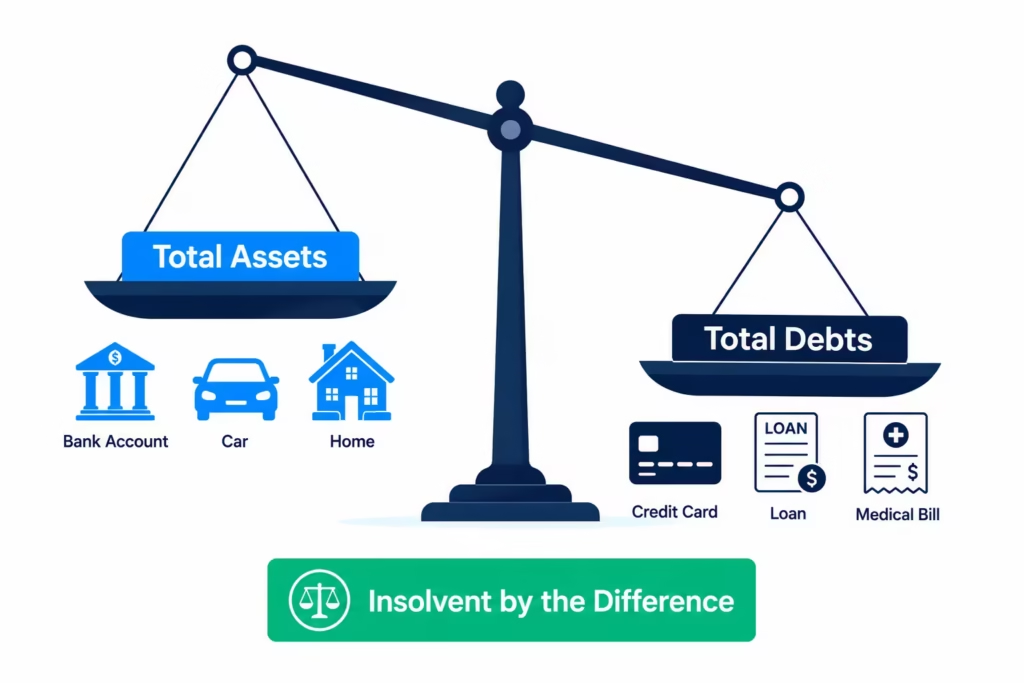
If the forgiven amount is less than or equal to your insolvency, you can exclude it from your taxable income using IRS Form 982. The IRS explains the process on its insolvency exclusion page.
📌 Did You Know: Most people who settle credit card debt qualify for the insolvency exclusion because their debts already outweigh their assets. Running the math before tax time can save thousands of dollars.
A tax professional can help you file Form 982 correctly. The cost is usually small compared to the tax savings.
DIY Negotiation vs. Debt Settlement Company vs. Bankruptcy
Choosing the right path depends on your balance size, income, and comfort level with tough phone calls.
DIY negotiation works best when:
- Your Amex balance is under $25,000
- You can gather a lump sum on your own
- You’re comfortable making a few tough calls
- You want to avoid extra fees
The upside is simple: no middleman, no fees, and full control. The downside is the stress and time it takes to negotiate calls yourself.
A debt settlement company may fit when:
- You have multiple large debts (Amex plus two or more other creditors)
- Total debt is over $10,000
- You don’t have time or confidence to negotiate
- You can pay their fees (usually 15% to 25% of enrolled debt)
The trade-off: these companies often tell clients to stop paying creditors, which triggers lawsuits and deep credit damage. They also charge sizable fees that eat into the savings. Choose a company that only charges after a settlement is reached, not upfront.
Bankruptcy may make sense when:
- Total debt across all creditors is over $30,000 to $50,000
- You have no lump sum and no realistic way to raise one
- You’re already being sued by multiple creditors
- Your income is too low to catch up in three to five years
Chapter 7 bankruptcy can wipe out unsecured credit card debt in about four to six months. Chapter 13 sets up a 3 to 5 year payment plan. Both have serious credit impacts, but for someone truly stuck, bankruptcy can be a clean start.
A quick decision framework: if you can pay 40% of what you owe in a lump sum, DIY negotiation is almost always the best move. If you can’t reach 40% and have several debts, look at settlement companies. If you can’t pay anything meaningful and are drowning, talk to a bankruptcy attorney.
Frequently Asked Questions (FAQs)
Will American Express actually settle credit card debt?
Yes, American Express settles debt, typically for 30% to 60% of the balance depending on the account’s stage. Amex negotiates harder than issuers like Chase or Citi and often prefers holding out for a higher payoff before agreeing to a discount.
What happens if American Express sues you for unpaid debt?
You still have the right to negotiate a settlement even after being sued, often at a higher rate of 50% to 70%. You typically have 20 to 30 days to file a written answer with the court, and missing that deadline lets Amex win by default judgment.
What is a reasonable settlement offer for Amex credit card debt?
A reasonable opening offer is 25% to 30% of the balance, with most people settling between 40% and 50% after their account charges off. Starting low gives you room to negotiate up if Amex counters with a higher number.
What percentage will Amex settle for after charge-off?
After the 180-day charge-off point, Amex typically accepts 40% to 60% of the balance. This window is usually the strongest time to negotiate, since Amex has already written off the debt as a loss.
Is it worth settling credit card debt instead of paying in full?
Settling can save you a significant portion of what you owe, sometimes cutting a $10,000 balance down to $4,000 or less. The tradeoff is a “Settled” mark on your credit report for seven years and possible taxable income on the forgiven amount.
Will my credit score go up after I settle with Amex?
Your score won’t go up immediately after settling, since the account is reported as “Settled” rather than “Paid in Full.” Most people expect scores to drop short-term. But they often recover within 12 to 24 months by making on-time payments elsewhere.
Can you set up a payment plan instead of a lump sum with Amex?
Amex strongly prefers a lump-sum settlement over payment plans, and the discount is much smaller if you spread payments out. If you can’t pay a lump sum, the financial hardship program offers a fixed monthly plan for 6 to 12 months instead.
Do you have to pay taxes on a settled Amex debt?
If Amex forgives $600 or more, they’ll issue a Form 1099-C and the IRS may treat that amount as taxable income. Many people use the insolvency exclusion to avoid this tax. They do this when their total debts are greater than their total assets before settling.
What is the lowest percentage a debt collector will typically accept?
Once an Amex account moves to a collection agency, offers as low as 30% of the balance are sometimes accepted. Agencies work on commission and often want a quick resolution, though final approval limits are still set by Amex.
Wrapping Up
Settling with American Express takes patience, preparation, and a real plan. The timeline matters, the paperwork matters even more, and knowing your rights along the way keeps you in control.
Based on the numbers most consumers report, a lump-sum offer between 40% and 50% after charge-off gives most people the best mix of savings and closure. Get the deal in writing. Budget for potential taxes. Choose the path that fits your finances: DIY, settlement company, or bankruptcy.
If a friend or family member is struggling with credit card debt and doesn’t know Amex will settle, share this guide with them. It could save them thousands of dollars and years of stress.