
You hold an Amex card. You’ve heard you can earn bonus points when a friend signs up. But every time you open the app, you can’t find the referral link, you’re not sure which card to refer from, and you have no idea if your friend has to apply for the exact same card you carry. That’s exactly why I put this guide together.
The Amex refer-a-friend program is one of the easiest ways to stack extra Membership Rewards points, SkyMiles, or Hilton points, but only if you know where to click.
To refer a friend quickly, log in at americanexpress.com/en-us/referral. Then, choose the card with the best bonus and send your friend the direct link.
I’ll guide you through each step, the card types, the new April 2026 rules, troubleshooting, taxes, and the small details that determine if your bonus posts.
Key Takeaways
This guide explains how to refer a friend on American Express, covering where to find your referral link, which card to refer from for the highest bonus, co-branded versus Membership Rewards card rules, the 2026 five-referral annual cap, and the tax implications of earning referral bonuses.
Core Facts:
- The Amex referral portal is at americanexpress.com/en-us/referral; the same feature is accessible in the app under Membership > Earn More > Refer a Friend, and the link sometimes appears in one location but not the other.
- The referral bonus you earn is set by the card you refer from, not by the card your friend applies for, so cardholders with multiple Amex cards should always refer from the card showing the highest current offer.
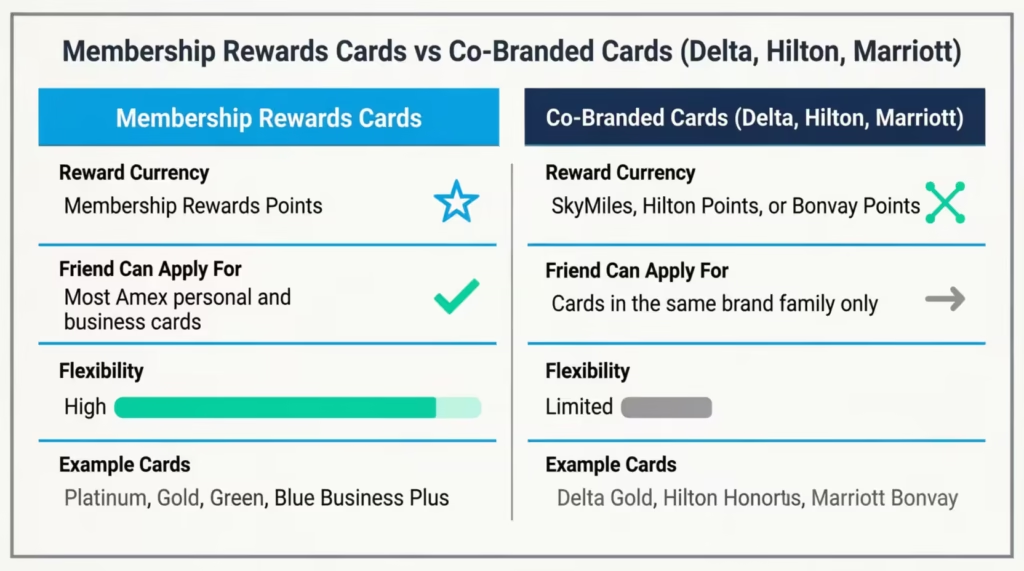
- Membership Rewards cardholders (Platinum, Gold, Green, Blue Business Plus, Business Platinum) can refer friends to most Amex personal or business cards; co-branded Delta, Hilton, and Marriott referral links only work within their own card family.
- As of April 8, 2026, the referral cap changed from a points-based limit to five approved referrals per card per calendar year; a cardholder holding a Platinum and a Gold can earn up to ten referral bonuses per year.
- Referral bonuses are treated as taxable income; Amex issues a 1099-MISC to cardholders who earn $600 or more in referral value in a calendar year, valuing each Membership Rewards point at 1 cent.
- Your friend must apply through your specific link at the time of application; applying through a public Amex page, a search result, or a bookmarked link after navigating away voids the referral.
Best for:
- Amex cardholders who hold a Platinum or Gold card and want to understand how to maximize the referral bonus by choosing the right card to refer from.
- People troubleshooting a missing referral bonus or a disappearing referral option in their Amex account.
- Cardholders approaching the $600 referral value threshold who need to understand the 1099-MISC tax reporting implications before earning additional bonuses.
How to Refer a Friend to American Express
Most cardholders never use the referral feature because it sits behind a portal they never visit. The good news: once you know the path, generating and sending a link takes under two minutes.
Start by going directly to the Amex referral portal and signing in with your normal Amex username and password. The landing page is the central hub for everything. After you log in, the site shows you every card on your account that currently has an active referral offer, along with the bonus you’d earn for each one.
From there, the flow is short:
- Pick the card you want to refer to.
- Review the current referral offer attached to that card.
- Click “Refer a Friend” or “Generate Link.”
- Choose whether to send by email through Amex’s tool, or copy the direct link to share with yourself.
- Agree to the program terms.
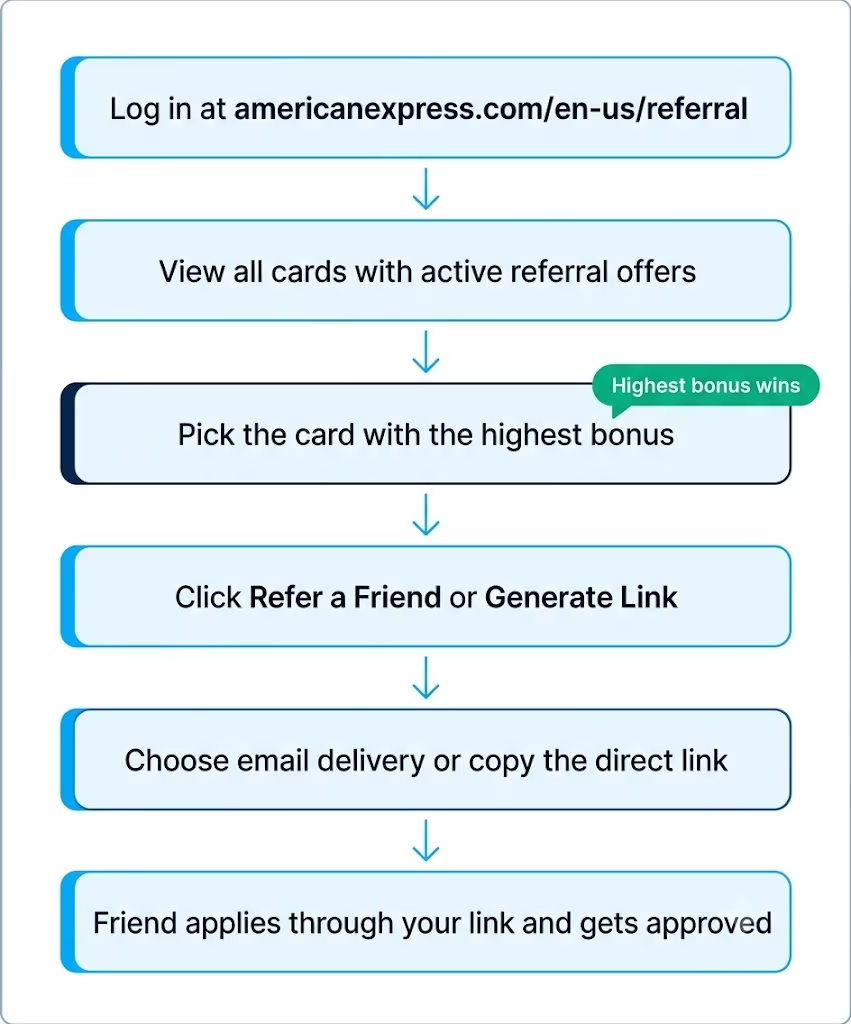
Each card on your account has its own offer. The bonus tied to that card is what you’ll earn if your friend is approved, no matter which Amex card they end up choosing.
So before you send anything, scan the list and compare the bonuses. If your Platinum is showing 30,000 points and your Gold is showing 15,000, you’ll want to refer from the Platinum even if your friend wants to apply for a Gold.
💡 Pro Tip: Check both the website and the app before deciding which card to refer from. Sometimes a referral offer appears in one place but not the other, especially during promotional periods.
How to Find Your Referral Link in the Amex App
Many readers prefer the mobile app because they already use it for daily account checks. The path inside the app is slightly different from the website, but it’s just as quick.
Open the Amex app and log in. At the bottom of the screen, tap the Membership tab. Scroll down to the section labeled Earn More, then tap Refer a Friend. The app then shows you each card on your account along with its current referral offer.
Tap the card you want to refer from, agree to the terms, then tap Share. The app uses your phone’s native share sheet, so you can send the link through text messages, WhatsApp, email, Messenger, or any other app on your phone. This is usually the fastest method if you’re already on your phone and texting the person you want to refer.
If you don’t see a “Refer a Friend” option under Earn More, that’s a separate issue covered later in the troubleshooting section.
How to Send the Referral Link
Once you’ve generated the link, you have two ways to deliver it to your friend. Each has trade-offs you should know before choosing.
The email method lets Amex send the referral on your behalf. You enter your friend’s name and email address, and Amex emails them a branded message with the link inside. This looks clean and professional.
But there’s a catch: if your friend opted out of Amex marketing emails before, they won’t get the message. They never see it, never click, and no bonus posts. You won’t be told the email failed either.
The direct link method is more reliable. You copy the referral URL and paste it yourself into a text, WhatsApp message, email, or DM. Your friend clicks the link, lands on the application page, and applies from there. Because you control the delivery, there’s no risk of an email filter or opt-out blocking it.
Either way, the most important rule is this: your friend must use the link at the time they apply. If they bookmark it, navigate away, and later apply through a Google search or the main Amex homepage, the referral won’t count, and you earn nothing.
Which of Your Amex Cards Should You Refer From
If you hold more than one Amex card, this is where most cardholders leave easy points on the table. The bonus you earn is set by the card you refer from, not by the card your friend applies for. That single rule changes everything about your strategy.
Open the referral landing page and look at every card listed in your account. Each one displays its own current offer. These offers move around. Platinum and Gold cards have higher annual fees.
They usually offer bigger per-referral bonuses. These bonuses often range from 15,000 to 40,000 Membership Rewards points when active. Cash-back cards, like Blue Cash Preferred, typically give smaller bonuses. You might see rewards from $50 to $250 in statement credits for each approved referral.
Here’s the practical logic: Suppose you hold a Platinum showing a 30,000-point offer and a Gold showing a 15,000-point offer, and your friend wants the Gold. Many people instinctively refer to the Gold because that’s the card their friend wants. That’s the wrong move. Refer from the Platinum, and your friend can still apply for the Gold through the link. You earn 30,000 points instead of 15,000 for the same approval.
The decision tree is simple:
- Hold multiple cards? Compare every active offer side by side.
- Always refer to the card with the highest current bonus.
- Don’t worry about matching your card to your friend’s choice as long as you hold a Membership Rewards card.
- If you only hold a co-branded card (Delta, Hilton, Marriott), the rules change. That’s covered in the co-branded section below.
⚠️ Mistake to Avoid: Don’t generate a referral link from a card just because you use it most. The card with the highest current offer is the one that pays you, even if it’s the card you barely touch.
Which Cards Can Your Friend Apply For
A common misconception keeps people from referring friends at all. Many cardholders think their friend has to apply for the same card they hold. For most Amex products, that’s not true.
If your card earns Membership Rewards points, such as the Platinum, Gold, Green, Blue Business Plus, or Business Platinum, your friend can apply for most Amex personal or business cards.
They can use your link to do this. They aren’t locked into the card you sent them from. When they click your link, they see a button labeled “View All Cards with a Referral Offer.” Tapping that opens a list of every Amex card they can apply for and still credits the referral back to you.
Here’s a concrete example. You hold the Gold Card, and you send a referral link to a friend who’s been eyeing the Delta SkyMiles Gold for free checked bags.
Your friend clicks your link, taps “View All Cards,” picks the Delta Gold, applies, and gets approved. You still earn your Membership Rewards points referral bonus from the Gold Card. Your card triggered the link, so your friend gets the Delta card welcome offer.
One more important detail: the welcome offer your friend sees through a referral link is often higher than the one on the public application page.
A card showing 60,000 points to the general public might show 75,000 or even 90,000 points through a referral. This isn’t guaranteed every time, but it happens often enough that referral links are usually the better path for the friend, not just for you.
Co-Branded Card Rules (Delta, Hilton, and Marriott)
The flexibility above does not apply to co-branded cards. If your only Amex card is a Delta, Hilton Honors, or Marriott Bonvoy card, the rules are tighter.
When you refer from a co-branded card, your friend can only apply for another card in the same brand family. A Delta Gold cardholder can refer friends to other Delta Amex cards, including Delta Blue, Delta Gold, Delta Platinum, and Delta Reserve, plus the business versions.
They cannot refer to the regular Gold Card, Platinum Card, or any non-Delta product. The same logic applies to Hilton and Marriott referrals.
You also earn the co-branded currency as your bonus, not Membership Rewards points. Refer from a Delta card, and you earn SkyMiles. Refer from a Hilton card, and you earn Hilton Honors points.
Refer from a Marriott Bonvoy card, and you earn Bonvoy points. This matters because those currencies don’t transfer to airline partners the way Membership Rewards do, so the value calculation looks different.
If you hold both a Membership Rewards card and a co-branded card, you have flexibility. If your friend wants many options, use the MR card. If they want a specific hotel or airline product, and the SkyMiles or hotel point bonus is good, then go for the co-branded card.
How to Refer a Friend for the Amex Platinum Card
The Platinum Card draws the most referral search traffic of any Amex product, and for good reason. When Platinum referrals are active, the bonus per referral is often among the highest in the Amex portfolio. It can reach 30,000 to 40,000 Membership Rewards points for each approved application.
The catch is that not every Platinum cardholder sees the referral option, and many lose access for stretches of weeks or months at a time. Amex doesn’t publish an explanation. The offer appears, disappears, and sometimes returns without any clear pattern. This is a real and ongoing issue, not a bug on your end.
To check whether your Platinum currently has an active referral:
- Log in to the Amex referral portal and look for your Platinum card in the card list.
- If it doesn’t show there, open the Amex app, tap Membership, then Earn More, then Refer a Friend.
- If the card appears in only one place (app or web), use that one to generate the link.
- If neither shows your Platinum, your referral access is likely paused. See the troubleshooting section below.
When your Platinum referral is live, your friend can apply for any Amex card through the link, not just the Platinum. They’re not restricted to the Platinum itself. So even if a friend wants a Gold, a Hilton card, or a Delta card, you can refer them with your Platinum and earn the Platinum’s bonus value.
Set realistic expectations for the bonus amount. The offer changes. Some months it’s higher, some months it’s lower, and some months it’s gone entirely. Always check the current offer before sending.
Referring a Friend for the Amex Gold Card
The Gold Card referral process mirrors the Platinum exactly. Same portal, same app path, same logic. The only differences are the bonus amount and the consistency of availability.
When Gold referrals are active, the bonus typically sits in the 15,000 to 25,000 Membership Rewards points range per approved friend. Gold cardholders face the same issue with disappearing referral access as Platinum cardholders. However, Gold Card referrals often appear more consistently in many accounts.
Like the Platinum, a Gold Card referral lets your friend apply for any eligible Amex card. They don’t have to choose the Gold. If they pick a different card and get approved, you still earn the Gold’s referral bonus.
How to Refer a Friend Using a Delta Amex Card
If you hold a Delta SkyMiles American Express card, the referral process gives you SkyMiles instead of Membership Rewards points, and the rules around what your friend can apply for are tighter.
Start at the referral portal or app. Sign in, then look for your Delta card on the list. Select it, review the current offer, and generate a link the same way you would for any other card. The interface and steps are identical. What changes are in the currency and the eligibility.
When you send a Delta referral link, your friend can apply for any card in the Delta Amex family:
- Delta SkyMiles Blue
- Delta SkyMiles Gold (personal and business)
- Delta SkyMiles Platinum (personal and business)
- Delta SkyMiles Reserve (personal and business)
They cannot use your Delta referral to apply for a regular Gold, Platinum, Hilton, or Marriott card. The link is locked to the Delta family.
The bonus you earn comes in SkyMiles, not points. The standard Delta referral bonus tends to be lower than what elevated promotional offers can push it to.
During off-promotion months, expect something like 5,000 to 15,000 SkyMiles per approved friend, depending on the card. During elevated promotions, that number can climb meaningfully higher. If you have a friend who’s flexible on timing, it’s worth checking the referral page every few weeks to see if an elevated offer has appeared.
The bonus posting timeline is the same as any other Amex referral. Amex says it takes 8 to 12 weeks after approval. But really, SkyMiles often show up in your Delta account just days after your friend’s approval.
What Your Friend Gets When You Refer Them
This section often gets ignored, but it matters. If your friend feels they’re getting a worse deal than going through Amex’s normal application page, they won’t use your link. Understanding what they actually receive helps you frame the referral honestly.
When your friend applies through your referral link, they see a welcome offer attached to the card they choose. That welcome offer is sometimes higher than the public offer Amex shows on its main application pages.
As an example, the public Gold Card welcome offer may be 60,000 points, while the referral version your friend sees could be 75,000 or 90,000 points. This isn’t a fixed bump. The size of the elevated welcome offer can vary between different referrers for the same card, depending on Amex’s targeting logic.
The friend has to meet two conditions for the referral and the welcome offer to apply:
- They must be a new cardmember for that specific card. Amex has a “once-in-a-lifetime” welcome offer policy for most cards. This means if your friend has had that exact card before, they probably won’t qualify for the welcome offer or the referral bonus.
- They must apply through your link and be approved. Bookmarking the link and applying later through a different path breaks the chain.
If your friend has never held the card and applies fresh through your link, both sides win. They get the welcome offer, you get the referral bonus. If they’ve previously held that card, even years ago, Amex may deny them the welcome offer, which also kills your referral bonus.
How Many Times Can You Refer a Friend to Amex Per Year
This is where the program changed dramatically in 2026, and the new rule benefits high-volume referrers significantly.
According to Frequent Miler’s reporting on the change, as of April 8, 2026, you can earn a referral bonus a maximum of five times per card per calendar year. After your fifth approved referral on a card, your friend can still apply using your link. They’ll get the welcome offer, but you won’t earn more on that card for the rest of the year.
The key details to understand:
- The limit is per card product, not per account. If you hold both a Platinum and a Gold, you can earn up to five referral bonuses on each, for a total of ten in a calendar year.
- Referrals made between January 1, 2026, and April 7, 2026, do not count toward the new five-referral limit. The counter reset on April 8, 2026.
- The counter resets again on January 1, 2027, and every January 1 thereafter.
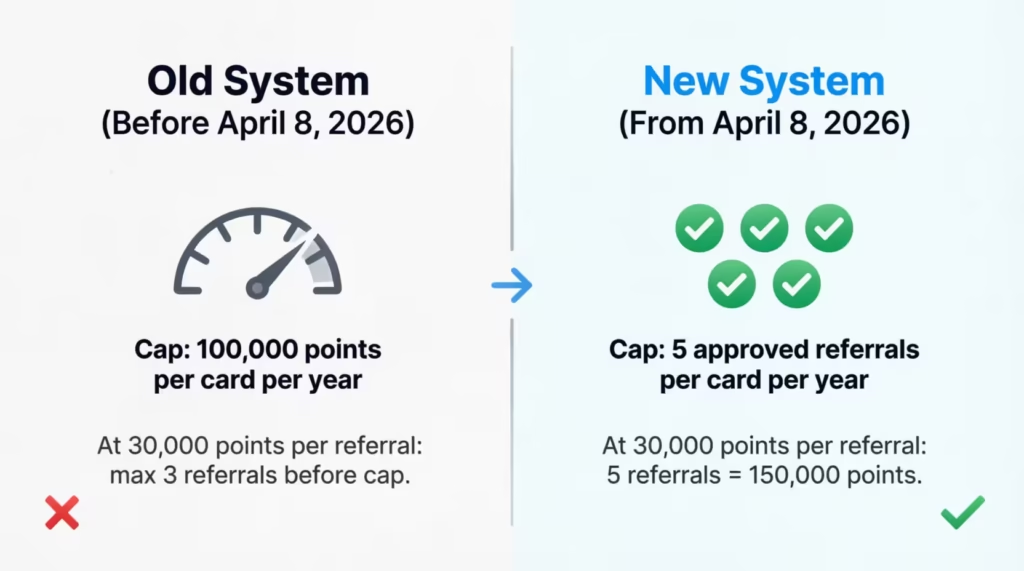
Under the old system, the cap was based on points, typically 100,000 Membership Rewards points per card per calendar year. Once you hit that, you stop earning. The math under the new system often works in your favor.
If your referral bonus is 30,000 points, five referrals equal 150,000 points, well past the old 100,000 cap. As Doctor of Credit explains in its breakdown of the new five-referral hard cap, the same rule applies across all eligible Amex card products. If your bonus is 40,000 points, five referrals equal 200,000 points, double the old limit.
The new structure only hurts referrers earning small bonuses on a high volume of approvals. For many cardholders, especially those with Platinum or Gold cards, the new cap is better than the old one. These cards offer bigger per-referral bonuses.
📌 Did You Know: Because the five-referral limit applies per card product, a cardholder with three eligible Amex cards can theoretically earn up to fifteen referral bonuses in a single calendar year.
Why Your Amex Referral Option Is Missing or Not Working
This is one of the most frustrating issues in the entire program, and it’s also the most under-documented. You log in to check your referral options, but you see a blank screen. No cards are listed, or you get a message saying referrals are “temporarily unavailable.”
Here’s what’s actually happening:
The missing referral problem mostly affects personal Membership Rewards cards. This includes the Gold and Platinum cards. Business cards and co-branded cards (Delta, Hilton, Marriott) tend to retain referral access more consistently, though they’re not immune. The issue can appear without warning. One week, your Platinum shows a 30,000-point offer, the next week, the entire card has vanished from the referral portal.
Amex has not publicly explained the cause. The missing referral issue is likely connected to one or more of these factors. This is based on patterns seen in personal finance forums and points communities:
- How many referrals have you earned in the recent past
- The age and history of your account
- Internal Amex targeting decisions that aren’t disclosed to cardholders
- Whether you’ve been flagged for behavior that Amex associates with referral abuse (such as referring strangers in bulk)
The most important thing to understand: this problem comes and goes. Many cardholders who lose referral access regain it weeks or months later without doing anything. Some never get it back. There’s no public timeline and no formal appeal process.
This means you should set your expectations honestly. If your Platinum or Gold has shown referrals in the past and they’ve disappeared, there’s a reasonable chance they’ll return on their own. If you’ve never seen a referral option on a card you’ve held for years, you may simply not be targeted for the offer.
What to Do If Your Referral Link Is Not Showing Up
There’s no guaranteed fix, but a few steps are worth trying before giving up.
First, check both the website and the app. The referral portal and the Amex app pull from slightly different systems, and the link sometimes appears in one place but not the other. If your Gold Card shows no referral offer on the web portal, open the app, tap Membership, then Earn More, then Refer a Friend, and see if it appears there. The reverse also works.
Second, there’s a workaround that’s been reported to work in some accounts: report your card as lost. When Amex issues you a new card with a new card number, this sometimes resets the internal flag blocking your referral access.
This isn’t an official fix, and results vary. The downside is clear: your card number changes. This means you must update all autopay accounts, subscriptions, and saved payment methods linked to that card. Only consider this if your referral bonuses would be substantial enough to justify the hassle.
Third, if you previously generated a referral link before access disappeared, that old link may still be active. Some cardholders say their saved referral URLs still work. These links track approvals even when the referral option is missing from their account.
Contacting Amex directly is usually a last resort. Customer service agents usually can’t restore referral access. Many cardholders report that agents recognize the problem but can’t help.
When to Expect Your Referral Bonus and How to Track It
After you’ve sent your link and your friend has been approved, the waiting begins. Amex’s official policy states that the referral bonus posts within 8 to 12 weeks of your friend’s approval. In practice, it almost always happens faster. Many cardholders report their bonus posting within a few days, sometimes within 24 to 48 hours of being approved.
You’ll typically get an email from Amex confirming that your referral was approved. This email triggers the bonus posting timeline. If your friend got approved but you didn’t receive a confirmation email, check that they applied using your link, not another way.
To track referrals and bonuses inside the app:
- Open the Amex app and log in.
- Tap the Membership tab at the bottom.
- Tap View Activity.
- Look for entries labeled “bonus points” or similar referral-related descriptions. These are the points credited to your account from approved referrals.
If 12 weeks have passed and your bonus still hasn’t posted, that’s the time to contact Amex. Have the date your friend applied and was approved ready, along with any confirmation email you received. Amex can usually trace whether the application went through your link correctly.
Situations Where You Will Not Earn a Referral Bonus
The fastest way to lose a referral bonus is to assume it’s automatic. Several specific conditions block the bonus from paying out, and most of them are avoidable if you know about them in advance.
You won’t earn the bonus if:
- Your friend didn’t apply through your specific link. If they applied through Amex’s public homepage, a Google search, an in-app prompt, or anywhere other than your link, the referral isn’t tracked. The bonus is dead.
- Your friend’s application was denied. A referral only pays out on an approved application. Pre-approval doesn’t count. Conditional approval that later falls through doesn’t count.
- Your friend was approved, but had held that specific card before. Amex’s lifetime language clause on welcome offers also kills the referral bonus in most cases. If your friend opened the Gold Card in 2018, closed it, and applies again through your link in 2026, the bonus usually doesn’t pay.
- Your friend was sent the link by email, but had opted out of Amex marketing emails. The email never reaches them. They never click, never apply, and you never see a thing.
- Your account is past due or not in good standing. If you’re carrying a delinquent balance, missing payments, or under any kind of account hold, Amex can withhold referral bonuses.
- You’ve already hit the five-referral cap on that card for the calendar year. After your fifth approved referral on a card in 2026, you won’t earn more bonuses. However, your friend still receives their welcome offer.
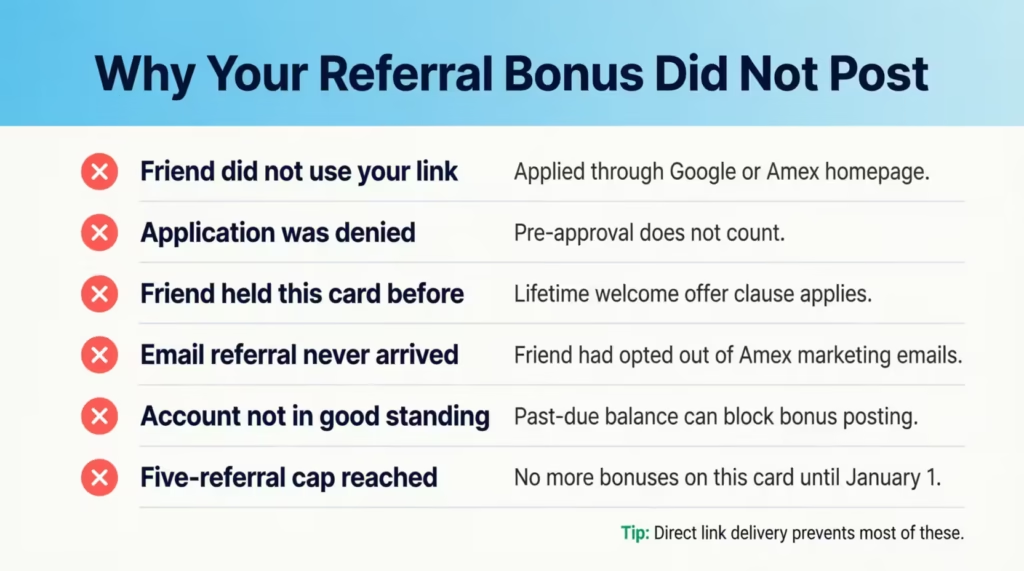
The two most common reasons people miss out are the link not being used at the application and the friend having previously held the card. Both are preventable if you confirm with your friend before they apply.
Tax Implications of Amex Referral Bonuses
This is the part most cardholders don’t think about until a 1099 shows up in January. Amex treats referral bonuses differently from regular credit card rewards, and the distinction matters at tax time.
Standard welcome offers and points earned from spending are generally treated as rebates and aren’t taxed. Referral bonuses are different because you didn’t purchase them; they’re income from a service (referring a friend). The New York Times reported that Amex began sending 1099-MISC forms to cardholders who earned $600 or more in referral value during a calendar year, with copies sent to the IRS.
For tax valuation, Amex uses 1 cent per point. So a 30,000-point referral bonus shows up on the 1099 as $300 of taxable income. A 40,000-point bonus shows up as $400. Delta SkyMiles and Marriott Bonvoy points earned through referrals are also valued at 1 cent each for 1099 purposes.
Here’s the practical math. If your Platinum referral bonus is 30,000 points and you complete five referrals in 2026, that’s 150,000 points, which Amex values at $1,500 of taxable income. Even one referral that pushes your annual total to $600 or more in referral value can trigger a 1099-MISC.
The $600 figure is the IRS reporting threshold that triggers the 1099, but referral income is technically taxable from the first dollar. Cardholders are expected to report all referral income on their tax return, even if no 1099 is issued. Whether that affects what you owe depends on your overall tax situation, your bracket, and what other income you have.
This is informational, not tax advice. If your referral bonuses are close to the 1099 limit, or if you’re unsure how to report them, talk to a tax professional before you file.
Frequently Asked Questions (FAQs)
Why won’t Amex let me refer a friend?
Amex periodically pauses referral access on personal Membership Rewards cards like the Platinum and Gold without explanation. Check the website at americanexpress.com/en-us/referral and the app under Membership > Earn More. The offer might show up in one place but not the other.
Why am I not getting my Amex referral bonus?
The most common causes are your friend not using your exact link at the time of application, their application being denied, or having previously held that specific card. Your account being past due or hitting the five-referral annual cap on that card also blocks the bonus from posting.
How much is an Amex referral bonus?
Referral rewards vary: Platinum usually earns 30,000–40,000 Membership Rewards points per approved friend, Gold 15,000–25,000 points, and Delta SkyMiles often pay 5,000–15,000 SkyMiles, excluding promotions.
What Amex cards are eligible for referral?
Most Membership Rewards cards have referral offers. This includes the Platinum, Gold, Green, Blue Business Plus, and Business Platinum cards. Co-branded cards like Delta, Hilton, and Marriott Amex also offer referrals. Not every card shows an active offer at all times, and availability varies by account.
Does an Amex referral have to be the same card?
If your card earns Membership Rewards points, your friend can apply for most Amex cards through your link, not just the one you hold. Co-branded cards are the exception: a Delta referral link only works for other Delta Amex cards, and the same applies to Hilton and Marriott.
Is Amex refer a friend worth it?
For cardholders with Platinum or Gold cards, it usually is: five referrals at 30,000 points each yields 150,000 Membership Rewards points, which exceeds the old 100,000-point annual cap. The main trade-off is that bonuses above $600 in referral value per year trigger a 1099-MISC and are taxable as income.
How much are Amex referral points worth?
Amex values Membership Rewards points at 1 cent each for tax and 1099 reporting purposes, so a 30,000-point referral bonus equals $300 in Amex’s accounting. Your personal redemption value can be higher, particularly when transferring points to airline partners.
Are Amex referral bonuses taxable?
Yes, unlike spending rewards, referral bonuses are treated as income because you earned them by performing a service. Amex sends a 1099-MISC to cardholders who earn $600 or more in referral value in a calendar year, using a valuation of 1 cent per point.
Can I earn referral bonuses on more than one Amex card in the same year?
Yes, the five-referral annual cap applies per card product, so holding multiple eligible cards multiplies your earning potential. A cardholder with a Platinum, a Gold, and a Delta card can earn up to fifteen referral bonuses in a single calendar year.
Wrapping Up
The Amex referral program is one of the simplest ways to grow your points balance once you understand how it actually works.
Below is what we’ve discussed:
- Where to find your link
- How to choose the right card to refer
- What your friend can apply for
- The 2026 limit change
- The missing referral problem
- Bonus tracking
- Conditions that void your bonus
- The tax side of larger referral hauls
Based on the evidence above, the most effective approach is to refer from the card showing the highest current bonus and use the direct link method, not email.
If you know someone shopping for a new credit card in 2026, share this guide so they apply the smart way, not the way that quietly costs both of you points.