
If you’ve been digging through your Citi app trying to find a “refer a friend” button, you’re not alone. Most of us assume every big card issuer runs a public referral program because Chase, Amex, and Capital One make it so easy. That’s why the Citibank credit card referral program feels so confusing right now. You want to send a link to a friend and earn a bonus, but the button just isn’t there.
Here’s the short answer: Citi does not currently offer a public, self-serve referral program for most of its credit cards.
Stick with me. I’ll walk you through what still works, the one card family that’s an exception, and the smartest ways to earn a bonus without a referral link.
Key Takeaways
This guide explains why the Citibank credit card referral program does not exist publicly for most cards, covering the invitation-only AAdvantage exception, how to check for targeted offers, and how to spot fake referral links.
Core Facts:
- Citi does not offer a public, self-serve referral program for the Citi Double Cash, Citi Strata Premier, or Citi Custom Cash credit cards.
- The Citi AAdvantage co-branded cards may have an invitation-only referral offer, sent by email to select cardholders rather than published on the website.
- Targeted referral offers can be checked by signing into a Citi account and looking under the “Offers,” “Rewards,” or “My Offers” section.
- American Express caps referrals at five per calendar year per card, effective April 2026, while Capital One publishes uncapped referral counts with card-specific annual mile or dollar caps.
- A legitimate Citi application link should load directly on the citi.com domain using HTTPS, without redirecting through multiple unfamiliar domains.
- Applying without a referral link does not change a friend’s welcome bonus eligibility or approval odds for any Citi card.
Best for:
- Readers trying to find a Citi refer-a-friend link and confused why it does not appear in their account or app.
- Citi AAdvantage cardholders wanting to understand how the invitation-only referral offer works when active.
- Anyone comparing referral programs across Citi, Chase, American Express, and Capital One before recommending a card to a friend.
Does Citibank Have a Credit Card Referral Program Right Now?
Short answer: NO, not in the way Chase or Amex does. Citi does not currently run a public, self-serve credit card referral program for its main U.S. consumer cards. The Citi Double Cash, Citi Strata Premier, and the closed-to-new-applications Citi Custom Cash don’t offer a “refer a friend” link. You can’t share it to earn Citi ThankYou Rewards or a statement credit.
This is a real change in how the market works. Most major issuers publish a refer-a-friend page and let cardholders generate a personal link right from their account. Citi does not. If you log into your account and hunt around, you’ll notice there’s no such option under rewards, offers, or account services for these cards.
There’s a narrow exception to note: the Citi AAdvantage co-branded cards may have an invitation-only referral offer. But for the flagship Citi cards most people carry, no public program is live in 2026.
Why You Won’t Find a “Refer a Friend” Button on Citi’s Site or App
Open the Citi Mobile app. Tap on “Rewards” or “Offers.” You’ll find cash back deals, ThankYou point redemptions, and sometimes special offers from specific merchants. What you won’t see is a referral link generator. That’s because Citi has not built one into the consumer experience for these products.
Here’s why this matters: If a Reddit post or a personal finance blog from 2022 or 2023 tells you to “just log in and find your referral link,” that advice is outdated. The button was never a permanent feature for most Citi cards, and it isn’t there today. Some older articles are describing programs that ran briefly, expired, or only applied to specific co-branded cards.
So if you searched, tapped, and came up empty, your account is working fine. The feature just doesn’t exist for your card.
The Citi AAdvantage Referral Exception (Invitation-Only)
You can find a Citi referral offer at this spot: the Citi/AAdvantage credit cards from American Airlines. These include the Citi AAdvantage Platinum Select, the Citi AAdvantage Executive, and the AAdvantage MileUp card.
The catch is that this program is invitation-only. You don’t get access just because you hold the card. Citi sends special email offers to some AAdvantage cardholders. Only those emails have the personal referral link. If you never got the email, you can’t opt in later. There’s no page on Citi’s website where you can request to be added.
📌 Did You Know: The American Airlines AAdvantage eShopping portal also runs a separate refer-a-friend feature for the shopping program, but it’s currently paused. The AAdvantage eShopping refer-a-friend page states the bonus is not available at this time. This is different from the credit card referral, but readers often confuse the two.
How the AAdvantage Referral Program Has Worked When Active
When the invitation-only offer has been live in past cycles, the mechanics look like this.
The primary cardholder gets an email with a unique referral link. They forward it, or share it, to someone who does not already have that specific Citi card. The friend applies through that link and, if approved, becomes a new cardholder.
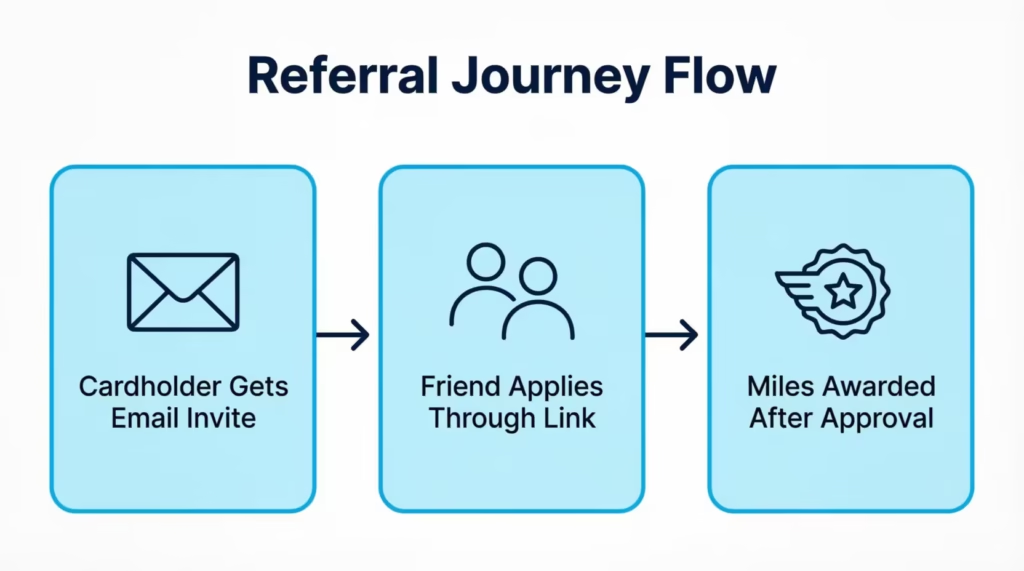
When the new account is funded and posted, the referring cardholder earns AAdvantage miles. You usually get a few thousand miles for each approved referral. There’s an annual cap on the total miles you can earn. Doctor of Credit reported past Citi AAdvantage referral offers tied to specific new-card launches, which is another reason the program tends to come and go.
Two things to remember. First, the friend has to use your exact link, or the referral won’t track. Second, the offer terms change each time Citi runs it, so miles awarded and caps may not match what you saw last year.
What Citi’s Referral Program Used to Look Like
A few years back, Citi did run broader targeted refer-a-friend promotions on more cards. Some Citi ThankYou cardholders would see an offer inside their account for a limited window. The reward was usually points or a statement credit. Those promotions were never fully public, but they reached more people than the AAdvantage version does today.
That history is why so much outdated content still floats around online. Blog posts from 2022 and 2023 describe screens and steps that no longer exist. Some list the specific bonus amount, like 2,500 ThankYou points, and treat the program as if it’s always available. It isn’t. Those older articles are describing a moment in time, not the current setup.
If a source doesn’t have a recent update date, treat it as historical background only. The safest move is to check your own Citi account for offers, which we’ll cover in a moment.
Will Citi Bring Back a Broader Referral Program?
Nobody outside Citi knows for sure. What we can say is that referral programs are a common marketing lever, and issuers turn them on and off based on how aggressively they want to grow a card. Chase and Amex keep theirs running full-time. Citi has chosen a more targeted approach for now.
It’s reasonable to expect Citi to test broader referral offers again, especially around new card launches or major refreshes. But there’s no announced timeline. Waiting on the return of a full program isn’t a strategy. Working with what’s actually live today is.
How to Check If You’ve Received a Targeted Referral Offer
Even though there’s no public program, Citi does occasionally push targeted offers into individual accounts. It only takes a minute to check, and it costs nothing.
Follow these steps to look for an active offer on your account:
- Sign in to your Citi account on the Citi website or open the Citi Mobile app.
- On the main dashboard, look for a section called “Offers,” “Rewards,” or “My Offers.” On the app, this is often a tab near the bottom.
- If enrollment is required, you’ll usually see an “Enroll” or “Activate” button next to the offer. Tap it before doing anything else, because unenrolled offers do not pay out.
- Read the terms carefully. Check the referral link’s expiration date, the reward amount, and any spend requirement the friend must meet.
- If you see a personal link, copy it exactly. Do not shorten it or paste it into a link tracker, because that can break the referral attribution.
If nothing shows up, that simply means Citi hasn’t targeted your account for a referral offer right now. It doesn’t mean anything is wrong.
💡 Pro Tip: Check your Citi promotional email folder too. Some referral invitations arrive by email first and only appear in the account dashboard after you click through. Search your inbox for “refer,” “referral,” or “invite a friend” from a citi.com sender address.
What to Do Instead of a Citi Referral Link
If you don’t have a referral offer, you still have good options to help your friend and, in some cases, help yourself.
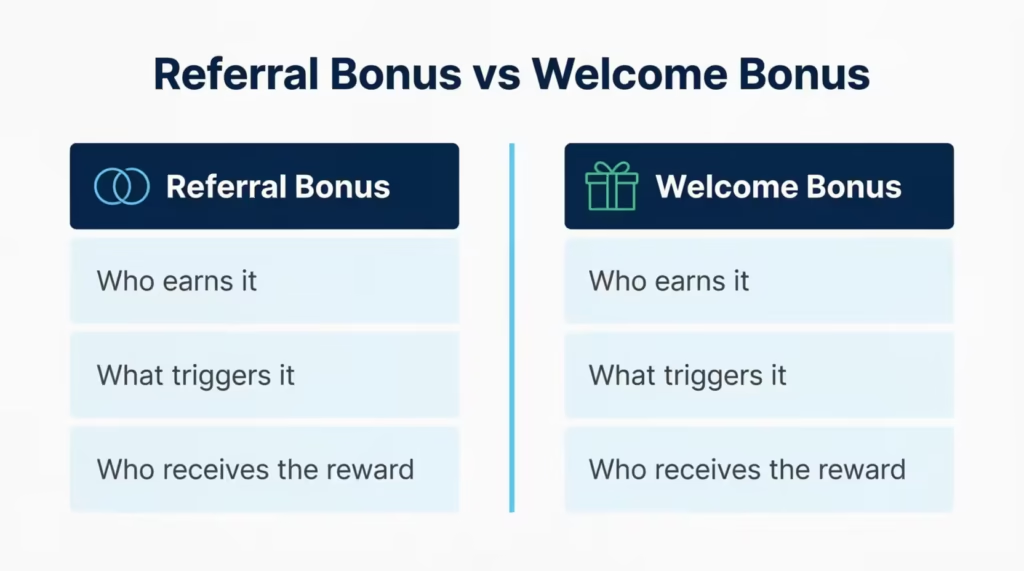
The most important thing to understand is the difference between a referral bonus and a welcome bonus. A referral bonus rewards the existing cardholder for bringing a new customer in.
A welcome bonus rewards the new applicant for opening the card and meeting a spend requirement. Every Citi credit card that’s still open to new applications has a welcome bonus. Anyone can see it on the Citi website.
Here’s the practical move: Send your friend the public Citi application page for the card you’d recommend. They’ll get the same welcome bonus they would with a referral link. You won’t earn a reward for that application. But you really helped them. You also protected them from using a fake or expired link from a third-party site.
You can also ask Citi for a retention offer on your own account. Retention offers aren’t the same as referral bonuses. However, they can give you statement credits or bonus points. Just call and say you’re thinking about closing or downgrading your account. That’s a separate lever, and it’s often overlooked.
Calling Citi to Ask About Referral or Retention Offers
If you’d rather have a conversation than dig through the app, calling the customer service number on the back of your card works. Ask directly whether there’s a “member-get-member” offer, a refer-a-friend promotion, or any targeted invitation attached to your account. Use those exact phrases. Front-line agents recognize them.
Two tips that make the call more useful. First, have your account information and the specific card in front of you. Different Citi products have different program rules.
Second, if the first agent says no, politely ask if a supervisor or the retention team can check. Retention teams see offers that aren’t always visible to the general customer service queue.
If nothing is available, don’t push. Agents can’t create an offer that doesn’t exist. But you’ll get a clear answer, and sometimes you’ll surface a retention offer that gives you value even without a referral.
Are Third-Party “Citi Referral Link” Websites Legitimate?
Search “Citi credit card referral link,” and you’ll find aggregator sites promising working links. Be careful with these. Most Citi cards don’t have a public referral program. This means any site that says it has a live link for the Double Cash, Strata Premier, or Custom Cash cards is probably using an old promotion. It might also be showing a generic application link as a referral.
Here’s the risk: If you or your friend applies through a fake “referral” link, one of three things happens. Best case, the link is just a normal application page, and your friend still gets the standard welcome bonus.
Middle case: the link is a marketing affiliate link, meaning the site earns a commission, but neither of you gets any extra reward. Worst case, it’s a phishing page designed to steal application data.
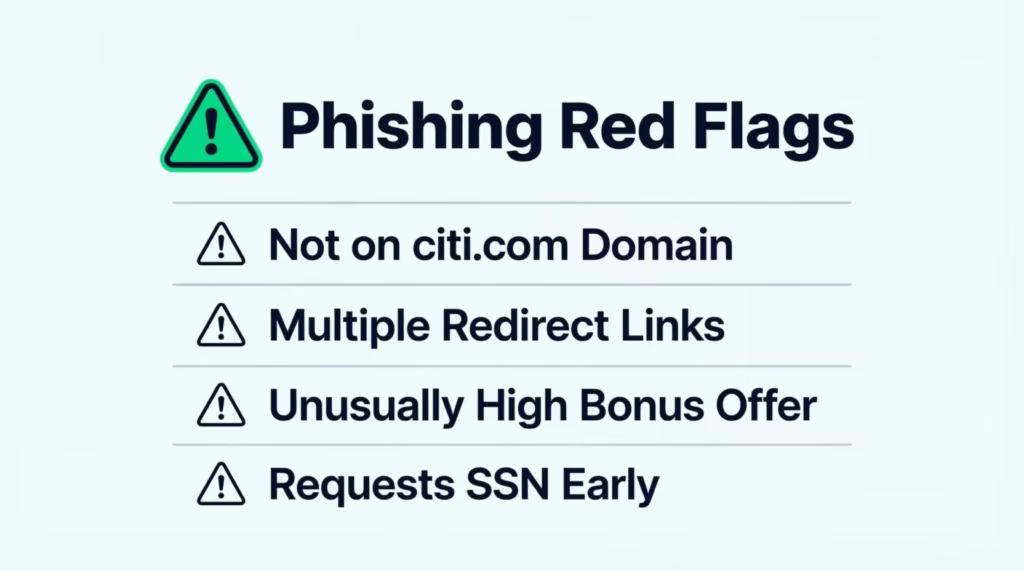
A quick check helps. A real Citi application URL should sit on the citi.com domain and use HTTPS. If the link redirects through multiple unfamiliar domains before landing on Citi, that’s a red flag. If the promised bonus sounds unusually high, like 50,000 ThankYou points for a card whose welcome offer is normally 20,000, that’s another red flag.
⚠️ Mistake to Avoid: Do not enter your Social Security number or full financial details on any page that claims to be a Citi referral link but doesn’t clearly load citi.com. If in doubt, close the tab and type the Citi URL manually.
What Happens If Your Friend Applies Without a Referral Link
Nothing bad happens to your friend if they apply directly through Citi’s main site instead of using a referral link. They’ll still receive the advertised welcome bonus if they meet the minimum spend in the required time. Their approval odds don’t change either. Referral links don’t influence the underwriting decision.
The only thing that’s different is that you, the referrer, won’t earn a bonus. Since most Citi cards don’t have a live referral program anyway, that’s not really a loss. Your friend gets the full new-cardholder value, which is usually the biggest reward in the equation.
How Citi’s Referral Approach Compares to Chase, Amex, and Capital One
To understand why Citi feels different, it helps to see how the other major card issuers handle referrals in 2026. Chase runs one of the most consistent programs. Cardholders can log in, generate a referral link for most eligible cards, and earn bonus points or miles per approved referral.
American Express also runs a full public program, but they tightened the rules recently. Frequent Miler reported that Amex now caps referrals at five per calendar year, per card, effective April 2026. That’s a meaningful shift, since heavy referrers used to earn far more.
Capital One publishes its refer-a-friend program too. Their help center confirms there’s no limit on the number of referrals, but each card has its own annual dollar or mile cap. The Venture X, for example, tops out at 100,000 bonus miles per year through referrals.
Citi is the outlier. Instead of publishing a program, Citi has moved toward targeted, invitation-only offers, mostly on the AAdvantage side. Why? Only Citi can say for sure, but it likely reflects a marketing focus on co-branded partnerships rather than broad organic growth.
For cardholders, the approach is different. Check for targeted offers. Use welcome bonuses instead of referrals. Don’t depend on Citi for referral income as you do with Chase or Amex.
| Issuer | Public Referral Program | Typical Bonus | Annual Cap |
|---|---|---|---|
| Chase | Yes | 5,000 to 20,000 points per referral | $500 / 100K miles / 200K points |
| American Express | Yes | Varies by card | 5 referrals per card per year |
| Capital One | Yes | Varies by card | Card-specific mile or dollar cap |
| Citi | No (mostly) | AAdvantage invite-only, when active | Varies by targeted offer |
Frequently Asked Questions (FAQs)
Does Citibank have a referral program for credit cards?
No, Citi does not run a public, self-serve referral program for its main U.S. consumer cards like the Double Cash or Strata Premier. The only exception is an invitation-only referral offer on Citi AAdvantage co-branded cards.
How do I refer a friend to Citibank?
Since most Citi cards have no public referral link, your best option is sharing the card’s public application page so your friend gets the standard welcome bonus. If you hold an AAdvantage card, check your email for an invitation-only referral link instead.
Does Citi Double Cash have a referral bonus?
No, the Citi Double Cash does not offer a referral bonus or a “refer a friend” link. It’s one of the flagship Citi cards without a public referral program in 2026.
What is the referral process for Citibank?
For most Citi cards, there is no referral process since no public program exists. For AAdvantage cards, Citi occasionally emails select cardholders a unique link, and the friend must apply through that exact link for the referral to count.
How do I check if I have a targeted Citi referral offer?
Sign in to your Citi account and look for a tab called “Offers,” “Rewards,” or “My Offers.” If enrollment is required, tap “Enroll” before doing anything else, since unenrolled offers won’t pay out.
How does Citi’s referral program compare to Chase and American Express?
Chase and Amex both run public, ongoing referral programs, while Amex now caps referrals at five per card per year as of April 2026. Citi is the outlier, offering no public program and relying mainly on invitation-only AAdvantage promotions instead.
Are third-party “Citi referral link” websites legitimate?
Most are not legitimate since Citi doesn’t have a public referral program for its main cards. A real Citi link should load directly on the citi.com domain over HTTPS, and any site promising an unusually high bonus is a red flag.
What happens if my friend applies without a referral link?
Nothing negative happens. Your friend still receives the advertised welcome bonus if they meet the spend requirement, and approval odds stay the same either way.
What is a Citi retention offer, and how is it different from a referral bonus?
A retention offer is a statement credit or bonus points Citi gives existing cardholders to keep their account open, separate from any referral program. You can ask for one by calling customer service and mentioning you’re considering closing or downgrading your card.
Is the Citi AAdvantage referral program available to everyone?
No, it’s invitation-only, meaning Citi sends the referral link by email to select AAdvantage cardholders rather than making it available to everyone who holds the card. If you never received that email, there’s no way to sign up for it separately.
Wrapping Up
In 2026, the Citibank credit card referral program looks like this: Most cards lack a public self-serve option. Only AAdvantage cardholders can join by invitation. Plus, many old blog posts confuse.
Check your Citi account for targeted offers. Share public welcome bonus links with friends if there’s no referral link. Be very cautious with third-party aggregator sites.
If you know someone shopping for a new credit card and comparing Chase, Amex, and Citi, share this guide with them. It could save them from applying through a fake link and losing a legitimate welcome bonus.