
If you’ve been staring at Citi’s credit card page wondering which one you can actually get, you’re not alone. Maybe your score is under 650. Maybe you’re new to the U.S. and have almost no credit file. Or maybe a rough year left dents on your report. Either way, you don’t want to burn a hard inquiry on a card that will deny you.
Quick Answer: The easiest Citibank credit card to get is the Citi® Secured Mastercard®. It’s the only Citi card built for people with limited or damaged credit. It has no annual fee and requires a refundable deposit starting at $200. It reports to all three credit bureaus and can help you build towards an unsecured card over time.
In this guide, we’ll show you the specific card, the score bands, the pre-qualification trick, and smart steps to safeguard your credit as you apply.
Key Takeaways
This guide explains how to get approved for a Citibank credit card with fair or limited credit, covering the Citi Secured Mastercard’s deposit requirements, score bands across the Citi lineup, and the graduation process to an unsecured card.
Core Facts:
- The Citi Secured Mastercard requires a refundable security deposit between $200 and $2,500, which becomes the card’s credit limit, and has no annual fee.
- Citi’s unsecured cards, including Double Cash, Simplicity, Rewards+, and Strata, generally require a credit score of 670 or higher for approval.
- Citi reports account activity to all three credit bureaus (Experian, Equifax, and TransUnion), and the deposit must be funded within 30 days of approval.
- Citi typically limits applicants to one new card approval every 8 days and no more than two card approvals within a 65-day window.
- Secured card graduation to an unsecured account typically occurs after 12 to 24 months of on-time payments and low usage, and cannot be requested manually.
- Keeping credit utilization below 30 percent, and ideally under 10 percent, is recommended for building credit on a secured card.
Best for:
- Applicants with a credit score below 670 who want a Citibank card with realistic approval odds.
- People with limited or no credit history who need a starter card that reports to all three bureaus.
- Readers who want to avoid unnecessary hard inquiries by understanding Citi’s score requirements before applying.
The Short Answer: Citi® Secured Mastercard® Is the Easiest Citibank Card to Get
Citi’s full lineup is aimed at people with good to excellent credit, meaning a FICO score of 670 and up. Almost every Citi rewards card, from the Double Cash to the Strata, sits in that range. That leaves one card built for everyone else.
The Citi® Secured Mastercard® is the easiest Citi card to qualify for. It is designed for applicants with limited or no credit history. Here is how it works:
- You put down a refundable security deposit between $200 and $2,500.
- That deposit becomes your credit limit.
- You use the card like a normal Mastercard and pay the bill each month.
- Citi reports your activity to Experian, Equifax, and TransUnion.
- There is no annual fee.
Because your deposit backs the account, Citi’s risk is low. That’s why approval is possible even without a strong FICO score. You can review the full card terms on the official Citi Secured Mastercard product page.
💡 Pro Tip: Deposit only what you can spare. The money is refundable, but it stays locked as collateral until the account closes or graduates. Starting at $200 to $500 is smart while you rebuild.
Why Most Other Citi Cards Are Hard to Get With Fair or Poor Credit
Citi does not offer an unsecured card for bad credit. If your score is below 670, the rest of the Citi lineup will most likely deny you.
Here is how the main Citi cards compare in realistic approval terms:
| Citi Card | Typical Score Needed | Best For |
|---|---|---|
| Citi® Secured Mastercard® | No minimum score, limited credit OK | Building or rebuilding credit |
| Citi Double Cash® Card | 670+ (good) | Simple flat-rate cash back |
| Citi Simplicity® Card | 700+ (good to excellent) | Long balance transfer offers |
| Citi Rewards+® Card | 670+ (good) | Small purchase rounding rewards |
| Citi Strata℠ Card | 720+ (very good) | Travel rewards |
These score ranges reflect the profiles Citi typically approves. If your credit isn’t there yet, applying for a rewards card mostly wastes a hard inquiry and can slow down your rebuild.
How Citibank Decides Whether to Approve You
Approval is not just about your score. Citi weighs several factors together:
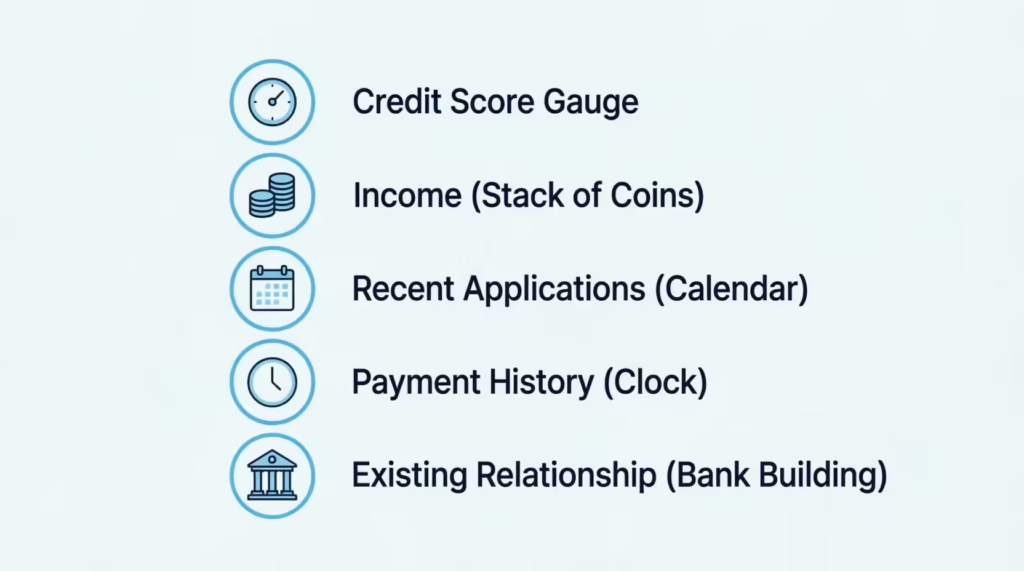
Credit score and history. The FICO scale runs from 300 to 850. Experian defines the bands clearly: poor is 300 to 579, fair is 580 to 669, good is 670 to 739, and very good is 740 to 799. If you sit below 670, secured is your realistic Citi lane.
Income and debt. Citi wants to see that you can pay the bill. They ask for your total annual income, including household income if you’re 21 or older. Higher income with lower debt payments boosts your odds.
Recent applications. Citi has strict pace rules. They generally won’t approve more than one Citi card every 8 days, or more than two Citi cards in a 65-day window. Space out any new applications.
Payment history. Late payments, charge-offs, and collections in the last 24 months are the biggest red flags. Citi wants clean recent behavior even if older items exist.
Existing Citi relationship. Being a Citi checking or savings customer can help. It gives Citi extra data on your finances beyond the credit bureau.
Use Citi’s Pre-Qualification Tool Before You Apply
This is the single most important tip in this guide. Before you apply for any Citi card, use the free pre-qualification tool.
Visit the official Citi pre-qualification page. Enter your name, address, and the last four digits of your Social Security number. Citi runs a soft inquiry, which does not affect your credit score. In a few seconds, you’ll see any Citi cards you’re likely to be approved for.
Pre-qualification isn’t a 100% guarantee, but it’s the closest thing to a green light before you commit to a hard pull. Note that the Citi Secured Mastercard does not always show up in pre-qualification results. If you have very limited or no credit history, you may need to apply directly on the secured card page.
⚠️ Mistake to Avoid: Applying for the Citi Double Cash or Custom Cash “just to try” when your score is under 670. Each denial adds a hard inquiry that stays on your credit report for two years.
Step-by-Step: How to Apply for the Citi Secured Mastercard
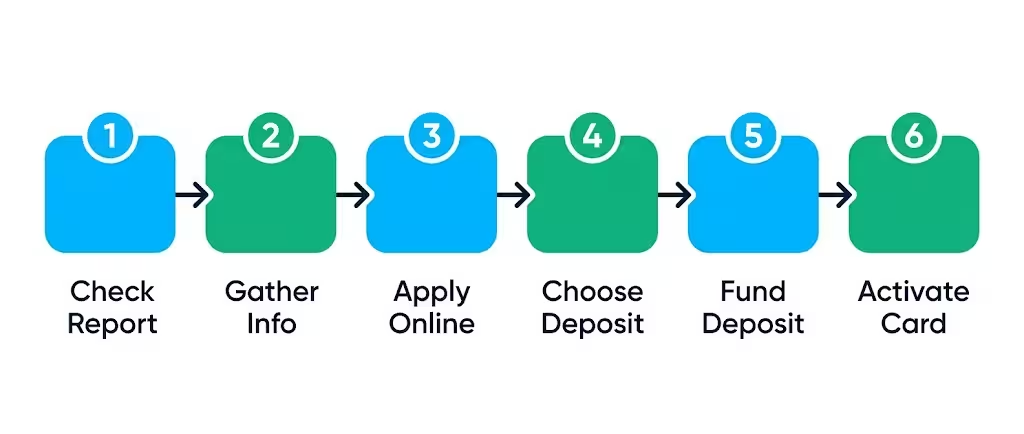
Follow these steps to give yourself the best shot at approval.
Step 1: Check Your Credit Report First
Before applying, pull your free reports from all three bureaus at AnnualCreditReport.com. Look for errors, old collections, or duplicate accounts. Dispute anything that doesn’t belong to you. Even a small correction can raise your score before you apply.
Step 2: Gather Your Information
Have these ready:
- Full legal name and date of birth
- Social Security number or ITIN
- U.S. residential address (no P.O. boxes)
- Total annual income (including allowable household income if 21+)
- Monthly rent or mortgage payment
- Employment status and employer name
- Bank account and routing number for your deposit
Step 3: Start Your Application on Citi.com
Go directly to the Citi Secured Mastercard application page. Avoid third-party links so you’re sure you’re on the real Citi site. Look for the padlock icon and the URL starting with “citi.com.”
Step 4: Choose Your Security Deposit Amount
Pick a deposit between $200 and $2,500, in $100 increments. This becomes your credit limit. If you plan to use the card only for small monthly bills, $200 to $500 is enough. A higher deposit gives you more room but locks up more cash.
Step 5: Fund Your Deposit
You have 30 days from approval to fund the deposit. Citi accepts bank transfers from a U.S. checking or savings account. Once the deposit clears, your card ships. Expect it in 7 to 10 business days.
Step 6: Activate and Use the Card Wisely
Once the card arrives, activate it online or through the Citi Mobile app. Then follow the rules below to build credit fast.
How to Use Your Secured Card to Actually Build Credit
Getting the card is only step one. What you do next decides how fast your score improves.
Keep your utilization low. Charge no more than 30% of your credit limit at any time. Under 10% is even better. If your limit is $300, keep the balance under $90.
Pay in full every month. Never carry a balance if you can avoid it. Interest on secured cards is high, and carrying a balance doesn’t help your score.
Pay before the statement closes. Your statement balance is what gets reported to the credit bureaus. Paying it down a few days before the statement date shows a lower utilization ratio.
Set up autopay for at least the minimum. Payment history is the biggest factor in your FICO score. One missed payment can drop your score by 60 to 100 points. According to myFICO’s official scoring guide, payment history alone accounts for 35% of your FICO Score.
Don’t close old accounts. If you have other cards, keep them open and active with small charges. Credit age matters.
Wait before applying for more cards. Let the secured card age for at least 6 months. Then check if you pre-qualify for a Citi unsecured card or another rewards card.
When and How the Citi Secured Card Graduates to Unsecured
The best-kept secret about the Citi Secured Mastercard is that it can graduate. That means Citi may automatically convert it into an unsecured card and refund your deposit, while keeping the same account open.
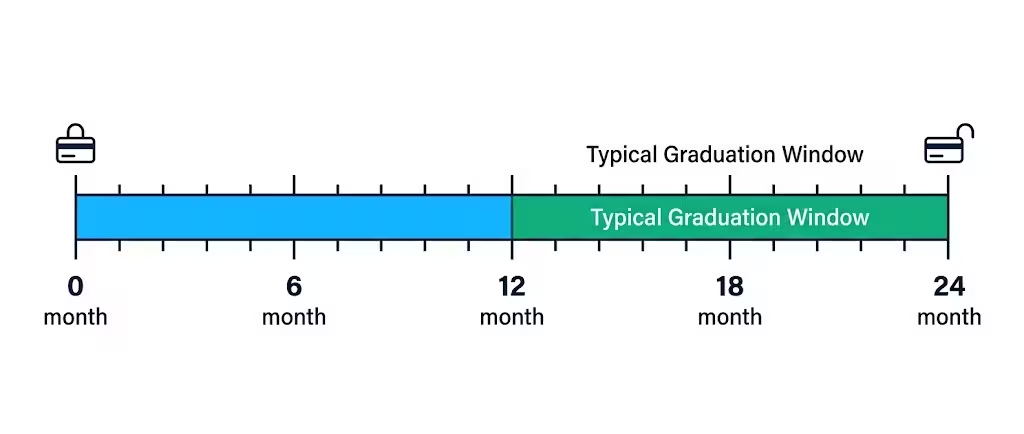
Graduation is not guaranteed, and Citi doesn’t publish a fixed timeline. Graduation from a secured card typically occurs after 12 to 24 months. This usually follows on-time payments, low usage, and better credit. You cannot request graduation manually. Citi reviews accounts automatically.
If your card doesn’t graduate after 18 to 24 months, you can:
- Apply for an unsecured Citi card using the pre-qualification tool.
- Once approved for a new card, close the secured account and get your deposit back.
- Keep using the new unsecured card as your primary Citi account.
Backup Plans If You Can’t Get the Citi Secured Card
Not everyone qualifies even for a secured card.
If Citi denies your secured application, it might be due to:
- an active bankruptcy
- unpaid collections
- too many recent hard inquiries.
Here’s what to do next:
Wait 6 months and reapply. Time heals most credit issues. Focus on paying down existing balances during this period.
Try a starter card from a bank you already use. Your existing bank has more data on your finances and may approve you when Citi won’t.
Become an authorized user. Ask a family member with strong credit to add you to one of their cards. Their positive history can boost your score in 1 to 2 months.
Try a credit-builder loan. These small loans, usually from credit unions, report to bureaus. They help build payment history without needing card approval.
The Consumer Financial Protection Bureau explains more options in their official guide to building credit, which is a trusted, non-commercial resource.
Frequently Asked Questions
Can I get a Citi credit card with a 600 credit score?
A 600 score falls in the fair range, below the 670 typically needed for Citi’s unsecured cards. Your realistic option is the Citi Secured Mastercard, which has no minimum score requirement.
What credit bureau does Citi pull from?
Citi reports your account activity to all three major credit bureaus: Experian, Equifax, and TransUnion. This means responsible use of a Citi Secured Mastercard builds your history across the board.
Which Citi credit card is best for beginners?
The Citi Secured Mastercard is the best starting point for beginners with limited or no credit history. It requires a refundable deposit starting at $200, which becomes your credit limit, and has no annual fee.
What is the minimum credit score for a Citi card?
The Citi Secured Mastercard has no minimum score requirement, making it accessible even with limited credit. Citi’s unsecured cards, like the Double Cash or Rewards+, generally require a score of 670 or higher.
How hard is it to get approved for a Citi credit card?
Approval difficulty depends heavily on which card you choose. Unsecured Citi cards typically require good to excellent credit (670+), while the Secured Mastercard is designed for approval even without a strong FICO score.
Does Citi do a hard pull for a credit limit increase?
The article doesn’t cover Citi’s credit limit increase process. Check Citi’s official account terms or contact customer service directly for details on this.
How long does it take for a secured card to graduate to unsecured?
Graduation typically happens after 12 to 24 months of on-time payments and low card usage. Citi reviews accounts automatically for graduation, and you cannot request it manually.
What happens if Citi denies my secured card application?
Common denial reasons include an active bankruptcy, unpaid collections, or too many recent hard inquiries. If denied, you can wait 6 months and reapply, try a starter card from your existing bank, or become an authorized user on someone else’s card.
How much should I charge on a secured credit card each month?
Keep your balance under 30% of your credit limit, and ideally under 10% for the best results. On a $300 limit, that means keeping your balance below $90, or under $30 for optimal impact.
How many Citi cards can I apply for at once?
Citi generally won’t approve more than one card every 8 days, or more than two cards within a 65-day window. Spacing out applications protects your approval odds and limits hard inquiries on your report.
Wrapping Up
Choosing the right Citi card when your credit is limited or damaged doesn’t have to be a guessing game. The Citi Secured Mastercard is the clear entry point, thanks to its low deposit floor, no annual fee, and full credit bureau reporting.
Pre-qualification protects you from unnecessary hard inquiries. Using your card wisely, such as keeping low balances and paying on time, helps build a strong credit foundation from a starter account.
Based on the underwriting patterns covered here, the most effective approach is to start secured, build for 12 to 18 months, then move up.
If you know someone new to credit or working through a rebuild, share this guide; it could save them a painful denial and years of slower progress.