
You keep hearing the phrase “credit monitoring.” Maybe your bank offered it for free. Maybe a data breach settlement threw in “two years of credit monitoring” like it’s a prize. Or maybe a scary “your score changed” text made you wonder if you should pay for a credit monitoring service before something worse happens. The problem? Nobody explains what it actually does, and signing up for the wrong thing wastes money or leaves you exposed.
Credit monitoring is a service that watches your credit reports and alerts you when something changes, so you can spot fraud or errors early.
Below, I’ll walk you through how it works, what it can’t do, when free is enough, and what to do the moment an alert pops up on your phone.
Key Takeaways
This guide explains what credit monitoring does and does not do, including how alerts work, the difference from identity theft protection and a credit freeze, and when a paid plan is worth the cost.
Core Facts:
- Credit monitoring is a detection tool that alerts you to changes on your credit report, but it cannot prevent fraud or stop a thief from opening a new account.
- Credit monitoring runs on soft inquiries only, so checking your own credit or using a monitoring service never lowers your credit score.
- Paid credit monitoring typically costs $9.99 to $29.99 per month and adds three-bureau coverage, your FICO Score, dark web scanning, and identity theft insurance often up to $1 million.
- Free monitoring services usually track one or two bureaus and show a VantageScore instead of the lender-used FICO Score.
- A credit freeze is free by federal law and must be completed within one hour of an online or phone request, but it only blocks new credit and does not monitor existing accounts.
- If an alert reveals fraud, the recommended sequence is to contact the creditor directly, file a written dispute with the bureau, freeze credit at all three bureaus, and file a report at IdentityTheft.gov.
Best for:
- People deciding whether free monitoring is sufficient or whether a paid three-bureau plan is worth the added cost.
- Readers who were part of a data breach and need to know what protective steps to take next.
- Anyone who received a credit monitoring alert and needs a clear, immediate action sequence.
What Credit Monitoring Is
Credit monitoring is a service that checks your credit reports. This can be free or paid. It monitors reports from one or more of the three major credit bureaus: Equifax, Experian, and TransUnion. When something new shows up on a report, the service sends you an alert by email, text, or app notification.
Think of it as a home security camera pointed at your credit file. The camera doesn’t lock the doors. It doesn’t stop a burglar from walking in. It just tells you when someone shows up so you can react fast.
The service checks for:
- New accounts opened in your name
- Hard inquiries from lenders
- Changes to your balances
- Updates to your personal info, like a new address
Some tools also give you a monthly credit score update, so you can watch the number rise or fall over time.
Here’s the part most people miss: credit monitoring detects; it does not prevent. It cannot stop a thief from opening a card in your name. It can only tell you after the fact so you can shut it down quickly. That distinction matters because it shapes what you should expect from the tool and what other protections you may need alongside it.
How Credit Monitoring Works
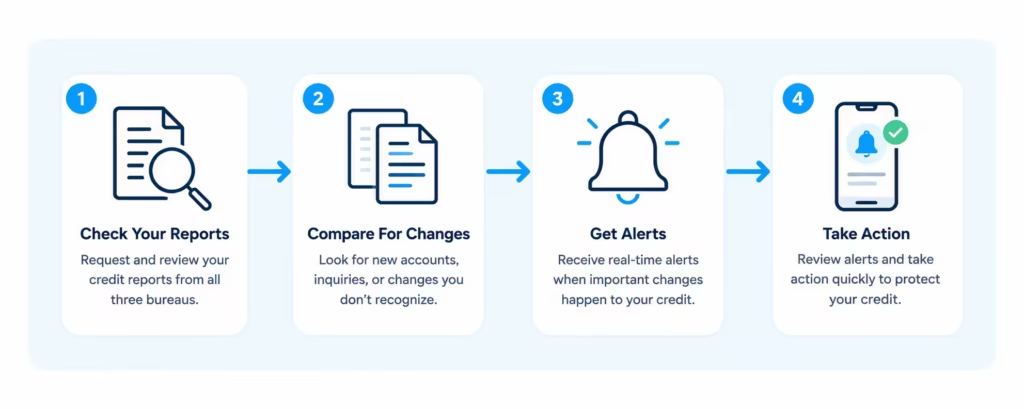
The service pulls your credit report data regularly. It compares today’s version with yesterday’s snapshot and flags anything new. Most tools check daily. Some check in near real time when they get direct data feeds from a bureau.
When the tool spots a change, it sends the alert through whatever channel you picked during signup: email, push notification, or SMS text. Good services let you customize which changes trigger an alert, so you’re not buried in noise every time your balance shifts by a few dollars.
Behind the scenes, the tool is reading the same credit report data lenders see. It’s not doing magic. You can automate a check that you could do yourself. Just pull your reports at AnnualCreditReport.com. The three bureaus now offer free weekly access, as confirmed by the Consumer Financial Protection Bureau.
What Triggers an Alert
Most services will notify you when any of these events hit your file:
- New accounts opened in your name. A new credit card, loan, or line of credit appears on your report. This is one of the biggest red flags for identity theft.
- Hard inquiries. A lender pulled your credit because someone (hopefully you) applied for new credit.
- Balance and utilization changes. A big jump in what you owe, especially on a card you don’t use, may signal fraud or a billing error.
- Personal information updates. A new address, phone number, or employer added to your file. Thieves often change the address first so victims don’t see the paper statements.
- Public records and delinquencies. A new collection account, a court judgment, or a missed payment posting to your report.
💡 Pro Tip: Turn on alerts for personal information changes even if you ignore the others. An address change you didn’t request is often the first sign someone is trying to reroute your mail to hide fraud from you.
Does Checking Your Credit Hurt Your Score
No. Credit monitoring does not hurt your score, and neither does checking your own credit report. This is one of the most common myths in personal finance, and it stops people from watching their own money.
Here’s the reason: There are two kinds of credit pulls: soft inquiries and hard inquiries. A soft inquiry happens when you check your own credit, when a lender pre-screens you for an offer, or when a monitoring service reads your file.
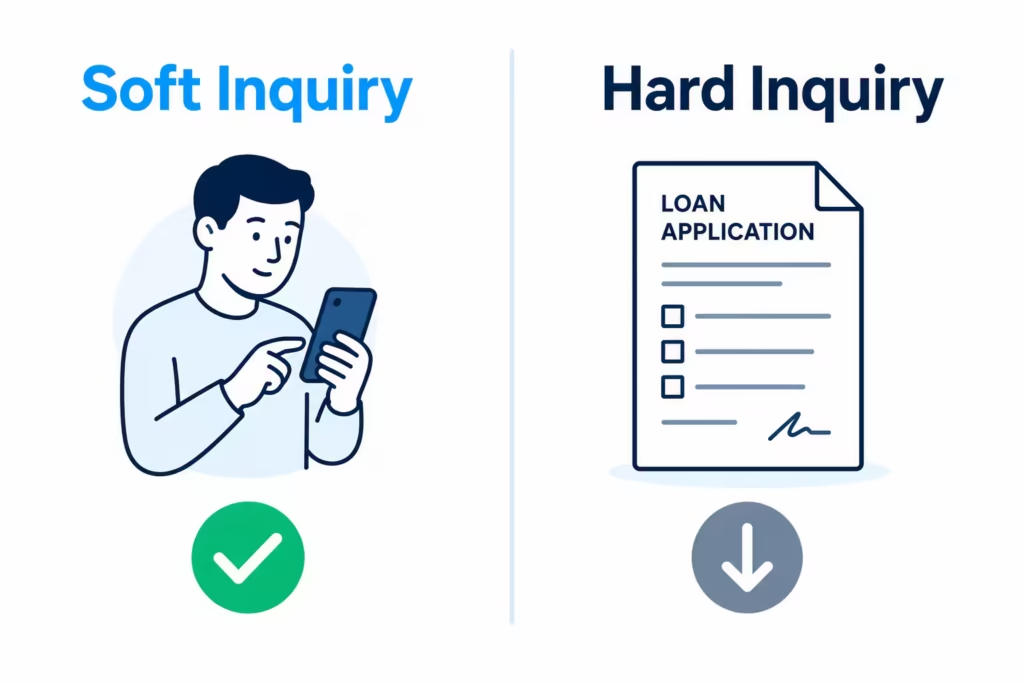
Soft inquiries are invisible to your score. A hard inquiry happens when you apply for new credit like a card, mortgage, or auto loan. Hard inquiries can shave a few points off your score for a short time.
Credit monitoring runs entirely on soft pulls. You could check your file every single day, and your score would not budge because of it. So when a monitoring service says “we checked your credit today,” that’s a soft pull, and it has zero impact on your number.
What Credit Monitoring Can’t Do
Setting realistic expectations is the difference between feeling protected and being protected. Here’s what the service will not do for you, no matter which brand you pay:
- It can’t stop a thief from opening credit in your name. The service only tells you after the account is opened. To actually block new credit, you need a credit freeze, which we’ll cover in a later section.
- It can’t prevent phishing, SIM swaps, or password theft. Credit monitoring only sees your credit file. It doesn’t watch your email, your bank login, or your phone carrier account.
- It can’t fix errors for you. If the alert reveals a mistake on your report, you still have to file the dispute yourself with the bureau. The tool just flags the problem.
- It can’t catch debit card fraud, tax refund fraud, or medical identity theft. These don’t show up on a credit report. A crook using your debit card at a gas pump will never trigger a credit alert.
- It can’t cover every bureau unless you specifically pick a three-bureau service. Single-bureau tools leave blind spots, which we’ll get into shortly.
⚠️ Mistake to Avoid: Do not assume that “free credit monitoring” from a breach settlement covers every kind of identity theft. It usually watches one bureau and one report. Debit fraud, tax fraud, and account takeovers of existing logins are all invisible to it.
Credit Monitoring vs. Identity Theft Protection
These two products get sold side by side, and the marketing blurs the line on purpose. They are not the same thing.
Credit monitoring watches your credit reports. That’s the whole job. When a new tradeline or inquiry hits your file, you get pinged.
Identity theft protection is a wider net. It includes credit report alerts and adds Social Security number monitoring. It also scans the dark web for your email, SSN, or card numbers.
Additionally, it monitors public records and offers identity restoration services if your identity is stolen. Many paid plans include identity theft insurance. This can help reimburse you for legal fees, lost wages, and costs related to recovering from fraud.
So the shorthand is this: credit monitoring is one narrow tool. Identity theft protection is a bundle of tools, and credit monitoring is just one item inside that bundle.
How Credit Monitoring Fits Into a Broader Identity Protection Plan
For many, a smart stack includes these steps:
- Use a free credit monitoring tool as your daily alert system.
- Place a credit freeze at all three bureaus to block new accounts.
- Stay watchful for phishing texts and emails.
Full paid identity theft protection is worth the cost when your risk profile is high. That means you were part of a big breach with your Social Security number. You might be a public figure or a high earner, making you a target.
Maybe you’ve been a victim before. Or, you just don’t want to deal with recovery paperwork alone if things go wrong. For everyone else, layering the free tools usually delivers most of the value at none of the cost.
Free vs. Paid Credit Monitoring
The honest truth is that free credit monitoring is enough for the majority of people. But “enough” depends on your situation, and paid tools do offer real extras.
Free services, such as those from Credit Karma, Experian’s free tier, and various bank or credit card apps, usually track one or two bureaus. They provide a VantageScore, which competes with FICO, and send alerts for major changes. Some banks push credit monitoring inside their mobile app at no cost.
Paid services usually run $9.99 to $29.99 per month.
You receive several benefits, including:
- Three-bureau monitoring
- Your FICO Score, which lenders often use
- Credit lock tools to easily control access
- Dark web monitoring
- Identity theft insurance, usually up to $1 million in coverage
| Feature | Free Credit Monitoring | Paid Credit Monitoring |
|---|---|---|
| Bureaus covered | Usually one, sometimes two | All three |
| Score type shown | VantageScore | FICO Score (lender’s version) |
| Alerts | Basic (new accounts, big changes) | Detailed, real-time |
| Dark web scanning | Rarely included | Usually included |
| Identity theft insurance | No | Yes, often up to $1M |
| Credit lock tool | No | Often yes |
| Typical cost | $0 | $9.99–$29.99/month |
Single-Bureau vs. Three-Bureau Monitoring
Here’s the blind-spot problem. Each of the three bureaus builds its own report, and lenders don’t always report to all three. A card issuer might report to Experian but not TransUnion. A collection agency might file only with Equifax.
If your monitoring tool watches just one bureau, fraud posted to a different bureau’s file could sit there for months before you notice. Someone could open three fake accounts on your Equifax file, and if you’re only watching TransUnion, you would never see the alerts.
Three-bureau monitoring closes that gap. Consider upgrading if you have a thick credit file with many accounts. It’s also wise if you plan to take out a major loan, like a mortgage. Lastly, if you were part of a data breach and expect fraud attempts, it’s especially worth it. For a young adult with two cards and a student loan, single-bureau coverage is usually fine.
Who Actually Needs Paid Monitoring
Paid credit monitoring makes sense in a few specific situations. If your Social Security number was exposed in a big breach and you’re still at risk, extras like insurance and restoration help are worth getting.
If you’re actively repairing credit and want the exact FICO score lenders will see, paid tools give you that number. If you’ve already been a victim of identity theft, the recovery services save you dozens of hours of paperwork.
For example, take Michael, a 42-year-old operations manager whose data was leaked in a healthcare breach that exposed his SSN. He paid $19.99 a month for a three-bureau plan with $1 million in identity theft insurance.
Six months later, an alert flagged a $6,200 auto loan application filed in his name at a dealership two states away. He caught it inside 24 hours, filed the dispute, and the insurance covered the $850 in legal fees he needed to clear the fraudulent record.
For most other readers, that level of coverage is overkill. Free tools plus a credit freeze do the same defensive job for zero dollars.
Credit Monitoring vs. a Credit Freeze
If credit monitoring is the security camera, a credit freeze is the deadbolt on the door. And unlike some monitoring, the freeze is completely free by federal law.
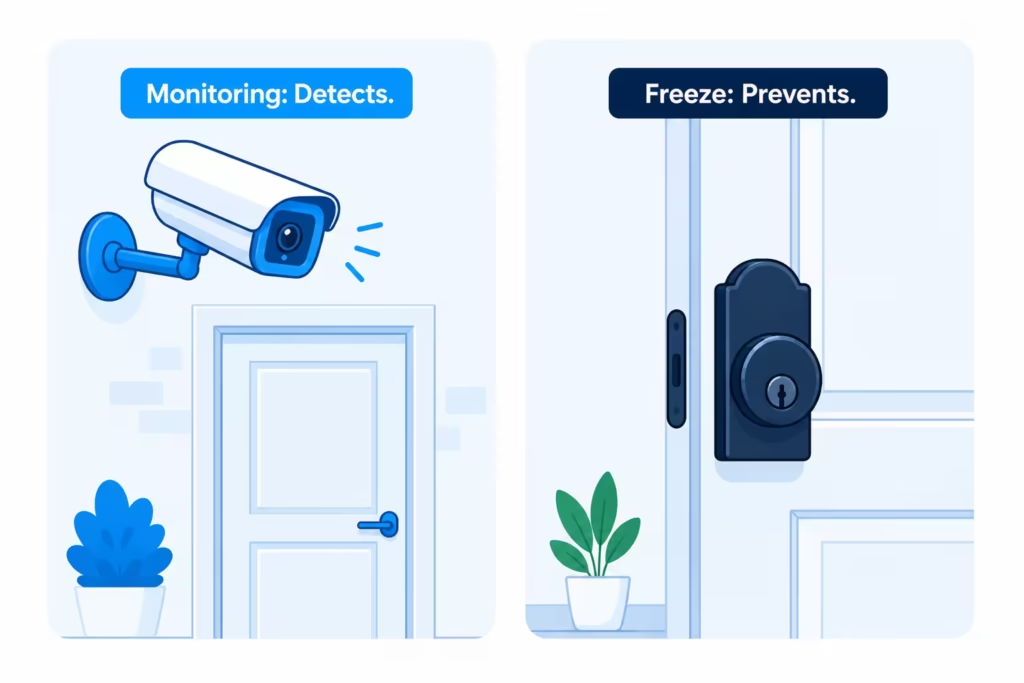
A security freeze locks your credit report so no new lender can pull it. Since lenders won’t approve new credit without seeing your report, the freeze effectively blocks new accounts from being opened, whether by you or by a thief. When you want to apply for credit yourself, you temporarily thaw the freeze, usually online in a couple of minutes.
The trade-off is that a freeze only blocks new credit. It doesn’t watch your existing accounts, and it doesn’t tell you when something changes. The smart move is to layer both strategies. First, freeze your file at all three bureaus to stop new fraud. Then, use credit monitoring to catch anything that slips through, like changes to your existing accounts.
📌 Did You Know: You can place, lift, or remove a credit freeze for free at any bureau. They must complete your request within one hour if you do it online or by phone. That’s federal law under the Fair Credit Reporting Act, and it applies to every adult, not just fraud victims.
To set one up, you’ll need to contact each bureau separately: Equifax, Experian, and TransUnion. A freeze at just one bureau still leaves two doors open, so do all three.
What to Do When You Get a Credit Monitoring Alert
An alert hits your phone. Don’t panic, but don’t ignore it either. Work through this action sequence in order:
- Read the alert carefully. Note exactly what changed: a new account, a hard inquiry, a personal info update, or a balance jump. The type of change tells you what to do next.
- Check whether the activity was yours. Did you just apply for a card, buy a car, or move? Legitimate activity often looks alarming until you remember you did it. Ask your spouse or anyone authorized on your accounts too.
- If the activity isn’t yours, contact the creditor first. Call the lender listed in the alert (not a number the alert gives you; look it up from the lender’s official site) and tell them the account or inquiry is fraudulent. They can shut it down, often the same day.
- File a dispute with the bureau in writing. Contact the bureau that reported the change and formally dispute the item. Doing it in writing (or through their online dispute portal) creates a paper trail. The bureau has 30 days to investigate.
- Freeze your credit at all three bureaus if you haven’t already. This blocks any further attempts.
- File an identity theft report at IdentityTheft.gov. This is the Federal Trade Commission tool that generates an official recovery plan and a report you can use with creditors and law enforcement. It’s free and takes about 15 minutes.
- Keep records. Save every email, letter, and case number. If the fraud escalates, you’ll need this paper trail for insurance claims or police reports.
Take Jennifer, a 34-year-old marketing lead at a tech startup. She got a hard inquiry alert from a bank she’d never used. She called the bank within an hour; they confirmed a fraudulent loan application, and they killed the file before it ever posted to her report. Total time invested: 45 minutes. Damage to her credit: zero. That’s what fast action on a credit monitoring alert actually looks like.
Frequently Asked Questions (FAQs)
Is it worth paying for credit monitoring?
Paying is worth it if your Social Security number was exposed in a breach, you’re recovering from identity theft, or you need your exact FICO score for a major loan like a mortgage. For most other people, free tools plus a credit freeze provide the same protection at no cost.
Do I need to monitor all three credit bureaus?
Yes, since lenders don’t always report to all three bureaus, fraud can show up on one report while staying invisible on another. Someone could open fake accounts on your Equifax file, and you’d never see it if you only watch TransUnion.
Can I freeze my credit without paying a fee?
Yes, a credit freeze is free by federal law at all three bureaus. Under the Fair Credit Reporting Act, requests must be completed within one hour when done online or by phone.
How to get free credit monitoring?
Services like Credit Karma, Experian’s free tier, and many bank or credit card apps offer no-cost monitoring. These typically track one or two bureaus and show a VantageScore instead of a FICO Score.
How much does it cost to have your credit monitored?
Paid credit monitoring typically runs $9.99 to $29.99 per month for three-bureau coverage. That price usually includes your FICO Score, dark web monitoring, and identity theft insurance up to $1 million.
Can someone check my credit without me knowing?
Yes, lenders can run a soft inquiry to pre-screen you for offers without your direct knowledge, and this does not affect your score. A hard inquiry, which does affect your score, requires you to apply for credit and typically shows up on your report.
How do you tell if your credit has been hacked?
Watch for alerts about new accounts you didn’t open, hard inquiries from lenders you never contacted, or personal information changes like an unfamiliar address. A sudden balance jump on a card you don’t use is another common warning sign.
What’s better, LifeLock or Experian?
The right choice depends on what you need: broader identity theft protection with SSN and dark web monitoring, or straightforward credit report tracking. Compare specific plan features like bureau coverage, insurance limits, and monthly cost rather than the brand name alone.
Does checking my own credit score lower it?
No, checking your own credit report counts as a soft inquiry and never affects your score. Only hard inquiries, which happen when you apply for new credit, can cause a temporary dip.
What should I do first if a credit monitoring alert looks suspicious?
Confirm the activity isn’t yours by checking with anyone authorized on your accounts, then call the creditor listed in the alert using their official phone number, not one provided in the alert itself. Report fraud immediately since lenders can often shut down a fraudulent account the same day.
The Bottom Line
Credit monitoring is a detection tool, not a shield. It watches your reports and pings you when something changes, but it can’t stop fraud on its own. For most readers, the best approach is to combine free monitoring with a freeze at all three bureaus.
Only upgrade to a paid three-bureau plan if your SSN was exposed, you’re recovering from theft, or you need FICO scores for a major loan. Know what the service does, know what it doesn’t, and act fast when an alert lands.
If you know someone who just got a breach notice, share this so they set up the right protection before a thief does.