
I know that feeling. You open your Capital One statement, see the interest charge, and wonder if a simple phone call could shrink your APR. Maybe you’ve paid on time for years. Maybe your credit limit has doubled. So it feels fair to ask: will Capital One lower my interest rate if I just call and request it? You are not alone in wondering, and the internet gives mixed answers.
Here is the short truth: Capital One’s stated policy is that it does not offer individual rate matching or rate changes on its credit cards.
Below, we’ll walk through what that means, what still might work, how to protect your credit while trying, and the smartest moves if the answer is no.
Key Takeaways
This guide explains whether Capital One will lower your credit card interest rate, covering the company’s official no-rate-change policy, the hardship program exception, credit score impact of asking, and five alternative ways to reduce interest costs.
Core Facts:
- Capital One’s Help Center states it does not offer rate matching or individual rate changes on its credit card accounts, applying broadly across cards like Quicksilver, Platinum, QuicksilverOne, Venture, and Savor.
- Almost all Capital One credit cards use a variable interest rate equal to the Prime Rate plus a set margin, so APR moves automatically with Federal Reserve rate changes.
- Asking a representative for a lower APR does not trigger a hard credit inquiry or affect your credit score, since it is not a new credit application.
- Capital One offers a hardship program for cardholders facing financial distress, which can include a temporarily lowered or waived interest rate, typically for a six to twelve-month window.
- Being placed on a hardship plan can result in the account being closed or restricted once the plan ends, and the APR typically reverts to the original rate on any remaining balance.
- The average credit card APR was around 20.94% in Q2 2026, and balance transfer cards commonly offer 15 to 21 months at 0% intro APR with a transfer fee of 3% to 5%.
Best for:
- Cardholders who want to know if calling Capital One to negotiate a lower rate is worth their time before dialing.
- People currently experiencing financial hardship, such as missed payments or income loss, who want to understand the hardship program.
- Cardholders whose rate request was denied and who are looking for alternative ways to reduce interest costs, such as a balance transfer.
Does Capital One Lower Credit Card Interest Rates?
The direct answer is no, at least not as a general practice. Capital One’s own Help Center states clearly that it does not offer rate matching or individual rate changes on its accounts. This is a written company policy, not just one rep’s opinion. That means most cardholders who call and simply ask for a lower APR will be told no, even with a long history of on-time payments.
This policy applies broadly across Capital One accounts. So whether you carry a Quicksilver, Platinum, QuicksilverOne, Venture, or Savor card, the same rule sits in the background. Many blogs still say “just call and negotiate.” That advice is not wrong for every issuer, but it can create false hope, specifically with Capital One. Being clear-eyed here saves you time and frustration.
That said, “no rate change” is not the whole story. There is a real hardship program for people in financial distress, and there are strong alternatives if a straight rate cut is off the table. Both are worth knowing before you pick up the phone.
Why Credit Card Issuers Generally Do or Don’t Lower Rates
Credit card companies set your APR using risk pricing models. In plain words, they look at your credit score, income patterns, card type, and market conditions when they approve you. That rate is baked into your account.
Some issuers, like Discover or American Express, are known to sometimes make one-off exceptions for loyal customers. Capital One has chosen a different path. It offers set products at set rates instead of case-by-case negotiation. This is standard industry practice for many large issuers, and it keeps their pricing consistent across millions of accounts.
What Determines Your Capital One Interest Rate
Your APR is not random, and it is not really up to a phone rep. A few main things decide it.
Your credit profile at approval. Your FICO score, credit history, income, and debt levels at the moment you applied set the range of rates the card can offer. A thinner or lower-score file at approval usually means a higher APR for the life of the account.
Your card type. Capital One’s cards sit in different tiers. Subprime and starter cards like QuicksilverOne and Platinum tend to carry higher APRs. Rewards cards like Quicksilver, Savor, and Venture usually offer lower APR ranges to stronger applicants. The product itself carries a rate band you cannot really argue with.
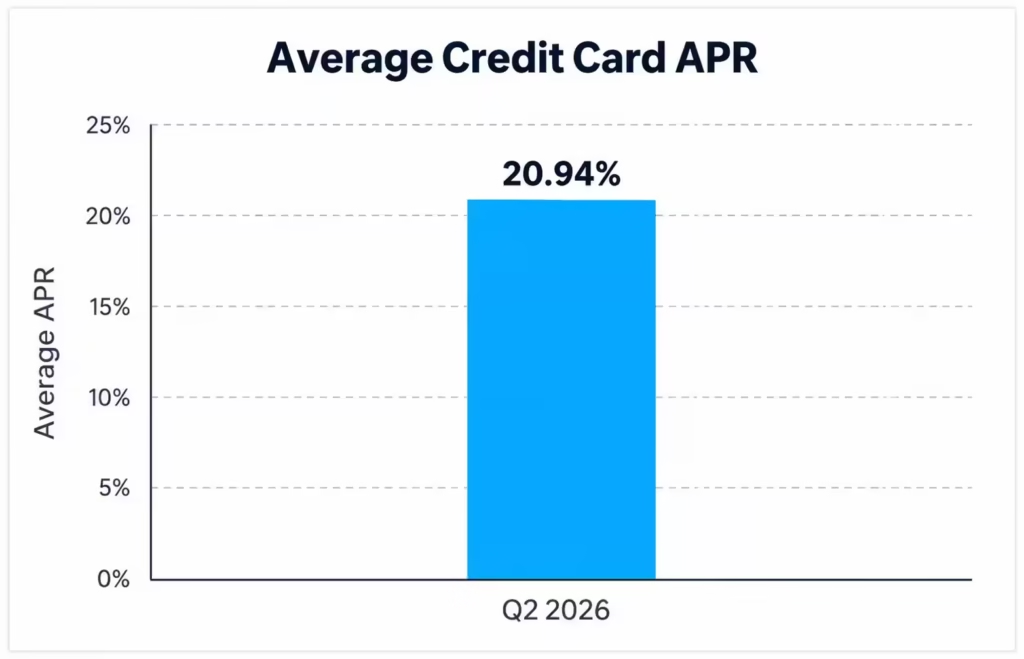
The variable rate structure. Almost all Capital One credit cards use a variable interest rate. This means your APR is the Prime Rate plus a set margin. When the Federal Reserve raises or lowers rates, the Prime Rate moves, and your APR moves with it. No phone call needed. The average credit card APR sat around 20.94% in Q2 2026, showing how rate moves reach real cardholders.
Market conditions. If Fed rate cuts happen later this year, your APR should follow down. If rates rise, it goes up. Your job is not to fight the margin. Your job is to lower the balance that the rate is charged on.
Rate Reduction vs. Rate Matching a Competitor’s Offer
These sound similar, but they are two different asks. A rate reduction means “please lower my current APR.” A rate match means “another card offered me 18%, please match it.” Capital One’s Help Center clearly states it does not do rate matching. So walking in with a competitor’s offer letter will not help you here.
If you have a solid offer from another issuer, that is not a wasted piece of mail. It might be a signal that you now qualify for a better card elsewhere, or for a balance transfer promo. We’ll cover that below.
What Actually Happens When You Call and Ask
Setting the right expectation before you dial matters. Here is the typical flow.
You call the number on the back of your card. A first-line representative answers. You ask for a lower APR. In most cases, that rep will say they do not have the authority to change your rate, or they’ll cite the same policy that lives on the Help Center page.
Real cardholders have reported hearing lines like “Capital One is not lowering interest rates for the foreseeable future,” even after years of on-time payments and multiple credit limit increases. Long tenure, good history, and higher limits are lovely to have. They just do not override the pricing policy.
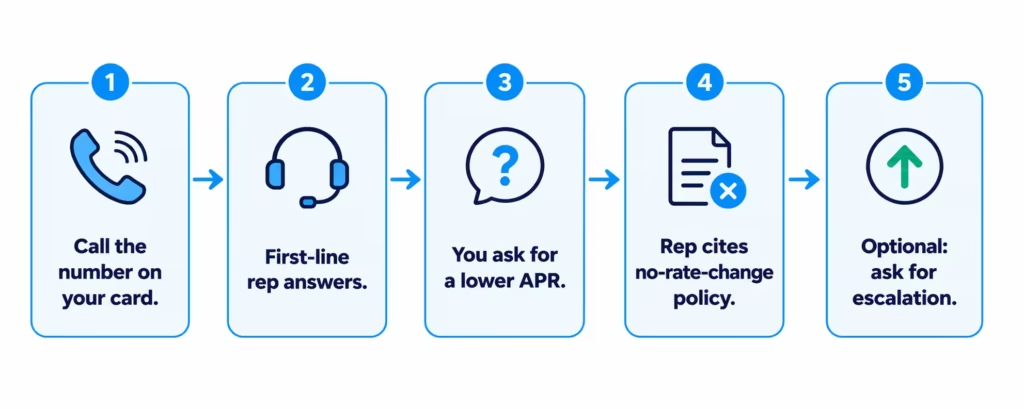
You can ask to be escalated to a retention or account specialist. Sometimes that helps at other issuers. At Capital One, the answer is often the same. Escalation is still worth trying, but do not stake your budget on it. Expect no, and be pleasantly surprised if you hear anything else.
⚠️ Mistake to Avoid: Don’t wait months hoping the rep will “come back with something.” Capital One usually gives its answer on the same call. If it is a no, move on to the alternatives fast so you stop paying more interest than you must.
Does Asking for a Lower Rate Hurt Your Credit Score?
This is the fear that stops many people from ever calling. The good news is that a simple verbal request does not hurt your credit score.
When you call a rep and ask for a lower APR, that is not a new credit application. It does not create a hard inquiry on your credit report. Capital One is not pulling your credit again just because you asked a question. Your account stays open, your credit limit stays put, and your score stays untouched.
A hard pull only happens when you formally apply for something new. That could be a new credit card, a balance transfer offer that requires a fresh application, or a loan. If you stick to asking about your existing account, you are safe.
There is one small caveat. If you frame the call as a hardship request and the bank places your account into a hardship plan, the account can be closed or restricted after the plan ends. So know which lane you are in before you call.
How to Request a Lower Interest Rate From Capital One
Even though the odds are low, some readers still want to try. That is fair. Here is the cleanest way to do it so you don’t waste time.
Step 1: Gather your account info. Have your card number, average monthly spend, current APR, and how long you have been a cardholder. If you have offers from other issuers, keep them nearby (even if Capital One won’t rate-match, the offers help your own decision-making).
Step 2: Pick your contact channel. Call the number on the back of your card. You can also start the conversation through the Capital One app, the secure message center, or Eno, Capital One’s virtual assistant. For a rate discussion, a live phone call is usually best. Eno is better for balance checks and transaction questions.
Step 3: State your ask in one clean sentence. Do not ramble. Say what you want, then stop and listen.
Step 4: If told no, ask about the hardship program only if it applies to you. If it does not, do not force it. Instead, ask if any promotional APR offers are attached to your account and thank the rep for their time.
Step 5: Log what you heard. Note the date, the rep’s name, and their answer. This helps if you try again in six to twelve months, especially after a Fed rate cut or a credit score jump.
What to Say When You Call
Keep your script short, polite, and factual. Here is a simple approach.
“Hi, my name is [Your Name]. I have been a Capital One cardholder since [year], I’ve paid on time every month, and my credit score has improved since I opened this account. I’d like to request a lower APR on this card. What options are available on my account?”
That is it. Do not explain your monthly bills. Do not compare your rate to a friend’s card. Do not threaten to close the account. Lead with on-time payment history, ask once, and let the rep speak. If the answer is no, you can say, “Are there any promotional balance transfer offers on my account right now?” That is a fair follow-up and sometimes gets you something useful.
💡 Pro Tip: Call on a weekday morning. Reps are fresher, hold times are shorter, and you are less likely to reach an overworked overflow center. A calm, unhurried call reads as confident and professional.
When and How to Escalate Beyond the First Representative
First-line reps have limited authority. If you were calling almost any other issuer, this is the point where you would politely ask for the retention or customer retention department. You can still try that at Capital One. Just say, “I understand. Could you please transfer me to a retention specialist or an account review team who can look at APR options?”
At Capital One, escalation often lands you at someone who cites the same policy. So set your ceiling now. Try escalation once. If the second person also says no, stop pushing. Hang up politely. Save your energy for the alternatives that actually move the needle, which we cover next.
Capital One’s Credit Card Hardship Program
Here is where Capital One does offer real help, but only for a specific group of cardholders. If you’re behind on payments, at risk of missing one, or facing issues like job loss, medical bills, or family emergencies, Capital One looks at hardship cases one by one.
Reported relief through the program can include a temporarily lowered interest rate, usually for a six-to-twelve-month window. In some cases, interest can be reduced or waived so you can catch up on the balance.
To ask about it, call the number on the back of your card and say, “I am experiencing a financial hardship and would like to know what assistance options are available on my account.” Be honest about your situation. Have numbers ready: your monthly income, your fixed bills, and the shortfall. Capital One does not publish a public list of qualifying events. They decide case by case.
Two things to keep in mind. First, being placed on a hardship plan can lead to the card being closed once the plan ends, since the goal is to help you pay it off, not to keep spending. Second, this is not the right path if you are just trying to save a bit on interest. Using a hardship program when you don’t need one can hurt your account and your available credit later.
📌 Did You Know: A hardship-plan interest reduction is temporary by design. Once your plan window ends, your APR typically snaps back to the original rate on any remaining balance. So use the relief window to pay the balance down aggressively, not to keep charging on the card.
Saving Money vs. Genuine Financial Hardship, Which Applies to You
Be honest with yourself before you call. The signs are pretty clear.
You want to save money if you’re current on payments, your income is stable, and you can easily cover your minimum. Plus, you don’t want to see interest grow. In this case, Capital One is very unlikely to grant a rate cut. Your best move is a balance transfer or a payoff plan.
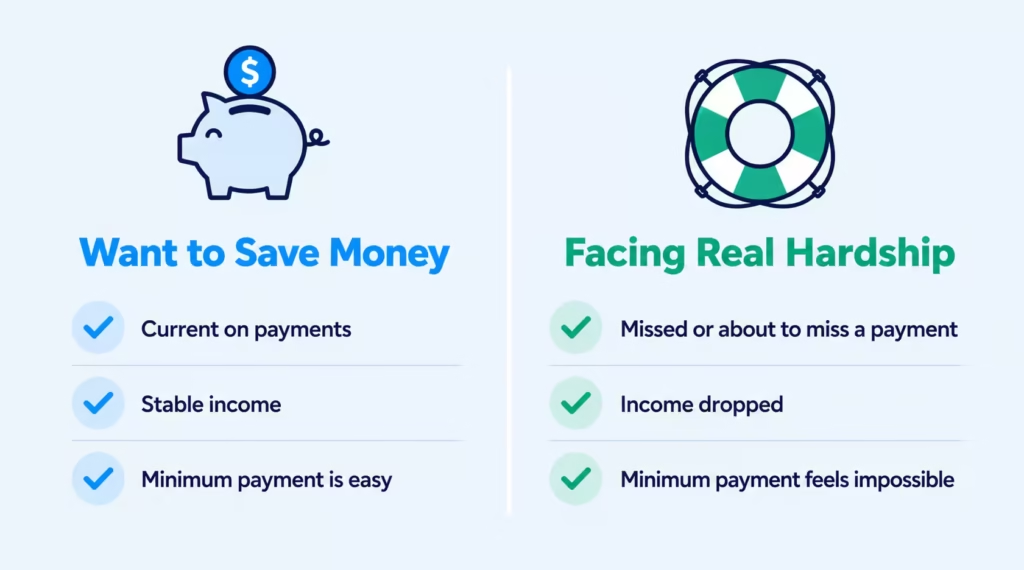
You might qualify for hardship help if you’ve missed a payment or are about to. You may also qualify if your income has dropped due to job loss, illness, or a family event. If your minimum payment feels impossible, help is available. This is the lane where Capital One’s hardship team can actually help.
Mixing these two up is where callers go wrong. Framing a “save money” call as hardship can lead to unwanted account restrictions. Framing a real hardship as a casual rate request means you leave real relief on the table. Pick your lane before you dial.
What to Do If Capital One Won’t Lower Your Rate
Getting a “no” is not the end. It is the start of the smarter move. Here are the actions that actually cut what you pay in interest, ranked by impact.
1. Move the balance to a 0% intro APR card. A balance transfer to another issuer’s promotional card is by far the most powerful tool. Many cards offer 15 to 21 months at 0% APR on transferred balances.
2. Attack the principal. Rate matters, but balance matters more. Paying $200 extra a month on a $5,000 balance can save you hundreds in interest, no phone call needed. Set an auto-payment above the minimum. Even $50 more helps.
3. Compare offers from other issuers. If your credit has grown since you got your Capital One card, you may now qualify for a lower-APR card at another bank. You do not need to close the Capital One card. Just stop carrying the balance on it.
4. Improve your credit score. A stronger FICO score in six to twelve months opens the door to lower-APR products in the future.
5. Explore certified nonprofit credit counseling. Groups approved by the Consumer Financial Protection Bureau can help set up a debt management plan with lower rates negotiated across all your cards.
Using a Balance Transfer Card to Escape a High Rate
A balance transfer moves debt from your Capital One card to a new card with a 0% intro APR for a set period. That means every dollar you pay goes to principal, not interest, during the promo window.
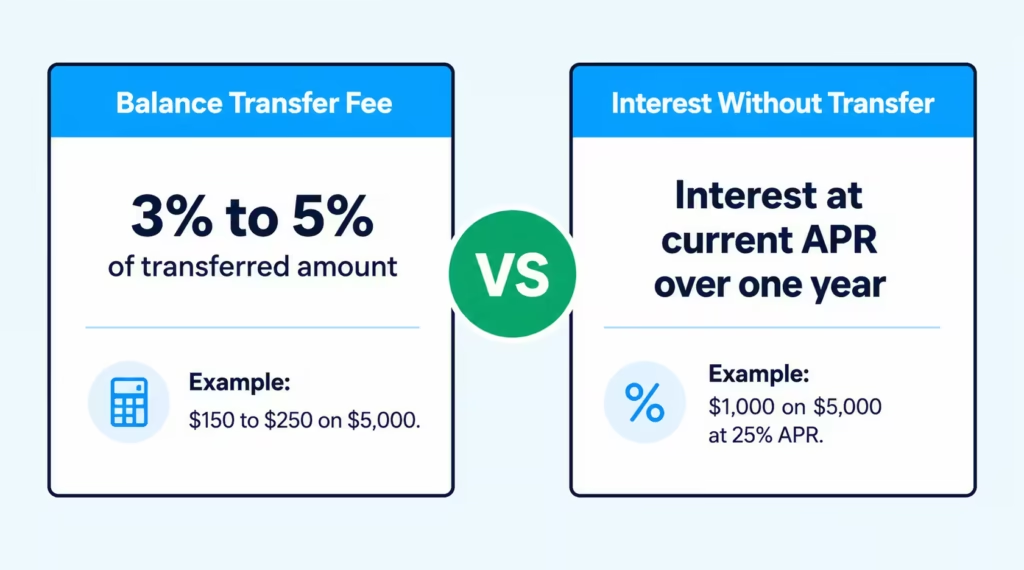
Watch out for a few things. Most cards charge a balance transfer fee of 3% to 5% of the amount moved. On $5,000, that is $150 to $250 upfront. Compare that to what you would pay in interest at your current APR over the same period. If your APR is 25% and you would pay $1,000 in interest over a year, a $200 transfer fee is a bargain.
Also, know your promo end date. When it expires, any remaining balance flips to the card’s regular APR, which is often above 20%. Split your total balance by the number of promo months and pay at least that much each month. This option is best for cardholders with fair-to-good credit. They should be able to pay off the balance before the promo ends.
Improving Your Credit Score to Qualify for Better Rates Later
If a balance transfer is not open to you yet, work the long game. A higher score means better offers next year.
Focus on three things. Keep your credit utilization low, ideally below 30%, and under 10% if you can. Never miss a payment; on-time payment history is the biggest driver of your score. And do not open several new accounts in a short window, since each hard pull dings your score temporarily.
Improvement is not overnight. Most people who focus on these three habits see a real score bump in six to twelve months. You have enough time to qualify for a lower APR product or a top-tier balance transfer offer. This gives you a real chance to save, even if Capital One won’t offer it directly.
Frequently Asked Questions (FAQs)
What is the Capital One 6-month rule?
This isn’t an official Capital One policy or term. If you were told no on a rate request, waiting six to twelve months and reapplying after a credit score jump or a Fed rate cut is a reasonable strategy, but it’s not a guaranteed program.
Can I negotiate my APR with Capital One?
Not really. Capital One prices its cards with set rates instead of case-by-case negotiation, so even long-time cardholders with perfect payment histories are typically told no when they ask for a lower APR.
Can you get your Capital One interest rate lowered?
Capital One’s stated policy is that it does not offer individual rate matching or rate changes on its credit cards. The one exception is its hardship program, which can temporarily lower your rate for six to twelve months if you’re facing real financial difficulty.
Why is Capital One’s APR so high?
Almost all Capital One cards use a variable rate equal to the Prime Rate plus a set margin, so your APR moves automatically with Fed rate changes. Subprime and starter cards like QuicksilverOne and Platinum also carry higher rate bands than rewards cards like Venture or Savor.
How can I lower my credit card APR?
The fastest way is a balance transfer to a card offering 15 to 21 months at 0% intro APR, which stops interest charges during the promo window. Paying more than the minimum each month and improving your credit score over six to twelve months also opens the door to lower-rate cards later.
What is the downside of Capital One’s hardship program?
A hardship plan can lead to your account being closed or restricted once the plan ends, since the program is meant to help you pay off the balance rather than keep spending. Your APR also typically reverts to the original rate on any remaining balance once the relief window closes.
What’s a good next step if Capital One says no?
Move any carried balance to a 0% intro APR card from another issuer, since that stops interest accrual entirely during the promo period. Most transfer cards charge a 3% to 5% fee, which is usually far cheaper than a year of interest at a rate above 20%.
Does asking Capital One for a lower rate hurt your credit score?
No, a simple verbal request for a lower APR does not trigger a hard inquiry or affect your score. Your score is only impacted if you formally apply for a new card, loan, or balance transfer that requires a fresh credit pull.
Does Capital One offer promotional APR rates instead of a permanent rate cut?
If a rep declines your rate request, it’s worth asking whether any promotional balance transfer offers are attached to your account. These are separate from a permanent APR reduction but can still provide temporary interest savings.
Wrapping Up
Here’s the wrap. Capital One’s policy states it won’t lower rates for individual accounts. So, calling to ask for a lower APR probably won’t help, even if you have a great history. The exception is the hardship program, which can help with real financial distress with a temporary interest reduction.
If a rate cut isn’t an option, the quickest win is a 0% balance transfer. Then, focus on paying down principal and boosting your score for better offers later.
Based on Capital One’s stated policy, the most effective approach is to skip the negotiation and go straight to a balance transfer or payoff plan.
If you know someone struggling with high Capital One interest, share this guide on social media. It might save them hundreds in avoidable charges.