
I’ve been where many Citi cardholders find themselves right now. You’re staring at a statement, watching interest charges eat up your payment, and wondering if calling Citibank could actually shrink that number.
The real question is simple: will Citibank lower my interest rate if I just pick up the phone and ask? The short answer is yes, Citi does reduce APRs for qualifying cardholders, and the request often takes less than 15 minutes.
Below, I’ll walk you through who qualifies, exactly what to say, how much of a cut to expect, and what to do if Citi says no.
Key Takeaways
This guide explains how to request a lower APR from Citibank, including eligibility factors, exact scripts for phone and chat, realistic reduction sizes, and what to do if the request is denied.
Core Facts:
- Citi lowers APRs for qualifying cardholders through a routine customer service request made by phone or online chat, typically taking about 10 to 15 minutes.
- Rate reductions are approved based mainly on payment history, account tenure, and overall relationship with Citi, such as holding multiple Citi accounts.
- A typical approved reduction is 1 to 5 percentage points, and the change appears on the next billing statement as either permanent or promotional (6 to 12 months).
- Requesting a rate reduction typically involves a soft inquiry or no inquiry, which does not affect a credit score, unlike a hard inquiry.
- A standard rate reduction request differs from a hardship program, which may involve account freezing, a lowered credit limit, and credit bureau reporting.
- If declined, the article recommends asking the reason, requesting alternative relief, and waiting 3 to 6 months before reapplying unless credit score or offers change.
Best for:
- Cardholders in good standing who want to lower their APR without enrolling in a hardship program.
- Readers deciding between requesting a rate reduction and using alternatives like a balance transfer or personal loan.
- Anyone preparing for a Citi customer service call who wants a specific script and realistic expectations.
Does Citibank Actually Lower Interest Rates If You Ask
Yes, Citibank does lower credit card interest rates for cardholders who ask, though the bank doesn’t advertise this option. Rate reductions happen through a routine customer service request, not a special program. You call, you ask, and a representative reviews your account. If your history looks strong, they can approve a lower APR right on the call.
This isn’t a rare or hidden practice. A Bankrate consumer survey found that most cardholders who asked for a lower rate got one, yet only a small share of people ever try. That gap is important. The people paying the most in interest are often the ones who never make the call. Citi handles these requests every day, and asking is treated as a normal account inquiry.
The rate change, if approved, usually shows up on your next billing statement. Some reductions are permanent adjustments to your standard APR. Others are short-term promotional rates that last 6 to 12 months. The representative will tell you which type you’re getting before you agree.
Why Citi Would Agree to Lower Your Rate
Citi’s willingness comes down to retention math, not kindness. Acquiring a new credit card customer costs banks hundreds of dollars in marketing, underwriting, and sign-up bonuses. Keeping an existing customer who pays reliably is far cheaper. When you carry a balance and pay on time, you’re a profitable account. Losing you to a competitor’s balance transfer offer costs Citi more than trimming your APR by a few points.
There’s also the interest math on Citi’s side. A cardholder with a $5,000 balance at 21% APR brings in real revenue. But so does someone with 17% APR if they stay for five more years. A slightly lower rate that keeps you from moving your debt is still a win for the bank. That’s the quiet reason these requests get approved.
Are You Eligible for a Rate Reduction
Citi doesn’t publish a checklist, but the pattern across approved requests is clear. Three factors matter most: your payment history, how long you’ve had the account, and your overall relationship with the bank.
Payment history is the single biggest factor. If you’ve made your last 12 payments on time, you’re in a strong position. Missed or late payments in the past year weaken your case sharply. Citi’s systems flag delinquencies quickly, and reps see them as soon as they open your account.
Account tenure matters too. Cardholders with 12 months or more of Citi history get taken more seriously than someone who opened the card last quarter. A two or three-year relationship is even better. It signals you’re a stable customer, not someone gaming a promo offer.
Your broader relationship helps as well. If you also bank with Citi, hold a Citi savings account, or carry more than one Citi card, mention it. Reps can see this on their screen, but stating it out loud reminds them you’re worth keeping happy.
Credit score isn’t officially required, but a FICO score in the mid-600s or higher makes approval much more likely. If your score has improved since you opened the card, that’s a strong talking point. You went from riskier to safer, and your rate should reflect that.
How to Request a Lower APR From Citi
There are two ways to ask: by phone or through Citi’s online chat. Both work, but they suit different situations. Phone is faster if your case needs any explanation. Chat gives you a written record and lets you take your time typing.
Before you contact Citi, gather a few things. Have your account number ready, your last three statements handy, and a rough sense of your current APR and balance. Also look up one or two competing offers, like a 0% balance transfer card you’d qualify for. Having that in front of you keeps the conversation focused.
Requesting by Phone
Call the number on the back of your Citi card, or use Citi’s main customer service line at 1-800-950-5114. When the menu picks up, say “credit card” and then “APR” or “interest rate.” If those options don’t route you correctly, ask to speak with a representative.
Once you’re connected, keep the request short and clear. Something like: “I’ve been a cardholder for three years, I pay on time, and I’d like to request a lower APR on my account.” The rep will pull up your file, review your history, and either approve, offer a partial reduction, or route you to someone with more authority. The full call usually takes 10 to 15 minutes.
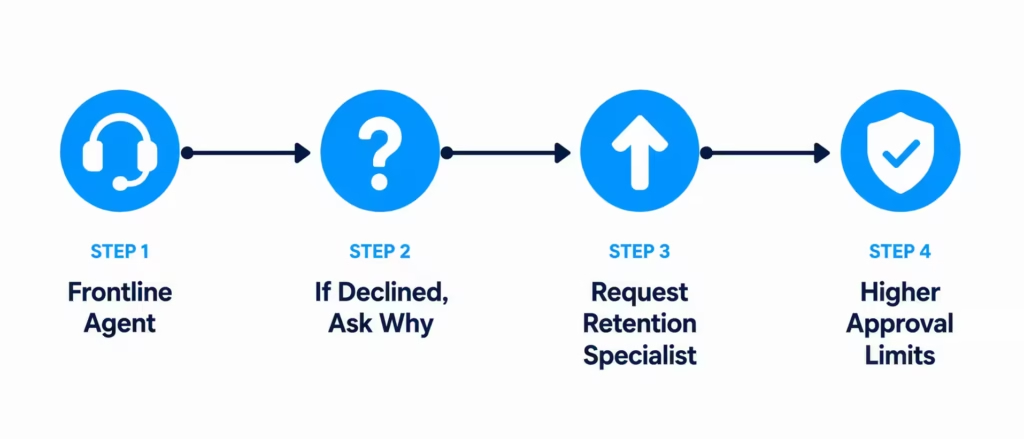
If the first rep says no, politely ask if there’s a retention or account specialist you can speak with. Frontline agents often have limited authority. The next tier up can approve reductions the first person can’t.
Requesting Through Online Chat
Log in at citi.com and open the secure message or chat feature from your account dashboard. On the Citi Mobile app, tap the chat icon after logging in. Start with a short opener: “Hello, I’d like to request an APR reduction on my card ending in [last four digits].”
Chat has two clear advantages. First, you get a written transcript, which is useful if there’s any confusion later. Second, you have time to think before responding. The trade-off is speed. Some chat reps can approve reductions on the spot, but others will ask you to call in for a final decision.
💡 Pro Tip: If you use chat and get a “please call us” response, ask the chat agent to note your request in the account file first. When you call, reference that note. It saves you from starting the conversation over.
What to Say When Asking for a Lower Rate
The words you use matter more than most people realize. You’re not begging for a favor. You’re a paying customer asking for a business adjustment. Keep your tone calm, direct, and confident.
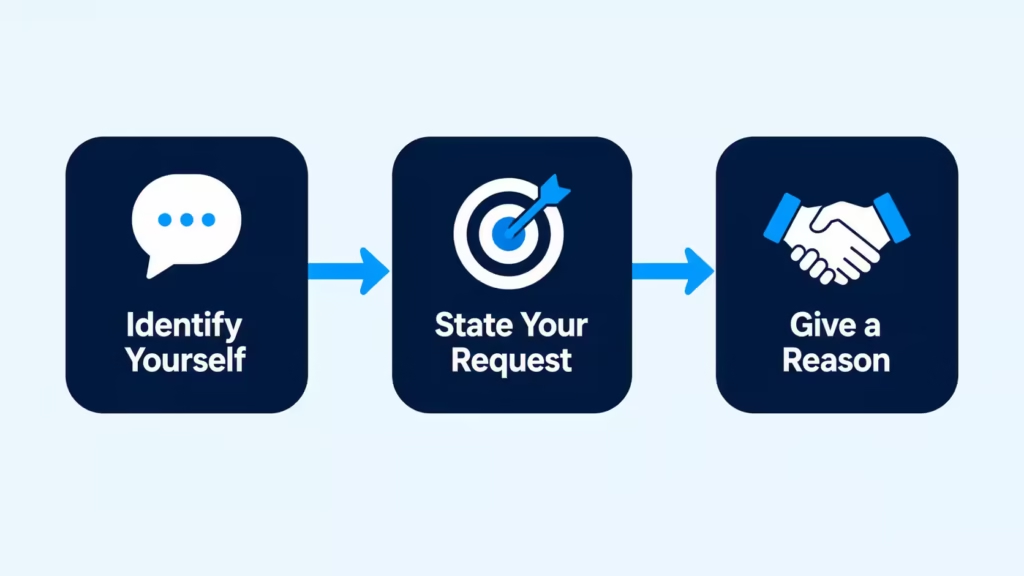
Start by identifying yourself and your history: “I’ve had this card since 2022, and I’ve made every payment on time.” Then state what you want: “My current APR is 24.99%, and I’d like to see if you can lower it.” Finally, add one reason it’s reasonable: “I’ve received offers from other issuers at lower rates, but I’d rather stay with Citi if we can adjust this.”
That three-part script covers the essentials without oversharing. Don’t discuss personal financial stress unless you’re asking about a hardship program. That topic is covered below. Framing this as hardship changes how Citi handles the account.
If the rep asks what rate you’re hoping for, aim slightly lower than what you’d accept. If you’d be happy at 18%, ask for 15%. Citi rarely gives the exact number you request, so anchoring a bit below your target leaves room for a counter.
A few phrases to keep ready:
- “I’ve been a loyal customer, and I want to stay with Citi.”
- “I’ve seen competitive offers from other banks, but I’d prefer to keep this account.”
- “Can we look at what APR you’d be able to approve today?”
Escalating to a Retention Specialist or Account Manager
If the first agent won’t budge, don’t argue with them. Ask directly: “Is there a retention specialist or account manager who can review this request?” That single sentence often opens the next door.
Retention teams exist specifically to prevent customers from closing accounts or transferring balances elsewhere. They have higher approval limits. They can provide options that frontline agents can’t, like bigger rate cuts or promotional APR periods. When you reach one, repeat your short script and mention the competing offer you’re considering. That’s the leverage retention responds to.
Stay polite through the whole escalation. Reps have notes on every call, and a friendly customer gets more flexibility than an angry one. If you’re transferred, thank the first agent before the handoff.
How Much of a Reduction to Realistically Expect
Set your expectations before you call. A typical approved reduction is 1 to 5 percentage points. If your current APR is 24.99%, a realistic result might be 19.99% to 22.99%. Bigger drops happen, but they’re the exception, not the rule.
Several factors shape the size of the cut. Long tenure, a perfect payment history, and an improved credit score all raise the number. A short history or any recent late payment pushes it lower or blocks approval entirely.
Citi’s cards use variable APRs tied to the Prime Rate, so your quoted rate has a floor. The bank can lower the margin above Prime, but they can’t drop below their internal minimum for your card product. That’s why cardholders with premium cards sometimes see smaller reductions in percentage terms. The card’s base rate is already lower.
For context, the average credit card APR on accounts assessed interest was 22.15% according to Federal Reserve data. If Citi lowers you from 24% to 20%, you’re moving from above-average to below-average, which is a meaningful win.
Here’s what a 4-point reduction looks like in real dollars:
| Balance | Current APR | New APR | Annual Interest Saved |
|---|---|---|---|
| $3,000 | 24% | 20% | ~$120 |
| $6,000 | 24% | 20% | ~$240 |
| $10,000 | 24% | 20% | ~$400 |
Those numbers assume you carry the balance for the full year. Pay it down faster, and the savings shrink, but so does your total interest cost.
Is the Reduction Permanent or Temporary
Citi offers both types, and you need to ask which one you’re getting. A permanent reduction lowers your ongoing APR indefinitely (until Citi changes its pricing terms with proper notice). A promotional reduction gives you a lower rate for a set window, usually 6 or 12 months, and then your APR returns to the previous level.
Neither is inherently better. A deep promotional cut (say, 0% for 12 months) can save more if you plan to aggressively pay down the balance during that window. A smaller permanent reduction saves less per month but keeps saving forever. If you have a large balance you can clear within a year, take the promo. If you’ll carry the balance longer, push for the permanent change.
Always ask: “Is this a permanent APR change or a promotional offer, and if promotional, when does it expire?” Get the answer in writing through a follow-up secure message if you called by phone.
Does Asking for a Lower APR Hurt Your Credit Score
No, in almost every case, asking Citi for a lower rate does not hurt your credit score. This is one of the biggest fears that stops people from calling, and it’s mostly unfounded.
When Citi reviews your account for a rate reduction, they typically use a soft inquiry or no inquiry at all. Soft inquiries don’t affect your FICO score and aren’t visible to other lenders. As Citi’s own credit knowledge center explains, hard credit inquiries can lower your credit score, while soft inquiries don’t affect your score.
The reason is simple. You’re not applying for new credit. You’re asking for a change on an account you already have. Citi already has your data. A rate review is an internal decision, not a fresh underwriting event.
There’s one edge case to know. If Citi thinks your rate shows real risk and denies your request, they may do a hard pull. This could happen for a special product change or override, but it’s rare. This is uncommon, and the rep must disclose it before pulling. Just ask upfront: “Will this request involve a hard credit inquiry?” If the answer is yes, you can decline and end the call with no impact.
Your credit utilization and payment history are key to your FICO score. Asking won’t change them at all. In fact, if you get a lower rate and use the savings to pay down your balance faster, your score is likely to improve.
Citi Hardship Programs vs. a Standard Rate Reduction Request
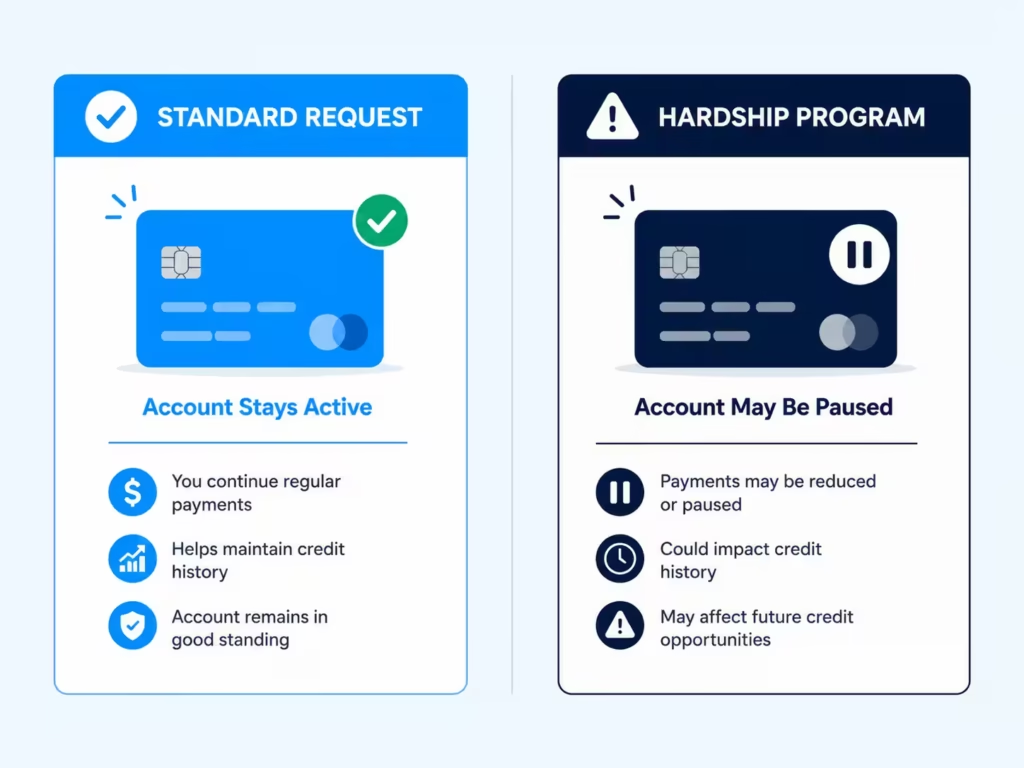
These are two different tracks, and mixing them up can cost you. A standard rate reduction is a simple request from a customer in good standing. You keep full access to your card, your credit limit stays the same, and there are no restrictions on your account.
A hardship program is designed for cardholders in real financial trouble, like job loss, medical emergency, or serious income drop. Citi may lower your APR significantly, sometimes below 10%, and pause fees or minimum payments for a set period. But there’s a cost. Enrollment in hardship often means your card is frozen or closed. Your credit limit may be lowered. Also, the program might be reported to credit bureaus, which could impact future applications.
⚠️ Mistake to Avoid: Never open a customer service call by saying “I’m having financial hardship” if all you want is a standard rate cut. That single phrase can route your account into the hardship track, where restrictions apply. Save that language for situations where you genuinely need short-term relief.
If you can still make your minimum payments and just want a better rate, stick with the standard request. If you truly cannot afford your payments, hardship may be the right choice, but understand the trade-offs before enrolling. Citi’s hardship team can walk you through the specifics, but only after you’ve made a clear decision to go that route.
What Happens If Citi Declines Your Request
A “no” isn’t the end of the process. Citi declines requests for specific reasons, and most of those reasons are things you can address and revisit.
First, ask the rep why the request was denied.
Common reasons are:
- a recent late payment
- a short account history
- a drop in your credit score
- the account already having a promotional low rate.
Get the reason in plain language before hanging up.
Second, ask if there’s another form of relief available. Sometimes, the rep can’t lower your standard APR. But they might offer a short promotional rate, a balance transfer deal on your current card, or a temporary fee waiver. These aren’t as good as a permanent cut, but they help.
Third, note the date and the rep’s name. If you call back later with new info, like a higher credit score or six more months of on-time payments, mention the last denial. Also, say what has changed.
How Soon and How Often You Can Ask Again
Wait at least 3 to 6 months before requesting again after a denial, unless something material has changed. Calling every few weeks gets flagged in your account notes and hurts future requests. Reps read the notes before they engage.
Two situations justify calling sooner. First, if your credit score has jumped by 30 points or more (say, after a large balance payoff or a negative item aging off your report). Second, if you receive a strong balance transfer offer from a competitor and you want to use it as leverage. In both cases, mention the specific change when you call.
For everyone else, the rhythm to follow is a request once every 6 to 12 months. Each call, note what improved since the last one: another year of on-time payments, a lower utilization ratio, a higher score, a longer tenure. Those are the levers that flip a “no” into a “yes.”
Alternatives If Citi Won’t Lower Your Rate
If Citi won’t budge and you still need relief from a high APR, you have three solid alternatives. Each fits a different situation.
Balance transfer to a 0% APR card
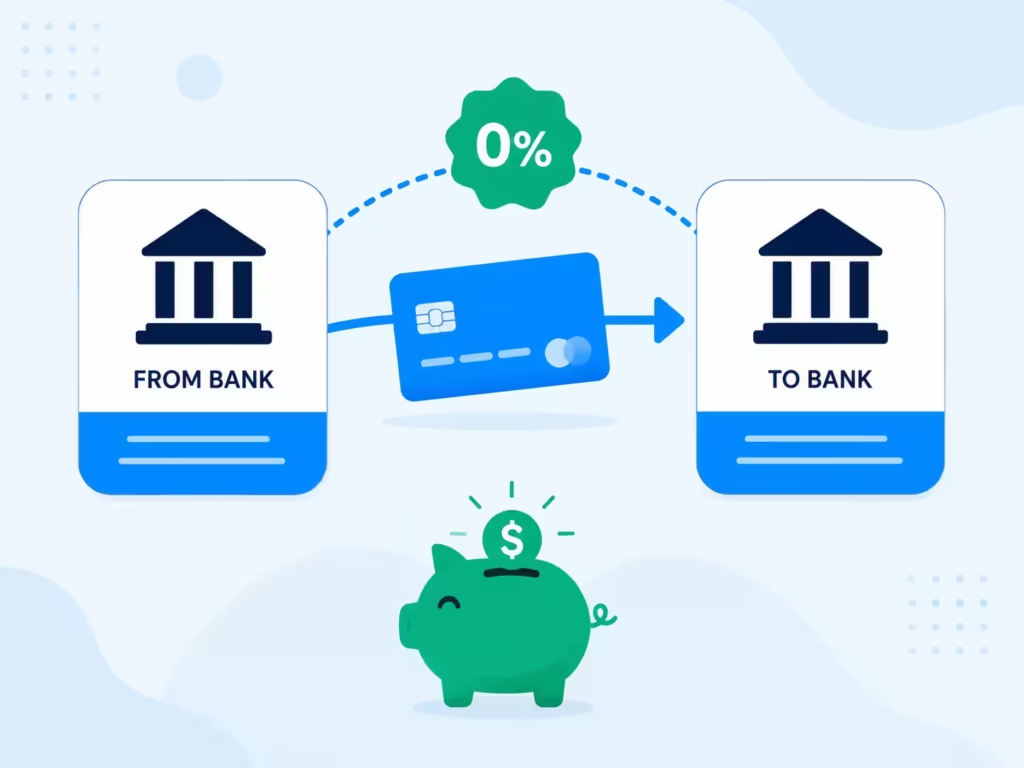
This is the most powerful option if your credit is decent. A new card with a 0% intro APR gives you 12 to 21 months of interest-free time to pay down the debt. The Citi Diamond Preferred Card currently offers 0% intro APR for 21 months on balance transfers from account opening, then a variable APR of 16.49% to 27.24%. Balance transfer fees typically run 3% to 5% of the transferred amount, so factor that in. Even with a 5% fee, avoiding 22%+ interest for 21 months usually comes out well ahead.
Personal loan for debt consolidation
A personal loan turns your revolving credit card debt into a fixed installment loan, often at a lower rate. Rates for borrowers with good credit typically run 8% to 15%. The loan has a set payoff date, which helps you actually clear the debt instead of carrying it forever. This works best if you can commit to not running the card balance back up after the transfer.
Nonprofit credit counseling
If your credit card debt is too high on multiple cards, a nonprofit credit counseling agency can help. They can negotiate with all your creditors together. Reputable agencies accredited by the National Foundation for Credit Counseling provide free consultations. They can also create a debt management plan with lower rates for all your accounts. This affects new credit access during the plan, but it can dramatically cut your total interest costs.
📌 Did You Know: A single balance transfer to a 0% APR card can save more than a year of small rate reductions from your existing issuer. Transferring a $6,000 balance at 22% APR to a 0% card for 21 months can save you about $2,000 in interest. This includes a 5% transfer fee of $300.
Pick the path that matches your situation. If you have one card with a moderate balance, a balance transfer is usually the winner. If you have multiple cards and rising minimums, a personal loan or credit counseling gives you a cleaner structure. Whichever path you choose, act before the interest cost grows any larger.
Frequently Asked Questions (FAQs)
Will Citibank actually lower my interest rate if I call and ask?
Yes. Citi lowers APRs for eligible cardholders with a simple customer service call. This isn’t a special program. The call typically lasts 10 to 15 minutes.
Does asking Citi for a lower interest rate hurt my credit score?
In almost every case, no. Citi typically uses a soft inquiry or no inquiry at all to review the request, which doesn’t affect your FICO score. A hard pull is possible but rare, and the rep must disclose it before running one.
How much can I expect Citi to lower my APR?
A typical approved reduction is 1 to 5 percentage points. For example, a 24.99% APR might come down to somewhere between 19.99% and 22.99%.
What’s the best way to ask Citi for a lower rate by phone or chat?
Both work. Phone is usually quicker. You often get answers in one call. Chat provides a written transcript, but it might end with a request to call for a final decision.
Am I eligible for a Citi APR reduction?
Citi doesn’t publish a formal checklist, but approvals lean heavily on three factors: on-time payment history (especially the last 12 months), account tenure of a year or more, and your broader relationship with Citi, like holding multiple accounts.
What should I say when I call Citi to ask for a lower rate?
A short three-part script works best: identify yourself and your payment history, state the specific rate you’re requesting, and give one reason it’s reasonable, such as a competing offer from another issuer.
What happens if Citi says no?
Ask the rep for the specific reason, since it’s often a recent late payment, short tenure, a credit score drop, or an existing promotional rate. You can also ask about alternative relief, like a temporary promotional rate or fee waiver.
How often can I ask Citi for another rate reduction?
Wait 3 to 6 months after a denial unless something material has changed, like a credit score jump of 30+ points or a new competing offer; otherwise, aim for once every 6 to 12 months.
Is a standard rate reduction the same as a Citi hardship program?
No. A standard request keeps your account and credit limit unchanged. A hardship program is for real financial trouble and can freeze or close your card, lower your limit, and get reported to credit bureaus.
The Bottom Line
Getting Citi to lower your APR often comes down to one call, the right words, and a bit of preparation. Cardholders with a solid payment history, at least a year of tenure, and a good credit score are likely to see a reduction of 1 to 5 points, or even more. Based on Citi’s own soft-inquiry policy, asking rarely hurts your credit score, which means there’s little downside to trying.
For most readers, start with a standard phone request. If needed, escalate to retention. Also, keep the balance transfer option as a strong backup.
If you know someone stuck paying high credit card interest every month, share this guide with them. A single 15-minute call could save them hundreds of dollars this year.