
I’ve been there, staring at a SoFi Credit Card statement and watching interest quietly eat into every payment. It feels stuck, especially when you’re paying on time and still not making a dent. Many cardholders wonder if SoFi will lower their interest rate or if asking is even worth the effort.
Yes, SoFi can lower your credit card APR if you call and ask, though approval depends on your account history and current rates.
Below, you’ll find the exact steps, a word-for-word script, timing tips, and backup plans if the first answer is no.
Key Takeaways
This guide explains how to request a lower interest rate on a SoFi credit card, including the factors SoFi reviews, best timing to call, a sample script, escalation steps, and backup options if the request is denied.
Core Facts:
- SoFi reviews rate reduction requests case by case and has no public rate-match program or automatic APR reduction feature in the app.
- Key approval factors include payment history, credit utilization under 30%, FICO score increases, account tenure, and overall SoFi relationship across products.
- Requesting a rate review does not trigger a hard credit pull; SoFi may run a soft credit pull instead, which does not affect your FICO score.
- SoFi’s hardship program can reduce APR to as low as 0% to 9.99% and may pause or reduce minimum payments for up to 12 months.
- Temporary rate reductions typically last 6 to 12 months and revert afterward, while permanent reductions require formal underwriting and apply to future balances.
- If SoFi denies the request, reasons to avoid a call include a late payment in the last 6 months, utilization over 80%, or an account less than 6 months old.
Best for:
- Cardholders with 6 to 12 months of on-time payments who want to lower their current SoFi credit card APR.
- People whose FICO score has increased since opening the account and want leverage for a rate negotiation.
- Cardholders facing financial hardship who want to explore SoFi’s hardship program or backup alternatives like a personal loan or balance transfer.
Does SoFi Lower Credit Card Interest Rates?
SoFi does sometimes lower credit card APRs, but it isn’t a guaranteed perk. The SoFi Credit Card is a Mastercard issued by SoFi Bank, N.A., and like most card issuers, SoFi reviews rate reduction requests case by case. There is no public “rate match” program, and no button in the app that drops your APR automatically.
What that means for you: a lower APR is possible, but you’ll have to ask for it directly. Cardholders with a clean payment record, low utilization, and steady account activity have the best shot. Those who just opened the card, missed a payment, or maxed out their limit will likely hear no.
Set your expectations before you call. SoFi may offer a small APR trim, a short promotional rate, or a temporary hardship rate. A permanent, deep cut is rare across the whole industry, not just at SoFi.
📌 Did You Know: The Consumer Financial Protection Bureau found in a 2023 report that about 76% of cardholders who asked for a lower APR received one. Asking is often the only step between paying full price and paying less.
How SoFi’s Credit Card Differs From a Legacy Bank Card
SoFi is a digital-first fintech, not a traditional branch bank. That shapes how rate requests get handled. You won’t walk into a lobby to speak with a banker. Every conversation runs through phone support or in-app chat, and the reps you reach are trained on SoFi’s own scripts and internal policies.
Legacy issuers like Chase or Citi have decades of retention playbooks and dedicated retention teams. SoFi’s team is leaner, and its credit card product is newer, so the flexibility can vary. On the plus side, SoFi tends to reward cardholders who use its broader ecosystem, such as SoFi Money, SoFi Invest, or SoFi Plus. Being a multi-product member can strengthen your case.
Keep this in mind: SoFi’s tone in support chats is friendly, but the answer still depends on underwriting rules. A polite ask works better than a heated demand.
What Determines Whether SoFi Will Approve Your Request
SoFi looks at a short list of factors when deciding whether to trim your APR. Knowing these ahead of time helps you frame your request around real strengths.
Here’s what matters most:
- Payment history. On-time payments for at least 6 to 12 months carry the most weight. Even one recent late payment can sink your chances.
- Credit utilization. Keeping your balance under 30% of your credit limit signals you’re not overextended. Under 10% is even better.
- FICO score changes. If your score has climbed since you opened the card, mention it. A jump from 680 to 740 is a strong talking point.
- Account tenure. Cardholders who’ve been with SoFi for a year or more get more flexibility than brand-new accounts.
- Current APR versus market rates. If your APR is well above what SoFi offers new applicants with similar credit, you have leverage.
- Overall SoFi relationship. Direct deposit into SoFi Money, an active SoFi Invest account, or a SoFi Personal Loan in good standing can tip the scales.
Experian data shows the average credit card APR sits around 21.5% in 2025, so knowing where your rate lands helps you argue for a fair adjustment.
Best Time to Ask
Timing changes the answer. The strongest window is right after a streak of good behavior. Wait until you’ve made at least 6 consecutive on-time payments, ideally 12. Ask soon after a FICO score bump, a raise, or paying down a large chunk of the balance.
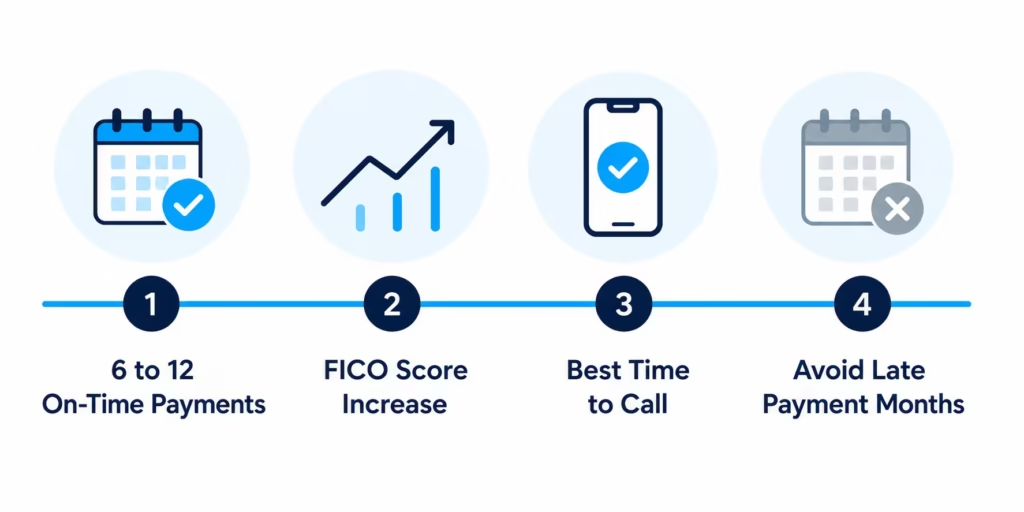
Avoid calling right after a late payment, a new hard inquiry, or a big spending month that pushed your utilization high. Also skip calling during the last week of the month, when call centers are busiest, and reps have less patience for negotiation.
If you’re planning a bigger financial move, like a mortgage application, ask 60 to 90 days ahead so any temporary account notes settle down first.
How to Contact SoFi Credit Card Customer Service the Right Way
Reaching the correct team saves time and stress. SoFi’s general support line handles most requests, but you’ll want to be clear that your question is about your credit card APR, not a personal loan or bank account.
Follow these steps:
- Call SoFi directly at 1-855-456-7634. The credit card team is generally available 7 days a week.
- Use in-app chat through the SoFi mobile app. Log in, tap the profile icon, and select “Contact Us.” Chat is often faster than the phone.
- Have your account details ready. Keep your account number, last 4 of your Social Security number, and current APR handy before the call starts.
- Ask to speak with a credit card specialist. The first-tier agent may not have the authority to change your rate. Politely request the credit card retention or account review team.
Do not send rate requests through public social media or email. Those channels don’t reach the right team and can delay your request.
What to Say: A Script for Requesting a Lower Rate
Words matter here. A calm, confident tone lands better than a rushed complaint. Use this script as your starting point and tweak the numbers to fit your account.
Sample script:
“Hi, my name is [Your Name], and I’ve been a SoFi Credit Card holder since [month, year]. I’ve made every payment on time and I keep my balance well under my limit. My current APR is [X]%, which feels high compared to other offers I’m seeing for someone with my credit profile. Could you please review my account for a lower APR? I’d like to keep my card with SoFi, but the rate is making it hard to pay down my balance.”
Why this works:
- It opens with your positive history.
- It states the ask clearly.
- It shows you’re weighing other options, without threatening to close the account.
- It frames the rate as a barrier to paying SoFi back, which is in SoFi’s interest to fix.
If the agent asks why, be honest. Rising living costs, a specific pay-down goal, or a better offer from another issuer all count as valid reasons.
💡 Pro Tip: Before you call, check pre-qualified offers on Bankrate or NerdWallet for cards matching your credit profile. Naming a specific competing APR (“Chase Freedom is offering me 18.99%”) gives the rep something concrete to beat.
If the First Answer Is No: How to Escalate
A no from the first rep isn’t the end. Front-line agents often have limited authority. Politely ask, “Is there a supervisor or retention specialist who could review this?” Retention teams have more room to approve rate cuts, promotional APRs, or hardship pricing.
If the supervisor still says no, ask two follow-up questions:
- “What would I need to change on my account to qualify for a lower APR in the future?”
- “Can you note my file so I can request a review again in 3 or 6 months?”
Getting concrete criteria gives you a roadmap. Waiting 90 days and calling back with fresh on-time payments often flips the answer.
Get the New Rate in Writing
If SoFi agrees to a lower APR, do not hang up until you have the details in writing. Ask the rep to:
- Confirm the new APR in an email or secure message.
- State whether the rate is permanent or temporary.
- Give you the exact start date and, if temporary, the end date.
- Note any conditions, like keeping autopay on or staying below a certain balance.
Screenshot the confirmation from the app once it appears. Store it with your other card records. If the rate ever gets reversed without warning, that written proof is your ticket to a quick fix.
Does Asking for a Lower Rate Hurt Your Credit Score?
Short answer: no. Requesting an APR reduction on an existing SoFi card does not trigger a hard credit pull. It’s a customer service request, not a new credit application.
At most, SoFi may run a soft credit pull to review your current profile. Soft pulls are invisible to other lenders and do not affect your FICO score. You can request a rate review as often as you like without dinging your credit.
The only time credit takes a hit is if you apply for a brand-new card, a balance transfer card, or a personal loan to replace the SoFi balance. Those involve hard inquiries. So the ask itself is safe. The alternatives you might turn to if SoFi says no are where credit-score effects come in.
⚠️ Mistake to Avoid: Don’t close your SoFi card in frustration if you get a no. Closing an account can raise your overall credit utilization ratio and shorten your average account age, which can drop your score by 10 to 40 points.
Temporary vs. Permanent Rate Reductions: What to Expect
Most issuer-driven rate cuts, SoFi included, are temporary. Understanding the difference protects you from surprise later.
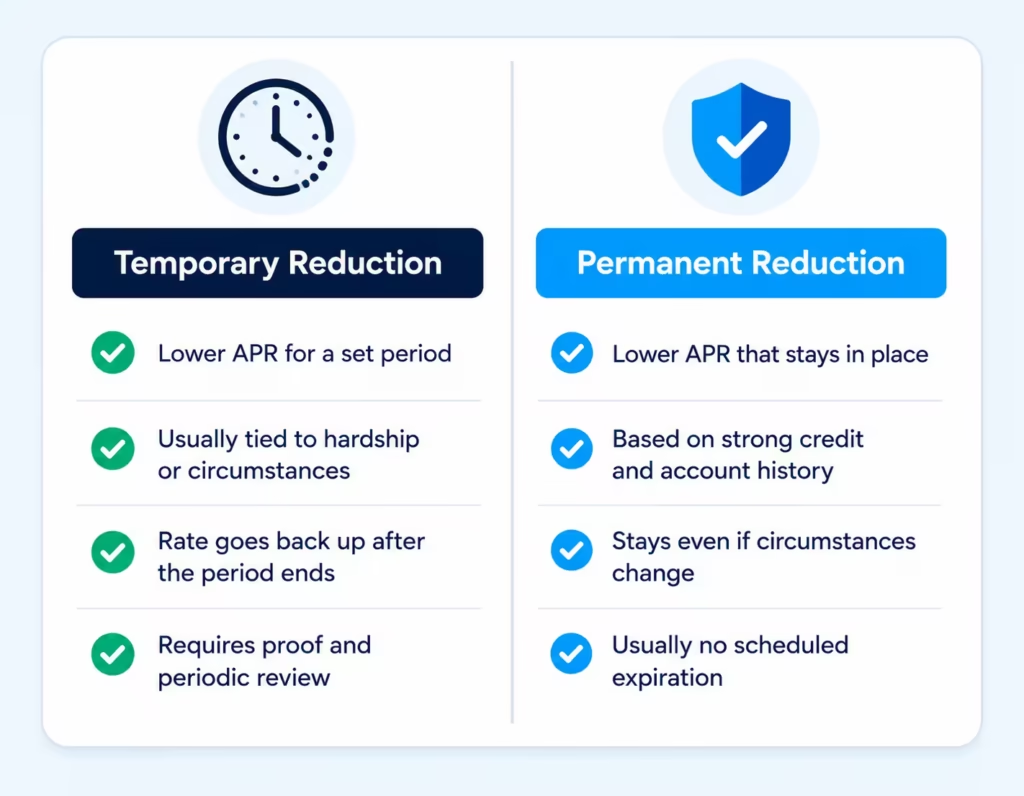
Temporary rate reduction:
- Usually 6 to 12 months.
- Often tied to a hardship program or promotional review.
- Reverts to your original APR (or close to it) once the window ends.
- May require you to keep the card in good standing during the discount period.
Permanent rate reduction:
- Rare, but possible for long-tenured cardholders with strong credit.
- Requires a formal underwriting review.
- Applies to all future balances, not just the current one.
- Won’t automatically reset if you miss a payment, but late payments can still trigger a penalty APR.
Ask the rep directly: “Is this a permanent change or a temporary promotional rate?” That single question saves you from budgeting around a discount that vanishes.
SoFi’s Hardship Program for Credit Card Cardholders
If you’re facing a real financial squeeze, such as job loss, medical bills, or reduced hours, SoFi offers a hardship program. Terms vary by account, but common features include:
- A reduced APR, sometimes as low as 0% to 9.99%.
- A pause or reduction in minimum payments for up to 12 months.
- A freeze on new purchases during the plan.
- Reporting to credit bureaus continues, but the account stays in good standing if you meet the plan terms.
To apply, call SoFi and ask specifically about “hardship assistance for my credit card.” Be ready to explain your situation and provide a rough monthly budget. Hardship plans aren’t a fit for everyone. They protect you short-term but limit card use while active.
If SoFi Says No: SoFi Personal Loan as an Alternative
When a card APR reduction isn’t possible, a SoFi Personal Loan can replace high-interest card debt with a fixed, lower rate. This is a separate product from your credit card, so it’s a fresh application with its own underwriting.
Key features that make it attractive for debt consolidation:
- Fixed APR for the life of the loan, so payments don’t drift up.
- Terms from 2 to 7 years, giving you room to pick a manageable monthly payment.
- No fees, including no origination or prepayment penalties.
- 0.25% autopay discount on the APR when you enroll in automatic payments.
- Rate check with a soft pull, so seeing your offer doesn’t hurt your credit.
If your FICO score is 680 or higher and your debt-to-income ratio is reasonable, a SoFi Personal Loan often lands well below typical card APRs. You use the funds to pay off the SoFi card balance (and any other high-rate cards), then repay the loan at the fixed rate. Check current rates at the SoFi Personal Loans page.
One catch: taking the loan involves a hard credit inquiry once you accept an offer. Expect a small, short-term score dip that usually recovers within a few months of on-time payments.
Other Alternatives If a Rate Reduction Isn’t Available
If SoFi says no and a personal loan doesn’t fit, you still have solid options.
- 0% balance transfer card. Cards from Chase, Citi, or Wells Fargo often offer 15 to 21 months at 0% APR on transferred balances. Watch for a 3% to 5% transfer fee, and pay off the balance before the promo ends.
- Credit union personal loan. Local credit unions frequently beat big-bank rates, especially for members with steady income and fair credit.
- Nonprofit credit counseling. Agencies accredited by the NFCC can set up a Debt Management Plan (DMP) that consolidates card payments and often negotiates lower APRs on your behalf. This does not require a new loan.
- Debt avalanche method. Keep the SoFi card, but attack the highest-APR balance first while paying minimums on the rest. It saves the most on interest without any application.
- Extra income toward principal. Even $50 a month extra on the SoFi balance can shave months off the payoff timeline and cut total interest paid.
Pick the option that fits your credit profile and how quickly you can realistically pay down the debt.
| Option | Credit Impact | Best For |
|---|---|---|
| SoFi Personal Loan | Hard pull, then steady | Consolidating $5k+ with fixed payments |
| 0% Balance Transfer | Hard pull, high short-term | Payoff possible in 12-18 months |
| Credit Counseling (DMP) | Low, no hard pull | Multiple cards, tight budget |
| Debt Avalanche | None | DIY payoff, no new credit |
When a Rate Reduction Request Is Unlikely to Work
Some situations make a yes almost impossible. Save yourself the call if any of these apply right now:
- A late payment in the last 6 months. Even a single 30-day late payment resets the clock on your good-standing record.
- Utilization over 80% of your limit. SoFi reads this as financial stress, not stability.
- The card is less than 6 months old. There isn’t enough history to justify a change.
- A recent hard inquiry or new account. New credit activity looks risky.
- A drop in your FICO score. If your score fell since account opening, you’ve lost negotiation leverage.
- You’re already on a promotional or hardship rate. SoFi won’t stack discounts.
- You have an active dispute or chargeback on the account. Resolve that first.
If any of these fit, spend the next 3 to 6 months rebuilding. Pay on time, pay down the balance, and avoid new applications. Then call back with a stronger case. Patience often turns a no into a yes.
Frequently Asked Questions (FAQs)
How can I lower my credit card APR?
Build at least 6 to 12 months of on-time payments, keep utilization under 30% of your limit, and call SoFi with a clear, polite script requesting a review. Mention any FICO score increase since account opening, since a jump like 680 to 740 strengthens your case.
Is 24% APR on a credit card high?
Yes, 24% APR sits well above the 2025 average credit card APR of around 21.5% reported by Experian. If your SoFi rate lands near or above this mark, you have leverage to ask for a reduction.
What percent APR is too high?
An APR is generally considered too high once it exceeds the national average, which sat around 21.5% in 2025 according to Experian. Rates above 24% to 30% signal it’s worth requesting a reduction or exploring alternatives like a balance transfer.
Does asking SoFi for a lower rate hurt your credit score?
No, requesting an APR reduction does not trigger a hard credit pull since it’s a customer service request, not a new application. SoFi may run a soft credit pull instead, which is invisible to other lenders and doesn’t affect your FICO score.
What is the downside to using SoFi if my rate request is denied?
If SoFi says no, closing your card out of frustration can backfire by raising your overall credit utilization ratio and shortening your average account age. This combination can drop your score by 10 to 40 points.
Why does SoFi keep lowering my interest rate?
SoFi typically only lowers rates when a cardholder specifically requests a review and demonstrates strong payment history and low utilization. Repeated reductions usually mean the account holder keeps qualifying through consistent on-time payments and manageable balances.
Does refinancing with SoFi affect credit score?
Checking your rate involves a soft credit pull, so seeing your offer doesn’t hurt your credit. However, actually accepting a SoFi Personal Loan offer triggers a hard credit inquiry, causing a small, short-term score dip that typically recovers within a few months.
Are SoFi interest rates good?
SoFi doesn’t have a public rate-match program, so a lower APR isn’t guaranteed and depends on a case-by-case review. Cardholders with clean payment records, low utilization, and steady account activity get the best shot at a favorable rate.
How much does a temporary SoFi hardship rate reduce my APR?
SoFi’s hardship program can reduce your APR to as low as 0% to 9.99% for cardholders facing job loss, medical bills, or reduced hours. This typically pairs with a pause or reduction in minimum payments for up to 12 months.
Is SoFi good for a personal loan instead of a credit card rate cut?
If your FICO score is 680 or higher with a reasonable debt-to-income ratio, a SoFi Personal Loan often offers a fixed APR below typical card rates. It also includes no origination or prepayment fees and a 0.25% autopay discount.
Wrapping Up
Lowering a SoFi Credit Card APR is possible, but it takes preparation, timing, and the right words. Based on the factors SoFi weighs, the most effective approach is to build 6 to 12 months of on-time payments, keep utilization under 30%, and call with a clear, polite script ready. If the answer is no, ask what to fix and try again in 90 days.
Backup options like a SoFi Personal Loan, balance transfer, or credit counseling can still cut your interest costs.
If you know someone stuck paying high card interest, share this guide; it could save them hundreds in a single phone call.