
We know how stressful it feels when you or a loved one is asked to cosign, and there’s no steady paycheck to point to. Maybe the person helping is retired, self-employed, or between jobs, and the big worry is whether a lender will slam the door shut. That’s exactly why the question “does a cosigner have to have a job” comes up so often before anyone dares to apply.
Short answer: no, a cosigner does not always need a job, but they almost always need verifiable, stable income or strong assets.
Below, we’ll walk you through what lenders really check, which non-job income counts, what paperwork you’ll need, and how the rules shift for car loans, apartments, and student loans.
Key Takeaways
This guide explains whether a cosigner needs a job, showing that verifiable income such as Social Security, pensions, or self-employment earnings can qualify instead, along with documentation, credit score, and rules by loan type.
Core Facts:
- A cosigner does not need a job, but lenders require verifiable, stable income from sources like Social Security, pensions, self-employment, dividends, alimony, or rental payments.
- Lenders evaluate three factors: income stability, income size compared to existing debts, and the likelihood the income will continue.
- Most lenders look for a credit score around 670 or higher for cosigners, with many preferring 700 or above.
- Lenders generally like to keep the total debt-to-income ratio, including the new loan, under about 43 percent.
- Required documents can include pay stubs, tax returns, bank statements, Social Security or pension award letters, and government ID.
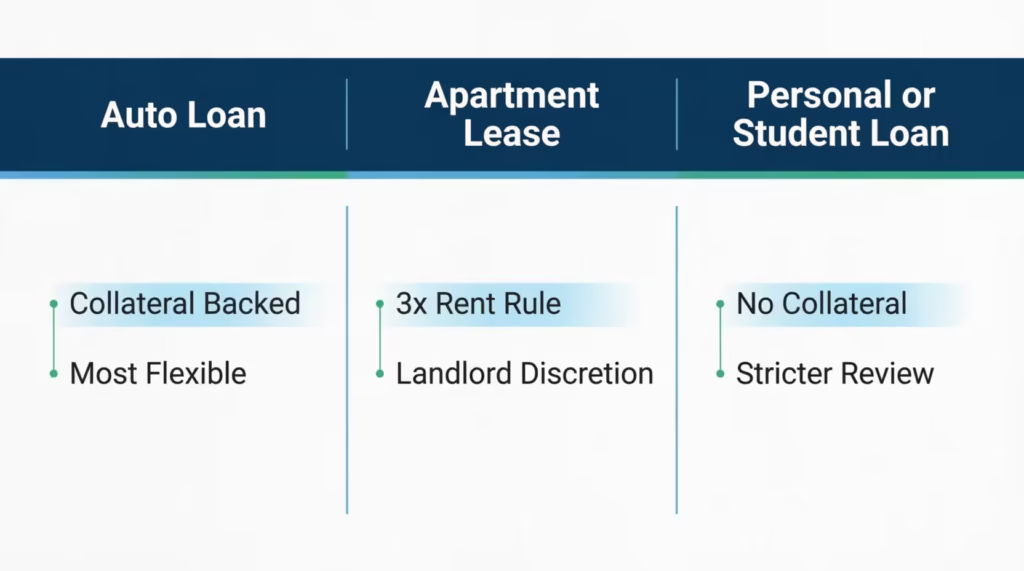
- Auto loan cosigners tend to have more flexibility since the vehicle serves as collateral, while apartment leases often require income near three times the monthly rent.
Best for:
- Retired individuals living on Social Security or pension income who are being asked to cosign a loan or lease.
- Self-employed or freelance workers who need to document income through tax returns instead of pay stubs.
- Anyone comparing cosigner income requirements across auto loans, apartment leases, and personal or student loans before applying.
Does a Cosigner Need a Job, or Just Income?
Here’s the biggest myth to clear up first: A lender doesn’t actually care if your cosigner clocks in at an office. What they care about is money coming in that is steady, provable, and likely to keep flowing. So “job” and “income” get treated like the same thing in casual talk, but they’re not the same to a bank.
Think of it like this. A person can have a full-time job and still look risky if their pay is unstable or their debts are huge. Another person can be retired with no job at all, yet still look safe because they get a set pension check every month. The lender’s real test is about verifiable income, not employment status.
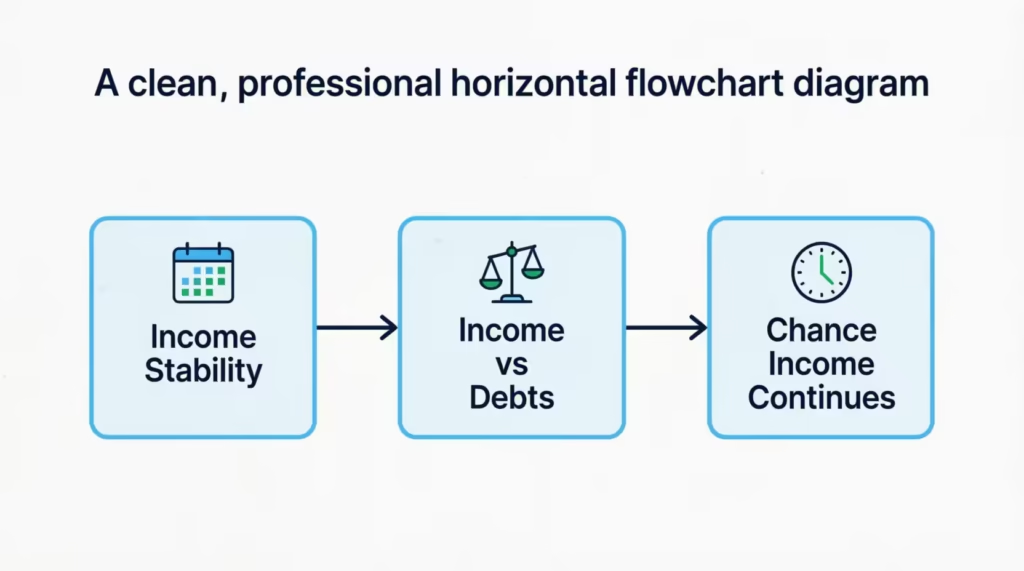
When a bank looks at a cosigner, three things get checked:
- Income stability: Is the money coming in month after month, or does it come and go?
- Income size vs. debts: How does the income compare to what the cosigner already owes? This is the debt-to-income ratio, often called DTI.
- Chance the income continues: Will this money still be there next year, or is it about to stop?
If your cosigner clears these three checks, the lack of a W-2 job usually isn’t a deal breaker. If they fail these checks, having a job won’t save the application either. That’s the real frame to keep in mind as we go deeper.
What Counts as Verifiable Income for a Cosigner
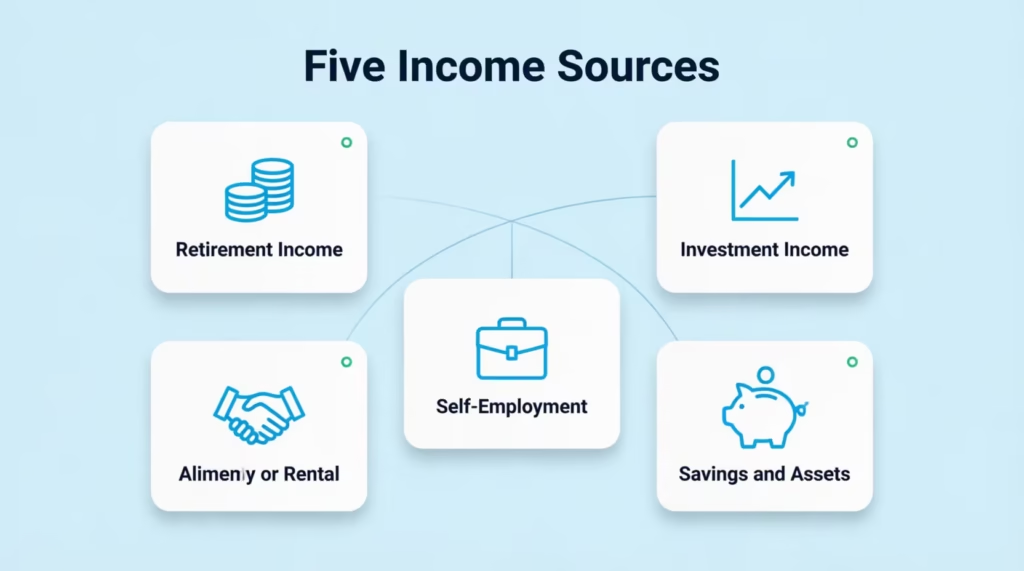
Once you drop the “must have a job” idea, you open up a much bigger list of income types lenders will accept. What matters is that the money is documented, regular, and expected to last. Here are the main non-wage income sources that count.
- Social Security and pension income: Monthly retirement checks are one of the most stable income types. Lenders often love them.
- Investment and dividend income: Regular payouts from stocks, bonds, or mutual funds can qualify, especially when shown on tax returns.
- Self-employment or 1099 income: Freelancers, contractors, and small-business owners can qualify using tax returns and profit records.
- Alimony, child support, or rental income: These count when the payments are steady and can be proven with court orders, deposits, or lease agreements.
- Savings and asset reserves: Big savings, CDs, or brokerage accounts can serve as a backup or supporting factor, though they rarely replace income by themselves.
The point is simple. If your cosigner can prove money is coming in from one or more of these sources, they may qualify even without a paycheck. Find the category that fits, then focus on the paperwork for that category.
Can a Retired Person Be a Cosigner?
Yes, a retired person can be a cosigner in most cases. Social Security, pension payments, and required retirement account withdrawals all count as qualifying income when they can be documented with award letters or bank statements.
Lenders may still ask how long the payments will continue. For example, some pensions run for life, while others may end after a set period. As long as the payments are expected to keep flowing for the length of the loan, retirement income plus strong credit often makes up for the lack of a job.
Can a Self-Employed Person Be a Cosigner?
Yes, but expect more paperwork. Self-employed cosigners usually swap pay stubs for tax returns, and most lenders want to see one to two years of filings. They’ll often average the income across those years to smooth out ups and downs.
Because 1099 income can swing month to month, lenders may look harder at stability. Bank statements, profit-and-loss reports, and business licenses can help paint a fuller picture. A clean tax return with consistent numbers is your best friend here.
Can Someone Unemployed With Savings or Assets Be a Cosigner?
Sometimes, but this is the exception, not the rule. A few lenders and landlords will look at big cash reserves, investment accounts, or paid-off property as a stand-in for income. This is more common with private lenders, luxury landlords, or asset-based loan programs.
A high credit score alone rarely replaces income. If the cosigner has no ongoing money coming in and no clear reserves, most lenders will pass, no matter how good the credit report looks.
Can I Be a Cosigner Without a Job?
If you’re the one being asked to cosign and you don’t have a job, the answer is nuanced. Not having a job by itself isn’t an automatic no. Having no income at all usually is.
To be a strong cosigner without a job, you generally need to bring three things:
- A steady, documented income source: Social Security, pension, 1099 income, dividends, or similar.
- A solid credit score: Most lenders want to see around 670 or higher, and higher is better.
- A low debt load: The less you already owe, the easier it is to keep your DTI in a safe range.
This works well when a retired parent cosigns for their child’s car, or a self-employed relative cosigns for an apartment. It tends to fail when someone truly has no income, no reserves, and thin credit. In that case, applying can waste a hard credit pull and still end in denial.
💡 Pro Tip: If the primary borrower has decent credit and just needs a small boost, sometimes adding a co-borrower with income is easier than adding a cosigner without a job. Ask the lender which structure they prefer before you apply.
Documentation a Cosigner Needs to Provide
The paperwork is where many cosigners get tripped up, especially when they don’t have pay stubs to hand over. Prepare these documents ahead of time so the process moves fast.
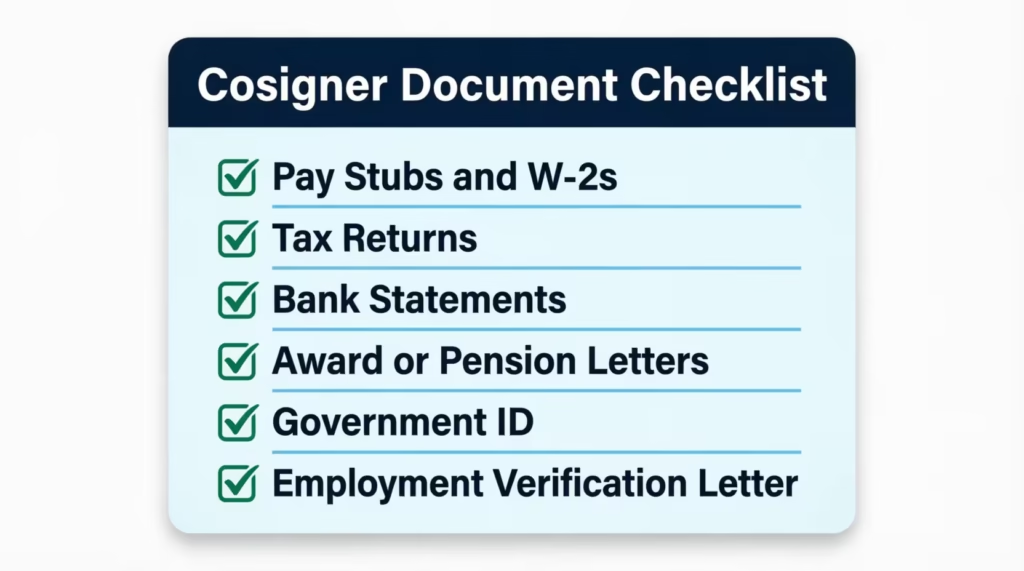
- Pay stubs and W-2s: For any cosigner who does work a regular job. Usually the last 30 days of stubs and the most recent W-2.
- Tax returns: One to two years of full returns, key for self-employed cosigners and anyone with mixed income.
- Bank statements: Two to three months, showing deposits from Social Security, pensions, business income, or other sources.
- Social Security award letters or pension statements: The official document showing the amount and frequency of payments.
- Government ID and proof of address: A driver’s license or passport, plus a recent utility bill or lease.
- Employment verification letter: If the cosigner works, some lenders and landlords want a signed letter from the employer stating role, pay, and length of service.
Gather these before you apply. Sending a full, clean packet the first time helps avoid delays and reduces the chance the lender asks for something extra later.
Does a Cosigner Have to Have a Job for a Car Loan?
Auto lenders tend to be some of the most flexible when it comes to cosigners. The car itself acts as collateral, so the lender has a way to recover money if things go bad. That security often makes them more open to cosigners who don’t have a traditional job.
For most auto loan cosigner approvals, the lender wants three things: proof of identity, proof of income, and proof of residency. The income part is where non-job cosigners often win. A retiree with a steady Social Security check and clean credit can often qualify to cosign a car loan without any employer at all.
A strong primary borrower can also offset a weaker cosigner. If the main buyer has steady work and okay credit, the cosigner might just need to shore up the credit side while showing modest but real income. Still, the cosigner takes on full liability, so this shouldn’t be treated as a low-stakes favor.
Does a Co-signer Have to Have a Job for an Apartment?
Apartment leasing plays by different rules than lending. Landlords set their own standards, and those standards can be stricter than what a bank uses. Most landlords focus on one core number: whether the cosigner’s income is about three times the monthly rent, and sometimes higher.
Non-job income usually counts here too. A retiree’s pension, a freelancer’s 1099 income, or a trust payout can meet the three-times-rent rule, as long as it’s clearly documented. Some landlords are also open to strong savings or a paid-off home as extra reassurance.
One important point: landlords are not legally required to accept a cosigner at all. Some buildings won’t allow them, others will only accept a cosigner who lives in the same state, and some want to see a cosigner with income closer to four or five times the rent. Ask the leasing office about their policy before you even fill out an application.
Does a Co-Signer Have to Show Proof of Income for an Apartment?
Yes, in almost every case. Landlords ask for proof of income to make sure the co-signer can actually cover rent if the tenant stops paying. Skipping this step would defeat the whole point of a co-signer.
Common documents landlords request include:
- Recent pay stubs, usually the last 30 to 60 days
- Most recent W-2 or 1099 forms
- Two to three months of bank statements
- A signed employment verification letter or a job offer letter for new hires
- Social Security or pension award letters for retired cosigners
If the cosigner is self-employed, expect the landlord to ask for tax returns instead of pay stubs. Bring more than they ask for. Extra paperwork rarely hurts, and it often speeds up approval.
Does a Cosigner for a Loan Have to Have a Job? (Personal & Private Student Loans)
Personal loans and private student loans usually sit on the stricter end of the cosigner spectrum. These loans aren’t backed by a car or a house, so the lender leans harder on income and credit to make sure the money comes back.
For a private student loan cosigner, most lenders want to see a solid credit history, a healthy DTI, and clear proof of income. Employment isn’t strictly required, but the cosigner must show they can cover payments if the student can’t. Parents who are retired can often qualify with pension or Social Security income, plus strong credit.
Personal loan lenders take a similar approach. Some allow cosigners, some don’t. Those that do generally want:
- A credit score in the mid-600s or higher
- A steady, documented income source
- A DTI that stays comfortable even after adding the new loan
Because there’s no collateral, expect more paperwork here than with an auto loan. Tax returns, bank statements, and detailed income proof are the norm. If the cosigner’s income is fully non-job, plan on providing extra documentation to show it’s stable.
Credit Score and Debt-to-Income Requirements When a Cosigner Has No Job
Numbers matter a lot when the cosigner doesn’t have a paycheck. Two figures do most of the heavy lifting: the credit score and the debt-to-income ratio.
Most lenders look for a credit score requirement of about 670 or higher for cosigners, though many prefer 700-plus. A stronger score can help offset non-traditional income, but only up to a point. Lenders still want to see money coming in.
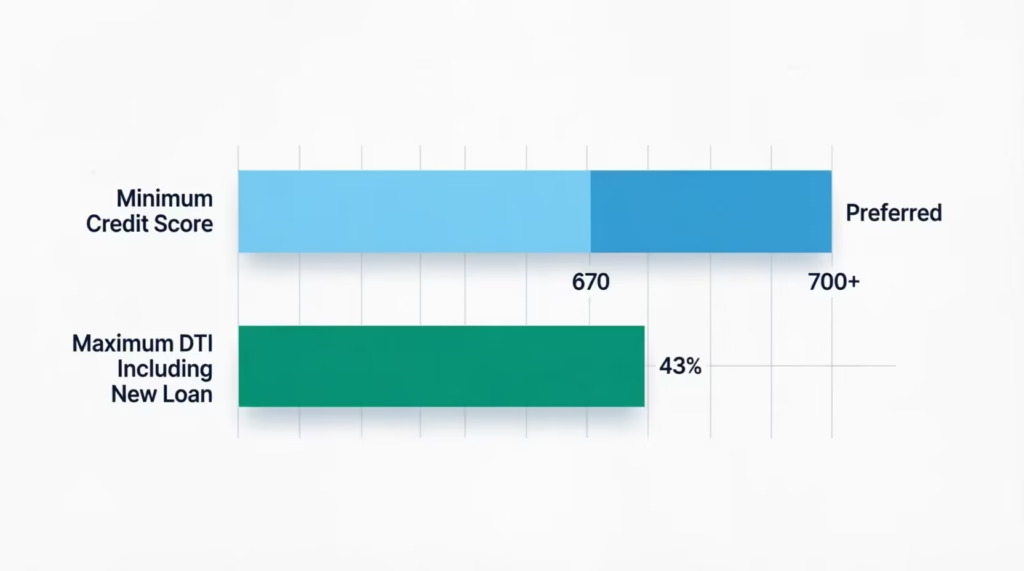
DTI is calculated by dividing total monthly debt payments by gross monthly income. When the cosigner’s income is from Social Security, a pension, or self-employment, that number simply replaces wage income in the formula. Many lenders like to keep total DTI, including the new loan, under about 43 percent, though this varies.
A high credit score alone can’t fully replace income. If a cosigner has an 800 score but zero verifiable income, most lenders will still say no. The pairing that works best is decent-to-strong credit plus proven, stable income, whatever the source.
⚠️ Mistake to Avoid: Don’t apply “just to see what happens” if your cosigner has no income. A hard credit pull can ding both scores, and a denial doesn’t automatically give you a workable next step. Line up income proof first, then apply.
What Happens If a Cosigner Is Denied for Lack of Income?
A denial isn’t the end of the road. Federal rules give applicants real protections and clear next steps, so use them.
Under the Equal Credit Opportunity Act, lenders must send an adverse action notice when they deny credit. This notice explains the main reasons for the denial. Read it carefully. It often points to the exact fix needed, like more income proof, a lower DTI, or a different cosigner.
From there, several paths open up:
- Find a different cosigner: Someone with stronger, more documented income may sail through where the first choice didn’t.
- Add a co-borrower instead of a cosigner: A co-borrower shares the loan as an equal party, which some lenders view more favorably.
- Build reserves or income proof first: A few months of steady deposits and updated tax returns can flip a “no” into a “yes.”
- Try a different lender: Standards vary a lot. Credit unions, online lenders, and specialty lenders may weigh non-job income differently.
- Apply without a cosigner: Sometimes the primary borrower actually qualifies alone, especially with a slightly smaller loan or a bigger down payment.
Don’t rush to reapply the same day. Each application can add another hard pull. Fix the weak spot first, then try again with a stronger file.
What a Cosigner Is Liable for, Regardless of Employment Status
This is the part every cosigner needs to understand before signing anything. Employment doesn’t change the risk. Once approved, a cosigner is fully on the hook, jobless or not.
Cosigners take on joint and several liability. That means the lender can go after either party, or both, for the full balance. If the primary borrower misses payments, the lender doesn’t have to chase them first. They can come straight to the cosigner. As the Consumer Financial Protection Bureau explains, a cosigner is pledging to pay the debt if the main borrower does not.
The loan or lease also lands on the cosigner’s credit report. Every late payment, collection, or default shows up on their record. It affects their credit score, their DTI, and their ability to borrow for their own needs, like a mortgage or a car.
📌 Did You Know: Federal rules say lenders must provide cosigners a written Notice to Cosigner. This notice explains the risks before they sign, so no one is surprised by what they agree to.
Employment status only helps the cosigner avoid liability by helping them make payments if things go wrong. It doesn’t reduce the legal obligation one bit.
Frequently Asked Questions (FAQs)
Does a cosigner have to have an income?
Yes, cosigners need verifiable income even without a traditional job. Social Security, pensions, self-employment earnings, dividends, alimony, or rental income all count as long as they’re documented and expected to continue.
Can I be a cosigner if I don’t have a job?
Yes, as long as you have steady documented income, a credit score around 670 or higher, and a low debt load. Retirees living on Social Security or pensions often qualify without any employer at all.
Will a cosigner with no income help?
No, a cosigner with zero verifiable income and no asset reserves usually gets rejected by lenders. A high credit score alone, even 800, typically can’t offset a complete lack of income.
Is there a downside to having a cosigner?
Yes, the cosigner takes on full joint and several liability for the debt. Late payments, collections, or defaults appear on their credit report and can hurt their own ability to borrow later.
Do I need proof of income if I have a cosigner?
Yes, almost every lender and landlord requires proof of income from the cosigner too. Expected documents include pay stubs, tax returns, bank statements, or Social Security award letters depending on the income type.
Does cosigning hurt your credit?
Cosigning itself doesn’t automatically hurt your credit, but the loan appears on your credit report and affects your debt-to-income ratio. Missed payments by the primary borrower will directly damage the cosigner’s score.
What disqualifies a cosigner?
No verifiable income, a credit score below roughly 670, or a debt-to-income ratio that’s already too high can disqualify a cosigner. Unstable or undocumented income also raises red flags with lenders.
Can I get a car with no job but a cosigner?
Yes, auto lenders are often flexible since the car itself serves as collateral. A cosigner with steady Social Security income and clean credit can frequently qualify even without an employer.
What happens if a cosigner is denied for lack of income?
The lender must send an adverse action notice under the Equal Credit Opportunity Act explaining the reason for the denial. From there, applicants can find a different cosigner, build income proof, or try a different lender.
What’s the difference between a cosigner and a co-borrower?
A cosigner backs the loan without ownership rights, while a co-borrower shares equal legal ownership and responsibility for the debt. Some lenders view co-borrowers more favorably when a cosigner’s income looks weak.
Wrapping Up
Whether a cosigner needs a job comes down to one core idea. Lenders and landlords care about stable, verifiable income far more than they care about a paycheck. Social Security, pensions, self-employment income, and even strong assets can all support a cosigner application, if the paperwork is clean and the credit is solid.
The rules shift a bit for car loans, apartments, and student loans, but the income focus stays the same. Based on the evidence above, the most effective approach is to match the right income proof to the right loan type before applying.
If you know someone worried about cosigning without a traditional job, share this guide; it could save them from a needless rejection.