
Planning a trip abroad and staring at your Citi card, wondering if it will actually work at a café in Paris or a taxi in Tokyo? You are not alone.
Many cardholders worry about surprise fees, frozen accounts, or getting stuck at checkout with a card that won’t tap, dip, or swipe. The good news: you can use your Citibank credit card internationally in almost every country where Visa or Mastercard is accepted.
This guide shows you card fees, tips for each country, and steps to take before you fly. This way, you can spend abroad without any surprises.
Key Takeaways
This guide explains whether a Citibank credit card works internationally, covering foreign transaction fees by specific card, the Dynamic Currency Conversion trap, country-specific tips, and steps to prepare before traveling.
Core Facts:
- Citibank credit cards work internationally almost anywhere Visa or Mastercard is accepted, which includes over 200 countries and territories.
- The Costco Anywhere Visa by Citi, Citi AAdvantage Executive World Elite Mastercard, and Citi Strata Premier Card all charge 0% in foreign transaction fees, while Simplicity, Double Cash, Diamond Preferred, Rewards+, and Custom Cash each charge 3%.
- Foreign transaction fees apply based on the merchant’s location, not the billing currency, so a foreign merchant charging in U.S. dollars still triggers the fee.
- Dynamic Currency Conversion markups average around 7.6% and can reach as high as 12.4% above the standard network exchange rate, so choosing local currency at checkout avoids this extra cost.
- Citibank debit card foreign ATM withdrawals can incur a foreign transaction fee, a Citi non-network ATM fee, and a local ATM operator fee, each ranging from about $2.50 to $5, plus daily withdrawal limits of roughly $1,000 to $2,000.
- Recommended pre-travel steps include setting a travel notice through the Citi Mobile App or citi.com, confirming a PIN, checking card expiration, and saving Citibank’s international collect-call number, 1-605-335-2222.
Best for:
- Travelers deciding which Citi card to bring abroad based on foreign transaction fees.
- Cardholders planning trips to Europe, Mexico, Canada, Japan, or the Philippines who want country-specific card and cash guidance.
- Anyone wanting to avoid Dynamic Currency Conversion markups or prepare their card before an international trip.
Can I Use My Citibank Credit Card Internationally?
Yes, you can use your Citibank credit card internationally. Every Citi credit card uses either the Visa or Mastercard network. Both networks are accepted by millions of merchants in over 200 countries and territories. If a store, hotel, or restaurant abroad displays the Visa or Mastercard logo, your Citi card will almost always work there.
The real question is not whether the card works. It is what it will cost you to use it. Two Citi cards can behave very differently overseas. One might charge you nothing extra. Another might quietly add 3% to every single purchase. That is the gap this guide is built to close.
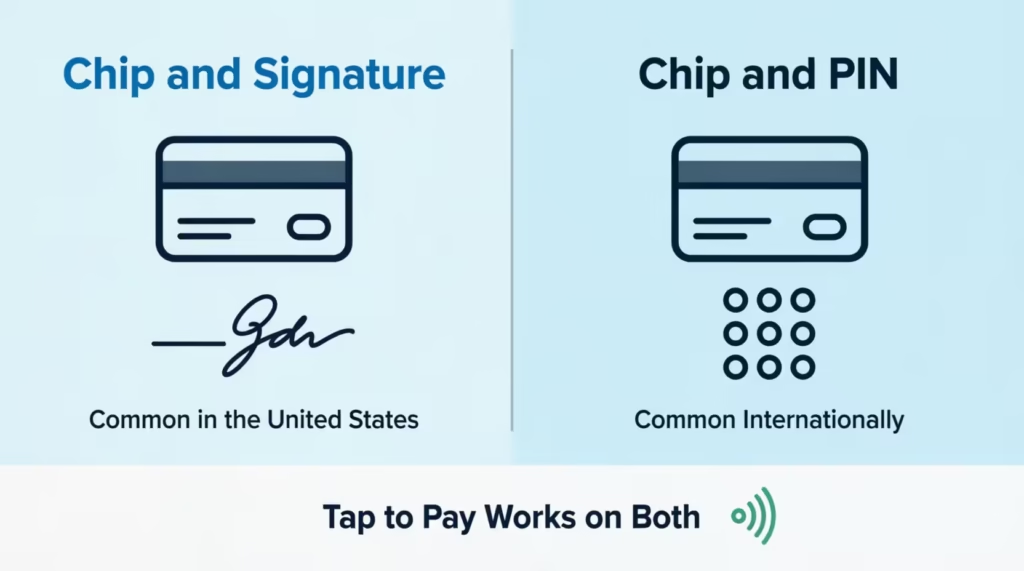
There is also a second layer to think about: the physical way the card is used. Most of the world uses chip-and-PIN terminals. The United States mostly uses chip-and-signature or contactless tap.
Your Citi card will work at chip-and-PIN terminals. You might need to sign a receipt instead of entering a PIN. You can also use the tap function if the terminal supports it. This is normal, not a sign your card is broken.
Foreign Transaction Fees by Citi Card
A foreign transaction fee is an extra charge added to any purchase processed outside the United States, even if the charge is in U.S. dollars. If your card carries a 3% fee, a $100 dinner in Rome becomes $103 on your statement. Over a two-week trip, that adds up fast.
Not every Citi card charges this fee. The table below shows where each popular card stands. Always confirm the current fee on your own cardholder agreement before you travel, since terms can change.
| Citi Card | Foreign Transaction Fee | Best Fit For |
|---|---|---|
| Costco Anywhere Visa by Citi | 0% | Costco members traveling abroad |
| Citi / AAdvantage Executive World Elite Mastercard | 0% | Frequent international flyers |
| Citi Strata Premier Card | 0% | Points-focused travelers |
| Citi Simplicity Card | 3% | Domestic use, not travel |
| Citi Double Cash Card | 3% | Everyday U.S. cash back |
| Citi Diamond Preferred Card | 3% | 0% APR balance transfers |
| Citi Rewards+ Card | 3% | Small everyday purchases |
| Citi Custom Cash Card | 3% | Bonus category spending at home |
💡 Pro Tip: If your main Citi card charges 3% and your trip is longer than a weekend, apply for a no-foreign-fee card at least 3 to 4 weeks before you fly. Even one week of a $2,000 hotel stay saves you $60 in fees on a no-fee card.
Costco Anywhere Visa by Citi International Fees
The Costco Anywhere Visa by Citi charges 0% in foreign transaction fees. That makes it one of the strongest travel-friendly cards in the Citi lineup, even though it is marketed as a Costco warehouse card. You also earn cash back on purchases abroad, including higher rates on eligible travel and restaurant spending.
There is one catch: acceptance. Costco Anywhere Visa runs on the Visa network, so it works almost anywhere Visa is accepted. That is nearly everywhere. But a small handful of countries and merchants still process Mastercard more smoothly than Visa. In practical terms, this is rarely an issue for regular travelers in Europe, Canada, Mexico, or most of Asia.
Citi Simplicity Card International Fees
The Citi Simplicity Card charges a 3% foreign transaction fee on every purchase made outside the United States. The card was built for people who want a simple, no-fee, no-late-fee balance product for domestic use. It was not built for travel.
If Simplicity is your only card and you are heading overseas, consider one of these three moves. Bring a small backup card with no foreign fee. Use the Simplicity card only for emergencies. Or apply for a Citi card that waives foreign fees before your trip.
How the Foreign Transaction Fee Is Calculated
The fee is a flat percentage applied to the U.S. dollar amount of your purchase after the Visa or Mastercard network converts the local currency. It is not a fixed dollar charge, and it does not depend on how you pay (chip, tap, or online).
Say you buy a €50 pair of shoes in Madrid. The Visa network converts €50 to about $54 at the wholesale exchange rate. Then Citi adds a 3% fee, which is $1.62. Your total charge posts as $55.62. On a small purchase, this feels tiny. On a $3,000 hotel bill, it becomes $90 in fees you did not need to pay.
The important thing to remember: the fee applies to any transaction processed by a foreign merchant, even if the price is listed in U.S. dollars. Booking a Paris hotel through a French website in USD still triggers the fee. Buying from a UK-based online store that charges you in dollars still triggers the fee. The fee is about where the merchant is, not what currency shows up on your bill.
Local Currency or U.S. Dollars? The Currency Conversion Choice at Checkout
At restaurants, hotels, and ATMs abroad, the payment terminal may ask if you want to be charged in local currency or in U.S. dollars. This choice is called Dynamic Currency Conversion (DCC). It sounds helpful. It is not.
Always choose the local currency. Every time. No exceptions.
Here is why. When you pick U.S. dollars, the merchant (not Visa or Mastercard) sets the exchange rate. That merchant-set rate is almost always worse than the network’s rate.
Research from the Norwegian Consumer Council found that DCC markups can average around 7.6% and reach as high as 12.4% above the network exchange rate. Even conservative comparisons put typical hidden markups in the 3% to 7% range.
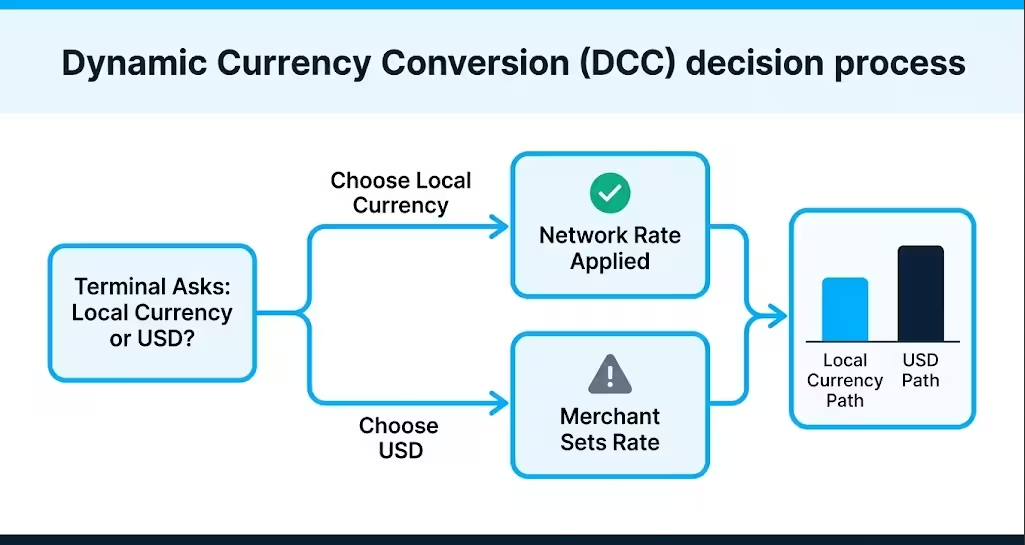
Compare that to paying in local currency. Your Citi card uses the Visa or Mastercard wholesale rate, which is very close to the mid-market rate. If your card has no foreign transaction fee, that is the total cost. If your card has a 3% fee, that is your only extra cost. Either way, it beats DCC.
⚠️ Mistake to Avoid: Do not assume USD is “safer” because you understand the number. USD at the terminal is almost always the more expensive option, sometimes by 7% or more. If the terminal defaults to USD, cancel and ask to redo the transaction in local currency.
Watch for DCC everywhere. It shows up on card terminals, ATMs, taxi payment devices, and even some hotel websites at booking. The prompt is designed to make USD look like the friendly choice. Ignore that framing and pick the local currency name (EUR, GBP, JPY, MXN, and so on) every single time.
Can I Use My Citibank Credit Card in Europe?
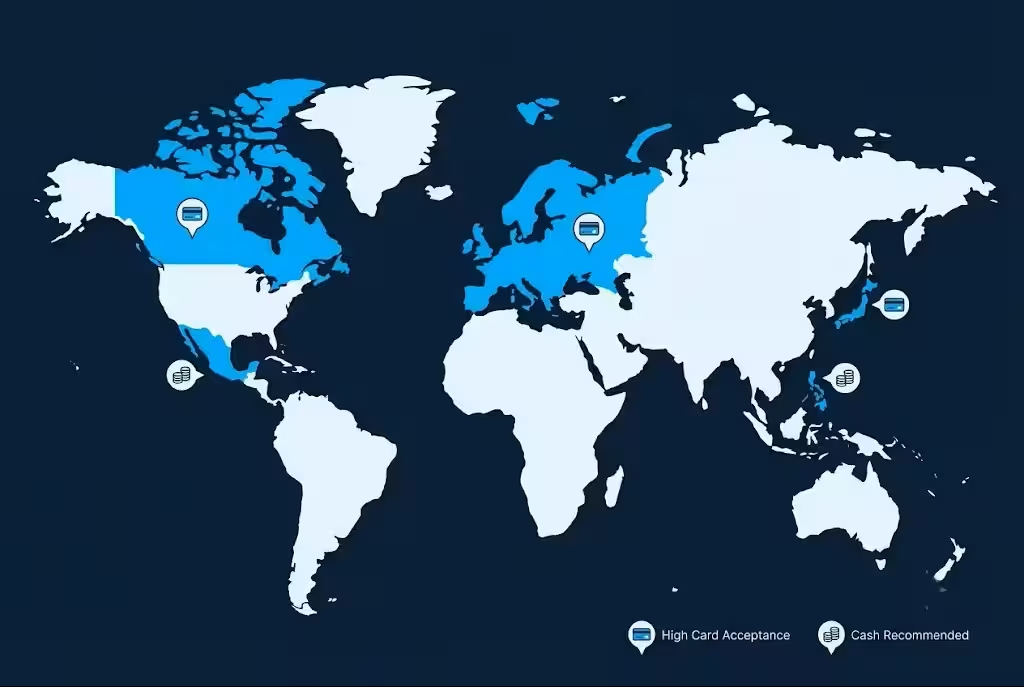
Europe is one of the easiest regions in the world to use a Citi credit card. Card acceptance is extremely high in cities, at major tourist sites, in hotels, restaurants, museums, trains, and most shops. Contactless tap-to-pay is not just available. It is the default across most of the European Union and the United Kingdom.
A few things to expect. Your Citi card will likely be a chip-and-signature card, while most European terminals expect chip-and-PIN. In practice, when the terminal asks for a PIN, you can usually still tap the card, or the terminal will fall back to a signature slip.
If you plan to use unattended machines (train ticket kiosks, some gas pumps, tollbooths, parking meters), a PIN becomes more important. Call Citi before your trip and ask if a PIN can be set for your card.
Cash is still useful for small vendors, open-air markets, some cafés in smaller towns, and public restroom fees in transit hubs. A rough guide: carry the equivalent of $50 to $100 in local currency for small daily needs, then rely on your card for everything else.
Does It Matter If My Citi Card Is Visa or Mastercard in Europe?
For everyday travelers in Europe, it does not matter. Both Visa and Mastercard are accepted at nearly all merchants across the EU and UK. If a store takes one, it almost always takes the other.
Small exceptions do exist. A few rural shops, tiny family-run restaurants, and specific transit machines may prefer one network over the other. But these differences apply equally to Visa and Mastercard, and they usually come down to which local acquirer the merchant uses, not the network itself.
If you have the choice, the better strategy is to travel with two cards on two different networks. That way, if one card is declined for any reason (a temporary technical block, a fraud freeze, a merchant terminal error), the other card gets you through the transaction.
Can I Use My Citibank Credit Card in Mexico?
Your Citi credit card is accepted widely in Mexico. You can use it at hotels, resorts, and restaurants in tourist areas. It also works at larger stores, chain pharmacies, and gas stations in cities like Mexico City, Guadalajara, Cancún, and Puerto Vallarta. Both Visa and Mastercard have strong acceptance nationwide.
The mix changes once you leave the resort zones or big cities. Local markets, taco stands, small tiendas, taxis (especially non-app taxis), and roadside vendors often work in cash only. Even in tourist areas, small tips for housekeeping, bellhops, and guides are almost always given in pesos.
A practical setup for Mexico: use your Citi card for hotels, sit-down restaurants, tours booked through operators, and large stores. Keep about 500 to 1,000 Mexican pesos in cash for street food, small vendors, tips, and taxis. Always insist on being charged in pesos, not U.S. dollars, at any terminal.
Can I Use My Citibank Credit Card in Canada?
Canada is the closest to a “just like home” experience for a U.S. Citi cardholder. Card acceptance is nearly universal. Tap-to-pay is everywhere, from Tim Hortons drive-thrus to Toronto transit. Chip-and-signature transactions are common, so your Citi card should behave almost exactly the way it does in the U.S.
The only real cost concern is the foreign transaction fee. Canada is a foreign country for card processing purposes, even though the border is short and the currencies look similar. That means a Citi Simplicity, Double Cash, or Diamond Preferred card will still charge a 3% fee on every Canadian purchase.
If Canada is a country you visit often, that 3% is worth solving. A weekend of shopping, hotels, and restaurants in Vancouver or Montreal can easily cross $1,500, which is $45 in avoidable fees. A no-foreign-fee Citi card (or any no-foreign-fee card in your wallet) is the fix.
Can I Use My Citibank Credit Card in Japan?
Japan accepts your Citi credit card. However, card culture is different from the U.S. You can use cards at major hotels and department stores. They also work at chain restaurants and convenience stores like 7-Eleven, FamilyMart, and Lawson. Most shops in Tokyo, Osaka, and Kyoto also accept cards, as do shinkansen ticket counters.
Where cards get harder:
- Small family-run restaurants (izakayas, ramen shops)
- Local temples and shrines
- Some traditional inns (ryokan)
- Rural bus and train fares
- Small taxis outside major cities
- Street food
Japan is still meaningfully more cash-based than the U.S., especially outside big-city retail chains.
The practical rule for Japan: carry more cash than you would in Europe. A daily buffer of 5,000 to 10,000 yen ($35 to $70) covers most small purchases. Use ATMs inside 7-Eleven stores (called Seven Bank ATMs) or Japan Post offices. They accept foreign cards, have English menus, and give you the network exchange rate.
📌 Did You Know: Some Japanese card terminals show only Japanese text and ask “円 (yen) or ドル (USD)?” The kanji 円 means yen. Choose 円. This is the same DCC trap in Japanese. Choosing dollars adds a hidden markup, exactly like in Europe.
Can I Use My Citibank Credit Card in Philippines?
In major Philippine cities (Manila, Cebu, Davao), inside large malls (SM, Ayala), at chain hotels, and at bigger restaurants, your Citi card works reliably. Both Visa and Mastercard networks are accepted, and contactless tap is spreading in urban centers.
Outside those zones, card acceptance drops fast. Provincial towns, small islands, jeepneys, tricycles, sari-sari stores, most local restaurants, and beach vendors run almost entirely on cash. If your trip includes island hopping, Palawan, Siargao, or Bohol, plan for cash as the main payment method.
Bring a mix. Use your Citi card for city hotels, malls, larger restaurants, and dive shop bookings. Withdraw Philippine pesos from bank ATMs in cities. Smaller places may not have cash, especially on weekends or holidays. Skip the DCC prompt at any ATM and choose to be charged in pesos.
Citibank Debit Card International Use (How It’s Different from Credit)
A Citibank debit card also works internationally, but the risk profile is very different from a Citi credit card, and the fee structure is worse for most travelers. Both card types will function on the Visa or Mastercard network at overseas merchants and ATMs.
The problem is what happens when something goes wrong. A credit card gives you strong federal protection under the Fair Credit Billing Act. Fraudulent charges on a credit card are typically capped at $50 in liability, and most issuers (including Citi) offer zero liability in practice.
A debit card is covered by the Electronic Fund Transfer Act (Regulation E), where your liability depends heavily on how fast you report the loss. Debit fraud also drains your actual checking account, which can leave you stranded abroad while the bank investigates.
The fees stack differently, too. When you use a Citibank debit card at a foreign ATM, you often pay a foreign transaction fee, a Citi non-network ATM fee, and a local ATM operator fee. Each can range from about $2.50 to $5, plus a percentage. Daily withdrawal limits also apply, usually somewhere between $1,000 and $2,000 per day, depending on your account tier.
Use your credit card for purchases. Only use your debit card for cash withdrawals at trusted ATMs. Keep withdrawals small and only take out cash when you really need it. Never use a debit card as your main payment method abroad.
Before You Travel: Steps to Avoid Problems With Your Citi Card Abroad
A little prep the week before your flight saves you the panic of a declined card at a hotel counter in a foreign language. Work through this checklist 3 to 7 days before you leave.
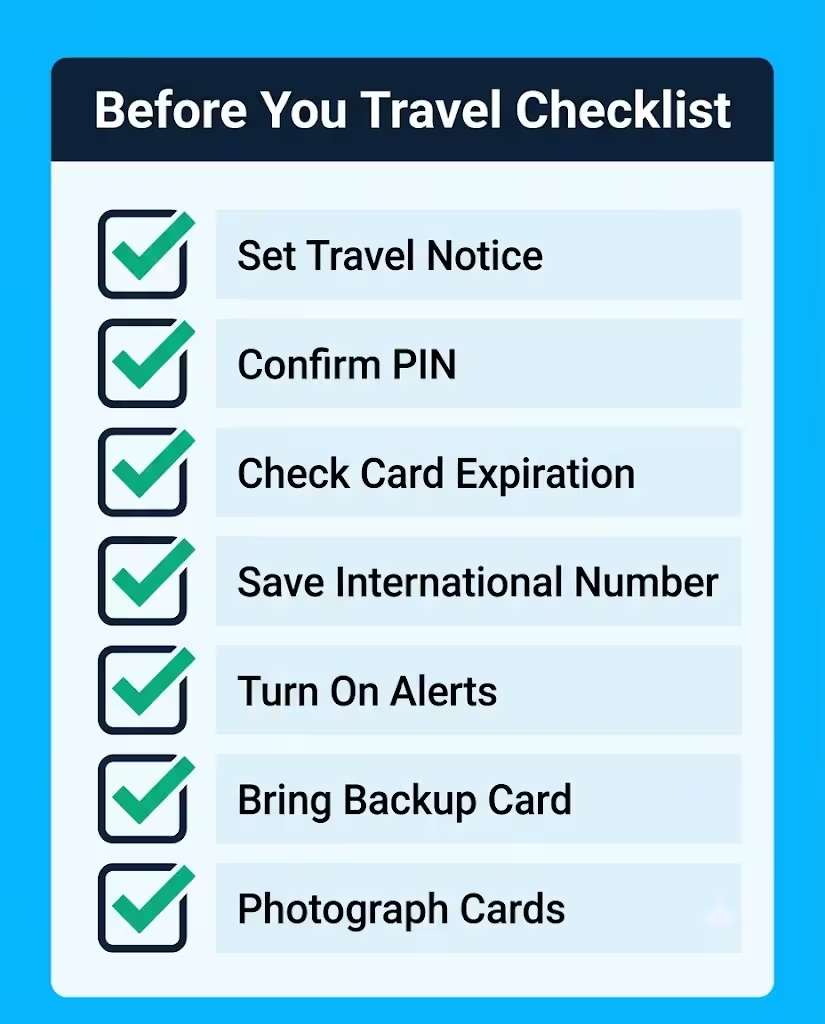
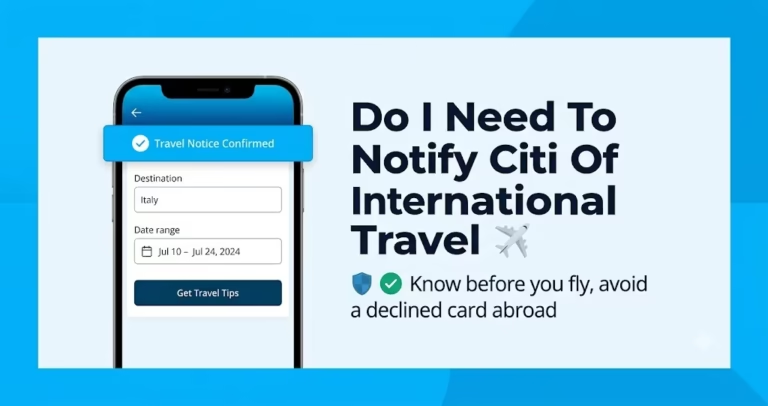
- Set a travel notice. Log in to the Citi Mobile App or citi.com and add a travel notification with the countries and dates. This tells Citi’s fraud team that overseas charges are expected, which drastically lowers the chance of a freeze.
- Confirm your PIN. For chip-and-PIN terminals and unattended kiosks, you may need a PIN. If you do not know yours, request one through the app or by calling the number on the back of your card. PINs can take 7 to 10 days to arrive, so do this early.
- Check card expiration. Your card must not expire during your trip. If it expires within 60 days, ask Citi to expedite a replacement.
- Save Citi’s international number. Write down the international collect-call number (1-605-335-2222 for Citi cards, reachable from anywhere in the world) in your phone and on paper. The 1-800 numbers do not work from most foreign networks.
- Turn on transaction alerts. Set text or push alerts for every charge over a small threshold ($1 works). If a fraudulent charge hits, you will see it within seconds.
- Bring a backup card. Ideally on a different network (if your Citi is Visa, bring a Mastercard, and vice versa) and stored separately from your main wallet.
- Photograph your cards. Take a clear picture of the front and back of each card, then store the images in a secure, password-protected folder (not your camera roll). You will need the card number and international support number if the card is lost.
What to Do If Your Citi Card Is Declined or Frozen Abroad
First, try the transaction one more time. Terminal errors, momentary network drops, and merchant-side glitches happen. Ask the cashier to run it again, or try the tap function if you inserted the chip.
If the second attempt fails, step aside and check your phone. Look for a text or push notification from Citi. Fraud freezes often come with a message asking you to confirm a suspicious charge. Reply “yes” or “no” as instructed, and the block usually lifts within seconds.
If there is no message, call Citi’s international line (1-605-335-2222, collect from a landline, or direct-dial from your mobile). Have your card number, ZIP code, and last few transactions ready. A representative can lift the block, confirm your travel notice, or reissue an emergency card if needed. In the meantime, use your backup card for the purchase.
Lost or Stolen Citi Card While Traveling
Call Citi immediately at 1-605-335-2222 (collect from abroad). Report the card as lost or stolen. Citi will freeze the card, cancel it, and start the replacement process.
For urgent trips, Citi can arrange an emergency card replacement delivered internationally, usually within 24 to 72 hours in major cities. You can also request an emergency cash advance if you have no other funds available.
While you wait, file a local police report if the card was stolen. Some travel insurance policies and credit card benefits require a police report number to reimburse related losses.
Then switch to your backup card and monitor your account daily for any charges that were not yours. Once the replacement card arrives, activate it through the Citi Mobile App and update any recurring international charges (hotel holds, car rentals) with the new card number.
Frequently Asked Questions (FAQs)
Will my Citibank credit card work internationally?
Yes, your Citibank credit card works internationally almost anywhere Visa or Mastercard is accepted. That includes over 200 countries and territories, since every Citi card runs on one of these two networks.
Do I need to notify Citibank of international travel?
You do not need to notify Citi, but setting a travel notice through the Citi Mobile App or citi.com is still smart. It tells Citi’s fraud team that overseas charges are expected, which lowers the chance of a card freeze.
How far in advance should I tell my bank I’m traveling?
Set your travel notice 3 to 7 days before departure. This also gives you time to confirm your PIN and check your card’s expiration date before you fly.
How do I avoid the 3% foreign transaction fee?
Use a Citi card with 0% foreign fees, such as the Costco Anywhere Visa, the Citi AAdvantage Executive World Elite Mastercard, or the Citi Strata Premier Card. Applying 3 to 4 weeks before your trip gives the card time to arrive.
Do Citibank credit cards charge international fees?
Some do, and some don’t. Cards like Citi Simplicity, Double Cash, Diamond Preferred, Rewards+, and Custom Cash charge 3% on every foreign purchase, while Costco Anywhere Visa, AAdvantage Executive World Elite, and Strata Premier charge 0%.
Which Citi credit card is best for travel?
The Citi Strata Premier Card, Costco Anywhere Visa by Citi, and Citi AAdvantage Executive World Elite Mastercard are the strongest picks for travel since all three charge 0% in foreign transaction fees.
What triggers a foreign transaction fee?
The fee applies to any purchase processed by a merchant located outside the United States, even if the price is listed in U.S. dollars. A French hotel charging you in USD still triggers the fee because the merchant’s location is what matters, not the currency shown.
When using a credit card abroad, which currency should I choose?
Always choose the local currency, never U.S. dollars, when a terminal or ATM asks. Choosing USD triggers Dynamic Currency Conversion, which can add markups averaging 7.6% and reaching as high as 12.4% above the standard network rate.
How much does Citibank charge for international ATM withdrawal?
A Citibank debit card used at a foreign ATM can rack up a foreign transaction fee, a Citi non-network ATM fee, and a local ATM operator fee. Each of these can run about $2.50 to $5, on top of a percentage charge.
What should I do if my Citi card is declined abroad?
Try the transaction again first, since terminal glitches and network drops are common. If it fails twice, check your phone for a fraud alert text, or call Citi’s international line at 1-605-335-2222 to lift the block.
Wrapping Up
Using your Citibank credit card internationally is safe, easy, and usually the smartest way to pay abroad, as long as you know your card’s foreign transaction fee, always choose the local currency at checkout, and prep the account before you fly.
The most effective approach is to travel with a no-foreign-fee Citi card as your primary, a backup card on a different network, and a small cash buffer for cash-heavy places like Japan and rural Mexico or the Philippines. Set the travel notice, save the international collect number, and you are set.
If you know someone about to take their first big international trip with a Citi card, share this guide. It could save them from a 7% surprise on their next dinner in Rome.