
You’re carrying a balance on your Chase card, and the interest keeps eating your payments. You’ve probably read that you can just call and ask for a lower rate. But with Chase, it’s not that simple, and knowing how to get Chase to lower your interest rate the right way can save you real money.
The short answer: Chase rarely lowers rates by phone request, but it does review accounts automatically about every six months, and its hardship program can cut your APR if you qualify.
Below, you’ll learn exactly how the review works, how to set up your account to pass it, what to say on the phone, and what to do if Chase says no.
Key Takeaways
This guide explains how to get Chase to lower your interest rate, including how the automatic six-month account review works, what the hardship program offers, and how to prepare your account for both.
Core Facts:
- Chase phone reps generally cannot manually lower your APR; most rate reductions come from an automatic review Chase runs on qualified accounts about every six months.
- The review considers on-time payment history, credit utilization, overall credit standing, account tenure, and recent credit activity such as new applications.
- Chase’s hardship program can reduce APR, sometimes to single digits, for a set period often six to twelve months, for cardholders facing documented financial hardship like job loss or illness.
- A hardship plan lowers the cost of carrying a balance but does not reduce the principal amount owed.
- Asking about a rate review or hardship program does not trigger a hard inquiry, while applying for a new balance transfer card does.
- On a $6,000 balance, a five-point APR cut from 24.99% to 19.99% saves roughly $300 per year, based on the article’s example calculation.
Best for:
- Cardholders with a Chase card who want to lower their rate through legitimate account review preparation rather than a direct phone request.
- People experiencing financial hardship, such as job loss or a medical emergency, who may qualify for Chase’s hardship assistance program.
- Readers deciding between a balance transfer card and a nonprofit debt management plan after other rate-reduction options haven’t worked.
Can You Ask Chase to Lower Your Interest Rate?
You can ask. But here’s the honest truth: a Chase interest rate reduction request by phone rarely works.
Chase’s phone reps generally don’t have the authority to manually lower your APR. Unlike some smaller issuers, Chase Bank doesn’t let agents submit rate reduction requests on the spot. So if you call and ask, “Will Chase lower my interest rate?”, the answer you’ll likely hear is no, followed by an explanation that accounts are reviewed automatically.
This surprises a lot of people. Generic advice online says to call any card issuer and negotiate. That works at some banks. At Chase, it mostly doesn’t.
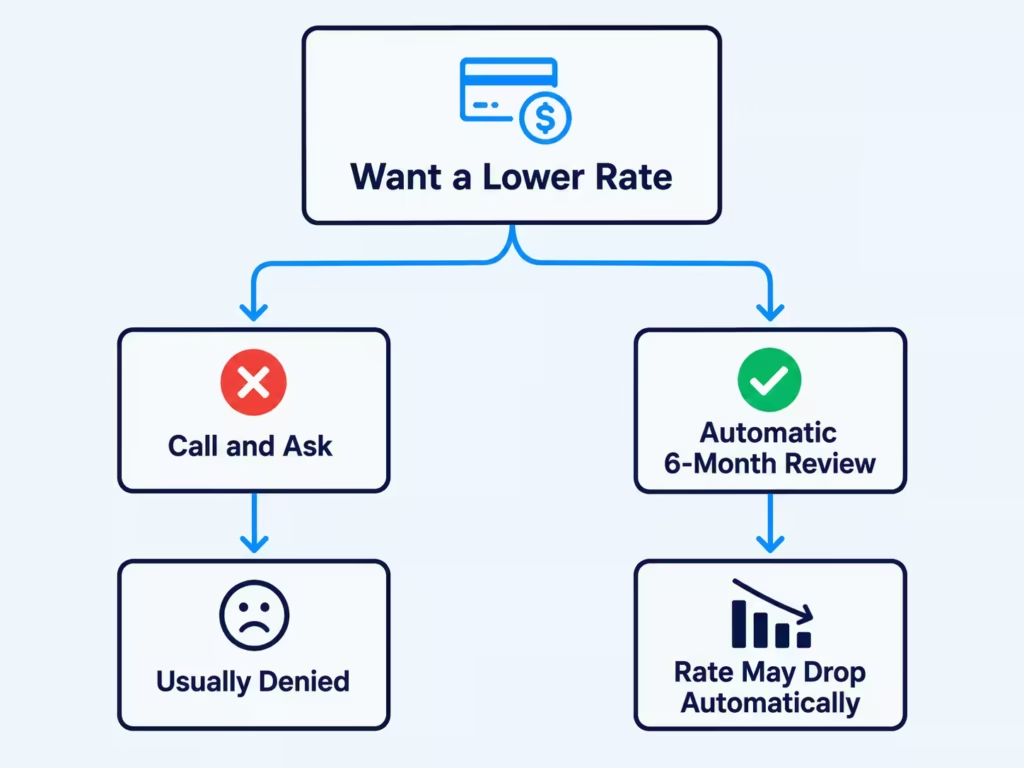
Does that mean you’re stuck? Not at all. Chase uses two real paths to lower rates: an automatic account review that runs on its own, and a hardship program for people in financial trouble. The rest of this guide shows you how to use both.
How Chase’s Automatic Account Review Works
Chase’s system, not its phone agents, decides most rate reductions. The bank reviews qualified card accounts about every six months. If your account looks stronger than it did at the last review, the system can lower your APR on its own. You don’t have to ask for it. Chase confirms this review cycle on its own site, and says it will send you a letter if your rate changes.
Two things to know about this process:
- If you qualify, your APR drops automatically, and you get a notice in the mail or in your account.
- If you don’t qualify, nothing happens. No letter, no change. Your rate stays put.
This is why waiting by the phone doesn’t work. The better move is to shape your account so the next review goes your way.
Variable APR and the Prime Rate
Before you go further, it helps to know why your rate moves at all. Most Chase cards carry a variable APR. That means your rate is tied to the prime rate, a base rate banks use that moves with Federal Reserve decisions. The prime rate currently sits at 6.75%.
When the prime rate rises, your APR rises too, even if you did nothing wrong. When it falls, your APR can drift down without any review at all. This is different from a true review-based reduction, which happens because Chase decided you became a lower-risk customer. Both can change your rate, but only one is in your control.
What Factors Chase Considers During a Review
Chase doesn’t publish its exact review formula. But cardholder reports and Chase’s own guidance point to a few clear factors:
- On-time payment history. A long streak of payments made on time matters most.
- Credit utilization ratio. This is how much of your credit limit you’re using. Lower is better.
- Overall credit standing. This includes your credit score and what’s on your reports from Equifax, Experian, and TransUnion.
- Account tenure. Older accounts in good shape tend to fare better.
- Recent credit activity. A burst of new applications can work against you.
Notice the pattern: the review rewards people who look less risky than they did six months ago.
How to Position Your Account Before the Next Review
You can’t schedule the review. But you can get ready for it. Plan for a 60 to 90 day runway before your next likely review window. Here’s a checklist that actually moves the needle:
- Turn on autopay. Set it for at least the minimum payment. This protects your on-time payment history even if you forget a due date. One late payment can undo months of progress.
- Pay your balance down below 30% of your limit. If your limit is $10,000, aim to owe less than $3,000. Under 10% is even better. Pay down early in the billing cycle so the low balance is what gets reported.
- Check your credit reports for errors. A wrong late payment or an account that isn’t yours can drag down your review. Pull your reports free at AnnualCreditReport.com and dispute anything incorrect.
- Avoid new credit applications. Each application creates a hard inquiry. A few inquiries in the months before a review can signal risk and hurt your odds.
- Keep the account active. Use the card for a small purchase now and then, and pay it off. A dormant account gives the review system little new evidence of good behavior.
Think of this as a months-long credit score improvement plan aimed at one goal: looking safer to Chase’s system than you did at the last review.
💡 Pro Tip: Pay your card down before the statement closing date, not just by the due date. Your statement balance is what credit bureaus usually see. So, paying early can quickly lower your reported utilization.
What Actually Happens When You Call Chase
Say you call the Chase customer service line anyway. Credit card support is at 1-800-432-3117. What should you expect?
Most likely, the rep will tell you they can’t submit a manual request to negotiate your Chase APR. Cardholders report this answer over and over. It’s not a brush-off. It’s how the system is built.
That said, a call isn’t always wasted. It can still be worth dialing if you want to:
- Ask when your account was last reviewed
- Update your stated income, since higher reported income can help at review time
- Fix errors on your account
- Ask directly about hardship assistance, which is a different conversation entirely
What you should not expect is a rep who can cut your rate five points because you asked nicely. Knowing this upfront saves you a frustrating hour on hold.
⚠️ Mistake to Avoid: Don’t threaten to close your card as a negotiation tactic. Chase reps can’t match a competing offer right away. Also, closing an old card can hurt your credit. It may reduce your available credit and shorten your credit history.
Chase’s Hardship Program: The One Path That Can Lower Your Rate by Request
Here’s the exception to everything above. Chase runs a Customer Assistance Program for cardholders facing real financial hardship. This is the one situation where asking directly can lead to a Chase interest rate reduction.
The program isn’t advertised. You won’t find a big page about it on Chase’s site. You have to call and ask for the hardship or customer assistance department by name.
Who qualifies? People dealing with documented money trouble, such as:
- Job loss or a major cut in income
- A serious illness or medical bills
- Divorce or a family emergency
- A natural disaster
What can it offer? Cardholders report reduced APRs, sometimes down to the single digits, for a set period, often six to twelve months. Some plans also waive fees or set a fixed monthly payment. Terms vary case by case.
This is not a loophole for anyone who dislikes their rate. Chase may ask for proof of hardship, and the program is designed for people who might otherwise fall behind. But if that’s you, it’s the single most powerful option in this guide.
Hardship Reduction vs. Permanent Reduction
Don’t confuse these two. They work very differently:
| Hardship program rate | Automatic review reduction | |
|---|---|---|
| How you get it | Call and request it | Happens on its own |
| How long it lasts | Temporary, often 6 to 12 months | Permanent until terms change |
| Who qualifies | People with proven hardship | Accounts in strong standing |
| What happens after | Rate returns to standard terms | New lower rate stays |
One more key point: a hardship plan lowers the cost of carrying your balance. It doesn’t reduce the balance itself. If you owe $8,000, you still owe $8,000. You just pay less interest while you catch up.
What to Say When You Call
The hardship call is the one call that can genuinely change your rate. Go in prepared. A simple framework:
- Ask for the right team. Say: “I’d like to speak with the hardship or customer assistance department about my account.” A front-line rep often can’t help, so ask to be transferred.
- State your situation clearly. Name the hardship and when it started: “I lost my job in June, and my income dropped by half. I want to keep paying, but I need a lower rate to do it.”
- Point to your history if it’s strong. Tenure and a clean payment record help: “I’ve had this card for six years and never missed a payment before this.”
- Ask what programs you qualify for. Let them list the options. Then ask follow-up questions about the rate, the length, and the payment.
- Get the terms in writing. Before you hang up, ask for written confirmation of the new rate and how long it lasts.
Keep it calm and factual. The agent’s job is to match your situation to a program, and clear details make that easier.
Will Asking Chase for a Lower Rate Hurt Your Credit?
This fear stops a lot of people from calling. The good news: asking about a rate review or a hardship program is not a hard inquiry. It doesn’t touch your credit score. Your score only takes a hard inquiry hit when you apply for new credit, and a phone request isn’t an application.
Asking about the automatic review carries zero risk. You’re just requesting information about your own account.
Hardship enrollment is a bit more nuanced. Entering a hardship plan may be noted on your credit reports, and some plans restrict or close the card while you’re enrolled. That can affect your credit differently than a simple inquiry, mainly through utilization changes.
But compared to missing payments, a hardship plan is almost always the gentler option. Falling behind hurts far more than enrolling.
Bottom line: a call won’t backfire. The worst realistic outcome is hearing no.
How Much a Lower APR Actually Saves You
Is all this effort worth it? Run the numbers on a realistic example.
Say you carry a $6,000 credit card balance at 24.99% APR. Your interest cost is roughly $125 per month, or about $1,500 per year.
Now say your rate drops to 19.99%, a five-point cut. Your interest falls to about $100 per month, or roughly $1,200 per year. That’s a savings of around $25 each month and about $300 per year, with no extra payments required.
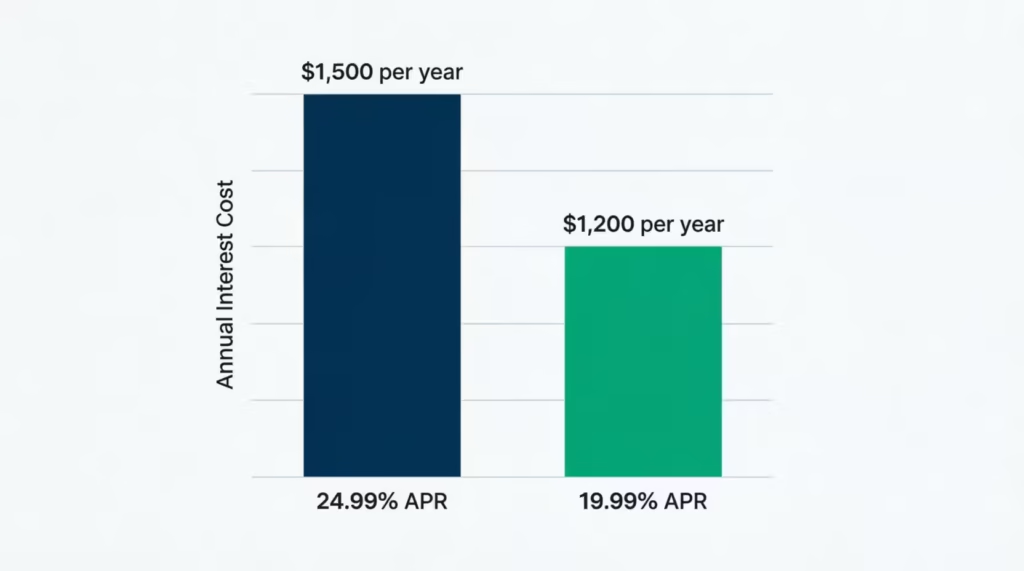
The savings grow if you carry the balance longer. Over three years, that five-point drop keeps close to $900 in your pocket. And context matters here: Federal Reserve data puts the average APR on accounts actually charged interest at 22.15% as of May 2026. If your rate sits well above that, the payoff from a reduction is even bigger.
A smaller cut still helps, but do the math first. If a two-point drop saves you only $10 a month, a balance transfer might deliver more.
If Chase Won’t Lower Your Rate, Here’s What to Do Next
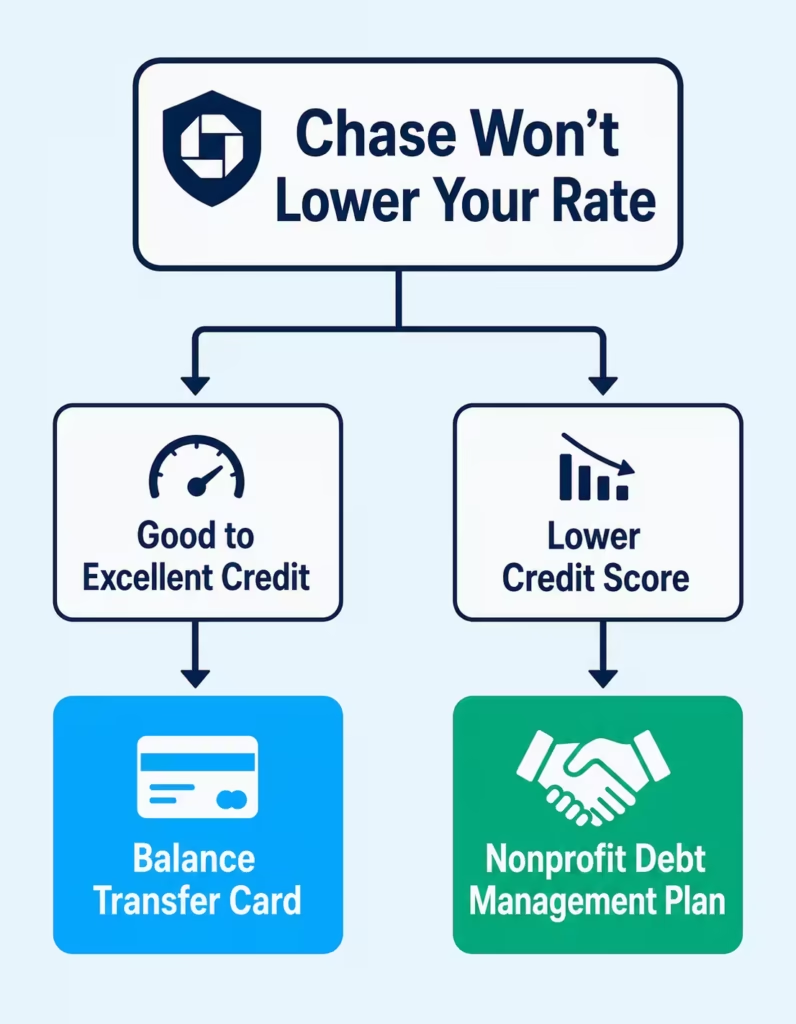
Sometimes none of the above works. The review comes and goes with no change, and hardship doesn’t apply to you. That’s frustrating, but it isn’t the end. You still have two strong options, and both can beat a high APR by a wide margin.
Consider a Balance Transfer Card
A balance transfer credit card lets you move your Chase balance to a new card with a 0% intro APR, often for 12 to 21 months. Every dollar you pay during that window goes to principal, not interest.
Keep two catches in mind. Most cards charge a balance transfer fee, usually 3% to 5% of the amount moved. On a $6,000 balance, that’s $180 to $300 upfront. And the 0% rate ends, so you’ll want a payoff plan that clears the debt before the intro period closes.
This route works best if you have good to excellent credit, since approval and limits depend on your score. It also creates a hard inquiry, so weigh that against the savings from the earlier section.
Nonprofit Credit Counseling and Debt Management Plans
If your credit isn’t strong enough for a new card, a nonprofit credit counseling agency offers another path. A certified counselor can set up a debt management plan, or DMP. With a DMP, the agency talks to your creditors. They aim for lower rates, usually in the single digits. Then, they combine your payments into one monthly amount.
A DMP usually runs three to five years. You pay the agency, and the agency pays your creditors. Many plans require closing the enrolled cards, which is a trade-off to consider.
One thing a DMP is not: debt settlement. Settlement companies try to cut the amount you owe, which can wreck your credit and trigger tax bills. A DMP doesn’t reduce your principal. It just makes the debt cheaper and simpler to pay off, which is far safer.
Frequently Asked Questions (FAQs)
Will Chase lower my APR if I ask?
Chase phone reps generally can’t manually lower your rate on request. Chase instead reviews qualified accounts automatically about every six months and adjusts your rate based on your payment history and credit standing.
Can I negotiate APR with Chase?
Chase doesn’t negotiate rates over the phone the way some smaller issuers do. Your best options are qualifying for the automatic six-month review or enrolling in Chase’s hardship program if you’re facing financial difficulty.
Why is my Chase interest rate so high?
Most Chase cards carry a variable APR tied to the prime rate, which currently sits at 6.75%. Your rate can also stay high if your credit utilization is elevated, you’ve missed payments, or you haven’t yet passed an automatic review.
Will asking Chase for a lower rate hurt your credit?
No. Asking about a rate review or hardship program is not a hard inquiry and doesn’t affect your credit score. Only applying for new credit, like a balance transfer card, triggers a hard inquiry.
Is 24.99 APR good or bad?
A 24.99% APR is on the higher end for credit cards. Federal Reserve data puts the average APR on accounts actually charged interest at 22.15% as of May 2026, so 24.99% sits above average.
What is the 5/24 Chase rule?
This term refers to Chase’s approval policy for new card applications, not interest rate reduction, so it isn’t covered in this guide. It’s unrelated to lowering your APR on an existing Chase card.
Can I negotiate my debt with Chase?
Chase’s hardship program can reduce your APR, sometimes to single digits, for six to twelve months if you’re dealing with job loss, illness, or another documented hardship. It lowers the cost of carrying your balance but doesn’t reduce the principal you owe.
Will creditors accept a 50% settlement offer?
Settlement offers vary by creditor and how delinquent the account is, but accepted settlements often land between 40% and 60% of the balance. Settlement can significantly damage your credit and may trigger a tax bill on the forgiven amount, unlike a nonprofit debt management plan, which doesn’t reduce your credit score in the same way.
How much does a balance transfer card cost?
Balance transfer cards typically charge a fee of 3% to 5% of the amount moved, which is $180 to $300 on a $6,000 balance. In exchange, you get 0% APR for 12 to 21 months, so every payment goes toward principal.
What is a debt management plan and how does it differ from settlement?
A debt management plan (DMP) is run through a nonprofit credit counselor who negotiates lower rates, often in the single digits, and combines payments into one monthly amount over three to five years. Unlike settlement, a DMP doesn’t reduce what you owe, just makes it cheaper to pay off.
Wrapping Up
Getting Chase to budge comes down to three moves: position your account for the automatic six-month review, ask for the hardship program if you’re facing real financial strain, and pivot to a balance transfer or DMP if neither path works.
For most readers, the review preparation checklist will deliver the best results, because it targets the system that actually controls your rate. That’s the realistic answer to how to get Chase to lower your interest rate.
Know someone carrying a balance on a Chase card? Share this guide with them. It could save them hundreds of dollars a year.