
Getting your Chapter 7 discharge letter feels like a fresh start, but the credit score sitting on your report tells a different story. Landlords, car dealers, and card issuers still see the filing, and you’re left wondering how to rebuild credit after Chapter 7 without falling for another trap.
The quickest way ahead is a step-by-step plan: first, fix your reports. Then, open a small credit-building account. Pay it on time and keep your balances low.
In the sections below, we’ll walk through each step with real timelines, score ranges, and red flags to watch.
Key Takeaways
This guide explains how to improve your credit score after Chapter 7, including fixing report errors, choosing credit-building tools, managing utilization timing, and following a realistic month-by-month recovery timeline.
Core Facts:
- A Chapter 7 filing can drop a strong credit score by up to 200 points, with most people landing between 500 and 580 right after discharge.
- Chapter 7 stays on a credit report for 10 years from the filing date, while Chapter 13 falls off after seven years.
- FHA mortgage approval requires a two-year wait from the discharge date, and conventional mortgages usually require four years.
- Payment history makes up 35% of a FICO Score and credit utilization makes up 30%, making these the two most important factors to manage.
- Credit bureau disputes take up to 30 days to investigate, and discharged accounts should be checked starting about three months after discharge.
- Legitimate secured cards typically charge $0 to $39 in annual fees, while predatory “second chance” offers often charge $75 to $200 plus added program fees.
Best for:
- People who recently received a Chapter 7 discharge and need a step-by-step plan to start rebuilding.
- Readers trying to time a future mortgage or auto loan application around bankruptcy waiting periods.
- Anyone evaluating secured cards, credit-builder loans, or “second chance” credit offers and needing to spot predatory terms.
Confirm Your Discharged Accounts Are Reporting Correctly
Before you open anything new, you need to check what the three bureaus are already showing. Many people pull their report a few weeks after discharge and find old accounts still listed as “past due” or with a balance owed. That is a scoring problem you can fix, and fixing it often bumps your score before you do anything else.
Wait about three months after your discharge date, then pull all three reports. Creditors have to update the bureaus, and that update can take 30 to 90 days. Checking too early wastes the pull. Checking too late lets errors keep dragging your score down.
You can get free reports every week from Experian, Equifax, and TransUnion through AnnualCreditReport.com, which is the only site authorized by federal law for this purpose. The Federal Trade Commission confirms that all three bureaus permanently extended free weekly access, so you never need to pay for a basic report.
Once you have all three in hand, find every account that was part of your filing. Each one should show a status like “Discharged in Chapter 7 Bankruptcy” or “Included in Bankruptcy” and a zero balance due. The account can still show as closed, and the late payments from before filing can still appear. That is normal. What is not normal:
- A balance greater than zero on a discharged account
- A status still marked “past due,” “collection,” or “charge-off” with no bankruptcy notation
- Continued late-payment marks dated after your filing date
- An account you listed on your bankruptcy schedules that does not appear at all
Keep your discharge letter and the schedule of creditors from your bankruptcy filing nearby. You’ll need both if you have to dispute something.
Dispute Inaccurate Information
If you spot an error, file a dispute with the bureau that is showing the wrong data. Each bureau lets you dispute online, which is the fastest route.
Follow these steps for each bad entry:
- Log in to the bureau’s dispute portal (Experian, Equifax, or TransUnion each have their own).
- Select the account with the wrong information.
- Choose the reason that matches your situation, usually “account included in bankruptcy” or “balance is incorrect.”
- Upload a copy of your discharge letter and, if helpful, the page from your bankruptcy petition listing that creditor.
- Add a short written statement: “This debt was discharged in Chapter 7 bankruptcy on [date]. Please update the balance to zero and the status to discharged.”
The bureau has 30 days to investigate. If the creditor confirms the debt was discharged, the entry gets corrected. If the creditor does not respond, the bureau must remove or update the entry.
💡 Pro Tip: File the same dispute with all three bureaus at once, even if only one shows the error today. Creditors report to different bureaus on different schedules, and the mistake often spreads if you wait.
Understand Your Realistic Credit Score Timeline
Setting the right expectations keeps you from panicking at month three or applying for a mortgage too early. A Chapter 7 filing hits every score, but how far it falls depends on where you started.
A bankruptcy can knock as much as 200 points off a strong credit score. If you were already in the fair range (580 to 669), the drop is usually smaller, around 130 to 150 points, because damaged files have less room to fall. Most people land somewhere between 500 and 580 right after discharge.
The filing remains on your report for a full 10 years from the filing date, not the discharge date. This applies to Chapter 7 and Chapter 11. Chapter 13, however, falls off after seven years.
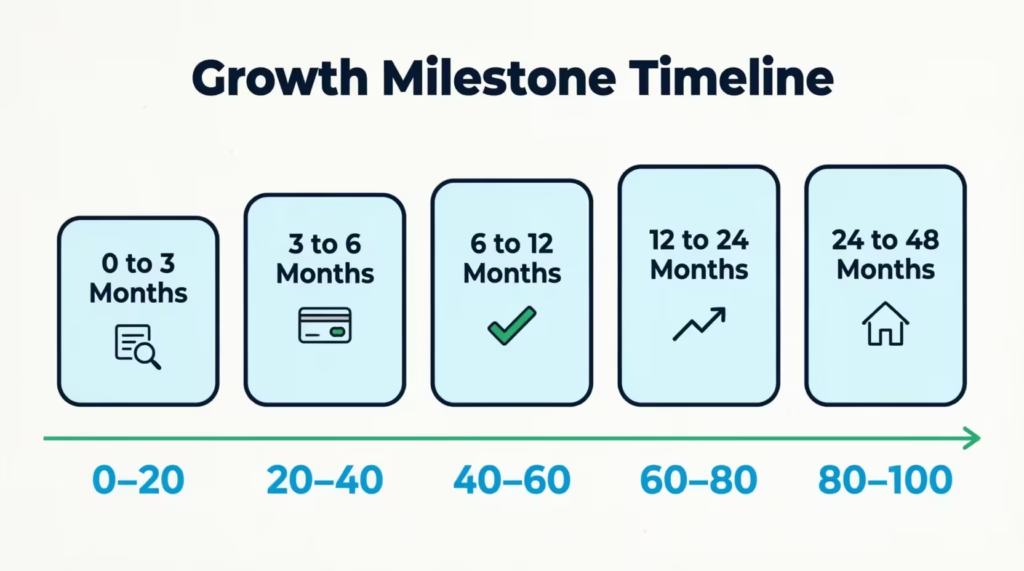
Here is what a realistic credit score timeline looks like for someone who follows the steps in this article:
| Months After Discharge | Typical Score Range | What Usually Happens |
|---|---|---|
| 0 to 3 | 500 to 580 | Score bottom, discharged accounts still updating |
| 3 to 6 | 540 to 600 | Errors fixed, first secured card or builder loan opens |
| 6 to 12 | 580 to 640 | First year of on-time payments reported |
| 12 to 24 | 620 to 680 | Stronger payment history, utilization stays low |
| 24 to 48 | 660 to 720+ | Bankruptcy weight fades, recent behavior dominates |
The score rises even with a bankruptcy on file because new positive activity counts more than older negative marks. Your last 24 months of behavior matter more than the filing itself once you’re past year two.
What Your Score Unlocks at Each Stage
Score ranges connect to real approvals. Knowing the number you need helps you time your applications:
- Around 580 to 620: Approval for most secured cards, some subprime auto loans (at high APRs), and many apartment applications. FHA guidelines allow home loans at 580 with a 3.5% down payment.
- Around 620 to 660: Better auto loan rates, unsecured starter cards with reasonable terms, most apartment approvals without a large deposit.
- Around 660 to 700: Conventional auto financing at fair rates, mainstream credit cards, and rental approvals with normal deposits.
- Around 700 and above: Conventional mortgage approval, prime credit card offers, and competitive interest rates on most products.
For an FHA mortgage specifically, FHA lending guidelines require a two-year wait from the Chapter 7 discharge date, not the filing date. Conventional mortgages usually require four years. Plan your timeline around these gates so you’re not surprised.
Choose the Right Credit-Building Tool for Your Situation
You need new positive accounts to replace the old damaged ones. But you don’t need every tool at once. Pick one or two that match your cash situation and current relationships, then let them season for six months before adding anything else.
Secured Credit Cards
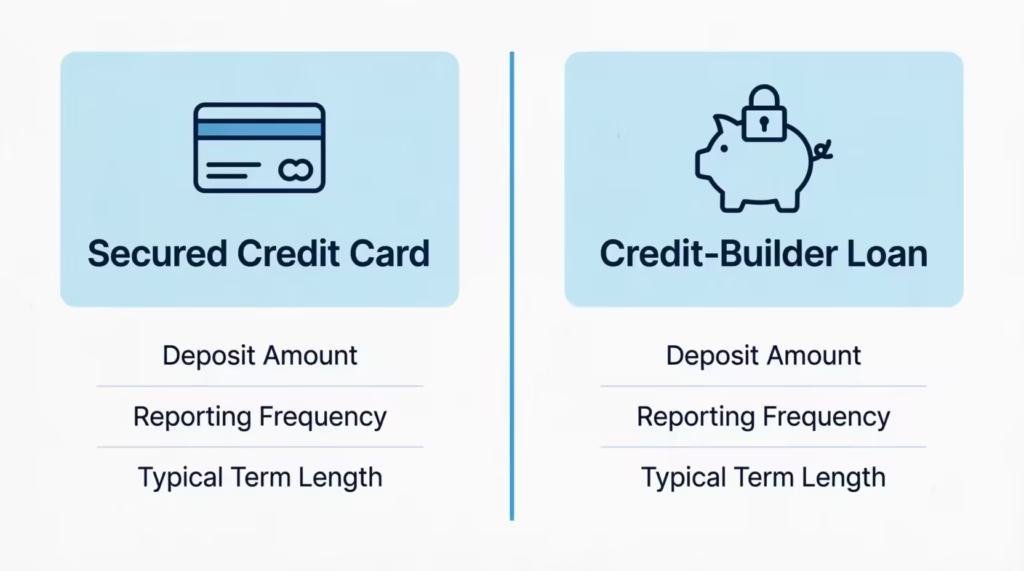
A secured card looks and works like a regular credit card, but you put down a refundable deposit that becomes your credit limit. Deposit $300, get a $300 limit. The card issuer reports your activity to all three bureaus every month, just like an unsecured card.
Pick an issuer that:
- Reports to all three bureaus (most major banks do, but confirm before you apply)
- Charges no annual fee, or a small one under $40
- Offers a clear path to “graduate” to an unsecured card after 6 to 12 months of on-time payments
- Returns your deposit when you graduate or close the account in good standing
Discover, Capital One, and Citi all offer secured products that meet these criteria. Store-branded secured cards and prepaid “credit builder” cards often don’t graduate. They also tend to charge higher fees. Because of this, they are a weaker choice.
Credit-Builder Loans
A credit-builder loan works backward from a normal loan. Instead of getting cash upfront, the lender holds the loan amount (usually $500 to $2,000) in a locked savings account. You make fixed monthly payments for 12 to 24 months. Each payment gets reported to the bureaus. When you finish, you get the money, minus interest.
These loans build payment history without any temptation to spend. Credit unions and community banks offer the best terms, often with APRs under 10%. Self and other online providers also offer them, though rates can be higher.
⚠️ Mistake to Avoid: Signing up for a credit-builder loan and a secured card in the same month. Each new account creates a hard inquiry and lowers your average account age. Space new accounts at least three to six months apart.
Becoming an Authorized User
If a family member has a credit card with a long history and low balances, they can add you as an authorized user. The full account history usually gets copied to your credit report, which can add years of positive data instantly.
Before agreeing, check three things:
- The card is in good standing with no late payments in the last 24 months.
- The balance stays under 30% of the limit every month.
- The card issuer reports authorized users to the bureaus (Amex, Chase, Bank of America, and Capital One do; some smaller issuers don’t).
You do not need physical access to the card for this to work. Ask the primary cardholder to add you and then confirm the account appears on your report within two months.
Getting a Cosigner
A cosigner is different from an authorized user. When someone cosigns a loan or card with you, they take equal legal responsibility. If you miss a payment, their credit takes the hit too. If you default, they owe the balance.
Cosigning is useful for larger goals like a car loan when your score alone won’t qualify. It is not the right tool for a first credit card. The stakes are too high on both sides. Only ask a cosigner if you have steady income, a clear repayment plan, and a real conversation about what happens if things go wrong.
Don’t Open Too Many Accounts at Once
Lenders and scoring models both penalize a burst of new applications. Each application creates a hard inquiry, which drops your score by a few points and stays on your report for two years. Multiple new accounts also lower your average account age, which is another scoring factor.
A safer approach: open one secured card in month three, add a credit-builder loan in month six, and stop there for the first year. That’s enough to build a solid payment history without triggering red flags.
Keep Credit Utilization Low on Every Open Account
Payment history is the biggest scoring factor. However, credit utilization is right behind it. Amounts owed, mostly from utilization, make up 30% of your FICO Score. This is second only to payment history, which accounts for 35%.
Utilization is the percentage of your available credit you’re actually using. If your secured card has a $300 limit and you carry a $60 balance, your utilization is 20%. Keep that number under 30% on every card, every month. Under 10% is even better once you’re chasing higher scores.
Small-limit secured cards make this rule tricky. A single $150 purchase on a $300 card puts you at 50% utilization. Even if you pay in full every month, the score can suffer if the balance gets reported at the wrong time.
Here is the timing that trips most people up:
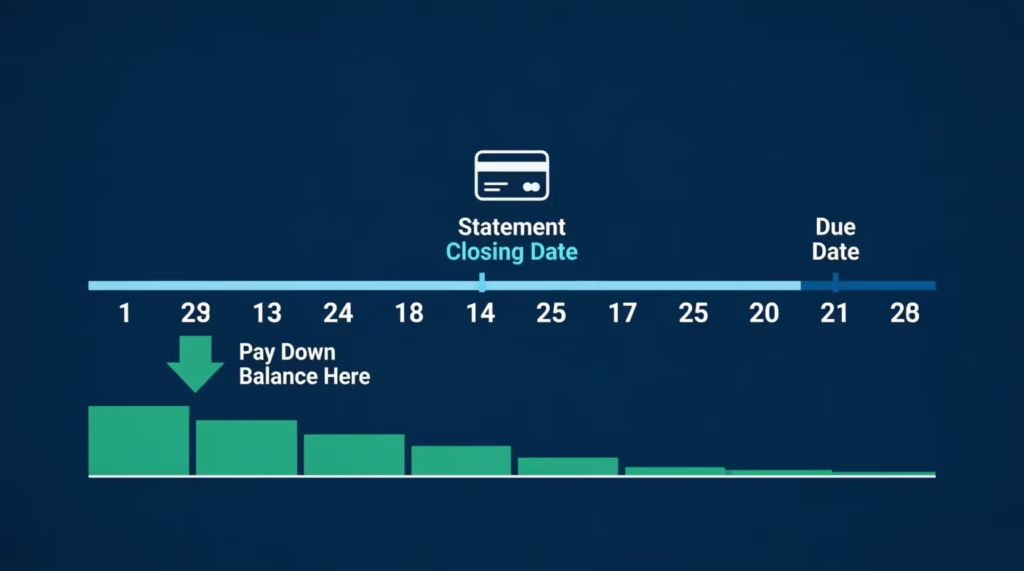
- Your card issuer reports your balance to the bureaus once a month, usually on your statement closing date.
- If your statement closes on the 15th and your balance that day is $200 on a $300 limit, the bureaus see 67% utilization, even if you pay it off on the 20th.
- Paying your balance down before the statement closing date, not just before the due date, is how you keep reported utilization low.
Two practical ways to do this:
- Log in to your account and pay the balance down to under 10% about a week before the statement closes.
- Use the card for one small recurring charge (like a $10 streaming subscription), pay it in full each month, and let the low balance report naturally.
Both methods build positive payment history without ever letting utilization climb.
Make Every Payment on Time, Including Reaffirmed Debts
Payment history is 35% of your FICO Score, more than any other factor. After a Chapter 7, that percentage matters even more because you have very little positive history to offset any new mistake. A single 30-day late payment in the first year can undo months of rebuilding.
Set up autopay for at least the minimum on every open account. Autopay does not mean you stop watching the account. It means the payment gets there on time even if life gets busy. Check the account weekly for a few minutes to catch any billing errors.
The trickier issue after Chapter 7 is reaffirmed debt. When you filed, you may have signed a reaffirmation agreement to keep a car, a home, or another secured asset. Reaffirming means that debt was not discharged. You still owe it, and the lender still reports every payment (or missed payment) to the bureaus.
Common debts that survive a Chapter 7 filing include:
- Reaffirmed auto loans on cars you kept
- Mortgages you continued paying on
- Federal student loans (almost never discharged)
- Recent tax debt (usually not dischargeable)
- Child support and alimony (never dischargeable)
These accounts keep reporting. Miss a payment on a reaffirmed car loan post-discharge, and the late mark goes straight onto a rebuilding credit file that cannot absorb it. The scoring damage is roughly twice as painful as a late payment on a fresh account, because there is so little positive activity to balance it out.
📌 Did You Know: Reaffirmed accounts show up on your report as regular open accounts, not as bankruptcy accounts. Some people forget they reaffirmed a debt and stop treating it as high-priority. Check your bankruptcy paperwork to confirm which debts you reaffirmed. Treat those payments as your top priority.
Avoid Predatory ‘Second Chance’ Credit Offers
The mail starts arriving before the ink on your discharge is dry. Sometimes even before the discharge is final. Card offers marketed as “second chance” or “guaranteed approval for post-bankruptcy” show up because bankruptcy filings are public record and marketing lists get updated fast.
Some of these offers are legitimate. Many are designed to charge you as much as legally possible in the first year. Spotting the difference is straightforward once you know the red flags.
Watch for these warning signs on any offer you receive:
- Annual fees over $75. Legitimate rebuilding cards charge $0 to $39. Predatory cards charge $75 to $200.
- “Program fees,” “activation fees,” or “one-time processing fees”. These are often taken from your first credit line, meaning a $300 limit becomes $180 the day you get the card.
- APRs above 29.99%. Rebuilding does not require paying rates that high. Legitimate secured cards from major banks run in the low-to-mid 20s at most.
- Monthly maintenance fees. Adding $6 to $10 a month on top of an annual fee is a sign the card exists to generate fees, not to help you.
- No path to graduate to unsecured. If the terms say nothing about upgrading, the issuer has no interest in you building past this card.
- Unclear reporting. If the offer does not clearly state it reports to all three bureaus, the account might not help your score at all.
Safer alternatives that many people overlook:
- Secured cards from major banks (Discover, Capital One, Citi) with no or low annual fees
- Gas station cards and department store cards, which often approve lower scores and report to bureaus
- Credit union secured cards, which typically have the best terms of any category
If an offer feels aggressive or the fees feel high, throw it away. Better offers will come later as your score improves.
Monitor Your Credit Score and Reports Consistently
Rebuilding is not something you set and forget. New errors can appear, old accounts can resurface, and your utilization can drift up without you noticing. Regular monitoring catches problems early.
A simple check-in schedule works for most people:
- Every month for the first year: Log in to one bureau’s free portal or a free service like Credit Karma to see your score trend. Look for any new negative marks or sudden utilization jumps.
- Every three months for the first two years: Pull one full credit report from AnnualCreditReport.com. Rotate through the three bureaus so you check all of them yearly.
- Once a year after year two: Continue the quarterly pull if you can, but once yearly is the minimum.
Free tools worth using:
- AnnualCreditReport.com for the actual reports from all three bureaus, updated weekly at no cost.
- Credit Karma for free VantageScore updates from TransUnion and Equifax, plus alerts.
- Experian’s free membership for a free FICO Score 8 based on your Experian report.
- Your credit card issuer’s free score service. Many issuers (Discover, Capital One, Chase, Citi) show a monthly FICO or VantageScore in the app.
Each time you check, look for four things:
- Any new account you did not open (a fraud warning sign)
- Any old discharged account showing a balance again
- Utilization creeping above 30% on any card
- Your score trend across three or six months (a single-month drop is normal; a three-month downward slide is a problem)
Catching a utilization creep or a reporting error in month four is easy to fix. Finding it in month twelve is not.
Know When Credit Counseling Helps (and When Credit Repair Companies Don’t)
After a Chapter 7, two very different types of services will try to reach you. One can genuinely help. The other cannot legally do anything you can’t do for yourself, and often makes your situation worse.
Credit counseling agencies are usually nonprofit. They provide budgeting help, debt-management planning, and financial education. The CFPB defines the distinction clearly: counseling organizations advise and educate you on managing money, while debt-settlement and credit-repair firms operate as for-profit businesses. A reputable counselor holds accreditation from the National Foundation for Credit Counseling (NFCC) or the Financial Counseling Association of America (FCAA). An initial session is often free.
Counseling is useful post-bankruptcy for:
- Building your first real budget on a lower income
- Setting up an emergency fund plan
- Understanding which debts (like student loans) still need managing
- Getting free educational materials rather than paying a for-profit “coach”
Credit repair companies are a different story. They promise to “remove bankruptcy from your credit report” or “raise your score 100 points in 30 days.” Neither of those things is possible through any legal method. A legitimate bankruptcy report stays for 10 years, and the only way to raise a score is time plus responsible borrowing.
The FTC and CFPB both warn that credit repair companies cannot do anything you cannot do yourself for free. Here are the red flags of a scam:
- Charging fees before any service is performed (illegal under the Credit Repair Organizations Act)
- Promising to remove accurate negative information, including a real bankruptcy
- Telling you to dispute every negative item, even accurate ones (this can be illegal)
- Refusing to explain your legal rights in writing
- Suggesting you create a new identity or use an EIN in place of your Social Security number
If a company promises fast credit repair after Chapter 7, walk away. Any service they can legally perform is one you can perform yourself, for free, using the dispute steps covered earlier in this article.
Protect Your Progress With Basic Financial Stability Habits
Rebuilding stalls when a surprise expense forces you to lean on new credit. A blown transmission, a medical bill, or a lost paycheck can push utilization back to 90% overnight, wiping out months of progress. Basic financial stability keeps the score gains you’ve already earned.
Start with a small emergency fund. The full “three to six months of expenses” goal is a long-term target. For the first year post-discharge, aim for $500 to $1,000 in a separate savings account. That amount covers most car repairs, minor medical bills, and short income gaps without touching a credit card.
Automate the savings. Set up a $25 or $50 weekly transfer from checking to a high-yield savings account. Small, consistent amounts add up faster than occasional lump sums, and automation removes the decision.
A simple budget is the other guardrail. You do not need a spreadsheet with 40 categories. A workable post-bankruptcy budget covers:
- Fixed monthly bills (rent, utilities, insurance, phone, minimum debt payments)
- Groceries and gas
- A small “sinking fund” for known but irregular costs (car registration, birthdays, back-to-school)
- Whatever is left, split between the emergency fund and personal spending
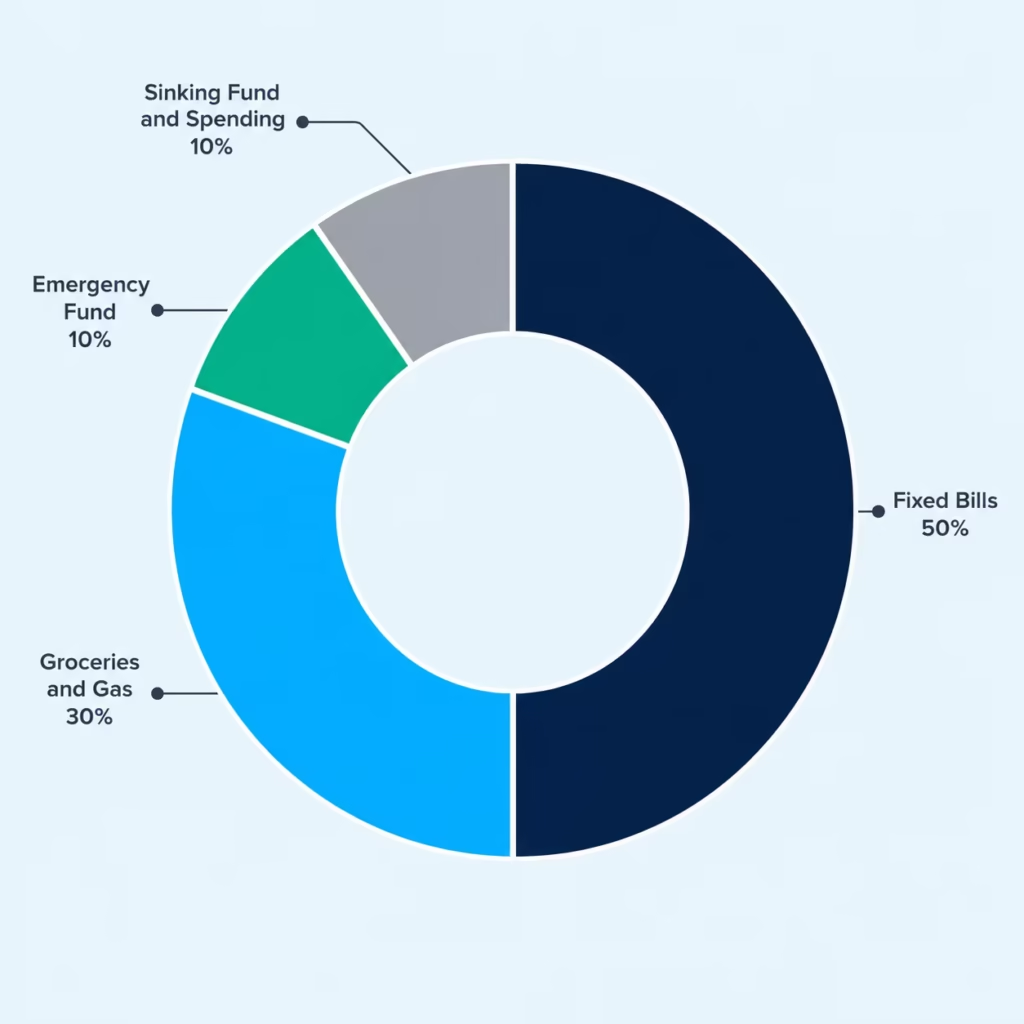
The point of the budget is to make sure new credit stays a tool, not a lifeline. If you’re using a secured card for groceries because you ran out of cash, the card is filling a budget gap, not building credit. Fix the gap first, then the credit rebuild takes care of itself.
Frequently Asked Questions (FAQs)
How quickly can you raise your credit score after Chapter 7?
Most people see their score bottom out in the first three months, then climb steadily. Meaningful progress typically shows up within 12 to 18 months of consistent on-time payments and low utilization.
How long does Chapter 7 stay on a credit report?
A Chapter 7 filing stays on your credit report for 10 years from the filing date, not the discharge date. Chapter 13 falls off sooner, after seven years.
How soon can I get a loan after Chapter 7?
For an FHA mortgage, lenders require a two-year wait from your discharge date. Conventional mortgages usually require four years, while auto loans and secured cards are often available right away.
How easy is it to get a credit card after Chapter 7?
Secured credit cards are the easiest option, since approval is based on a refundable deposit rather than your score. Major banks like Discover, Capital One, and Citi offer secured cards with no or low annual fees that report to all three bureaus.
How can I rebuild my credit after Chapter 7?
Start by confirming your discharged accounts report correctly, then open one secured card or credit-builder loan. Pay on time every month and keep utilization under 30% to build positive history.
What two debts cannot be erased in Chapter 7?
Federal student loans and child support or alimony are rarely discharged in Chapter 7. Recent tax debt is also typically excluded from discharge.
What is the biggest killer of credit scores?
A missed payment is the most damaging factor, since payment history makes up 35% of your FICO Score. After Chapter 7, a single 30-day late payment can undo months of rebuilding because there’s little positive history to offset it.
Can you remove Chapter 7 from a credit report before 10 years?
No, a legitimate bankruptcy cannot be legally removed before the full 10 years from the filing date. Companies promising early removal of accurate information are violating credit repair laws.
How low will my credit score drop after Chapter 7?
A bankruptcy can knock up to 200 points off a strong score, with most people landing between 500 and 580 right after discharge. Scores already in the fair range typically drop less, around 130 to 150 points.
What is the easiest credit card to get after Chapter 7 discharge?
Secured credit cards from major banks like Discover, Capital One, and Citi are the easiest to qualify for post-discharge. Avoid store-branded secured cards, since they often charge higher fees and don’t offer a path to an unsecured card.
Wrapping Up
Rebuilding your credit score after Chapter 7 is simple if you follow these steps:
- Fix any errors on your credit reports.
- Know your timeline for improvement.
- Open one or two credit-building accounts.
- Keep your credit utilization low.
- Always pay on time for reaffirmed or new debts.
The best approach is to be patient and monitor closely. The scoring system rewards recent, consistent behavior more than it punishes old filings.
Most people see meaningful progress in 12 to 18 months and mortgage-ready scores within four years.
If you know someone who just got their discharge letter, please share this guide. It could save them from predatory offers and years of unnecessary damage.