
Starting college brings a lot of firsts, and one of the biggest is making money decisions. Maybe you’re staring at credit card ads on campus, or your parents keep telling you to “start building credit.” But you’re not sure what a student credit card actually is, if you can even get one, or if it’s smart at all. I get it. The fear of debt or ruining your credit before adult life even starts feels real.
A student credit card is a beginner-friendly card built for college students with little or no credit history, helping them start credit safely.
In this guide, I’ll walk you through how these cards work, who qualifies, real costs, and how to decide if one fits your life right now.
Key Takeaways
This guide explains what a student credit card is, including eligibility rules under the CARD Act, typical credit limits and APR ranges, how it builds credit, and how it compares to authorized user and secured card options.
Core Facts:
- A student credit card is revolving credit for enrolled college students, requiring applicants to be at least 18 years old.
- Applicants between 18 and 20 must show independent income (job, work-study, freelance pay, or scholarship overflow) or add a cosigner age 21 or older.
- Student cards typically start with credit limits between $300 and $1,000, compared to $2,500 or more on regular adult cards.
- Student card APRs generally range from the low 20% range to nearly 30%, and most charge no annual fee.
- Paying the full statement balance by the due date avoids interest entirely, while carrying a balance triggers interest charges and can extend payoff time significantly.
- Card issuers report monthly activity to Experian, Equifax, and TransUnion, with payment history and credit utilization as the two biggest factors affecting the score.
Best for:
- Students at least 18 years old who are enrolled in a qualifying school and have some form of income or a willing cosigner.
- First-time credit users who want to build credit history without a security deposit.
- Readers deciding between a student card, becoming an authorized user, or getting a secured credit card.
What Is a Student Credit Card?
A student credit card is a real credit card made for college students who are just starting out with credit. It works like any other card. You swipe or tap, the bank pays the store, and you pay the bank back later. The main goal of a student credit card is to help someone with no credit history build one from scratch.
This is not a prepaid card. It’s not a debit card either. Both of those pull money from cash you already have. A student card gives you a small amount of revolving credit, which means you can borrow a set amount, pay it back, and borrow again. That “borrow and repay” cycle is what teaches the credit bureaus that you can handle money.
Big banks and credit unions issue these cards. The same names you see on regular cards, like Discover, Capital One, Chase, and Bank of America, offer student versions too.
The card looks the same. It runs on the same Visa or Mastercard networks. The only real change is that the terms are softer, so young adults with thin files can still get approved.
How a Student Credit Card Works Day-to-Day
Once your card arrives, daily use looks simple. You buy something, and the charge posts to your account. At the end of the month, the bank sends a statement that lists every purchase and the total balance due.
You then get a grace period, usually around 21 days, to pay the full balance before interest kicks in. If you pay the whole amount by the due date, you owe zero interest. That’s the secret sauce of using a credit card for free.
Each month, the card issuer also reports your activity to the three major credit bureaus. They send your balance, your credit limit, and whether you paid on time. This is how a small piece of plastic starts building your credit file, one month at a time.
Who Qualifies for a Student Credit Card?
To apply for a student credit card in your own name, you must be at least 18 years old. That’s the legal minimum set by federal law. Most issuers also want proof that you’re enrolled in a college, university, or trade school.
If you’re between 18 and 20, extra rules kick in because of the Credit CARD Act of 2009. This law was passed to protect young adults from getting stuck in debt they can’t repay. It adds two paths for younger applicants: show your own income, or bring in a cosigner. The next few sections break each of these down.
Income Requirements Under the CARD Act
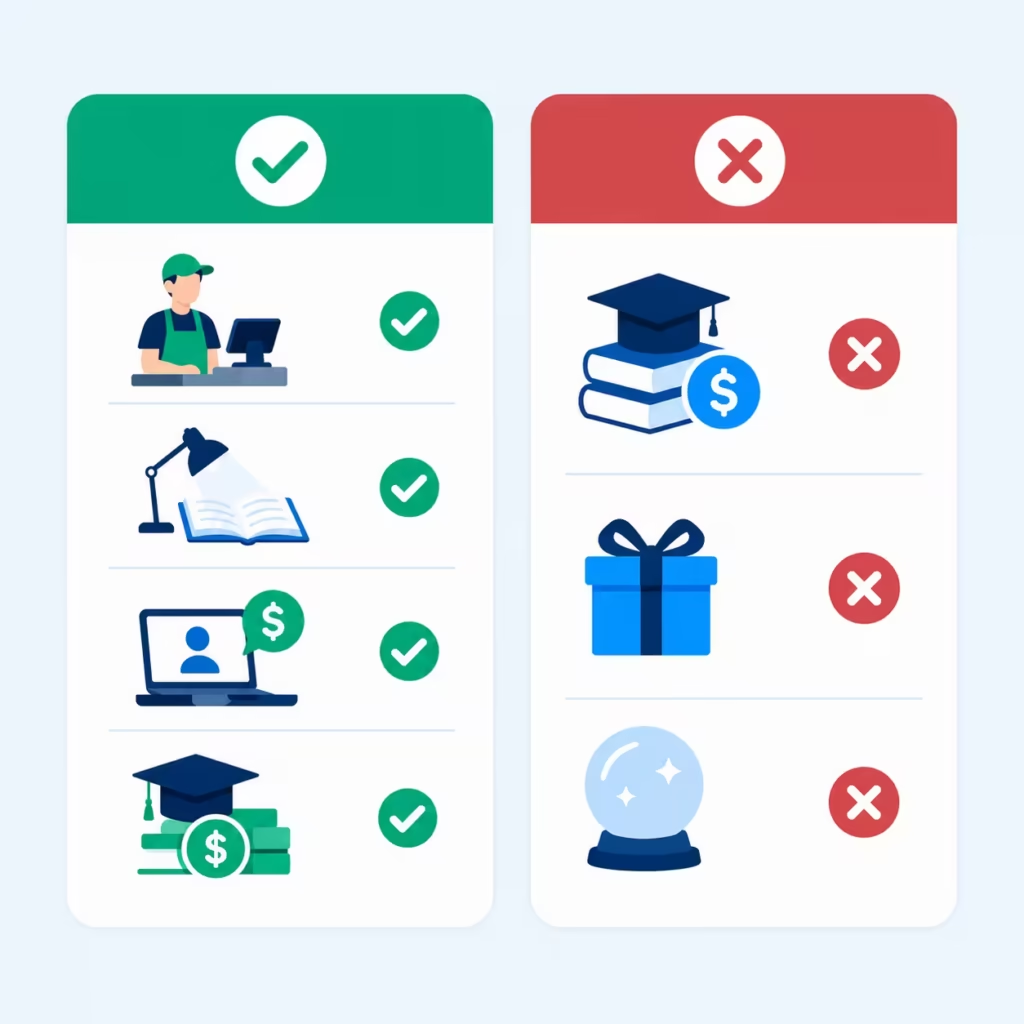
The CARD Act requires that anyone under 21 must show an “independent ability to pay” before getting approved. That sounds strict, but the list of what counts as income is wider than most students think.
Qualifying income usually includes:
- Money from a part-time or full-time job
- Campus work-study wages
- Regular tips or freelance pay
- Scholarships or grants that are left over after tuition
- Certain military allowances
Income that usually does not count:
- Student loans (this is borrowed money, not income)
- Gifts or an allowance from parents
- Money you expect to earn later
Cosigner Rules
If you don’t have enough income on your own, you can sometimes bring in a cosigner. A cosigner must be 21 or older and must show they can pay the debt if you don’t. This is usually a parent or guardian.
Here’s the catch. Not all card issuers accept cosigners anymore. Many big banks stopped offering this option years ago, so you may need to call the issuer directly or read the fine print.
Also, a cosigner is legally on the hook. If you miss a payment, their credit takes the hit too. That’s why many families skip this route and pick a different starter card instead.
Enrollment and Verification Requirements
Card issuers want proof that you’re really a student. During the application, they might ask for:
- The name of your school
- Your expected graduation date
- A .edu email address
- A copy of a class schedule or student ID (sometimes)
Verification is usually quick and digital. If you already have a student email, the process moves faster. Keep in mind that dropping out or graduating early doesn’t cancel your card. The card just stays open and eventually shifts into a regular product, which we’ll cover later.
Can International Students Get a Student Credit Card?
Yes, but it depends on the issuer. The main hurdle is that most banks ask for a Social Security Number (SSN) or an Individual Taxpayer Identification Number (ITIN) to check identity and credit.
Some issuers now run programs built for international students. They look at things like your school, your home country’s banking history, or your visa status instead of a U.S. credit score. Deserve EDU and a few fintech partners are known for this. If you’re an F-1 or J-1 visa holder, ask your school’s financial aid office. They often keep a list of card programs that work with international students.
How Student Credit Cards Differ From Regular Credit Cards
Under the hood, student credit cards and regular credit cards work the same way. Both use revolving credit, both report to the same three bureaus, and both charge interest if you carry a balance. The plumbing is identical.
The difference is in the terms. Because banks see students as higher-risk borrowers with thin credit files, they change three things: the credit limit, the APR, and the rewards. Each of these gets its own section next, so you can see exactly what to expect.
Typical Credit Limits on Student Cards
Most student credit cards start with a credit limit between $300 and $1,000. Some go a little higher for students with high income or a cosigner, but four-figure limits at the start are rare.
Regular credit cards for adults with steady income and good credit often start at $2,500 or more. So why the gap? Banks use your credit history to guess how much risk you carry. Students usually don’t have much history, so lenders limit their exposure. A lower cap means less trouble for both sides if things go wrong.

The good news is that limits can grow. Many issuers do an automatic review after 6 to 12 months of on-time payments. If you use the card, pay in full, and keep balances low, they may bump your limit without you even asking. This is where responsible use pays off in a real way.
📌 Did You Know: A higher credit limit can actually help your score, even if you don’t spend more. Your credit utilization ratio drops when the limit goes up. That single change can lift your FICO score by several points.
Typical APR and Fees on Student Cards
The APR (Annual Percentage Rate) on student credit cards is often higher than the rate on prime cards. That makes sense because banks charge more to cover the risk of lending to someone with no track record. Expect student card APRs in the low 20% range to nearly 30%, depending on the issuer and market rates.
For context, the Federal Reserve’s G.19 report shows that the average interest rate on all credit card accounts that carry a balance sits around 22% in mid-2026. Student cards usually track at the upper end of this range because banks price young applicants as riskier borrowers.
Now for good news. Most student credit cards charge no annual fee. You won’t pay just to keep the card open, which is a big deal when you’re on a tight budget.
Here’s where the grace period matters. If you pay your full statement balance by the due date, you owe zero interest, no matter how high the APR is. The APR only bites when you carry a balance from one month to the next. So the safest habit is simple: use the card, then pay it off in full every month.
⚠️ Mistake to Avoid: Paying only the “minimum payment” feels safe, but it’s a trap. On a $500 balance at 26% APR, the minimum can stretch your payoff to over two years and nearly double what you owe. Always aim to pay the full statement balance.
Rewards and Perks Common to Student Cards
Even beginner cards come with perks now. Most student cards offer cash back rewards on the categories where college students actually spend money. Common bonus areas include:
- Dining and restaurants
- Groceries
- Gas and transit
- Streaming services like Netflix, Spotify, or Hulu
- Amazon and online shopping
Cash back rates usually range from 1% to 5%, with the top rates tied to specific rotating categories or spending caps.
Some issuers add student rewards that regular cards don’t offer. A few examples:
- Good-grades bonus: Discover, for example, has offered a small statement credit for students who keep a GPA of 3.0 or higher.
- First-year match: Some cards double your total first-year cash back at the end of year one.
- No foreign transaction fees: Handy for study-abroad semesters.
Beyond cash back, many student cards come with financial education tools. Free FICO score access, spending trackers, and simple budget dashboards inside the app help you learn as you go. Take advantage of these. They’re built for exactly your situation.
How a Student Credit Card Builds Credit

This is the whole reason to get one. A student credit card builds credit by feeding data to the three major credit bureaus every month: Experian, Equifax, and TransUnion. Those bureaus then hand that data to scoring models like FICO and VantageScore, which turn it into your credit score.
Two factors matter most:
Payment history is the biggest slice of your score. FICO says it makes up 35% of the FICO score. “On-time” means paying at least the minimum by the due date. A single payment that lands 30 days late can drop a thin file by 60 to 100 points and stays on your report for up to seven years.
Credit utilization is the second big lever. This is the share of your credit limit you’re using. If your limit is $500 and your balance is $150, your utilization is 30%. Most experts suggest keeping it under 30%, and under 10% is even better. Utilization is measured when the bank reports each month, usually on the statement closing date.
Two other factors help over time:
- Length of credit history: The older your first card, the better. Opening a student card at 18 gives that account years to age, which lifts your average account age later.
- Credit mix: Having different types of credit, like a card plus a small loan, helps a bit. It’s a smaller factor, so don’t rush to add loans just for this.
Sarah, a sophomore studying nursing, opened a student card with a $500 limit in her first semester. She used it only for her $45 Spotify and phone bill, paid the full balance every month, and never carried a balance.
Ten months later, her FICO score sat at 724, high enough that she was pre-approved for a regular travel rewards card the summer after junior year. Small use plus perfect payments did the heavy lifting.
Risks of a Student Credit Card
The upside is real, but so are the risks. Ignoring them is how first-time cardholders end up with credit card debt that follows them into their first job.

Carrying a balance and paying interest. If you don’t pay in full, interest starts stacking. At a 27% APR, a $600 balance costs about $13 in interest the first month, and it grows if you keep carrying it. That’s money spent on nothing.
Missed payments hit thin files harder. Because your file is short, one late payment moves your score a lot more than it would move a 30-year credit history. Late fees also apply, often around $25 to $41 for the first miss.
Overspending relative to income. A $1,000 limit is not $1,000 of “free money.” It’s a loan. Students who treat the limit like a budget often max out and can’t pay it off. A safe rule is to only charge things you already have the cash to pay off this week.
Damage carries forward. Bad marks on a student card can hurt future approvals for apartments, auto loans, phone plans, and even some jobs. Landlords and employers now check credit in many states. Starting your file with missed payments makes those doors harder to open later.
The fix is straightforward. Use the card lightly, pay in full, and treat it as a tool for building history, not for spending you can’t afford.
Student Credit Card vs. Authorized User vs. Secured Card
There isn’t just one way to start building credit. Three main paths exist, and picking the right one depends on your situation. Here’s how they compare.
| Feature | Student Credit Card | Authorized User | Secured Credit Card |
|---|---|---|---|
| Who qualifies | Enrolled students 18+ with income or cosigner | Anyone added by a primary cardholder | Anyone with a deposit, regardless of student status |
| Deposit required | No | No | Yes, usually $200 to $500 |
| Reports to your credit | Yes, always | Sometimes, depends on issuer | Yes, always |
| Best for | Students with some income or work-study | Teens or young adults with a helpful parent | Non-students or thin-file adults |
| Independent qualifying | Required | Not required | Required (income), but easier |
Authorized user means someone adds you to their existing account. You get a card in your name, but the main person is still on the hook for the bill. This is the fastest path, but not every issuer reports authorized user activity to the bureaus. Ask before signing up.
A secured credit card works like a regular card, but you put down a refundable cash deposit that becomes your credit limit. It’s a good backup if you don’t have income, aren’t enrolled in school, or got denied for a student card. After 6 to 12 months of good use, most issuers refund the deposit and switch you to an unsecured card.
Simple guidance: If you’re enrolled in college and have any income, apply for a student card first. If you have a parent with strong credit willing to add you, being an authorized user is a fast boost. If neither works, a secured credit card is a reliable fallback.
What Happens to a Student Credit Card After Graduation
A common worry is that the card gets shut off the day you toss your cap. It doesn’t. Your card stays open, your credit line stays yours, and your credit history on that account keeps aging, which helps your score.
What often changes is the product. Many issuers quietly convert your student card into a regular card version within 12 months after graduation. The account number usually stays the same, so you don’t have to update auto-pay. This process is called account conversion.
Around graduation, do a quick check:
- Call the issuer or check your app to see what card the account will become
- Compare the new card’s APR, rewards, and any new annual fee
- If the new terms are worse than a card you’d get today, ask for a product change instead of closing the account
Whatever you do, avoid closing the account. Closing wipes out that account’s length from your active file and can drop your score, especially in the early years of your credit life. Keep it open, use it once a month for a small charge, and pay it off.
How to Know if a Student Credit Card Is Right for You
A student credit card makes sense when three things line up. Run this quick check:
- You’re at least 18 and enrolled in a qualifying school
- You have some form of steady income (job, work-study, or scholarship overflow) or a willing cosigner
- You want to build credit and can commit to responsible use every month
If all three are true, a student card is often the strongest starting move because it doesn’t need a deposit and rewards good habits with cash back and future credit line boosts.
An alternative may fit better if:
- You have no income and no cosigner: A secured credit card is easier to get.
- A parent has excellent credit and wants to help: Being an authorized user builds credit history the fastest without any application.
- You’re not sure you’ll pay in full every month: Wait, learn to budget first, and open the card once you can commit. Using debt as a lifeline in college is the biggest reason young adults end up in trouble.
When you’re ready, compare a few offers side by side. Look at the APR, the annual fee (aim for $0), the cash back categories that match your spending, and whether the issuer reports to all three bureaus. Read the terms once, then apply for the one that fits. One card is enough to start.
Frequently Asked Questions (FAQs)
How much income do I need for a student credit card?
There’s no fixed dollar amount required. Applicants under 21 must show an independent ability to pay, which can include part-time job wages, work-study pay, freelance income, or leftover scholarship money after tuition.
What is the credit limit on a student credit card?
Most student credit cards start with a limit between $300 and $1,000. Limits can grow after 6 to 12 months of on-time payments and responsible use.
Who qualifies for a student credit card?
You must be at least 18 years old and enrolled in a college, university, or trade school. Applicants between 18 and 20 also need to show independent income or bring in a cosigner age 21 or older.
Is it worth it to get a student credit card?
Yes, if you can pay the full balance every month. It builds credit history with no annual fee and no deposit required, unlike a secured card.
What are the drawbacks of having a student credit card?
Carrying a balance triggers high interest, often in the low 20% to nearly 30% APR range. Missed payments can drop a thin credit file by 60 to 100 points and stay on record for up to seven years.
Can you get a student credit card if not a student?
No, most issuers require proof of enrollment, such as a school name, expected graduation date, or a .edu email address. Non-students typically need a secured credit card instead.
Does adding my college student to my credit card help them build credit?
Adding your student as an authorized user can build their credit, but only if the issuer reports authorized user activity to the bureaus. Not all issuers do this, so ask before signing up.
What is the difference between a student and a regular credit card?
Both work the same way and report to the same credit bureaus, but student cards typically have lower limits ($300 to $1,000 versus $2,500 or more), higher APRs, and student-focused rewards like good-grades bonuses.
Wrapping Up
Getting your first credit card feels big, but it doesn’t have to be scary. A student credit card is simply a beginner-friendly tool that lets young adults build credit while learning good money habits.
Most college students should open a no-annual-fee student card. They can charge one or two small monthly bills to it. Then, they should pay the full statement balance each time. This approach follows the pay-in-full mechanics and CARD Act rules. That single habit builds strong credit faster than any hack.
If you know a college freshman who’s nervous about credit, share this guide with them. It could save them years of confusion and a lot of money in interest.