
Opening a credit card statement and spotting a surprise fee is frustrating. You might wonder if the amount is even correct, or if one missed payment is about to wreck your credit score. If you’re searching for answers about a credit card late payment fee, you’re in the right place, and you’re definitely not alone.
Here’s the short answer: a late fee is a flat penalty your card issuer charges when at least the minimum payment doesn’t arrive by the due date, and right now it usually runs up to $30 the first time and $41 if it happens again soon after.
Keep reading, and you’ll get the exact 2026 numbers, the truth about that $8 cap you may have heard about, and simple steps to get a fee removed or never pay one again.
Key Takeaways
This guide explains what a credit card late payment fee is, including the current 2026 dollar amounts, why the $8 fee cap no longer applies, how fee timing differs from credit reporting timing, and how to get a first fee waived.
Core Facts:
- A late payment fee is a flat penalty charged when at least the minimum payment isn’t received by the due date, capped at up to $30 for a first offense and up to $41 for a repeat offense within six billing cycles.
- The fee can never exceed the minimum payment that was due, even if the standard fee amount is higher.
- A federal court vacated the CFPB’s $8 late fee cap rule on April 15, 2025, so the $30/$41 safe harbor amounts are currently in effect.
- Late fees can be charged the day after the due date, but issuers don’t report a payment to credit bureaus until it is 30 days past due.
- The late fee itself is never reported to credit bureaus; only the payment status is reported once it reaches 30 days past due.
- Most issuers offer a one-time goodwill waiver for a first late fee, typically requested by phone after paying at least the minimum due.
Best for:
- Readers who were just charged a late fee and want to know if the amount is legal and correct.
- Cardholders worried that a recent late payment already damaged their credit score.
- Anyone looking for the exact steps to request a first-time late fee waiver.
What Is a Credit Card Late Payment Fee?
A credit card late fee is a flat penalty charge. Your card issuer adds it to your balance when at least the minimum payment due doesn’t reach them by your statement due date. That’s it. It’s not interest, and it’s not a percentage of your balance. It’s a fixed dollar amount.
A few things are worth knowing about this late payment penalty. First, the fee shows up in your card’s pricing information, usually called the Schedule of Fees, before you ever get charged. So the amount should never be a total mystery.
Second, the fee is completely separate from interest charges. Interest is the cost of borrowing money over time. A late fee is a one-time charge for missing a deadline. You can owe both at once, but they’re two different things.
📌 Did You Know: A late fee can never be larger than the minimum payment you owed. If your minimum payment was only $25, the fee is capped at $25, even if the normal fee is higher.
How Much Is a Credit Card Late Fee in 2026?
This is the number most people come here for, so let’s be exact. Under Regulation Z, which is the federal rule that governs credit card penalty fees, large card issuers can charge up to $30 for a first late payment and up to $41 for each additional late payment within the following six billing cycles. These figures are called the safe harbor amounts, and they’re the legal ceiling most big banks operate under CFPB.
In practice, most major issuers charge somewhere between $28 and $30 for a first offense. If you were charged $30 or $41, the amount is normal and legal. Remember, too, that the fee can never exceed the minimum payment that was due.
Why the Fee Amount Varies by Issuer
If your friend’s card charges less than yours, there’s a simple reason. Card issuers are allowed to charge up to the legal limit, but nothing forces them to charge the maximum. Some issuers set lower fees on purpose. It’s a way to attract and keep customers.
Issuer size matters as well. The rules draw a line between large issuers, meaning those with one million or more open accounts, and smaller ones. Smaller issuers have historically had more flexibility in how they set penalty fees. The only way to know your exact credit card late fee amount is to check your own card agreement. Look for the fee schedule in your original terms or in your online account.
What Happened to the $8 Late Fee Cap?
You may have seen headlines saying late fees were capped at $8. That was true for a while, and then it wasn’t. Here’s the quick timeline.
In March 2024, the Consumer Financial Protection Bureau (CFPB) finalized a rule that would have cut the safe harbor amount to $8 for large issuers. The banking industry sued. Then, on April 15, 2025, a federal court in Texas threw the rule out completely. Notably, the CFPB itself agreed the rule was unlawful and asked the court to vacate it.
So where does that leave you in 2026? The older safe harbor amounts, $30 for a first violation and $41 for a repeat one, are back in effect. That’s why any article still quoting an $8 cap is out of date.
One more thing: the CFPB has signaled it may revisit late fee rules in the future. Because this area of the CARD Act and Regulation Z can shift, it’s smart to confirm the fee listed in your current card terms.
Grace Period and Due Date Rules You Need to Know
Knowing exactly when a payment counts as late can save you real money. The rules here are more consumer-friendly than most people expect.
Federal law gives you breathing room before a payment is even due. Your due date must fall at least 21 days after your statement closing date. The due date also has to land on the same calendar day every month, so it can’t jump around and trip you up.
Then there’s the cutoff time, and this part surprises people. A payment isn’t due at midnight. By law, it counts as on time as long as the issuer receives it by 5 p.m. on the due date, in the time zone they specify.
Online payments made before that cutoff count as on time too. If the due date falls on a weekend or holiday and the issuer doesn’t accept payments that day, you get until the next business day.
Late Fee Timing vs. Credit Report Timing: They’re Not the Same
This is the single most misunderstood part of the whole topic. Two separate clocks are running, and mixing them up causes a lot of needless panic.
Clock one is the fee clock. It’s fast. Your issuer can charge a late fee the very first day after your due date passes. Clock two is the credit reporting clock. It’s slow. Issuers don’t report you to the credit bureaus until your payment is a full 30 days past due.
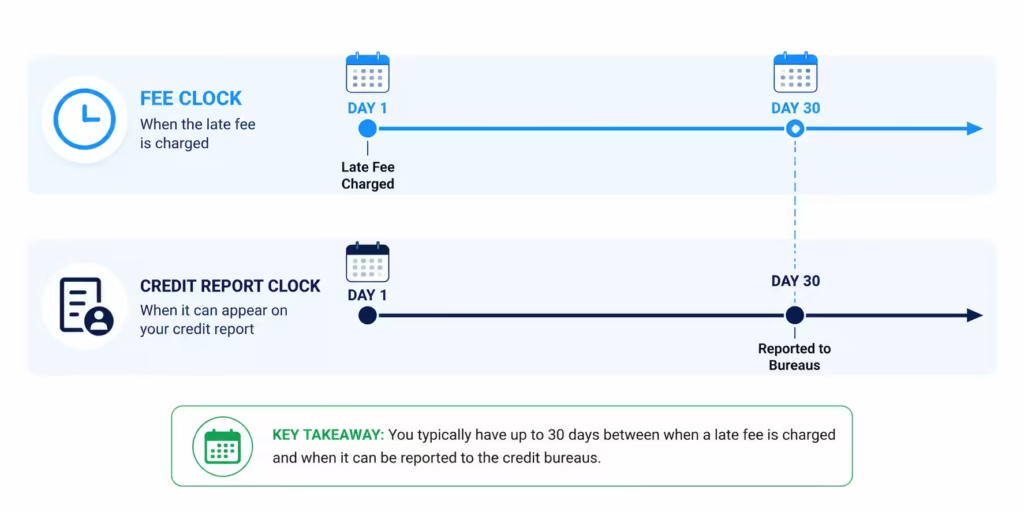
Here’s what that means in real life. Pay three days late, and it costs you the fee, but your credit report stays clean. Pay 31 days late, and you get hit twice: the fee plus a late payment mark on your credit report. If you’ve just missed a due date, you still have a window to pay before any credit damage happens. Use it.
Does a Late Fee Itself Show Up on My Credit Report?
No. The fee itself is never reported to the credit bureaus. It’s just a charge on your account, like interest. What gets reported is your payment status, and only once it reaches 30 days past due.
One warning goes with this. If your account did cross the 30-day line, paying the late fee afterward doesn’t erase the delinquency mark. The fee and the credit report entry are separate events. Paying one doesn’t undo the other.
Does a Late Payment Fee Affect Your Credit Score?
The fee alone does nothing to your credit score. You could pay the fee and never see your score move a single point. The real danger is the late payment behind the fee, and only when it crosses that 30-day line.
When a payment does get reported as 30 days past due, the damage can be serious. Payment history is the biggest factor in your FICO score, making up about 35% of it. Experian reports that even one 30-day late payment can hurt your score, and people with high starting scores often see the largest drops, sometimes around 100 points.
The mark also sticks around. A late payment can stay on your credit report for up to seven years, though its effect on your score fades as time passes. The encouraging part is the flip side of the two-clock rule. As long as you pay before day 30, your score stays untouched, even though you owed the fee.
First-Time Late Fee vs. Repeat Late Fee: How the Escalation Works
The late payment penalty isn’t always the same amount. Federal rules set two price tiers, and which one applies depends on your recent history.
A first violation can be charged up to $30. A subsequent violation can be charged up to $41. “Subsequent” has a precise meaning here: another late payment in the same billing cycle or in one of the next six billing cycles.
| Situation | Maximum Fee |
|---|---|
| First late payment | $30 |
| Another late payment within the same or next six billing cycles | $41 |
| First late payment after six clean billing cycles | $30 (the clock resets) |
The good news is built right into the rule. Once you go six full billing cycles without a late payment, the clock resets. Your next late payment, if one ever happens, is treated as a first violation again at the lower amount.
The Real Cost of a Late Payment Beyond the Fee
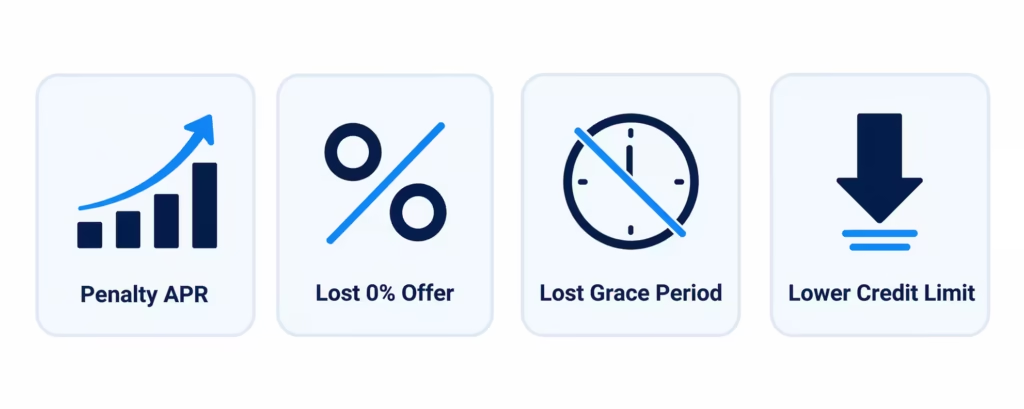
Here’s something most people miss: the flat fee is often the cheapest part of paying late. A late payment can set off other consequences that cost far more over time.
Four things can happen beyond the fee itself. Your interest rate can jump to a penalty APR. A promotional 0% APR offer can be canceled early. Your grace period on new purchases can disappear. And in some cases, your issuer can lower your credit limit, which can push your credit utilization higher and hurt your score from another direction.
Penalty APR: How Much Higher and How Long It Lasts
A penalty APR is a much higher interest rate your issuer can apply after a serious payment problem, usually a payment that’s 60 or more days late. Penalty rates commonly reach 29.99%, nearly double what many cardholders pay normally.
There’s one protection worth knowing. If the penalty rate was triggered by late payments, your issuer must review your account after six months. Make six straight on-time payments, and the rate on your existing balance generally has to come back down. New purchases can sometimes stay at the higher rate, so check your agreement.
Losing Your Grace Period
The grace period is the window, usually at least 21 days, when new purchases don’t collect interest if you pay your statement balance in full. It’s the reason responsible card users can borrow for free.
A late payment can take that away. Once the grace period is gone, new purchases start collecting interest the day you make them. That makes every dollar you spend more expensive until you pay the balance back down to zero and the grace period returns. Stacked together, a $30 fee, months of penalty-rate interest, and lost interest-free days can turn one missed deadline into a few hundred dollars.
⚠️ Mistake to Avoid: Budgeting only for the flat fee. If you’re running a balance, the interest costs from a lost grace period and a penalty APR will usually cost you far more than the fee itself.
How to Get a Late Fee Waived
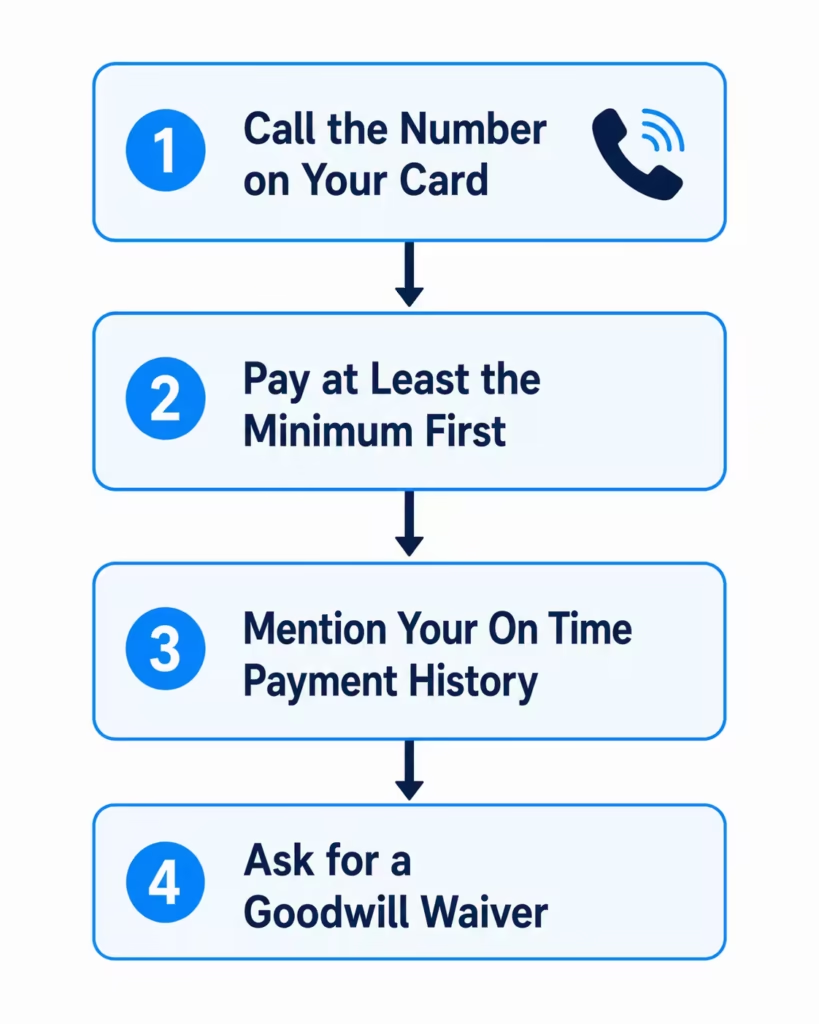
If this is your first late payment, or your first in a long time, there’s a strong chance you can get the fee removed. Most issuers offer a one-time courtesy waiver, often called a goodwill adjustment. They just rarely advertise it. You have to ask.
- Call the number on the back of your card. Phone works better than chat for waivers.
- Pay at least the minimum due before you call, if you can. It shows good faith.
- Point to your track record. Something like: “I’ve paid on time for two years. This was a one-time slip. Could you remove the late fee as a goodwill courtesy?”
- If the first agent says no, politely ask for a supervisor.
Take Marcus, a warehouse supervisor in Dallas with a spotless three-year payment history. He missed a due date during a family emergency, called his issuer the next day, and had the $30 charge reversed in under five minutes.
Results like that are common for first-time misses. If you’re late for the third or fourth time this year, expect a harder conversation. The waiver habit works best when it’s rare.
💡 Pro Tip: Use the word “goodwill” on the call. Agents hear it as a signal that you know the process, and goodwill waivers are a standard, approved tool at most major issuers.
How to Avoid Late Fees Going Forward
Fixing a fee once is nice. Never paying one again is better. Four simple moves cover almost every situation.
Set up autopay. Every major issuer offers it, and you can usually choose between the minimum payment, the full statement balance, or a fixed amount. If cash flow is tight, autopaying at least the minimum guarantees you’ll never trigger a fee, and you can always pay more by hand later.
Add reminders as a backup. Most card apps let you set text or email alerts a few days before the due date. A calendar reminder works too. Know your cutoff time as well. Remember, payments usually count as on time until 5 p.m. on the due date in the issuer’s time zone, not midnight in yours.
Finally, if your due date lands badly, move it. Most issuers let you request a due date change, so you can line it up a day or two after your paycheck hits. It’s a five-minute request that permanently lowers your odds of paying late.
Frequently Asked Questions (FAQs)
What is a credit card late payment fee?
A credit card late payment fee is a flat penalty your issuer charges when at least the minimum payment doesn’t arrive by the due date. Under Regulation Z, large issuers can charge up to $30 for a first offense and up to $41 for a repeat offense within six billing cycles.
What happens if I am 1 day late on my credit card payment?
You’ll likely owe a late fee since issuers can charge one the day after the due date passes. Your credit score stays safe, though, since late payments aren’t reported to credit bureaus until they’re 30 days past due.
What happens if I am 2 days late on a credit card payment?
Being 2 days late triggers the same flat late fee, up to $30 for a first offense, but won’t affect your credit score. The credit reporting clock only starts once a payment hits the 30-day mark, so you still have a wide safety window.
What happens if I am 3 days late on my credit card payment?
A 3-day-late payment results in a late fee but no credit score damage, since credit bureaus aren’t notified until day 30. Paying the balance as soon as possible still matters, since interest may already be accruing on any unpaid amount.
Will a 2-day late payment affect credit score?
No, a 2-day late payment does not affect your credit score. Issuers only report payments to credit bureaus once they reach 30 days past due, so scores stay untouched for anything paid before that point.
How many days late can you pay a credit card?
You can pay up to 29 days late without any credit score impact, since reporting to credit bureaus only happens at the 30-day mark. A late fee, however, can apply starting the very first day after the due da
What is the best day to pay a credit card?
Paying before 5 p.m. on your due date in your issuer’s time zone counts as on time, so the safest day is your actual due date or earlier. Setting up autopay for at least the minimum payment removes the risk of missing this cutoff entirely.
Does a late fee show up on my credit report?
No, the late fee itself is never reported to credit bureaus. Only your payment status gets reported, and only once a payment reaches 30 days past due, which is a separate event from the fee itself.
Can a late fee be waived?
Yes, most issuers offer a one-time courtesy waiver, often called a goodwill adjustment, especially for a first-time or rare late payment. Calling the number on your card, paying at least the minimum first, and mentioning your on-time payment history improves your chances.
What’s the difference between a first-time and repeat late fee?
A first late payment can cost up to $30, while a subsequent late payment within the same or next six billing cycles can cost up to $41. After six consecutive on-time billing cycles, the clock resets and your next late fee, if any, returns to the lower $30 tier.
Wrapping Up
A credit card late payment fee is a flat charge, currently up to $30 the first time and $41 for a repeat within six billing cycles, and the widely reported $8 cap is no longer in effect. The fee itself never touches your credit report, and your score stays safe as long as you pay before the 30-day mark.
For most readers, the best way is to set up autopay for the minimum. Then, add a reminder a few days in advance. This method helps avoid human errors that often lead to late fees.
If you know someone juggling several cards or rebuilding their credit, share this with them. It could save them the fee, the penalty APR, and a lot of stress.