
You booked the flights. You reserved the hotel. Then a thought hits: will your credit card charge you extra every time you use it abroad? That worry is smart. A credit card foreign transaction fee can quietly add 1% to 3% to everything you buy in another currency, and most cardholders don’t find out until the statement arrives.
This fee is a percentage your card issuer adds for purchases outside the United States. You can avoid it completely with the right card.
This guide walks you through exactly how the fee works, when it applies, what it costs over a full trip, and the fastest ways to stop paying it for good.
Key Takeaways
This guide explains what a credit card foreign transaction fee is, how it’s calculated, how it differs from dynamic currency conversion, and how to avoid it using a no-fee card before traveling.
Core Facts:
- A foreign transaction fee typically ranges from 1% to 3% and applies to any purchase processed in a foreign currency or through a foreign merchant, even from a purchase made at home.
- The fee combines two parts: a network fee (around 1%, charged by Visa or Mastercard) and an issuer fee (0% to 2%, charged by the card-issuing bank).
- The fee is calculated on the converted U.S. dollar amount, not the original foreign currency amount, after the network converts the purchase.
- Dynamic currency conversion (DCC) is a separate merchant-set markup, often 3% to 7%, that can apply in addition to the foreign transaction fee if a cardholder chooses to pay in USD abroad.
- On a $3,000 international spending budget, the fee totals $30 at 1%, $60 at 2%, or $90 at 3%, according to the article’s example calculations.
- Capital One and Discover do not charge foreign transaction fees on any of their U.S. cards, per the article.
Best for:
- Readers planning international travel who want to understand whether their current credit card charges a foreign transaction fee.
- Online shoppers who buy from foreign-based merchants or websites and want to know why an unexpected fee appeared on their statement.
- Anyone comparing cards before a trip and deciding whether to apply for a no-fee card in advance.
What Counts as a Foreign Transaction
A foreign transaction is any purchase processed in a foreign currency or routed through a merchant based outside your home country. That second part matters more than most people realize. “Foreign” describes how the transaction is processed, not where your feet happen to be when you tap “buy.”
Two situations trigger the fee:
- Purchases made abroad. You hand your card to a café in Paris or a shop in Tokyo. The charge runs in euros or yen, then gets converted to dollars.
- Purchases processed by a foreign merchant. You order a jacket from a retailer in the UK while sitting on your couch in Ohio. The payment still crosses borders behind the scenes.
One more thing worth knowing: the fee isn’t unique to credit cards. Debit cards and prepaid travel cards often carry the same kind of charge. The foreign transaction fee credit card holders see on a statement follows the same logic wherever it appears.
How the Foreign Transaction Fee Is Calculated
Many cards that impose this fee typically take between 1% and 3% of each transaction. This range is widely recognized as the industry standard.
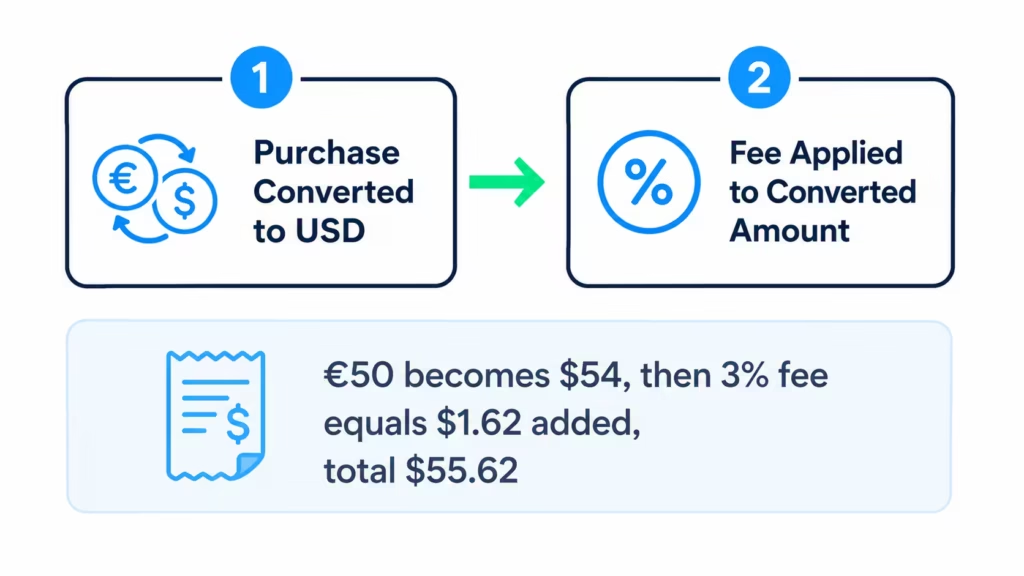
The math happens in two steps:
- The network converts your purchase to U.S. dollars. Visa, Mastercard, American Express, or Discover takes the foreign amount and converts it using that day’s exchange rate.
- The fee is applied to the converted dollar amount. Not the foreign currency face value. The percentage surcharge is calculated on the U.S. dollar figure.
So if you spend the equivalent of $100 on a card with a 3% fee, you owe $103. Simple enough. The interesting part is who gets that $3.
Network Fee vs. Issuer Fee
The fee on your statement looks like one charge. It is actually two smaller charges stacked together.
- The network fee. The card network charges roughly 1% to handle the currency conversion. Visa and Mastercard both sit around this level; a GSA SmartPay bulletin on government travel cards confirms Mastercard applies a 1.0% conversion fee.
- The issuer fee. Your bank adds its own charge on top, usually 0% to 2%. This is the part that varies from card to card.
That second piece is where your power lies. The issuer’s portion is the part a card company can waive, which is exactly why some cards advertise no fee at all. Choosing the right card removes the issuer fee, and often the whole charge with it.
A Real Example
Picture a €50 dinner in Rome. Say the day’s exchange rate puts that meal at about $54.
Now apply a 3% fee to the converted amount: 3% of $54 is $1.62. Your statement shows $55.62, not the $54 you expected.
That gap confuses a lot of cardholders. Jennifer, a project manager at a mid-sized logistics firm, once spent 40 minutes on the phone disputing a $57 charge for a €50 dinner before a customer service agent explained the fee. The charge was legitimate. Her card simply carried a 3% surcharge she’d never noticed in the fine print. Small amounts like $1.62 feel harmless on one meal. The next sections show why they aren’t.
Does the Fee Apply If You’re Not Traveling?
Yes. The fee depends on where the transaction is processed, not where you are physically standing.
That means an online international purchase from your living room can trigger the same charge as a swipe at a market in Mexico City. Buy software from a German developer, order skincare from a Korean brand, or book a tour with an Australian company. The fee goes with the payment across borders.
There’s a sneakier version, too. Some platforms that feel American route their payments through foreign processors. A U.S.-based website might run its checkout through a bank in another country, and your card treats that charge as an overseas transaction. The result: a surprise fee on a purchase that never felt international at all.
📌 Did You Know: You can get hit with this fee without leaving your house. What matters is where the merchant’s bank sits, not where you click “buy.”
Foreign Transaction Fee vs. Dynamic Currency Conversion (DCC)
These two charges get mixed up constantly, and the confusion costs real money.
Dynamic Currency Conversion happens when a merchant or ATM abroad offers to charge you in your home currency instead of the local one. The screen says something like “Pay in USD?” and it feels helpful. You see a familiar number. No mental math.
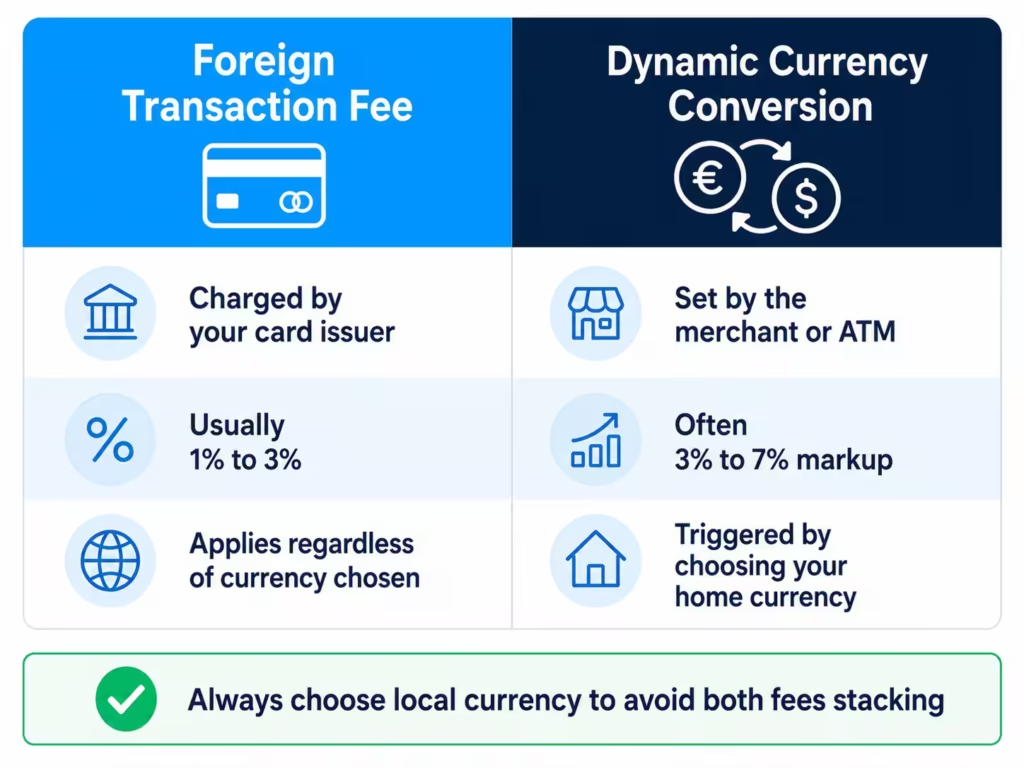
Here’s the catch: the merchant sets that exchange rate, and it is almost always worse than the rate your card network would use. The markup often runs 3% to 7%, baked right into the price. Worse, picking USD might not save you from the foreign transaction fee. Your payment can still go through a foreign bank. You can end up paying both.
The rule is simple: always choose the local currency. Paying in euros, yen, or pesos is usually cheaper. Let your card network handle the currency conversion, even if there’s a fee.
What to Say When a Merchant Offers to Charge You in USD
At the terminal, the choice usually appears as two buttons: one for USD, one for the local currency. Sometimes the cashier asks out loud.
- If the screen asks, pick the local currency option every time.
- If a person asks, a simple “Charge me in local currency, please” does the job.
- If a receipt shows USD after you asked otherwise, you can ask for the transaction to be voided and rerun before you sign.
💡 Pro Tip: Some terminals make the USD option bigger or brighter on purpose. Look for the smaller button labeled with the local currency, and take the extra two seconds before tapping.
Foreign Transaction Fee vs. Currency Exchange Rate
One more distinction clears up the last common confusion: the fee and the exchange rate are separate things.
The exchange rate is the market price of one currency in another. Card networks convert your purchases at a rate close to wholesale. It’s similar to the near-market rate banks use with one another. That rate is not a fee. It’s just the going price of euros or yen on that day.
The foreign transaction fee is a surcharge layered on top of that fair rate. Your network gives you an honest conversion, then your issuer adds its percentage on top.
Compare that with a currency exchange kiosk at the airport. Those booths don’t charge a separate fee. Instead, they build a fat markup directly into the rate they offer you, so you get fewer euros per dollar than the market rate. Different mechanism, same result: you pay more. Cards, even ones with a fee, usually beat the kiosk.
How to Find Out If Your Card Charges the Fee
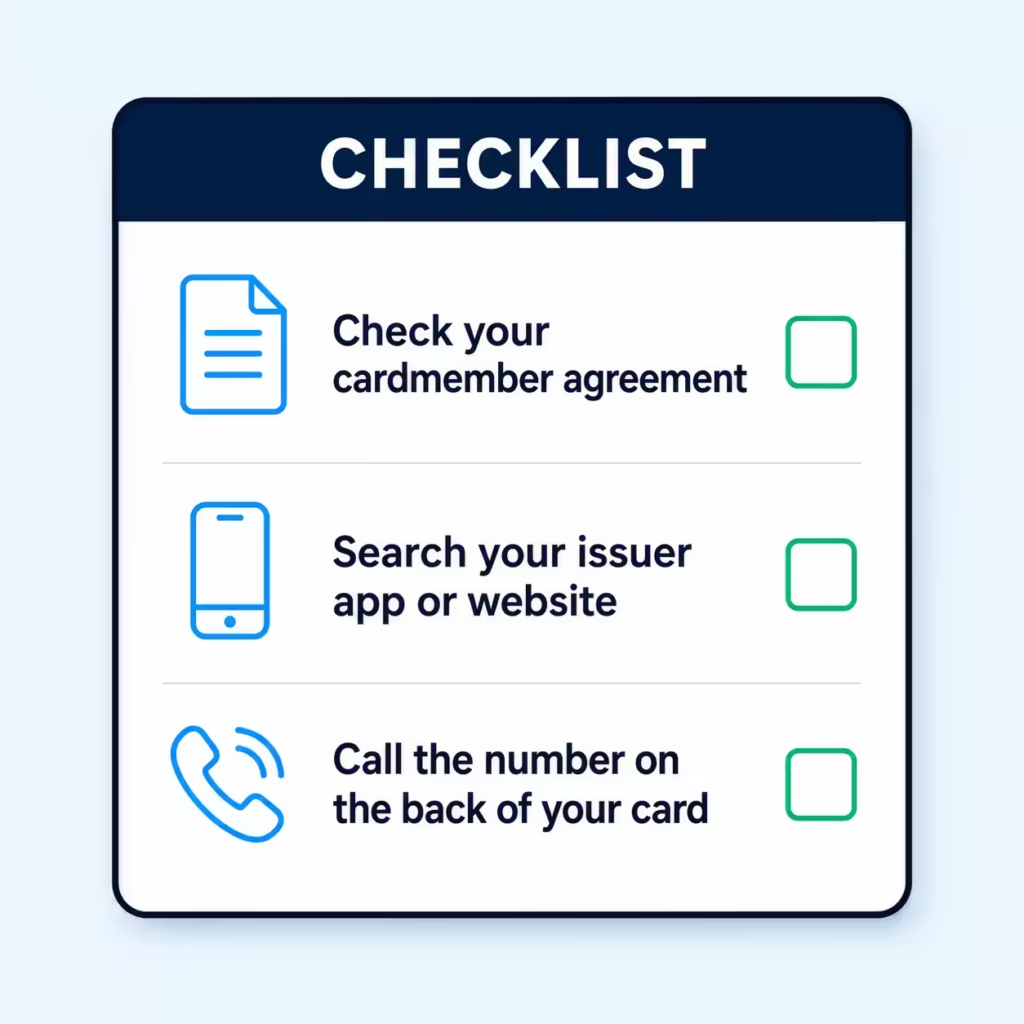
You can settle this in the next five minutes. Here’s exactly where to look:
- Check your cardmember agreement. Every card comes with terms and conditions that include a fee schedule. Check for a table near the top of the document. It’s often called the Schumer box. This table shows the APR, annual fee, and any fees for foreign purchases in simple terms.
- Search your issuer’s app or website. Log in to your online account and look for a “rates and fees” or “card benefits” page. Most major issuers post the fee schedule there, and a quick search of the site for “foreign transaction” usually lands you on the answer.
- Call the number on the back of your card. If the documents aren’t clear, customer service can tell you in one minute whether your specific card charges the fee and at what rate.
If your paperwork says “none” or “0%” next to foreign transactions, you’re clear to use that card anywhere.
Typical Fee Ranges by Card Type
A quick benchmark for what to expect based on the plastic in your wallet:
| Card type | Typical fee |
|---|---|
| Basic Visa or Mastercard from a major bank | Around 3% |
| Store cards and older legacy products | Often around 1% |
| Premium travel cards and many fintech-issued cards | $0 |
A LendingTree study of foreign transaction fees found that nearly half of all credit cards still charge one, with an average fee of 2.61% per transaction. In other words, you have about a 50/50 chance your regular card will cost more overseas. So, it’s smart to do the five-minute check before any trip.
How Much the Fee Can Cost You Over a Trip
One dinner with a $1.62 surcharge is forgettable. A full vacation is not. The fee applies to every qualifying transaction individually, so it compounds quietly across every meal, hotel, train ticket, and souvenir.
Here’s what a $3,000 international spending budget costs at each common fee level:
| Fee rate | Total fees on $3,000 |
|---|---|
| 1% | $30 |
| 2% | $60 |
| 3% | $90 |
Ninety dollars is a nice dinner out, a museum pass for the family, or a checked bag both ways. Michael, a finance director at a manufacturing company, tracked his family’s two-week Italy trip and counted 41 separate card transactions. At 3%, his “great everyday card” added $96 to the trip, spread so thin across the statement that he almost didn’t notice.
That’s the real danger of this fee. It never stings at once. It just quietly inflates a trip budget you thought you’d nailed.
⚠️ Mistake to Avoid: Budgeting the trip in dollars but spending in foreign currency without checking your card first. Add the fee percentage to every line of your budget, or swap cards before you leave.
How to Avoid Foreign Transaction Fees
The cleanest fix is also the simplest: use a card that doesn’t charge the fee.
- Get a no foreign transaction fee credit card before you travel. Many travel rewards credit cards waive the charge entirely, and plenty of them carry no annual fee either. Capital One and Discover, for example, don’t add this surcharge on any of their U.S. cards.
- Check the approval timeline. A new card typically takes one to two weeks from application to arrival in your mailbox. Apply at least three weeks before departure so you have a cushion, and activate it the day it lands.
- Carry a little local cash as backup. Some taxis, markets, and small shops abroad don’t take cards. Withdraw cash from an ATM in local currency instead of exchanging dollars at a kiosk. Also, decline the ATM’s offer to convert to USD. That’s DCC again.
- Know that ATM withdrawals are a different animal. Withdrawing cash from an ATM abroad can lead to extra costs. You might face an ATM fee, a cash-advance charge on credit cards, and interest that starts right away. Treat credit card ATM withdrawals as a last resort.
If You Can’t Get a New Card Before Traveling
Trip in two weeks and no time for an approval? You still have options.
- Audit every card you already have. Check each one against the steps above. A forgotten card in the drawer sometimes waives the fee even when your daily card doesn’t.
- Ask the household. A spouse or family member may hold a card with no fee, and being added as an authorized user is often faster than applying solo.
- Use a debit card with no foreign transaction fee for cash needs. Many online banks and debit cards linked to brokerages refund ATM fees. They also avoid surcharges. This helps you manage cash spending without using a credit card for ATM withdrawals.
- Pay the fee strategically if you must. If no other option exists, put only essential purchases on the card and pay cash for the rest. On a $3,000 trip at 3%, the fee caps at $90, which may be cheaper than the interest and hard inquiry of a rushed last-minute application.
Can You Get a Foreign Transaction Fee Refunded?
In most cases, no. The fee is a clear charge in your cardmember agreement. So, issuers handle it like interest or an annual fee. It’s valid and not something you get back.
That said, three situations are worth a phone call:
- The charge was processed in error. If a U.S. merchant mistakenly used a foreign processor, or if you were charged for a domestic transaction, that’s a billing error. Call your issuer, point to the specific line item, and ask for it to be reversed.
- You were pushed into DCC without a real choice. Visa and Mastercard both require merchants to offer currency conversion as an option, not a default. If a merchant converted your purchase to USD without asking, or hid the choice, report it to your card issuer. The network can push back on the merchant, and some issuers will credit the difference.
- You simply ask. Issuers grant one-time courtesy refunds more often than you’d expect, especially for cardholders with a clean payment history. The worst outcome is a “no.”
David, an operations manager at a consulting firm, called his issuer. He noticed a $74 fee on 12 transactions from a UK vendor he thought was domestic. The agent confirmed the charges were technically valid, then wiped the full $74 as a one-time courtesy. Five minutes on the phone, full refund. That outcome isn’t guaranteed, but it costs nothing to try.
The best long-term choice is to ensure the fee doesn’t come back. A no-fee card from the earlier section solves this issue for good.
Frequently Asked Questions (FAQs)
How do I avoid foreign transaction fees on my credit card?
Get a credit card that doesn’t charge one before you travel, since Capital One and Discover skip the fee on all their U.S. cards. Apply at least three weeks before departure so it arrives and activates in time.
Which credit cards have no foreign transaction fees?
Many travel rewards cards waive this fee, and quite a few charge no annual fee either. Capital One and Discover don’t add the surcharge on any of their U.S. cards, making them solid starting points.
Why did my credit card charge me a foreign transaction fee?
Your card charged the fee because the purchase was processed through a foreign merchant or bank, not because of where you were standing. A U.S. purchase can even trigger it if the checkout routes through an overseas processor.
Is it better to use a credit card or cash when traveling internationally?
Cards are usually cheaper than cash, since currency kiosks build a hidden markup into their exchange rate rather than charging a visible fee. Carry some local cash as backup for taxis and small shops that don’t take cards.
Do foreign transaction fees get refunded?
Refunds aren’t automatic since the fee is a valid charge in your cardmember agreement. Issuers do grant one-time courtesy refunds fairly often, especially if you call and simply ask.
How do I avoid the 3% foreign transaction fee specifically?
Check your cardmember agreement’s fee schedule, often called the Schumer box, to confirm your rate before you travel. If it charges 3%, switch to a no-fee card like Capital One or Discover, or a fintech-issued travel card.
Is it better to exchange currency or use a credit card?
Using a credit card is typically better, since airport currency kiosks build a markup directly into their exchange rate rather than charging a separate fee. Cards convert purchases close to the wholesale market rate, even with a foreign transaction fee added on top.
How much can foreign transaction fees add up to on a trip?
On a $3,000 international spending budget, a 3% fee adds $90 in charges spread across every purchase. At the reported average rate of 2.61%, that same trip would cost close to $78 extra.
What should I say if a merchant offers to charge me in USD abroad?
Decline and ask to be charged in the local currency instead, since the merchant sets the DCC exchange rate and it’s almost always worse than your card network’s rate. A simple “charge me in local currency, please” works at the register.
What’s the difference between a foreign transaction fee and dynamic currency conversion?
A foreign transaction fee is a surcharge your card issuer adds to purchases processed abroad, typically 1% to 3%. Dynamic currency conversion is a separate charge where a merchant converts your total to USD at an inflated rate, often 3% to 7%, and you can still owe both.
The Bottom Line
The mechanics are simple:
- This surcharge hits any purchase made abroad, even from your couch.
- It usually ranges from 1% to 3%.
- It combines a network fee with an issuer fee.
- Lastly, it’s different from dynamic currency conversion, which you should always decline.
For most readers, the most effective approach is a no-fee card, since the average surcharge of 2.61% turns a $3,000 trip into nearly $80 of pure waste. If a trip is coming up, run the five-minute check on your cards today.
If you know someone planning to travel internationally, share this guide. It might help them avoid paying for their card issuer’s vacation instead of their own.