
I’ve been there. You step up to the counter, hand over your American Express card, and the cashier shakes their head. It’s awkward, and it can leave you scrambling for cash or another card you weren’t planning to use.
If you’re trying to figure out where Amex is not accepted before your next big purchase or trip, you’re not alone. Many cardholders learn about these gaps the hard way, often in a checkout line or at a hotel front desk abroad.
The short answer: Amex is widely accepted in the U.S. but has clear gaps at Costco, eBay, many small shops, and across rural areas in Europe and Oceania.
I’ll show you which merchants, categories, and countries don’t accept Amex. Plus, I’ll share tips to help you plan and choose a good backup card.
Key Takeaways
This guide explains where Amex is not accepted, covering major US retailers, country-specific gaps in the UK, Canada, Europe, and Oceania, sanctioned countries, and backup payment strategies for travelers.
Core Facts:
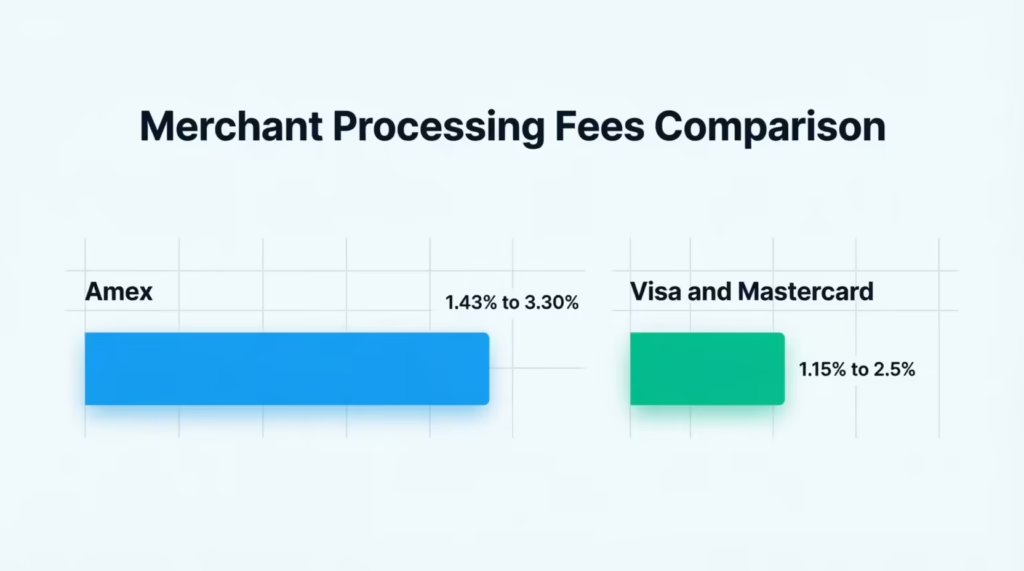
- Amex operates as a closed-loop network with merchant fees ranging from 1.43% to 3.30% plus $0.10 per swipe, higher than Visa and Mastercard’s 1.15% to 2.5% plus $0.10.
- Costco dropped Amex in 2016 for an exclusive Visa partnership in the US, while Costco Canada accepts only Mastercard and Costco Australia accepts neither Amex nor any of these exceptions beyond standard cards.
- eBay stopped accepting American Express globally on August 17, 2024, citing unacceptably high fees, and now requires Visa, Mastercard, Discover, PayPal, Google Pay, or Apple Pay.
- American Express reports acceptance at 99% of US places that take credit cards, though small independent shops, rural businesses, and certain service providers still opt out.
- OFAC sanctions block Amex entirely in Cuba, Iran, North Korea, and Syria, meaning no merchant in these countries can legally process the card.
- International acceptance gaps are common in rural France, Italy, Germany, New Zealand, and Australia, where small businesses often skip Amex or apply a disclosed surcharge instead.
Best for:
- Travelers planning trips to Europe, Oceania, Canada, or rural areas of the US who want to know where Amex commonly fails.
- Shoppers who frequent Costco or eBay and need to know which payment methods those retailers actually accept.
- Anyone building a backup payment strategy with a no-foreign-fee Visa or Mastercard, cash, and a separate debit card for travel.
Why American Express Isn’t Accepted Everywhere
American Express is built differently from Visa and Mastercard. It runs as a closed-loop network. That means Amex acts as both the card issuer and the network that processes the payment. Visa and Mastercard, on the other hand, work as open networks. Banks issue the cards, and the networks move the money.
That structure shapes the fees. Amex’s merchant processing fees sit at roughly 1.43% to 3.30% plus $0.10 per swipe. Visa and Mastercard sit lower, at about 1.15% to 2.5% plus $0.10. The gap looks small, but on thin retail margins, it adds up fast. A small bakery doing $40,000 a month in card sales could pay hundreds more each month just to accept Amex.
To close this gap, Amex launched the OptBlue program in 2014. It lets small business processors bundle Amex pricing with their Visa and Mastercard rates. The result has been strong.
According to American Express, the card is now accepted at 99% of U.S. places that take credit cards. But “99% of places that take credit cards” is not the same as “100% of places where you shop.” Some businesses still skip Amex on purpose. Others don’t take any credit cards at all. And outside the U.S., the picture changes fast.
So when an Amex gets refused, it usually comes down to one of three things. The merchant pays too much in interchange fees. The country leans on local networks like Girocard or Carte Bancaire. Or the business simply hasn’t signed up for the OptBlue program yet.
📌 Did You Know: Amex is now accepted in over 200 countries and territories, but acceptance density varies wildly. A card that works at 99% of U.S. merchants might only work at 1 in 4 small shops in rural France.
Major US Retailers and Categories That Don’t Accept Amex
Even with strong domestic coverage, some big U.S. names still refuse American Express. Knowing which ones can save you a panic at the register.
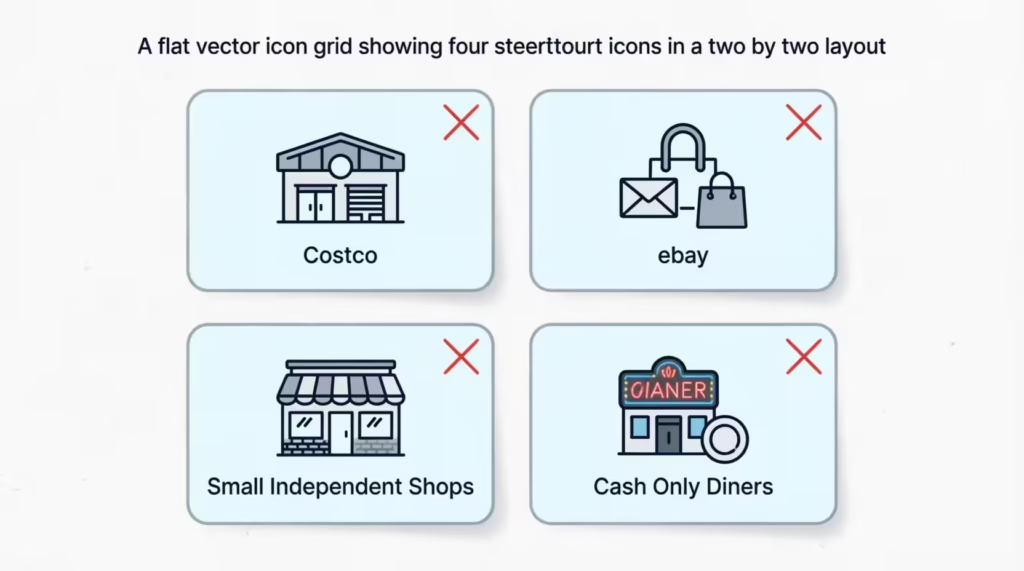
Costco is the biggest one. Costco dropped Amex back in 2016 and signed an exclusive deal with Visa. So if you walk into any Costco warehouse in the U.S., your Amex won’t work. Same goes for Costco.com. Only Visa cards, debit cards, cash, checks, and Costco gift cards work in-store. If you shop Costco often, a no-annual-fee Visa is worth keeping just for those trips.
eBay is the other big name to know. eBay stopped accepting American Express globally on August 17, 2024. The company pointed to “unacceptably high fees” as the reason in a press release from eBay. Buyers on eBay now need to pay with Visa, Mastercard, Discover, PayPal, Google Pay, Apple Pay, or other supported methods.
Beyond those two, you’ll hit small independent retailers that opted out of Amex. Think mom-and-pop coffee shops, neighborhood diners, family-run bookstores, food trucks, farmers market booths, and corner barber shops. These are the “small business card fees” sensitive businesses. If a place looks small and locally run, ask before you order.
A few other categories worth knowing:
- Some U-Haul and budget moving truck locations skip Amex.
- Many cash-only diners and bars don’t take any card at all.
- A handful of regional grocery chains (like Aldi in some states) only accept Amex at certain locations.
- Some medical and dental offices prefer Visa or Mastercard because of the lower swipe fees.
⚠️ Mistake to Avoid: Don’t assume that because a store accepts Visa and Mastercard, it also takes Amex. Always check the door sticker or the payment icons online before you commit to a big purchase.
Government, Tax, and Utility Payments
Government billers are a quiet trouble spot. Many state tax portals, local DMV websites, and utility companies route credit card payments through a third-party processor. These processors often accept Amex, but they tack on a convenience fee of 1.85% to 2.95%. That fee usually wipes out any rewards you’d earn on the card.
Some agencies skip Amex entirely. Examples include certain state tax sites, smaller municipal water and sewer departments, court fines, and parking ticket portals. Property tax payments are hit or miss.
The IRS does accept Amex through approved third-party processors, but the fee can be 1.75% or higher. Always check the payment page before you commit. If the rewards don’t beat the fee, use a debit card or bank transfer instead.
Where Is Amex Not Accepted in the USA
Across the country, Amex coverage is excellent in cities and tourist hubs. Stores that don’t take American Express tend to cluster in a few predictable spots.
Rural and small-town America is the biggest gap. Mountain lodges, lakeside diners, roadside fruit stands, and family-run gas stations often skip Amex. They sell on thin margins and don’t want to lose a slice to higher fees. Independent restaurants, neighborhood bars, and food trucks are also common refusers.
Some service categories tend to dodge Amex too. Many independent contractors, plumbers, electricians, and HVAC techs take only Visa, Mastercard, debit, or check. Daycares, dog walkers, and house cleaners sometimes use Square or Stripe accounts that skip Amex by default. Small medical and dental practices may charge a surcharge if you insist on using it.
The pattern is simple. The smaller and more local the business, the more likely Amex gets refused. Big chains, hotels, airlines, and online retailers almost always work. So if you’re traveling within the U.S. and sticking to chains, you’ll be fine. If you’re road-tripping through small towns or eating at indie spots, carry a backup card.
Where Is Amex Not Accepted in the UK
The UK has the highest Amex acceptance rate in Europe, but it still trails Visa and Mastercard by a wide margin. Amex sits at roughly 2% of UK card transactions. Visa and Mastercard split the rest. So while big hotels, department stores, and chain restaurants happily take Amex, plenty of smaller spots don’t.
Common gaps include traditional pubs, especially independent ones outside London. Small cafes and coffee shops in residential neighborhoods often skip it too.
Market stalls at places like Borough Market, Camden Market, and Portobello Road are very mixed. Some traders take all cards, others only take debit and cash. Independent boutique shops, small fish and chip places, and family-run B&Bs are also unreliable for Amex.
Beware the foreign transaction fee trap too. Even where Amex works in the UK, your U.S.-issued Amex may charge 2.7% on each purchase unless you carry a no-foreign-fee card like the Platinum or Gold. Check your card’s terms before you assume rewards will cover the cost. For UK trips, pair your Amex with a no-foreign-fee Visa or Mastercard, and you’ll cover both acceptance and cost concerns.
You can use the Amex acceptance map for the UK to look up specific shops, restaurants, and hotels before you book.
Where Is Amex Not Accepted in Canada
Canada’s Amex acceptance is strong in cities but thinner in rural areas. Toronto, Vancouver, Montreal, and Calgary look much like the U.S. Hotels, chain restaurants, and big retailers almost always take Amex. Smaller towns, ski lodges, and remote attractions are a different story.
The biggest Canada-specific gotcha is Costco Canada. Unlike Costco in the U.S., which uses Visa as its exclusive network, Costco Canada took a different path. CIBC is the exclusive credit card issuer for Costco Mastercards in Canada, and Mastercard is the only credit card network accepted at Canadian Costco warehouses. So neither your U.S. Amex nor your U.S. Visa will work cleanly at a Costco store in Toronto or Vancouver. You’ll need a Mastercard, debit, cash, or a Costco Cash Card.
Other gaps in Canada include small independent diners, rural gas stations, small ski hill cafés, and many farmers market vendors. Most provinces’ government services accept Amex via third-party processors. However, the convenience fees often outweigh the rewards.
If you live in or visit Canada often, a no-foreign-fee Mastercard is the strongest companion to your Amex. It fills the Costco gap and works almost everywhere else too. The Amex acceptance map for Canada is also helpful for planning bigger purchases.
Where Is Amex Not Accepted in New Zealand
New Zealand is one of the trickier spots for Amex users. The cards work fine at big hotels, airlines, car rental chains, and major retailers in Auckland, Wellington, and Christchurch. Outside those zones, acceptance drops off.
Small cafés, boutique shops, and family-run restaurants often skip Amex because of the higher swipe cost. Farm stays, holiday parks, and small B&Bs are hit or miss. Adventure tour operators sometimes accept Amex but pass along a credit card surcharge of 2% to 4%. That can quietly erase your rewards.
Surcharging is legal in New Zealand if disclosed. So if a small operator does accept Amex, expect a separate fee at the till. Always ask up front. Knowing the surcharge before you swipe lets you decide whether to use Amex or switch to debit.
For most travelers, carrying a no-foreign-fee Visa or Mastercard alongside your Amex is the cleanest setup. It also helps with rental car holds and small-town fuel stops, where Amex is most likely to fail.
Where Is Amex Not Accepted in Australia
Australia is a mixed bag for Amex users. Some big names take it, others don’t. The biggest exceptions you need to know are Aldi and Costco Australia. Aldi Australia does not accept American Express. Costco Australia also doesn’t take Amex. Both stick to debit, eftpos, Visa, and Mastercard.
The good news: Woolworths, Coles, Bunnings, IKEA Australia, and Kmart all accept Amex. So do big hotels, airlines like Qantas and Virgin Australia, major restaurants, and most chain retailers in Sydney, Melbourne, and Brisbane.
The pattern of refusals is the same as elsewhere. Small business card fees matter most to small businesses. So independent cafés, small bakeries, food trucks, market stalls, and family-run restaurants in regional areas are the most likely to refuse Amex or surcharge heavily.
For everyday spending in Australia, your Amex covers maybe 80% of needs in a big city. The other 20% is where a backup Visa or Mastercard saves you. The Amex acceptance map for Australia lists confirmed Amex-friendly venues.
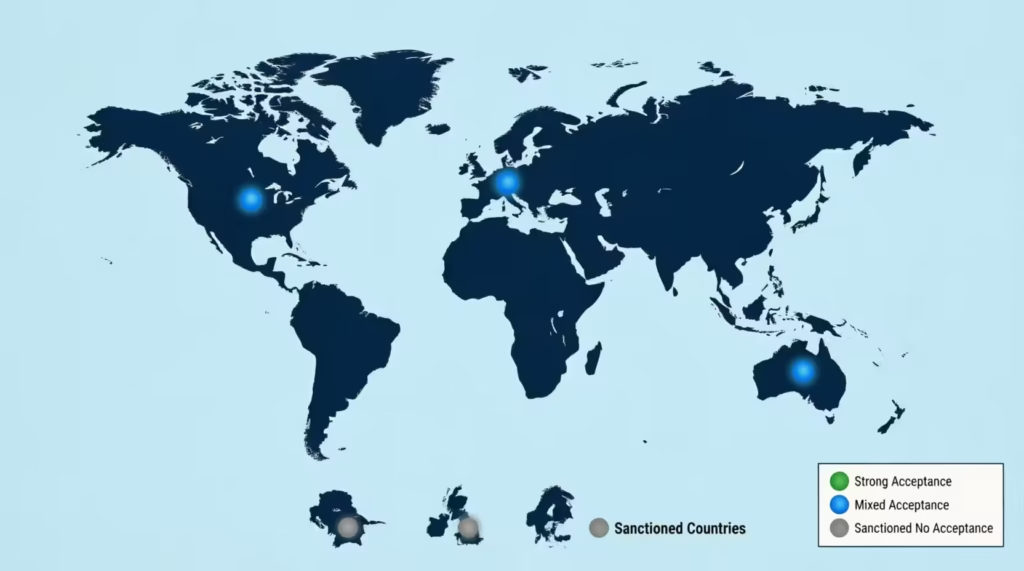
Amex Surcharges vs. Outright Non-Acceptance
Australia is famous for credit card surcharges. The Reserve Bank of Australia allows merchants to pass on card fees as long as they disclose them. Many small businesses do this. So instead of refusing Amex, they accept it with a surcharge of 1.5% to 3%.
The fee gap is real. The Australian Financial Review reports that the average merchant fees for American Express are 1.3% of the cost of goods, compared with debit cards at 0.4%. That gap is why a café might charge a 2% Amex surcharge but only 1% for Visa and Mastercard.
The key rule for cardholders: a surcharge has to be disclosed before the sale. Look for a sign at the register, a line on the menu, or a notice on the eftpos terminal. If you don’t see disclosure, ask. And if the Amex surcharge wipes out your rewards (often anything over 1.5% does), pay with debit or your Visa instead.
💡 Pro Tip: When a venue accepts Amex with a 3% surcharge, compare it to your card’s reward rate. If your card earns 1 point per dollar worth around 1.5 cents, a 3% surcharge means you’re paying 1.5% extra for the privilege. Use a different card.
Where Is Amex Not Accepted in Germany
Germany is a tough country for credit cards in general, not just Amex. Cash is still king in many places. Germans also lean heavily on girocard, a domestic debit network that’s almost universal but not the same as Visa or Mastercard.
Big hotels, department stores like KaDeWe and Galeria, premium restaurants, and major chains in Berlin, Munich, and Frankfurt take Amex. Outside those zones, acceptance drops off fast. Bakeries, small restaurants, local cafés, kiosks, and many independent shops still prefer cash or Girocard. Even in Berlin, you’ll find trendy bars and food spots that take only cash.
Beware the foreign transaction fee here too. Most U.S.-issued credit cards charge 2.7% to 3% on euro purchases unless you have a premium card with no foreign fees. In Germany, use your Amex for hotels, restaurants, and big retailers. For smaller places, get a no-foreign-fee Visa or Mastercard. Also, keep some euros for cafés, bakeries, and public transit ticket machines.
Where Is Amex Not Accepted in Italy
Italy splits in two for card payments. In major cities like Rome, Milan, Florence, and Venice, Amex works well at hotels, designer shops, big restaurants, and chain retailers. In smaller towns, villages, and rural areas like Tuscany, Puglia, and parts of Sicily, acceptance gets spotty.
Common gaps include:
- Family-run trattorias
- Small pizzerias
- Espresso bars
- Neighborhood gelato shops
- Tourist-area souvenir stalls
Some take only cash. Others take only Visa and Mastercard. Even some museums and historic sites take cards but exclude Amex from the list.
There’s one specific Italy gotcha to plan for: car rental insurance and damage waivers. Some rental agencies in Italy won’t accept the collision damage waiver coverage built into your Amex card.
They’ll insist you buy their own insurance or use a Visa or Mastercard for the security hold. Always read your card’s rental car coverage terms and call the rental company before you fly. Pair your Amex with a no-foreign-fee Visa or Mastercard for car rentals, small shops, and rural travel.
Where Is Amex Not Accepted in France
France leans heavily on Visa and Mastercard, processed through the local Carte Bancaire system. Amex acceptance is much lower than in the UK or Germany, even in Paris.
Where Amex typically works:
- Luxury retailers like Louis Vuitton, Hermès, and Chanel
- High-end restaurants
- Big hotels
- Department stores such as Galeries Lafayette and Printemps
- Major chains and airlines
Where it often doesn’t:
- Neighborhood boulangeries
- Small bistros
- Brasseries off the tourist path
Family-run hotels, market stalls, taxis, and many small shops in cities outside Paris also fall into this category.
For France, treat Amex as your hotel and luxury shopping card, not your everyday card. Use a no-foreign-fee Visa or Mastercard as your daily driver for cafés, bakeries, museums, and small restaurants. Carry some euros for cash-only spots and tipping. This combo covers all your needs without surprises.
Countries Where Amex Doesn’t Work At All
Some countries are off-limits for Amex no matter what. This is not a fee issue. It’s a U.S. sanctions issue. The Office of Foreign Assets Control (OFAC) prohibits most American financial transactions with specific countries. Amex must follow this rule.
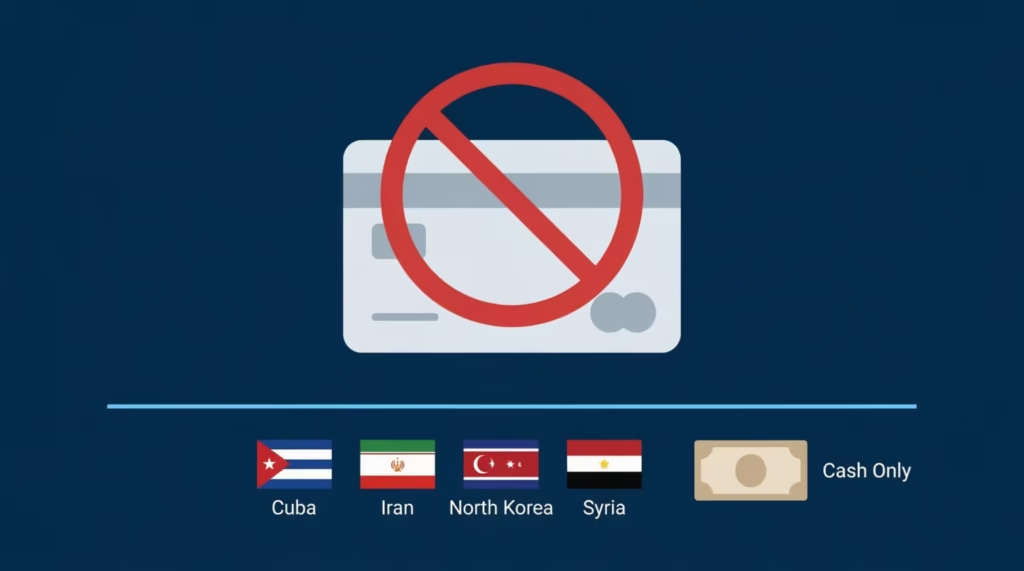
As of 2026, OFAC maintains comprehensive sanctions against four countries: Cuba, Iran, North Korea, and Syria. You can confirm the list on the OFAC Sanctions Programs page. Sudan was on the comprehensive list for years but was eased in recent updates, though specific restrictions remain. South Sudan is also subject to targeted sanctions.
In these countries, your Amex card simply will not process. No merchant legally takes it. Cash, often in U.S. dollars or euros, is your only real option. ATMs won’t dispense local currency on a U.S. card either.
If you’re visiting these countries, bring enough cash for the trip. Also, arrange any visas and travel insurance beforehand. Check with your bank about wire options too. Carry copies of your travel documents and use a money belt for safety.
Sanctioned countries also create knock-on issues. Even if you visit them with cash and no card use, some travel rewards programs may flag your account. Always read your card’s terms about restricted destinations before you book.
How to Check If a Specific Merchant Accepts Amex Before You Go
The easiest way to avoid an awkward decline is to check before you swipe. American Express makes this fairly simple if you know the tools.
The most useful tool is the American Express acceptance map. You enter a city, neighborhood, or specific business name. The map shows Amex-accepting hotels, restaurants, shops, and attractions in that area. It’s not perfect. Small businesses sometimes update their card setup without telling Amex. But for hotels, big restaurants, and major retailers, it’s reliable.
A few other quick checks that save trouble:
- Look for the Amex logo on the front door, near the register, or on the menu. If you see Visa and Mastercard logos but no Amex logo, the merchant likely doesn’t take it.
- Check the online checkout page. When you reach the payment step, look at the supported card icons. If Amex isn’t listed, you can’t use it for that purchase.
- Call ahead for big purchases. Before you book a wedding venue, place a $5,000 furniture order, or reserve a hotel suite, ask the merchant directly. A two-minute phone call beats a denied charge at the counter.
- Check the merchant’s payment page. Many websites list supported payment methods in their FAQ or footer.
- Ask in advance for service appointments. If a contractor, doctor, or service provider is about to bill you a large amount, confirm Amex works before the work starts.
For international travel, the Amex global acceptance map covers many countries. Local Reddit threads, travel forums like TripAdvisor, and recent Google reviews are also good signals. If three recent reviews mention “card declined,” believe them.
What to Carry as a Backup Payment Method
The simplest answer: always carry one backup that’s not an Amex. The strongest backup setup is a no-foreign-transaction-fee Visa or Mastercard. Visa and Mastercard cover the merchants and countries that Amex doesn’t, and a no-foreign-fee card avoids the 2.7% to 3% hit you’d otherwise see overseas.
Other good backup options are the Chase Sapphire Preferred, Capital One Venture or Venture X, Wells Fargo Autograph, and Bilt Mastercard, all of which have no foreign fees and use either Visa or Mastercard. Pick one that fits your spending. If you travel a lot, the Sapphire or Venture pulls double duty as a travel rewards card.
Cash is your second backup. For U.S. trips, $100 to $200 in small bills handles cash-only diners, food trucks, parking meters, and tips.
For international trips, a few hundred dollars in local currency covers small shops, taxis, public transit, and emergency situations. Get cash from a bank ATM with your debit card, ideally one with no foreign ATM fees, like Charles Schwab or Fidelity.
A simple checklist for travel:
- One Amex (for rewards, points, and where it works)
- One no-foreign-fee Visa or Mastercard (for everywhere else)
- One debit card with no foreign ATM fees (for cash withdrawals)
- $100 to $300 in local cash (for cash-only spots and emergencies)
- A second card stored separately in your bag or hotel safe (in case your wallet gets lost)
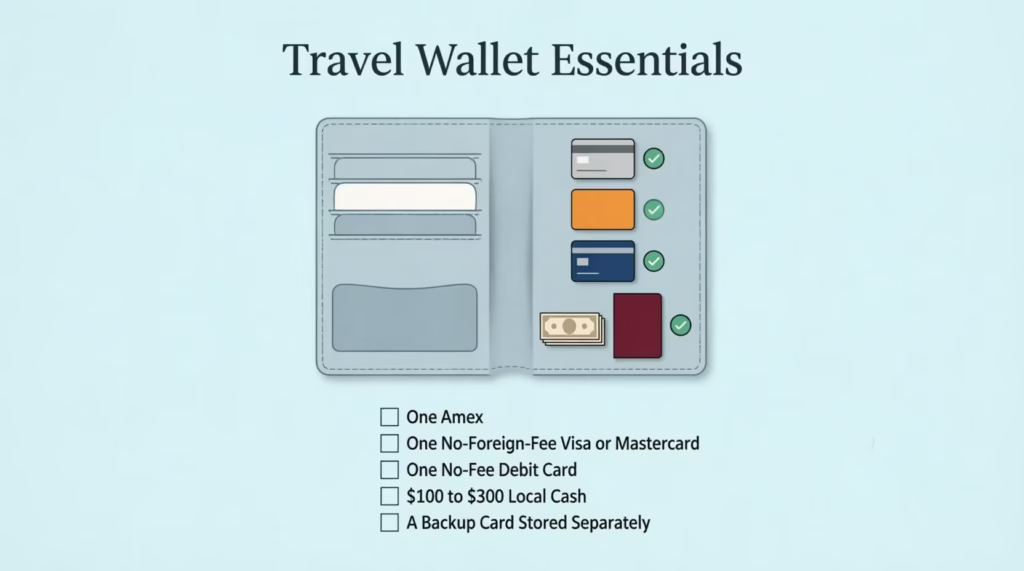
This setup means you’ll never get stuck. Even if your Amex gets declined, lost, or frozen, you have three other ways to pay. For domestic travel, the same logic works on a smaller scale. Pair your Amex with a Visa or Mastercard, keep some cash, and you’ll handle 99% of situations without stress.
Frequently Asked Questions (FAQs)
Where is Amex not accepted?
Amex is widely accepted across the US but has clear gaps at Costco, eBay, many small businesses, and rural areas in Europe and Oceania. The biggest US gaps are Costco and eBay, while rural France, Italy, Germany, New Zealand, and Australia are the trickiest international zones.
Why is Amex not accepted everywhere?
Amex charges merchants higher processing fees, roughly 1.43% to 3.30% plus $0.10 per swipe, compared to Visa and Mastercard’s 1.15% to 2.5%. Small businesses on thin margins often skip Amex to avoid that extra cost.
Does Costco still accept Amex?
No, Costco dropped Amex in 2016 and signed an exclusive deal with Visa. Only Visa cards, debit cards, cash, checks, and Costco gift cards work at US Costco warehouses and Costco.com.
Why does Costco no longer accept Amex?
Costco switched to an exclusive partnership with Visa in 2016, cutting ties with Amex entirely. This applies to both in-store and Costco.com purchases in the US.
Does McDonald’s accept Amex?
The article doesn’t mention McDonald’s directly, but it notes that big chains almost always accept Amex while small, locally run businesses are the ones most likely to refuse it. Since McDonald’s is a major national chain, it generally falls into the high-acceptance category described in the article.
Is Amex accepted at Chick-fil-A?
The article doesn’t name Chick-fil-A specifically, but it explains that large chain restaurants typically accept Amex without issue. Smaller, independent restaurants are the ones more likely to opt out due to higher swipe fees.
What should I carry as a backup if Amex gets declined?
Carry a no-foreign-transaction-fee Visa or Mastercard, $100 to $300 in local cash, and a debit card with no foreign ATM fees. This combination covers cash-only spots, Costco, and merchants abroad where Amex commonly fails.
Where does Amex not work at all, even with cash backup?
Amex cannot process transactions in Cuba, Iran, North Korea, and Syria due to US sanctions enforced by OFAC. Travelers to these countries need cash, often in US dollars or euros, since no merchant or ATM will accept a US-issued card there.
Does eBay accept American Express?
No, eBay stopped accepting American Express worldwide on August 17, 2024, citing unacceptably high fees. Buyers must use Visa, Mastercard, Discover, PayPal, Google Pay, or Apple Pay instead.
How can I check if a specific merchant accepts Amex before I go?
Use the American Express acceptance map by entering a city, neighborhood, or business name to see confirmed Amex-friendly locations. For bigger purchases, call ahead or check the payment icons on the merchant’s checkout page to confirm before you buy.
Wrapping Up
Amex is a great card for rewards, travel perks, and big chain spending, but it’s not a one-card-fits-all solution. The biggest U.S. gaps are Costco and eBay. The trickiest international zones are rural France, Italy, Germany, New Zealand, and Australia (where Aldi and Costco both refuse it). And four countries (Cuba, Iran, North Korea, Syria) block Amex entirely due to U.S. sanctions.
To get the best results, pair your Amex with a no-foreign-fee Visa or Mastercard. Also, keep a small cash reserve on hand. That trio handles almost every situation cleanly.
If you know a friend or family member who’s heading abroad with only an Amex in their wallet, share this with them. A two-minute read could save them a very awkward checkout moment in Rome or Auckland.