
If you’re carrying credit card debt and someone mentioned credit counseling, you probably have questions. Is it free? Is it legit? Will it hurt your credit? And what even happens in a session? If you’re asking “what is credit counseling,” you’re in the right place.
Credit counseling is a service where a certified counselor reviews your budget, debts, and credit report, then helps you build a personalized plan to get your debt under control. The first session is usually free at nonprofit agencies.
Below, you’ll learn how a session works, what it costs, how it affects your credit score, how to spot a legitimate agency, and how to tell if it’s the right move for you.
At a Glance
This guide explains what credit counseling is, how a session works, typical costs, credit score effects, and how to verify a legitimate nonprofit agency before enrolling.
Core Facts:
- Credit counseling is a service where a certified counselor reviews your budget, debts, and credit report to build a personalized action plan, usually with a free first session at nonprofit agencies.
- The counseling session itself does not affect your credit score, since it is a conversation and review, not something reported to credit bureaus.
- A debt management plan (DMP) is an optional tool, typically lasting three to five years, where the agency negotiates lower interest rates and consolidates payments into one monthly amount.
- DMP fees generally include a setup fee of $75 or less and a monthly fee between $25 and $50, while the initial session and educational workshops are usually free.
- Enrolling in a DMP can cause a short-term credit score dip from required account closures, but on-time payments through the plan build payment history over time.
- A DMP requires repaying the full debt owed and does not forgive or reduce the balance, unlike debt settlement, which can result in a negative “settled” mark on credit reports.
Best for:
- People carrying mostly unsecured debt, like credit cards, whose income can cover a reduced monthly payment.
- Readers who want to avoid bankruptcy and prefer structured repayment over taking out a new consolidation loan.
- Anyone unsure whether a nonprofit credit counseling agency is legitimate before sharing financial details.
What Is Credit Counseling and How Does It Work
Credit counseling is professional guidance for people dealing with debt. You meet with a certified credit counselor, either by phone, online, or in person. The counselor looks at your full financial picture. That includes your income, your monthly bills, and everything you owe. From there, you work together on a written action plan.
Most of these services come from nonprofit credit counseling agencies. Their counselors are trained and certified to review budgets and explain your options.
Here’s something important to know upfront. The term “credit counseling” covers two different things:
- General debt and budget counseling. This is voluntary help for anyone feeling squeezed by debt.
- Bankruptcy-required counseling. This is a legal step you must complete before filing for bankruptcy. It’s a separate process with its own rules.
This guide covers both, but most of it focuses on the first type.
It’s also worth knowing what credit counseling is not. It is not a loan. It is not automatic debt forgiveness. And a good session is not a sales pitch. The counselor’s job is to review your situation and lay out your choices. What you do next is up to you.
How a Credit Counseling Session Actually Works
A lot of people avoid calling because they picture a lecture or a pushy sales call. The reality is much calmer. Here’s what a typical session looks like.
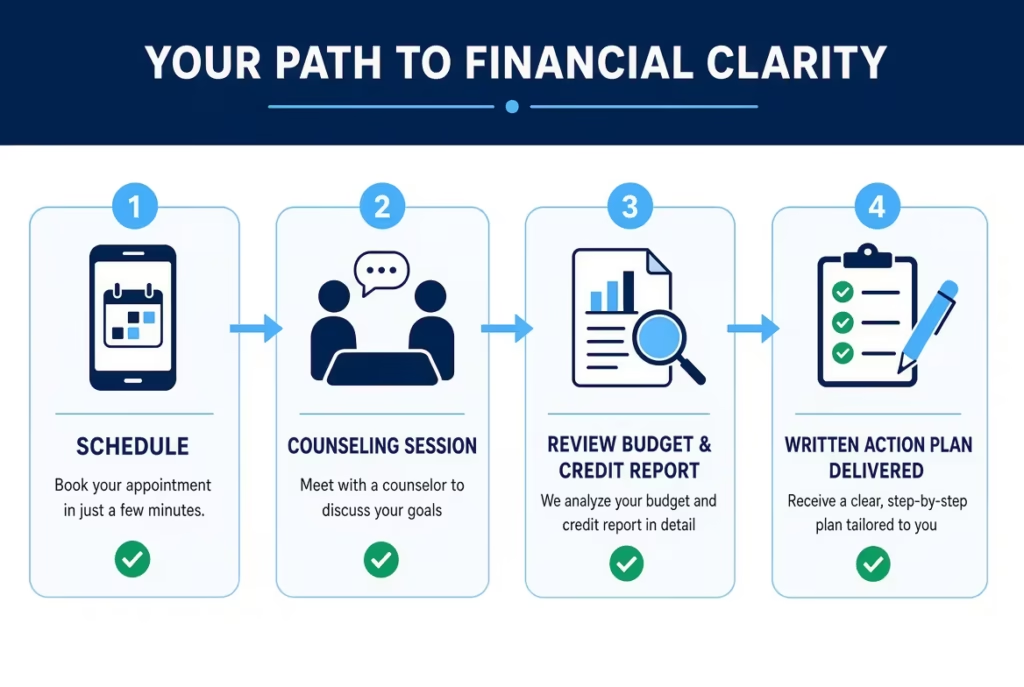
Scheduling. You can book by phone, online, or in person. Many agencies offer evening and weekend slots.
The session itself. Plan for about 30 minutes to an hour. NFCC member agencies describe a typical first session in that range. During that time, the counselor will:
- Ask about your income and regular expenses
- List out your debts, interest rates, and minimum payments
- Review your credit report with you
- Talk through your goals, like lowering payments or paying cards off faster
What the counselor does not do. They don’t judge you. They don’t force you into anything. And they don’t sign you up for a repayment plan just because you called. You are never obligated to accept a recommendation.
What you walk away with. You leave with a written action plan. Sometimes that plan is a better budget and a few negotiation tips. Sometimes it’s a referral to another service. And sometimes the counselor suggests a debt management plan, which we’ll cover in detail later.
The point is simple. One conversation gives you a clear picture of where you stand and what your realistic options are.
Credit Counseling vs. Debt Settlement vs. Credit Repair vs. Debt Consolidation
Search for debt help online, and you’ll see ads for four services that sound almost identical. They are not the same thing, and mixing them up can be expensive. This table shows the key differences.
| Service | What it does | Who provides it | Typical cost | Credit impact |
|---|---|---|---|---|
| Credit counseling | Budget review, advice, optional debt management plan | Nonprofit agencies | Free first session; low DMP fees | Neutral to positive over time |
| Debt settlement | Negotiates to pay less than you owe | For-profit companies | Often 15% to 25% of enrolled debt | Usually negative |
| Credit repair | Disputes errors on your credit report | For-profit companies (or DIY) | Monthly fees, or free if you do it yourself | Neutral; only fixes errors |
| Debt consolidation loan | Combines debts into one new loan | Banks, credit unions, online lenders | Loan interest and fees | Depends on how you use it |
Credit counseling is advice first. The session is about understanding your situation. A debt management plan is optional and comes later, if it fits.
Debt settlement is riskier. These companies often tell you to stop paying your creditors while money builds up in an account. The Federal Trade Commission warns that this can lead to late fees, collections, lawsuits, and real damage to your credit. Fees are also much higher than nonprofit counseling.
Credit repair has a different goal entirely. It focuses on disputing mistakes on your credit report. The FTC points out that you can dispute errors yourself for free, and no company can legally remove accurate negative information.
Debt consolidation is a loan product, not advice. You borrow money to pay off your cards, then repay the loan. It can work well if your credit is still good enough to qualify for a low rate.
⚠️ Mistake to Avoid: Don’t sign up with a for-profit debt settlement company thinking it’s nonprofit credit counseling. Check the organization’s nonprofit status and memberships before you share any financial details.
Nonprofit Credit Counseling and How It’s Structured
You’ll hear “nonprofit” over and over as the trust signal to look for. But what does it actually mean here?
Most legitimate credit counseling agencies are 501(c)(3) nonprofits. That means they’re organized for a charitable, educational purpose, not to make money off you. Important: nonprofit does not mean everything is free. These agencies still charge modest fees for some services, like running a debt management plan. The difference is that fees are capped, disclosed upfront, and often waived for hardship.
Two national groups anchor this ecosystem:
- The National Foundation for Credit Counseling (NFCC), the oldest and largest network of nonprofit counseling agencies
- The Financial Counseling Association of America (FCAA), another national membership association for nonprofit counseling organizations
Local agencies operate as members of these networks. Membership comes with standards. For example, NFCC member agencies must be accredited by the Council on Accreditation, certify their counselors, and submit to annual audits.
Services also go well beyond debt plans. Many agencies offer budgeting help, housing counseling, homebuyer education, and free workshops.
How Does Consumer Credit Counseling Work
If you’ve seen the name “Consumer Credit Counseling Service,” or CCCS, that’s a legacy brand name. Many local nonprofit agencies still use it. These offices run independently in their own communities, but most operate under the umbrella of a national network like the NFCC.
Working with a CCCS office is the same as working with any other member agency. You get the budget review, the action plan, access to a debt management plan if it fits, and financial education. The name on the door matters less than the membership and accreditation behind it.
When you contact an agency, you will first set up an initial consultation. A certified counselor will look at your current income and expenses. They will ask questions about your financial goals. You will then work together to create a plan that fits your specific needs. This process is designed to be supportive and confidential. The goal is to help you feel more confident about managing your money in the long run.
What Is a Debt Management Plan (DMP) and How It Fits Into Credit Counseling
This is where many people get confused. Counseling is the conversation. A debt management plan is one specific tool that might come out of that conversation. They are not the same thing, and calling a counselor does not enroll you in anything.
A DMP is a structured repayment plan, usually lasting three to five years. If you enroll, here’s what happens:
- The agency negotiates with your credit card companies. Creditors often agree to lower interest rates and waive certain fees.
- You make one consolidated monthly payment to the agency.
- The agency distributes that money to your creditors on schedule.
The benefits are real for the right person. One payment instead of many. Lower interest rates. A clear end date. NFCC data on DMP savings shows how reduced rates and waived fees can cut the total cost of repayment.
But enrollment is always optional. And it comes with trade-offs. Creditors usually require you to close the enrolled cards. You also pay a monthly fee, which we break down in the cost section below.
What Types of Debt a DMP Can (and Can’t) Cover
DMPs are built mainly for unsecured debt. That means credit cards and, in some cases, personal loans or medical bills.
Secured debts usually stay outside the plan. That includes your mortgage and your auto loan, since those are tied to property the lender can take back. Federal student loans are also excluded because they have their own federal repayment and relief programs.
That doesn’t mean counseling can’t help with those debts. A counselor can still advise you on mortgage or student loan options and point you to the right programs. They just can’t fold those balances into a DMP.
You should also know that a DMP is not a way to erase your debt. You must pay back the full amount you owe. The plan just makes the repayment process more manageable. By working with a credit counselor, you get a structured path to becoming debt-free.
How Does Credit Counseling Affect Your Credit Score
This is the fear that stops a lot of people from calling, so let’s be precise about it.
The counseling session itself does not affect your credit score. Talking to a counselor is not reported to the credit bureaus as a negative event. It’s simply a conversation and a review of your finances.
Enrolling in a DMP is a different story, but not the scary one you might expect. Here’s the mechanism, step by step:
- When you enroll, creditors often require you to close the cards in the plan. Closing cards shrinks your available credit. That can raise your credit utilization ratio, which is a big part of the “amounts owed” category. FICO’s published scoring factors show amounts owed makes up about 30% of your score. So a short-term dip is possible.
- Some creditors add a notation to your report showing you’re paying through a counseling program. That notation is visible to lenders, but FICO does not count it against your score.
- Your payments through the plan are reported as on-time payments. Payment history is the single biggest scoring factor at about 35%. Steady, on-time payments build your score back over the life of the plan.
The contrast that matters most: debt settlement often ends with accounts marked “settled for less than owed,” which is a negative mark. A completed DMP ends with accounts paid in full. That difference shows up clearly on a credit report.
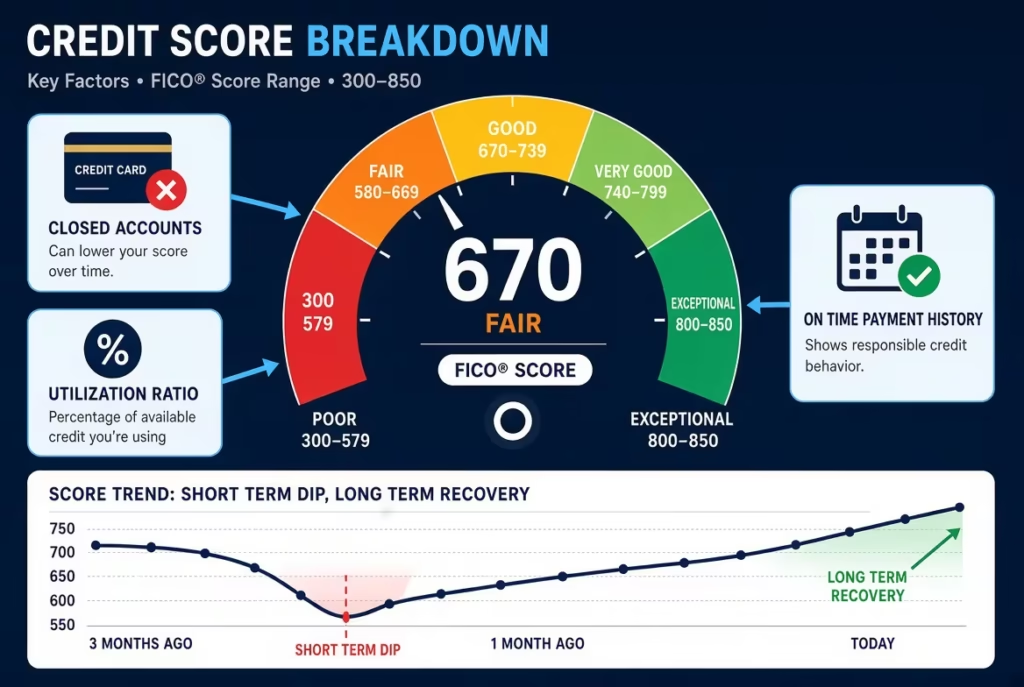
The net pattern for most people who finish a plan is a possible dip at the start, then meaningful improvement as balances fall and payments stack up. Your exact results will depend on your credit profile and whether you complete the plan.
📌 Did You Know: The fear of a credit score hit keeps many people from ever making the call. But the initial counseling session has no credit impact at all. You can get a full review of your options without touching your score.
What Credit Counseling Costs
Fee confusion is one of the biggest reasons people hesitate. So here are the numbers, separated by what’s free and what’s not.
Free in most cases:
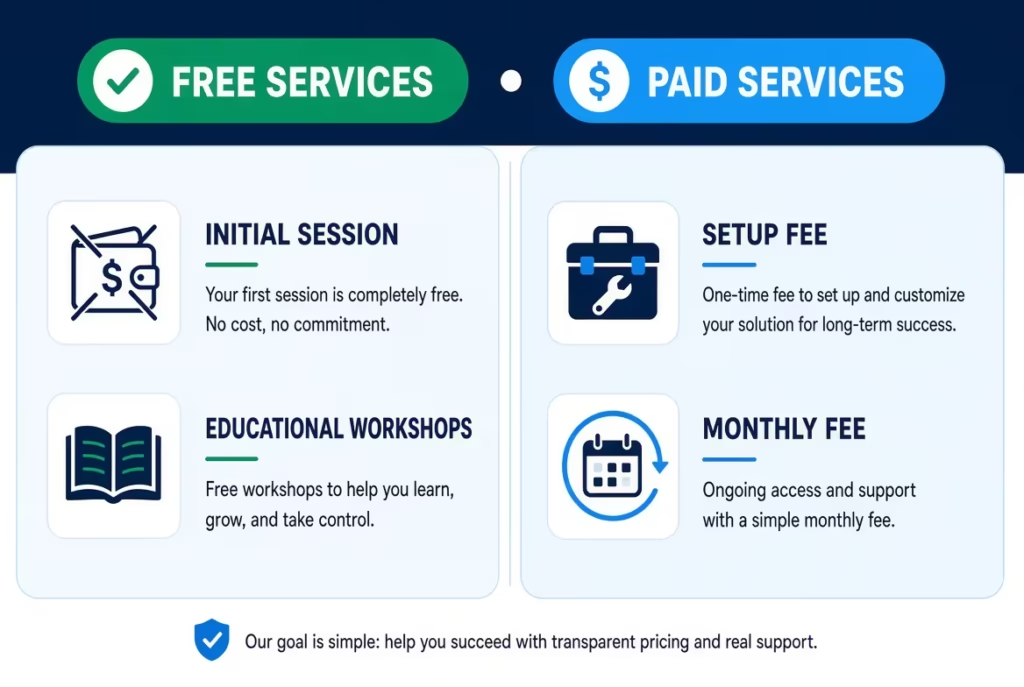
- The initial counseling session. At NFCC-certified nonprofits, the first session is free, and you may qualify for additional free resources or fee waivers.
- Educational materials and workshops. Usually free or very low cost.
Costs money:
- DMP setup fee. The NFCC cites a setup fee of $75 or less at member agencies.
- DMP monthly fee. Typically between $25 and $50, depending on your state and agency.
- Bankruptcy-required courses. These are separate services with their own fees, often $50 or less per course.
Hardship help. Legitimate nonprofit agencies reduce or waive fees when you can’t afford them. If money is that tight, say so upfront and ask.
Red flag. Any agency that demands a big payment before doing any work for you is not operating the way a legitimate nonprofit does. Walk away.
You should always ask about the total cost before signing any agreements. A reputable counselor will explain every charge clearly. Be wary of hidden fees or vague explanations. If an agency cannot explain their pricing in simple terms, look elsewhere for help. Your financial stability is the goal, so make sure the service is worth the price.
How to Verify a Legitimate Credit Counseling Agency
Scam operators know that people in debt are searching for help. Some pose as nonprofits. Before you hand over your financial details, run this checklist:
- Check NFCC membership. Search the agency’s name through the NFCC or ask if it’s a member in good standing.
- Check FCAA membership. The FCAA maintains a member directory you can search directly.
- Confirm accreditation. Look for Council on Accreditation status, which requires annual audits and certified counselors.
- Confirm 501(c)(3) status. A real nonprofit can show you its tax-exempt status. You can also verify it through the IRS.
- Ask about fees before you commit. Legitimate agencies explain all fees upfront, in writing.
- Watch for pressure tactics. Be wary of anyone who contacts you out of the blue, guarantees to “erase” your debt, or refuses to explain costs.
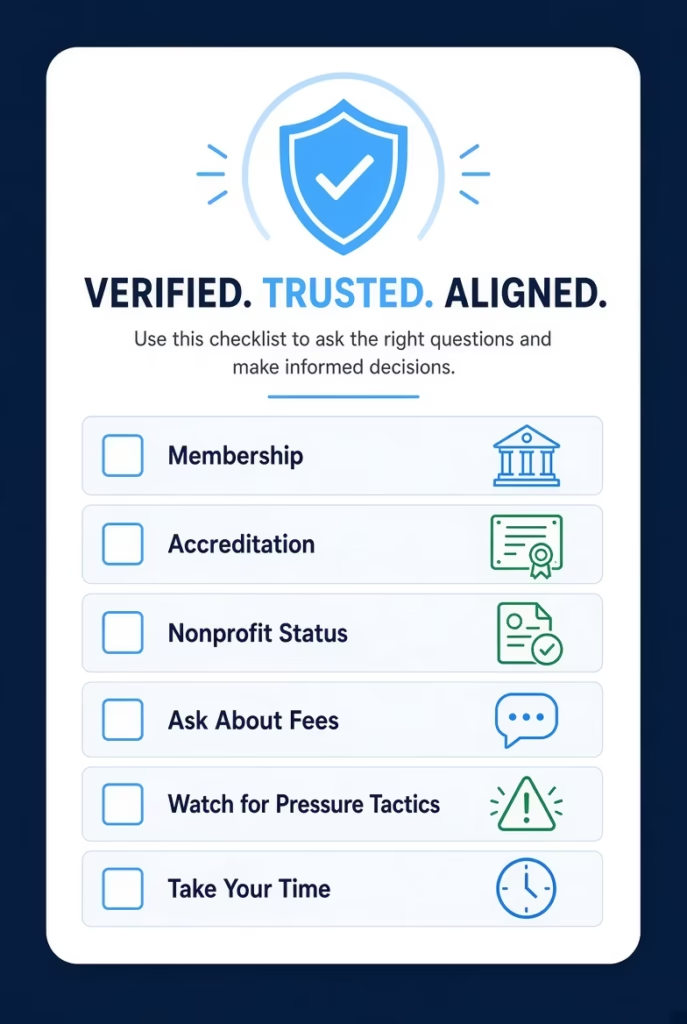
The FTC’s guidance on getting out of debt backs up these warning signs and is worth a read before you sign anything.
💡 Pro Tip: A five-minute verification check can save you thousands of dollars. Search the agency’s name plus “complaints” or “lawsuit” as a final gut check before your first call.
Is Credit Counseling a Good Idea for Your Situation
Whether this is worth your time depends on your debt type and how deep the hole is. Here’s a practical way to self-assess.
Credit counseling is likely a good fit if:
- Most of your debt is on credit cards or other unsecured accounts
- Your income can cover a reduced monthly payment
- You want to avoid bankruptcy
- You want structure and accountability without taking out a new loan
It may not be the right tool if:
- Your debt is mostly secured, like a mortgage or auto loan in trouble
- Your debt is so large that even reduced payments aren’t workable (in that case, talk to a bankruptcy attorney)
- Your credit is still strong, and your debt is small enough to manage on your own with a tighter budget
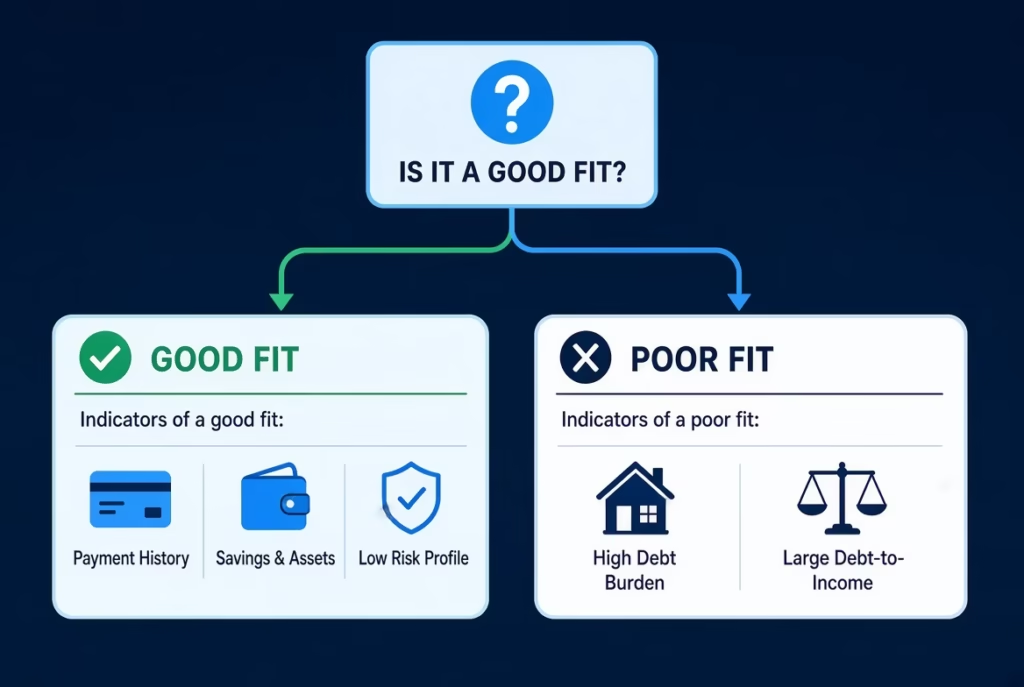
Even if you never enroll in a DMP, a session can still help. Counselors offer budgeting guidance, financial education, and referrals to other programs. That alone can be worth the free hour.
Just keep expectations realistic. Counseling is not debt forgiveness. It’s a way to organize, reduce costs, and pay off what you owe on better terms.
Before you reach out, gather all your financial paperwork. Have your recent credit card statements and loan documents ready to review. Be prepared to talk openly about your spending habits and income. The counselor needs an honest picture of your situation to give the best advice. Once you know your options, you can decide on the best path forward.
Bankruptcy-Required Credit Counseling (A Separate Legal Requirement)
Some people land on this term for a very different reason. If you’re filing for bankruptcy, credit counseling isn’t optional. It’s the law.
Under the Bankruptcy Abuse Prevention and Consumer Protection Act of 2005, anyone filing Chapter 7 or Chapter 13 must complete two separate educational steps:
- Pre-filing credit counseling, completed before you file
- Post-filing debtor education, completed after you file
These are two different courses. Don’t confuse them. According to the U.S. Courts, only providers approved by the U.S. Trustee Program can issue the certificates the court requires. Any NFCC agency will do. The provider must be on the Department of Justice’s approved list.
Timing matters too. The pre-filing session must happen within 180 days before you file, and the certificate gets filed with your bankruptcy petition. The session reviews your income, debts, and possible alternatives to bankruptcy. You are not required to follow the counselor’s recommendations.
Skip this step, and the consequences are serious. Your case can be dismissed.
How Long Is the Credit Counseling Course
The pre-filing session is short. The U.S. Trustee Program’s FAQ says a typical session runs about 60 minutes, though some run a bit longer.
The post-filing debtor education course must last at least two hours, per the program’s debtor education requirements. Both courses can be completed online, by phone, or in person.
How Long Is a Credit Counseling Certificate Good For
The pre-filing certificate is valid for 180 days from the day you complete the session. File within that window. If it expires, you’ll need to retake the course and pay the fee again.
The debtor education certificate works on a different clock. It’s tied to your case timeline and must be filed before the court will grant your discharge. Your attorney or the court clerk can confirm the exact deadline for your chapter and district.
You might worry about what these courses will cost. Fees vary depending on the provider you choose. However, companies must provide services even if you cannot afford the price. You can request a fee waiver if your income is low enough. Ask the counselor about this option when you sign up.
Getting Started With Credit Counseling
If you’ve made it this far, the next step is simple and low-risk.
Find a legitimate agency. Start with the member directories at the NFCC or the FCAA. Both list vetted nonprofit agencies.
Prep a little before the call. You don’t need perfect records, but it helps to have your income figures, a list of your debts with balances and rates, and a rough sense of your monthly expenses.
Know what happens after. You’ll leave the session with one of three things: a written action plan, a debt management plan proposal, or a referral to another resource.
Remember the ground rule. Nothing is automatic. You can take the plan, think about it, or walk away. The first session costs you nothing but an hour of your time, and it doesn’t touch your credit score.
Frequently Asked Questions (FAQs)
Can credit counseling hurt my credit score?
The counseling session itself has no credit score impact at all. Enrolling in a debt management plan can cause a short-term dip from closed accounts, but on-time payments typically rebuild your score over the life of the plan.
Is credit counseling really worth it?
It’s worth it if most of your debt is on credit cards and your income can cover a reduced monthly payment. Even without enrolling in a plan, the free session gives you budgeting guidance and a clear picture of your options.
Is it better to do credit counseling or debt consolidation?
Credit counseling works through a nonprofit agency that negotiates lower rates on your existing debt, while debt consolidation is a new loan you use to pay off your cards. Consolidation typically requires good enough credit to qualify for a low interest rate, which not everyone in debt has.
Do credit counselors charge a fee?
The first counseling session is typically free at nonprofit agencies. If you enroll in a debt management plan, expect a setup fee of $75 or less and a monthly fee between $25 and $50.
Can you actually get credit card debt forgiven?
No, a debt management plan requires you to repay the full amount you owe. The plan only restructures your payments with lower interest rates; it doesn’t erase or reduce your balance.
What is the downside of debt consolidation?
Debt consolidation is a loan, not advice, so you need decent credit to qualify for a rate low enough to make it worthwhile. Unlike nonprofit credit counseling, there’s no built-in budget review or ongoing support included.
What happens if I miss a payment on a debt management plan?
A missed payment can undo the progress the plan is meant to build, since on-time payments are what improve your payment history score. It can also risk your standing with creditors who agreed to reduced rates as part of the plan.
Can I still use my credit cards while on a debt management plan?
No, creditors typically require you to close any credit cards enrolled in the plan. This is one reason your credit utilization can temporarily rise when you first enroll.
Wrapping Up
Credit counseling is a straightforward service: a certified counselor reviews your finances and helps you build a plan. The first session is typically free at nonprofit agencies; it won’t hurt your credit score, and it locks you into nothing.
Many readers with credit card debt can benefit from lower rates and a single payment. A good first step is to have a free session at an NFCC or FCAA member agency.
Know someone weighing their debt options right now? Share this guide with them. One clear explanation could save them from a costly mistake.