
You bought something with your credit card, and now it’s broken, stolen, or missing. Maybe you’re about to spend a lot of money and want to know if your card has your back. Credit card purchase protection sounds great, but the fine print is confusing.
Here’s the short answer: purchase protection is a free benefit on many credit cards that can pay you back if an eligible purchase is damaged or stolen, usually within 90 to 120 days of the purchase date.
Below, you’ll learn how to check if your card has it, what’s covered, what the limits are, and exactly how to file a claim that gets approved.
At a Glance
This guide explains how credit card purchase protection works, including what’s covered and excluded, coverage windows and dollar caps, the claim filing process, and common reasons claims get denied.
Core Facts:
- Purchase protection reimburses eligible items damaged or stolen after a card purchase, typically within 90 to 120 days of the purchase date, with coverage activating automatically and no enrollment required.
- Per-item claim caps commonly range from about $500 to $10,000 depending on the card, with annual account caps typically between $25,000 and $50,000.
- Commonly excluded items include motorized vehicles, perishable goods, antiques or used items, services, tickets, gift cards, and losses from normal wear and tear or unattended items.
- Purchase protection is usually secondary coverage, meaning other applicable insurance, like renters or homeowners policies, typically must be filed first before the card benefit pays.
- Filing a claim generally requires the original receipt, the credit card statement showing the charge, a police report for theft, and photos for damage, with decisions typically made in 5 to 15 business days.
- Common denial reasons include missing documentation, excluded item categories, expired claim windows, missing police reports, and items left unattended or lost with no evidence of a wrongful act.
Best for:
- Cardholders deciding whether to rely on purchase protection before making a large purchase.
- Anyone with a recently damaged, stolen, or lost item who wants to know if a claim is possible.
- Readers confused about how purchase protection differs from extended warranty, return protection, or price protection.
What Credit Card Purchase Protection Is and How It Works
Credit card purchase protection helps you get reimbursed if an eligible item you bought is damaged, stolen, or sometimes lost. Think of it as short-term insurance that comes free with your card.
Here’s how the mechanism works. Coverage turns on automatically the moment you charge an eligible purchase to the card. There’s no form to fill out and no enrollment step. If you pay for a $900 laptop with a card that has this benefit, that laptop is typically protected from the day you buy it.
A few things are worth knowing about how purchase protection works behind the scenes. The benefit functions like insurance, and it often is insurance in a legal sense. Many programs are backed by a real insurance company. Your card issuer may promote it as a card benefit, not an insurance policy. You never pay a separate premium for it.
It’s also different from the store’s own policies. A merchant’s return window covers you when you change your mind. A manufacturer’s warranty covers defects. Purchase protection helps when something goes wrong with an item after you buy it, even if the product itself wasn’t at fault.
How to Check if Your Card Has This Benefit
Not every credit card includes purchase protection, and coverage varies from card to card. Two cards from the same bank can have different terms. So before you rely on this benefit, confirm that your specific card has it.
You have three easy ways to check:
- Find your card’s “guide to benefits.” This document lists every protection your card carries. Most issuers post it on their website or inside your online account portal. Chase, for example, publishes benefit guides for each card that spell out coverage windows and dollar caps in plain terms.
- Call the number on the back of your card. Ask the representative whether your card includes purchase protection and request a copy of the current benefits guide.
- Check your card network’s benefit page. Networks like Visa and Mastercard provide some protections on their own, apart from what your issuer adds. American Express acts as both network and issuer, and it publishes its full purchase protection terms online.
One caution: a card network name on your card doesn’t guarantee the benefit. Visa Purchase Protection and Mastercard Purchase Assurance are available, but they may not apply to your card. It depends on the specific product your issuer set up. Always verify against your own card’s documents.
What’s Covered and What’s Excluded
Coverage details vary by issuer, but the pattern across major cards is fairly consistent. Knowing both sides of the list helps you judge your situation in minutes instead of filing a claim that was never going to pay.
What’s Typically Covered
Most purchase protection policies cover everyday tangible goods bought new with the card. Common eligible categories include:
- Electronics, such as phones, laptops, tablets, and TVs
- Clothing, shoes, and accessories
- Home and garden goods, furniture, and small appliances
- Personal care items and most other physical retail products
Gifts usually count too. If you bought an item with your card and gave it to someone else, many policies still treat it as an eligible card purchase.
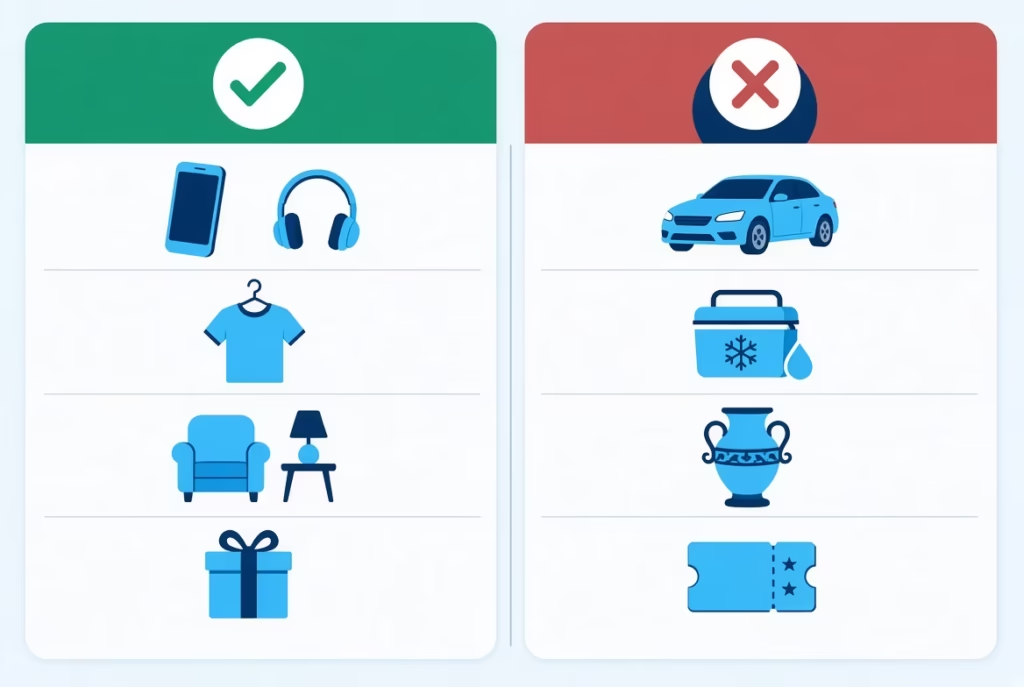
As for what kinds of events qualify, accidental damage and theft are the two causes of loss that nearly every policy covers. Some cards add limited coverage for lost items, but that’s less common and comes with stricter rules.
What’s Typically Excluded
The exclusion list is where most claim disappointment happens. Categories commonly left out include:
- Motorized vehicles and vehicle parts, including car accessories
- Perishable or consumable goods, like food, wine, and cosmetics once used
- Antiques, collectibles, one-of-a-kind items, and used or pre-owned goods
- Services, event tickets, and gift cards
- Damage from normal wear and tear
- Items that vanished with no evidence of theft or a wrongful act, often called “mysterious disappearance”
- Losses tied to your own illegal activity, fraud, or clear negligence, such as leaving a bag unattended in a public place
- Weather-related damage, under some policies
The practical takeaway: a stolen phone is usually a strong claim. A phone you simply can’t find is usually not. When in doubt, check the exclusions section of your card’s benefits guide before you spend time on a claim.
📌 Did You Know: “Mysterious disappearance” is one of the most common surprises in purchase protection terms. If there’s no evidence of theft, like a break-in or a police report, many policies won’t pay, even if you’re certain the item was taken.
Coverage Limits and Timing
Two numbers decide whether a claim is even possible: how many days you have, and how many dollars the policy will pay. Both vary by card tier, so look them up for your specific card.
Claim Window
Most cards protect purchases for 90 to 120 days from the purchase date. Chase cards, for instance, cover eligible purchases for 120 days against damage or theft. American Express cards generally cover 90 days. Some basic cards run as short as 60 days.
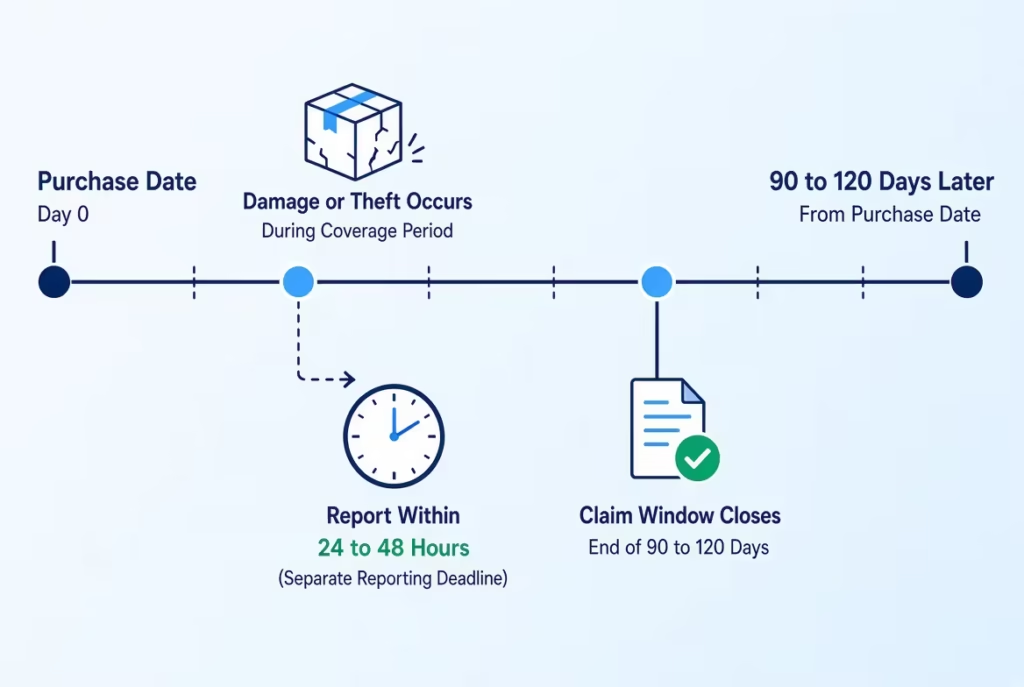
Two timing details trip people up:
- The clock starts on the purchase date, not the incident date. If your window is 90 days and the item breaks on day 95, the claim is outside coverage even by a few days.
- The incident itself may have a separate, shorter reporting deadline. Some policies require you to report a theft to the benefit administrator quickly, sometimes within days of the event, even if you’re still inside the 90 or 120-day window. Filing a police report promptly matters here too.
Per-Item and Annual Caps
Purchase protection won’t pay unlimited amounts. The typical structure includes two caps:
- A per-item or per-claim limit. Entry-level cards often cap claims around $500 per item, while premium cards can go much higher. The Amex Platinum Card, for example, lists up to $10,000 per covered purchase.
- An annual account cap. Many policies limit total claims to a yearly maximum, commonly in the $25,000 to $50,000 range depending on the card.
Two more rules shape what you actually receive. Reimbursement is limited to the amount you charged to the card, not the item’s current replacement cost. And shipping and handling charges are often excluded from the payout.
Primary vs. Secondary Coverage: What This Means for Your Claim
This is the rule that quietly derails many claims. Purchase protection is usually secondary coverage. That means it pays out only after any other insurance you have has been applied.
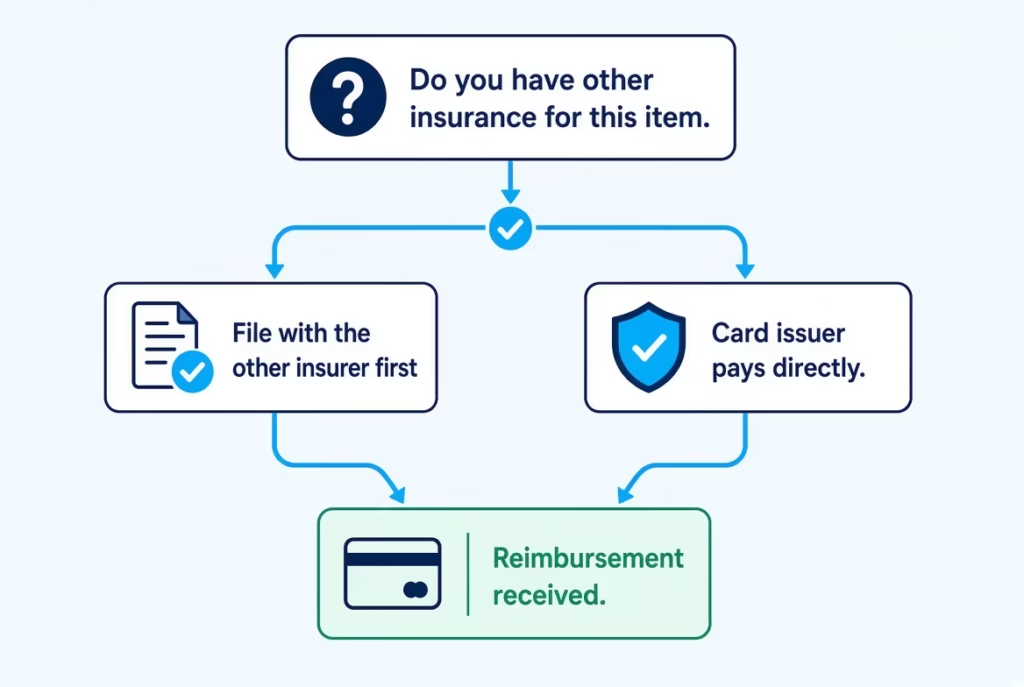
If a stolen item is covered by your renters, homeowners, or auto policy, the card issuer can ask you to file a claim with that insurer first. You may need to share the claim outcome. This includes your deductible and what the other policy paid. Then, the card benefit will cover the remaining amount.
If you have no other insurance that applies, purchase protection can act as your primary coverage and pay directly.
Skipping this sequencing step can get a claim delayed or denied on a technicality, even when the loss itself was legitimate. Before you file, ask yourself one question: does any other policy I hold cover this item? If yes, start there.
How Purchase Protection Differs From Other Card Benefits
Credit cards bundle several protection benefits with similar names, and they solve different problems. Filing the wrong type of claim wastes time. This quick comparison draws the boundaries.
| Benefit | Problem it solves | Typical trigger |
|---|---|---|
| Purchase protection | Item damaged or stolen soon after purchase | A covered event within 90 to 120 days |
| Extended warranty | Product defect after the manufacturer’s warranty ends | A breakdown the original warranty would have covered |
| Return protection | Store won’t accept your return | Merchant refusal within their return window |
| Price protection | Price dropped after you bought | Rarely available today |
Purchase Protection vs. Extended Warranty
These two are confused most often. An extended warranty benefit lengthens the manufacturer’s original warranty, typically by about an extra year. It covers defects in how the product was made or how it fails under normal use.
Purchase protection covers accidents and theft, not defects. If your TV stops working because of a faulty part 14 months in, that’s an extended warranty claim. If your TV falls off the wall mount two months after you bought it, that’s a purchase protection claim. Both benefits can apply to the same item at different times for different problems.
Purchase Protection vs. Return Protection
Return protection solves a “the store won’t take it back” problem. If a retailer refuses your return inside its own return window, this benefit may reimburse you instead.
Two things define it. You must show proof that you tried to return the item to the merchant first. And it’s offered less often today than purchase protection, so don’t assume your card has it.
Purchase Protection vs. Price Protection
Price protection refunded the difference if an item’s price dropped shortly after you bought it. It’s the benefit people still ask about, but it has essentially disappeared. Visa and Mastercard cut network-level price protection around 2018, and most issuers dropped theirs in the years that followed.
As of 2026, virtually no major consumer card still offers it. If you’re counting on a price-drop refund, check your benefits guide first. You almost certainly don’t have this coverage anymore.
Extended Warranty is the final benefit to consider. It functions as an extension of the manufacturer’s original guarantee. If your purchase breaks after the standard warranty expires, this perk may cover the repair costs or provide a refund. Always check your specific card’s terms, as limitations often apply to the item type and the total repair value.
How to File a Purchase Protection Claim
The exact process varies by issuer, but the general sequence is consistent across cards. Acting fast matters, because both the coverage window and the incident reporting deadline are working against you.
Follow these steps:
- Find the claims contact. Look for the benefit administrator’s phone number or claims portal on your issuer’s benefits page, or call the number on the back of your card.
- Report the incident quickly. Notify the benefit administrator within the required reporting window. For theft, file a police report right away, since many policies expect one within 24 to 48 hours of the incident.
- Complete the claim form. You’ll do this online or by phone. Describe the item, the purchase, and exactly what happened.
- Submit your documentation. Send in the proof listed below. Many issuers set a deadline for returning documents.
- Wait for the decision. Respond quickly if the administrator asks for anything extra.
Documentation You’ll Need
Missing paperwork is the leading cause of avoidable denials. Gather these items before you file:
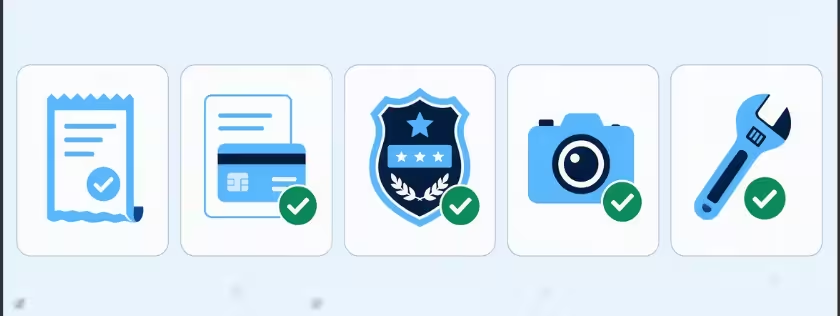
- The original purchase receipt for the item
- The credit card statement showing the charge
- For theft: a police report, filed promptly after the incident
- For damage: clear photos of the damaged item and, where relevant, the scene
- Repair estimates, if the item could be fixed rather than replaced
One habit that saves claims: don’t throw the damaged item away. The issuer may ask you to ship it in for inspection before paying out.
⚠️ Mistake to Avoid: Tossing a broken item before the claim closes. If the benefit administrator can’t inspect it, a valid claim can be denied over something completely preventable.
Timeline and How Reimbursement Is Paid
Once your documentation is complete, decisions usually come in about 5 to 15 business days. However, timing can vary by issuer and the complexity of the claim. If the administrator requests more information, the clock stretches.
Approved claims are typically paid as a statement credit to your card account or as a check. The amount is capped at what you actually charged to the card. If you split a purchase between two payment methods, only the portion on the protected card is usually eligible.
Keep an eye on your email or post for any updates from the administrator. They will reach out if they need extra details to settle your request. Check your online banking or paper statements regularly once your claim is approved. You should see the credit arrive shortly after the final decision is made. Always keep copies of your claim paperwork until the money is safely in your account.
Common Reasons Purchase Protection Claims Get Denied
Most denials fall into a short list of causes. Some are fixable, and some are final. Knowing the difference saves you from chasing a lost cause or giving up on a claim you could still win.

- Missing or incomplete documentation. The most common reason, and the most preventable.
- The item is in an excluded category. Used goods, vehicles, perishables, and services are frequent examples.
- The claim came in after the window closed. Either the coverage period from the purchase date expired, or the incident reporting deadline passed.
- No police report for a theft claim. Without one, theft claims are often denied automatically.
- The item was left unattended. Losses from checked baggage or an unattended vehicle are commonly treated as negligence.
- No evidence of a wrongful act. A lost item with no sign of theft usually qualifies as mysterious disappearance, which most policies exclude.
What to Do if Your Claim Is Denied
A denial isn’t always the end. Take these steps before giving up:
- Call the issuer and ask for the specific denial reason. Get it in writing if you can.
- Ask whether you can resubmit missing documentation. Documentation gaps are often curable, and many administrators will reopen a claim if you supply the missing proof.
- Recognize the hard stops. Denials based on an excluded item category or an expired coverage window are generally final. Denials based on paperwork often aren’t.
Also keep one distinction in mind: purchase protection is separate from your legal right to dispute billing errors, such as charges for items you never received. That right comes from the Fair Credit Billing Act, a federal law with its own process. If your problem is a billing error rather than damage or theft, that’s the correct path.
Choosing Which Card to Use for a Big Purchase
If you carry several cards, the one you pick at checkout can decide whether a $2,000 purchase is protected at all. Not every card in your wallet has this benefit, and the ones that do vary widely in strength.
A simple decision process helps:
- Know which of your cards carry purchase protection. Check each card’s benefits guide once, and note it down.
- Match the card to the purchase size. For a purchase that would blow past a $500 per-item cap, look for a card with a higher limit before you charge it.
- Favor premium or rewards cards for big-ticket items. These cards more commonly include stronger protection than basic or secured cards, though you should verify rather than assume.
For small everyday purchases, pausing to compare cards usually isn’t worth the effort. For anything you’d genuinely struggle to replace, a two-minute check of your benefits guide before checkout is a reasonable habit.
💡 Pro Tip: Before making a big purchase, look up your card’s “guide to benefits” in your email or issuer portal. Check two numbers: the coverage window and the per-item cap. Those two figures tell you most of what you need to decide.
Protecting Your Ability to Claim Later
The best time to protect a claim is long before anything goes wrong. A few light habits keep your future options open:
- Save digital copies of receipts for any significant purchase. A photo or a forwarded email receipt works fine.
- Photograph major purchases when they’re new, and store the image somewhere searchable.
- Note the purchase date in a place you can find fast. The claim window runs from that date, and memory fades quickly.
- Keep a short list of which cards carry this benefit and what their limits are, so you’re not researching it in a stressful moment.
It doesn’t take much effort, but it tackles the three main claim killers: no receipt, no proof of the purchase date, and no knowledge of which card had the coverage.
Frequently Asked Questions (FAQs)
What is credit card purchase protection?
Credit card purchase protection is a free benefit that reimburses you if an eligible item bought with the card is damaged or stolen, usually within 90 to 120 days of purchase. Coverage activates automatically with no enrollment or extra cost.
How much do I need to spend to get purchase protection?
There’s no minimum spend requirement. Coverage applies to any eligible purchase charged to the card, whether it costs $20 or $2,000, as long as the item and event type qualify.
Do I need to register my card to get purchase protection?
No registration or sign-up is required. Purchase protection turns on automatically the moment you charge an eligible item to a card that carries the benefit.
What protection do I have if I pay by credit card?
You’re typically covered for accidental damage or theft on eligible items for 90 to 120 days after purchase, up to a per-item cap that can range from $500 to $10,000 depending on the card. Coverage usually applies after any other insurance you hold, like renters or homeowners.
How will I get a refund if I paid through a credit card?
Approved purchase protection claims are typically paid as a statement credit to your card account or as a check. The amount is capped at whatever you originally charged to the card, not the item’s current replacement cost.
How long do refunds take to come back to a credit card?
Once you’ve submitted complete documentation, most issuers decide within 5 to 15 business days. The timeline can stretch if the administrator requests additional proof before finalizing the claim.
Wrapping Up
Purchase protection can reimburse you when a card purchase is damaged or stolen, but only within a set window, up to set dollar caps, and usually after any other insurance you hold. The difference between a paid claim and a denied one often comes down to documentation and timing, both of which you control.
A practical approach is to check your card’s benefits guide today, before you need it, and start saving receipts for big purchases.
If this guide helped you understand credit card purchase protection, share it with a friend. They might be about to make a big purchase or dealing with a broken or stolen item.