
Applying for the wrong credit card costs you twice. You get denied, and the hard inquiry dings your score for nothing. It’s a frustrating spot to be in, especially when you’re trying to build credit for the first time or fix damage from the past. Understanding the real difference between a secured vs. unsecured credit card is the fastest way to avoid that trap.
Here’s the short answer: a secured card requires a refundable cash deposit and suits people with no credit or bad credit. In contrast, an unsecured card requires no deposit but demands an established credit history.
Below, you’ll get a full breakdown of how each card works, what it costs, how the deposit comes back to you, and a clear way to decide which one fits your situation right now.
Key Takeaways
This guide explains the difference between secured and unsecured credit cards, including deposit requirements, credit limit rules, approval eligibility, deposit refund timelines, and how to decide which card fits your credit situation.
Core Facts:
- A secured credit card requires a refundable cash deposit as collateral, while an unsecured credit card requires no deposit but demands an established credit history.
- On most secured cards, the deposit amount sets the starting credit limit, with typical deposits ranging from $200 to $2,500 depending on the issuer.
- Both card types report payment history, balances, and account status to Experian, Equifax, and TransUnion, so both build credit the same way when used responsibly.
- The average APR on credit card accounts assessed interest was 22.15% as of May 2026, and many secured cards carry APRs at or above that average.
- Most issuers review secured accounts for graduation to unsecured status after 6 to 18 months of responsible use, and the deposit is returned at that point.
- If a secured account closes due to non-payment, the issuer applies the deposit to the balance owed, and any remaining balance is still the cardholder’s responsibility.
Best for:
- People with no credit history, limited credit, or credit damaged by missed payments, a charge-off, or bankruptcy who need a realistic path to approval.
- Readers with established credit history, a fair or better score, and stable verifiable income who are deciding whether a deposit is even necessary.
- Anyone weighing utilization risk, deposit refund timing, or graduation eligibility before applying for either card type.
What Is a Secured Credit Card
A secured credit card is a real credit card backed by a cash deposit you pay upfront. That deposit acts as collateral. If you don’t pay your bill, the card issuer keeps the deposit to cover what you owe. This safety net is exactly why issuers approve people other cards won’t touch.
Here’s what matters most: the deposit is not a fee. It’s your money, held in a linked account, and it’s refundable. You get it back when you close the account in good standing or upgrade to an unsecured card later.
Secured cards are built for three groups of people:
- Anyone with no credit history at all, like recent graduates or newcomers to the U.S.
- Anyone with limited credit who hasn’t used credit long enough to have a strong profile
- Anyone rebuilding credit after missed payments, a charge-off, or bankruptcy
One common mix-up is worth clearing up right away. A secured card is not a prepaid card. A prepaid card holds your own money and doesn’t report to the credit bureaus, so it can’t help your credit score. A secured card is true revolving credit. It gives you a credit limit, sends you a monthly statement, and reports your activity. Used well, it’s one of the simplest tools to build credit from scratch.
What Is an Unsecured Credit Card
An unsecured credit card is what most people picture when they hear the words “credit card.” No deposit is required. The issuer approves you based on your creditworthiness, which means your credit history, your credit score, and your income.
Because there’s no collateral protecting the issuer, the bar is higher. Most unsecured cards want an established credit history and steady, verifiable income. The best ones, the cards with big rewards and low rates, are saved for people with good or excellent credit.
Unsecured cards are revolving credit too. You borrow up to a set limit, pay it back, and borrow again. The key difference is trust. The issuer is lending to you on the strength of your track record alone, with no deposit as a backup. If your track record is thin or damaged, that trust usually isn’t there yet, and that’s when the secured route makes more sense.
Key Differences Between Secured and Unsecured Cards
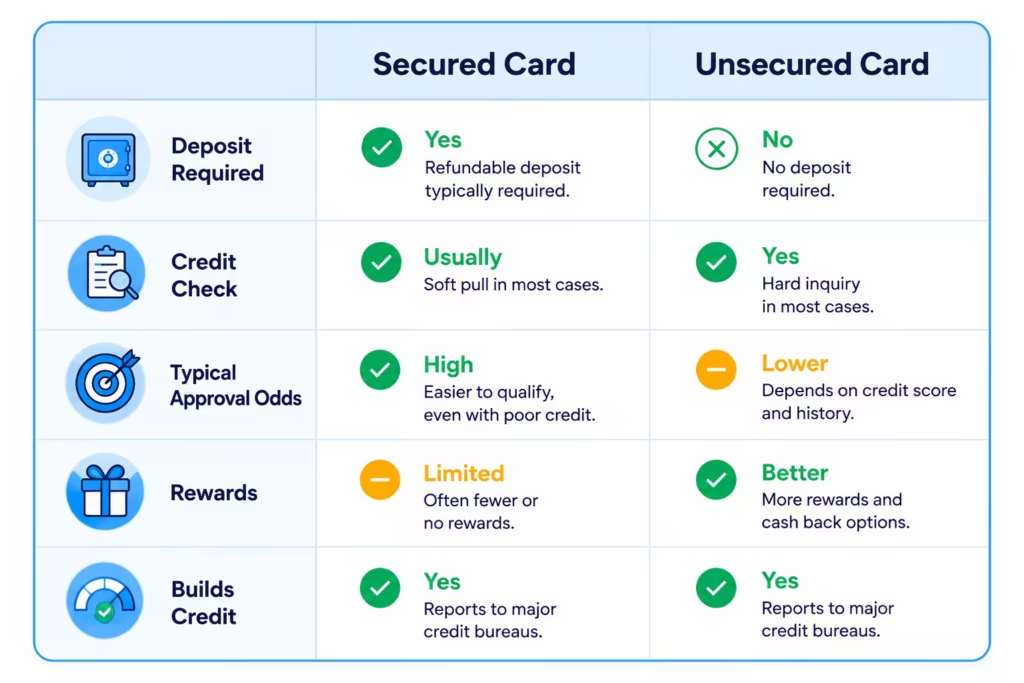
The core distinction comes down to one thing: the security deposit. Secured cards require it as collateral. Unsecured cards don’t. Everything else flows from that single fact.
The deposit changes who gets approved, how your credit limit is set, and what happens to your money if things go wrong. It does not change how the card works when you swipe it. Let’s break both points down.
How the Deposit Sets Your Credit Limit
On most secured cards, your deposit equals your starting credit limit. Put down $200, and your limit is $200. Put down $500, and your limit is $500. Typical deposits run from $200 to $2,500, depending on the card.
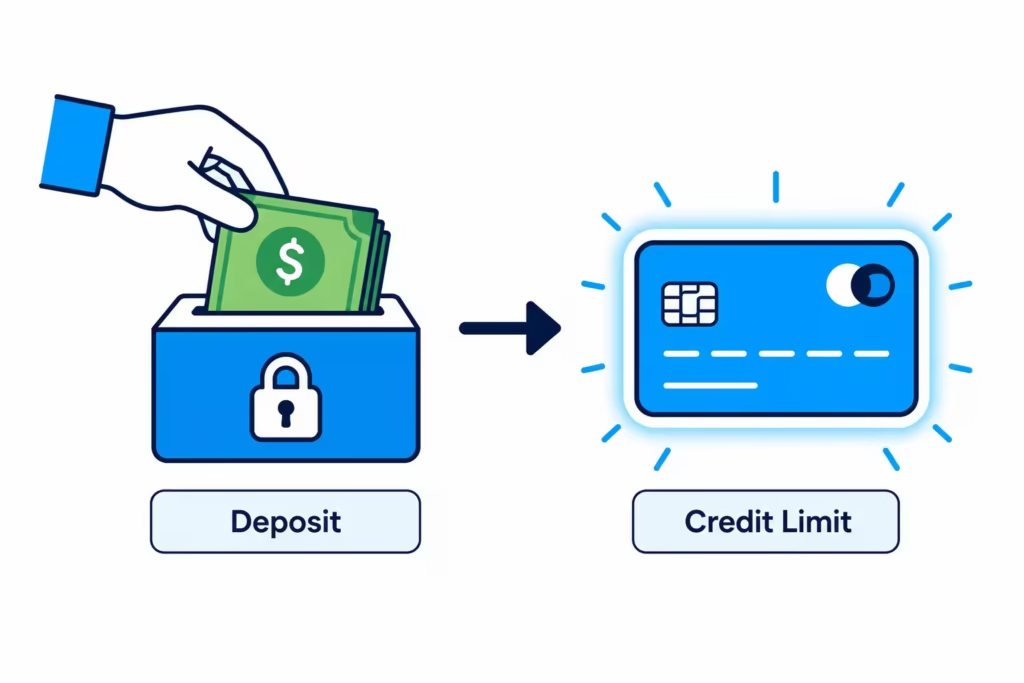
Some issuers bend this rule in your favor. With the Capital One Platinum Secured card, a deposit of $49, $99, or $200 can open a credit line of at least $200, so your limit can actually be higher than your deposit. Most cards also let you deposit more than the minimum if you want more spending power from day one.
There’s one more wrinkle. After months of on-time payments, some issuers raise your limit without asking for more deposit money. Think of it as a small reward for proving you can handle credit.
⚠️ Mistake to Avoid: Don’t assume your secured card limit works like a normal starter limit. If you deposit $200, your spending power is capped at $200. Maxing it out, even on small purchases, can spike your credit utilization and slow your score growth.
Do Secured and Unsecured Cards Work the Same Day to Day
Yes. Completely.
Both cards have a 16-digit number, a chip, and an expiration date. Both work anywhere the card network is accepted, online and in stores. Both send a monthly statement with a due date and a minimum payment. Both let you carry a balance as revolving credit, and both report your activity to the credit bureaus.
No cashier, hotel clerk, or rental car agent can tell the difference. Nothing on the card itself says “secured.” The only real differences sit behind the scenes: how you got approved and where your deposit is parked. If you’ve been worried that a secured card would feel like a downgrade in daily life, it won’t.
Eligibility: Which Card You’ll Likely Qualify For
This is where the decision gets practical, because approval odds should drive your choice more than anything else.
Secured cards are designed for people the rest of the market turns away. The deposit lowers the issuer’s risk, so the credit check is light or, with some cards, skipped entirely. If you have no credit history, a thin file, or a score in the 500s, a secured card is very likely within reach.
Unsecured cards expect more. Issuers look for an established credit history, a fair or better score, and income they can verify. Apply without those, and the most common result is a denial plus a hard inquiry that trims your score a few points.
Picture Michael, a warehouse supervisor in Ohio with a 578 score after an old charge-off. He applied for two unsecured rewards cards in one month and got denied both times. Each denial added a hard inquiry, and his score slipped to 561. A single secured card application would have saved him six months of repair work.
One honest caveat: even secured cards can say no. An active bankruptcy that hasn’t been discharged, no verifiable income at all, or identity verification problems can block approval. It’s rare, but it happens. Checking for pre-approval offers before you apply is the safest way to test your odds without risking a hard inquiry.
Do Secured Credit Cards Build Credit the Same Way as Unsecured Cards
Yes. This is the myth that keeps too many people on the sidelines, and it’s flatly wrong.
Secured cards report your payment history, your balances, and your account status to all three major credit bureaus: Experian, Equifax, and TransUnion. That’s the same reporting an unsecured card does. Your FICO score can’t tell the two card types apart. It only sees how you behave.
That means the result depends on you, not the card. Pay on time, every time. Keep your balance low. Let the account age. Do those three things, and a secured card builds credit exactly as well as any card on the market.
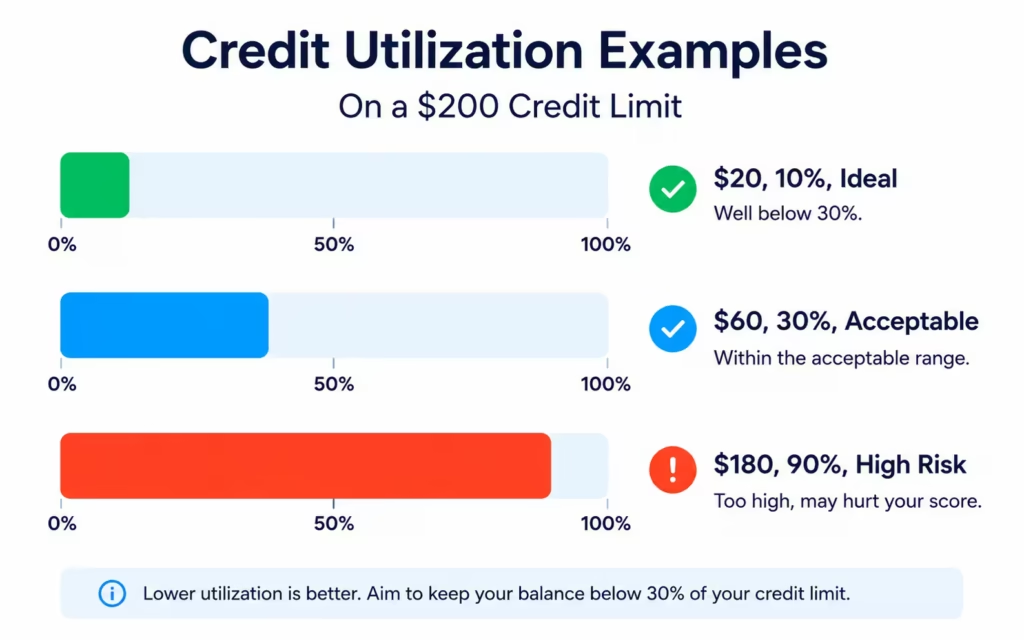
There’s one detail that matters more on a secured card: credit utilization. That’s the share of your limit you’re using, and scoring models watch it closely. Secured cards have low limits, so it’s easy to run a high ratio by accident.
Spending $180 on a $200 limit means 90% utilization, even though $180 isn’t much money. A good rule is to keep your balance under 30% of the limit, and under 10% is even better. On a $200 limit, that’s $20 to $60. Small, planned purchases and quick payments keep that number where it should be.
Cost Comparison: APR, Fees, and Rewards
Many people assume secured cards must be cheaper because they offer fewer perks. The reality is messier, and it pays to know the numbers before you apply.
Interest rates. Secured cards often carry APRs at or above the market average, because they’re priced for higher-risk borrowers. The latest Federal Reserve data puts the average APR on credit card accounts assessed interest at 22.15% as of May 2026. Plenty of secured cards sit right around that mark or higher. The cleanest move with either card type is paying in full each month, which makes the APR irrelevant.
Annual fees. Some secured cards charge no annual fee at all. Others charge $25 to $49 or more. Meanwhile, plenty of basic unsecured cards are fee-free too. The lesson is simple: never assume. Check the fee before you apply.
Rewards. This is where unsecured cards usually win. Cash back, points, and travel perks are common on unsecured products, while most secured cards offer nothing. A few secured cards do pay cash back, but they’re the exception.
The deposit. Remember, the deposit is refundable collateral, not a cost. A $200 deposit on a fee-free secured card costs you nothing in the long run if you pay on time. Compare that to a $95 annual fee on an unsecured card, which is gone forever. “Cheaper” depends on the specific card, not the category.
How and When You Get Your Deposit Back
The deposit lifecycle has three stages, and knowing them takes the fear out of committing your cash.
Stage 1: The hold. When you’re approved, you fund the deposit, usually within a set window of about 35 days after approval. The issuer parks that money in a linked account. It sits there as collateral while you use the card. You can’t spend it, but it’s still yours.
Stage 2: The refund trigger. Your deposit comes back in one of two situations. The first is graduation, where the issuer upgrades you to an unsecured card and releases the deposit. The second is closing the account. If you close it yourself, pay the balance down to zero first. The issuer then returns your deposit in full.
Stage 3: The timeline. Refund speed varies by issuer. Many send the money within 7 to 10 business days after the account closes or converts. Others take up to two billing cycles plus 10 days, because they wait to confirm no stray charges post to the closed account. Ask your issuer for their exact policy so you’re not guessing.
There’s one scenario where you don’t get it back, and it’s important. If the account is closed for non-payment, the issuer applies your deposit to the balance you owe. If you owe more than the deposit covers, you still owe the difference.
The deposit protects the issuer, not your payment record. Skipping payments on a secured card hurts your credit just as much as it would on any other card.
Graduating From a Secured Card to an Unsecured Card
A secured card is a temporary tool, not a life sentence. Most issuers review accounts for graduation after 6 to 18 months of responsible use.
The process works in one of two ways. Some issuers run automatic reviews and upgrade you without being asked. Discover reviews secured accounts after about seven months.
Cardholders who qualify can get their deposit back. They keep the same card, which becomes unsecured. Other issuers wait for you to request a review, so it’s worth calling and asking around the six-month mark.
What earns graduation is no mystery. Pay every bill on time. Stay well within your limit. Keep the account active with regular small purchases. Do that consistently, and most issuers will move you up.
Two details make graduation even better. First, the upgrade usually involves no hard inquiry, since the issuer already knows you. Your score takes no hit. Second, your deposit comes back at graduation, either as a check, a bank transfer, or a statement credit. And because the account itself stays open, its age keeps working in your favor. That’s a quiet but real boost to your credit history.
📌 Did You Know: Graduating a secured card keeps your original account open and aging. Closing a card and opening a brand-new unsecured one instead resets that clock and can temporarily lower your score.
Which Card Should You Choose Based on Your Situation
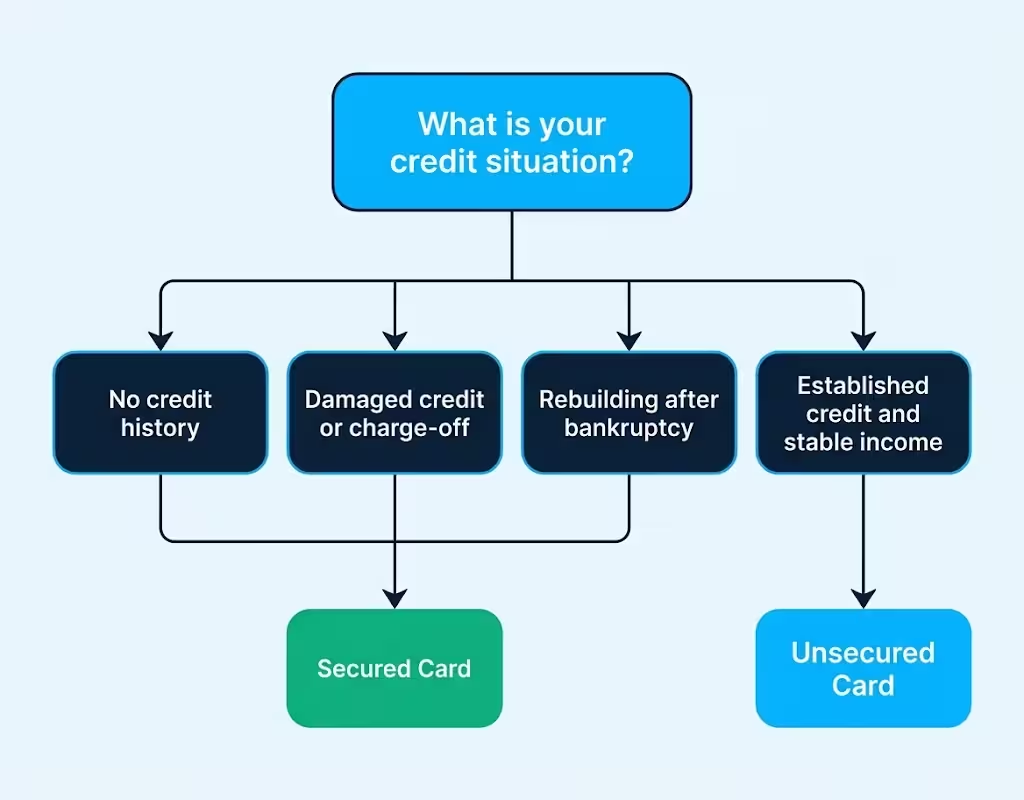
Here’s the decision, mapped to real starting points.
You have no credit history at all. A secured card is generally the practical starting point. Approval is likely. The deposit is refundable. Plus, each on-time payment helps build your file for future apartments, car loans, and better credit cards.
You have damaged credit or a past charge-off. A secured card is your rebuild tool. Unsecured approvals at this stage are unlikely, and each denial adds a hard inquiry. Take the sure thing, use it well for 6 to 12 months, and let graduation come to you.
You’re rebuilding after bankruptcy. Once the bankruptcy is discharged, a secured card is usually the first door that opens. Some issuers want the discharge finalized before approving anyone, so check the card’s terms first.
You already have decent credit and stable income. Skip the deposit. An unsecured card is likely within reach and usually delivers better value: lower fees, real rewards, and higher limits.
Secured Card vs. Becoming an Authorized User
There’s a third path worth knowing. A family member or partner can add you as an authorized user on their card. You get the benefit of their account history on your credit report, and no deposit is needed.
The catch is control. Your credit now rides on someone else’s behavior. If the primary cardholder pays late or runs up the balance, your score absorbs the damage too. It also doesn’t build independent credit history the same way, since the account isn’t truly yours. Some lenders weigh authorized user accounts less heavily when you apply for your own credit later.
The two paths aren’t rivals. If someone with a spotless payment record offers to add you, say yes, and open a secured card at the same time. One gives you borrowed history, the other gives you your own.
Signs You’re Ready to Skip Secured and Apply for Unsecured
Some readers don’t need a deposit-backed card at all. You’re probably ready to apply directly for an unsecured card if these describe you:
- A credit history of a year or more with on-time payments
- A credit score in the fair range or better
- Stable income you can document on an application
- Pre-approved offers showing up in your mail or online banking
Pre-approval checks use a soft inquiry, so testing your odds costs nothing. If solid pre-approved offers appear, that unsecured card is likely yours for the taking.
Frequently Asked Questions (FAQs)
Is it better to have a secured credit card or unsecured?
It depends on your credit history, not personal preference. With no credit or bad credit, a secured card is the practical choice since approval is likely. With established credit and stable income, an unsecured card usually offers better value through lower fees and real rewards.
What credit score do I need for an unsecured credit card?
Issuers generally want a fair or better credit score along with an established credit history and verifiable income. A credit history of a year or more with on-time payments is a strong sign you’re ready to apply directly for an unsecured card.
Who should use a secured credit card?
Secured cards suit three groups: people with no credit history like recent graduates, people with a thin credit file, and people rebuilding after missed payments, a charge-off, or bankruptcy. The refundable deposit lowers the issuer’s risk, so approval odds are much higher for these situations.
How do I use a secured credit card with $200 limit?
Keep your balance under 30% of the limit, meaning $60 or less on a $200 card, with under 10% being even better. A good strategy is charging one small recurring bill, like a streaming subscription, and paying it off in full each month.
Does a secured credit card ever become unsecured?
Yes, most issuers review accounts for graduation after 6 to 18 months of responsible use. Discover reviews secured accounts after about seven months, and qualifying cardholders get their deposit back while keeping the same card, which becomes unsecured.
What are 2 downsides of getting a secured credit card?
Secured cards often carry APRs at or above the market average, currently around 22.15% as of May 2026, since they’re priced for higher-risk borrowers. Most also offer few or no rewards, unlike unsecured cards which commonly include cash back, points, or travel perks.
Can I put $2000 on a secured credit card?
Yes, typical secured card deposits range from $200 to $2,500 depending on the issuer. Most cards let you deposit more than the minimum if you want higher spending power from the start, since your deposit usually sets your credit limit directly.
What happens when you don’t pay off a secured credit card?
If the account closes due to non-payment, the issuer applies your deposit to the balance you owe. If your unpaid balance exceeds the deposit amount, you still owe the difference, and your payment history takes the same credit score hit as any other card.
Is Capital One a secured credit card?
Capital One offers the Platinum Secured card as one option, not its entire lineup. A deposit of $49, $99, or $200 on this card can open a credit line of at least $200, meaning your limit can exceed what you put down.
What is the biggest benefit of a secured credit card?
The biggest benefit is that it reports to all three major credit bureaus exactly like an unsecured card, letting you build credit history even with no prior file or past damage. Your deposit stays fully refundable when you pay on time and close the account or graduate in good standing.
Wrapping Up
Choosing between a secured and unsecured credit card depends on your situation. If you have no credit or bad credit, go for a secured card. If you have established credit and a steady income, an unsecured card is the better option.
Both cards build credit the same way. They work similarly every day. The secured card deposit is fully refunded when you graduate or close the account in good standing. For most readers starting from scratch or rebuilding, a no-annual-fee secured card is best.
Pay it off in full each month. This approach ensures progress without wasting applications. Know someone nervous about putting down a deposit? Share this with them. It might be the nudge that finally gets their credit moving.