
You’ve probably seen an offer for a charge card and wondered how it’s any different from the credit card already in your wallet. The whole charge card vs credit card question trips up a lot of smart people, because both cards look the same, swipe the same, and let you buy now and pay later. Pick the wrong one, though, and you could face surprise fees or a frozen account.
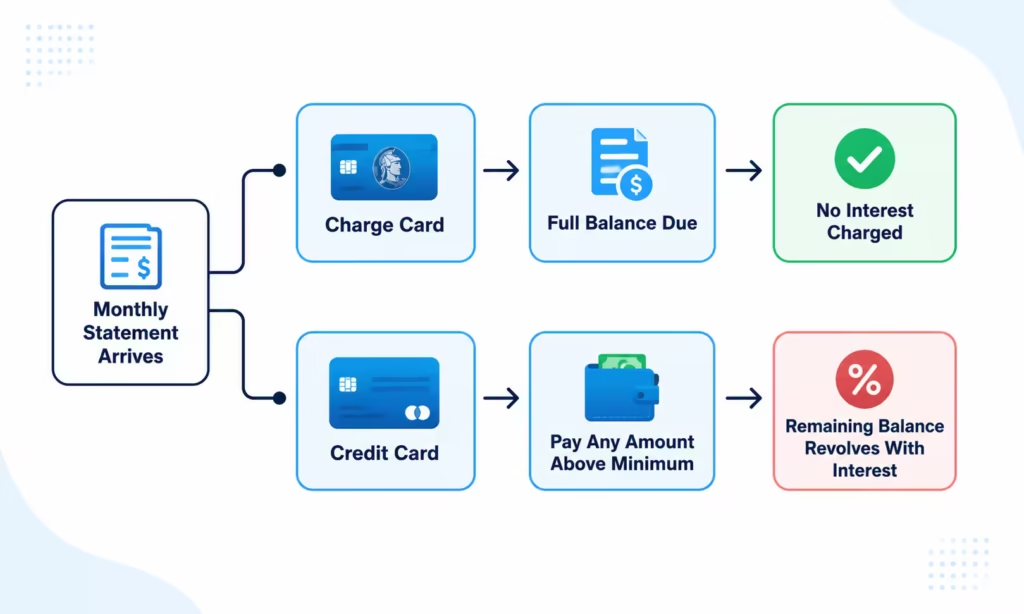
The short answer is simple. A charge card must be paid off in full every month. A credit card lets you carry a balance and pay interest on it over time.
Below, you’ll get the full picture in plain English: how each card handles your money, what each one does to your credit score, and a quick self-check to help you choose with confidence.
Key Takeaways
This guide explains the charge card vs credit card difference, covering payment rules, spending limits, interest charges, credit score impact, and what happens when a payment is missed on each card type.
Core Facts:
- A charge card requires the full statement balance to be paid each month, while a credit card allows any payment amount at or above the minimum, with the remainder carrying over at interest.
- Charge cards have no preset spending limit and approve purchases individually based on payment history and spending patterns, rather than a fixed dollar cap.
- The average APR on credit card accounts assessed interest was 22.15% as of May 2026, meaning a $5,000 carried balance can generate over $1,000 in yearly interest.
- Because charge cards typically have no reported credit limit, most modern scoring models exclude them from the credit utilization calculation entirely.
- A typical late payment fee is around $32, and charge card spending power is frozen or restricted once a payment is missed, unlike a credit card which stays active with a minimum payment.
- Charge card approval generally requires a FICO score of 670 or higher, while credit cards are available across the full credit spectrum, including secured options for building credit.
Best for:
- Readers deciding between a charge card and a credit card based on how they typically pay their balance each month.
- People with good to excellent credit who want to understand how a charge card affects utilization and credit score.
- Anyone comparing interest costs, fees, and payment flexibility before applying for either card type.
What Actually Separates a Charge Card From a Credit Card
The difference between a charge card and a credit card comes down to one rule: what you owe when the bill arrives.
A charge card requires you to pay in full each month. When your statement closes, the entire statement balance is due by the payment date. There’s no option to pay a smaller amount and push the rest into next month.
A credit card works on revolving credit. You get a credit limit, and you can pay any amount between the minimum payment and the full balance. Whatever you don’t pay “revolves” into the next month, and the issuer charges interest on it. As you pay the balance down, that credit becomes available to borrow again. That’s what makes it revolving.
In daily life, revolving credit gives you flexibility. Tight month? Pay the minimum and catch up later. The cost of that flexibility is interest, and it adds up fast.
So why do people mix the two up? Because they feel identical. Both are plastic or metal cards. Both work at the same stores, websites, and tap-to-pay terminals. Both send a monthly statement. Many charge cards even come from a company famous for credit cards, with American Express being the classic example.
The easiest way to tell which type you hold is to check your statement. If it shows a minimum payment due, it’s a credit card. If the full balance is due, it’s a charge card.
| Feature | Charge Card | Credit Card |
|---|---|---|
| Balance due each month | Full statement balance | Any amount at or above the minimum |
| Carry a balance? | No (except select financed purchases) | Yes, with interest |
| Spending cap | No preset spending limit | Fixed credit limit |
| Interest on regular spending | None | Charged on carried balances |
| Typical annual fee | Often higher | Wide range, many no-fee options |
Spending Limits: Preset Limit vs. No Preset Spending Limit
A credit card comes with a fixed credit limit, say $5,000 or $15,000. That number is set when the account opens, and it stays put until the issuer raises or lowers it. Spend up to it, and further charges get declined.
A charge card skips the fixed number entirely. Instead of one static cap, the issuer approves each purchase on its own, in real time. Your spending flexibility adapts based on a few signals: your payment history with the issuer, your past spending patterns, and your overall credit profile. Pay on time for a year, and your purchasing power usually grows. Miss payments, and it shrinks.
Why “No Preset Spending Limit” Doesn’t Mean Unlimited
This phrase scares people, and it’s easy to see why. It sounds like a blank check. It isn’t one.
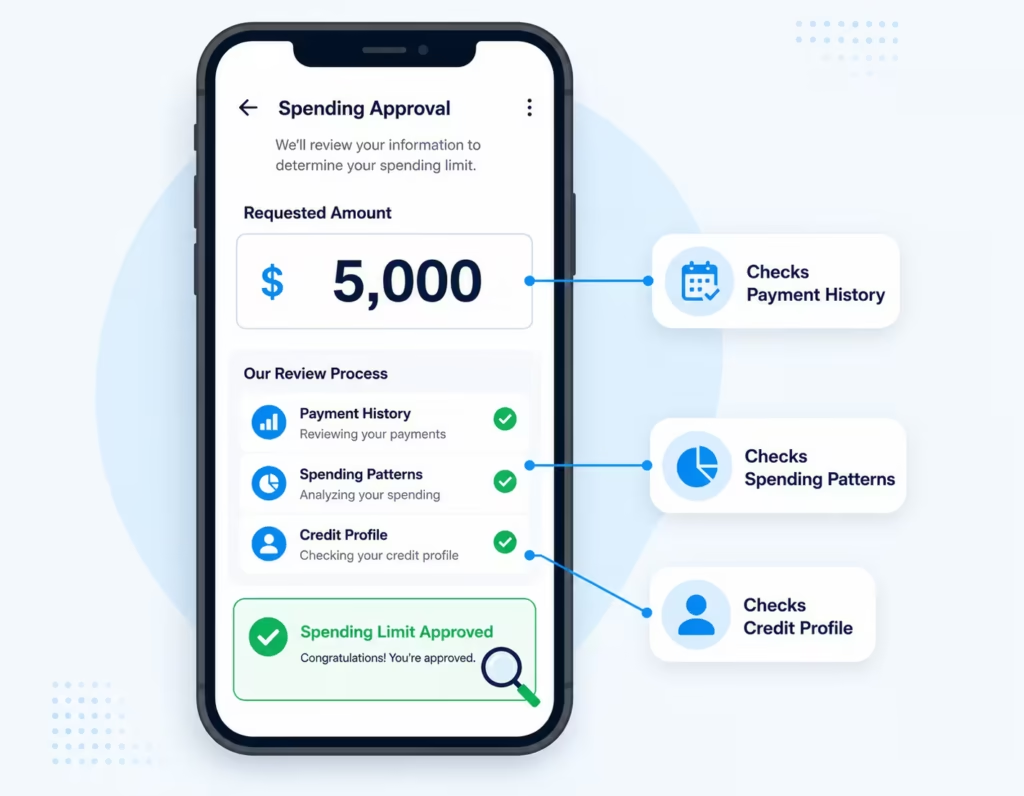
“No preset spending limit” simply means there’s no hard number set in advance. Every single transaction still goes through an approval check. A purchase that’s large or unusual for your history can absolutely be declined, even if smaller purchases sailed through the day before. It’s not an unlimited credit line. It’s a moving target that follows your behavior.
📌 Did You Know: American Express offers a “Check Spending Power” tool in cardholders’ online accounts. You can enter a large amount before you buy, and the tool tells you whether that purchase would likely be approved. Learn more about how the feature works on the American Express no preset spending limit page.
Interest Charges: How Each Card Treats What You Owe
Charge cards typically charge no interest on regular spending, and the reason is mechanical. Interest needs a carried balance to attach to. Since a charge card balance is due in full each month, there’s nothing left over to charge interest on. The card is effectively interest-free by design.
Credit cards work the opposite way. Carry a balance past the due date, and interest starts building on what’s left. And those rates are steep right now. The latest Federal Reserve data puts the average APR on credit card accounts assessed interest at 22.15%, as of May 2026. On a $5,000 carried balance, that’s over $1,000 a year in interest alone.
The trade-off is clear. A charge card saves you from interest but gives you no room to pay over time. A credit card gives you that room, and bills you for it.
Modern Charge Cards With Pay Over Time Features
The line between the two card types has blurred a bit in recent years. Some issuers, most notably American Express, now offer Pay Over Time features on their charge cards.
The mechanics matter here. Pay Over Time applies only to certain eligible purchases, often those above a set dollar amount. Those specific purchases move into a financed bucket with interest attached. The rest of your statement balance is still due in full, on the normal schedule. So even on a “flexible” charge card, the core pay-in-full obligation hasn’t gone anywhere.
Annual Fees: What to Expect From Each Card Type
Charge cards tend to carry higher annual fees than credit cards, and there are two reasons. First, they target premium customers, so they bundle premium perks like travel credits and lounge access. Second, the issuer takes on more risk with flexible spending power, and the fee helps offset it. Some premium charge cards run several hundred dollars per year.
That said, both card types span the full range. No-fee charge cards and no-fee credit cards both exist, and both markets have ultra-premium options too.
The right way to judge any fee is simple math. Add up what the card’s rewards and perks are actually worth to you in a year. If that number beats the annual fee with room to spare, the fee earns its keep. If not, a no-fee card from your charge card issuer or bank is the smarter home for your spending.
How a Charge Card Affects Your Credit Score
This is where most reader anxiety lives, so let’s get the mechanism right.
Your credit utilization ratio is the share of your available credit that you’re using. It’s a major input in your FICO score, and it needs two numbers to exist: your balance and your credit limit.
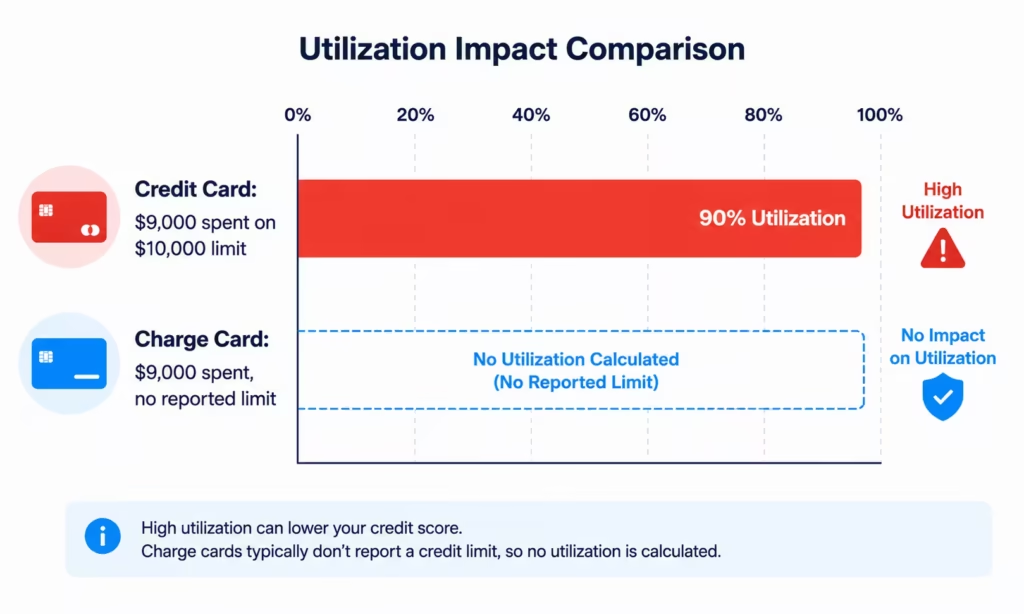
Here’s the key. A charge card has no preset credit limit to report to the credit bureaus. No reported limit means there’s no ratio to calculate, so most modern scoring models leave the charge card out of your utilization math entirely.
The practical result: a $9,000 month on a charge card won’t spike your utilization the way the same spending on a $10,000-limit credit card would. (One nuance: some older scoring models use your highest historical balance as a stand-in limit, so utilization isn’t guaranteed to be zero in every model.)
What absolutely still counts is payment history. Charge card activity is reported to the credit bureaus like any other account. On-time payments build your credit. A payment that’s 30 or more days late damages it.
Is a Charge Card Better for Building Credit?
Neither card type is inherently better for building credit. Payment history is the single biggest factor in your score, and it rewards both cards equally.
A charge card does offer one quiet edge: it removes utilization from the equation, so heavy monthly spending can’t drag your score down. A credit card offers a different edge: a fixed limit that adds to your total available credit, which can lower your overall utilization if you keep balances low. For most people, the better tool is simply the one they’ll pay on time, every time.
How Charge Cards and Credit Cards Are Reported to Credit Bureaus
Both charge cards and credit cards can appear on your credit report, but what gets reported and how it factors into your score isn’t identical between the two.
For credit cards, issuers typically report your credit limit, your current balance, and your payment history each month. That credit limit and balance combination is what makes up your credit utilization ratio, the percentage of available credit you’re using at any given time.
Utilization is one of the more heavily weighted factors in your FICO score, which is why credit card balances can move your score up or down fairly noticeably from month to month.
Charge cards work differently. Because most charge cards don’t have a preset spending limit, there’s typically no credit limit figure for the issuer to report. Without a reported limit, there’s no utilization ratio to calculate for that account.
Your charge card doesn’t get factored into that part of your credit score math at all, whether you charge a few hundred dollars a month or use it heavily for business expenses.
What does still show up: payment history and account age. Whether you pay your charge card statement in full and on time each month gets reported to the credit bureaus just like it would for a credit card, and that payment history contributes to your score the same way. The account also adds to your overall credit history length once it’s been open for a while, which is another factor bureaus consider.
The practical takeaway is that a charge card can help your credit profile through consistent on-time payments and account age, without the risk of high utilization dragging your score down the way an overloaded credit card balance could.
But it also means a charge card by itself isn’t building the specific utilization track record that comes from managing a revolving credit line responsibly. If utilization history matters for your goals, like preparing for a mortgage application, you’ll still want at least one reporting credit card in the mix alongside any charge card you carry.
What Happens If You Can’t Pay a Charge Card in Full
Most articles say “you must pay in full” and stop there. Here’s what actually happens if you can’t, step by step.
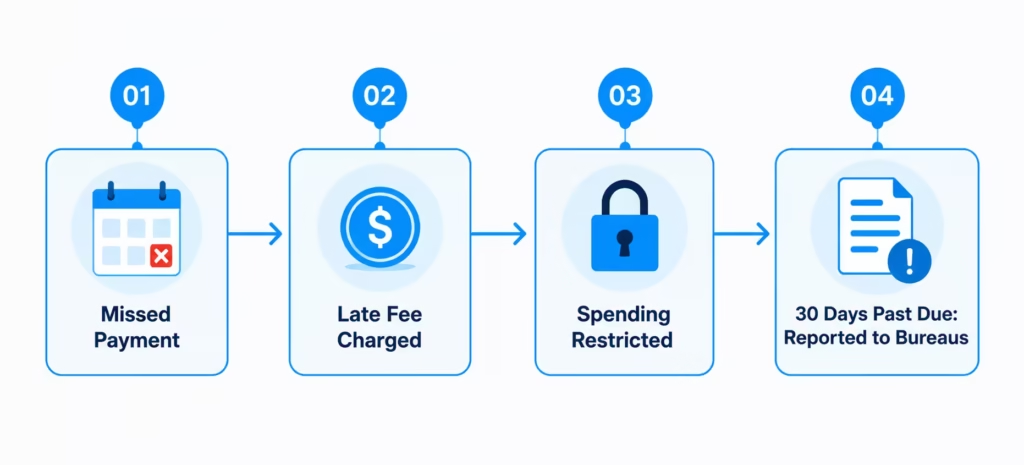
First comes a late payment fee. Research from the Consumer Financial Protection Bureau shows a typical late fee runs around $32, and fees near $40 are common at the largest issuers.
Second, your spending power gets restricted. Miss the payment, and most issuers freeze or sharply limit new purchases until the overdue statement balance is paid. The card effectively stops working.
Third, repeated missed payments escalate. The issuer may review the account, cancel it, or send the balance to collections. Once the payment is 30 days past due, the delinquency gets reported to the credit bureaus, and that mark can follow you for years.
Contrast that with a credit card. Miss the full balance there, and you simply pay interest on what remains. As long as you cover the minimum payment, the account stays in good standing.
Picture David, a freelance photographer who put $5,800 of camera gear on his charge card before wedding season. A corporate client pays him six weeks late, and David can’t cover the full statement. On the charge card, he’s facing a late fee plus a frozen card. Had he used a credit card, he could have paid a $150 minimum and carried the rest at interest until the invoice cleared.
⚠️ Mistake to Avoid: Treating one missed charge card payment like a missed credit card payment. There’s no minimum payment safety net on a charge card, so a single missed statement can freeze your spending and trigger a charge card penalty right away.
Eligibility and Approval Requirements
Charge cards set a higher bar. Because the issuer carries uncapped spending risk, approval generally requires good to excellent credit, typically a FICO score of 670 or higher, with premium products often looking for 700-plus. Every application triggers a personal credit check, which means a hard inquiry on your report.
Credit cards cover the full spectrum. Strong credit unlocks premium rewards cards, fair credit still qualifies for mid-tier options, and secured credit cards exist specifically for people building or rebuilding. If your score is a work in progress, a credit card is the realistic starting point.
Before applying for anything, pull your credit reports so there are no surprises. You can get them for free from all three bureaus at AnnualCreditReport.com.
💡 Pro Tip: Use the issuer’s online pre-qualification tool before you apply. It runs a soft inquiry that doesn’t affect your score, so you can check your approval odds without burning a hard inquiry on a long shot.
Which Issuers Currently Offer Charge Cards
True charge cards are rare today. American Express remains the primary major issuer, with its Platinum, Gold, and Green cards operating as charge products with no preset spending limit. Diners Club still exists in select markets as another example. Nearly everything else on the market is a traditional credit card, so your charge card issuer choices are narrow by design.
Rewards: How Charge Card and Credit Card Programs Differ
Charge cards lean premium. Because they target high spenders who pay in full, their rewards programs tend to be rich and uncapped, with heavy earning on categories like dining and travel. Products like Amex Platinum and Amex Gold are built this way, pairing strong earn rates with travel perks and statement credits.
Credit card rewards vary far more widely by tier. No-fee cards commonly earn a flat 1.5% to 2% back, mid-tier cards add bonus categories, and premium credit cards rival charge cards on perks.
The real comparison is fee versus value. A $250 annual fee card needs to out-earn a no-fee 2% card by enough to cover that fee, plus extra to be worth the hassle. Run that math with your own spending before the rewards sheet wins you over.
Can You Have Both a Charge Card and a Credit Card?
Yes. Nothing about applying for or using a charge card requires you to give up a credit card, and most people who carry a charge card also carry at least one credit card alongside it.
The two aren’t competing products meant to replace each other. They’re built to do different jobs, and using both lets you cover more of your spending needs than either one could on its own.
A common way this plays out: someone uses a charge card for spending they know they can pay off in full every month, like recurring bills, everyday purchases, or business expenses tied to a predictable budget.
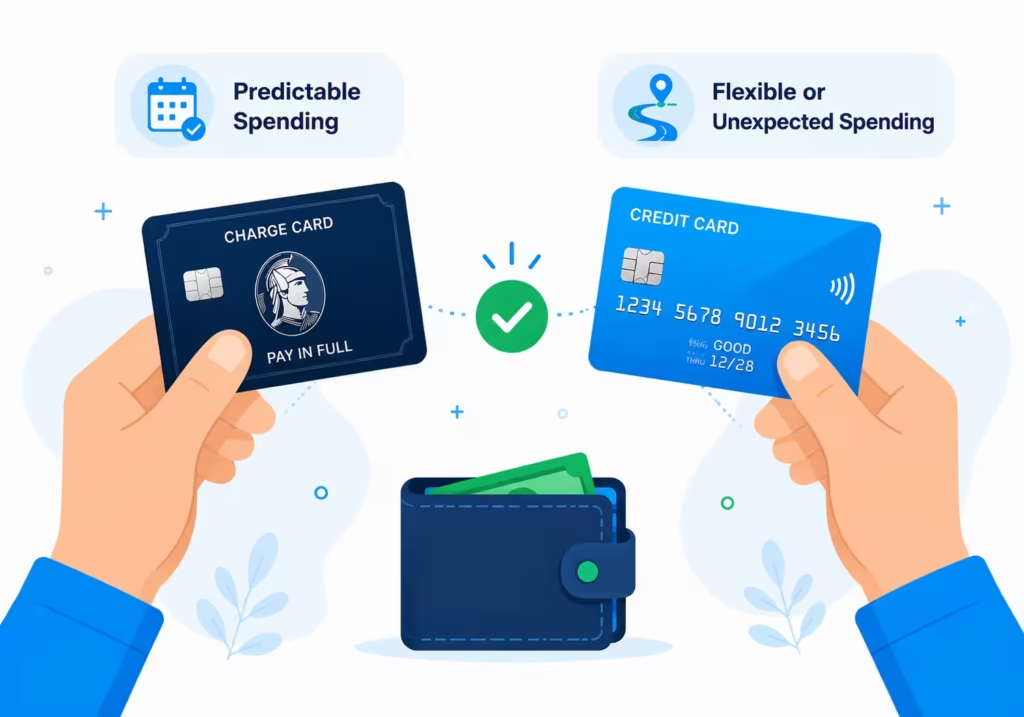
The same person keeps a credit card in their wallet for situations where flexibility matters more than avoiding an annual fee, like an unexpected repair, a larger purchase they’d rather pay off over a few months, or simply as a backup if the charge card issuer declines an unusual transaction.
This pairing also solves a problem that trips up a lot of charge card holders: what to do about purchases they can’t pay off right away. Rather than stretching a charge card balance past your ability to pay in full, you can route that specific purchase to a credit card and let it revolve there instead, while keeping the charge card exclusively for spending you know you’ll clear each cycle.
If you’re currently comparing charge cards and credit cards as if you have to pick a lane, it’s worth reframing the decision. The real question isn’t which one to choose. It’s whether your spending habits and financial goals justify holding both, and if so, how to divide your spending between them so each card is doing the job it’s actually built for.
How to Decide Which One Fits Your Spending Habits
So, is a charge card better than a credit card? Neither is universally better. The right pick depends on how you actually spend, and three honest questions will tell you which side you’re on.
1. Do you ever need to carry a balance? If cash flow gets tight some months and you lean on the minimum payment, a credit card is the only safe fit. A charge card will punish that habit fast.
2. Do you want a hard spending ceiling? If a fixed credit limit helps you stay disciplined, a credit card gives you that guardrail. If you’d rather have flexible capacity that grows with your track record, a charge card delivers it.
3. Do the rewards outweigh the fee for you? If you pay in full every month and spend heavily in bonus categories, premium charge card rewards can be worth the annual fee. If not, a no-fee credit card wins on pure math.
| Your spending pattern | Better fit |
|---|---|
| Sometimes carry a balance for cash flow | Credit card |
| Always pay in full, want premium rewards | Charge card |
| Want a hard ceiling to control spending | Credit card |
| Large, growing expenses and a strong payment record | Charge card |
| Fair credit, still building your score | Credit card first |
Match your pattern to the row above, and the charge card vs credit card decision usually makes itself.
Frequently Asked Questions (FAQs)
Is Amex Platinum a charge card or credit card?
The Amex Platinum is a charge card with no preset spending limit, meaning you must pay your statement balance in full each month rather than carrying it over.
Do charge cards have a limit?
Charge cards skip a fixed credit limit and instead approve each purchase individually based on your payment history and spending patterns. This is called “no preset spending limit,” but it isn’t unlimited since large or unusual purchases can still be declined.
Is Amex Green a charge card?
Yes, the Amex Green is listed alongside Amex Platinum and Amex Gold as one of American Express’s charge card products with no preset spending limit.
Do charge cards still exist?
Yes, though they’re rare today. American Express remains the primary major issuer, with Diners Club also offering them in select markets, while nearly every other card on the market is a traditional credit card.
What is an example of a charge card?
American Express is the main issuer of true charge cards today, with its Platinum, Gold, and Green cards operating this way. Diners Club also offers charge cards in select markets.
Are charge cards harder to get than credit cards?
Yes, charge cards typically require good to excellent credit, usually a FICO score of 670 or higher, with premium versions looking for 700-plus. Credit cards cover a much wider range, including options for fair credit or building credit from scratch.
What happens if you don’t pay off a charge card?
Missing a charge card payment triggers a late fee of around $32, and your spending power gets frozen or restricted until you pay the overdue balance. Payments 30 or more days late get reported to credit bureaus and can hurt your score for years.
Does a charge card build credit?
Yes, charge card payment history and account age get reported to credit bureaus just like a credit card. Charge cards also skip the utilization calculation entirely since there’s no credit limit to report, so heavy spending won’t spike your utilization ratio.
Why get a charge card instead of a credit card?
Charge cards suit people who always pay in full and want flexible spending capacity that grows with their track record, plus premium rewards on categories like dining and travel. They also remove utilization risk from your credit score since there’s no reported limit.
Can you have both a charge card and a credit card?
Yes, most charge card holders also carry at least one credit card, using the charge card for predictable spending they’ll pay off fully and the credit card for flexibility or unexpected expenses. The two cards serve different jobs rather than competing for the same role.
Wrapping Up
The core difference is one rule: charge cards demand full payment each month, while credit cards let you revolve a balance at a cost. That single mechanic shapes everything else, from interest and fees to spending power and credit score impact.
For most readers, a credit card is the safer starting point because it offers flexibility when cash gets tight. A charge card suits disciplined payers chasing premium rewards and flexible spending capacity.
Whatever you choose in the charge card vs credit card debate, pay on time. If someone you know is weighing an Amex offer right now, share this with them. It could spare them a surprise fee and a frozen card.