
You just checked your credit card app and spotted a charge marked “pending.” Maybe the amount looks off, the merchant name seems strange, or you can’t figure out why your available credit dropped by more than you spent. That in-between status can feel confusing, especially when you’re not sure if your money is safe or if you can do anything about the pending transaction on the credit card activity you’re seeing.
A pending transaction is a charge your card issuer has approved but has not yet fully processed, so it holds part of your available credit until the merchant finalizes the sale.
Below, we’ll walk you through how these holds work, why the amount can change, how long they last, and exactly what to do if something looks wrong.
Key Takeaways
This guide explains what a pending transaction on a credit card is, including how authorization holds work, why pending amounts can differ from final charges, typical posting timelines, and steps to take for errors or fraud.
Core Facts:
- A pending transaction is a charge your issuer has approved, but the merchant has not yet finalized, so it holds part of your available credit without adding to your statement balance.
- Most pending transactions post within one to three business days, though some take up to five business days depending on the merchant and payment network.
- Pending charges do not accrue interest and are not included in your statement balance or credit score reporting until they post.
- Certain merchants, including gas stations, hotels, restaurants, and car rental companies, commonly place holds higher than the final purchase amount.
- Cardholders generally cannot cancel a pending transaction through their card issuer; the merchant must be contacted directly to void the authorization.
- Formal disputes under the Fair Credit Billing Act apply only to posted transactions, so pending charges must post before a chargeback can be filed.
Best for:
- Cardholders who see an unfamiliar or larger-than-expected pending charge and want to know what it means before taking action.
- People trying to understand why their available credit dropped by more than a purchase amount.
- Anyone who suspects fraud on a pending transaction and needs to know the correct first steps.
What ‘Pending’ Means on a Credit Card
A pending status shows that your card issuer has approved a charge but has not yet posted it to your account. The merchant swiped or keyed in your card, your bank checked your available credit, and it agreed to hold the funds. However, the money has not officially moved yet.
Think of it as a promise between your bank and the merchant. Your bank says, “Yes, this cardholder has room on their credit line for this purchase.” The merchant then has a short window to send the final charge for full processing. Once that happens, the pending charge turns into a posted transaction.
While a charge sits in pending status, it does not add to your official statement balance. It also does not start collecting interest. Still, it does lower the amount of credit you can use for new purchases until it clears or drops off.
How the Authorization-to-Posting Process Works
Every card purchase moves through two clear steps before it lands on your statement. Understanding both steps helps you see why charges act the way they do.
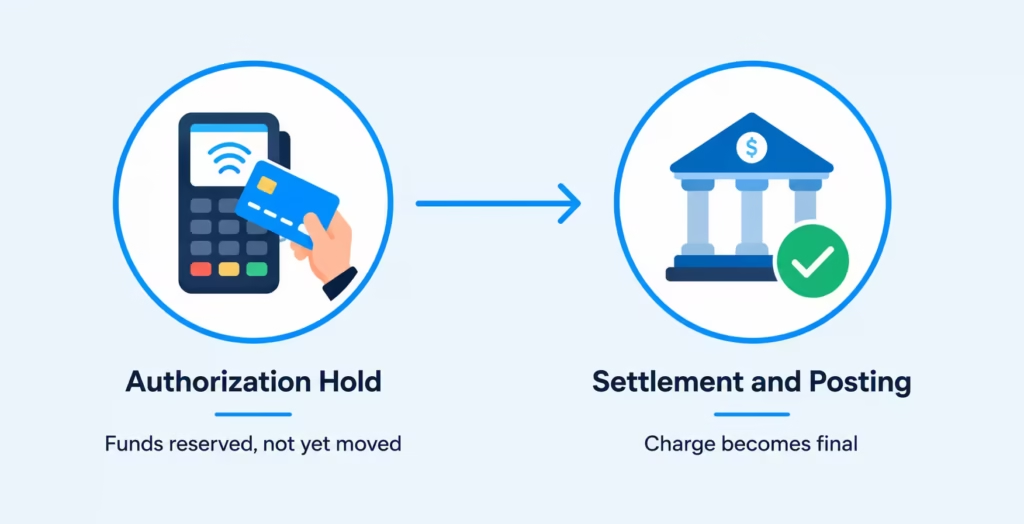
Step 1: Authorization Hold
The moment you tap, swipe, or enter your card number, the merchant sends a request to your card issuer. This request asks, “Does this account have enough available credit for this amount?” If yes, the issuer places an authorization hold on that dollar amount. This hold shows up in your app as a pending transaction.
The hold protects both sides. It reserves your credit so you don’t overspend, and it promises the merchant they’ll get paid once they submit the final charge.
Step 2: Settlement and Posting
Later, often at the end of the merchant’s business day, the store or website sends a batch of final charges to the payment network. This step is called settlement. Once your bank receives and processes the settled charge, it removes the hold and adds the real amount to your posted balance.
At this point, the transaction is final. It counts toward your statement balance, and it will show interest charges if you carry a balance past your due date.
Pending vs. Posted Transactions Compared
Pending and posted charges look similar in your app, but they behave very differently. Knowing the difference helps you read your account correctly.
FeaturePending TransactionPosted TransactionStatusApproved but not finalFully processedAffects available creditYesYesAdds to statement balanceNoYesCan accrue interestNoYes (if carried past due date)Amount can still changeYesNoCan you formally dispute itNo, not yetYesHandled byMerchant mostlyCard issuer
A pending charge is a placeholder. It shapes your available balance, but not your account balance. A posted charge is locked in. It becomes part of your billing cycle and shows up on your statement at the end of the period.
This gap matters most when you’re trying to fix a problem. Since pending charges are not final, most banks can’t formally dispute them or reverse them. You’ll usually have to wait for the charge to post before your full protections kick in.
How Pending Transactions Affect Your Available Credit
Your credit card has two numbers to watch: your credit limit and your available credit. The credit limit is the total amount your issuer allows you to charge. Available credit is what’s left after subtracting posted charges and pending holds.
Say your credit limit is $5,000 and you already have $1,000 in posted charges. If you swipe your card for a $200 purchase, that $200 shows as pending. Your available credit drops to $3,800, even though the charge hasn’t posted yet.
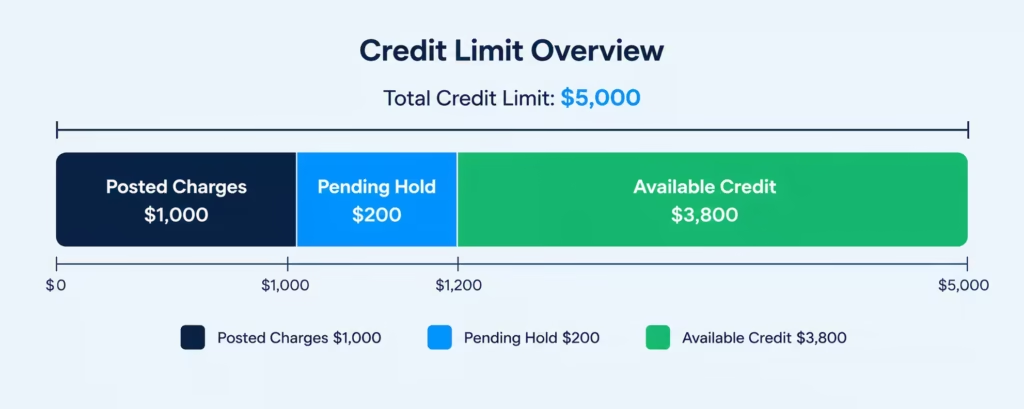
This drop is normal. It stops you from spending money that’s already promised to a merchant. But it can catch you off guard, especially if the pending hold is larger than what you actually spent, which often happens at gas stations, hotels, and restaurants.
💡 Pro Tip: If you rely on a specific amount of available credit for a big purchase, wait until any large pending holds clear before you swipe again. A hotel check-in hold, for example, can lock up hundreds of dollars for days.
Why the Pending Amount Can Differ From the Final Charge
You may notice a pending charge for one amount, then see a slightly different final charge on your statement. This happens more often than most cardholders expect, and it’s usually not a mistake.
Some merchants place a pre-authorization hold that’s higher or lower than your actual purchase. Tips, taxes, fuel totals, and hotel extras all cause the number to shift once the sale finishes. Your bank simply updates the amount once the merchant sends in the final charge.
A pre-authorization is like a security deposit. The merchant estimates the highest possible amount you might spend, then adjusts it down (or up) when you’re done. Once settlement happens, the correct amount posts and the extra hold falls off.
Common Merchants That Cause Larger or Unusual Holds
Some businesses are known for placing higher pending charges than what you’ll actually pay. This is standard practice for them, not fraud.
- Gas stations: Many pumps place a hold of $1, $75, $100, or even $125 before you start pumping. The real charge posts once you finish.
- Hotels: A hotel may hold your room rate plus $50 to $200 per night for possible extras like room service, mini-bar use, or damages.
- Restaurants: The pending charge often shows the pre-tip amount. Once the server adds your tip, the final posted charge will be higher.
- Car rental companies: These businesses often hold several hundred dollars extra as a security deposit against damage or fuel costs.
- Online orders shipped in parts: Retailers may authorize the full order, then charge each shipment separately as items ship.
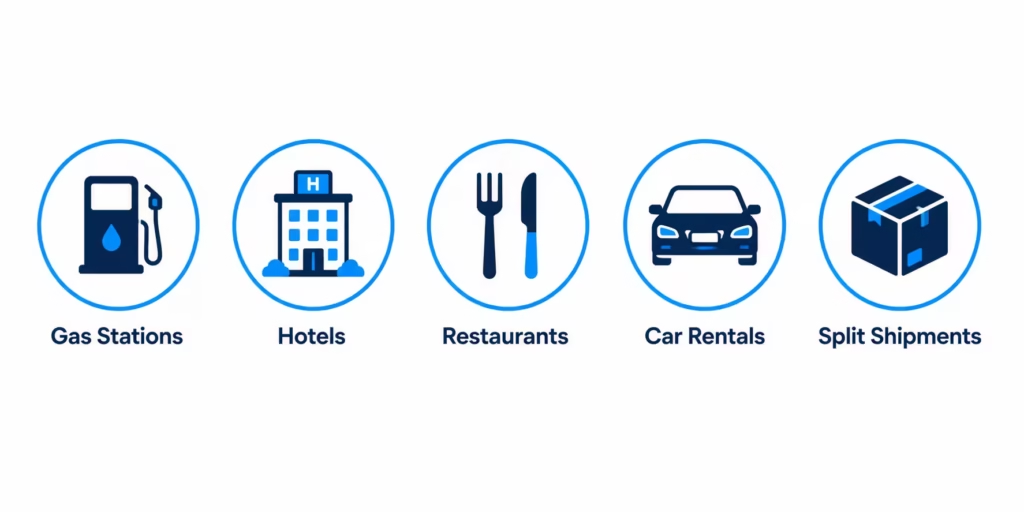
If you see one of these, give it a few days before you worry. The final amount will almost always match your actual purchase.
Duplicate Pending Charges Explained
Sometimes you’ll see the same charge twice in your pending list. This often happens when a payment terminal times out. It can also occur if the merchant reruns the card. Sometimes, the transaction gets authorized at checkout and again at shipping.
In most cases, only one of these charges will post. The duplicate hold drops off within a few business days. If both charges do post, contact the merchant first. They can void one before it becomes a permanent problem.
How Long Pending Transactions Typically Take to Post
Most pending charges post within one to three business days. Some may take up to five business days, depending on the merchant, the payment network, and the type of purchase.
Weekends and bank holidays can slow things down. A charge you make on a Friday night may not post until Tuesday or Wednesday. Card issuers only process settlements during business days, so any charge made outside that window waits in line.
Certain purchases take longer to settle. Hotel stays post after checkout. Car rentals post after you return the vehicle. Subscription services often post on a set billing date each month. In all these cases, the pending hold stays until the merchant finishes the sale.
What Happens If a Pending Transaction Never Posts
Every so often, a pending charge simply disappears without ever posting. This is not a glitch. It usually means the merchant never finished processing the sale, or they voided the authorization before settlement.
If a pending charge falls off, your available credit returns to normal. You will not be billed for it, and you don’t need to take any action. However, if you were expecting a purchase to go through, contact the merchant to make sure the sale was actually completed. A missing charge could mean your order was canceled.
Does a Pending Transaction Accrue Interest or Count Toward Your Statement Balance
A pending transaction does not accrue interest. It also does not count toward your statement balance until it posts. Interest only starts on posted balances that carry past your due date, based on your card’s grace period rules.
Your statement closing date is the last day of your billing cycle. Any charge that posts on or before that date shows up on that month’s statement. A charge that’s still pending on your closing date usually rolls into the next billing cycle. This timing matters if you’re trying to lower your statement balance for credit utilization reasons.
Payment due dates are separate. If you pay your statement balance in full by the due date, you won’t pay interest on new purchases. This applies to both pending and posted transactions during the cycle.
Does a Pending Transaction Affect Your Credit Score
Pending charges usually don’t affect your credit score directly. Card issuers report your account balance to credit bureaus once per billing cycle, typically on your statement closing date. Only posted charges are included in that report.
That said, a large pending hold can still shape how your utilization looks if it posts before your statement date. Utilization is the share of your credit limit you’re using, and it’s one of the biggest factors in your FICO Score. Keeping your posted balance well below your limit before the statement closes helps protect your score.
Can You Cancel a Pending Transaction
In most cases, you cannot cancel a pending transaction through your card issuer. Banks can’t reverse an authorization once a merchant has requested it. The merchant controls that hold until it either settles or expires.
To stop the charge, contact the merchant directly and ask them to void the authorization. If they agree, the hold will drop off your account within one to five business days, depending on how fast their system releases it. Ask for a confirmation email or a reference number so you have proof of the request.
⚠️ Mistake to Avoid: Don’t call your card issuer first to cancel a pending charge. They’ll almost always tell you to contact the merchant. Skipping straight to the store saves time and gets the hold released faster.
If the merchant refuses to void the charge, or you can’t reach them, your next step is to wait for the transaction to post. Once it’s final, you can file a formal dispute with your card issuer through the standard chargeback process.
What to Do If Something Looks Wrong With a Pending Transaction
Seeing an odd pending charge can feel stressful, but you have clear steps to take. The right move depends on what looks wrong. Sometimes the issue is just a normal hold. Other times, it’s a sign of fraud.
Start by checking the merchant name. Some businesses show up under a different name (like a parent company) than the store you actually visited. A quick web search of the merchant descriptor often clears up the confusion.
If the name and amount seem off, move through the steps below based on what type of problem you’re facing.
What to Do If the Pending Amount Looks Wrong
If the pending charge shows a different amount than what you agreed to pay, don’t panic. First, check whether the merchant is one that commonly places larger holds, like a gas station or hotel. If yes, wait one to three business days for the final amount to settle.
If the amount is still wrong once it posts, contact the merchant with your receipt or order confirmation. Ask them to adjust the charge or issue a refund for the difference. Most stores can fix this quickly.
If the merchant refuses or can’t be reached, wait for the charge to fully post. Then file a dispute with your card issuer, and include your receipt as proof of the correct amount.
What to Do If You Suspect Fraud on a Pending Transaction
If you spot a pending charge you didn’t make, act fast. Under the Fair Credit Billing Act, your liability for unauthorized credit card charges is limited to $50, and most major issuers offer $0 fraud liability.
Here’s what to do right away:
- Log in to your card app and look for a “report fraud” or “lock card” option.
- Freeze or lock your card so no new charges go through.
- Call the number on the back of your card and tell the agent about the pending charge.
- Ask them to open a fraud claim and send you a new card with a new number.
- Save any related emails, texts, or receipts as records.
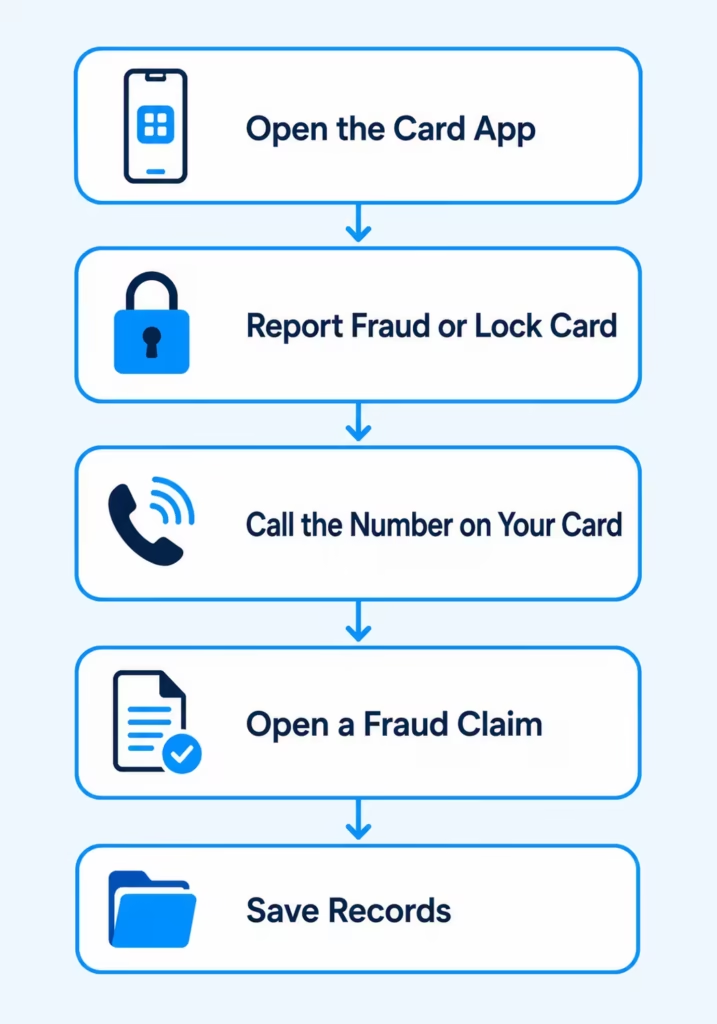
Even though the charge is still pending, your issuer can flag it in their system. Once it posts, they can start the fraud investigation and remove the charge from your balance.
Can You Formally Dispute a Pending Transaction
You usually cannot file a formal dispute on a pending charge. Federal chargeback rights, including those under the Fair Credit Billing Act, apply to posted transactions. Your card issuer needs a completed charge to open an official investigation.
That doesn’t mean you’re stuck. You can still take three helpful steps while the charge is pending:
- Report the concern to your issuer so they note it on your account
- Contact the merchant and ask them to void the authorization
- Gather proof (receipts, screenshots, emails) for a possible dispute later
Once the charge posts, you generally have 60 days from the statement date to file a formal dispute with your card issuer, according to the Consumer Financial Protection Bureau. Acting quickly gives you the strongest protection.
Frequently Asked Questions (FAQs)
Does pending transaction mean it went through?
No, pending means your issuer approved the charge, but the merchant hasn’t finalized it yet. The sale becomes official only after settlement, which usually takes one to three business days.
How long will a pending transaction take to post?
Most pending transactions post within one to three business days, though some take up to five. Weekend or holiday purchases often take longer since banks only process settlements on business days.
Does a pending transaction mean they already took the money?
No, the money hasn’t actually been taken yet. Your bank places a hold on your available credit, but the funds only move once the merchant sends the final charge during settlement.
Can I cancel a pending transaction and get my money back?
You usually can’t cancel it through your card issuer since they can’t reverse an authorization once requested. Contact the merchant directly and ask them to void it, which typically clears the hold within one to five business days.
Can a bank refuse to cancel a pending transaction?
Yes, banks generally can’t cancel pending transactions at all because the merchant controls the hold. Your issuer will typically direct you to contact the merchant instead of handling it themselves.
How long can a pending transaction stay on a credit card?
Pending transactions typically clear within one to three business days, occasionally stretching to five. Certain purchases like hotel stays or car rentals stay pending longer since they post only after checkout or return.
Should I worry if a transaction is still pending?
Usually not, since pending charges are a normal part of the authorization process. Only worry if the charge is unrecognized, stays pending far longer than five business days, or you suspect fraud.
What happens if I have a pending charge on my credit card?
The charge lowers your available credit immediately but won’t appear on your statement balance or accrue interest until it posts. It typically finalizes within one to three business days once the merchant settles the transaction.
Will I get my money back if it says pending?
If you’re disputing a charge, formal refunds typically can’t start until the transaction posts, since chargeback rights apply to completed charges. If it’s fraud, report it immediately so your issuer can flag it and remove it once it posts.
Wrapping Up
Pending charges are a normal part of how credit cards work, but they can still cause worry when the amount looks off, or the merchant seems unfamiliar. Understanding how authorization holds, settlement timing, and available credit fit together makes these in-between charges much easier to read.
To handle this, follow these steps:
- Allow normal holds one to three business days to clear.
- Contact the merchant for any amount issues.
- Call your issuer right away if you suspect fraud.
If you know someone who checks their credit card app and gets confused by pending charges, share this guide. It will help them manage those charges with confidence.