
You just got a data breach email, spotted a weird charge, or heard a scary identity theft story from a friend. Now you’re wondering if a fraud alert is the right move, or if it will freeze up your credit and cause more trouble. It’s a stressful moment, and the online advice often sounds confusing.
A fraud alert is a free notice on your credit file that tells lenders to verify your identity before opening new credit in your name.
In this guide, we’ll walk you through what a fraud alert really does, the three types you can pick from, how to place one in minutes, and what to expect after it’s active. You’ll leave knowing exactly what to do next.
Key Takeaways
This guide explains what a fraud alert is, including the three available types, how it differs from a credit freeze, its effect on your credit score, and how to place, renew, or remove one at any credit bureau.
Core Facts:
- A fraud alert is a free notice on your credit report that requires lenders to verify your identity before opening new credit in your name.
- Three types exist: an Initial alert lasting 1 year with no proof required, an Extended alert lasting 7 years requiring an FTC or police report, and an Active Duty alert lasting 1 year for military members.
- Contacting just one of the three credit bureaus places the alert on all three, since that bureau is required to notify the other two.
- A fraud alert does not affect your credit score, since it is not used in FICO or VantageScore calculations.
- Unlike a fraud alert, a credit freeze blocks all new lender access to your report entirely rather than just requiring identity verification.
- Removing a fraud alert requires contacting each of the three bureaus separately, since removal from one bureau does not sync to the others.
Best for:
- Readers who received a data breach notice, lost a wallet, or noticed one unusual charge and want fast, free protection without proof of theft.
- Confirmed identity theft victims who have an FTC identity theft report or police report and need longer-term protection.
- Deployed military service members, or their designated representatives, who need alert coverage that matches a deployment timeline.
What Is a Fraud Alert?
A fraud alert is a free notice added to your credit report. It tells any lender that pulls your file to take extra steps and confirm your identity before opening a new account. The goal is simple. If a thief tries to open a credit card, loan, or phone plan using your name, the lender should pause and verify the request with you first.
Think of it as a warning flag. It does not lock your credit. It does not stop you from using your current cards or loans. It just adds a checkpoint for new credit applications.
Any consumer can add an initial fraud alert. You do not need to prove that identity theft happened. A simple worry, like a breach email or a missing wallet, is enough of a reason. For the longer 7-year alert, you do need proof, which we’ll cover later.
Here’s what a fraud alert does not do. It won’t block existing accounts, hurt your credit score, or stop bills from being paid. It also won’t catch every kind of fraud. A thief who already has your card number can still make charges on your open account. A fraud alert only helps with new credit account requests. For that reason, many people pair it with credit monitoring or a freeze for stronger protection.
💡 Pro Tip: A fraud alert is best used as a first, fast response. You can place one in minutes today and decide later if you want to add a credit freeze for deeper protection.
How Does a Fraud Alert Actually Work?
When a fraud alert sits on your file, it changes the way lenders review new applications. A message appears on your credit report telling the lender to take reasonable steps to confirm the person applying is really you. This is called creditor verification.
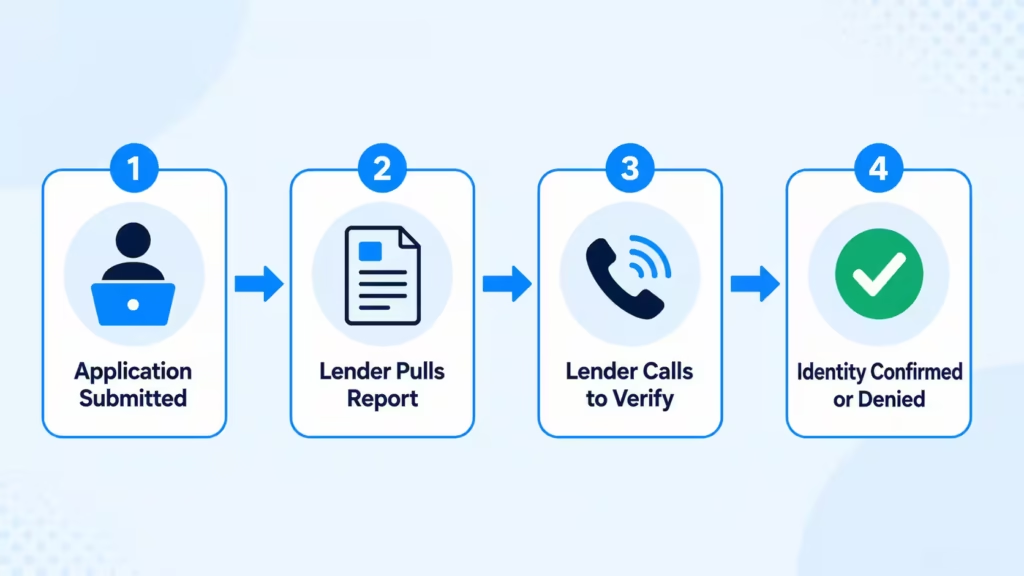
Here’s the flow in plain steps: A thief, or even you, applies for a new credit card. The lender pulls your credit report. They see the alert message with a phone number you provided.
Before approving anything, the lender must contact you at that number, or use another reasonable method to verify your identity. If they can’t reach you or confirm it’s really you, the application should not move forward.
This is why the phone number you list matters so much. If you enter an old number, the lender may not be able to reach you, and the application could either stall or slip through. Always use a number you actually answer.
One important detail. You only need to contact one of the three nationwide credit bureau offices to start the process. The Federal Trade Commission confirms that the bureau you contact must share your request with the other two, so the alert covers Experian, Equifax, and TransUnion together FTC Consumer Advice. This saves you from filing three separate requests.
The alert also gets you some bonus perks. You can get a free copy of your credit report from each bureau. Also, your name is taken off prescreened offers for a while. This helps reduce junk mail that thieves might steal from your mailbox.
Types of Fraud Alerts
There are three types of alerts, and each fits a different situation. Picking the right one saves you from placing a weaker alert when you qualify for stronger protection, or the other way around.
1. Initial Fraud Alert. This is the standard one-year alert. Any consumer can add it; no proof required. It’s the right pick if you’re worried but have no confirmed identity theft yet. It lasts 12 months and can be renewed as many times as you want.
2. Extended Fraud Alert. This is the seven-year alert for confirmed identity theft victims. To place it, you must submit an FTC identity theft report from IdentityTheft.gov, or a police report. According to TransUnion, an extended alert also blocks prescreened credit offers for five years, unless you opt back in to TransUnion Fraud Alerts.
3. Active Duty Alert. This is built for military members deployed away from home. It lasts one year and can be renewed for the full deployment. The active duty alert also removes your name from prescreened lists for two years, which reduces mailbox theft risk while you’re away.
| Alert Type | Duration | Proof Needed | Best For |
|---|---|---|---|
| Initial | 1 year | None | Data breaches, lost wallet, general worry |
| Extended | 7 years | FTC report or police report | Confirmed identity theft victims |
| Active Duty | 1 year (renewable) | Military status | Deployed servicemembers |
Which Type of Alert Fits Your Situation
Use this quick self-check instead of guessing.
Pick Initial if you got a breach email, lost a wallet, saw one strange charge that your bank already reversed, or you’re just being cautious after reading about identity theft. Most readers land here.
Pick Extended if a thief actually opened accounts in your name, filed a tax return using your Social Security number, or drained a bank account. You’ll need to file an FTC identity theft report at IdentityTheft.gov first, since that report is what unlocks the seven-year alert.
Pick Active Duty if you are a service member on deployment or a long assignment away from your usual home base. The Servicemembers Civil Relief Act framework and FTC rules give military members this special option.
If you’re unsure between Initial and Extended, start with Initial today. It’s fast, and you can upgrade later once you have your FTC report ready.
Fraud Alert vs. Credit Freeze: Which Do You Need?
This is the biggest point of confusion, so let’s clear it up. A fraud alert and a credit freeze both protect against new account fraud, but they work in very different ways.
A fraud alert asks the lender to verify your identity. Credit can still be pulled. Applications can still move forward, as long as the lender confirms it’s you.
A credit freeze blocks new lender access entirely. No one can pull your credit report for a new application until you unfreeze it. Nothing gets approved because nothing gets seen.
Here’s the practical difference. With a fraud alert, you barely notice it in daily life until you apply for new credit yourself, and then you may get a verification call. With a freeze, you must actively lift the freeze every time you or anyone else wants to check your credit. That includes new credit cards, cell phone contracts, apartment rental checks, and some job background checks.
| Feature | Fraud Alert | Credit Freeze |
|---|---|---|
| Cost | Free | Free |
| Effect on lenders | Verification required | Access blocked |
| Your effort | Set and forget | Lift each time |
| Best for | Suspicion or precaution | Confirmed theft or high risk |
| Duration | 1 or 7 years | Until you remove it |
| Covers all 3 bureaus with one request? | Yes | No, contact each bureau |
Sarah, a marketing manager at a mid-sized consulting firm, got a breach notice from her healthcare provider covering 40,000 patients. She had no signs of actual theft. A one-year initial fraud alert was the right call. Michael, a finance director whose Social Security number was used to file a fake tax return costing $6,200, needed the full credit freeze at all three bureaus plus an extended alert.
⚠️ Mistake to Avoid: Don’t assume a fraud alert works like a freeze. A determined thief who can answer a lender’s verification questions can still slip through an alert. If real theft has already happened, layer a freeze on top.
Does a Fraud Alert Affect Your Credit Score?
No. A fraud alert does not affect your credit score in any way. Not by one point. Not up. Not down.
Your credit score is built from your payment history, credit utilization, credit age, mix of accounts, and new credit inquiries. A fraud alert is a note for lenders, not a data point in the scoring formula. FICO and VantageScore do not use it in their calculations.
Lenders can still see your full credit report. They can still approve you. The alert only asks them to confirm you’re the real applicant first. Approval decisions still rest on your income, payment history, and other normal factors.
Some readers worry that the alert makes them look risky. It doesn’t. Lenders are used to seeing fraud alerts, and many customers add them as a routine safety step after breaches. Placing one is a sign of responsible behavior, not a red flag.
The only real-world effect you may notice is friction during instant approval. If you apply for a store card at checkout, the alert may slow that decision down. That’s the alert doing its job. It is not a score change.
How to Place a Fraud Alert
Placing a fraud alert is free, fast, and takes about 10 minutes online. You only need to contact one of the three major bureaus. That bureau is required by law to notify the other two, so your alert covers all three files.
Here are the direct links to each bureau’s fraud alert page. Pick the one you prefer.
Follow these steps for an initial alert.
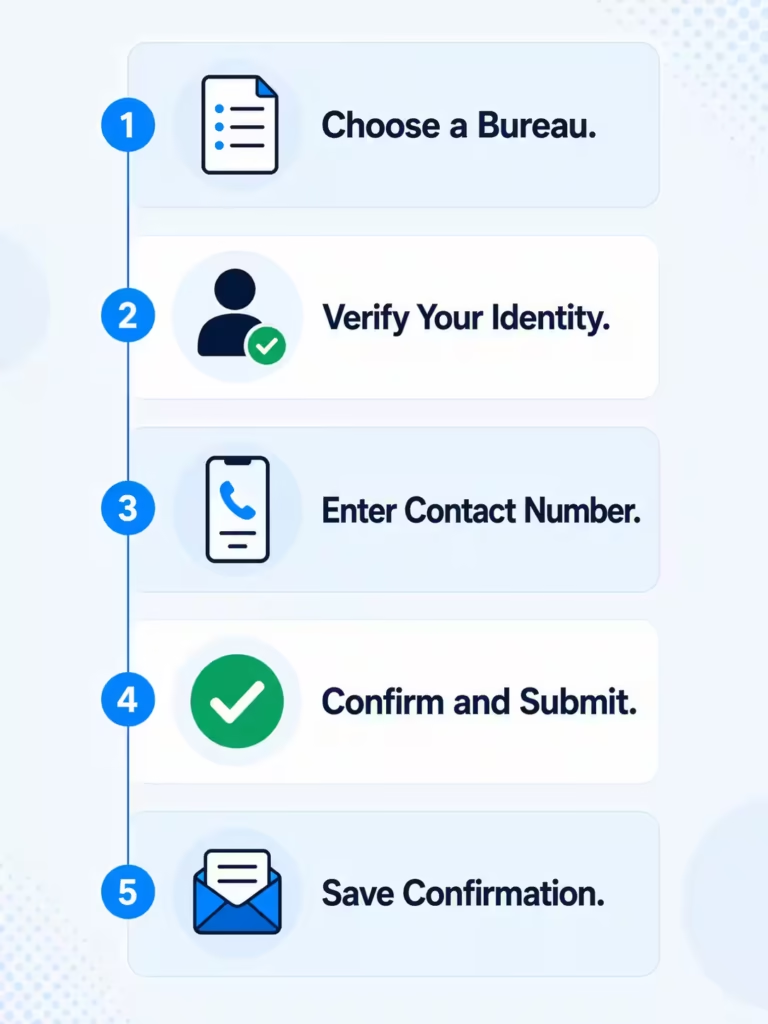
Step 1. Choose one bureau and open its fraud alert page from the links above. Any of the three works.
Step 2. Create an account or sign in. You’ll verify your identity using details like your name, address, date of birth, Social Security number, and answers to a few security questions pulled from your credit history.
Step 3. Select “Initial Fraud Alert” and enter the phone number lenders should use to reach you. Use a number you actually answer, since this is the number lenders will call before approving new credit.
Step 4. Confirm and submit. You should get a confirmation on screen, and usually a confirmation email or letter within a few days.
Step 5. Save that confirmation. You’ll want proof of the date, since the alert expires exactly one year later.
There is no cost. The Fair Credit Reporting Act (FCRA) makes all three types of fraud alerts free. Any site that asks you to pay is not the right one, so double-check the URL.
Extra Documentation for Extended and Active-Duty Alerts
Extended and active duty alerts need a bit more paperwork.
For an extended fraud alert, you must show that you’re a real identity theft victim. The easiest proof is an FTC identity theft report created at IdentityTheft.gov. The site walks you through a short questionnaire and generates the report as a PDF. A police report also works, but it takes longer to get. Most consumers use the FTC option because it’s free and takes about 20 minutes.
For an active duty alert, you’ll need to confirm your military status. Most bureaus accept your basic service details online, but some may ask for a copy of your deployment orders or a military ID scan. Keep a digital copy handy before you start.
Upload your report through the bureau’s secure portal, or mail a copy with your written request if the online option isn’t working. Once approved, the extended alert lasts a full seven years, and the active duty alert lasts one year with the option to renew.
What Happens After You Place a Fraud Alert
Once your alert is active, most of your life stays exactly the same. Your existing cards keep working. Autopay still runs. Your credit score doesn’t budge. The only place you’ll feel the change is when someone, including you, applies for new credit account access.
Here’s what to expect in real situations.
Applying for a new credit card. The lender will pull your report, see the alert, and try to reach you at the phone number on file. This may add a few minutes to a few days to approval. Instant online approvals often turn into “we’ll follow up” messages.
Buying a car. Dealership financing usually pauses while the lender calls you. Have your phone on and ready. Some dealerships handle this smoothly; others get confused. Being upfront about the alert speeds things up.
Getting a phone plan or utilities. These providers also do a soft or hard pull. Expect a callback. Bring ID and your alert confirmation to the store to prove it’s really you.
Applying for a mortgage or refinance. Mortgage lenders are used to alerts and handle them well, but the file may sit an extra day or two while identity checks clear.
Renting an apartment. Landlords using tenant screening services may see the alert too. A quick call or ID check clears it up.
Also expect fewer prescreened credit offers in your mailbox. That’s a built-in perk. It cuts a common source of mail theft.
📌 Did You Know: The one bureau contact rule means that placing an alert with just TransUnion, for example, forces both Experian and Equifax to add it too. You never need to file three separate requests for an initial or extended alert.
How Long Does a Fraud Alert Last, and How Do You Renew It?
Each alert type has its own timeline.
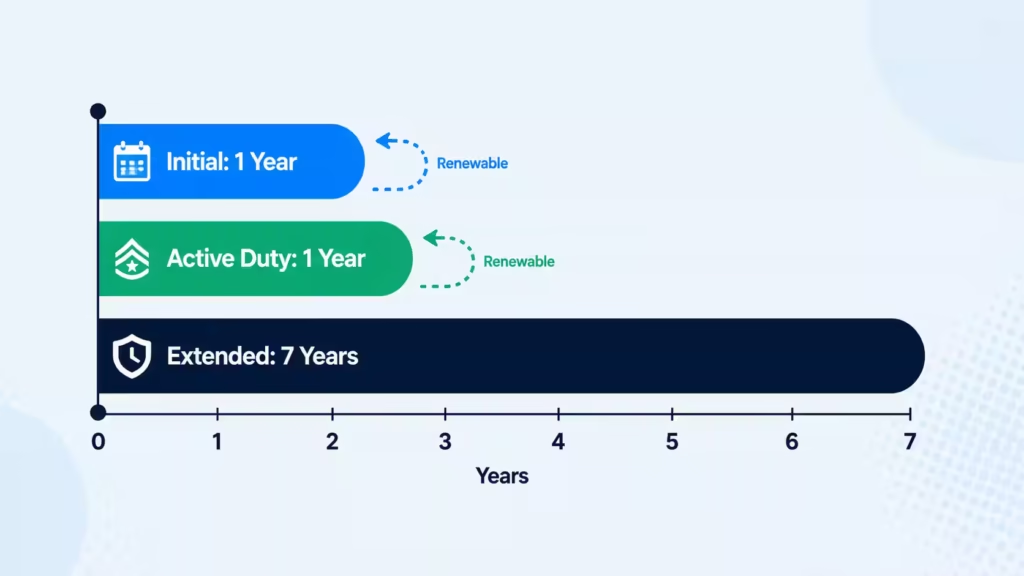
- Initial fraud alert: 1 year, renewable an unlimited number of times.
- Extended fraud alert: 7 years, renewable with a fresh FTC or police report.
- Active duty alert: 1 year, renewable for the length of deployment.
Renewal is not automatic. When your alert expires, it drops off your credit file quietly. Lenders stop seeing it. If you still want the protection, you must place a new alert before or right after the expiration date.
For an initial fraud alert, renewal is as simple as placing it again through any bureau’s website. It takes the same 10 minutes. Set a calendar reminder for 11 months after your original placement date, so you don’t miss the window.
For an extended fraud alert, you’ll need a current FTC identity theft report or police report at renewal time. If your original report is still valid and reflects your case, some bureaus accept it. Others may ask for a fresh one, so it’s smart to generate an updated FTC report at IdentityTheft.gov before you renew.
For an active duty alert, contact any of the three bureaus and confirm your continued deployment status. Renewal is free and quick.
David, an Army sergeant deployed on a 15-month rotation, placed his active duty alert at the start of his deployment. Eleven months in, he renewed it online in under 10 minutes so the coverage matched his full-time away.
How to Remove a Fraud Alert
Removing a fraud alert is different from placing one. This is important. Placing an alert with one bureau covers all three. Removing an alert does not. You must contact each bureau separately to fully remove it from your credit file.
Follow these steps.
Step 1. Decide if you really want to remove it. Common reasons include finishing a big loan process or realizing the alert is slowing down credit decisions you need to make. Otherwise, letting it expire naturally is easier.
Step 2. Contact Experian, then Equifax, then TransUnion. Each bureau has a separate removal process, usually inside your online account under fraud alert settings. You can also send a written request by mail with a copy of your ID.
Step 3. Verify identity for each removal. Bureaus want to confirm it’s really you asking, not a thief trying to clear the way. Expect a few security questions.
Step 4. Confirm removal in writing. Save the confirmation from each bureau. Removal usually takes effect within a few business days.
There is no fee to remove an alert. If a bureau or site charges you, that is not the right process.
If you only remove the alert from one bureau, the other two will still show it. That may cause confusing mixed results during new credit applications. Take the extra 10 minutes and remove it from all three.
Special Situations: Minors, Representatives, and Renewing Active-Duty Alerts
Standard fraud alert advice covers most adults. A few groups need extra steps.
Parents of minor children
A child under 16 usually lacks a credit report. But thieves sometimes use kids’ Social Security numbers. This fraud can go unnoticed for years. Parents can request a check for a minor’s credit file and, if one exists, place a security freeze at all three bureaus. A fraud alert also works if a report exists. Each bureau has a form for parents or guardians, and you’ll need the child’s birth certificate, your ID, and proof of your relationship.
Representatives for elderly or incapacitated adults
If you’re helping a parent with dementia, a spouse healing from a serious illness, or another adult who can’t handle their own credit, you can act for them. You’ll need legal proof, usually a power of attorney document, guardianship order, or conservatorship letter. Submit the documentation to any bureau along with the fraud alert request. Once approved, you can also renew and remove the alert as their representative.
Renewing an active duty alert during long deployments
Alerts expire after one year. Servicemembers on deployments longer than 12 months need to renew from wherever they’re stationed. Most bureaus allow online renewal, which is the fastest option. If online access is limited, a mailed written request with a copy of your military ID works too. A trusted family member with power of attorney can also renew on your behalf.
Active duty spouses handling family finances
A service member can grant a spouse or family member power of attorney to manage credit alerts during deployment. Keep the POA document ready before contacting any bureau.
Jennifer’s 78-year-old father was recovering from a stroke. After a suspicious credit card application showed up in his mail, she used a durable power of attorney to alert his file. The whole process took about 25 minutes online with Experian, and the alert covered all three bureaus.
Frequently Asked Questions (FAQs)
What is a fraud alert?
A fraud alert is a free notice added to your credit report that tells lenders to verify your identity before approving new credit in your name. It doesn’t block your existing accounts or lower your credit score.
Is having a fraud alert bad?
No, a fraud alert is not bad and doesn’t hurt your credit score in any way. It’s a routine safety step that many people add after a data breach, and lenders see it as normal rather than risky.
How long does a fraud alert last?
An initial fraud alert lasts 1 year and can be renewed an unlimited number of times. An extended alert for confirmed identity theft lasts 7 years, and an active-duty military alert lasts 1 year, renewable for the length of deployment.
Can someone still open accounts with a fraud alert?
Yes, a determined thief who can answer a lender’s verification questions can still open an account. A fraud alert only requires the lender to verify identity first; it doesn’t block the application as a credit freeze does.
What happens if you ignore a fraud alert notification?
If a lender calls to verify your identity and you don’t respond, the application typically stalls or gets denied since the lender can’t confirm it’s really you. This protects you, but it can also delay your own legitimate credit applications if you miss the call.
What are the three types of fraud alerts?
The three types are Initial (1 year, no proof needed, for general worry), Extended (7 years, requires an FTC or police report, for confirmed identity theft), and Active Duty (1 year, renewable, for deployed military members).
Can a fraud alert be removed?
Yes, but you must contact each of the three bureaus separately to remove it, unlike placing one, which covers all three at once. Removal is free and usually takes effect within a few business days after identity verification.
Does a fraud alert cost money?
No, all three types of fraud alerts are completely free under the Fair Credit Reporting Act. Any website that asks you to pay for a fraud alert is not a legitimate bureau site.
Does a fraud alert stop all types of fraud?
No, a fraud alert only protects against new accounts being opened in your name. It won’t stop a thief who already has your existing card number from making charges, so many people pair it with credit monitoring or a freeze.
Do I need to put a fraud alert on all three credit bureaus?
No, you only need to contact one bureau, either Experian, Equifax, or TransUnion. That bureau is legally required to share your request with the other two, so all three files get the alert.
Wrapping Up
A fraud alert is one of the fastest and cheapest ways to protect your credit after a scare. We covered what it does, the three types available, how it differs from a credit freeze, why it won’t hurt your score, and how to place, renew, or remove one at Experian, Equifax, or TransUnion.
Most readers should start by placing an alert today at any bureau. Then, decide within a few weeks if a credit freeze is also necessary.
If you know a friend, coworker, or family member who just got a breach email or spotted a strange charge, share this guide. It could save them hours of stress and stop identity theft before it starts.