
I’ve spent years helping readers untangle the small print behind their credit reports, and few things spark more panic than seeing “30 days late” next to an account. The stress usually comes from not knowing how bad it really is, whether it can be undone, or how long the mark will linger. If you’ve just missed a due date or spotted a late payment on a credit report you didn’t expect, take a breath.
A late payment becomes a formal credit report entry only after your account is at least 30 days past due, and the damage, while real, is rarely permanent.
In the guide below, you’ll get the exact reporting rules, realistic score-drop ranges, the 30/60/90/120-day escalation clock, and a step-by-step fix plan you can start today.
Key Takeaways
This guide explains what counts as a late payment on a credit report, when it gets reported to the bureaus, how much it can drop your score, and the exact steps to fix or dispute it.
Core Facts:
- Credit bureaus only record a payment as late once an account is at least 30 days past its due date, not the day after the due date passes.
- A first-time 30-day late payment can drop a high credit score by roughly 60 to 110 points, or 15 to 40 points for a fair score.
- Late payments escalate in stages at 30, 60, 90, and 120 days past due, with each stage creating its own reportable entry and growing score impact.
- Accounts unpaid past 120 to 180 days are typically charged off, added as a separate negative mark, and may be sold to a collection agency.
- Under the Fair Credit Reporting Act, a late payment can stay on a credit report for up to seven years from the original delinquency date.
- Consumers can dispute inaccurate late payment entries with the credit bureaus, which must investigate within 30 days.
Best for:
- Readers who just missed a due date and want to know how to avoid credit report damage within the 30-day window.
- Readers who already have a late payment reported and need a recovery plan, including goodwill letters and disputes.
- Readers trying to understand how much a late payment will affect their specific credit score.
What Counts as a Late Payment
A late payment happens the moment you miss the due date printed on your billing statement. However, the word “late” carries two very different meanings depending on who is using it. Your lender calls a payment late the day after it was due. The credit bureaus don’t record anything as late until the account is at least 30 days past the due date.
Three common events can trigger late status on your account:
- A missed due date. You didn’t pay by the deadline, and no grace period applies.
- A partial payment. You paid less than the minimum amount due. Even $1 short can flag the account as delinquent.
- A failed autopay. Your linked bank account bounced, your card on file expired, or your bank blocked the transfer.
Grace periods add another layer. Mortgages usually offer a 15-day grace period before a late fee kicks in. Credit cards, by federal rule, must give you at least 21 days between the statement date and the due date, but there’s no extra “cushion” once that due date passes. Auto loans and personal loans vary, so always check your contract.
⚠️ Mistake to Avoid: Assuming a paid minimum means you’re safe. If your statement shows a $75 minimum due and you send $70, your lender can still mark the account as delinquent even though you paid something.
Late Payment vs. Missed Payment
People use these two terms as if they mean the same thing. They don’t, and knowing the difference can save you real money and stress.
A late payment is any payment made after the due date, even by a few hours. Your lender will charge a late fee and may raise your interest rate, but nothing reaches the credit bureaus yet.
A missed payment, in credit bureau language, is a payment that is now 30 or more days past due. This is the point where the account gets reported to Experian, Equifax, and TransUnion, and where your credit score starts to feel the hit.
Put simply, every missed payment started as a late payment, but not every late payment turns into a missed one. That 30-day window is where you have the most power to fix things quietly.
When a Late Payment Actually Gets Reported to the Credit Bureaus
The reporting threshold is one of the most misunderstood parts of consumer credit. Lenders do not report late payments the day after they’re missed. They wait until the account is at least 30 days past due, then send an update to the three credit bureaus during their next reporting cycle.
Experian says this rule clearly: creditors only report late payments to any of the three credit bureaus when the account is at least 30 days late.
That means if your payment is one day late, 10 days late, or even 25 days late, the credit bureaus generally don’t see it. The consequences at that stage stay between you and your lender. Late fees may hit, and a promotional interest rate could disappear, but your credit score usually stays untouched.
Most lenders report data to the bureaus once a month, tied to your statement closing date. If you cross the 30-day mark right before that reporting date, the delinquency shows up quickly. If you settle up before your next statement closes, you may avoid it entirely.
The 1-29 Day Window: What Happens Before It’s Reported

The first 29 days after a missed due date form a private window between you and the lender. This is where quick action pays off the most.
During this window, expect these outcomes:
- A late fee. Credit card late fees are capped at $8 for most issuers under the Consumer Financial Protection Bureau’s rule, though some issuers still charge more depending on the account type. Mortgage and loan late fees are usually 4% to 6% of the missed amount.
- A possible penalty APR. Some credit cards can raise your rate to a penalty APR (often near 29.99%) if you’re more than 60 days late, but a policy change can be triggered early on subprime cards.
- Reminder calls and emails. Your issuer will nudge you through the app, email, phone, and text. Answer them. Silence makes lenders assume the worst.
- No credit report damage yet. As long as you clear the balance before day 30, the payment history section of your report stays clean.
💡 Pro Tip: Call your lender before day 15, explain what happened, and ask for a one-time late fee waiver. Issuers grant these more often than most people realize, especially when your prior payment history is strong.
How a Late Payment Shows Up on Your Credit Report
Once a payment crosses the 30-day mark and gets reported, it appears inside the “payment history” section of your credit report. Each of your accounts has its own row, and each row shows a monthly grid stretching back up to seven years.
Here’s what actually shows up on the report:
- Account name and number. The creditor’s name (like “Chase Card Services”) and a partial account number.
- Account status. This may read “current,” “30 days past due,” “60 days past due,” and so on.
- Days late category. The report groups delinquencies into buckets: 30, 60, 90, 120, and 150+ days.
- Original delinquency date. This is the exact date the account first went 30 days past due. It’s important because it starts the seven-year removal clock.
- Date of last activity. The most recent action on the account, whether a payment or a status change.
The three bureaus (Experian, Equifax, and TransUnion) don’t always show the same data at the same time. Not every lender reports to all three, and reporting cycles vary. It’s normal to see the late payment on one report a week before it shows on another.
| Days Past Due | How It Appears | Typical Score Impact |
|---|---|---|
| 1-29 days | Not on report | None (fees only) |
| 30 days | “30 days late” | Moderate to severe |
| 60 days | “60 days late” | More severe |
| 90 days | “90 days late” | Serious derogatory mark |
| 120+ days | “120 days late” or charge-off | Severe long-term damage |
How Much a Late Payment Can Drop Your Credit Score
Payment history is the single largest factor in your FICO Score, making up roughly 35% of the total, and it also carries the most weight in VantageScore. That’s why a single missed payment can cause a much bigger drop than most people expect.
The exact point loss depends on your starting score, the age of the account, and how many other on-time payments sit on your report. Realistic ranges look like this:
- A first-time 30-day late payment: roughly 60 to 110 points for high scores; 15 to 40 points for fair scores.
- A 60-day late payment: an added 20 to 40 points on top of the initial drop.
- A 90-day late payment: another significant drop, often pushing scores into the “poor” range.
- A 120+ day late payment or charge-off: the harshest single-event drop on the FICO scale.
One late payment can lower a top-tier score more than it lowers a mid-range one. That feels unfair, but it makes sense once you understand how scoring models weigh risk.
📌 Did You Know: The FICO scoring model treats a fresh 30-day late payment as one of the most predictive signs of future default. That’s why a single slip can cost more points than opening several new accounts.
Why Your Starting Score Changes the Size of the Drop
Higher scores fall harder. If your FICO score is 800, the model has built a picture of you as a very low-risk borrower. A sudden late payment breaks that pattern, so the model corrects sharply, sometimes taking 100+ points off in one move.
If your score is 620, the model already expects some payment risk. The late payment confirms what the score was already pricing in, so the drop is smaller (often 40 points or less).
Two more factors shape the size of the fall:
- Account age. A late payment on a 15-year-old account can hurt more than one on a card you opened last year, because older accounts anchor your payment history.
- Utilization at the time. If your credit card is near its limit when it goes late, the double negative (high utilization plus delinquency) magnifies the drop.
The good news? A high starting score also recovers faster, because your report holds many years of positive history to lean on.
The 30/60/90/120-Day Escalation Ladder
A late payment is not a single event. It’s a countdown. Every 30 days it goes unpaid, the status worsens and the damage compounds. Think of it as a ladder you don’t want to keep climbing.

Day 30: First reported. The account moves from “current” to “30 days past due.” Your score takes its first major hit. Late fees have already been charged.
Day 60: Second-stage delinquency. The account is now “60 days past due.” The penalty APR kicks in on most credit cards. Score damage grows. Collection calls become more frequent.
Day 90: Serious delinquency. At “90 days past due,” lenders view the account as high-risk. Many will stop offering payment plans and begin preparing for internal collections. This mark can block you from new credit, apartments, and even some jobs.
Day 120: Pre-charge-off zone. Once you hit 120 days, the account is usually flagged for charge-off. Your original creditor may sell the debt to a collection agency. A charge-off adds a second negative item to your report on top of the late payment history.
Each rung on the ladder counts as its own reportable event. That means one long-running delinquency can create four separate negative marks (30, 60, 90, 120) tied to the same account.
What Happens If It Goes Unpaid Past 120 Days
After 120 to 180 days, most credit card issuers charge off the account. A charge-off doesn’t mean the debt is forgiven. It means the lender has decided you’re unlikely to pay, so they write off the loss for accounting purposes and pass the debt on for recovery.
At this point, three things usually happen:
- The account appears as “charged off” on your credit report, one of the most severe negative marks possible.
- A collection agency takes over. The debt may be sold for pennies on the dollar. You’ll start getting letters and calls from a new party.
- A lawsuit becomes possible. For large balances, the creditor or collector can sue you, potentially leading to wage garnishment or a lien.
The seven-year removal clock is measured from the original delinquency date, not from the charge-off or collection date. So no matter how many times a debt is sold, it still ages off your report at the same time.
How Long a Late Payment Stays on Your Credit Report
Under the Fair Credit Reporting Act (FCRA), a late payment can remain on your credit reports for up to seven years from the date of the original delinquency. This applies whether the account was later paid, settled, or charged off.
Here’s how the timeline works in practice:
- The clock starts on the original delinquency date, which is the first day the account went 30 days past due.
- Paying the account brings it “current,” but the late payment history still stays on the report for the full seven years.
- Bankruptcy discharge or account closure does not restart or shorten the clock.
- After seven years, the bureaus must remove the entry automatically. You don’t need to request removal.
The good news: the negative impact of a late payment doesn’t stay the same across those seven years. It fades over time, especially if the rest of your credit behavior stays clean.
Does the Impact Fade Before It Falls Off?
Yes, and this is the part most articles skip. Credit scoring models weigh recent behavior more heavily than old behavior. A late payment from last month feels like a fresh wound. A late payment from three years ago feels more like a scar.
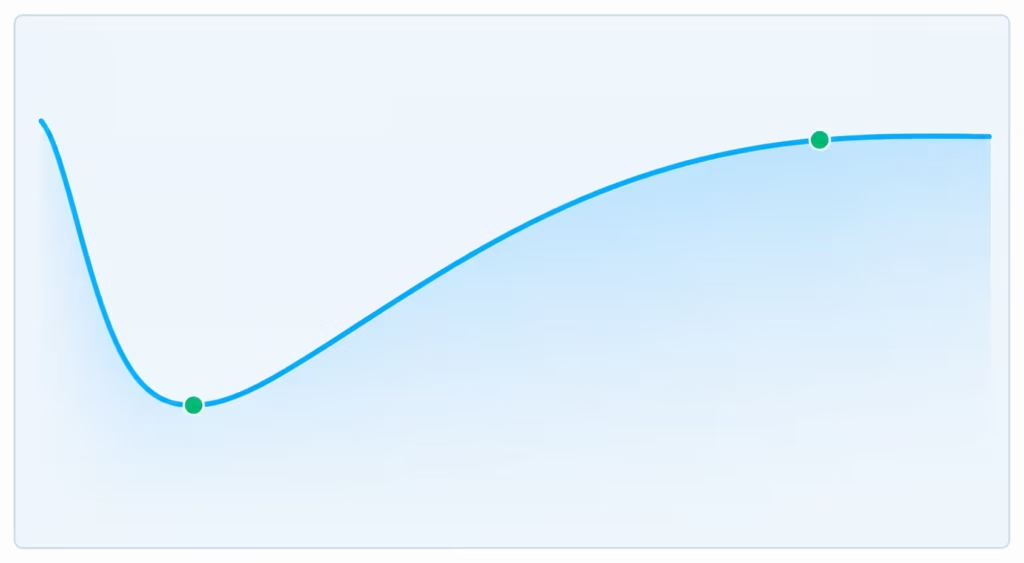
Here’s the typical recovery curve:
- Months 0-6: The score drop feels sharp. You may struggle to get approved for new credit.
- Months 6-12: With every on-time payment you make, the score climbs. Many people recover 30 to 50% of the lost points inside the first year.
- Months 12-24: The late payment starts to look like a one-off event, especially if surrounded by 12+ months of clean payments.
- Years 2-4: Most of the score damage is gone. The entry still appears on the report but no longer drives lending decisions the way it used to.
- Years 5-7: The entry is more historical than harmful. Then it drops off automatically.
The takeaway is simple: time and consistency heal credit scores. Your job is to stop the bleeding first, then let the calendar do its work.
How to Check Whether a Late Payment on Your Report Is Accurate
Never assume a late payment is correct just because it appears on your credit report. According to consumer research, credit report errors are common enough that experts recommend checking your report at least once a year. Under the FCRA, you have the right to dispute anything that looks wrong.
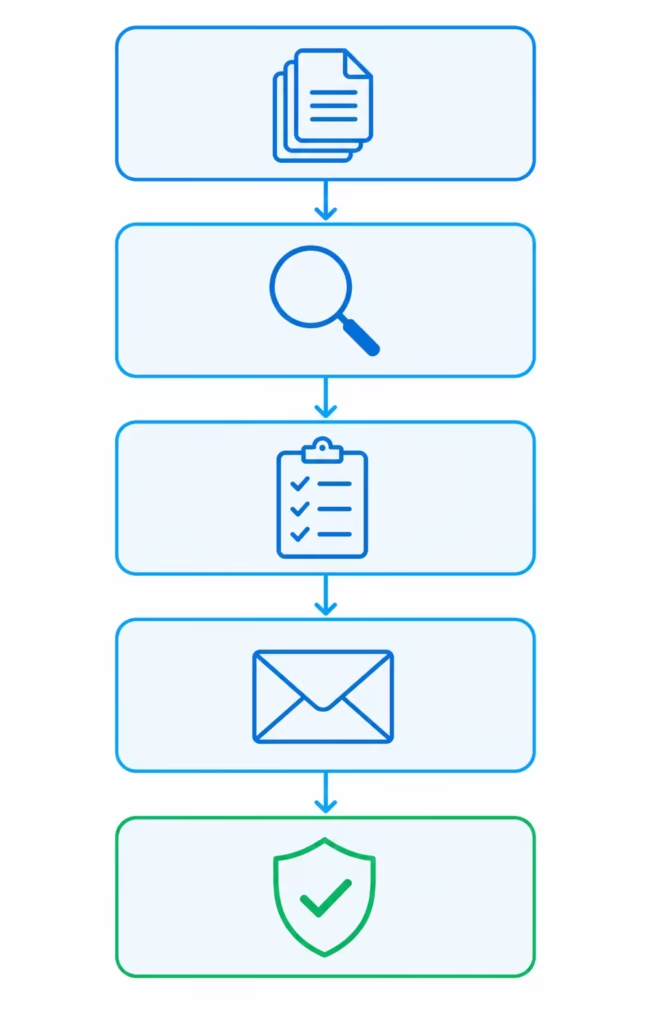
Follow this checklist to verify a late payment entry:
- Pull all three reports. Go to AnnualCreditReport.com, the only free source authorized by federal law. You can now get a free copy from Experian, Equifax, and TransUnion each week.
- Match the account details. Confirm the account number, creditor name, and balance line up with your own records.
- Check the payment history grid. Look at each month and confirm the “late” marker matches what actually happened. A late marker in a month you paid on time is a clear error.
- Confirm the original delinquency date. If the date is wrong, the seven-year clock might be extended beyond what the law allows.
- Gather proof. Bank statements, cleared checks, autopay confirmations, and screenshots of past-due notices are all strong evidence.
- File a dispute. You can dispute directly with each bureau online, by mail, or through the creditor. The bureau must investigate within 30 days.
If the dispute succeeds, the late payment is removed, and your score usually recovers within one to two reporting cycles. If it fails but you still disagree, you can add a 100-word statement to your file explaining your side.
What to Do If You’re Late but It Hasn’t Been Reported Yet
You’re in the golden window. As long as you act before day 30, you can usually avoid any credit report damage at all. Move fast and follow this sequence.
Step 1: Pay the full past-due amount today. Not the minimum, not part of it. Pay everything due so the account becomes current the moment the payment clears. If cash is tight, at least pay the minimum plus any late fees so the account no longer counts as delinquent.
Step 2: Call your lender the same day. Use the number on the back of your card or on your statement. Tell them what happened in one sentence. A clean script works best: “I missed my last due date, I’ve just paid the full balance owed, and I’d like to request a one-time late fee waiver given my strong payment history.”
Step 3: Ask two specific questions. First, “Will this be reported to the credit bureaus?” Second, “Can you note the account as never being 30 days past due?” Get the answer in writing through the secure message center if possible.
Step 4: Set up autopay for at least the minimum. This prevents a repeat. Even if you plan to pay in full each month manually, autopay for the minimum acts as a safety net. Most bank apps let you toggle this in under a minute.
Step 5: Add a due-date reminder. Set a calendar alert five days before every due date. Pair it with a second alert two days before, and you’ll rarely miss another payment.
💡 Pro Tip: When you call, mention specific positive facts, such as your years as a customer or your streak of on-time payments. Lenders are far more willing to waive fees and skip reporting when they can see you’re a low-risk, long-term account.
What to Do If a Late Payment Is Already on Your Report
If the mark is already there, don’t panic. You still have real tools, and the impact fades faster than you think. Work through these steps in order.
Step 1: Bring the account current immediately. Every extra day it stays past due pushes it further up the escalation ladder. Paying it off stops the bleeding and shows future lenders the issue is resolved.
Step 2: Send a goodwill letter. A goodwill letter is a short, polite request asking the creditor to remove the late payment as a one-time courtesy. It works best when you have a long history with the lender and the late payment was a genuine one-off. Keep it under 300 words, admit responsibility, and explain what you’ve done to prevent it from happening again.
Step 3: Dispute anything inaccurate. If any detail is wrong (the date, the amount, the number of times reported), file a formal dispute with the bureau. Legitimate late payments cannot be disputed away, but errors can be corrected under the FCRA.
Step 4: Rebuild active positive history. The fastest way to recover is to bury the late payment under fresh good behavior. Keep every other account paid on time, keep credit card balances below 30% of the limit, and don’t close old accounts unless you must.
Step 5: Track your progress monthly. Use a free score monitoring tool through your bank or a service like Experian’s free credit monitoring to watch the score rebuild. Seeing the numbers move keeps you motivated.
Step 6: Be patient with big-ticket applications. Wait 6 to 12 months after the late payment before applying for a mortgage or auto loan if you can. Lenders weigh recent late payments heavily during underwriting.
Recovery isn’t fast, but it is predictable. Consumers who pay all their bills on time for 12 months after a late payment often regain most of their lost points. The late payment still shows on the report, but the improvement is noticeable.
Frequently Asked Questions
How bad is a late payment on your credit report?
A first-time 30-day late payment can drop a high credit score by 60 to 110 points, while fair scores usually lose 15 to 40 points. The damage grows worse at 60, 90, and 120 days as the account moves further past due.
Can I have a 700 credit score with late payments?
Yes, a 700 score can include an older or single late payment, especially if 12 or more months of on-time payments followed it. Scoring models weigh recent behavior more heavily, so the impact fades well before the mark falls off your report.
Can I get a late payment removed from my credit report?
You can request removal through a goodwill letter if you have a long history with the lender and the late payment was a one-time slip. You can also dispute the entry with the credit bureau if any detail, like the date or amount, is inaccurate.
How to get rid of a late payment on your credit score?
Bring the account current immediately, then send a goodwill letter asking the creditor to remove the mark as a courtesy. Pair this with 12 months of on-time payments and low credit utilization to rebuild most of the lost points.
What is the biggest killer of credit scores?
Payment history makes up roughly 35% of your FICO Score, the largest single factor in the model. A 120-day late payment or charge-off causes the harshest single-event drop on the FICO scale.
How to ask for late payment forgiveness?
Call your lender and use a short script: explain you missed the due date, confirm you’ve paid the full balance, and request a one-time late fee waiver based on your payment history. Mention your years as a customer, since issuers grant waivers more often for long-standing, low-risk accounts.
How to legally get late payments removed from credit report?
Under the FCRA, you can dispute any late payment entry that’s inaccurate, such as a wrong date or a marker on a month you actually paid on time. The bureau must investigate the dispute within 30 days and remove the entry if it can’t be verified.
Can you have an 800 credit score with a late payment?
An 800 score is less likely to carry a recent late payment, since a sudden delinquency can cost a top-tier score 100 or more points. Years after the event, though, the entry becomes mostly historical and stops driving lending decisions.
How much will my credit score go up if late payments are removed?
Score recovery varies, but many people regain 30 to 50% of their lost points within the first year of clean payments. If a dispute succeeds and the mark is removed entirely, the score usually recovers within one to two reporting cycles.
How long does a late payment affect your ability to get approved for credit?
Lenders weigh recent late payments heavily during underwriting, so it’s best to wait 6 to 12 months after a late payment before applying for a mortgage or auto loan. The mark itself stays on your report for seven years, but its influence on approval decisions fades well before then.
Wrapping Up
A late payment on your credit report feels scary at first, but the rules behind it are more forgiving than they seem. As long as you act inside the 30-day window, you can often avoid any lasting damage. If the mark is already there, quick payoff, a goodwill letter, careful dispute of any errors, and 12 months of clean payments will heal most of the score drop.
Consistent action today is the best choice. The seven-year FCRA timeline shows how scoring models value recent behavior. So, don’t wait; take action now.
If you know someone stressing over a missed due date or a new mark on their report, share this guide with them. It could save them hundreds of points and years of worry.