
You pulled your credit report and saw the words “charge-off” next to an old account. Now you’re asking the question everyone asks: what is a charge-off on a credit report, and does it mean the debt is gone? It’s a fair worry, because the term sounds like the balance was cancelled. It wasn’t, and acting like it was can cost you later.
A charge-off is a creditor’s internal bookkeeping move, not debt forgiveness. You still owe the money, and the mark can follow you for years.
Read on for a simple breakdown of the score damage, the timeline, your removal options, and the best first step for your situation.
Key Takeaways
This guide explains what a charge-off means on a credit report, including the score impact by scoring model, the seven-year reporting timeline, dispute and removal options, and steps to rebuild credit afterward.
Core Facts:
- A charge-off means the debt is unpaid and still owed; the creditor writes it off internally, but the balance remains your legal obligation and can still be collected or sold.
- A charge-off can lower a credit score by roughly 50 to 150 points, with higher starting scores typically seeing larger drops than lower starting scores.
- Payment history makes up 35% of a FICO Score, which is why a charge-off, as a severe payment failure, causes significant damage.
- A charge-off stays on a credit report for seven years from the date of first delinquency, not the charge-off date or the payment date.
- Paying a charge-off in full typically improves a score by only about 15 to 25 points, since the underlying missed payment history does not change.
- Under FICO 9 and VantageScore, paid collections are ignored, while FICO 8 and mortgage scoring versions still count a paid charge-off against you.
Best for:
- Readers who just noticed a charge-off on their credit report and want to know if the debt is forgiven.
- People deciding whether to pay, settle, or dispute a charge-off before applying for a mortgage or auto loan.
- Anyone trying to understand how long a charge-off stays on their report and how to rebuild their score afterward.
What a Charge-Off Actually Means
A charge-off happens when a lender decides it’s unlikely to collect what you owe and writes the account off as a loss on its own books. For the lender, this is an accounting step. It helps them clean up their balance sheet for tax and reporting purposes.
For you, it works very differently. A charge-off is a negative mark. The original creditor reports it to three credit bureaus: Equifax, Experian, and TransUnion. It stays attached to that account on your credit report.
Two things happen to the account at this point:
- It’s closed to new purchases or draws, so you can’t use it anymore.
- Its status changes from simply late, or delinquent, to “charged off,” which signals to any future lender that the debt was never repaid as agreed.
The most important thing to know: a charge-off is a write-off for the creditor, not a cancellation for you. The word confuses a lot of people. Michael, a warehouse supervisor in Ohio, ignored a $3,200 charged-off credit card for over a year because he assumed the bank had forgiven it. Then a debt buyer filed a lawsuit against him. The balance had never gone anywhere.
📌 Did You Know: Creditors often charge off accounts after 180 days of missed payments. This isn’t kindness; it’s a requirement from federal banking regulators.
Do You Still Owe the Debt After a Charge-Off?
Yes. You owe every dollar of it.
A charge-off changes how the lender accounts for the debt. It doesn’t change your legal obligation to pay it. The original creditor can still contact you for payment, and it can also sell or hand the debt to a collector, who then has the same right to collect.
The only real limits are these. The statute of limitations in your state sets a deadline for how long someone can sue you over the debt. That’s usually three to six years, depending on the state and the debt type. Once that deadline passes, you can’t be sued, but the debt itself still exists, and collectors can still ask you to pay.
So treat “charged off” as “still owed, now with extra credit damage.” It’s not the same as forgiven.
How a Charge-Off Happens (The Delinquency Timeline)
Nobody gets a charge-off overnight. It’s the last step of a long sequence of missed payments, and each step shows up on your credit report before the charge-off itself appears.
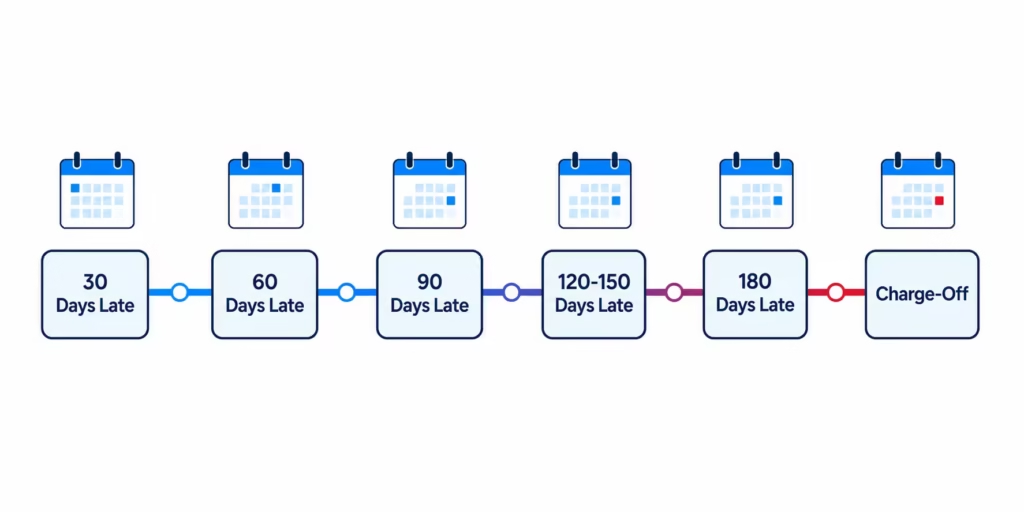
Here’s the typical progression:
- 30 days late. The first missed payment gets reported. Your score takes its first real hit.
- 60 and 90 days late. Each new delinquency level does more damage than the one before.
- 120 to 150 days late. The account is now severely delinquent. Collection calls and letters usually ramp up here.
- Around 180 days late. For credit cards and most revolving accounts, the creditor charges the account off. Installment loans like personal loans sometimes charge off closer to 120 days.
That works out to roughly six missed payments before the charge-off label shows up.
This timeline matters for one big reason: most of the damage to your score happens during the missed payments, not at the charge-off moment. By the time the charged-off status appears, your payment history already shows five or six straight late marks.
The charge-off is the headline, but the delinquency chain underneath it did most of the work. The date of first delinquency, which is the first missed payment that started this chain, also becomes important later. It’s the date the seven-year reporting clock starts from.
How Much a Charge-Off Hurts Your Credit Score
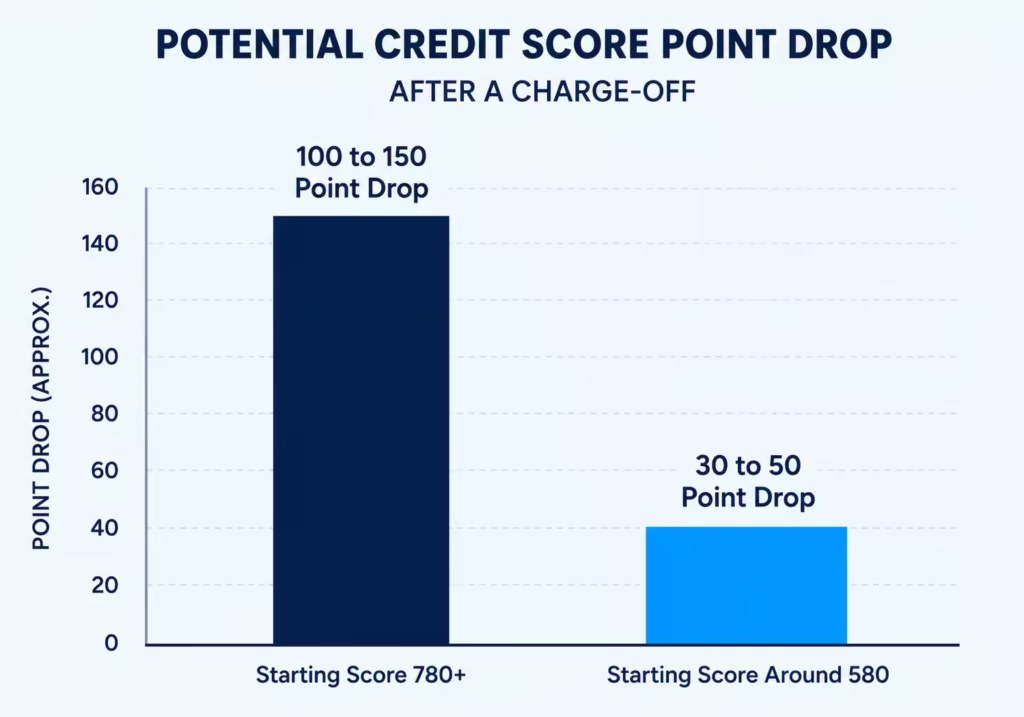
A charge-off is one of the most damaging entries that can appear on a credit report. The realistic hit is roughly 50 to 150 points, and the range depends heavily on where your score started.
That range sounds odd at first, but the logic is simple. Scoring models punish surprises. If your score was excellent, say 780 or higher, a charge-off stands out against an otherwise clean record, and the drop can reach 100 to 150 points.
If your score was already 580 due to other late payments, a charge-off may only lower it by 30 to 50 points. This is because much of the damage is already reflected in your score.
The reason the hit is so large comes down to how scores are built. Payment history makes up 35% of a FICO Score, the single biggest factor. A charge-off is a payment history failure at the most severe level.
There’s a second, quieter hit if the account was a credit card. When a card charges off, the balance often still counts toward your credit utilization while your available credit on that card drops to zero. That can push your overall utilization ratio up, which pressures the amounts-owed portion of your score. So one charged-off card can hurt you twice.
Charge-Off Impact by Scoring Model
The score you see isn’t the only score you have, and different models treat charged-off and collection debt differently. This is why your score on a free app can look fine while a lender’s score comes back much lower.
- FICO 8 (still the most widely used version) counts unpaid collections heavily and paid collections too, so resolving the debt doesn’t fully clear the penalty.
- FICO 9 ignores collection accounts that have been paid in full and weighs medical collections less. FICO’s own research confirms that paid collections are disregarded under this version.
- VantageScore 3.0 and 4.0 also ignore paid collections, which is one reason Credit Karma scores often look better after you pay.
- Mortgage FICO versions (2, 4, and 5) are older models, and they punish charge-offs and collections more harshly than newer versions, paid or not.
The key point: a paid charge-off can improve your VantageScore but may not affect the FICO score a mortgage lender uses. Before a big loan application, find out which score the lender uses.
Charge-Off vs. Collection Account: Why You Might See Both
Seeing two negative entries for what feels like one debt is confusing, but it’s usually not an error.
A charge-off comes from the original creditor. When your card issuer or lender gives up on collecting directly, it marks your account as charged off. That entry stays on your report under the original creditor’s name.
A collection account is a separate tradeline that appears when the debt is assigned or sold to a collection agency or debt buyer. Now the collector reports its own entry, usually showing the same balance (or close to it) under a different company name.
The lifecycle goes like this: First, the original creditor charges off the account. Then, they sell the debt to a debt buyer. The buyer then opens a new collection tradeline for the same balance. Two entries, one underlying debt. Both can legally appear in credit bureau reporting at the same time, as long as each is accurate.
There’s one detail worth checking, though. If the debt was sold, the original creditor’s entry should show a zero balance with a note that the debt was transferred. If the original entry shows the full balance, and the collector’s entry does too, it may look like you owe the debt twice. This is worth disputing because it’s inaccurate.
Two negative marks hurt more than one, but they age off at the same time. This is because both go back to the same date of first delinquency.
What Happens After a Charge-Off
A charge-off isn’t the end of the story. It’s usually the start of a fairly predictable sequence. Knowing the order helps you plan instead of getting blindsided.
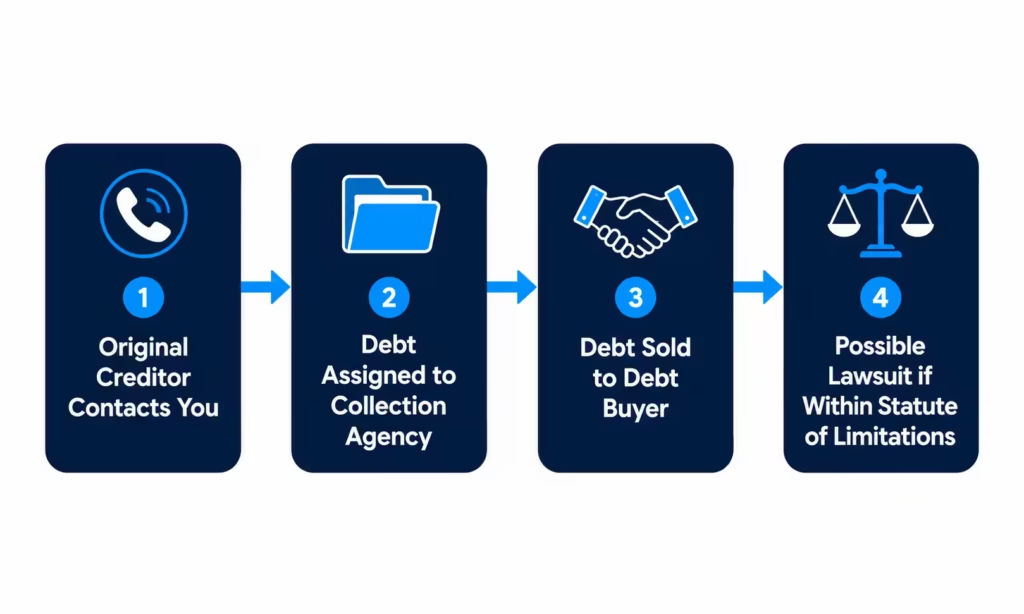
- The original creditor keeps trying first. For the first few weeks or months after charge-off, the lender’s own recovery department will typically call and send letters asking for payment.
- The debt gets assigned to a collection agency. The creditor still owns the debt but hires an agency to collect it for a cut of whatever comes in. Letters and calls now come from the agency.
- The debt may be sold outright to a debt buyer. Debt buyers purchase charged-off accounts for pennies on the dollar, so even settling for less than you owe can be profitable for them. This is why negotiation is often possible.
- A lawsuit becomes possible. As long as the statute of limitations hasn’t expired in your state, the creditor or debt buyer can sue. If they win, the judgment can lead to wage garnishment or a bank account levy, depending on state law.
Sarah, a customer service rep in Texas, received letters from three different companies about the same $2,100 charged-off card over 18 months. First the bank, then a collection agency, then a debt buyer. Each transfer was normal, but she only knew that after checking that each letter’s balance matched the original account.
At every stage, you retain rights. Collectors must validate the debt if you ask in writing, and they can’t harass you or misrepresent what you owe.
Does Paying Off a Charge-Off Help Your Credit Score?
Paying helps, but far less than most people expect. The realistic improvement is often in the single digits, up to about 15 to 25 points, depending on the scoring model and the rest of your file.
Here’s why the gain is so small. When you pay, the account status updates from “charged off, unpaid” to “paid charge-off.” What doesn’t change is the payment history itself. The six missed payments and the charge-off record stay on the report. Since payment history drives the score, and payment history didn’t change, the score barely moves.
Whether paying matters at all depends on the model. Under FICO 9 and VantageScore, paid collections are ignored, so resolving the balance can produce a visible lift on those scores. Under FICO 8 and the mortgage versions, a paid charge-off is still a charge-off.
That said, paying still has real value beyond points:
- Many mortgage and auto lenders require unpaid charge-offs to be resolved before approval, regardless of score.
- Paying (or settling) ends collection calls and removes the risk of a lawsuit on that debt.
- A paid account simply looks better to a human underwriter than an unpaid one.
For a bigger score impact, focus elsewhere first. Paying down balances on your active cards helps your credit score more than paying off an old charge-off. That’s because credit utilization counts for about 30% of your FICO Score.
Paid vs. Settled vs. Unpaid: How Each Is Reported
The status language on your report depends on what you do, and future lenders read these statuses closely.
- Paid in full (“charge-off paid”): You paid the entire balance. This is the best-looking resolution. The negative history remains, but the status shows you made it right.
- Settled for less than the full amount: You negotiated a lower payoff. The account reports as “settled” or “settled for less than owed.” It’s resolved, but some lenders view it as a partial default, so it reads more negatively than paid in full.
- Unpaid: The balance sits open. This is the worst status for loan approvals and keeps the door open to collections and lawsuits.
💡 Pro Tip: If you can’t pay in full, negotiate a written settlement first. Make sure to get an agreement to report the account as settled with a zero balance. Verbal promises from collectors aren’t enforceable.
How Long a Charge-Off Stays on Your Credit Report
A charge-off can stay on your credit report for seven years, and the clock runs from the date of first delinquency. That’s the first missed payment that started the chain leading to the charge-off, not the date the account was charged off, and not the date you paid it.
This rule comes from the Fair Credit Reporting Act. The Consumer Financial Protection Bureau confirms that most negative information, including charge-offs, can be reported for seven years.
Two points clear up the most common confusion here:
- Paying or settling does not restart or shorten the seven-year clock. A paid charge-off from 2021 still falls off in 2028. Payment changes the status, not the timeline.
- The damage fades long before the mark disappears. Scoring models weigh recent activity more heavily. A charge-off from five years ago feels less damaging than one from last year. This is true, especially if you’ve had positive payment history since then.
So if you have a charge-off from several years back and a major purchase coming up, time itself is quietly working in your favor.
Can a Charge-Off Be Removed From Your Credit Report?
Sometimes, but only under specific conditions. Set your expectations: a legitimate charge-off usually can’t be removed early from your credit report. Anyone promising guaranteed removal of accurate negative marks is selling something the law doesn’t support.
Your realistic removal paths are these:
- Dispute it if it’s inaccurate. Under the Fair Credit Reporting Act, credit bureaus must investigate and correct errors. If the balance, dates, or account details are wrong, or if the account isn’t yours, you can dispute the entry and potentially get it removed. Disputes work on errors, not on accurate but negative information.
- Negotiate a pay-for-delete. You offer to pay in exchange for the creditor or collector deleting the tradeline entirely. Some collectors agree; many don’t, because reporting accurate information is part of their agreements with the bureaus. Always get any pay-for-delete agreement in writing before paying.
- Let it age off. For an accurate charge-off that’s a few years old, waiting is usually the best choice. The mark will drop off automatically after seven years.
Check the Charge-Off for Accuracy First
Before any removal attempt, pull your reports and verify every detail of the entry. Disputes only succeed on genuine errors, so you need to know whether you have one.
Get your reports from all three bureaus. You can pull them for free, weekly, at AnnualCreditReport.com, the only site federally authorized for this.
Then check the charge-off entry against your own records:
- Dates: Does the date of first delinquency match when you actually fell behind? A wrong date can illegally extend the reporting period.
- Balance: If the debt was sold, does the original creditor show a zero balance? Is the collector’s amount correct?
- Account details: Is the account number, creditor name, and account type right? Is it even your account?
A legitimate dispute basis is a factual error: wrong dates, wrong amounts, accounts you don’t recognize, or duplicate reporting of a sold balance. “I was going through a hard time” or “I paid it late, but I paid it” isn’t a dispute basis. Filing disputes without a real error wastes your time and can flag your file.
The Statute of Limitations Risk When Negotiating
There’s a legal wrinkle most articles skip, and it matters if your charge-off is several years old.
The statute of limitations is the window during which a creditor or collector can sue you. It varies by state, typically three to six years. Here’s the risk: in some states, making even a small partial payment, or acknowledging the debt in writing, can restart that clock. A debt that was about to become too old to sue over can become suable again because of a $50 “good faith” payment.
⚠️ Mistake to Avoid: Don’t make a partial payment or promise to pay on an old charge-off. First, check your state’s statute of limitations rules. A small payment can legally revive a debt that was nearly uncollectable in court.
Two clarifications keep this straight. First, this only affects the lawsuit clock. It has zero effect on the seven-year credit reporting clock, which runs separately and can’t be restarted by payment.
Second, if a debt is already past the statute of limitations, collectors can still ask you to pay, but they can’t legally win a lawsuit against you for it.
When in doubt about an old, large debt, a short consultation with a consumer attorney is worth the cost before you negotiate.
What to Do First: A Decision Framework
You’ve got the full picture now. The right move depends on your specific situation, so find your branch below and start there.
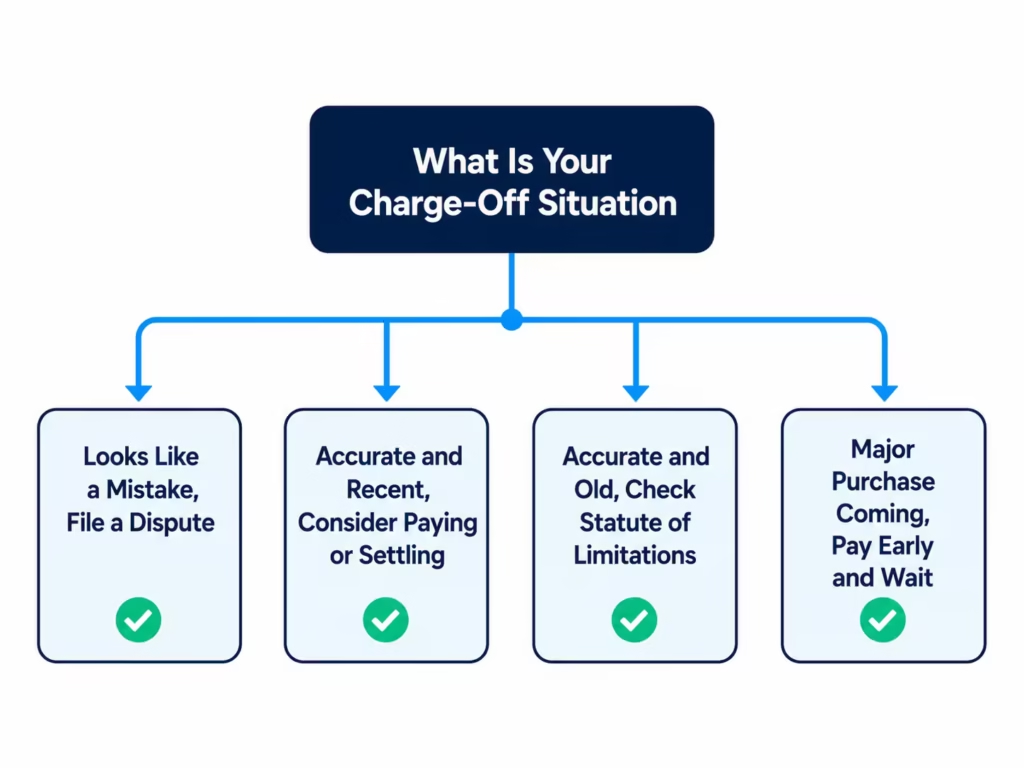
If you think the charge-off is a mistake: Pull all three reports. Check the dates, balance, and account details. Then, file disputes with any bureau that has incorrect information. Don’t pay anything until the accuracy issue is resolved. Paying a debt that isn’t yours or is reported incorrectly makes cleanup tougher.
If the charge-off is accurate and recent (under two years old): Focus on damage control. If a mortgage or car loan is coming, plan to pay or settle, since many lenders require it. If nothing big is coming, decide between paying in full (best optics) and settling (cheaper, slightly worse optics). Get any agreement in writing first.
If the charge-off is accurate and old (four-plus years): Check your state’s statute of limitations before contacting anyone about the debt. If it’s expired and you have no major loan plans, letting the mark age off is often the smartest, cheapest path. If you plan to buy a home soon, trying a pay-for-delete or settlement might be helpful. Underwriters focus on unresolved debts, even if scores don’t reflect them.
If you’re planning a major purchase within 12 months: Act early. Pay off your balance at least six months before applying. This gives the bureaus time to update. During the wait, focus on making positive payments and lowering utilization on your active accounts.
How to Start Rebuilding Your Score After a Charge-Off
A charge-off feels permanent, but recovery starts as soon as you do. These steps move scores the most, in rough order of impact.
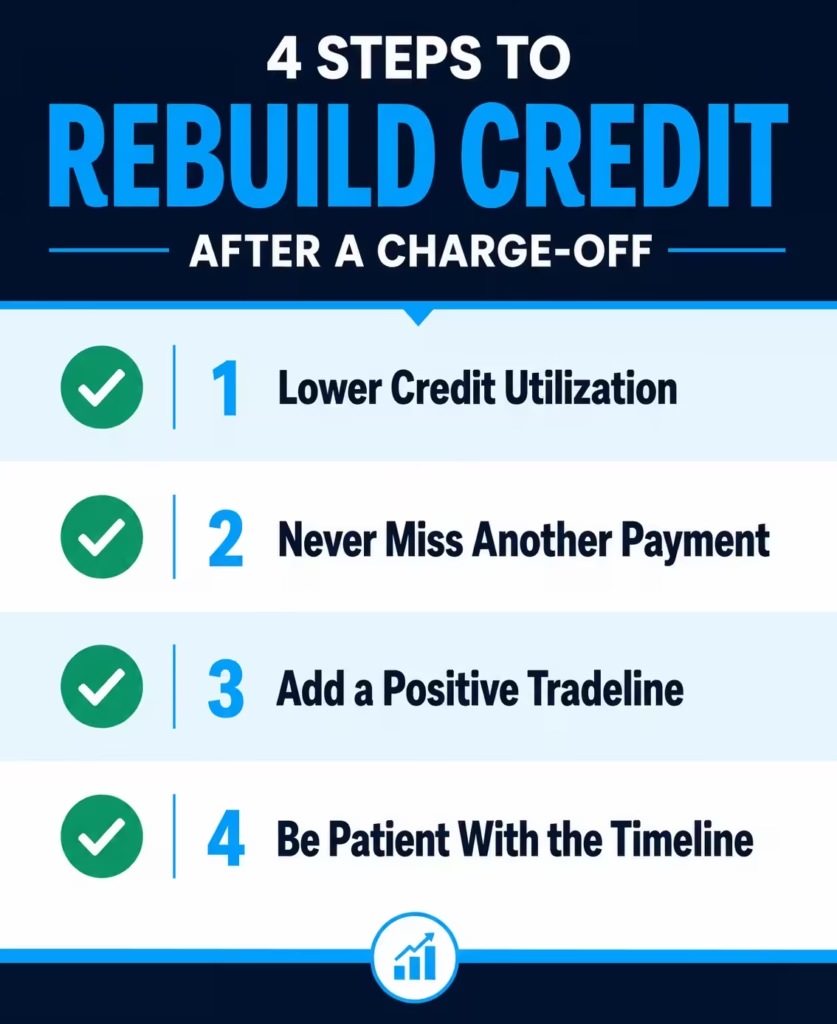
- Lower your credit utilization. Pay down balances on your open cards. Getting utilization under 30% helps, and under 10% helps more. This usually beats paying the charge-off itself for score impact.
- Never miss another payment. Every on-time payment from here on will dilute the old damage. Set up autopay for at least the minimum on every account.
- Add a positive tradeline if you need one. If your remaining accounts are thin, a secured credit card is the standard tool. You put down a refundable deposit, use the card lightly, and pay it off monthly. Six to twelve months of clean history on a secured card does real work.
- Be patient with the timeline. Most people notice significant score recovery in 12 to 24 months of consistent positive behavior, even if the charge-off remains. The mark fades in influence every year until it drops off at seven.
Jennifer, a teacher in Arizona, went from a 542 score with a charged-off card to 661 in about 20 months. Her strategy was nothing exotic: a $300 secured card used for gas only, autopay on everything, and her utilization kept under 10%. The charge-off was still on her report the whole time.
Frequently Asked Questions (FAQs)
Should I pay off a charged-off account?
Paying is usually worth it, especially before a mortgage or auto loan application, since many lenders require unpaid charge-offs to be resolved regardless of score. It also stops collection calls and removes the risk of a lawsuit on that debt.
What happens when you pay off a charged-off account?
The account status updates from “charged off, unpaid” to “paid charge-off,” but the six missed payments and charge-off record stay on your report. Since payment history doesn’t change, the score impact is usually small.
Will my credit score go up if I pay a charge-off?
Only slightly, typically 15 to 25 points depending on the scoring model. Under FICO 9 and VantageScore, paid collections are ignored, so the lift is more visible than under FICO 8 or mortgage scoring versions.
Are charge-offs worse than collections?
A charge-off and a resulting collection account often stem from the same debt, so seeing both isn’t double punishment for a separate offense. Both age off your report together, exactly seven years from the original date of first delinquency.
How do I remove a charge-off from my credit?
You generally can’t remove an accurate charge-off early; disputes only work for genuine errors like wrong dates, wrong balances, or accounts that aren’t yours. Some collectors will agree to a pay-for-delete arrangement, but always get that promise in writing before paying.
How serious is a charge-off?
It’s one of the most damaging marks on a credit report, capable of dropping a score by 50 to 150 points. The size of the hit depends on your starting score, with higher scores taking the biggest percentage drop.
Does a charge-off come off your credit report?
Yes, it falls off automatically seven years after the date of first delinquency, which is your first missed payment, not the charge-off date. Paying or settling the account does not shorten or restart that seven-year clock.
Should I pay a 5-year-old charge-off?
Check your state’s statute of limitations before contacting the creditor, since a payment can sometimes restart the legal window for a lawsuit. If it’s expired and no major loan is planned, letting it age off is often the cheaper path.
Can I buy a house with a charge-off on my credit?
It’s possible, but mortgage underwriters often require unpaid charge-offs to be resolved before approval regardless of your score. If a home purchase is within 12 months, paying off the balance at least six months early gives bureaus time to update your report.
What happens if you never pay a charged-off account?
The debt can be sold to a collection agency or debt buyer, who can pursue you for payment or even file a lawsuit if your state’s statute of limitations hasn’t expired. A win in court can lead to wage garnishment or a bank levy depending on state law.
Wrapping Up
A charge-off is just an accounting term. It doesn’t mean your debt is forgiven. You still owe the balance. The mark stays on your report for seven years from your first missed payment. If you pay it, the status updates, but the history remains.
For most readers, it’s best to check the entry’s accuracy first. Then, if a loan is coming, resolve the balance. If not, let an old, accurate mark fade away while keeping low utilization and making on-time payments. That’s what actually moves a score, because recent behavior outweighs old damage.
Understanding a charge-off on a credit report turns panic into a plan. If someone you know just spotted this term on their report and is spiraling, share this with them. It could save them from a costly mistake.