
I know how frustrating it feels to search for free credit monitoring services and hit a wall of look-alike apps. You just want to see your score, catch fraud early, and not get hit with a surprise dip before a mortgage or auto loan. But every app promises the same thing, and the fine print is confusing.
The fix is simple: pick two or three trustworthy free tools that each cover a different credit bureau, so together they give you full 3-bureau coverage at zero cost.
Below, we’ll walk you through which apps to use, which score they show, and exactly what to do when an alert pings your phone.
Key Takeaways
This guide explains the best free credit monitoring services, including which bureau and score model each app covers, how to combine apps for full 3-bureau coverage, and what to do when an alert fires.
Core Facts:
- No single free app covers all three bureaus; Credit Karma covers Equifax and TransUnion, Experian Free covers Experian, and Capital One CreditWise covers TransUnion.
- Most free apps show VantageScore 3.0, but FICO Score 8 is used in about 90% of lending decisions, and Experian Free and CreditWise show real FICO Score 8.
- Stacking Credit Karma, Experian Free, and Capital One CreditWise gives full 3-bureau coverage for $0, versus a paid plan costing $20 to $30 per month.
- Chase Credit Journey includes identity theft insurance up to $1 million covering legal fees, lost wages, and ID replacement costs, at no charge.
- Checking your own credit is a soft inquiry and never lowers your score, while a hard inquiry from a lender can shave off a few points temporarily.
- AnnualCreditReport.com provides free full credit reports from all three bureaus weekly, though it does not include a credit score.
Best for:
- Readers rebuilding credit after a missed payment who want to track two bureaus plus a real FICO Score 8.
- Readers preparing for a mortgage or auto loan within 6 to 18 months who need to see the FICO Score 8 lenders actually pull.
- Readers most concerned about fraud or identity theft who want dark web monitoring and identity theft insurance included at no cost.
What “Free Credit Monitoring” Actually Gives You
Free tools give you the basics. You get a credit score, a version of your credit report, and alerts when something changes. That is enough for most people who just want to track their credit and catch fraud early.
Here is what free credit monitoring apps usually include:
- A monthly or weekly credit score refresh
- Access to a soft-pull credit report from one or two bureaus
- Credit report alerts when a new account, inquiry, or big balance change hits your file
- Basic tips to help improve your score
- Light identity theft tools like dark web scans (only on some apps)
Here is what free tiers usually leave out:
- Full 3-bureau coverage in a single app
- Robust identity theft insurance (only Chase Credit Journey offers a strong policy for free)
- Deep dark web scans across many data sources
- Fast alerts across all three bureaus at once
- Live agents to help you fix fraud
The point is this: “free” does not mean the same features as paid. Free tools cover the basics well. Paid tiers add speed, depth, and insurance. For most people, free credit report monitoring is enough if you know how to stack a few apps together (more on that later).
💡 Pro Tip: Turn on push notifications, not just email alerts. Fraud can move fast. A push alert on your phone gets your attention in minutes, while an email might sit unread for hours.
Does Checking Your Own Credit Hurt Your Score?
No. Checking your own credit is a soft inquiry. Soft inquiries never lower your score. You can check it every day if you want.
A hard inquiry is different. That happens when a lender pulls your credit to decide on a loan or credit card. Hard pulls can shave a few points off your score for a short time.
So feel free to log in to any free app as often as you like. Your score will not drop from that.
FICO vs. VantageScore: Which Score Free Apps Actually Show You
This is the mistake that costs people the most. Most free apps show a VantageScore, not a FICO Score. But lenders mostly use FICO. So the score you see in a free app may not match the one your mortgage lender pulls.
Here is a plain-English breakdown of both models:
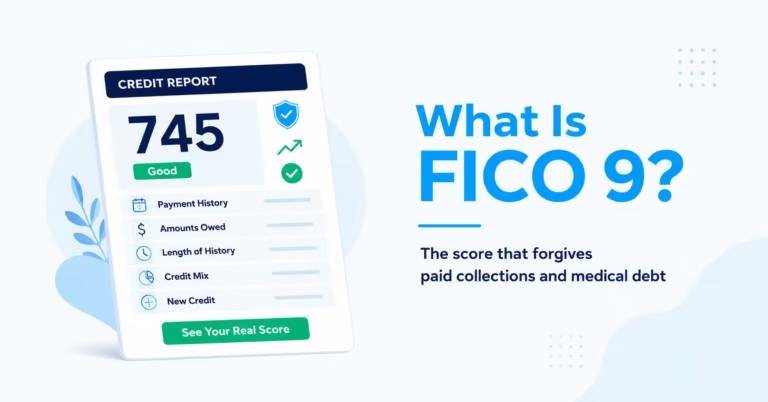
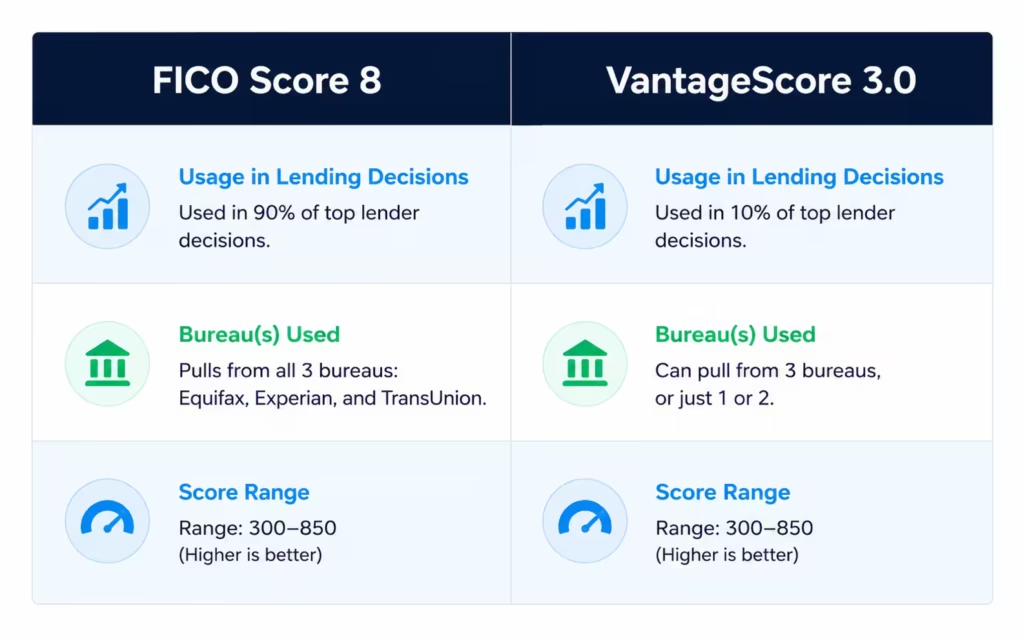
- FICO Score is used in about 90% of lending decisions. Mortgage lenders, auto lenders, and most credit card issuers rely on it. The most common version is FICO Score 8, though mortgage lenders often use older versions.
- VantageScore 3.0 is a newer model built by the three bureaus together. It uses the same 300–850 range as FICO. But the math behind the score is different, so the two numbers can be 20 to 50 points apart.
Here is which score each major free tool shows:
| Free App | Score Model | Bureau |
|---|---|---|
| Credit Karma | VantageScore 3.0 | Equifax and TransUnion |
| Experian Free | FICO Score 8 | Experian |
| Capital One CreditWise | FICO Score 8 | TransUnion |
| Chase Credit Journey | VantageScore 3.0 | Experian (via TransUnion data) |
| Discover Credit Scorecard | FICO Score 8 | Experian |
Why does this matter? If you are 60 to 90 days out from a mortgage or auto loan, a free credit score checker that shows VantageScore may give you false hope. Use Experian Free or Capital One CreditWise instead. Both show a real FICO Score 8, which is much closer to what your lender will see.
Why No Free Service Covers All Three Credit Bureaus
There are three main credit bureaus: Equifax, Experian, and TransUnion. Each one keeps its own file on you. The files often disagree. A late payment might show up on one but not the others. A fraud attempt might hit one bureau first before spreading.
No single free app pulls from all three. That is a structural gap, not a bug. Each free service partners with one or two bureaus and pulls data only from them.
Here is a quick map of which bureau each app covers:
- Credit Karma pulls from Equifax and TransUnion
- Experian Free pulls only from Experian
- Capital One CreditWise pulls only from TransUnion
- Chase Credit Journey pulls from Experian
- Discover Credit Scorecard pulls only from Experian
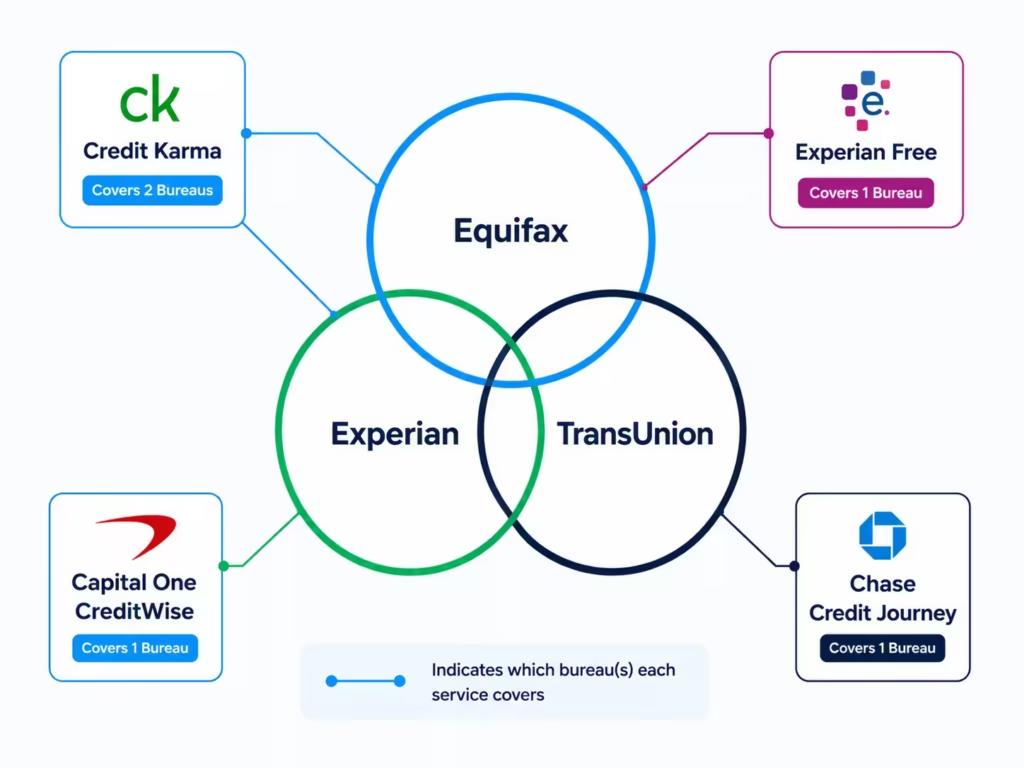
Notice the blind spots. If you use only Credit Karma, you miss Experian data. If you use only CreditWise, you miss two of three bureaus. Fraud that hits an uncovered bureau could sit for weeks before you notice.
That is the exact reason you need to stack a few free tools. One app equals partial coverage. Two or three apps together equal three-bureau coverage. We’ll spell out the exact combo further down.
How Free Credit Monitoring Services Actually Make Money
If it is free, how do these companies pay the bills? The short answer is offer matching, also called lead generation.
Companies like Credit Karma use your credit profile to recommend credit cards, loans, and insurance products that fit your score range. When you click an offer and sign up, the lender pays Credit Karma a referral fee. That is where most of the revenue comes from.
This is not shady, but you should know what to expect:
- You will see credit card and loan offers inside the app
- Some emails will pitch products based on your credit profile
- Your data helps the app rank offers, though the major players do not sell raw credit data
Bank-owned apps like Capital One CreditWise and Chase Credit Journey work differently. Their goal is to build a long-term relationship so you eventually become a customer of the bank. Either way, “free” means someone is being marketed to. Once you know that, you can use the tool without any surprises.
Credit Karma
Credit Karma is the most-used free credit tool in the U.S. It works well as your starter app because it covers two bureaus in one place.
Here is what Credit Karma gives you:
- Score model: VantageScore 3.0
- Bureaus covered: Equifax and TransUnion
- Update frequency: Weekly
- Eligibility: No bank account or credit card needed. Anyone with a Social Security number can sign up.
- Standout features: A credit score simulator, ID monitoring for a few dark web breaches, and easy dispute filing with TransUnion.
Best-fit use case: You want a fast, no-frills way to watch your score and catch changes at two of the three bureaus. Pair it with Experian Free to cover the third.
Sign up at the Credit Karma website or download the app from the App Store or Google Play.
Experian Free
Experian Free is the only major free app that shows a real FICO Score 8. That single fact makes it a must-have if you are getting ready to apply for a loan.
Here is what it delivers:
- Score model: FICO Score 8
- Bureau covered: Experian only
- Update frequency: Daily FICO Score 8 refresh, according to Experian’s free credit score page
- Eligibility: Anyone with an SSN can sign up. No purchase required.
- Standout features: Experian Boost, which lets you add utility bills, phone bills, and even streaming subscriptions to your Experian file. That can nudge your FICO score up by a few points if you pay these bills on time.
Best-fit use case: You are 3 to 12 months out from a mortgage, auto loan, or apartment application, and you want to see the actual FICO number lenders will pull.
⚠️ Mistake to Avoid: Do not confuse Experian Free with Experian’s paid IdentityWorks plans. The free tier gives you FICO Score 8 and one-bureau monitoring. If you get prompted to upgrade, you can skip it and keep the free features.
Capital One CreditWise
CreditWise stands out because you do not need to be a Capital One customer to use it. It is fully free and open to anyone.
Here is the breakdown:
- Score model: FICO Score 8, per Capital One’s CreditWise page
- Bureau covered: TransUnion
- Update frequency: Weekly
- Eligibility: No Capital One card required. Anyone can sign up.
- Standout tools: A credit score simulator that shows how paying down a card or opening a new account might affect your score. Dark web scanning and SSN tracing are also included.
Best-fit use case: You want a simple, honest tool from a bank you may not use, plus a simulator to play “what if” with your credit moves before you make them.
Chase Credit Journey
Chase Credit Journey punches above its weight because of one feature: real identity theft insurance, at no cost.
Here is what it offers:
- Score model: VantageScore 3.0
- Bureau covered: Experian
- Eligibility: Open to everyone. You do not need a Chase account.
- Identity theft insurance: Up to $1 million in coverage for expenses tied to identity theft recovery. Coverage includes legal fees, lost wages, and the cost of replacing IDs.
- Standout features: Dark web monitoring, data breach alerts, and SSN tracing.
Best-fit use case: You are most worried about fraud or identity theft. The insurance alone makes this app worth adding, even if you also use Credit Karma or Experian Free.
Other Free Options Worth Knowing About
A few smaller tools round out the free landscape. They are not primary picks, but they are worth knowing:
- Discover Credit Scorecard: Free FICO Score 8 from Experian, open to anyone. No Discover card needed.
- AnnualCreditReport.com: Free full credit reports from all three bureaus. Now available weekly at no cost, per the Federal Trade Commission. Great for a full data check, though it does not give you a score.
- NerdWallet and WalletHub: Both offer free VantageScore access with weekly updates. TransUnion is the source bureau for both.
These are helpful add-ons if you want more angles, but they overlap with what Credit Karma or CreditWise already give you.
Bank and Card Issuer FICO Score Access
Many card issuers offer a free FICO Score to their cardholders. If you already have one of these cards, you get free FICO access as a perk:
- Discover (Cardholders and non-cardholders): FICO Score 8 from Experian
- Citi (Cardholders only): FICO Bankcard Score 8 from Equifax
- Bank of America (Cardholders only): FICO Score 8 from TransUnion
- American Express (Cardholders only): FICO Score 8 from Experian
- Wells Fargo (Cardholders only): FICO Score 9 from Experian
The catch: most of these need an active card with the bank. Only Discover and CreditWise let non-customers in the door.
How to Combine Free Tools for Full 3-Bureau Coverage
This is the whole game. No single free app covers all three bureaus, so you stack a few together. Here is the exact combo that gives you full free 3-bureau credit monitoring at $0:
- Credit Karma for Equifax and TransUnion (VantageScore 3.0)
- Experian Free for Experian (FICO Score 8)
- Capital One CreditWise as a backup for TransUnion (FICO Score 8)
That’s it. Three apps, three bureaus, both score models. A paid 3-bureau plan can run $20 to $30 a month, or $240 to $360 a year. This stack costs nothing and gives you similar alert coverage.
Here is a simple way to manage the logins without it becoming a chore:
- Save all three logins in a password manager so you’re not typing them each time.
- Set the alert preferences in each app to push notifications on your phone.
- Pick one day a month (say, the first Saturday) to log in and eyeball each score.
- Use email filters to send all three apps’ alerts into one folder for easy review.
Ten minutes a month is all you need. And if any bureau shows something you didn’t do, you’ll know within days, not months.
📌 Did You Know: A 2024 Federal Trade Commission report found that identity theft made up about 19% of all consumer complaints, according to the FTC Consumer Sentinel Data Book. Full bureau coverage cuts your detection lag from weeks to days.
Free Monitoring vs. a Credit Freeze: Do You Need Both
Yes. They do different jobs.
- Credit monitoring tells you after something has happened. A new account, a hard inquiry, a big balance jump- you get an alert once it hits your report.
- A credit freeze stops the problem before it starts. When your file is frozen, no lender can pull it. So no new account can be opened in your name unless you unfreeze it first.
Use both. A freeze is your lock, and monitoring is your alarm. Freezes are free at all three bureaus, and you can lift them online in minutes when you actually want to apply for credit.
Which Free Credit Monitoring Service Fits Your Situation
Here is a direct pick based on what you’re trying to do. No fluff:
- If you’re rebuilding credit after a missed payment or collection: Start with Credit Karma plus Experian Free. Credit Karma covers Equifax and TransUnion, and Experian Free shows your FICO Score 8. Experian Boost can add a few points quickly if you pay utilities or streaming bills on time.
- If you’re prepping for a mortgage or auto loan in the next 6 to 18 months: Use Experian Free and Capital One CreditWise. Both show FICO Score 8, which is what most lenders pull. Skip apps that only show VantageScore during this window.
- If your top worry is fraud or identity theft: Chase Credit Journey plus Credit Karma is the strongest free combo. Chase gives you the $1 million identity theft insurance. Credit Karma widens your bureau coverage.
- If you just want simple, no-frills score tracking: Credit Karma alone works fine. Two bureaus, weekly updates, no cost. Add Experian Free later when you need the FICO number.
Match the tool to the goal. That’s the fastest way past decision paralysis.
What to Do When You Get a Credit Monitoring Alert
An alert popping up on your phone can feel scary. But most of the time, it’s routine. Here’s the calm, step-by-step response for each kind of alert.
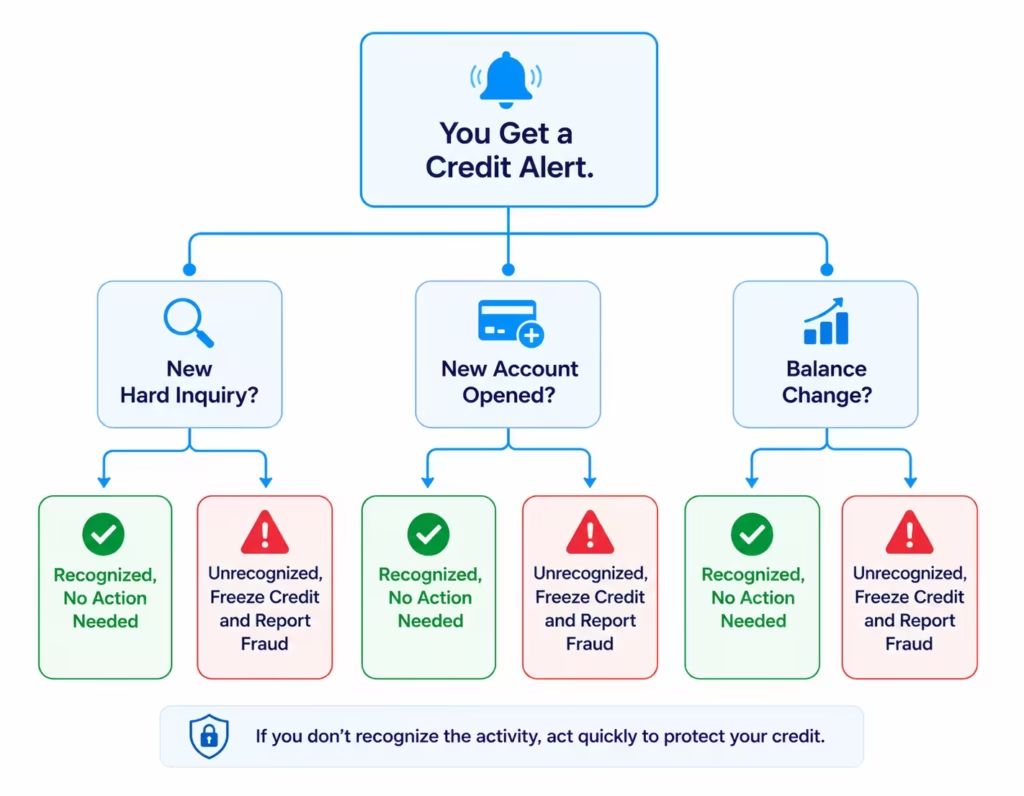
When the alert is a new hard inquiry:
- Ask yourself: did you apply for anything recently? A credit card, car loan, apartment, or cell phone plan can all trigger a hard inquiry.
- If yes, no action needed. The inquiry will fall off in about two years and stop affecting your score after 12 months.
- If no, treat it as fraud. Someone may be trying to open credit in your name. Move to the fraud steps below.
When the alert is a new account opened:
- Check the creditor name in the alert.
- If it’s yours, no action needed. New accounts can dip your score by 5 to 15 points for a few months, then bounce back.
- If it’s not yours, file a fraud alert with any one of the three bureaus. That bureau will notify the other two by law.
- Freeze your credit at all three bureaus right away.
- Report the fraud at IdentityTheft.gov.
When the alert is a big balance or utilization change:
- Look at the card and the new balance.
- If you made the charge, no action needed. But if your utilization is above 30% of the card’s limit, plan to pay it down before the statement date to protect your score.
- If you didn’t make the charge, call the card issuer’s fraud line right away. The number is on the back of the card.
When an alert deserves immediate action:
- Any unrecognized new account
- Any hard inquiry you didn’t authorize
- Any address, name, or SSN change on your report that you didn’t request
- A dark web hit on your full SSN or your primary bank account details
In those cases, freeze your credit first, then dispute the item with the reporting bureau. Don’t wait days. The faster you move, the smaller the mess.
Frequently Asked Questions (FAQs)
How can I monitor my credit score for free?
Stack Credit Karma for Equifax and TransUnion data, Experian Free for a real FICO Score 8, and Capital One CreditWise as a TransUnion backup. This combo costs nothing and delivers full three-bureau coverage instead of the partial view a single app gives you.
Which credit monitoring service is the most accurate?
No single free service is “most accurate” since each pulls from different bureaus and score models. Experian Free and Capital One CreditWise show the real FICO Score 8, the model used in about 90% of lending decisions, making them closer to what lenders actually see.
What is the best free credit monitoring?
Credit Karma plus Experian Free is the strongest combo for most people. Credit Karma covers Equifax and TransUnion with VantageScore 3.0, while Experian Free adds Experian coverage with an actual FICO Score 8.
Is free credit monitoring worth it?
Yes, for most people, free tools cover the basics well: a credit score, report access, and alerts on new accounts or inquiries. Paid tiers mainly add speed, deeper dark web scans, and identity theft insurance, which most users can skip unless fraud is a major concern.
Do banks use TransUnion or Equifax?
Banks and lenders use all three bureaus depending on the lender, but most base decisions on a FICO Score rather than VantageScore. Bank of America cardholders get a FICO Score 8 from TransUnion, while Citi cardholders get one from Equifax.
Which 3 credit bureaus to freeze?
Freeze your credit at all three major bureaus: Equifax, Experian, and TransUnion. Freezing is free at each one, and you can unfreeze online in minutes when you’re ready to apply for credit.
What is the biggest killer of credit scores?
An unrecognized new account or hard inquiry from fraud is one of the fastest ways to damage your score. High utilization above 30% of a card’s limit also hurts your score even if you pay on time, so paying down balances before the statement date protects you.
Is it worth paying for credit monitoring?
A paid three-bureau plan typically costs $20 to $30 a month, or up to $360 a year. Stacking free apps like Credit Karma, Experian Free, and Capital One CreditWise gives similar alert coverage across all three bureaus at no cost.
Does checking my own credit score lower it?
No, checking your own credit is a soft inquiry and never affects your score. You can check it as often as you like, unlike a hard inquiry from a lender, which can shave a few points off temporarily.
What should I do if I get a credit monitoring alert about a new account I don’t recognize?
File a fraud alert with one of the three bureaus, which by law notifies the other two automatically. Freeze your credit at all three bureaus immediately and report the incident at IdentityTheft.gov.
The Bottom Line
Free credit monitoring works if you know how to combine the right tools. Credit Karma covers Equifax and TransUnion, Experian Free covers Experian and gives you a real FICO Score 8, and Chase Credit Journey adds strong identity theft insurance.
Stack two or three of these based on your goal, whether that’s rebuilding credit, prepping for a mortgage, or catching fraud early.
The Credit Karma and Experian Free combo is the best choice for most readers. It provides access to all three bureaus and both score models for free.
If you know someone working on their credit or looking for a mortgage, share this guide. The right free tools can save them time and money.