
You saw the name “TransUnion” on a credit app, a loan letter, or a rental form. Now you want to know what it is and why it matters. It’s a fair question. Many people think the TransUnion credit bureau approved or denied their loan. Others worry it’s a scam or a debt collector.
Here’s the short answer: TransUnion is one of the three major U.S. credit bureaus. It collects your credit data and sells reports to lenders, but it never approves or denies credit itself.
Below, you’ll learn how it works, how to get your free report, how to freeze it, and how to fix errors. Each step is laid out in plain language.
Key Takeaways
This guide explains what the TransUnion credit bureau does, why it never approves or denies credit itself, how to get a free report, freeze your file, and dispute errors.
Core Facts:
- TransUnion is one of three major U.S. credit bureaus, along with Equifax and Experian, and it collects credit data but never approves or denies credit itself.
- Free credit reports are available through AnnualCreditReport.com, the only federally authorized site, and directly through the TransUnion Service Center.
- Credit freezes are free under federal law, take effect immediately online, and must be placed separately at TransUnion, Equifax, and Experian since one freeze does not cover the others.
- A fraud alert only requires contacting one bureau, which must notify the other two, and an initial alert lasts one year while an extended alert for confirmed identity theft victims lasts seven years.
- Disputes are free to file, and under the Fair Credit Reporting Act the bureau generally has up to 30 days to investigate and respond.
- Hard inquiries can lower your score and stay on file for about two years, while soft inquiries, including checking your own report, never affect your score.
Best for:
- Readers who want to understand what TransUnion actually does before disputing a denial or reading a credit report for the first time.
- Anyone wanting to freeze their file, add a fraud alert, or dispute an error using free, official channels.
- People who suspect identity theft and need a clear, ordered response plan involving TransUnion and the other bureaus.
What TransUnion Is and What It Actually Does
TransUnion is a credit reporting agency. It’s one of three big ones in the U.S., along with Equifax and Experian. The TransUnion credit bureau meaning is simple: it’s a private company that gathers credit data on consumers and organizes it into reports.
Here’s what that looks like in practice. Banks, credit unions, credit card issuers, and auto lenders send your account details to TransUnion each month. This includes your balances, limits, and payment history. TransUnion stores all of this in your credit file. When a lender wants to check you out, it buys a copy of that file.
One point needs to be crystal clear. TransUnion does not approve or deny credit. It only reports the data. The lender reads your report and makes its own call. So if a letter says you were denied “based on information from TransUnion,” the lender made that decision. TransUnion just supplied the file.
Why does this matter? Because it tells you where to aim your energy. You can’t argue with the bureau about a denial. But you can check your report, fix errors in it, and control who sees it. Those are the moves that actually change outcomes.
TransUnion vs. Equifax vs. Experian: Key Differences
All three bureaus do the same basic job. Each one is an independent, private company. They compete with each other. They don’t share one master database.
| TransUnion | Equifax | Experian | |
|---|---|---|---|
| Type | Private credit bureau | Private credit bureau | Private credit bureau |
| Core job | Collects and sells credit data | Collects and sells credit data | Collects and sells credit data |
| Data source | Lenders that report to it | Lenders that report to it | Lenders that report to it |
The key thing to know: not every lender reports to all three bureaus. A small credit union might report only to Equifax. A big card issuer might report to all three. This means your three files can hold different information at the same time.
Your scores can also differ across the three. That’s not a glitch. It’s how the system is built. The next section explains exactly why.
Why Your TransUnion Score Differs From Your Other Scores
Say your Credit Karma app shows a TransUnion score of 726. Then your bank shows an Experian-based score of 680. A 46-point gap feels alarming. It’s not. Three concrete reasons explain it.
1. Different scoring models. A score is a number calculated from your report data. Credit Karma uses VantageScore 3.0 with TransUnion data. Your bank likely uses a FICO Score with Experian data. These models weigh the same habits in different ways. One model may care more about recent late payments. Another may focus on total debt.
2. Different data in each credit file. Each bureau only knows what its furnishers tell it. If your car loan reports to Equifax but not TransUnion, that loan won’t appear in your TransUnion file at all. The missing account changes the score.
3. Timing. A score is a snapshot, not a live feed. Bureaus update on different days. If your card balance was high when TransUnion pulled the data but low when Experian pulled it, the scores will differ.
No score is “more accurate” than the others. They can all be valid at once. What matters is the trend. If all your scores move in the same direction over time, your credit health is on track.
What’s Inside a TransUnion Credit Report
Open your report, and you’ll see five main parts.
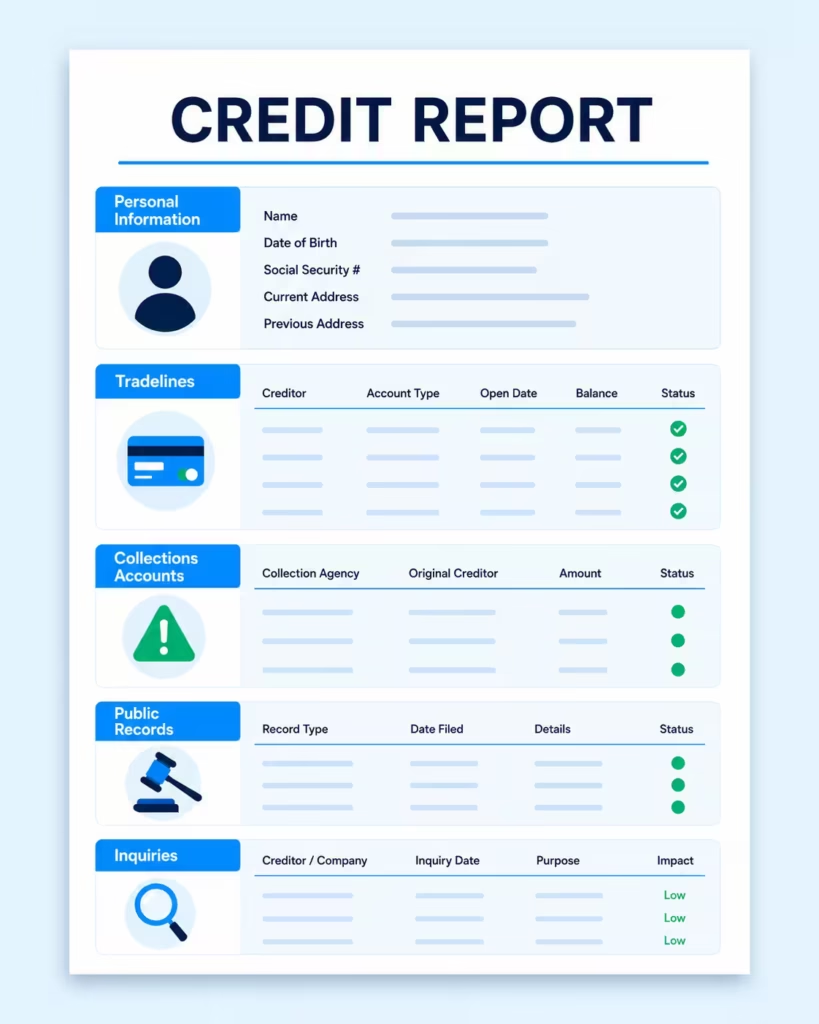
- Personal information. Your name, past and current addresses, date of birth, and Social Security number. Check this first. A wrong address can signal a mixed file or fraud.
- Tradelines. These are your credit accounts. Each tradeline shows the lender, the open date, the limit or loan amount, the balance, and your month-by-month payment history.
- Collections accounts. Debts that were sent to a collection agency show up here. These hurt your score the most.
- Public records. Bankruptcies can appear here. Tax liens and civil judgments were removed from reports years ago, so you rarely see them now.
- Inquiries. A list of everyone who pulled your file. More on this later.
Read the report top to bottom once a year at minimum. Most errors sit in plain sight.
Decoding TransUnion Report Codes and Terms
Reports use shorthand. Here are the codes you’ll actually run into:
- TRD: Tradeline. Just means a credit account.
- RVL: Revolving account, like a credit card.
- INST: Installment loan, like a car loan or personal loan.
- MTG: Mortgage.
- INQ: Inquiry. Someone pulled your file.
Status codes come in pairs, like R1 or I2. The letter is the account type: R for revolving, I for installment, M for mortgage. The number is your payment status. 1 means paid as agreed. Numbers 2 through 9 mean late payments, and 9 usually means a charge-off or collection.
Most reports include a legend at the end that explains each code. If yours doesn’t, TransUnion’s website has a plain-English glossary.
How to Get Your Free TransUnion Credit Report
You have two legitimate paths, and both are free.
Option 1: AnnualCreditReport.com. This is the only site the federal government authorizes for free reports. You can pull your report from all three bureaus. Free weekly online access is now permanent, as the Federal Trade Commission has confirmed. Go directly to AnnualCreditReport.com.
Option 2: The TransUnion Service Center. Create a free account at TransUnion’s official site, and you can view your report, plus use dispute and freeze tools in one place.
To verify your identity, have these ready:
- Your full name and date of birth
- Your Social Security number
- Your current address and past addresses if you moved recently
- Answers to security questions about your own accounts, like an old car payment amount
If the system can’t verify you online, you can request your report by mail.
How to Check If a “Free TransUnion Report” Offer Is Legitimate
Search “free TransUnion report” and some results lead to paid trial sites. They look official. They’re not.
Watch for these red flags:
- The site asks for a credit card “just to verify you.” Real free reports never need a card.
- The URL isn’t exactly transunion.com or annualcreditreport.com. Scam sites use look-alike addresses.
- The word “free” comes with a trial period. Trials turn into monthly bills.
⚠️ Mistake to Avoid: Never enter your card details on a site promising a free credit report. Your legally guaranteed report costs nothing, and any site charging for it is selling a subscription, not a report.
When in doubt, type the address yourself instead of clicking an ad.
How to Freeze Your TransUnion Credit
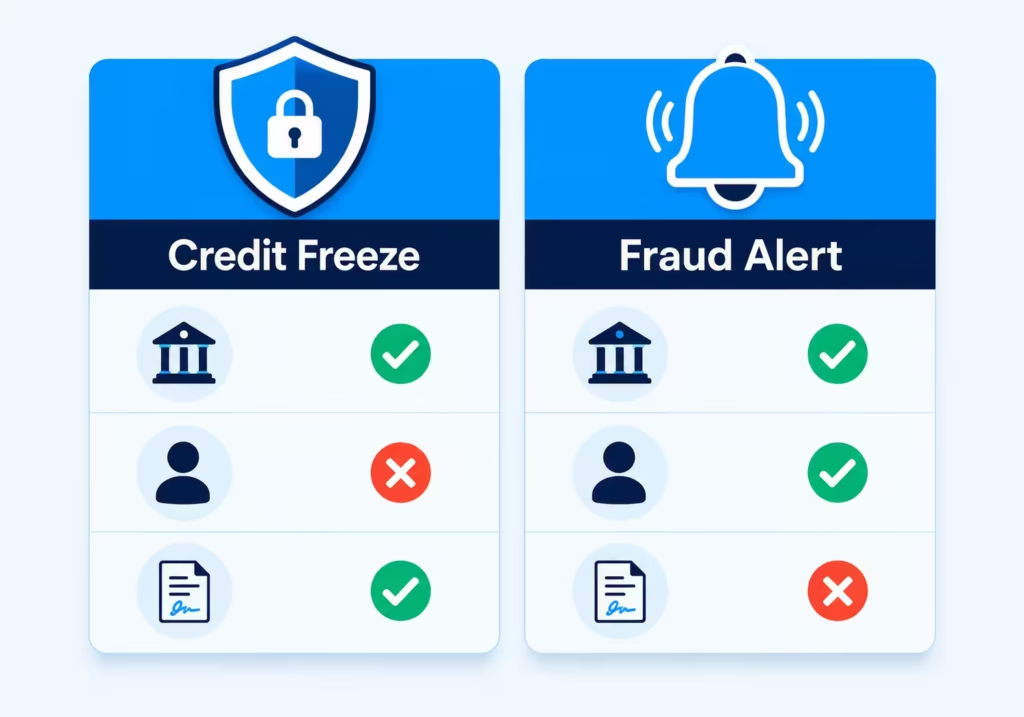
A credit freeze blocks new lenders from pulling your file. No file access means no new accounts. This makes a freeze the strongest free tool against identity theft.
📌 Did You Know: Federal law makes credit freezes free for everyone. There’s no limit on how often you freeze or unfreeze, and a freeze never hurts your score.
Placing a security freeze takes a few minutes:
- Go to the TransUnion Service Center and sign in, or create a free account.
- Find the credit freeze option in your account menu.
- Turn the freeze on. Online freezes take effect right away.
- Repeat the process at Equifax and Experian. A freeze at one bureau does not cover the others.
Your existing accounts keep working normally. Your score isn’t touched. Only new credit applications get blocked.
How to Unfreeze Your TransUnion Credit
Before you apply for a loan or card, lift the freeze. You have two choices.
- Temporary lift. Pick a start and end date, or name a single lender that can pull your file. After that, the freeze snaps back on by itself. This is the better pick for most people.
- Permanent removal. The freeze stays off until you turn it back on.
Online changes are usually instant. Requests by mail can take several days. Planning a mortgage application? Lift the freeze the same morning you apply, then let it re-freeze after.
How to Add a Fraud Alert With TransUnion
A fraud alert is the lighter option. It doesn’t block access to your file. Instead, it tells lenders to verify your identity before opening a new account. A lender might call you to confirm it’s really you applying.
Here’s how it works:
- Contact any one of the three bureaus and request a fraud alert. It’s free.
- That bureau must tell the other two, so one request covers all three.
- An initial alert lasts one year. You can renew it.
If you’ve already been a victim of identity theft and have an official report, you qualify for an extended alert that lasts seven years.
How to Dispute an Error on Your TransUnion Report
Errors are common and fixable. You can dispute anything inaccurate: a wrong balance, an account that isn’t yours, a paid collection still marked open, or a payment wrongly marked late.

The process is free:
- Pull your report and note the exact error.
- Gather proof. Bank statements, payoff letters, or account records all work.
- File the dispute online through the TransUnion Service Center. You can also file by mail.
- TransUnion contacts the company that furnished the data and checks the claim.
- Under the Fair Credit Reporting Act, the bureau generally has up to 30 days to investigate and respond.
If the furnisher can’t prove the item, it must be corrected or deleted. You’ll get the results in writing.
💡 Pro Tip: Errors must be disputed separately at each bureau. Fixing a mistake on your TransUnion report doesn’t fix it at Equifax or Experian, so check all three and file all three disputes at once.
Keep copies of everything you send. If the same error comes back, that paper trail becomes your leverage.
Understanding Hard vs. Soft Inquiries on Your TransUnion File
Your report’s inquiry section lists everyone who pulled your file. There are two kinds.
Hard inquiry. This happens when you apply for credit: a card, a loan, a mortgage. The lender pulls your file to decide. A hard inquiry can trim a few points off your score. It stays on your report for about two years, though scoring models mostly count it for the first 12 months.
Soft inquiry. This happens when you check your own credit, when a card issuer pre-screens you for an offer, or when an existing lender reviews your account. Soft pulls never affect your score. Only you can see most of them.
Spot an inquiry you don’t recognize? Take it seriously. First, check the company name. Some appear under a parent company’s name, like a retail card showing its bank partner. If it still looks wrong after a quick search, treat it as a possible fraud sign and follow the steps in the identity theft section below.
Who Can Access Your TransUnion Credit Report
Not just anyone can pull your file. The law requires a valid reason, called a permissible purpose.
- Lenders can pull it when you apply for credit.
- Employers and landlords need your written consent first.
- Insurers and utility companies can review it in some cases.
- You can check your own report as often as you like. It always counts as a soft inquiry, so it never dings your score.
What to Do If You Suspect Identity Theft Involving TransUnion
Maybe you see an account you never opened. Or a hard inquiry from a lender you’ve never heard of. Or a collections account for a debt that isn’t yours. Act fast, in this order:
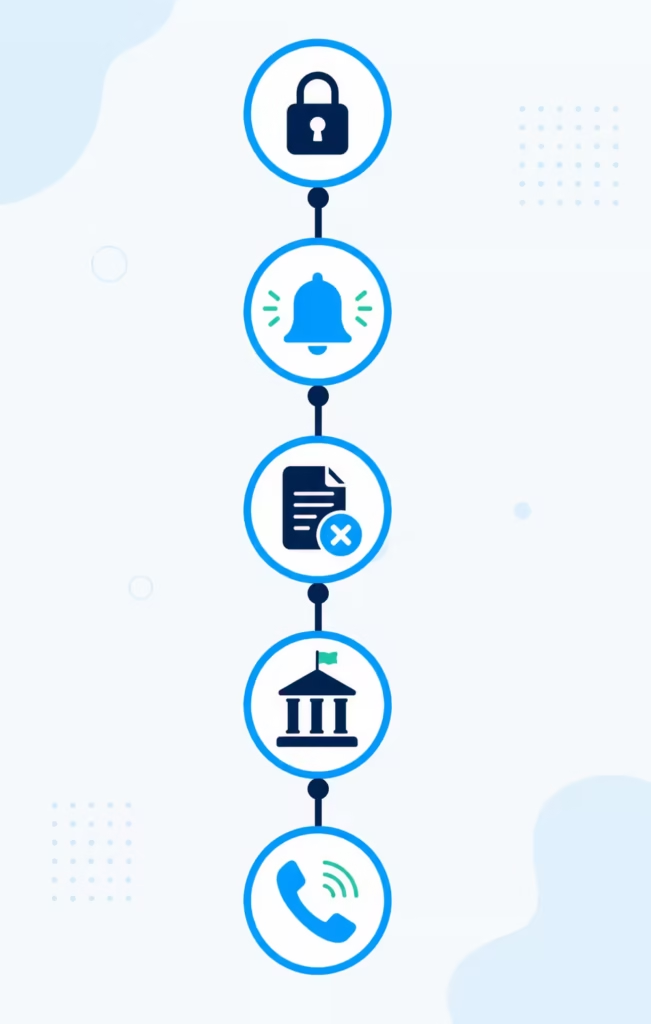
- Freeze your credit at all three bureaus. This stops new accounts right away. Do it online today; it takes minutes.
- Add a fraud alert. One request covers all three bureaus and lasts a year.
- Dispute every fraudulent item. File disputes with each bureau that show the fake account or inquiry.
- File an FTC Identity Theft Report. Go to IdentityTheft.gov and complete the report. It takes about 15 minutes and gives you an official recovery plan. This report also unlocks the seven-year extended fraud alert.
- Contact the lenders involved. Tell each bank or issuer the account is fraudulent and ask them to close it.
Consider Marcus, a 34-year-old warehouse supervisor in Ohio. He spotted a $2,300 store card on his TransUnion file that he never opened. He froze all three reports that night, filed his FTC report the next morning, and the account was deleted within five weeks. Speed made the difference.
What Happens When You Don’t Check or Manage Your TransUnion Report
Most people don’t skip these steps on purpose. Life gets busy, the report feels like paperwork, and nothing seems urgent until it is. Here’s what that delay actually costs.
An error you never disputed doesn’t sit quietly. Every time a lender pulls your file, that wrong balance or incorrectly marked late payment gets read and factored in again. One mistake can haunt you. It can impact a car loan, an apartment application, and a credit card decision. Each time, your chances go down.
A freeze you never placed after a data breach leaves the door open. Breach notifications pile up in inboxes and get ignored. Your file stays accessible, so someone with your Social Security number can open a card in your name. You won’t find out until a collections letter arrives.
A hard inquiry you never checked can be the first sign of fraud hiding in plain sight. Most people scroll past the inquiries section entirely. If one of those pulls wasn’t you, it’s a sign that something is wrong. The time between when it happens and when you notice is the perfect window for a scammer.
An old negative item that should have aged off can also just sit there uncorrected. Collections and late payments have limits on how long they can legally stay on your report. Nobody checks that for you. If you never look, an item that should have dropped off years ago quietly keeps dragging your score down.
None of this requires a mistake on your part. It just requires not looking. The good news is every one of these problems has a free fix, and you already know what they are. The next section covers exactly what to do the moment something looks off.
Frequently Asked Questions (FAQs)
Is TransUnion safe and legit?
Yes, TransUnion is a legitimate, long-established credit reporting agency. Watch for scam look-alike sites though: only use transunion.com or AnnualCreditReport.com, and never enter card details for a “free” report.
Is TransUnion a real credit bureau?
Yes, TransUnion is one of the three major U.S. credit bureaus, along with Equifax and Experian. It collects credit data from lenders and sells reports, but it never approves or denies credit itself.
Is there a fake TransUnion site?
Yes, some sites mimic TransUnion to sell paid trial subscriptions. Red flags include a URL that isn’t exactly transunion.com, requests for a credit card “to verify you,” and free offers tied to a trial period.
Which 3 credit bureaus should I freeze?
Freeze your file at TransUnion, Equifax, and Experian. A freeze at one bureau doesn’t cover the others, so you need to repeat the process at all three to fully block new credit applications.
Is it better to use Equifax or TransUnion?
Neither is better since they’re independent companies that often hold different data. Not every lender reports to all three bureaus, so your TransUnion file can look different from your Equifax file at the same time.
How do I get my free TransUnion credit report?
Use AnnualCreditReport.com, the only federally authorized site, which now offers permanent free weekly access to all three bureaus. You can also create a free account directly at the TransUnion Service Center.
How do I freeze my TransUnion credit?
Sign in or create a free account at the TransUnion Service Center, then find the credit freeze option in your account menu and turn it on. Online freezes take effect immediately and are free under federal law.
How do I dispute an error on my TransUnion report?
File the dispute online through the TransUnion Service Center or by mail, including proof like bank statements or payoff letters. TransUnion generally has up to 30 days under the Fair Credit Reporting Act to investigate and respond.
What’s the difference between a hard and soft inquiry?
A hard inquiry happens when you apply for credit and can trim a few points off your score for about 12 months. A soft inquiry, like checking your own credit, never affects your score.
What should I do if I suspect identity theft with TransUnion?
Freeze your credit at all three bureaus immediately, then add a fraud alert and file an FTC Identity Theft Report at IdentityTheft.gov. One fraud alert request covers all three bureaus and lasts one year.
The Bottom Line
TransUnion collects your credit data and sells reports, but lenders make the approval calls. Your scores differ across bureaus because of different models, data, and timing, and that’s normal.
The best way to manage your credit is simple:
- Pull your free TransUnion credit report every week through official channels.
- Dispute any errors you find right away.
- Keep a freeze on your file when you’re not applying for credit.
That routine costs nothing and protects everything.
If you know someone who just got denied for a loan or saw a strange inquiry, share this guide with them. It could save their score.