
We’ve all been there. You check your credit score in one app, then check another, and the numbers don’t match. You Google “how many credit bureaus are there,” and half the results say three, the other half say four. Which one is right? If you’re trying to fix an error, apply for a loan, or just protect your credit, this mix-up around the 4 major credit bureaus is frustrating.
Here’s the short answer: there are three nationwide credit bureaus plus one specialty bureau, giving you four in total.
Below, we’ll break down each bureau, why your scores differ, how to pull your reports for free, and what to do if you spot a mistake.
Key Takeaways
This guide explains what the 4 major credit bureaus are, including Equifax, Experian, TransUnion, and Innovis, why credit scores differ between them, and how to pull reports, dispute errors, and freeze files at each one.
Core Facts:
- The 4 major credit bureaus are Equifax, Experian, and TransUnion, plus a fourth specialty bureau called Innovis, which is used mainly for identity checks and pre-screened offers rather than everyday lending decisions.
- Equifax, Experian, and TransUnion free reports are available weekly and permanently through AnnualCreditReport.com, the single site jointly authorized by the three bureaus.
- Innovis reports must be requested separately through Innovis.com using its consumer request form, by phone, or by mail.
- Credit scores differ by bureau because not every lender reports to every bureau, bureaus update at different times, and each may use a different scoring model such as FICO Score 8 or VantageScore 3.0.
- Security freezes have been free by federal law at all three nationwide bureaus since September 2018, and a separate freeze must be placed at each of the four bureaus for full protection.
- Under the Fair Credit Reporting Act, a bureau generally has 30 days to investigate a dispute, and disputed items that can’t be verified must be removed or corrected.
Best for:
- Readers confused about whether there are 3 or 4 credit bureaus and wanting a clear explanation of each one’s role.
- People preparing to freeze their credit files or dispute an error and needing to know which bureau to contact.
- Anyone applying for a mortgage, loan, or credit card who wants to understand why their score varies across bureaus.
Who Are the 4 Major Credit Bureaus
The 4 major credit bureaus listed in the United States include Equifax, Experian, TransUnion, and Innovis. A credit reporting agency collects your credit account details from lenders and packages them into a credit report. A bureau does not decide if you get approved for a loan. That call is made by the lender.
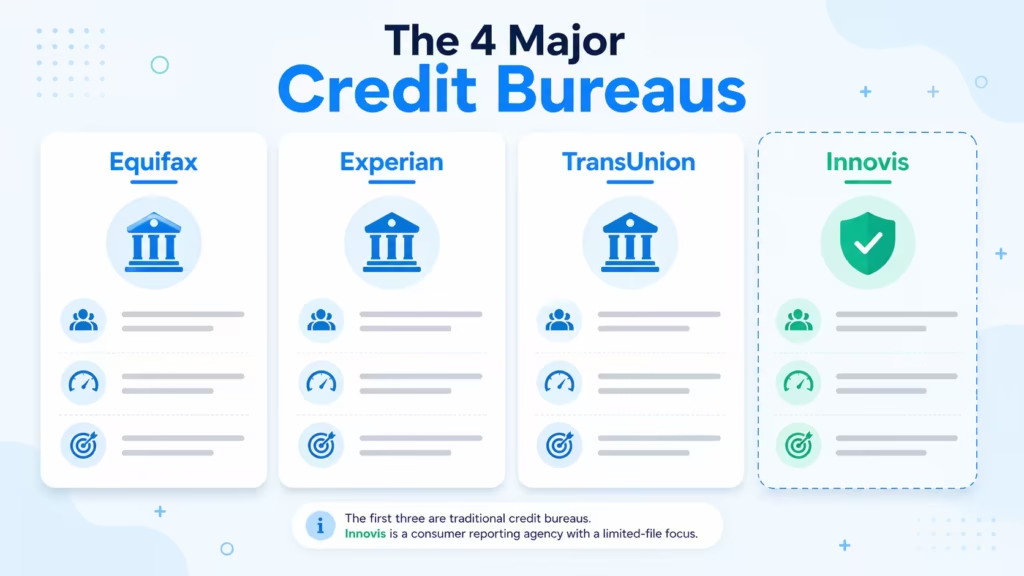
Three of these bureaus, Equifax, Experian, and TransUnion, are used in almost every lending decision. They power the credit reports most banks and card issuers pull. Innovis is the fourth. It collects credit data, but lenders mainly use it for identity checks, pre-screened offers, and fraud tools. It’s not for everyday credit scoring.
So when someone asks “what are the 4 credit bureaus,” the answer covers the big three plus Innovis.
Other Specialty Credit Bureaus You Might See
Besides the four, there are smaller niche reporting companies. ChexSystems tracks your checking account history. LexisNexis collects insurance and public record data. The Work Number holds employment and income data. Rental screening firms like ARS report tenant history to landlords.
These are called specialty consumer reporting companies. They don’t replace the four majors, and they don’t feed into your standard FICO or VantageScore. If you see one show up in a search or a letter, it just means another niche bureau exists for a specific use case.
Why Some Sources Say 3 Bureaus and Others Say 4
The gap comes down to how regulators define the market. The Consumer Financial Protection Bureau and the FTC treat Equifax, Experian, and TransUnion as the three nationwide consumer reporting companies. These are the ones that dominate credit reporting and feed nearly every lending decision. The CFPB’s own list of consumer reporting companies confirms this three-bureau framing.
Innovis is often called the fourth bureau. It collects and reports consumer credit data. This is done under the Fair Credit Reporting Act. But it doesn’t sell traditional credit scores and isn’t pulled by most mainstream lenders when you apply for a card or mortgage. That’s why some sources leave it out.
So the “3 or 4 credit bureaus” debate isn’t a scam or a conspiracy. It’s just a naming difference. If someone is talking about mainstream credit scoring, they mean three. If they’re talking about all the companies that keep your credit data, they mean four.
📌 Did You Know: The CFPB updates its list of consumer reporting companies every year. The 2025 edition names Equifax, Experian, and TransUnion as the three main bureaus. Innovis is listed with other consumer reporting companies.
Equifax
Equifax is one of the oldest credit reporting agencies in the country. It collects your credit account data such as loans, credit cards, payment history, credit limits, and balances. It also pulls in public records like bankruptcies. All of this goes into your Equifax credit file.
Lenders use Equifax data across mortgages, auto loans, credit cards, and personal loans. Many auto lenders in particular lean on Equifax scores.
You can spot an Equifax-branded report or score when a lender or free credit app shows “Equifax” or “powered by Equifax” next to your number. Some free monitoring tools, including the one built into certain bank apps, pull directly from Equifax. If you’re checking a score and see the Equifax logo, that number reflects only what’s in your Equifax file, not the other two bureaus.
Experian
Experian is the largest credit reporting agency in the world by revenue. It collects the same kinds of data as Equifax: credit accounts, payment history, credit inquiries, and public records. Experian also runs consumer-facing tools like credit monitoring, identity theft alerts, and Experian Boost, which lets you add utility and phone payments to your file.
Lenders across mortgages, credit cards, auto loans, and personal loans use Experian reports. It’s especially known for its close ties to FICO Score access. When a lender says they pulled your FICO Score, there’s a strong chance the underlying data came from Experian.
You’ll often see Experian branding on free FICO Score dashboards inside credit card apps like Discover and American Express. If your app shows “FICO Score 8 based on Experian data,” that’s Experian at work.
TransUnion
TransUnion rounds out the big three. It collects the same core credit data as Equifax and Experian, including account history, balances, inquiries, and public records. It also offers credit monitoring, identity protection, and score-tracking tools for consumers.
Lenders use TransUnion for credit cards, auto loans, mortgages, and personal loans. Many card issuers also lean on TransUnion when giving customers a free score inside their app. If you use a free credit monitoring tool like Credit Karma, you’re likely looking at TransUnion data.
TransUnion is easy to recognize inside apps that show a VantageScore based on its file. When a free score tool shows “TransUnion VantageScore 3.0,” that number is coming from your TransUnion credit file only. Any changes on Equifax or Experian won’t show up there.
Innovis
Innovis is the fourth bureau, and it works a little differently. It collects consumer credit data under the Fair Credit Reporting Act, just like the big three. But instead of selling scores for everyday lending, Innovis focuses on identity verification, fraud prevention, and pre-screened credit offers. It’s a subsidiary of CBC Companies.
Innovis holds credit account data, but it also uses alternative data points that the big three don’t always capture. That’s why some lenders pull Innovis when they want a second look at your identity or a fraud check, not a scoring decision.
Innovis matters to you if you’re trying to stop pre-approved credit card offers, freeze your file for full fraud protection, or investigate identity theft. It’s not the bureau a mortgage lender will pull to price your rate, but it is one you should freeze if you’re locking down your credit.
💡Want to know more? Read our detailed guide about Innovis
Is Innovis a Legitimate Credit Bureau
Yes, Innovis is a real, FCRA-regulated consumer reporting company. It’s listed by name on the CFPB’s official consumer reporting companies page, which confirms Innovis provides credit and identity verification data.
If you get an unexpected letter or report request from Innovis, it’s not a scam. But do go straight to Innovis.com to request a report or place a freeze. Don’t click links from random emails or ads that promise to pull your Innovis file for a fee.
Credit Bureau vs. Credit Score. What’s the Difference
This mix-up trips up a lot of readers, so let’s clear it up. A credit bureau collects your data and puts it into a report. It does not calculate your score. A credit-scoring company takes the bureau’s data and runs it through a formula to produce a number.
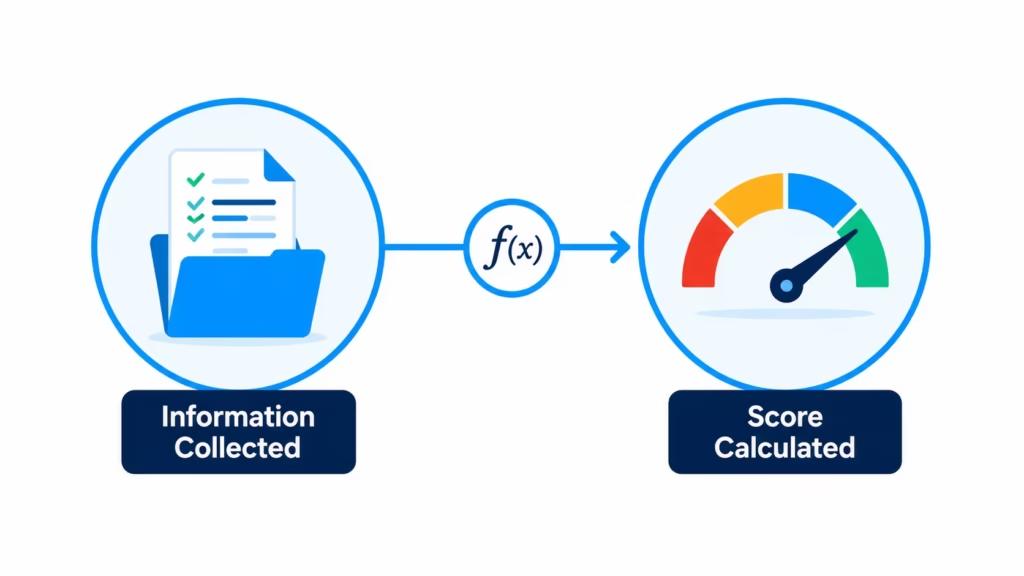
FICO Score and VantageScore are the two big scoring companies. FICO is used in most mortgage and auto loan decisions. VantageScore is common in free credit apps.
So a lender might pull your Experian credit report, then run it through the FICO Score 8 formula. The report is from the bureau. The score is from the scoring company.
This matters because when your score changes, it could be from new data in your file, a different scoring model, or a different bureau’s data. Knowing which piece changed helps you figure out what to fix.
Why Your Credit Score Differs by Bureau
Your score is rarely the same at all three big bureaus. Here’s why.
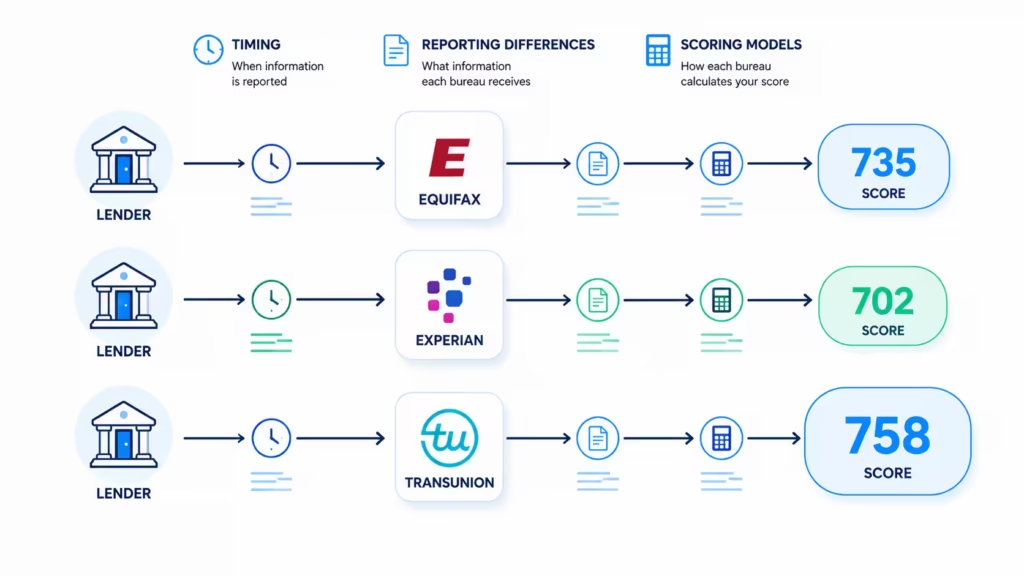
Not every lender reports to every bureau. Your credit card company might send your balance to Experian and TransUnion but skip Equifax. When one bureau is missing that account, your file and your score will look different there.
Timing also plays a role. Bureaus update at slightly different times. If your Equifax file updated Monday and TransUnion updated Friday, your balances and payment status can look different for several days.
Scoring model versions matter too. Equifax might feed a FICO Score 8, Experian might show a FICO Score 9, and TransUnion might show a VantageScore 3.0. Each formula weighs things a little differently.
The practical takeaway: there’s no single “real” credit score. You have several, and they all reflect a slice of your credit life. When a lender pulls a specific bureau, that’s the score that matters for that decision.
Do All Lenders Check All 4 Bureaus
No. Most lenders pull one, sometimes two, of the big three. Mortgage lenders often pull all three and use a merged report. Credit card issuers usually pull just one. Auto lenders pick based on region and the dealer’s setup.
Innovis is rarely used for these lending decisions. It shows up more in identity checks, fraud reviews, and pre-approved offer screening.
How to Get Your Free Credit Report from Each Bureau
You have a legal right to free reports from all four bureaus, but the process is different depending on the bureau.
For Equifax, Experian, and TransUnion, the single authorized source is AnnualCreditReport.com. This site is run jointly by the three bureaus and backed by federal law. Avoid lookalike sites that ask for a credit card or charge a fee. AnnualCreditReport.com is free and does not require payment.
To pull your reports, you’ll need to verify your identity. Have ready:
- Your full name, current address, and past addresses from the last two years
- Your Social Security number and date of birth
- Answers to a few security questions based on your credit history, like a past loan amount or lender name
For Innovis, you request your report separately. Go to Innovis.com and use its consumer request form. You can also call or mail in a request. You’ll provide similar identity details.
⚠️ Mistake to Avoid: Do not sign up for a “free trial” credit report site that asks for your credit card. These are paid monitoring services in disguise. The real free source for the big three is AnnualCreditReport.com, and Innovis reports are free directly from Innovis.
How Often You Can Check Each Bureau for Free
Free weekly access to your Equifax, Experian, and TransUnion reports through AnnualCreditReport.com is now permanent. The FTC confirms you can order these reports online, by phone, or by mail.
Innovis follows its own schedule. You can request an Innovis report for free, and there’s no charge to place a freeze. Check Innovis.com for current frequency details before you order.
A smart habit is to rotate. Pull one bureau’s report every few weeks. That way you’re checking your credit almost year-round without paying for monitoring.
What to Do If You Find an Error on One Bureau’s Report
Errors on credit reports are more common than most people think. Sarah, a marketing manager at a mid-sized consulting firm, spotted a $2,300 collections account on her Experian report that she didn’t recognize. She checked Equifax and TransUnion, and it was only on Experian. That’s exactly how errors show up. They don’t always mirror across bureaus.
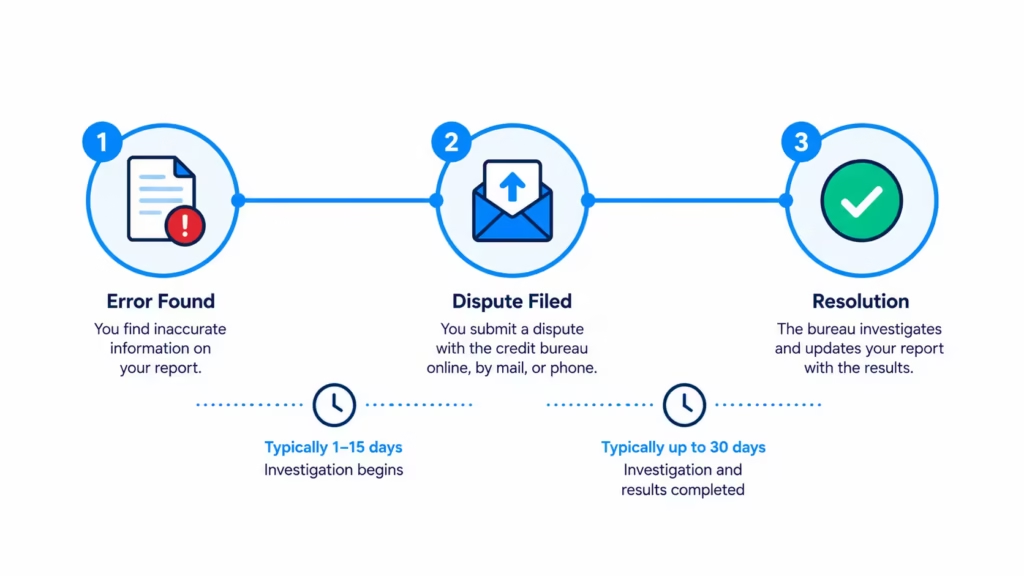
If you find a mistake, file an inaccurate information dispute claim with the specific bureau that has the error. Do not assume the fix will spread to the other two. Each bureau runs its own investigation on its own file.
You can dispute online, by mail, or by phone. Online is fastest. Include a clear explanation of what’s wrong and any supporting documents, like a paid-off statement or a police report if it’s identity theft.
Under the Fair Credit Reporting Act, a bureau generally has 30 days to investigate your dispute and get back to you. The CFPB confirms this timeline. If they can’t verify the item, it must be removed or corrected. Investigations are always free.
If the same error is on more than one bureau’s report, file a separate dispute with each one. This includes Innovis if the error is on your Innovis file.
How to Freeze or Lock Your File at Each Bureau
A security freeze blocks new lenders from pulling your credit file. It’s the strongest free tool you have to stop identity theft. If a scammer tries to open a card in your name, the lender can’t see your report, and the application usually gets denied.

Freezes are free by federal law and don’t hurt your credit score. Since September 2018, federal law has made them free at all three nationwide bureaus. To be fully protected, you must place a freeze separately at each of the four bureaus. One freeze does not cover the others.
Here’s where to go:
- Equifax: Equifax.com, phone, or mail
- Experian: Experian.com or by phone
- TransUnion: TransUnion.com or by phone
- Innovis: innovis.com/personal/securityFreeze
You’ll verify your identity and set a PIN or password. Keep that info somewhere safe. You’ll need it to lift the freeze later, whether that’s for a new loan or a background check.
Some bureaus also offer a paid “credit lock” through their own apps. A lock works like a freeze but is controlled by an app toggle. The key difference: a freeze is protected by federal law and always free. A lock is a private product, often bundled into a paid monitoring plan. For most people, the free freeze is enough.
You can also add a fraud alert to your file, which tells lenders to verify your identity before opening credit. Fraud alerts are free and only need to be placed once. The bureau you contact must notify the others.
Frequently Asked Questions (FAQs)
Is Innovis a real credit bureau?
Yes, Innovis is a legitimate, FCRA-regulated consumer reporting company listed by the CFPB. It focuses on identity verification, fraud prevention, and pre-screened offers rather than everyday credit scoring.
Which 3 credit bureaus should I freeze?
Freeze Equifax, Experian, and TransUnion to block new lenders from pulling your file. For complete protection against fraud, freeze Innovis too since it’s used for pre-screened offers and identity checks.
How do I get my full credit report from all 3 bureaus?
Go to AnnualCreditReport.com, the single site authorized by federal law for free Equifax, Experian, and TransUnion reports. Weekly free access is now permanent, and no credit card is required.
Do mortgage lenders use Innovis?
No, mortgage lenders typically don’t pull Innovis to price a rate. They usually pull all three major bureaus, Equifax, Experian, and TransUnion, and use a merged report instead.
What credit bureau do most banks pull from?
Most credit card issuers pull from just one of the big three: Equifax, Experian, or TransUnion. Mortgage lenders often pull all three and combine them into a merged report.
Why do my scores differ between bureaus?
Not every lender reports to every bureau, so account data can be missing from one file. Bureaus also update at different times and may use different scoring models, like FICO Score 8 versus VantageScore 3.0.
How often can I check each bureau for free?
You can pull weekly reports from Equifax, Experian, and TransUnion through AnnualCreditReport.com at no cost. Innovis has its own separate request schedule, so check Innovis.com for current details.
What should I do if I find an error on one bureau’s report?
File a dispute directly with the bureau that has the error, since mistakes don’t automatically carry over to the other bureaus. Under the Fair Credit Reporting Act, that bureau generally has 30 days to investigate and correct or remove the item.
Is a credit freeze different from a credit lock?
A freeze is protected by federal law, is always free, and blocks new lenders from viewing your file. A lock works similarly but is a private app-based product, often bundled into a paid monitoring plan.
What’s the difference between a credit bureau and a credit score?
A credit bureau, like Experian or Equifax, collects your account data and compiles it into a report. A separate scoring company, like FICO or VantageScore, runs that data through a formula to produce your actual score.
The Bottom Line
Knowing the 4 major credit bureaus, Equifax, Experian, TransUnion, and Innovis, gives you the power to manage your credit with confidence. We covered why sources disagree on the count, how each bureau works, why your scores differ, and the steps to pull, dispute, and freeze your reports.
Check your reports weekly. If you find errors, dispute them at the bureau that has them. Also, freeze all four files for complete protection.
If you know someone applying for a mortgage, disputing an error, or worried about identity theft, share this guide. It could save them hours of research and real money.