
You just got a new credit card, or maybe you spotted an interest charge on your statement, and you’re not sure why. The card terms mention a purchase APR, a cash advance APR, and a penalty APR, and it’s hard to tell which one actually applies to your everyday spending.
A purchase APR is the interest rate your card charges on regular purchases when you don’t pay your full statement balance by the due date.
Below is a clear breakdown of how this rate works. You’ll see when it starts, how it affects your bill, and easy steps to avoid it completely.
Key Takeaways
This guide explains what a purchase APR is, when it applies, how daily interest is calculated, and specific steps to avoid paying interest on credit card purchases entirely.
Core Facts:
- Purchase APR is the interest rate charged on regular purchases only when the full statement balance is not paid by the due date.
- Paying on time avoids late fees, but only paying the full statement balance avoids interest; a partial payment still accrues interest on the remaining balance.
- Interest is calculated using a daily periodic rate (APR divided by 365) multiplied by the average daily balance across the billing cycle.
- A $1,000 balance at 22.99% APR generates about $18.90 to $19 in interest over a 30 day billing cycle, based on the article’s worked example.
- Missing a full payment for one cycle removes the grace period for the following cycle as well, meaning new purchases start accruing interest immediately.
- The grace period is restored once the full statement balance is paid again, though the exact number of cycles required varies by issuer.
Best for:
- Cardholders confused about being charged interest despite paying their bill on time.
- People trying to understand how their specific APR translates into a real dollar cost.
- Anyone wanting a step-by-step approach to avoiding purchase interest going forward.
What Is Purchase APR?
Purchase APR stands for purchase annual percentage rate. It’s the interest rate a credit card applies to regular purchases. This includes groceries, gas, online orders, and restaurant bills. The rate only matters when you carry a balance. If you pay your full statement balance every month, this rate never costs you a cent.
When a card advertises “the APR,” this is almost always the number being shown. It’s the default rate for everyday spending, and it’s the one most cardholders should pay attention to first.
One thing worth knowing: the purchase APR meaning is tied to a yearly rate, but interest is actually charged daily. More on that in the calculation section below.
Purchase APR vs. Interest Rate
For credit cards, these two terms mean the same thing. When a card issuer says “interest rate” or “APR,” both refer to the yearly cost of borrowing on your card.
This is different from other loans. With a mortgage or auto loan, the APR includes fees on top of the interest rate, so the two numbers differ. Credit cards don’t bundle fees into the APR, so the terms are interchangeable. If you see both on your card paperwork, don’t read into it. They’re the same figure.
How Purchase APR Differs From Other Credit Card APRs
One credit card can have several APRs at once. Each one applies to a different type of transaction. Knowing which rate governs which activity helps you avoid surprise charges.
| APR Type | What It Covers | Grace Period? | Typical Cost |
|---|---|---|---|
| Purchase APR | Everyday purchases | Yes, if you pay in full | Standard rate |
| Balance transfer APR | Debt moved from another card | Usually no | Often matches purchase APR, sometimes 0% promo |
| Cash advance APR | ATM withdrawals, cash-like transactions | No | Higher than purchase APR, plus a fee |
| Penalty APR | Triggered by late or missed payments | No | Often near 29.99% |
A few key contrasts:
- Cash advance APR is usually several points higher than your purchase rate. Interest starts the day you take the cash. There’s no grace period, and most issuers add a fee of 3% to 5% on top.
- Balance transfer APR often matches the purchase rate. Some cards offer a 0% promotional rate on transfers for 12 to 21 months, usually with a transfer fee.
- Penalty APR kicks in after a serious late payment, often 60 days past due. It can apply to your existing balance and may stick around even after you catch up.
You can find all the rates your card charges in the Schumer box. This is the standardized table found on every card application and agreement. The Truth in Lending Act requires issuers to show these rates clearly, so always check that table before applying.
What Counts as a “Purchase” for This Rate
Most transactions are simple. Swiping your card at a store, paying a bill online, or checking out on a website all count as purchases. The purchase APR governs them.
Some transactions look like purchases but get coded as cash advances. Buying lottery tickets, casino chips, money orders, or foreign currency often falls into this group. So do wire transfers and peer-to-peer payments funded by your card in some cases.
⚠️ Mistake to Avoid: Assuming every card transaction is a purchase. Cash-like transactions start accruing interest immediately at the higher cash advance rate, with no grace period. When in doubt, check how your issuer classifies the transaction first.
When Purchase APR Actually Applies
Here’s the core rule of this entire article: purchase APR only applies when you carry a balance.
Carrying a balance means you didn’t pay your full statement balance by the payment due date. If you pay every dollar of last month’s statement on time, no interest is charged on those purchases. If you pay anything less, even $1 short, interest applies to the unpaid amount.
This is where many cardholders get tripped up. Consider a common situation: Dana, a project coordinator at a logistics company, charged $1,850 to her card during one billing cycle.
Her minimum payment was $40. She paid $40 on the due date, assumed she was fine because she paid “on time,” and was surprised by a $34 finance charge on the next statement. Paying on time protected her from a late fee. It did not protect her from interest, because she didn’t pay in full.
The timing matters too. Interest is calculated on your average daily balance across the billing cycle, not just the amount left after your payment. Every day a balance sits unpaid, it quietly grows.
The Grace Period and How It Protects You
The grace period is the window between the end of your billing cycle and your payment due date. It’s usually at least 21 days. During this window, you can pay your full statement balance and owe zero interest on your purchases.
Think of it as a free short-term loan. You buy something on day 1 of your billing cycle, the cycle closes on day 30, and your due date lands around day 51. If you pay the full statement balance by that due date, you borrowed the card issuer’s money for up to seven weeks at no cost. The Consumer Financial Protection Bureau says that paying in full by the due date each month is the standard way to avoid purchase interest entirely.
One important limit: grace periods generally apply only to purchases. Cash advances and, on many cards, balance transfers start accruing interest immediately, no matter how you pay.
📌 Did You Know: Federal law doesn’t require card issuers to offer a grace period at all. Most do because it’s an industry norm, but a small number of cards charge interest from the transaction date. Your card agreement tells you which type you have.
Why Paying On Time Isn’t the Same as Paying in Full
This is the single most common misunderstanding about credit card interest.
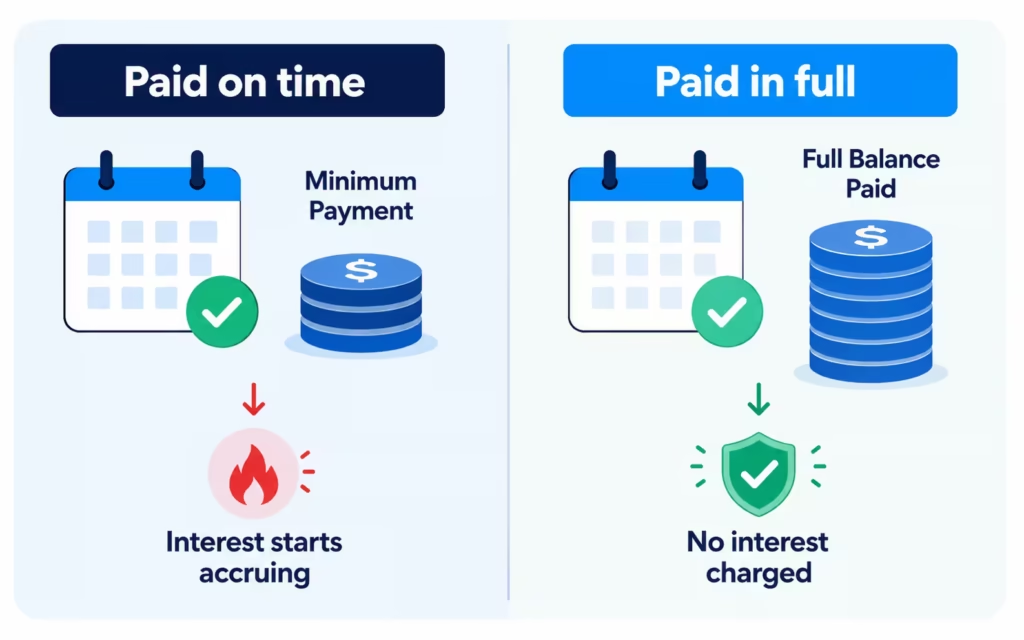
Paying on time means your payment arrived by the due date. That keeps your account current, protects your credit score, and avoids late fees. Paying in full means your payment covered the entire statement balance. Only the second one stops interest.
Here’s what happens with a partial payment:
- Your statement shows a $2,000 balance with a $50 minimum.
- You pay $50 by the due date. No late fee, no credit damage.
- The remaining $1,950 starts generating interest at your daily rate.
- Next month’s statement includes that interest as a finance charge.
The minimum payment is designed to keep your account in good standing, not to keep you debt-free. Treating it as “the payment” is how small balances turn into expensive ones.
Losing (and Regaining) Your Grace Period
The grace period isn’t permanent. It disappears the moment you carry a balance, and the way it disappears surprises a lot of people.
If you don’t pay your full statement balance one cycle, you lose the grace period for the next cycle too. That means new purchases start accruing interest from the day you make them. No free window. This catches people off guard because they expect each new purchase to get its own interest-free period.
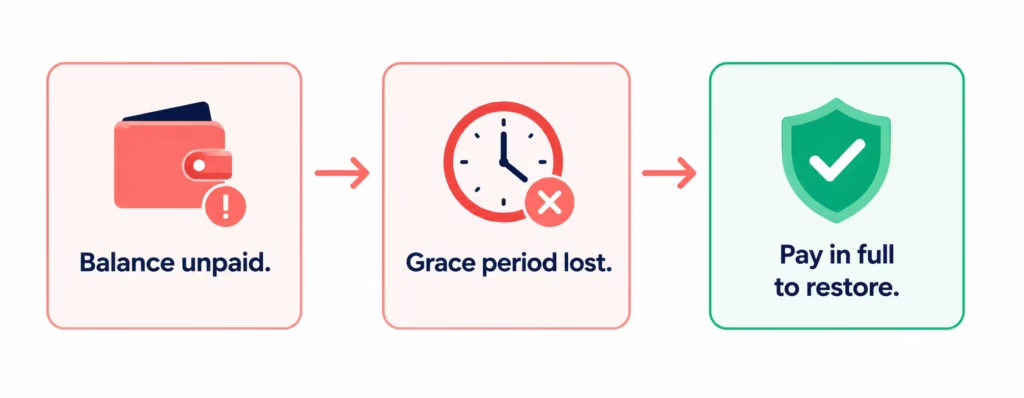
To get the grace period back, you need to pay your full balance again. Most issuers restore it once you pay the statement balance in full for a cycle or two. The exact rule varies by issuer, so your card agreement has the final word.
The practical takeaway: one partial payment can trigger two cycles of interest, not one. Paying in full every month isn’t just cheaper. It’s the only way to keep the grace period working for you.
How Purchase APR Is Calculated
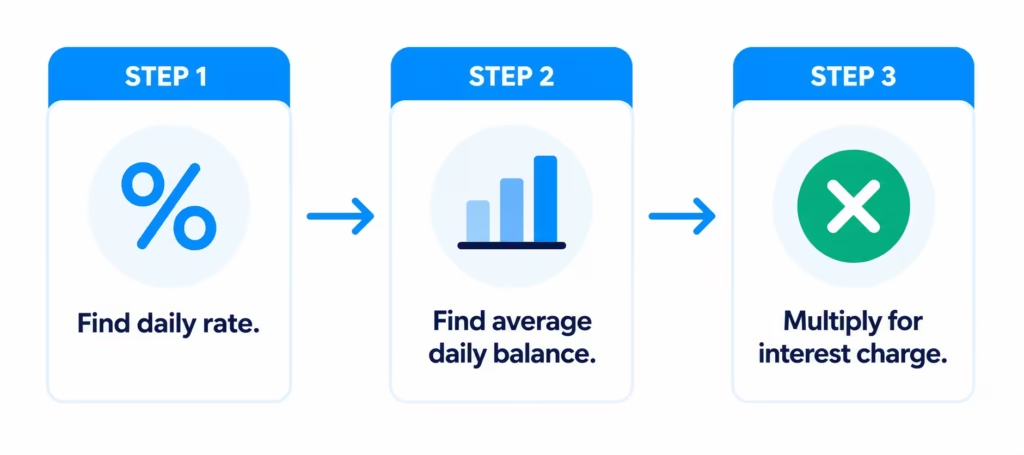
The APR on your statement is a yearly rate, but credit card interest is charged daily. Here’s how the math works, step by step:
- Find the daily periodic rate. Divide your APR by 365 (some issuers use 360). A 22.99% APR becomes roughly 0.063% per day.
- Find your average daily balance. Add up your balance at the end of each day in the billing cycle, then divide by the number of days.
- Multiply. Daily rate × average daily balance × days in the cycle = your interest charge.
There’s one more wrinkle: compounding interest. Each day’s interest gets added to your balance, so the next day’s interest is calculated on a slightly bigger number. Over a single month, the effect is small. Over a year of carrying a balance, it adds up.
This daily math is why the average credit card rate feels so heavy. Federal Reserve data puts the average rate on accounts assessed interest at roughly 22% as of mid-2026, near historic highs. At that level, a carried balance grows fast.
A Worked Example: Turning APR Into a Dollar Amount
Abstract percentages don’t mean much until you see real dollars. Let’s walk through a complete example.
Marcus, a warehouse supervisor at a manufacturing company, carries a $1,000 balance on a card with a 22.99% APR. He makes no new purchases during a 30-day billing cycle.
Step 1: Daily periodic rate. 22.99% ÷ 365 = 0.063% per day (0.00063 as a decimal).
Step 2: One day of interest. $1,000 × 0.00063 = about $0.63 per day.
Step 3: One month of interest. $0.63 × 30 days = about $18.90 for the cycle. With daily compounding, the real figure lands closer to $19.
That might sound manageable. But scale it up, and it stings. A $5,000 balance at the same rate costs roughly $95 a month, or about $1,140 a year, in interest alone. That’s money spent on nothing but the privilege of owing.
Now compare that to the alternative. If Marcus paid his full $1,000 statement balance by the due date, his interest charge would be exactly $0. Same purchases, same card, same APR. The rate only bites when a balance survives the due date.
Why Purchase APR Is Often Shown as a Range
When you browse card offers, you rarely see one rate. You see something like “19.99% – 28.99% variable APR.”
Issuers advertise a range because they don’t know your rate yet. Your exact APR depends on your creditworthiness, which the issuer can only assess after you apply and they review your credit report. The range includes everyone. Applicants with excellent credit are near the bottom, while those with fair credit are near the top.
This makes one practical point important: you can’t know your exact purchase APR until you’re approved. When comparing cards, compare the full ranges, and assume you’ll land somewhere in the middle unless your credit is strong.
What Determines Where You Land in the Range
Several factors decide your specific rate within the advertised range:
- Credit score. The biggest factor. Higher scores signal lower risk, so they earn lower rates. Scores above 740 typically qualify for the best end of the range.
- Credit history. Length of history, payment record, and existing debt all feed the issuer’s decision.
- Income and obligations. Issuers weigh your income against your debts to judge whether you can handle more credit.
- Card type. Premium rewards cards and cards aimed at fair-credit borrowers often carry higher ranges. Plain low-interest cards carry lower ones.
Fixed vs. Variable Purchase APR
A fixed APR stays the same unless the issuer decides to change it. A variable APR moves up and down with an underlying index, usually the prime rate.
The prime rate tracks the Federal Reserve’s benchmark rate. When the Fed raises rates, the prime rate rises, and variable card APRs rise with it, often within a billing cycle or two. When the Fed cuts, your APR can drift down too.
Nearly every consumer credit card issued today has a variable APR. Fixed-rate cards are rare. That’s worth knowing because it means the rate on your disclosure box isn’t locked in. It can move even if you do everything right.
How and Why Your Purchase APR Can Change
Three triggers account for most rate changes:
- Prime rate movement. If your card has a variable APR, your rate shifts automatically when the prime rate shifts. No notice is required for this type of change, since it’s built into your agreement.
- Penalty APR. A payment that’s 60 or more days late can trigger a penalty rate, often near 29.99%, applied to your balance. Some issuers remove it after several on-time payments. Others keep it.
- Issuer-initiated changes. An issuer can raise your rate on future purchases for various reasons. However, federal rules require a 45-day notice. You can also reject the change and close your account.
How to Avoid Paying Purchase APR
Everything in this article points to one goal: never letting this rate cost you money. These steps make that happen:
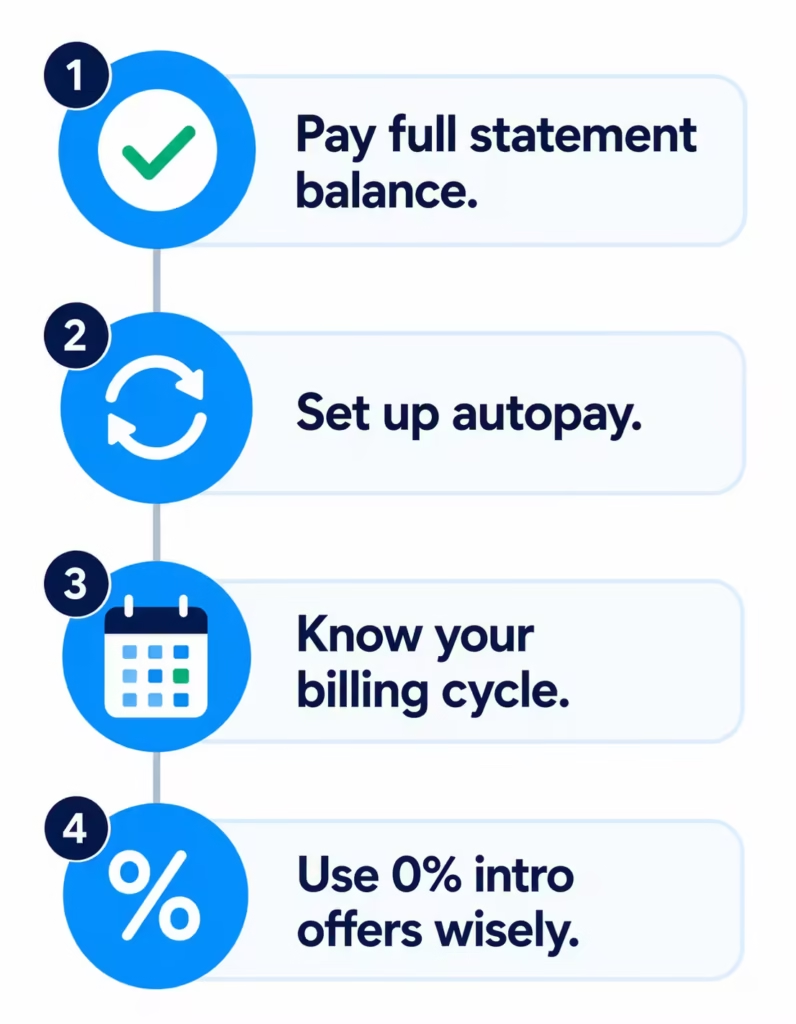
- Pay the full statement balance by the due date, every cycle. This is the only move that guarantees zero purchase interest. Not the minimum. Not “most of it.” The whole statement balance.
- Set up autopay for the full balance. Autopay removes the risk of forgetting a due date. Choose “statement balance” as the autopay amount, not “minimum payment.” If cash flow makes that risky some months, set autopay for the minimum as a backstop and pay the rest manually.
- Learn your billing cycle timing. Your statement closing date and due date are fixed each month. Big purchases made right after the closing date get the longest interest-free window.
- Use a 0% intro APR offer for large planned purchases. Some cards charge no interest on purchases for 12 to 21 months. This works well for a planned expense you’ll pay off within the promo window. Just clear the balance before the promo ends, because the regular rate applies to whatever remains.
Frequently Asked Questions (FAQs)
Is 24% purchase APR bad?
A 24% purchase APR sits above the average card rate, which was around 22% in mid-2026. It only costs you money if you carry a balance past your due date; pay in full each month, and the rate never applies.
What does 24% APR mean on a credit card?
It means you’re charged 24% yearly interest on any balance you carry past your due date. The math works out to roughly 0.066% per day, applied to your average daily balance.
How much is 26.99 APR on $3,000?
At 26.99% APR, a $3,000 balance carried for a 30-day cycle costs roughly $67 in interest for that month alone. Carried for a full year, that’s over $800 in interest on top of the original balance.
Do you pay purchase APR if you pay on time?
Paying on time only avoids late fees, not interest. You avoid purchase APR only if you pay your full statement balance, since even a partial payment leaves the remainder accruing interest daily.
What’s the minimum payment on a $3,000 credit card?
Minimum payments vary by issuer, typically 1-3% of the balance, so a $3,000 balance might require $30-$90 monthly. Paying only the minimum keeps your account current but lets interest build on the rest.
Is 20% purchase APR high?
A 20% purchase APR is close to the national average, which sits around 22% as of mid-2026. It’s not unusually high, but it still costs real money on any balance carried past the due date.
Is 30% APR too high?
A 30% APR is well above average and close to typical penalty APR territory, often near 29.99%. It’s a signal to prioritize paying in full or looking into a lower-rate card or balance transfer.
What is a good purchase APR rate?
A good purchase APR is one below the roughly 22% national average, with cards for excellent credit often starting near 19-20%. The exact rate you qualify for depends on your credit score, income, and debt.
Does a 0% intro APR offer apply to all purchases forever?
No, 0% intro APR offers on purchases typically last 12 to 21 months. After the promo ends, the regular purchase APR kicks in for any balance. So, make sure to pay off any unpaid amounts before the promo ends.
Can you lose your grace period even if you’ve never missed a payment?
Yes, carrying any unpaid balance past the due date removes your grace period for the next cycle, even without a missed or late payment. New purchases then start accruing interest immediately until you pay a full statement balance again.
The Bottom Line
A purchase APR is simply the price of carrying a balance on everyday spending. It applies only when the full statement balance goes unpaid; it’s calculated daily, and the grace period protects anyone who pays in full.
The best way to manage payments is to use automatic full-balance payments. Also, keep a clear view of your billing cycle dates. For most readers, that combination makes purchase APR a number they’ll see but never actually pay.
If you know someone who just got their first credit card, this guide could save them from an expensive first statement surprise.