
Seeing a lower credit limit on your Chase card can feel like a punch in the gut. One day the card works fine. The next day, your available credit is smaller, and you’re left wondering what happened. If you’re asking yourself, “why did Chase lower my credit limit?” you’re not alone. Many cardholders face this without warning, and it can shake their confidence.
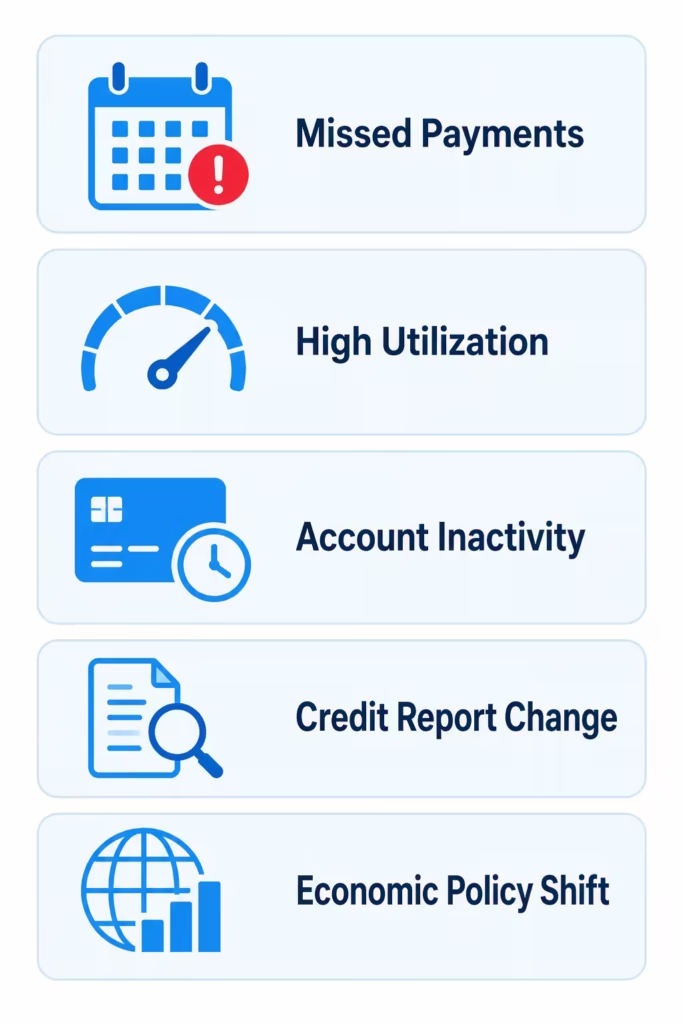
The short answer: Chase lowers credit limits mostly due to missed payments, high balances, account inactivity, credit report changes, or company-wide risk reviews.
Below, we’ll walk you through the exact reasons, your legal rights, and clear steps to get your limit back.
Key Takeaways
This guide explains why Chase lowers credit card limits, covering the five main triggers, your legal rights to a written explanation, how a lower limit affects your utilization ratio, and the exact steps to request reinstatement.
Core Facts:
- Chase most often lowers limits due to missed or late payments, high credit utilization above 50 to 80 percent, six or more months of account inactivity, a drop in your credit report from Experian, Equifax, or TransUnion, or company-wide economic risk reviews.
- Under the Equal Credit Opportunity Act and Fair Credit Reporting Act, Chase must generally send a written adverse action notice within 30 days when the cut is based on your credit report.
- Chase does not have to send a formal adverse action notice if the reduction stems from delinquency on the same account or from inactivity and portfolio-wide reviews unrelated to your personal credit report.
- A lower limit can spike your utilization ratio even if your balance stays the same; one example in the article shows utilization jumping from 25 percent to 62.5 percent after a limit cut from $10,000 to $4,000.
- Under the CARD Act of 2009, Chase cannot charge an over-the-limit fee for at least 45 days after notifying you if your balance exceeds a newly lowered limit.
- To request reinstatement, the article recommends first fixing the trigger, such as three to six months of on-time payments, then calling Chase’s credit line team and citing your payment history and reduced balance.
Best for:
- Cardholders who noticed a sudden Chase credit limit reduction and want to identify the specific cause.
- Readers who received an adverse action letter and want to understand what it legally must include.
- Anyone preparing to call Chase to request reinstatement of a previous credit limit.
Common Reasons Chase Lowers Your Credit Limit
Chase doesn’t cut limits on a whim. Every account review follows a mix of behavior signals and business rules. Some triggers come from your own account use. Others come from outside your control, like a shift in the economy or a change in Chase’s internal risk policy.
Knowing which bucket your case falls into helps you decide your next move. A behavior-based cut often has a fix. A portfolio-wide cut may need a different plan. Let’s look at the top five reasons this happens.
Missed or Late Payments
Payment history is the single biggest signal Chase watches. Just one late payment past 30 days can trigger an account review. Two or more late payments within a short window raise a bigger red flag.
Chase pulls your account activity often. If your recent history shows a pattern of paying late, even by a few days past the due date, the risk team may act fast. They can lower your limit to reduce their exposure before things get worse.
To fix this, set up autopay for at least the minimum due. This one step protects your account from small slips that trigger big cuts. If a late payment was a one-time mistake, call Chase and ask for a goodwill adjustment.
High Credit Utilization
Credit utilization is the percent of your limit you’re using. If your Chase card has a $10,000 limit and you carry a $7,000 balance, your utilization sits at 70%. That’s a warning sign to any card issuer.
Most credit experts point to the 30% guideline. Keeping your balance under 30% of your limit signals healthy use. Going above 50% often triggers a closer look. Going above 80% for several months in a row can lead to a limit cut, especially if you only pay the minimum each month.
Chase reads this pattern as stress. They may cut your limit to match how much they think you can safely pay back. If you always max out your card, they see risk, not opportunity.
Account Inactivity
If you haven’t used your Chase card in six months or more, it may be flagged as inactive. Card issuers don’t earn money on idle accounts. They also can’t judge your current spending health without recent activity.
An inactive card takes up room on Chase’s books without giving them any value. So they trim the limit or close the card outright. This is one of the most common “no-fault” reasons for a cut, especially on older cards you may have forgotten about.
To keep this from happening, use the card for a small purchase every two to three months. A streaming bill or a gas fill-up is enough to keep the account active and healthy.
A Drop in Your Credit Score or Credit Report
Chase runs periodic reviews of your full credit report. They pull data from Experian, Equifax, or TransUnion. If your score drops, new debt shows up, or a collection account appears on your bureau file, Chase may act.
This is called a soft-pull account review. It doesn’t hurt your score, but it gives Chase a fresh look at your total credit health. If your risk profile weakened since you opened the card, they may lower the limit even if your Chase account itself looks fine.
New hard inquiries, higher balances on other cards, or a new delinquency on any account can drag your score down and trigger a review.
Economic Conditions or Issuer Policy Changes
Sometimes the cut has nothing to do with you. Banks lower limits across large groups of customers during hard economic times. This is called a portfolio review or a risk-based, portfolio-wide adjustment.
When unemployment rises, default rates climb, or lending rules tighten, Chase may trim limits for whole card segments to lower their loss risk. Cardholders with perfect payment history can still see cuts during these events. This happened widely during the 2008 financial crisis and again during parts of 2020.
If your account is spotless but your limit still dropped, this is likely the reason. It feels unfair, but it’s a business decision, not a judgment on your habits.
Is Chase Legally Required to Tell You Why?
Yes, in most cases Chase must tell you why. But there are clear exceptions written into federal law. Two rules govern this: the Equal Credit Opportunity Act (ECOA) and the Fair Credit Reporting Act (FCRA). ECOA is enforced by Regulation B.
Under these laws, an “adverse action” includes any negative change to your credit terms, such as a limit cut. When Chase takes adverse action based on your credit report or credit behavior, they must send you a written notice. This notice usually arrives by mail within 30 days of the change.
What an Adverse Action Notice Must Include
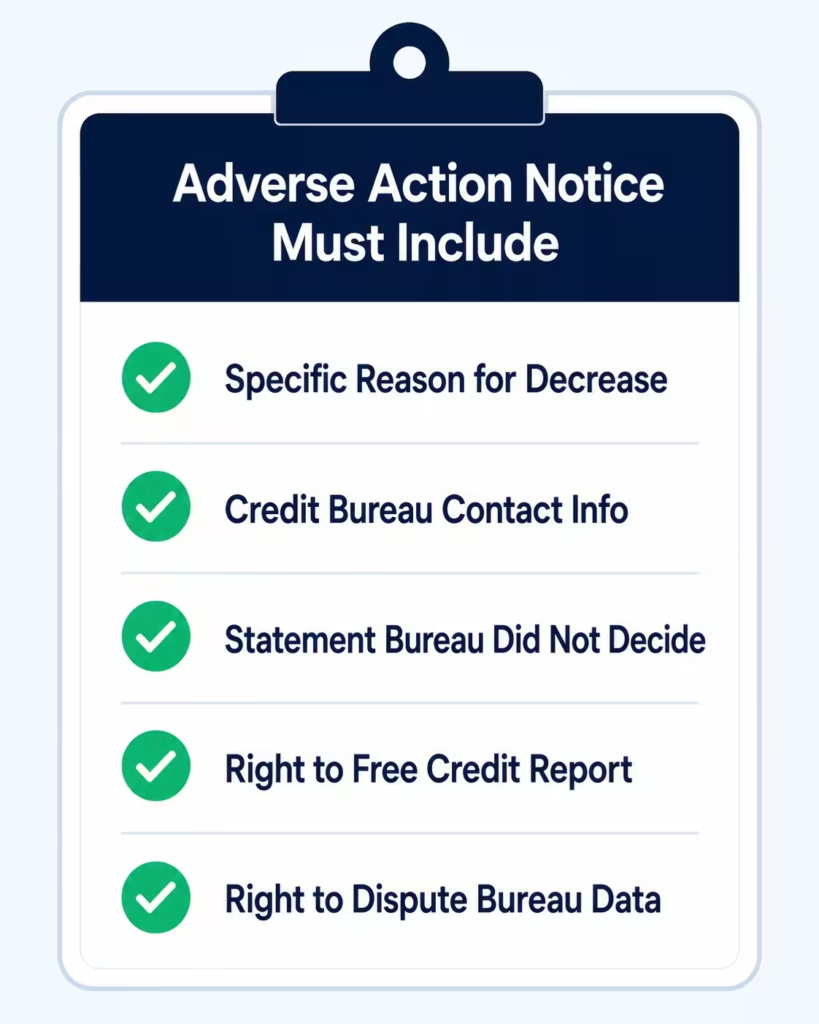
The letter Chase sends can’t be vague. Federal rules spell out what must appear in it. A proper adverse action notice must include:
- The specific reason or reasons for the decrease
- The name, address, and phone number of the credit bureau Chase used
- A statement that the bureau did not make the decision
- Your right to get a free copy of your credit report within 60 days
- Your right to dispute the accuracy of the bureau’s data
The Consumer Financial Protection Bureau confirms that lenders must give clear, specific reasons, not general statements like “credit issues.”
💡 Pro Tip: Save every adverse action notice. If you plan to dispute a bureau error or ask Chase to reinstate your limit, this letter is your strongest proof of what data they used.
When Chase Doesn’t Have to Send a Notice
There are two main exceptions. Chase can lower your limit without a formal adverse action letter in these cases:
Delinquency or default: If you’re behind on payments to Chase on the same account, they don’t have to send a notice. The law treats existing default as its own justification.
Inactivity or Account-Wide Reviews: If Chase reduces limits for many customers because of inactivity, portfolio risk, or economic policy, they may not need to send you an FCRA notice. This applies if the decision wasn’t based on your personal credit report. They still often send a courtesy letter, but it may not follow the full adverse action format.
This is why some cardholders get a full, detailed letter and others get a short, plain message. The law treats these two paths very differently.
How to Find Out the Specific Reason for Your Decrease
If Chase didn’t send a letter, or the letter felt too vague, you have every right to ask for more detail. Follow these steps to get a clear answer:
- Log in to your Chase account at chase.com and check the Messages or Alerts tab. Many notices appear there before the paper letter arrives.
- Call the number on the back of your card. Ask to speak with the credit line review team, not general customer service. Say: “My credit limit was reduced. Can you tell me the specific reason and confirm whether an adverse action notice was sent?”
- Request a written copy of any notice. If one was sent but you never got it, ask for a reissue by mail or secure message.
- Pull your free credit reports at AnnualCreditReport.com to see what Chase saw. Look for new late payments, high balances on other cards, or collection items.
- Compare the dates. The bureau data on the day of the review usually points to what tipped the decision.
Keep notes of every call, the agent’s name, and the reference number. If you later dispute the cut, this record matters.
How a Lower Limit Affects Your Credit Utilization Ratio
A limit cut can hurt your credit score even if you did nothing wrong. This is because your utilization ratio is a top factor in both FICO and VantageScore models.
Here’s a simple example: Say Sarah, a marketing coordinator, has a Chase Freedom card with a $10,000 limit and a $2,500 balance. Her utilization is 25%, which is healthy. Chase then cuts her limit to $4,000. Her balance didn’t change, but her utilization just jumped to 62.5%. That single change can pull her score down by 20 to 40 points overnight.
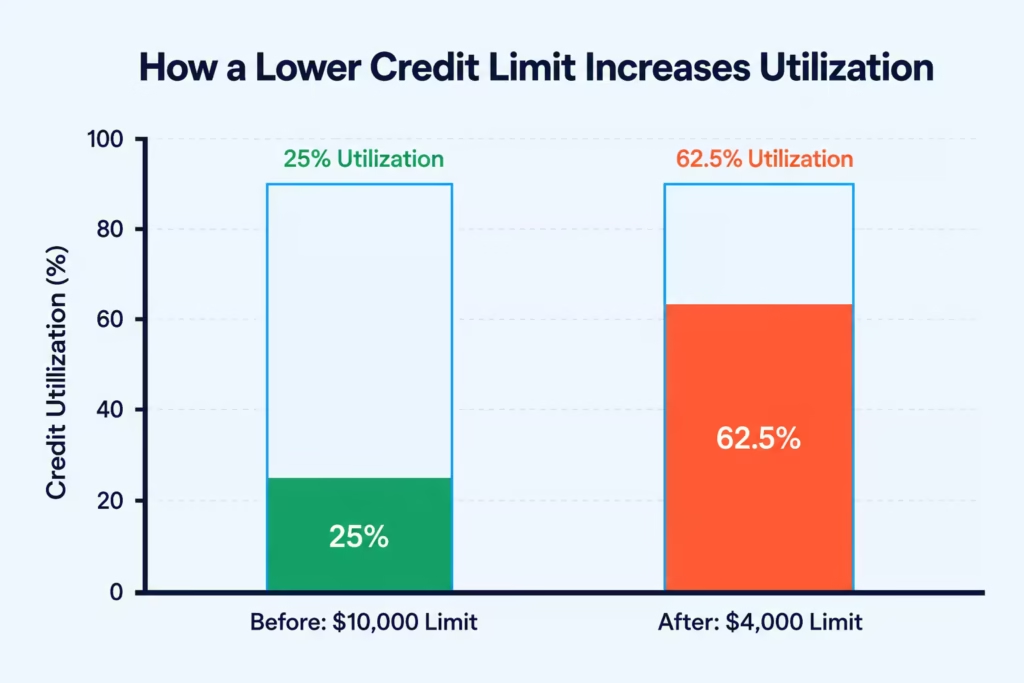
The pain grows if you have other cards too. Your total or “aggregate” utilization across all cards also matters. A single limit cut can push your overall usage above the 30% mark, even when your other cards are fine.
To soften the blow, pay your Chase balance down fast. Cutting the balance is the quickest way to bring utilization back into a healthy range. Also, avoid opening new cards in the same month, since new inquiries can stack more damage on top.
Does the Limit Decrease Itself Show Up on Your Credit Report?
The limit decrease event isn’t reported as a negative mark. Chase simply updates the new, lower limit on your monthly bureau report. No line item says “limit reduced.” No hard inquiry gets added either, since account reviews use soft pulls.
But the side effect is very real. Once the lower limit posts to Experian, Equifax, and TransUnion, your utilization ratio recalculates using the smaller number. That’s where the score damage happens, not from the cut itself but from the math it triggers.
📌 Did You Know: A credit limit cut only shows in your report as a lower “credit limit” data field. There is no separate flag or code for it. Lenders viewing your report won’t see the cut directly, only the new number.
How to Request Reinstatement of Your Original Credit Limit
Getting your old limit back is possible, but it takes the right approach. Chase reviews reinstatement requests case by case. The stronger your case, the better your odds.
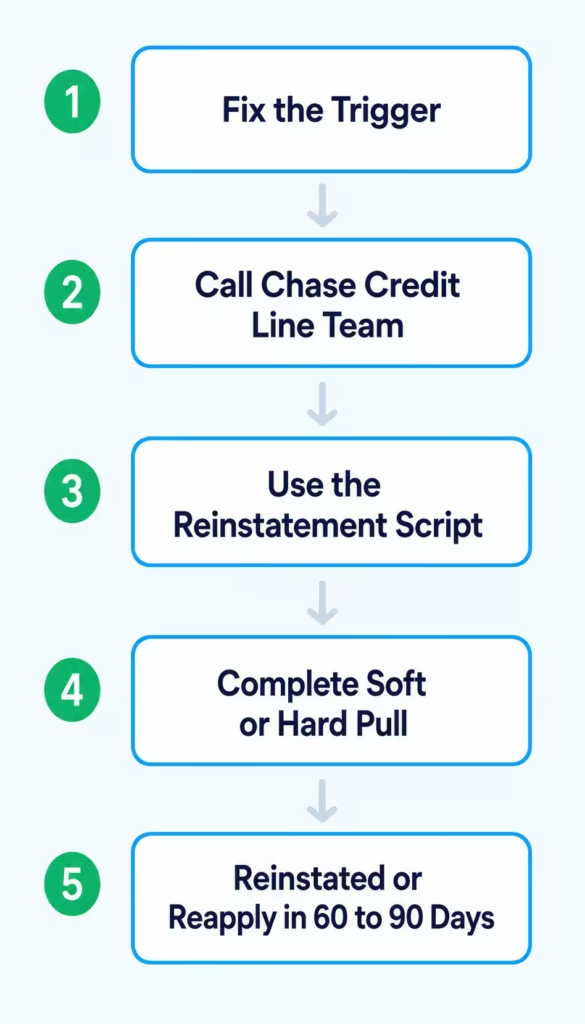
Follow these steps to make the request:
Step 1: Wait until you’ve fixed the trigger. If the cut came from a late payment, wait until you have three to six months of on-time payments. If it came from high utilization, pay balances down first. Calling too early almost always leads to a “no.”
Step 2: Call the Chase credit line team. Use the number on the back of your card or call 1-800-432-3117 for personal cards. Ask to be transferred to the credit line increase or account review department.
Step 3: Use a clear, factual script. Try something like: “Hi, my credit limit on account ending in [last 4 digits] was reduced on [date]. Since then, I’ve made [X] on-time payments and reduced my balance to [amount]. I’d like to request reinstatement to my prior limit of [amount].”
Step 4: Be ready for a soft or hard pull. Chase may run a fresh credit check. A soft pull won’t hurt your score. A hard pull can drop it by a few points. Ask which type they’ll use before you agree.
Step 5: If denied, ask for the specific reason. You can try again in 60 to 90 days after fixing that reason. Don’t apply repeatedly, since each hard pull adds a small dent.
⚠️ Mistake to Avoid: Don’t close the card in frustration right after a limit cut. Closing lowers your total available credit even more and shortens your credit history, doubling the damage to your score.
Protection From Over-the-Limit Fees After a Decrease
Federal law protects you here. Under the CARD Act of 2009, if Chase lowers your credit limit and your balance exceeds that limit, they can’t charge you an over-the-limit fee for at least 45 days after notifying you. During this grace window, you also don’t have to pay the excess in one lump sum.
You should still bring the balance under the new limit as fast as you can. Staying over the new limit can lead to new fees after 45 days and further damage to your credit profile.
If the Decrease Was Based on a Credit Report Error
Sometimes the trigger is wrong data on your credit report. A payment marked late that was actually on time. An old debt showing as new. An account that isn’t even yours. These errors happen more often than most people think.
If you spot a mistake, take these steps:
- File a dispute with the credit bureau that Chase used. Contact info is Experian, Equifax, or TransUnion.
- Give clear evidence. Attach bank statements, payment confirmations, or letters from creditors that back your claim.
- Wait 30 days. Bureaus must investigate and reply within 30 days under the FCRA.
- Send the corrected report to Chase. Once the bureau confirms the fix, contact Chase’s credit line team and ask them to redo the account review with the correct data.
- Ask for reinstatement. With clean data, Chase may restore your original limit or even offer more.
If Chase refuses to act after a proven error, you can file a complaint with the Consumer Financial Protection Bureau. This often speeds up a fair review.
How to Prevent Future Credit Limit Decreases
Preventing another cut is about steady, boring habits. The best defense is a healthy card profile that gives Chase no reason to worry.
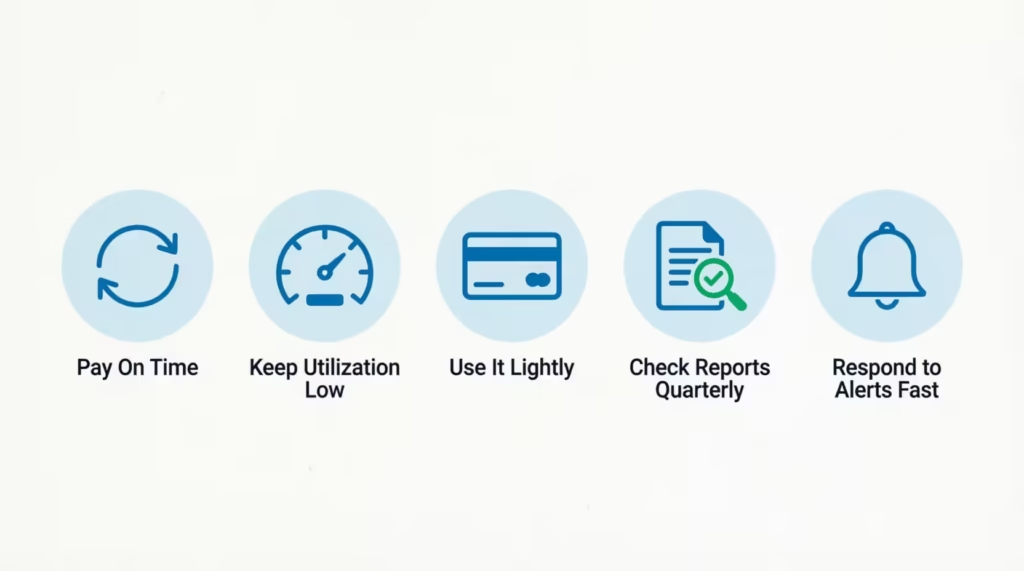
Pay on time, every time. Set autopay for at least the minimum. Late payments are the top trigger, and even one can lead to trouble.
Keep utilization low. Aim for under 30% of your limit at all times. Under 10% is even better for your score. If you spend more each month, pay down the balance before the statement closes.
Use the card often, but lightly. A small charge every month keeps the card active. Don’t let it sit dormant for six months or more.
Check your credit reports quarterly. Free reports are available at AnnualCreditReport.com. Catching errors early keeps them from showing up in a Chase review.
Watch your total debt load. Even debt on other cards affects your score. If your overall debt climbs, Chase may see it during a soft-pull review.
Respond fast to any account message. Chase sometimes asks for updated income info or verification. Ignoring these requests can lead to a limit cut on its own.
Building these habits gives you the strongest shield against another surprise cut and puts you in a good spot to ask for a limit increase later.
Frequently Asked Questions (FAQs)
Why is my Chase limit so low?
Common triggers include missed payments, high utilization above 50%, six or more months of inactivity, a drop in your credit score, or a company-wide portfolio risk review. Fixing the specific cause is the first step toward reinstatement.
Why did Chase randomly lower my credit limit?
If your account looks clean, the cut likely came from an economic or policy-driven portfolio review, not your behavior. Banks sometimes lower limits across whole customer segments when default rates rise or lending rules tighten.
Can Chase lower my credit limit without telling me?
Chase must send a written adverse action notice within 30 days if the cut comes from your credit report. However, inactivity or portfolio-wide reviews don’t always need that formal notice. You may still get a shorter courtesy letter instead.
What do I do if my credit limit is lowered?
Check your Chase alerts or call the credit line review team to find the reason. Then, fix the issue by paying down balances or catching up on late payments. Wait three to six months of clean history before requesting reinstatement.
Is it legal for a credit card company to reduce your credit limit?
Yes, credit card issuers can legally lower your limit at their discretion. Federal law under ECOA and FCRA only requires them to disclose the reason in most cases, not to avoid making the cut.
Does reducing your credit limit hurt your score?
Yes, because a lower limit raises your credit utilization ratio even if your balance stays the same. A $2,500 balance on a $10,000 limit sits at 25% utilization, but if the limit drops to $4,000, utilization jumps to 62.5% and can cost 20 to 40 points overnight.
Why did my credit limit decrease on its own?
Chase checks accounts now and then using soft pulls from Experian, Equifax, or TransUnion. A lower score, new debt, or a collection account can lead to a cut, even if you haven’t missed any payments to Chase. This review happens automatically, without action on your part.
Can you dispute a credit limit decrease?
You can’t dispute the decision itself, but you can dispute the underlying data if it’s wrong. Filing a dispute with the credit bureau Chase used and sending the corrected report to Chase can lead to reinstatement.
How do I stop Chase from lowering my credit limit?
Pay on time every time, keep utilization under 30% of your limit, and use the card at least every two to three months to avoid inactivity flags. Checking your credit reports quarterly also helps you catch errors before a review flags them.
Wrapping Up
A sudden credit limit cut from Chase can feel personal, but it’s usually the result of clear triggers you can spot and fix. Behavior signals like late payments, high balances, or inactivity often play the biggest role. Federal law protects your right to know why in most cases, and reinstatement is possible with the right steps
For most readers, the best way is to fix the trigger. Then, request a written reason. After three to six months of clean history, ask for a limit review.
If a friend or family member is stressing about a Chase limit cut, share this guide. It could save them weeks of confusion and score damage.