
I know how stressful this moment feels. You have a dental bill, a vet visit, or a surgery coming up. Someone at the front desk hands you a CareCredit brochure. Then you start searching, and every site gives a different answer about which credit bureau CareCredit uses. One says Experian. A forum says TransUnion. You just want to know which report to check.
The short answer: CareCredit runs a hard credit check through Synchrony Bank, and the bureau it pulls is usually Experian, though TransUnion and Equifax pulls happen too.
Below, you’ll get the full picture. You’ll learn what triggers a hard pull, what stays soft, and exactly how to prepare.
Key Takeaways
This guide explains which credit bureau CareCredit checks, covering hard versus soft inquiries, expected score impact, prequalification steps, and how to review all three credit reports before applying.
Core Facts:
- CareCredit, issued by Synchrony Bank, most often pulls Experian for hard inquiries, though TransUnion and Equifax pulls are also commonly reported by applicants.
- A completed application always triggers a hard inquiry, while prequalification only uses a soft inquiry that does not affect your credit score.
- FICO reports that one additional inquiry typically lowers a score by less than five points, and the impact fades within a few months.
- A hard inquiry stays on your report for two years but only affects most FICO scores for the first 12 months.
- If denied, the adverse action letter names the specific credit bureau and score Synchrony used, giving you a free copy of that report within 60 days.
- After approval, Synchrony reports your CareCredit account monthly to all three bureaus regardless of which bureau was checked during the application.
Best for:
- Readers deciding whether to apply for CareCredit and wanting to know which credit report to check beforehand.
- People concerned about how a CareCredit application might affect their credit score.
- Anyone recently denied who wants to understand the reason and prepare before reapplying.
Which Credit Bureau Does CareCredit Use?
Let’s clear this up right away. CareCredit is issued by Synchrony Bank. Synchrony does not publish a fixed rule about which bureau it checks. There’s no official page that says “we always pull Experian.” That’s why the internet gives you five different answers.
Here’s what the evidence actually shows. Experian is the most commonly reported bureau for CareCredit applications. Many approved and denied applicants say Experian was the one that showed the new inquiry. But that’s not the whole story. Plenty of people report a TransUnion pull instead. Some report Equifax. A few even report two bureaus pulled at once.
CareCredit’s own consumer education pages talk about all three bureaus as if all three matter. That’s a signal in itself. The company describes Experian, Equifax, and TransUnion as the three main players in credit reporting, and it never names one as “the” bureau it uses. If a single bureau were locked in, you’d expect them to say so.
So what should you do with that? Treat the bureau as unknown. Don’t build your plan around one report. If you check only Experian and CareCredit pulls TransUnion, you could be looking at the wrong file. Errors, old collections, or a stray inquiry might be sitting on the report you never opened.
The safest approach is simple. Check all three reports before you apply. It’s free. It takes about 20 minutes. And it removes the guessing game completely.
📌 Did You Know: Your three credit reports are rarely identical. A lender may report to only one or two bureaus, so an account or a late payment can show on one report and be missing from another.
Why the Bureau Pulled Can Vary by Applicant
Bureau selection isn’t random, but it isn’t public either. Banks make deals with each credit bureau. Those deals cover cost, data coverage, and how well the bureau’s data works in that bank’s models. Those deals change over time.
A few things seem to shift which bureau gets pulled:
Your state of residence. Bureaus have different data strength in different regions. A lender may favor whichever bureau has the richest file for your area.
The card version you apply for. The standard CareCredit card is a closed-loop card. It only works at enrolled providers and retailers. The CareCredit Rewards Mastercard works almost anywhere. These are different products with different risk profiles, so the underwriting path can differ too.
How you applied. Applying in a provider’s office, online, or by phone can route your file through slightly different systems.
Timing. A bank can switch bureau partners in a given year. Someone who applied in 2022 may report a different bureau than someone applying now.
Real applicant reports back this up. Two people in similar situations, applying the same month, sometimes see inquiries land on different reports. That inconsistency is normal. It isn’t a sign that something went wrong with your application.
Hard Pull vs. Soft Pull: What CareCredit Actually Does
This is the part that scares most people. So let’s make it plain.
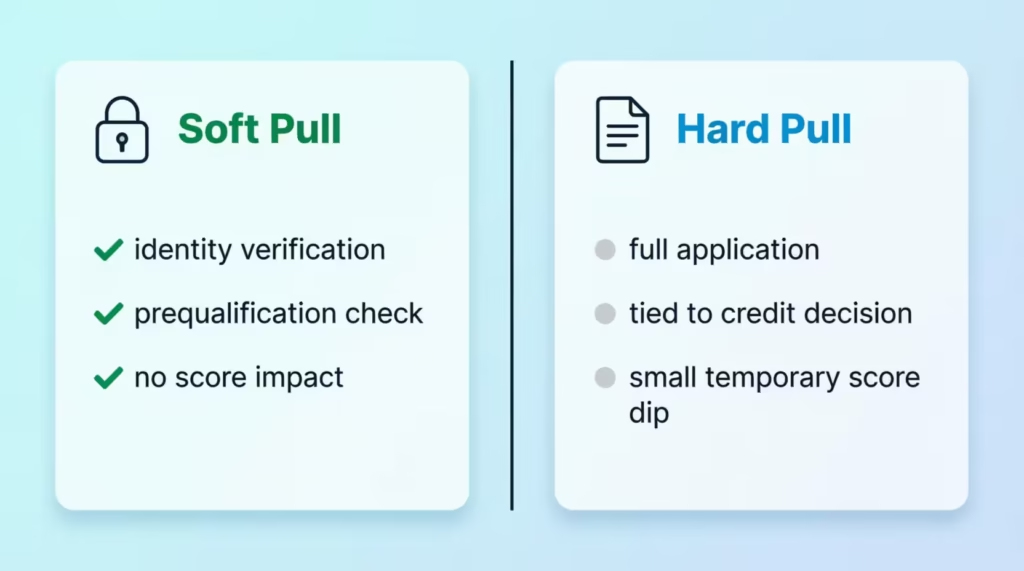
A soft pull is a look at your credit that doesn’t affect your score. Only you can see it on your report. Lenders can’t. It’s used for identity checks, prescreened offers, and prequalification.
A hard pull is a full review tied to a real credit decision. It shows up for other lenders to see. It can shave a few points off your score.
Here’s how CareCredit splits the two:
| Action | Type of pull | Score impact |
|---|---|---|
| Checking if you prequalify | Soft inquiry | None |
| Submitting a full application | Hard inquiry | Small, temporary dip |
| Getting approved and opening the account | Reported as new account | Small dip, then rebuilds |
| Requesting a credit limit increase | Usually soft, sometimes hard | Usually none |
A completed CareCredit application creates a hard inquiry. There’s no way around that. Any real credit card decision requires one. Synchrony must review your full file before extending a line of credit.
Prequalification is different. It uses a soft inquiry to confirm your identity and screen your file. CareCredit states plainly in its own FAQ that there’s no impact to your credit score to check if you prequalify, and that soft inquiries stay visible only to you.
Now, timing. A hard inquiry sits on your credit report for two years. That sounds long. But the part that matters is shorter. Most FICO scoring models only count inquiries from the last 12 months. After a year, the inquiry is still visible, but it stops pulling your score down. After two years, it drops off entirely.
How Much a CareCredit Hard Inquiry Affects Your Score
The real number is smaller than most people fear.
FICO says that for most people, one additional credit inquiry will take less than five points off their FICO Scores. On a 300 to 850 scale, that’s tiny. Some people with long, clean credit histories see no drop at all.
Why so small? Because inquiries are the smallest piece of your score. New credit accounts for about 10% of a FICO score, and inquiries are only part of that 10%. Payment history and how much of your limits you use matter far more.
The effect also fades fast. Most of the point loss happens right away. Within a few months, the number usually creeps back up, especially if you pay on time.
There is one situation where it adds up. If you apply for several credit products in a short window, each one leaves its own hard inquiry. Five applications in three weeks looks risky to a lender. It suggests you’re short on cash and grabbing credit fast. That pattern can cost you more points than any single pull.
So space out your applications. If you’re planning a mortgage or car loan in the next six months, think carefully about the timing of a CareCredit application. One healthcare card won’t ruin a mortgage approval. But five random inquiries might raise questions with an underwriter.
⚠️ Mistake to Avoid: Don’t apply for CareCredit at three different provider offices hoping one says yes. Each submission is a separate hard inquiry on your report, and the second and third rarely change the outcome.
How CareCredit’s Prequalification Tool Works
Prequalification is your best friend here. It lets you test the water without getting wet.
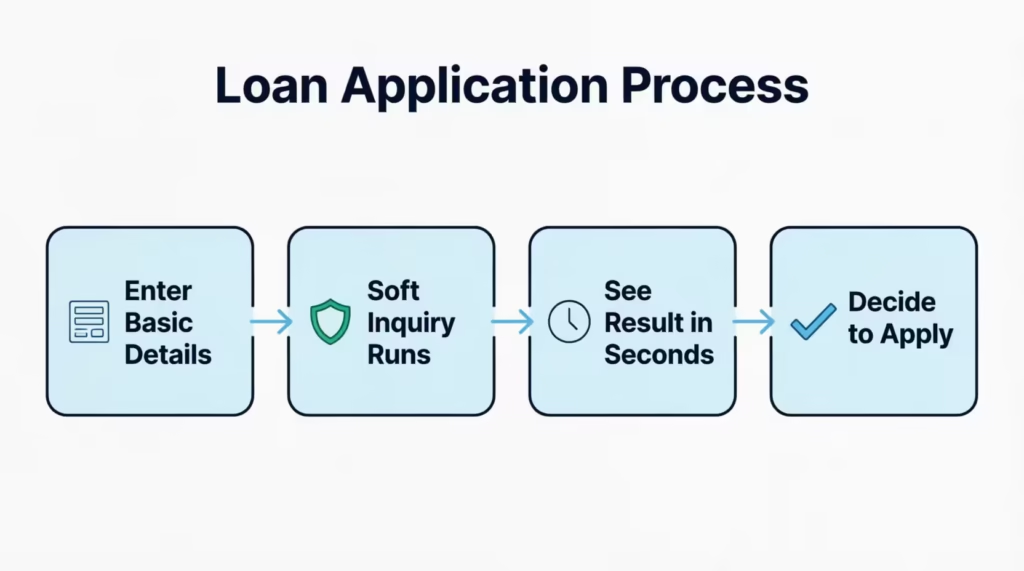
Here’s the flow, step by step:
Step 1: You enter basic details. Name, address, date of birth, income, and the last four digits of your Social Security number. You can do this on the CareCredit website, in a provider’s office, or on a tablet at the front desk.
Step 2: A soft inquiry runs. This verifies your identity and screens your credit file. Your score is untouched. CareCredit’s provider materials confirm the soft inquiry is used to verify identity and won’t affect the score.
Step 3: You get a result in seconds. Either you prequalify, or you don’t.
Step 4: You decide. If you prequalify, you’ll see an offer to move forward with the real application.
Now here’s the part people miss. Prequalifying is not approval. It means your file passed an early screen. It does not mean the money is yours.
Prequalification looks at a limited slice of your credit data. The full application looks at everything: your full report, your income, your existing debts, your relationship with Synchrony, and internal fraud checks. Things can change between the two steps.
That means two things can happen after you prequalify:
You could be approved, but for a lower limit than you hoped. If you need $6,000 in dental work and get a $1,500 limit, that’s a real problem to plan around.
You could be declined outright. It’s less common, but it happens.
And here’s the critical detail: the moment you accept the prequalified offer and submit the real application, a hard inquiry runs. The soft pull protection ends there. So don’t click through just to “see what happens.” Only accept the offer when you’re ready to open the account.
What Happens During the Full CareCredit Application
Once you decide to apply for real, the process moves fast. Understanding each step keeps you from being surprised.
The hard pull is triggered when you submit a complete application. That happens in one of three ways:
You accept a prequalified offer and confirm the application. You apply directly online without prequalifying first. You apply in the provider’s office, either on their tablet or over the phone with a CareCredit representative.
All three paths lead to the same place. A full application means a hard inquiry, and that inquiry lands on whichever bureau Synchrony pulls for your file. If they pull more than one, you may see the inquiry on two reports.
What you’ll need on hand:
Your full legal name and current address. Your date of birth. Your Social Security number. Your gross annual income, plus any income you want counted (spousal income can be included if you have reasonable access to it). Your monthly housing payment.
Be accurate with income. Overstating it is a bad idea, and understating it can cost you a higher limit.
The decision usually comes back in under a minute. Most applicants see “approved” or “declined” on the screen almost immediately, along with the credit limit if approved. Some applications get flagged for manual review.
If that happens, you’ll get a message saying a decision is pending, and you may hear back by mail or phone within 7 to 10 business days. This isn’t automatically bad news. It often just means the system needs to verify something.
If you’re approved, you can typically use the account right away for treatment that day. You’ll get a temporary account number, and the physical card arrives in the mail within a couple of weeks.
If you’re declined, Synchrony must send you an adverse action notice. This letter is required under the Fair Credit Reporting Act. It’s genuinely useful. It tells you the main reasons for the denial and, importantly, which credit bureau supplied the report they used. So if you were ever unsure which bureau CareCredit pulled for you, that letter answers it for your specific case.
💡 Pro Tip: Keep your adverse action letter. It names the exact bureau used in your decision, and it entitles you to a free copy of that report from that bureau within 60 days.
What Credit Score CareCredit Likely Uses to Decide
Here’s a gap that trips up thousands of applicants. The score you see is often not the score the lender sees.
There are two main scoring families. FICO scores are used in the vast majority of lending decisions. VantageScore is a competing model built by the three bureaus together. Both run on a 300 to 850 scale. Both look at similar data. But they weigh things differently, and they can produce different numbers from the same report.
Free apps usually show VantageScore. Credit Karma, for example, shows VantageScore 3.0 based on TransUnion and Equifax data. That’s a legitimate score. It’s just not the one most card issuers use.
So imagine this. Michael, a 34-year-old warehouse supervisor, needs $4,200 in root canal and crown work. He opens Credit Karma, sees a 682, and feels good. He applies for CareCredit and gets declined. Nothing was wrong with his math.
His VantageScore was 682. However, his FICO score from Synchrony was 631. This was lowered by a medical collection, which his free app calculated differently. That gap is normal. Differences of 20 to 50 points between models are common. Sometimes more.
Synchrony doesn’t publish which specific score version it uses. Underwriting criteria are proprietary. Banks guard them closely, partly for competitive reasons and partly to stop people from gaming the system. Card issuers usually use a FICO-based model. This is often a version made for bankcards. They also add their own internal scoring.
The practical takeaway: treat your free app score as a rough temperature reading, not a precise measurement. If your free score sits near a cutoff, assume the real number could be lower. Build in a buffer.
Minimum Credit Score Guidance for CareCredit Approval
There is no published minimum score for CareCredit. Synchrony has never released one. Anyone claiming a hard cutoff is guessing.
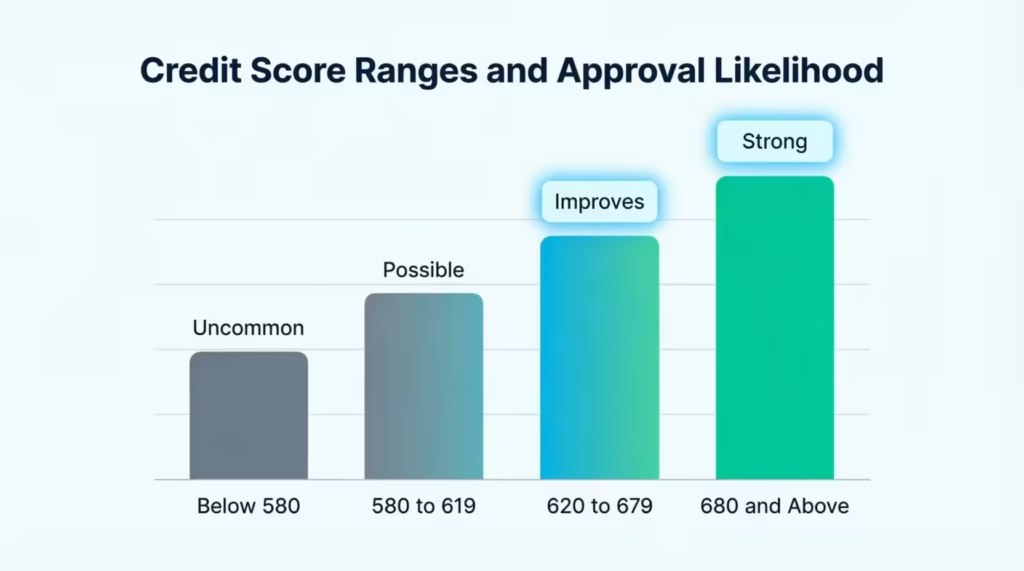
That said, patterns from real applicant reports give a usable picture:
Below 580. Approval is possible but uncommon. Recent late payments, collections, or a bankruptcy make it much harder.
580 to 619. This is the gray zone. Approvals happen here fairly often, usually with a small starting limit, sometimes $500 to $1,500.
620 to 679. Approval odds improve noticeably. Limits often land in the $1,500 to $5,000 range.
680 and above. Strong odds, with higher limits more common.
CareCredit has a reputation for being more reachable than premium rewards cards. That’s by design. It exists to help people pay for care, including people with imperfect credit. But “easier” doesn’t mean automatic.
Your score is only part of the decision. These factors matter too:
Your income relative to your existing debt. A high debt-to-income ratio can sink an application even with a decent score.
Recent delinquencies. A 30-day late payment from last month hurts far more than a collection from four years ago.
Your existing relationship with Synchrony. If you already have a Synchrony-issued card and you’ve paid it on time, that history helps. If you defaulted on one, it hurts badly. Synchrony issues many store cards, so check whether you have one you forgot about.
Recent inquiries. Several hard pulls in the last few months signal risk.
How much credit you’re using. High balances across your cards suggest strain, even if you’ve never missed a payment.
Which Credit Report to Check Before You Apply
This is the most useful thing you can do before applying. And since the bureau is unpredictable, the answer is straightforward: check all three.
Checking one report solves half the problem at best. If you check Experian and everything seems clear, a fraudulent account on your TransUnion file could surprise you. You won’t find out until the denial letter arrives.
Pulling your own reports is a soft inquiry. It costs you nothing in points. There’s no downside.
Once you have the reports open, look for these specific things:
Accounts you don’t recognize. An unfamiliar account could be identity theft, or it could be a mixed file where someone else’s data landed on your report. Either one can block an approval.
Late payments that shouldn’t be there. Confirm every 30, 60, or 90-day late mark is real. Reporting errors happen more than people expect.
Collections and their dates. Check whether the amounts and dates are correct. Paid collections should show as paid.
Your total balances against your total limits. Add up your credit card balances, then add up your limits. Divide the first by the second. That’s your utilization ratio. Under 30% is a common guideline. Under 10% is better. If you’re at 70%, paying down a card before applying can lift your score within one or two billing cycles.
Hard inquiries from the last 12 months. Count them. If you already have four recent inquiries, waiting a few months before adding a fifth is wise.
Your personal information. A wrong address or misspelled name can cause matching problems during underwriting.
If you find an error, dispute it with that bureau before you apply. Disputes typically resolve within 30 days. Applying with a known error on your file is choosing to be judged on bad data.
None of this requires knowing which bureau CareCredit will pull. That’s the whole point. Clean up all three, and you’re covered no matter which one they choose.
How to Check All Three Credit Reports for Free
The official free source is AnnualCreditReport.com. This is the only site authorized by federal law to give you free reports from Experian, Equifax, and TransUnion. Be careful with lookalike sites that charge fees or push subscriptions.
Free weekly reports are now permanently available from all three bureaus. That’s a change from the old once-a-year rule. You can pull each report every seven days if you want to.
The process takes about 10 to 20 minutes:
Go to the site and select all three bureaus. Enter your name, address, date of birth, and Social Security number. Answer the identity verification questions, which usually ask about old loans, past addresses, or former lenders. View and download each report as a PDF.
Save the files. If a dispute comes up later, having the original copy helps.
If verification fails online, don’t panic. It happens with thin credit files or recent moves. You can request reports by phone at 1-877-322-8228, or by mail using the request form on the site. Mailed reports take about 15 days.
One important note: These free reports contain your report data, not your credit score. Reports and scores are different things. For a rough score estimate, most major card issuers and banks now show a free FICO score in their apps or online portals. Each bureau also offers its own free consumer tools. Discover, for example, offers a free FICO score to non-customers as well.
How CareCredit Reports to Credit Bureaus After Approval
Getting approved changes the picture. And this is where a lot of articles stop, which leaves readers confused. The bureau used for your application decision has almost nothing to do with which bureaus track your account afterward.
Once your account is open, Synchrony reports it monthly to all three major bureaus. Your CareCredit account and balance will show up on Experian, Equifax, and TransUnion. This will happen even if only Experian was checked during the application.
That’s good news for monitoring. You don’t need to guess anymore. Any of the three will show your account activity.
Reporting timing follows your statement cycle. Here’s how it works:
Your billing cycle closes on your statement closing date. That’s the date printed on your statement, not your due date. Shortly after that, usually within a few days, Synchrony sends your account data to the bureaus. What gets sent is a snapshot: your balance as of the closing date, your credit limit, your payment status, and your account age.
This detail matters more than most people realize. The balance reported is the one from your closing date, not the balance after you pay. So if your statement closes with $2,800 on a $3,000 limit, the bureaus see 93% utilization, even if you pay the whole thing off two days later.
Michael’s example makes this concrete. He charges $2,800 for dental work in March. His statement closes March 18. He pays $1,000 on March 20 and the rest over the next few months. The bureaus still see $2,800 reported for March. His score dips. By June, after steady payments bring the balance to $900, the reported number drops and his score recovers.
To keep utilization lower on your report, make a payment before your closing date, not just before your due date. Paying early reduces the number that gets sent.
Two more effects worth knowing:
Payment history builds on all three files. Every on-time payment gets reported to all three bureaus. Over time, a CareCredit account paid on schedule strengthens all three reports. Payment history is the single largest factor in a FICO score, about 35%.
Utilization is counted twice. It’s measured per card and across all your cards combined. A maxed-out CareCredit card can hurt even if your other cards are nearly empty.
How CareCredit Appears on Your Credit Report (SYNCB/CARECR)
When you pull your report, don’t look for the word “CareCredit” on its own. You probably won’t find it.
The account typically shows as SYNCB/CARECR. Sometimes it appears as SYNCB/CARECREDIT or Synchrony Bank/CareCredit, depending on the bureau’s formatting.
Breaking it down: SYNCB is Synchrony Bank’s standard abbreviation. CARECR is a shortened form of CareCredit. Put together, it means your Synchrony-issued CareCredit account.
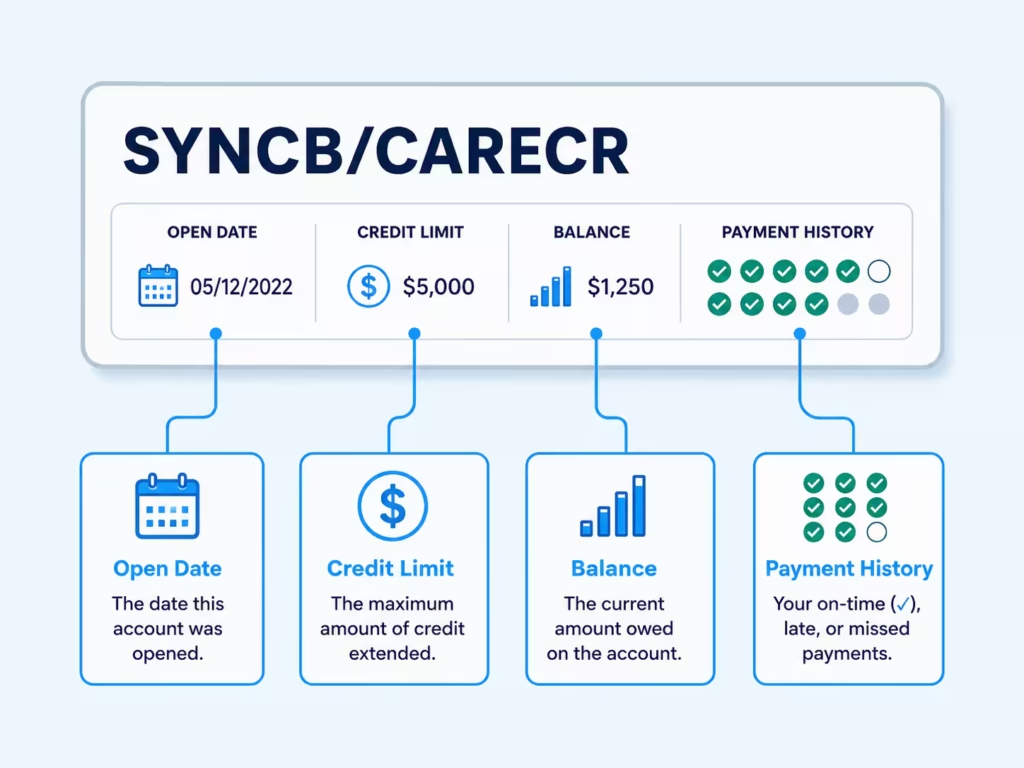
You may spot other SYNCB entries too. Synchrony issues cards for many retailers, so codes like SYNCB/AMAZON or SYNCB/LOWES belong to different accounts entirely.
Check these details on the tradeline:
The open date should match when you were approved. The credit limit should match your actual limit. A missing or wrong limit can make your utilization look worse than it is. The balance should reflect your last statement. The payment history grid should show no unexplained late marks.
If SYNCB/CARECR shows up and you never applied for CareCredit, take it seriously. Two things could be happening. It might be identity theft, where someone opened an account in your name. Or it might be a mixed file, where a credit bureau merged someone else’s account into your report. That’s more common with shared names or similar Social Security numbers.
Either way, act quickly. Call CareCredit customer service at the number on the CareCredit site to ask about the account. File a dispute with each bureau showing the account. Consider a fraud alert or credit freeze if fraud is confirmed. Your dispute rights come from the Fair Credit Reporting Act. This law says bureaus must investigate your claim, usually within 30 days.
Requesting a CareCredit Credit Limit Increase
Say you’re approved with a $1,500 limit, but your treatment plan costs $3,400. A credit limit increase might close that gap.
The good news: a CareCredit limit increase request is usually a soft pull. Synchrony often uses internal account behavior and your existing credit data rather than running a new hard inquiry. Cardholders who’ve called in report being told the request is a soft pull whether they use the app, the website, or the phone.
That said, “usually” isn’t “always.” Some requests do generate a hard inquiry, especially for newer accounts, very large increase requests, or when the bank needs fresh data. Because of that, ask before you commit.
The safest path:
Option 1: Use the app or website. Sign in to your CareCredit account or the mobile app. Look for the credit limit increase option. Update your income first, since a higher reported income supports a larger limit. Requests here are typically handled with a soft pull.
Option 2: Call Credit Solutions. CareCredit lists (866) 893-7864 for credit specialists. Calling has one big advantage. You can ask directly: “Will this request result in a hard inquiry?” Get the answer before you authorize it. If they say hard pull and you’re not comfortable, you can stop right there.
If a hard inquiry does run, it goes to whichever bureau Synchrony uses for your file, and the same “less than five points” rule generally applies.
To improve your odds:
Wait at least six months after opening the account. Many cardholders report better results after six to twelve months of activity.
Use the card and pay on time. An account with no activity gives the bank nothing to evaluate.
Keep your balance well below the current limit when you ask. Requesting more room while sitting at 95% utilization sends the wrong signal.
Update your income if it went up. This is often the single biggest lever.
Don’t ask repeatedly. If you’re denied, wait about six months before trying again.
One bonus: a higher limit lowers your utilization ratio, assuming your balance stays flat. That alone can nudge your score up.
Reapplying for CareCredit After a Denial
A denial stings, especially when you have care scheduled. But it isn’t the end of the road.
First, the honest part: yes, reapplying triggers a brand new hard inquiry. There’s no exception. Each application is a fresh credit decision, so each one leaves its own mark. And the second inquiry may land on a different bureau than the first, since bureau selection can shift.
That’s exactly why reapplying immediately is a bad move. Nothing about your file has changed in a week, so the answer almost certainly won’t change either. You’d just be collecting inquiries.
How long to wait
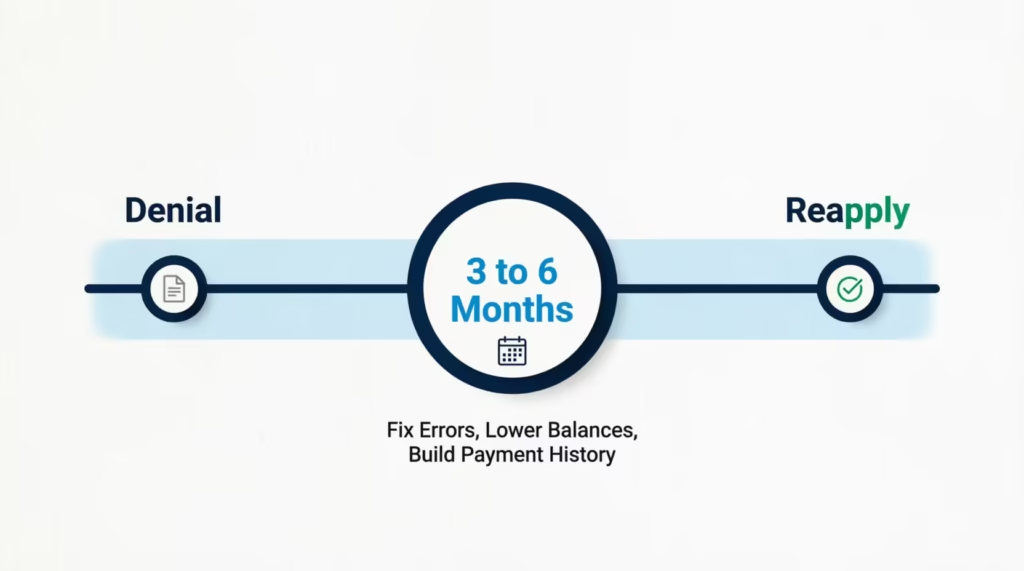
Three to six months is a reasonable window. Six months is safer. That gives you time to fix real problems and lets recent inquiries age. Some applicants see better results when they wait a full year after a denial. This is especially true for those with serious issues, like collections or high balances.
Read your denial letter first
This is the most valuable step, and most people skip it. Your adverse action notice lists the specific reasons for the decision. It might say “proportion of balances to credit limits is too high” or “too many recent inquiries” or “serious delinquency on file.” It also names the credit bureau used and the score they saw. You now know exactly what to fix and exactly which report to focus on.
Then work the list
Pull all three reports again from AnnualCreditReport.com and dispute any errors you find. Pay down card balances to get total utilization under 30%, ideally under 10%. Make every payment on time for the next several months, since payment history carries the most weight. Avoid new credit applications during the waiting period. Address collections if you can, and get any settlement agreement in writing before paying.
Consider your alternatives while you wait
Many dental and medical offices offer in-house payment plans with no credit check. Some providers work with third-party financing that uses different underwriting. Hospitals often have financial assistance programs, and nonprofit hospitals are generally required to offer them. Ask the billing office directly. Many patients never ask and never find out these options exist.
Frequently Asked Questions (FAQs)
What credit bureau does CareCredit use?
CareCredit, issued by Synchrony Bank, most often pulls Experian, but TransUnion and Equifax pulls happen too. Synchrony never confirms one fixed bureau, so checking all three reports before applying is the safest approach.
Is CareCredit a hard or soft inquiry?
Prequalification uses a soft inquiry that never affects your score. Submitting a full application always triggers a hard inquiry, which typically causes less than a five-point dip.
Does it hurt your credit to apply for CareCredit?
A single CareCredit application usually costs less than five points, and most of that recovers within a few months of on-time payments. The bigger risk comes from applying multiple times in a short window, since each attempt adds its own inquiry.
What credit score does CareCredit require?
There’s no published minimum score. Approvals below 580 are uncommon; the 580 to 619 range often sees small limits around $500 to $1,500, and scores of 680 and above see stronger odds with higher limits.
Can I prequalify for a CareCredit card without a credit check?
Prequalifying still involves a credit check, but it’s a soft inquiry that verifies your identity and screens your file without affecting your score. Only submitting the full application afterward triggers the credit-impacting hard inquiry.
Why is CareCredit unable to prequalify me?
Prequalification only reviews a limited slice of your credit data, so a thin file, mismatched personal information, or an existing negative mark can prevent a result. Reading your reports from AnnualCreditReport.com beforehand helps catch issues like this.
What credit report does CareCredit pull?
CareCredit pulls a hard inquiry report from Experian most commonly, though applicants also report TransUnion or Equifax pulls. Your adverse action letter, if you’re denied, will name the exact bureau used for your decision.
How long does CareCredit take to approve?
Most applicants get an approved or declined decision on screen in under a minute. If your application is flagged for manual review, a decision may take 7 to 10 business days by mail or phone.
What happens if I’m denied CareCredit and want to reapply?
Reapplying always triggers a new hard inquiry, so applying again immediately without fixing the underlying issue rarely changes the outcome. Waiting three to six months, reading your denial letter for specific reasons, and paying down balances improves your odds.
Wrapping Up
Which bureau processes your CareCredit application? Here’s the truth: Synchrony doesn’t stick to one bureau. Experian, TransUnion, and Equifax all appear on real applicants’ reports. Prequalification stays soft. The full application always goes hard. After approval, all three bureaus track the account monthly.
To handle that unpredictability, the best way is to get all three reports from AnnualCreditReport.com. Then, fix any errors and lower your balances before applying. That protects you no matter which file gets checked.
If someone you know is weighing CareCredit for a dental bill or a vet emergency, share this with them. It could save them a surprise denial and a wasted hard inquiry.