
You’re standing at the Best Buy checkout, and the cashier asks if you want to save 10% by opening a store card. Or you’re online, ready to buy a new laptop, and a credit card offer pops up. You pause. You want that discount, but you also don’t want a random hard inquiry hitting the wrong credit report. Knowing what credit bureau Best Buy uses is the smartest first step you can take.
The short answer: Citibank issues the card, and it usually pulls Experian, though Equifax or TransUnion can also be checked.
Below, we’ll walk you through every detail so you apply with confidence.
Key Takeaways
This guide explains which credit bureau Best Buy’s card issuer pulls, covering Citibank’s role as the actual lender, typical score requirements by card tier, credit freeze risks, and monthly reporting after approval.
Core Facts:
- Citibank, N.A. issues and underwrites the Best Buy card, not Best Buy itself, and Citibank runs the credit check during application.
- Citibank most commonly pulls Experian for Best Buy applications, though Equifax or TransUnion pulls are also reported, with no fixed or published policy.
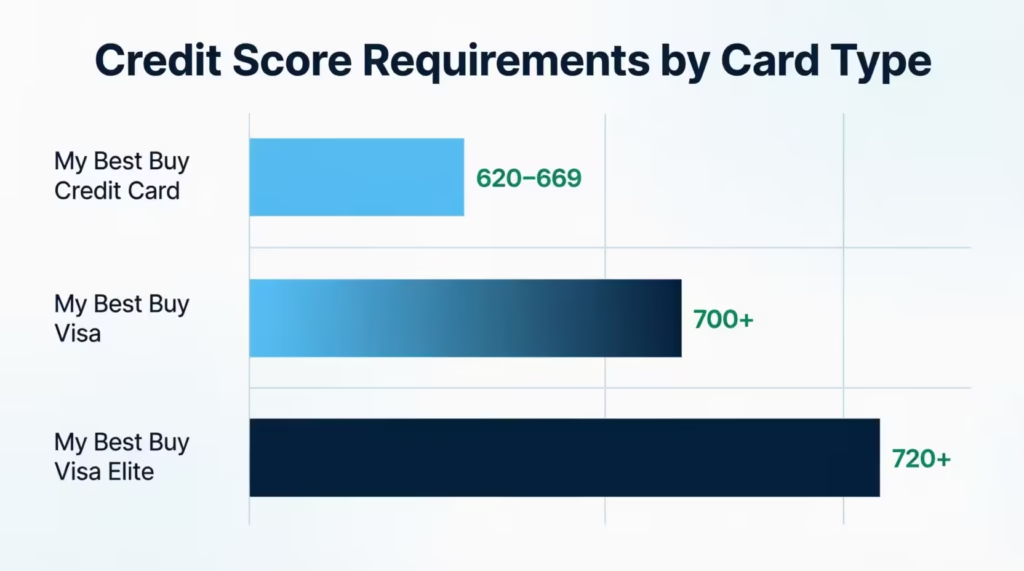
- The My Best Buy Credit Card typically requires a score of 620 to 669, while the My Best Buy Visa requires 700 or higher and the Visa Elite requires 720 or higher.
- A credit freeze at the bureau Citibank attempts to pull will cause an instant denial, even with strong credit, unless the freeze is lifted first.
- Prequalification uses a soft pull that does not affect credit score, while the formal application triggers a hard pull that can lower the score by 5 to 10 points.
- After approval, Citibank reports balance, credit limit, minimum payment, on-time payment status, and account status to all three bureaus every month.
Best for:
- Readers about to apply for a Best Buy card who want to check the correct credit report before submitting.
- Applicants unsure whether to choose the store card or the Visa version based on their current credit score.
- Anyone denied a Best Buy card who wants to understand common denial reasons and next steps.
Which Credit Bureau Best Buy (Citibank) Pulls When You Apply
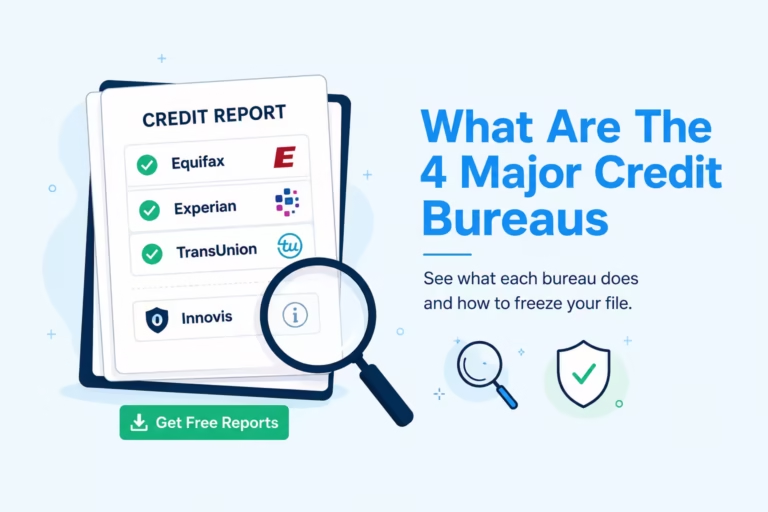
When you apply for a Best Buy credit card, the credit check does not come from Best Buy itself. It comes from Citibank, N.A., the bank that issues and underwrites the card. Citibank runs a hard inquiry on one of the three major credit bureaus: Experian, Equifax, or TransUnion.
For most applicants, Experian is the most common bureau pulled. Many users across credit forums and reports say Citibank tends to lean on Experian for Best Buy card applications. Still, this is not a fixed rule. Some people report an Equifax pull. Others see a TransUnion inquiry. In some cases, Citibank may even pull from two bureaus at once.
So the safest move is simple. Check all three of your credit reports before you apply. That way, you’re ready no matter which one gets checked.
Why the Bureau Pulled Isn’t Guaranteed or Consistent
The bureau that gets pulled can change based on a few things. Your state or region can play a role. Some bureaus have stronger coverage in certain areas, so Citibank may lean on the one with better local data. Your credit history can also affect the choice. If one bureau has a thinner file on you, the bank may pick another with more complete data.
Citibank does not publish a fixed policy on this. That’s why you’ll see mixed reports online. One person in Texas might get an Experian pull. Someone in New York might see TransUnion. The bank keeps this flexible on purpose.
📌 Did You Know: Citibank sometimes pulls from more than one bureau on the same application. This is called a “double pull,” and it can cause two small dips in your credit score instead of one.
Does the Bureau Pull Differ Between the Store Card and the Visa?
The My Best Buy® Credit Card (the store-only card) and the My Best Buy® Visa® are both issued by Citibank. Since the issuer is the same, the bureau pull works the same way for both. There’s no rule saying the store card pulls one bureau and the Visa pulls another.
The main difference is approval standards, not the bureau. The Visa version is a full credit card you can use anywhere, so it usually needs a stronger credit profile. The store card is easier to get, but it only works at Best Buy. Either way, expect Citibank to pull one of the three major bureaus.
Citibank Is the Real Issuer, Not Best Buy
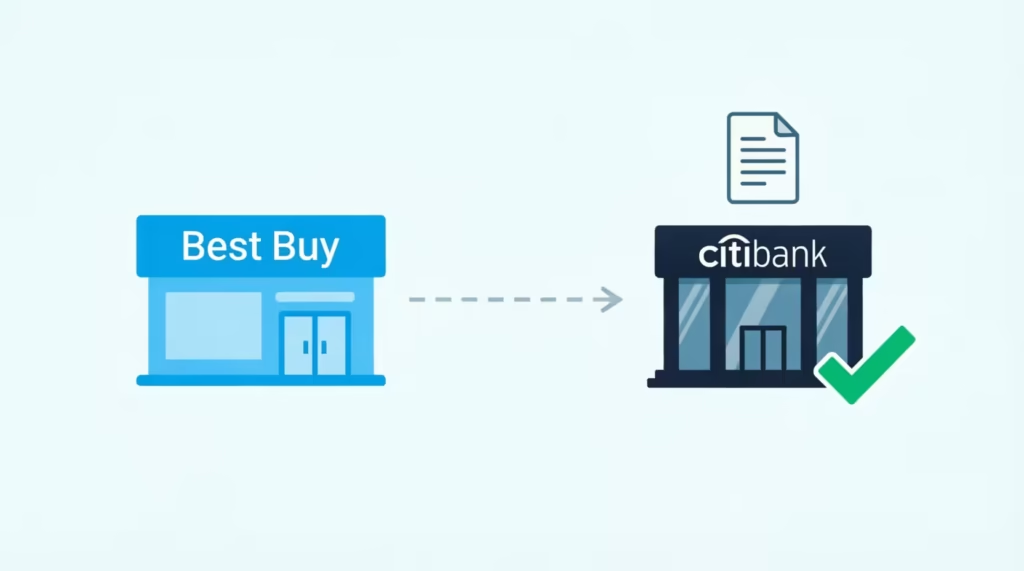
This is one of the most missed facts by first-time applicants. Best Buy does not lend you money. Best Buy does not check your credit. Best Buy does not decide if you’re approved. Citibank, N.A. does all of that.
Best Buy simply partners with Citibank to offer a store-branded card. Think of Best Buy as the storefront and Citibank as the bank behind the counter. When you fill out the application, your data goes straight to Citibank’s underwriting system. Citibank runs the credit check, looks at your income, weighs your risk, and approves or denies you.
This matters for a few reasons. Your card will show up on your credit report as a Citibank account, not a Best Buy account. Your monthly payments go to Citibank. And if you ever have a problem with your account, Best Buy staff cannot fix it.
Who to Contact for Disputes, Limit Increases, and Account Issues
For anything tied to your credit account, you’ll need to reach Citibank directly. Here’s how that works in practice:
- Billing disputes or fraud claims: Call the Citibank customer service number on the back of your card.
- Credit limit increase requests: Log in to your account at citiretailservices.citibankonline.com or call Citi customer service.
- Credit bureau reporting errors: File a dispute with the bureau showing the error, and also contact Citibank as the data furnisher.
- Lost or stolen card: Call Citi’s 24/7 fraud line, not Best Buy.
Best Buy store staff can only help with in-store purchases and rewards questions. They cannot see your credit account, change your limit, or fix reporting problems.
How to Check All Three of Your Credit Reports Before Applying
Since you don’t know which bureau Citibank will hit, the smart play is to review all three. The good news is you can get them for free. The federal site AnnualCreditReport.com is the only source approved under federal law to give you free weekly reports from Experian, Equifax, and TransUnion.
Follow these steps to prep your credit before you apply:
- Pull all three reports. Go to AnnualCreditReport.com and request one report from each bureau. It takes about 10 minutes.
- Scan for errors. Look for accounts you don’t recognize, wrong balances, late payments that were actually on time, or old debts that should have aged off.
- Check your utilization. Add up your credit card balances and divide by your total limits. Under 30% is good. Under 10% is even better.
- Look for old hard inquiries. Too many recent inquiries can hurt your odds, so it helps to know what’s there.
- Note your open accounts. Citibank likes to see a mix of active accounts with clean payment history.
💡 Pro Tip: Pull your reports at least 30 days before you apply. That gives you time to spot errors and start disputes if needed.
Disputing Errors Before You Apply
If you spot a mistake on any report, file a dispute right away. Each bureau lets you dispute online:
Disputes usually take about 30 days to resolve. So if you have a big error like a wrong late payment or a fraudulent account, wait until it’s cleared before you apply. Applying with a broken report can lead to a lower score reading and a denied application. That’s a wasted hard inquiry you can’t undo.
Credit Freezes Can Cause an Instant Denial
A credit freeze is a lock you put on your credit file to stop new accounts from being opened in your name. It’s a strong shield against identity theft. But it also blocks lenders like Citibank from checking your credit. If your file is frozen at the bureau Citibank tries to pull, your application will be denied on the spot, even if your credit is perfect.
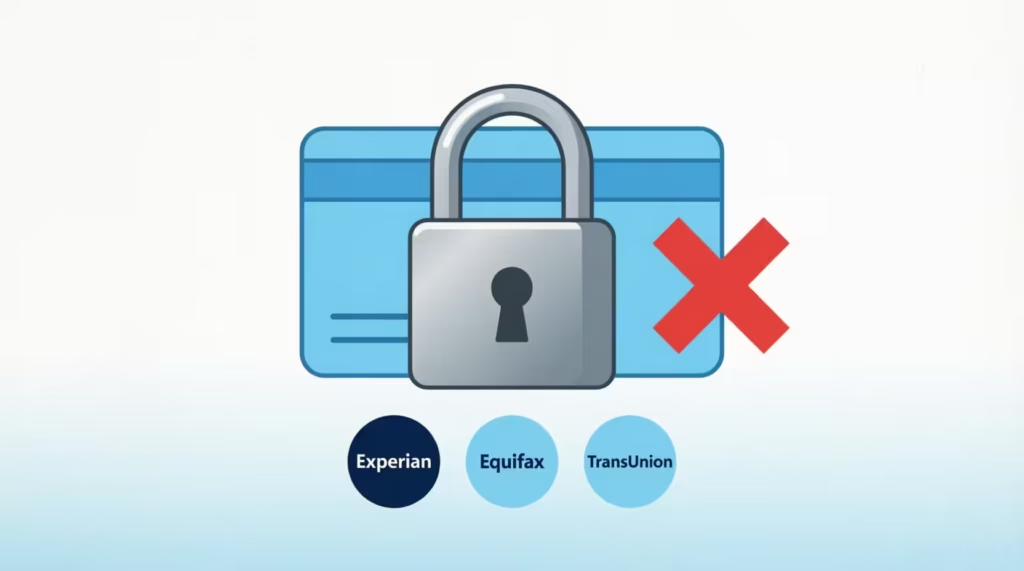
Many people forget they set a freeze years ago and never thawed it. Then they apply for a Best Buy card, get an instant denial, and wonder what went wrong. The fix is simple. You just need to lift the freeze before you apply.
Here’s how to unfreeze each one:
- Experian: Go to experian.com/freeze or call 888-397-3742.
- Equifax: Visit equifax.com/personal/credit-report-services or call 800-685-1111.
- TransUnion: Head to transunion.com/credit-freeze or call 888-909-8872.
You can lift the freeze on all three or just temporarily thaw the ones you think might be pulled. Thawing is often instant online, or up to an hour by phone. Since you don’t know which bureau Citibank will use, lifting all three is the safest bet.
⚠️ Mistake to Avoid: Applying for the Best Buy card without checking your freeze status first. An instant denial from a frozen file still shows up as a hard inquiry on some reports and wastes a chance at approval.
Prequalification vs. Formal Application: Soft Pull vs. Hard Pull
Not every credit check hurts your score. There are two very different types, and knowing the difference can save you points.
A soft pull is a light check. It does not affect your credit score. It’s used for prequalification offers, background checks, and when you view your own report. Citibank sometimes offers a prequalification tool that shows if you’re likely to be approved. This uses a soft pull, so it’s safe to try.
A hard pull happens when you formally apply. It shows up on your credit report and can drop your score by a few points, usually 5 to 10. It stays on your report for two years, but its impact fades after a few months.
Here’s the key point. A prequalification says you might be approved. It’s not a promise. When you submit the real application, Citibank runs a hard pull and makes the final choice. You could pass prequalification and still get denied on the full application if something else looks off, like high utilization or recent late payments.
If you’re not sure about your odds, always start with the prequalification. It costs you nothing and gives you a strong hint before you commit to the hard inquiry.
What Credit Score You Need for Approval
Citibank does not publish an official minimum score. But based on data from approved and denied applicants, here’s a rough guide.
| Card Type | Typical Score Range | Credit Tier |
|---|---|---|
| My Best Buy® Credit Card (store) | 620 to 669+ | Fair to good |
| My Best Buy® Visa® | 700+ | Good to excellent |
| My Best Buy® Visa® Elite | 720+ | Very good to excellent |
The store card is easier to get. If your FICO score is in the fair range (580 to 669), you have a decent shot at the store version. The Visa versions want a stronger profile, usually a score of 700 or higher plus solid income.
But your score is not the only thing Citibank checks. Approval also depends on:
- Income: Enough to cover the credit limit you’re asking for.
- Debt-to-income ratio: Lower is better. Under 40% is a safe zone.
- Recent applications: Too many in the last 6 months look risky.
- Payment history: Late payments and collections hurt a lot.
- Credit age: Older accounts help build trust.
So even a 720 score can get denied if your other numbers look weak. And a 660 can get approved for the store card if the rest of your file is clean.
How the Account Reports to Bureaus After Approval
Once Citibank approves you, your new account starts showing up on your credit reports. Citibank reports to all three major bureaus every month. This is different from the application pull, which only hits one bureau.
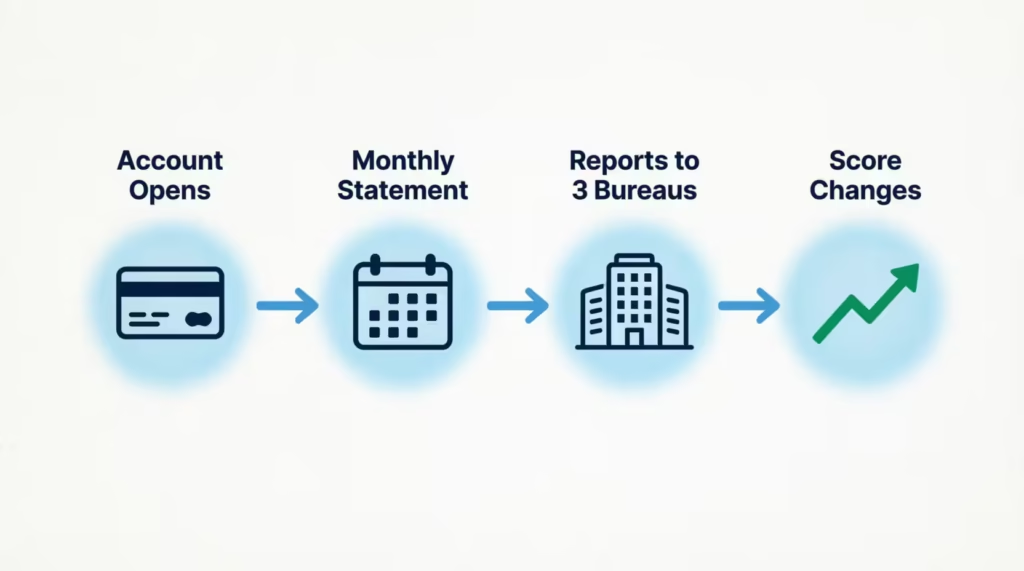
Each month, Citibank sends the following data to Experian, Equifax, and TransUnion:
- Your current balance
- Your credit limit
- Your minimum payment due
- Whether you paid on time
- Your account status (open, closed, past due)
This monthly reporting is why the Best Buy card can help build your credit, if you use it right. Keep your balance low and pay on time every month, and you’ll see a slow but steady lift in your score across all three bureaus.
On the flip side, one missed payment can drop your score fast. Late payments stay on your report for seven years. So even one slip can cost you for a long time.
Also worth knowing. The Best Buy card statement date and the reporting date can be different. Most issuers report to the bureaus a day or two after the statement closes. So if you want to keep your reported utilization low, pay down your balance before the statement date, not just before the due date.
What to Do If You’re Denied
A denial feels bad, but it’s not the end. Citibank must send you an adverse action letter within 30 days. This letter explains exactly why they turned you down. Read it closely. It’s the best clue for your next step.
Common reasons listed on adverse action letters include:
- Credit score too low
- Too many recent inquiries
- High debt-to-income ratio
- Short credit history
- A frozen credit file
- Recent late payments or collections
- Not enough income for the requested limit
Here’s what to do next:
- Get your free denial report. The letter comes with a right to a free copy of the credit report Citibank used. Request it within 60 days.
- Check for errors. If the report shows wrong info, dispute it with the bureau right away.
- Fix the flagged issue. If your score was too low, work on utilization and on-time payments for 3 to 6 months. If a freeze was the problem, thaw it and reapply.
- Wait before reapplying. Give it at least 3 to 6 months. Applying again too soon can lead to another denial and another hard pull.
- Try a reconsideration call. You can call Citibank’s reconsideration line and ask them to review the decision. Bring facts: your income, your recent payment wins, and any errors you fixed.
- Consider a starter card. If your credit is too thin, a secured card or a credit-builder loan can help you grow your file before trying Best Buy again.
According to the Consumer Financial Protection Bureau, you have full legal rights to know why you were denied and to challenge any incorrect data used in the decision. Use those rights. They’re free, and they work.
Frequently Asked Questions (FAQs)
Which credit bureau does Best Buy pull from?
Citibank, the actual issuer of the Best Buy card, most often pulls Experian, though Equifax or TransUnion can be checked instead. Since the bureau isn’t guaranteed, check all three reports before applying.
What credit score do I need for a Best Buy card?
The store card typically approves scores in the 620 to 669 range, while the My Best Buy Visa wants 700 or higher. The Visa Elite version usually requires 720 or above.
Does the Best Buy Credit Card require a soft pull?
Prequalification uses a soft pull that won’t affect your score, but the actual application triggers a hard pull. That hard pull can drop your score by about 5 to 10 points.
Does Best Buy report to the credit bureau?
Citibank reports your balance, limit, payments, and account status to all three bureaus every month. Consistent on-time payments and low balances can steadily improve your score over time.
What credit service does Best Buy use?
Best Buy doesn’t issue credit or check your credit at all. Citibank, N.A. handles underwriting, approval, and all credit reporting for the Best Buy card.
Why would I be denied a Best Buy credit card?
Common reasons include a low credit score, too many recent inquiries, high debt-to-income ratio, short credit history, or a frozen credit file. Citibank must send an adverse action letter within 30 days explaining the specific reason.
Does applying for the Best Buy Credit Card hurt my credit score?
Yes, the formal application results in a hard inquiry that can lower your score by 5 to 10 points. The inquiry stays on your report for two years, but its impact fades after a few months.
Is it hard to get credit with Best Buy?
The store card is fairly accessible with a fair credit score around 620 to 669, but the Visa versions need a stronger profile of 700 or higher. Approval also depends on income, debt-to-income ratio, and recent payment history.
What should I do if a credit freeze causes my Best Buy application to get denied?
Lift the freeze at each bureau before reapplying, since Experian, Equifax, and TransUnion all offer instant or near-instant online thawing. Since you won’t know which bureau Citibank pulls, unfreezing all three is the safest approach.
Final Thoughts
We’ve covered the full picture. Citibank, not Best Buy, runs the credit check, and it usually pulls Experian, though Equifax or TransUnion is possible too. To boost your chances of approval, check all three reports first. Then, lift any credit freeze. Finally, choose between the store card and the Visa based on your score.
Prequalification lets you explore options without a hard pull. If you’re denied, knowing your adverse action letter helps you recover. Check all three bureaus before applying. This way, you’ll avoid surprises and get the best results.
If you know someone eyeing a big Best Buy purchase this year, share this guide so they can apply smart and skip the wasted hard inquiry.