
You’re about to hit “submit” on a Zillow rental application. Your bank app shows a 720 credit score, so you feel ready. But then a doubt creeps in. Which credit bureau does Zillow actually pull from, and will that score match the one you just checked? The fear of a surprise denial, or seeing a lower number than expected, is real. Getting this wrong can cost you the apartment.
Zillow uses Experian and reports a VantageScore for rental applications, not TransUnion or Equifax.
In this guide, we’ll show you what Zillow pulls. You’ll learn why your score might differ. We’ll explain how CreditClimb fits in. Also, we’ll give you step-by-step checks to do before applying.
Key Takeaways
This guide explains what credit bureau Zillow uses for rental applications, covering the Experian VantageScore 4.0 model, what the screening report includes, how CreditClimb differs, and how to check your report or dispute errors before applying.
Core Facts:
- Zillow’s rental application credit check is provided by Experian and generates a VantageScore, not a FICO score and not a TransUnion or Equifax report.
- Zillow Rentals uses the VantageScore 4.0 model, which can include rent and utility payment history when that data is reported.
- The credit portion of a Zillow application is a soft pull, so it does not lower your credit score or add a lender-visible inquiry.
- The $35 application fee covers a portable tenant screening report usable across participating Zillow listings for 30 days, with credit pulled once during that window.
- CreditClimb is a separate Zillow product powered by Esusu that reports on-time rent payments to Experian, Equifax, and TransUnion for a yearly fee of about $20.
- Errors on a Zillow-generated credit report must be disputed directly with Experian, since Zillow support cannot access or edit the underlying credit file.
Best for:
- Renters who want to check the correct credit report before submitting a Zillow rental application.
- Applicants confused about why their Zillow score differs from a score shown by another app or bureau.
- Renters troubleshooting a missing score, blank report, or inaccurate information on a Zillow tenant screening report.
Which Credit Bureau Zillow Uses for Rental Applications
Zillow uses Experian for its rental application credit check, and the score shown is a VantageScore, not a FICO score. When you pay the $35 application fee on Zillow, the tenant screening report is powered by Experian, which pulls your credit file and generates a score using the VantageScore model.
Zillow Rentals now uses VantageScore 4.0. This updated model includes more data, such as rent and utility payment history, when it’s available. This is confirmed by Zillow’s own announcement and by Experian’s tenant screening partnership page.
That means if you want to know what a landlord will see through Zillow, the only credit report that matters is your Experian file. Cleaning up your TransUnion or Equifax reports won’t change what shows up on your Zillow application. This is the single most important fact for renters to understand before they apply.
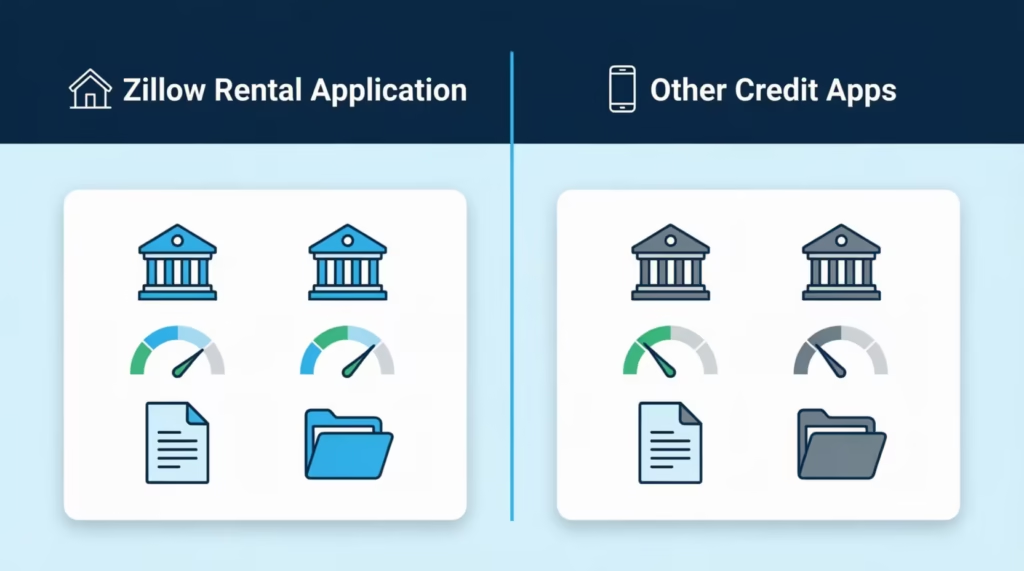
The credit score range used is the standard 300 to 850 scale, so the number itself will look familiar. But the data feeding into it, and the scoring formula, come only from Experian’s records.
💡 Pro Tip: Before you pay the $35 application fee, log in to Experian directly and check your report there. That’s the exact file Zillow’s tenant screening report will pull from, so any errors you see now are errors your landlord will see later.
Why Some Sites Say Zillow Uses TransUnion (And Why That’s Wrong)
If you’ve searched for this question before, you’ve probably read that Zillow uses TransUnion. That’s outdated or simply wrong. Zillow uses Experian for its rental application screening. You can find this on Experian’s tenant screening page, and it’s also confirmed in Zillow’s help docs.
Confusion often comes from other rental platforms. Some property management portals use TransUnion’s SmartMove or similar services. Zillow is not one of them. If you “fix” your TransUnion report but ignore Experian, you’ll face the same problems in your next Zillow application. Don’t waste time chasing the wrong bureau.
VantageScore vs. FICO: Why Your Zillow Score Looks Different From Other Apps
Your bank app or Credit Karma probably shows a FICO score or an older VantageScore, pulled from a different bureau. Zillow shows a VantageScore based only on your Experian file. These are two different scoring models looking at (sometimes) different data, so the numbers can vary by 20 to 60 points or more.
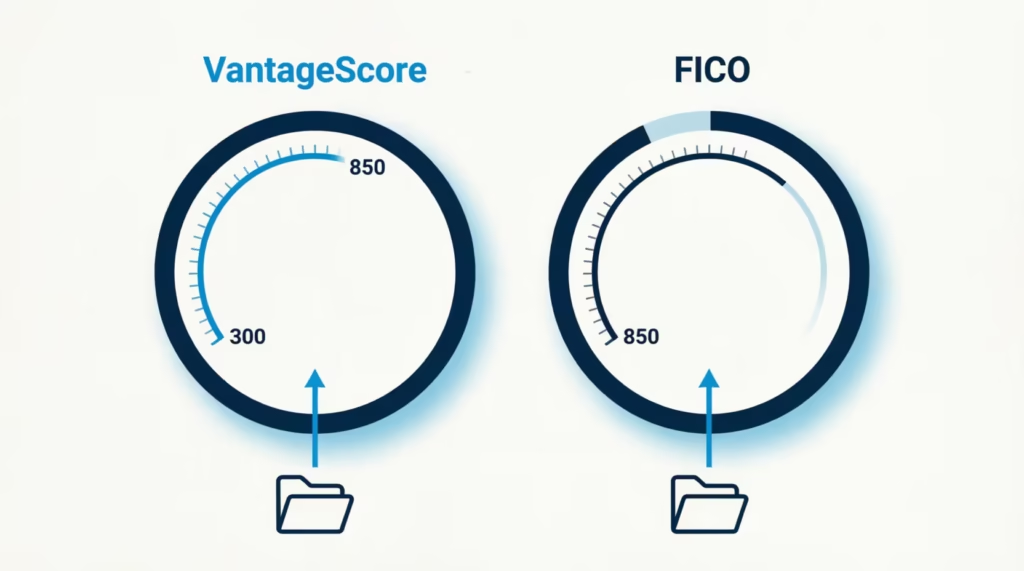
Both scoring models use the same 300 to 850 range, which makes them easy to confuse. But under the hood, they weigh things differently. FICO Score 8 and FICO Score 9, which most mortgage and auto lenders use, put more weight on long credit history and low balances. Zillow now uses VantageScore 4.0. This version is more forgiving with thin credit files. It can also include rent and utility payments if that data is reported.
Here’s a quick comparison to help you understand what you’re seeing:
| Feature | VantageScore 4.0 (Zillow) | FICO Score 8/9 (most lenders) |
|---|---|---|
| Score range | 300 to 850 | 300 to 850 |
| Bureau data used by Zillow | Experian only | Varies by lender |
| Weight on rent/utility data | Included when reported | Usually not included |
| Thin credit file friendly | Yes | Less forgiving |
| Common use | Rentals, some credit apps | Mortgages, auto loans, cards |
So if Credit Karma says 720 (a TransUnion VantageScore) and Zillow shows 685 (an Experian VantageScore 4.0), neither number is wrong. They’re just looking at different files. This is normal, and it’s why checking Experian directly is the only way to preview what Zillow will actually see.
What’s Included in a Zillow-Generated Experian Credit Report
Zillow’s tenant screening report is more than just a credit score. It bundles a full Experian credit file with a background check and identity verification, all in one report the landlord can view.
Here’s what’s inside a typical Zillow-generated screening package:
- Credit score: Your VantageScore 4.0 from Experian
- Open credit lines: Credit cards, auto loans, student loans, and mortgages with current balances
- Payment history: Late payments, collections, and charge-offs from the last seven years
- Public records: Bankruptcies, civil judgments (where reported), and tax liens if any
- Identity verification: Confirmation that the name, SSN, and date of birth all match Experian’s records
- Background check: Criminal history and eviction history, provided through CIC (Contemporary Information Corp.), Zillow’s background check partner
- Income and employment verification: Depending on the landlord’s setup, you may be asked to upload pay stubs or link a bank account
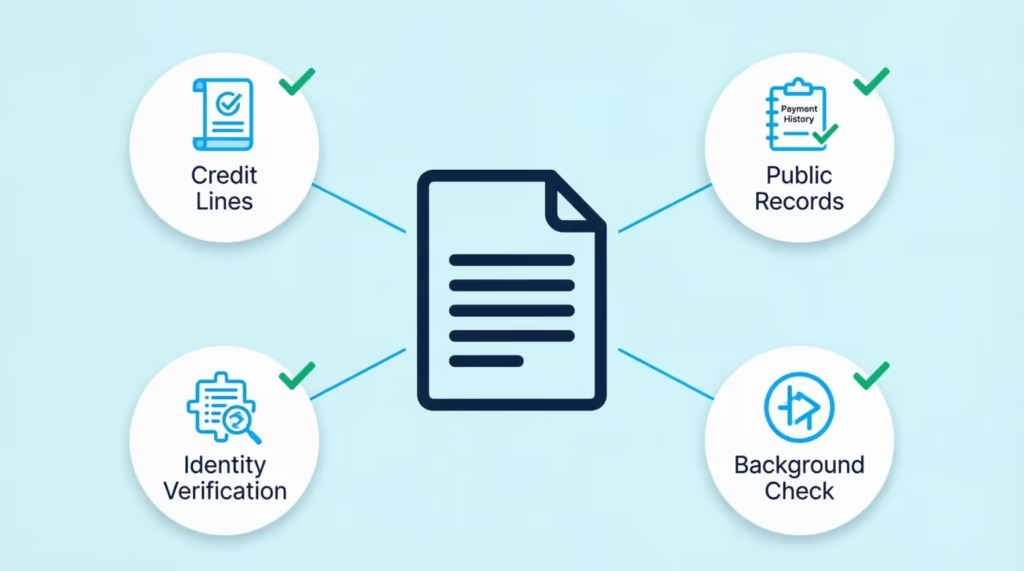
The credit portion is a soft pull, so it will not lower your score. But everything on your Experian file at that moment, including any old collection you forgot about, will show up on the report.
What Landlords See vs. What You See
When you submit a Zillow application, you and the landlord don’t see the exact same view. Both see the credit score and the summary, but the landlord’s copy is formatted as a decision-ready tenant screening report.
You can preview your own version through your Zillow renter profile, but you cannot edit or hide anything on it. If something looks wrong, the fix has to happen at Experian, not through Zillow.
Landlords also see the results of the background and eviction check, which you may not be able to preview in full detail. If something on that side is inaccurate, the dispute goes through CIC, not Zillow.
CreditClimb: Zillow’s Rent-Payment Reporting Tool and Which Bureaus It Uses
This is where a lot of renters get confused. Zillow’s CreditClimb is a completely separate product from its rental application screening. CreditClimb uses Esusu, a rent-reporting service. It reports your on-time rent payments to credit bureaus. This helps improve your credit score over time.
CreditClimb reports to all three major bureaus: Experian, Equifax, and TransUnion. This is confirmed on both Zillow’s rent reporting page and Zillow’s official launch announcement. That’s a big deal because it means every on-time rent payment you make can boost your credit file at every bureau, not just one.
The pricing is straightforward, and Zillow has structured it to be renter-friendly. You can get reporting for a small yearly fee, usually about $20. It may also cover up to 24 months of past rent payments if your landlord uses Zillow to collect rent.
Application Screening vs. CreditClimb: How They’re Different
These two products serve very different purposes, and mixing them up leads to real mistakes. Here’s how they compare side by side:
| Feature | Application Screening | CreditClimb (Rent Reporting) |
|---|---|---|
| Purpose | Approve you for a rental | Build your credit with rent |
| Bureau(s) used | Experian only | Experian, Equifax, TransUnion |
| Score model shown | VantageScore 4.0 | Not a score, just tradeline data |
| Cost | $35 per 30-day window | Around $20 per year |
| Timing | One-time when you apply | Monthly, ongoing |
| Effect on credit | Soft pull, no impact | Positive if you pay on time |
If you sign up for CreditClimb hoping it will improve your Zillow application score right now, that’s the wrong tool for the wrong problem. CreditClimb helps your long-term credit. Fixing your Experian file helps your immediate application.
Is Zillow’s Credit Check a Hard or Soft Pull
Zillow’s rental application uses a soft credit pull, not a hard inquiry. That means applying to a Zillow listing will not lower your credit score, and it will not add an inquiry that shows up to future lenders.
The soft pull happens when you complete identity verification and pay the $35 application fee. Experian generates the tenant screening report for the landlord, but from a credit standpoint, it’s treated like checking your own credit. No score damage, no lender-visible inquiry.
This matters for renters who are also shopping for a car loan, credit card, or mortgage at the same time. You can apply to Zillow listings without worrying about stacking hard inquiries on top of loan shopping.
⚠️ Mistake to Avoid: Some renters skip Zillow listings because they think each application is a hard pull. It’s not. The soft pull means you can apply to as many participating listings as you want in the 30-day window without any credit-score cost.
How the 30-Day Portable Application Affects Your Credit Pull
The $35 you pay covers a 30-day portable application. During that time, your credit is pulled once. Then, the same tenant screening report goes to any Zillow landlords who participate. You don’t pay again, and Experian doesn’t re-pull your file, for those 30 days.
After the 30-day window closes, if you’re still searching, a new application means a new $35 fee and a new soft pull to refresh the report. Since it’s still soft, it still doesn’t hurt your score. But the report itself is a fresh snapshot, so if anything changed on your Experian file in that month, the new report will reflect it.
How to Check Your Experian Report Before You Apply
Because Zillow only looks at your Experian file, that’s the one to review before you spend the $35. You have two solid free options.
First, go to AnnualCreditReport.com, the only federally authorized free credit report site. Pick Experian and pull your full report. This gives you every account, every late payment, every collection, and every public record Experian is holding on you. Look for anything you don’t recognize, wrong balances, or old debts that should have fallen off after seven years.
Second, create a free account directly at Experian.com. That gives you a look at your VantageScore (though the free version may not always be VantageScore 4.0, so treat it as directional). More importantly, it lets you see any recent changes, new accounts, or hard inquiries that might drag your score down.
Here’s a quick pre-application checklist to run through:
- Pull your Experian report from AnnualCreditReport.com
- Confirm your legal name, address history, and date of birth are correct
- Flag any account you don’t recognize (possible identity theft)
- Note any late payments in the last 24 months, since these hurt VantageScore the most
- Check credit card balances. Try to pay down anything above 30% of the limit at least one billing cycle before applying
- Look for collections or charge-offs. If they’re old or paid, they should still show as paid
- Dispute anything wrong with Experian directly before applying to a Zillow listing

Give yourself at least 30 to 45 days between filing a dispute and applying. That way, corrections have time to post to your Experian file before the landlord pulls the report.
What to Do If Your Zillow Credit Report Won’t Generate or Shows No Score
Sometimes you pay the $35, and the tenant screening report comes back blank, missing a score, or with an error. This is frustrating, but the causes are usually predictable.
The most common reason is a credit freeze. If you’ve frozen your Experian file (many people did after past data breaches), Zillow’s request to Experian is blocked, and no report can be generated. To fix it, log in to Experian.com, temporarily lift the freeze, and resubmit your Zillow application. You can re-freeze the file the next day.
Other common causes and fixes:
- Thin or no credit file: If you have less than six months of credit history, Experian may not generate a VantageScore. You’ll still get a report, just no numerical score. Landlords may ask for a co-signer or extra deposit in this case.
- Mismatched personal info: If your name, SSN, or date of birth on the Zillow application doesn’t match Experian’s records exactly, the file lookup fails. Double-check every field. Even a middle initial can cause a mismatch.
- Recent identity change: Recent name changes (marriage, legal change) or a new address that hasn’t updated at Experian can also block the match.
- Location or landlord restrictions: A few states have specific tenant screening rules, and some landlords disable the credit portion. In those cases, you may get a background check but no credit score.
If none of these fit, contact Experian directly to confirm your file is active and searchable. Zillow support cannot see into your Experian records, so calling Zillow first usually just adds a step.
Why Zillow Support Can’t Access or Fix Your Credit File
Zillow is a customer of Experian, not a caretaker of your credit data. If you call Zillow support about a missing score or wrong balance, they can confirm the report was requested. However, they can’t open your Experian file, edit anything, or fix the issue. All of that lives at Experian.
If the tenant screening report shows something wrong, the fastest path is:
- Log in to Experian.com and confirm the same error is on the underlying file
- File a dispute directly with Experian (details in the next section)
- Once Experian updates the file, ask the landlord to request a refreshed Zillow report
Skipping to Experian first saves days of back-and-forth.
How to Dispute an Error on Your Zillow-Generated Credit Report
If your Zillow tenant screening report shows a mistake, the dispute goes to Experian, not to Zillow.
Under the Fair Credit Reporting Act (FCRA) enforced by the Consumer Financial Protection Bureau, you have the right to dispute any inaccurate information on your credit file, and Experian has to investigate, usually within 30 days.
Here’s the step-by-step to file a dispute:
- Go to Experian’s dispute center and log in or create a free account
- Select the specific item on your report that’s wrong (a wrong balance, a late payment you paid on time, an account that isn’t yours)
- Explain in one or two sentences what’s incorrect and what the correct info should be
- Upload any supporting documents you have. Bank statements, payment confirmations, court records for cleared judgments
- Submit and save the dispute confirmation number
- Wait for Experian’s response, which usually arrives within 30 days by email or through your Experian account
If the dispute is approved, Experian updates your file. The next time a Zillow tenant screening report is pulled, the corrected data will show up. If your dispute is denied and you still think the item is wrong, you can add a 100-word consumer statement. This explains your side, and some landlords will read it.
Two other paths worth knowing:
- Direct creditor dispute: You can also contact the lender or collection agency directly and ask them to correct the info at the source. This sometimes moves faster than an Experian dispute for specific accounts.
- CFPB complaint: If Experian doesn’t fix a clear error, filing a complaint with the CFPB often gets a fast response, since the CFPB is the primary federal regulator for credit bureaus.
For background check or eviction record errors on the Zillow report, the dispute goes through CIC, not Experian. Zillow’s screening report should include CIC’s contact info at the bottom of the background section.
Frequently Asked Questions (FAQs)
What credit bureau does Zillow use?
Zillow uses Experian for its rental application credit checks, not TransUnion or Equifax. The score shown is a VantageScore, generated from your Experian credit file.
Does Zillow pull hard or soft credit?
Zillow’s rental application uses a soft credit pull, which does not lower your score or add a lender-visible inquiry. You can apply to multiple Zillow listings within the same 30-day window without any credit-score cost.
What FICO score is used to rent a house?
Zillow doesn’t use a FICO score at all. It uses VantageScore 4.0, based on your Experian file, which can differ from a FICO score by 20 to 60 points on the same 300-850 scale.
Why is my credit score lower on Zillow?
Your Zillow score likely differs because it pulls from Experian using the VantageScore 4.0 model, while apps like Credit Karma often show a TransUnion-based score. Both numbers can be accurate at once since they’re reading different files.
Do landlords look at TransUnion or Equifax?
Through Zillow, no. Landlords see a report and score built entirely from your Experian file, so cleaning up your TransUnion or Equifax reports won’t change what shows up on a Zillow application.
Is a Zillow credit report accurate?
It reflects exactly what’s on your Experian file at the time of the pull, including any old or forgotten collections. If something is wrong, the error must be disputed directly with Experian, not with Zillow.
How much does a Zillow credit report cost?
The Zillow rental application fee is $35, which covers your credit report, background check, and identity verification. That single fee makes your application portable to any participating Zillow listing for 30 days.
What happens if my Zillow credit report shows no score at all?
This usually means your Experian file is frozen, too thin (under six months of history), or your personal info didn’t match Experian’s records exactly. Unfreezing your file or correcting a mismatched name, SSN, or address is the most common fix.
Does CreditClimb affect my Zillow rental application score?
No. CreditClimb is a separate product that reports your on-time rent payments to Experian, Equifax, and TransUnion to build long-term credit, but it doesn’t change the Experian file used to score your current application.
What do I do if I find an error on my Zillow credit report?
File a dispute directly with Experian through its online dispute center, since Zillow support cannot access or edit your credit file. Experian is required to investigate most disputes within 30 days.
Wrapping Up
Zillow’s rental screening uses Experian and shows a VantageScore 4.0. Meanwhile, CreditClimb, which is powered by Esusu, reports to all three bureaus. Application pulls are soft, not hard, and the $35 fee covers a 30-day reusable report.
To improve your chances, follow these steps:
- Check your Experian file directly.
- Dispute any errors you find before applying.
- Use CreditClimb as a long-term tool for building credit, not just a quick fix for a low score.
If you know a friend house-hunting or worried their credit will torpedo a Zillow application, share this guide. It could save them from checking the wrong bureau and losing the apartment.