
So, you’ve got an old metal American Express card sitting on your desk. Maybe it’s a Platinum that just got reissued, a Gold card you replaced, or even a Centurion you’re closing out. You can’t just toss it in the trash.
You can’t shred it either. And you’re a little worried, because that chip and stripe still hold real account data. I’ve helped readers walk through this exact problem many times, and the good news is metal Amex card disposal is simple once you know your two safe options.
Below, you’ll get step-by-step guidance, expert safety tips, and the rewards check most people forget.
Key Takeaways
This guide explains how to safely dispose of a metal American Express card using two official methods, the Amex prepaid mail-back program and at-home destruction with tin snips and a hammer, including chip disabling, magstripe cutting, safe tool selection, and the critical distinction between disposing of a card and closing the account.
Core Facts:
- American Express runs an official prepaid mail-back program for metal cards. The return envelope comes with new card deliveries or can be requested free of charge by calling 1-800-528-2122 or messaging through the Amex mobile app.
- Before mailing a card back, cover the card number, CVV, and magnetic stripe with opaque tape to prevent data from being read if the envelope is opened in transit.
- For home destruction, disable the EMV chip first by striking it with a hammer or drilling through it, then cut the magnetic stripe and card body into at least six pieces using tin snips or bolt cutters.
- Standard paper scissors and paper shredders cannot cut through a metal card’s steel or titanium alloy core and will be damaged in the attempt. Tin snips costing $15 to $25 are the recommended home tool.
- Destroying the physical card does not close the Amex account. The account, credit line, annual fees, and Membership Rewards points all remain active until closure is separately requested by phone or through the app.
- Membership Rewards points are forfeited when the account is closed. If the card being disposed of is the only MR-earning account, points should be redeemed or transferred before requesting closure.
Best for:
- Amex cardholders who have received a replacement card and need to dispose of the old card safely without closing the account.
- Anyone considering closing a premium Amex card who wants to avoid accidentally forfeiting unredeemed Membership Rewards points before disposal.
- Cardholders who prefer to handle destruction at home rather than waiting for a prepaid return envelope, and need guidance on the correct tools and safety precautions.
Why You Can’t Destroy a Metal Amex Card Like a Regular Card
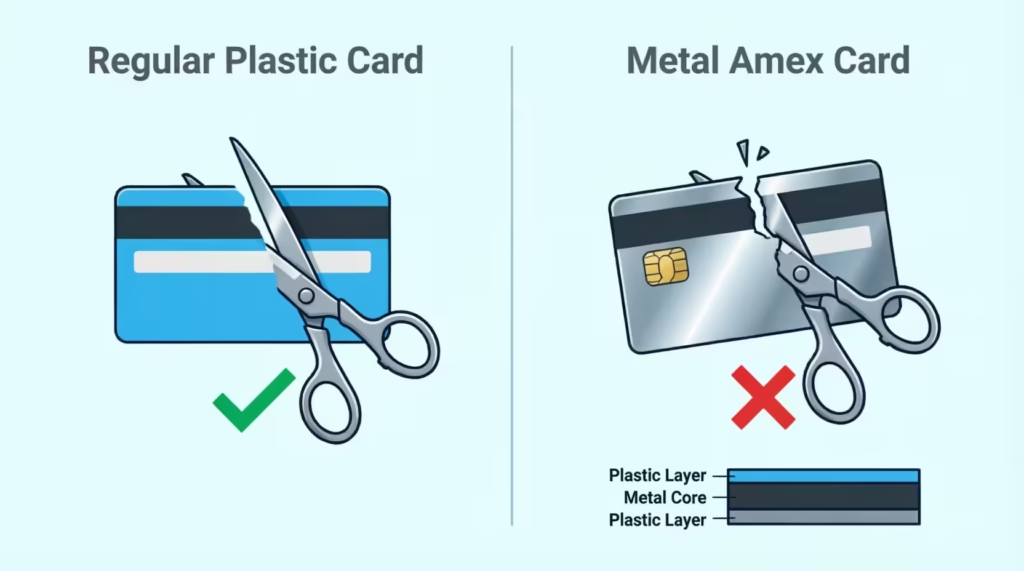
A regular credit card is plastic. You grab a pair of scissors, snip it into a few pieces, and you’re done. A metal Amex card is a different beast.
The card body is built with a metal core, usually a stainless steel or titanium alloy, sandwiched between thin plastic or resin layers. That’s why it has the heavy, weighted feel you noticed the first time you pulled it out of the welcome box.
Household scissors can’t cut through that core. If you try, you’ll dull or chip the blades. A paper shredder is even worse. Feeding a metal card into a shredder can jam the gears, snap the cutting teeth, or burn out the motor. Repair costs often run higher than the shredder itself.
Then there’s the safety side. Metal card edges are sharp once stressed. People who try to bend, snap, or hammer the card at home often end up with cuts, flying metal fragments, or scratched countertops.
So before you reach for any tool, understand this: you can shred a metal credit card only with specialty tools, not standard office gear. The rest of this guide covers what actually works.
💡 Pro Tip: If your card feels noticeably heavier than a regular plastic card, assume it has a metal core. That includes most American Express Platinum, Gold, and Centurion cards, plus several premium issuer cards from other banks.
What Happens If You Don’t Properly Destroy Your Old Card
The risk isn’t just about someone reading the numbers on the front. The real concern sits inside the card.
Your card has an EMV chip and, on older versions, a magnetic stripe. The chip stores encrypted account data used to authorize purchases. The magstripe holds card data in a readable format that cheap, easy-to-buy skimming devices can lift in seconds.
Even if your account is closed, leftover data on a discarded card can still be misused. This can happen in card-not-present fraud, fake account verifications, or social engineering scams. The Federal Trade Commission’s disposal guidance makes the point clearly: sensitive financial information must be destroyed so it can’t be read or reconstructed.
There’s also the e-waste angle. A metal Amex card is a composite item. It has metal, plastic, and a working electronic chip bonded together. That means it doesn’t belong in curbside recycling.
Most municipal recycling centers can’t separate the layers, and the chip is technically electronic waste. Throwing the card away sends your account data to a landfill. There, anyone digging through the trash could find it.
So secure disposal does two jobs at once. It removes the identity theft risk from leftover chip and magstripe data, and it keeps mixed-material e-waste out of the wrong recycling stream.
Returning Your Card to American Express by Mail
The easiest method is also the safest one. American Express runs an official mail-back program for metal cards. They launched a formal metal card recycling program in 2020, and it’s still the cleanest disposal path today. You ship the old card back, and Amex destroys and recycles it through their certified vendor.
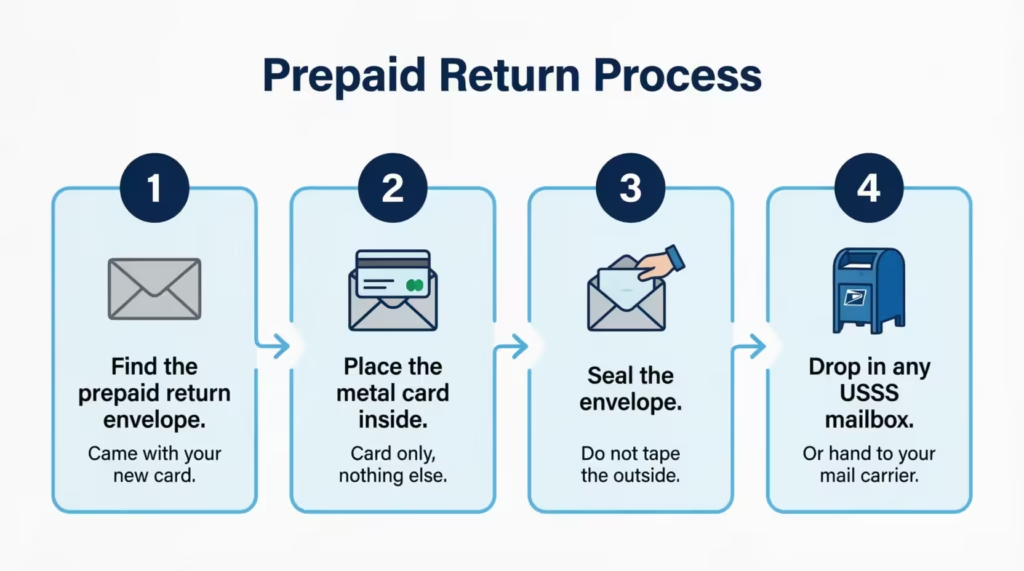
Here is the standard process:
- Look for the Reply Paid envelope or prepaid return envelope that came inside the box with your new card. It’s usually a small, padded white or branded envelope with pre-printed return info.
- Place the old metal card inside the envelope. Don’t add anything else, no notes, no extra cards from other banks.
- Seal the envelope.
- Drop it in any USPS mailbox or hand it to your mail carrier.
That’s the full mail-back disposal program. You don’t need a stamp. You don’t need to write anything. The return label and postage are already paid.
How to Get a Prepaid Envelope If You Don’t Have One
Sometimes the envelope isn’t in the box. Maybe you tossed it during the opening. Maybe your replacement came in a smaller mailer. Maybe you’re disposing of a card from a closed account and never got a fresh one.
You have two simple options:
- Call Amex customer service at 1-800-528-2122 (the same number listed on the back of every U.S. Amex card). Tell the agent you need a prepaid disposal envelope for your old metal card. They’ll mail one to your address on file at no charge. You can confirm this number on the official American Express Contact Us page.
- Send a secure message through your online account or the Amex mobile app. Go to “Help” then “Contact Us,” and request a card disposal envelope. You’ll usually get a reply within one to two business days, and the envelope arrives within a week.
Either way, the envelope is free. You don’t have to explain why you’re disposing of the card. It applies to any Amex metal card, whether it’s active, expired, or from a closed account.
What to Do With the Card Before You Mail It
Even though Amex destroys the card on their end, take a minute to lower the risk in transit.
- Cover the long card number on the front with a strip of opaque tape or a permanent marker.
- Black out the CVV/security code on the back.
- Cover the magnetic stripe with a piece of tape so the data can’t be skimmed if the envelope is opened.
- Do not cut, bend, or partially damage the card. A damaged card can tear the envelope or cut a postal worker. Send it whole.
Drop the envelope in a secure outgoing mailbox (your home box with the flag up, a USPS blue box, or a post office counter). Avoid leaving it in an apartment lobby tray where it could sit for days.
Can You Return a Metal Amex Card to a Branch?
Short answer: NO. American Express does not operate retail branches the way Chase, Wells Fargo, or Bank of America do. Amex is primarily a card and travel services company, not a deposit bank with neighborhood storefronts.
That means there’s no Amex location you can walk into to hand over an old card. The few Amex Centurion Lounges at airports are for travel and dining, not card services. The staff there can’t accept a card for destruction, and they aren’t trained to handle disposal.
So your real return options are two:
- The mail-back disposal program described above.
- Amex customer service, which can guide you through replacement, account closure, or mailing the card back, but cannot accept the physical card at any in-person location.
If you bank with another institution that has a branch, you might be tempted to drop the Amex card off there. Don’t. Other banks have no authority to destroy or process Amex cards. They will either refuse it or, worse, toss it in a bin where it becomes a security risk.
How to Destroy a Metal Amex Card Yourself at Home
If you don’t want to wait for an envelope or you’d rather handle it yourself, you can destroy an Amex metal card at home. The goal is to make the chip unreadable and cut the card into pieces small enough that no one can reconstruct your account number.
Here’s the working sequence:
- Disable the chip first. This is the most important step. Place the card flat on a sturdy surface, locate the small square or rectangular EMV chip on the front, and strike it firmly several times with a hammer. You want the chip cracked and visibly damaged. Some people drill a hole straight through the chip with a power drill, which works just as well.
- Cut the magnetic stripe. Use tin snips to cut the magstripe into at least three or four pieces. Once it’s severed across its length, it can’t be read by any skimmer.
- Cut the card body into pieces. Continue cutting the rest of the card into small chunks. Aim for at least six pieces. Cut through the long card number so no full sequence remains on any one piece.
- Separate the pieces. Put some pieces in one trash bag and the rest in another. Take them out on different days if you can.
This sequence covers the card destruction essentials. The chip is dead, the magstripe is cut, and the card number is split across multiple pieces in multiple bags. That’s the same outcome the mail-back program delivers, just done by you.
Tools That Actually Work on Metal Cards
Forget kitchen scissors. The right tools make this safe and quick.
- Tin snips (aviation snips): These are the gold standard. They’re built for cutting sheet metal and slicing through a metal card cleanly. A basic pair runs about $15 to $25 at any hardware store.
- Heavy-duty bolt cutters: Overkill for one card, but they work if you already own them.
- A power drill with a metal bit: Best for killing the EMV chip quickly. One hole through the chip is enough.
- A hammer and a hard surface: Good as a backup to crack the chip if you don’t own a drill.
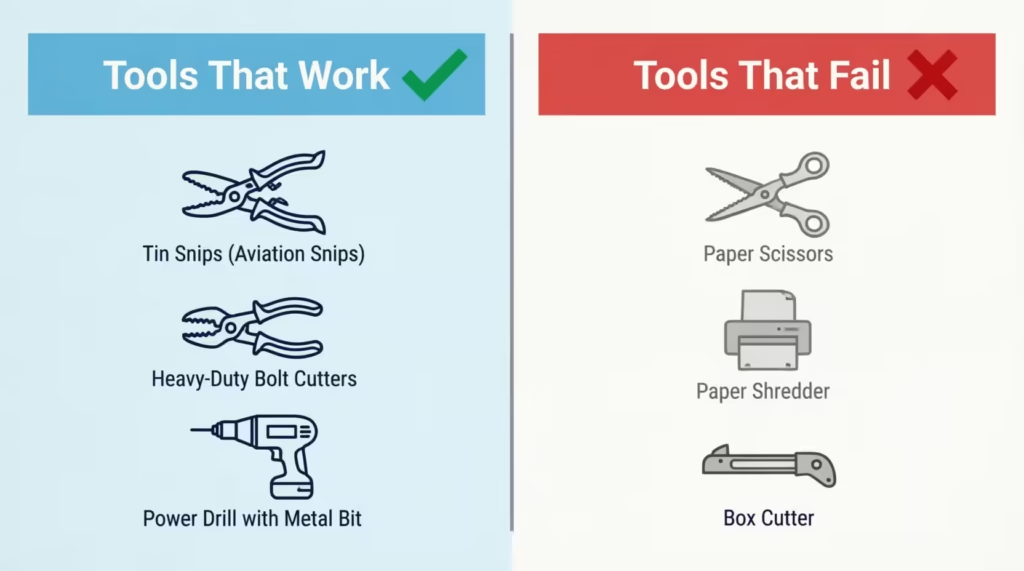
What doesn’t work: paper scissors, paper shredders, kitchen shears, box cutters, or anything with a thin blade. You’ll damage the tool and leave the card mostly intact.
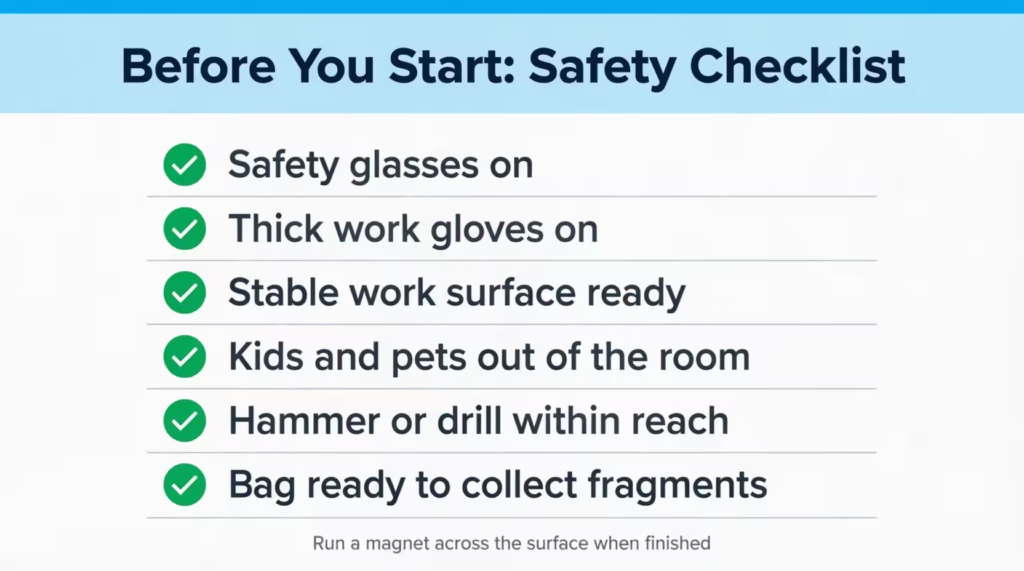
Safety Precautions Before You Start
Metal card edges get sharp the moment you cut them. The chip can fragment. The stripe can spring. A few simple precautions prevent every common injury.
- Wear safety glasses. Small metal shards can fly when you cut or hammer.
- Wear thick work gloves or gardening gloves. They protect your fingers from sharp edges.
- Work on a stable surface, not your lap or a glass coffee table. A wood cutting board or a workbench is ideal.
- Keep pets and kids out of the room. A sliver of metal on the floor is easy to step on.
- Pick up every fragment when you’re done. Run a magnet across the work surface to catch tiny pieces.
⚠️ Mistake to Avoid: Don’t try to bend or snap the card with your bare hands to “weaken” it before cutting. The metal core resists bending until it suddenly gives, and when it does, the broken edge can slice deeply. Cut it cold and flat instead.
What to Do With the Pieces After Destroying the Card
The pieces are dangerous to throw away together and tricky to recycle. Handle them like this:
- Don’t put metal card pieces in curbside recycling. Single-stream recycling sorters can’t process composite material with embedded electronics. Most facilities will pull it out as contamination, and the chip ends up in a landfill anyway.
- Split the pieces between two trash bags. Even with the card chopped up, separating the pieces makes it functionally impossible to rebuild your account number.
- Use sealed bags. A small zipper bag inside a kitchen trash bag works fine. It keeps sharp edges from poking through and keeps anyone curious from spotting card fragments.
- For an eco-conscious option, route to e-waste. If you can, find a certified e-waste drop-off. Many city recycling centres and electronics stores offer this service. Just bag the chip and stripe pieces, then drop them off with your old electronics. The metal body pieces can go on a separate trip to a scrap-metal recycler if you want full secure disposal of metal credit cards.
For most people, splitting pieces between two trash bags is good enough. The mail-back program is still the cleanest answer if you want zero handling.
Card Destruction vs. Closing Your Amex Account: Know the Difference
This is the part that trips up most readers. Destroying the physical card does not close your account. They are two separate actions handled by two separate systems.
When you cut up or mail back a card, you’re disposing of a physical object. Your account, your credit line, your Membership Rewards points, and your annual fee schedule all stay exactly as they were. If your account is open, Amex will simply mail you a replacement card.
To actually close the account, you have to call American Express at 1-800-528-2122 or message them through the app and request closure. The agent will confirm your identity, ask why you’re closing, and process the closure.
Your account closure rights are protected under federal rules summarized by the Consumer Financial Protection Bureau, which confirms you can close a card account at any time, even with a balance (you’ll still owe what you owe).
So the rule is simple:
- Got a replacement card? Just destroy or mail back the old one. Account stays open. No call needed.
- Want to end the relationship? Destroy or mail back the old card AND call Amex to close the account.
| Action | What It Does | What It Doesn’t Do |
|---|---|---|
| Destroy or mail back card | Removes the physical card and its data | Does not close your account or stop annual fees |
| Close account by phone | Ends the account, stops annual fees | Does not by itself destroy your old physical card |
Take the wrong path, and you can end up paying another annual fee on an account you thought was closed, or worse, losing rewards you never claimed.
Check Your Membership Rewards Points First
Before you close anything, look at your points balance. Membership Rewards points are tied to your account, not the physical card. If you close the account, any unredeemed points are forfeited. That can be a painful surprise if you’ve been saving for a flight.
Quick checklist before destroying or closing:
- Log in to your Amex account and check your current Membership Rewards balance.
- If you have another open Amex card that earns Membership Rewards (Gold, Platinum, Green, or certain business cards), your points pool transfers automatically across those cards. You don’t lose anything as long as one MR-earning account stays open.
- If this is your only MR-earning card, plan to redeem first. Transfer points to an airline partner, book travel through Amex Travel, or apply them to eligible charges before you close.
- Take a screenshot of your final point balance for your records.
- Confirm that any pending rewards (like a welcome bonus) have actually posted before closure.
You’re not in a rush. The card sits in a drawer for one more week with no risk. Sort out the points first.
Disposing of Multiple Old Metal Amex Cards at Once
Some readers come to this guide with a small pile: an old Platinum, a Gold from a few renewals back, maybe a business card. Maybe Jennifer, an operations manager at a Seattle marketing firm, opened her drawer last spring and found four old Amex cards stacked together over six years. The good news is Amex metal card disposal scales easily.
You have two clean paths:
Batch mail-back. Drop all the old cards into a single prepaid Amex return envelope. As long as they fit and the envelope seals flat, Amex will process the whole batch. If you have more cards than fit in one envelope, request a second envelope from customer service. There’s no charge and no limit on how many you can return.
Batch destruction at home. Set up your tin snips, hammer, and safety gear once and run all the cards through the same routine. Disable each chip, cut each magstripe, then chop each card body into pieces. Split the pieces across two or three trash bags taken out on different days.
A few tips for batch jobs:
- Confirm each card is from a closed or replaced account. If you’re not sure, log in to Amex and check active cards on file. You don’t want to accidentally destroy a current card.
- Keep one disposal of expired Amex card routine. Same chip-kill, same cuts, same disposal. Consistency is what makes the batch safe.
- For mixed issuers (an old Chase Sapphire Reserve, a Capital One Venture X, etc.), don’t put non-Amex cards in the Amex envelope. Each issuer has its own program. Send each card back to its own bank, or destroy them yourself together.
Once your drawer is empty, you’re done. No more old cards, no leftover identity theft risk, no rewards left on the table.
Frequently Asked Questions (FAQs)
Is it safe to mail back a metal Amex card?
Yes, as long as you prepare it properly before dropping it in the mail. Cover the card number, CVV, and magnetic stripe with opaque tape. Place the card in the prepaid Amex return envelope. Then, drop it in a secure USPS blue box, not an open lobby tray.
What is the safest way to mail a metal credit card back to American Express?
Use the prepaid return envelope that comes with your replacement card, or request a free one by calling Amex at 1-800-528-2122. Before sealing, tape over the card number, CVV, and magnetic stripe so the data cannot be read if the envelope is opened in transit.
Where can you return a metal American Express card?
American Express does not operate retail branches, so there is no physical location that accepts old cards. Your only official return option is the Amex prepaid mail-back program. You can start this by calling 1-800-528-2122 or messaging through the Amex app to ask for a free return envelope.
How do you safely destroy a metal credit card at home?
Strike the EMV chip several times with a hammer or drill a hole through it, then use tin snips to cut the magnetic stripe and card body into at least six pieces. Split the pieces between two separate trash bags and dispose of them on different days so the card number cannot be reconstructed.
What tools can actually cut through a metal credit card?
Tin snips (also called aviation snips) are the most practical option and cost $15 to $25 at any hardware store. Heavy-duty bolt cutters also work, and a power drill with a metal bit is the fastest way to destroy the EMV chip specifically.
What should you do with the pieces after destroying a metal credit card?
Split the pieces between at least two separate trash bags rather than throwing them all in together. For the most secure disposal, place the chip and stripe fragments in a sealed zipper bag before trashing, or drop them at a certified e-waste facility since the chip qualifies as electronic waste.
Does destroying your metal Amex card close your account?
No. Destroying or mailing back the card just gets rid of it. Your account, credit line, annual fees, and Membership Rewards points stay the same. To close the account, you must separately call American Express at 1-800-528-2122 or request closure through the app.
What happens to your Membership Rewards points when you dispose of your Amex card?
You keep your points if you replace or expire a card and keep the account open. You only lose points if you close the account, so redeem or transfer your balance first, especially if it’s your only Membership Rewards card.
Wrapping Up
Dealing with old metal cards comes down to a few clear choices. Mail it back to American Express in the prepaid envelope, or destroy it at home with tin snips, a damaged chip, and split-bag trash disposal. Either path solves the data risk and keeps mixed-material e-waste out of curbside recycling.
Based on the evidence above, the most effective approach for most readers is the official mail-back program. It’s free, secure, and handled by certified recyclers. Just remember to check your Membership Rewards points and confirm whether you also want to close the account.
If you know a friend who’s still nervous about cutting up an old Platinum or Centurion, share this guide. It could save them a damaged shredder, a sliced finger, and a few thousand forfeited points.