
Getting turned down for a regular credit card stings. If you have no credit history, or you’re still recovering from a rough patch, it can feel like every door is closed. A secured credit card is the tool built for exactly this spot, but the name alone doesn’t tell you much.
Here’s the short answer: it’s a real credit card backed by your own refundable cash deposit, and it reports to the credit bureaus just like any other card.
Below, you’ll learn how the deposit works, how it sets your credit limit, what happens to your money in every situation, and how to know if this type of card fits your life right now.
Key Takeaways
This guide explains what a secured credit card is, including how the refundable deposit sets your credit limit, common fees, credit bureau reporting, deposit outcomes, and the path to upgrading to an unsecured card.
Core Facts:
- A secured credit card requires a refundable cash deposit, typically in the $200 to $500 range, that acts as collateral and usually sets your credit limit dollar for dollar.
- Most major issuers report account activity to all three credit bureaus (Experian, Equifax, and TransUnion), but some smaller issuers report to only one, two, or none at all.
- If you close the account in good standing with your balance paid off, the deposit is returned in full, sometimes after a 30 to 60 day holding period.
- If you default, the issuer can apply your deposit to the unpaid balance, and you still owe any remaining amount beyond the deposit.
- Common fees include annual fees (often $0 to $50), application or processing fees, and monthly maintenance fees, though many cards charge no annual fee at all.
- After a period of on-time payments, often cited as 6 to 12 months, many issuers review accounts for graduation to an unsecured card and return the deposit.
Best for:
- People with no credit history, such as young adults, college students, recent immigrants, or international students.
- People rebuilding credit after a bankruptcy, charge-off, missed payments, or divorce.
- People who have been denied for an unsecured credit card and want an easier approval path.
What Is a Secured Credit Card?
A secured credit card is a credit card that requires a refundable cash deposit to open the account. You hand the card issuer a set amount of money, usually a few hundred dollars. That money acts as collateral. Then you get a card with a real credit line to spend against.
The word “secured” is the key. In lending, “secured” means a loan or account is backed by an asset. A mortgage is secured by a house. A car loan is secured by the car. With this card, the security deposit is the asset. If you never pay what you owe, the issuer can keep your deposit to cover the loss.
That one detail changes everything about who can get approved. Because the issuer already holds your cash, it takes on very little risk by giving you a card. Secured credit cards help people with no credit history or bad credit. They allow users to show they can borrow and repay money. This way, banks don’t take a risk on them.
So the meaning of a secured credit card, in plain terms, is this: it’s a real credit card where your own money guarantees the account. It’s built for first-time borrowers, newcomers to the country, students, and anyone rebuilding after financial trouble. Each of those groups gets a closer look later in this guide.
How the Security Deposit Works
The deposit is the part that confuses most people, and it’s also the part that scares them. Nobody wants to hand over $200 or $500 without knowing if they’ll ever see it again.
Here’s the truth: the deposit is collateral, not a fee. A fee is money you pay and never get back. Collateral is money the issuer holds while your account is open. As long as you pay your bills and close the account in good standing, the deposit comes back to you in full.
Most cards require a minimum deposit in the $200 to $500 range, though the exact amount varies by issuer. Some let you deposit much more if you want a higher limit. The money usually sits in a holding account while your card is active. You don’t spend it directly. It’s not loaded onto the card like a gift card balance. It just sits there as the issuer’s safety net.
Many issuers also let you add to your deposit later. Say you start with $300 and six months in, you want more breathing room. Some cards let you add another $200 to raise your credit line. That flexibility matters when your limit feels tight.
How the Deposit Determines Your Credit Limit
For most secured cards, the math is simple: your deposit equals your credit limit, dollar for dollar.
Watch how this plays out with real numbers:
- Marcus, a recent graduate starting his first job, deposits $200. His card arrives with a $200 limit. He uses it for gas and groceries, about $60 a month.
- Daniela, an international student, deposits $500. Her limit is $500. She puts her $85 phone bill and a few small purchases on it each month.
- Robert, rebuilding after a divorce, deposits $1,000 because he wants room for larger expenses. His limit is $1,000.
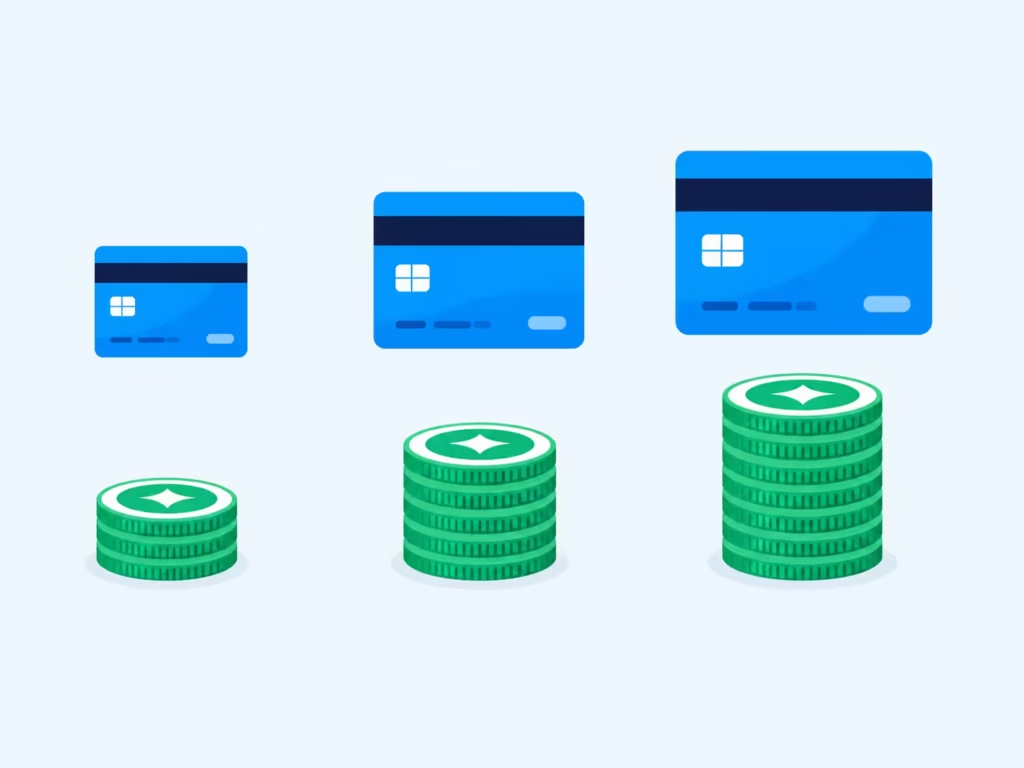
A few issuers bend this rule. Some offer a limit slightly higher than your deposit after a few months of on-time payments. Others require a minimum deposit but may approve a limit above it based on your income. These are exceptions, though. When you picture your own card, the safest assumption is: what you deposit is what you can spend.
Common Fees to Expect
The deposit is not the only cost to think about. Some secured cards charge fees on top of it, and fees are money you do not get back.
Common ones include:
- Annual fees, often $0 to $50 on better cards
- Application or processing fees, charged just to open the account
- Monthly maintenance fees, which quietly add up over a year
Not every card charges these. Several major issuers offer secured cards with no annual fee at all. A card with a $200 deposit and no annual fee costs you nothing extra while you build credit. A card with a $50 annual fee, a $25 processing fee, and a $6 monthly fee costs you real money before you ever swipe.
Before applying, compare the fee lists side by side. The deposit comes back. Fees don’t.
How You Use a Secured Credit Card
A lot of first-time applicants assume a secured card must work differently in daily life. It doesn’t. Day to day, it behaves exactly like a regular credit card.
You swipe, tap, or type in your card number to buy things. Each purchase borrows against your credit line. You are not spending your deposit. That money stays locked away as collateral the whole time.
At the end of each billing cycle, you get a statement. It shows your purchases, your total balance, and a minimum payment due. You pay the issuer back out of your bank account, just like any other credit card bill. Pay the statement balance in full by the due date, and you owe zero interest. Carry a balance, and interest charges apply at the card’s APR, same as an unsecured card.
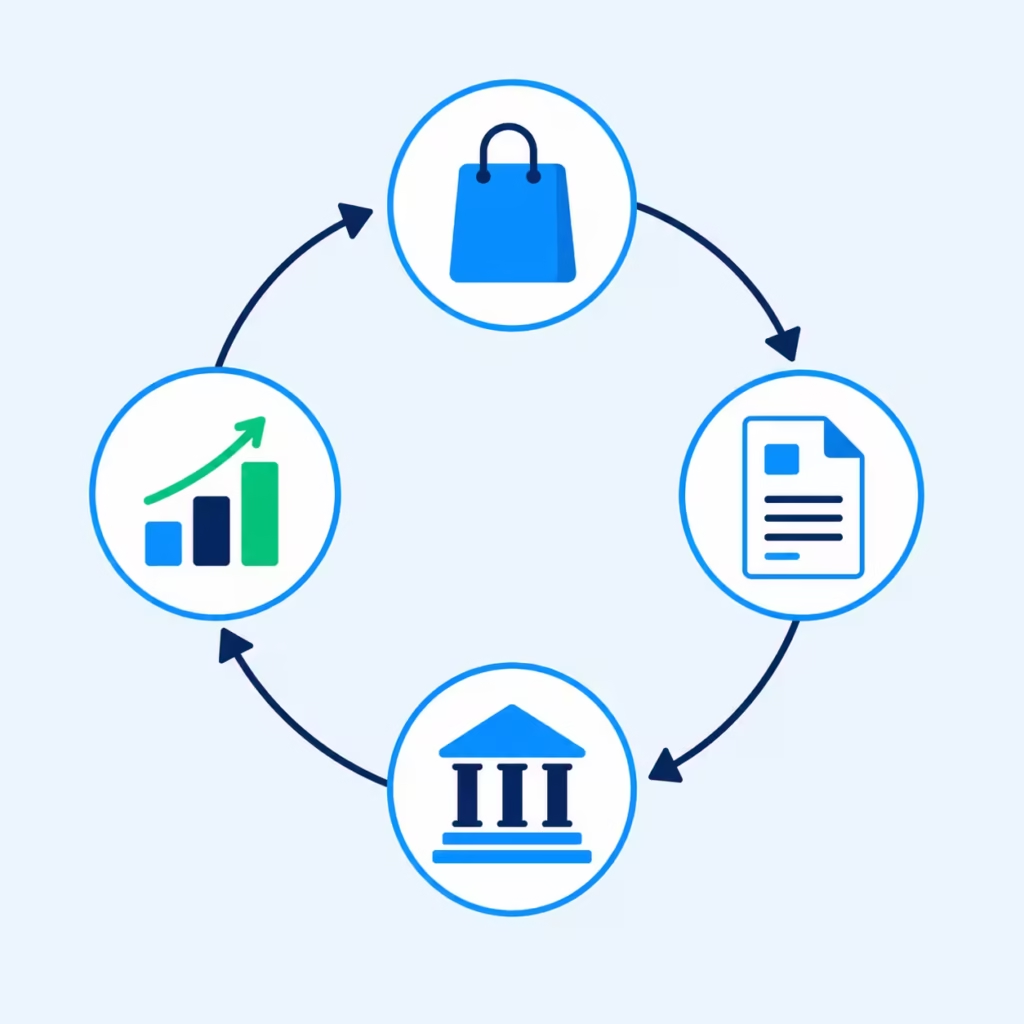
That monthly rhythm of spending, statement, and payment is also what builds your credit history. Every on-time payment adds a positive mark. Every missed one leaves a negative mark. The card works like training wheels on a real bike, not a toy bike.
Secured vs. Unsecured Credit Cards
An unsecured credit card is what most people mean by a “regular” credit card. No deposit required. The issuer lends you money based on trust in your credit history and income.
The honest truth about secured vs. unsecured credit cards is this: the deposit is the only structural difference. Everything else works the same way.
Both card types let you:
- Buy things up to your credit limit
- Get a monthly statement with a due date
- Pay in full to avoid interest
- Rack up interest if you carry a balance
- Appear on your credit reports
The reason issuers split them comes down to risk. With an unsecured card, the bank has nothing to grab if you stop paying. So it only approves people whose credit history proves they’re reliable. With a secured card, your deposit covers the bank if things go wrong. That lets the bank say yes to people it would otherwise turn down.
Think of the deposit as the price of admission when your credit file can’t speak for you yet.
Secured Credit Cards vs. Prepaid and Debit Cards
This is the most damaging mix-up on this topic, and it costs people months or even years of lost credit progress.
A prepaid card or a debit card spends your own money directly. You load cash onto a prepaid card, or you spend from your checking account with a debit card. No borrowing happens at all. The card company never lends you a dime.
Because no credit is extended, prepaid and debit card activity is never reported to the credit bureaus. You could use a prepaid card perfectly for ten years, and your credit report would not change by one point. There’s no payment history to report because you never owed anyone anything.
A secured card is the opposite. Even though you put down a deposit, every purchase is real borrowing. The issuer extends credit, you repay it, and that activity goes to the bureaus each month. That’s the whole mechanism that builds your score.
If someone has been using a prepaid card and believes they’re building credit, they’ve been running on a treadmill. The secured card is the one that actually moves forward.
Does a Secured Credit Card Actually Build Credit?
Yes. A secured credit card builds credit the same way any credit card does, with one condition: the issuer must report your account to the credit bureaus.
Most major issuers report to all three bureaus: Experian, Equifax, and TransUnion. But some smaller issuers report to only one or two, and a few don’t report at all. A card that doesn’t report is useless for credit building, no matter how carefully you use it.
What actually gets reported each month:
- Payment history: whether you paid on time
- Balance and credit limit: how much you owe relative to your limit (your credit utilization)
- Account age: how long the account has been open
- Account status: open, closed, current, or delinquent
None of this is a watered-down version of “real” credit reporting. Experian confirms that secured cards feed into your credit history and scores just like traditional cards. A FICO score can’t tell the difference between a payment on a secured card and a payment on an unsecured one. On-time is on-time.
📌 Did You Know: A secured card doesn’t show up as “secured” in a way that hurts your score. Scoring models like FICO treat it as a standard revolving credit account.
How Bureau Reporting Actually Works
Each month, your issuer sends an update to the bureaus. That update includes the same data fields as any credit card: your current balance, your limit, and whether your last payment was on time.
Two things drive the benefit. First, paying on time every month builds the payment history that makes up the largest share of your score. Second, keeping your balance low relative to your limit helps your utilization, another big scoring factor. On a $300 limit card, that means keeping your statement balance small, ideally under about $90.
One action step matters more than any other before you apply: confirm the issuer reports to all three bureaus. Check the card’s website or call and ask. If the answer is “we don’t report,” walk away and pick a card that does.
What Happens to Your Deposit
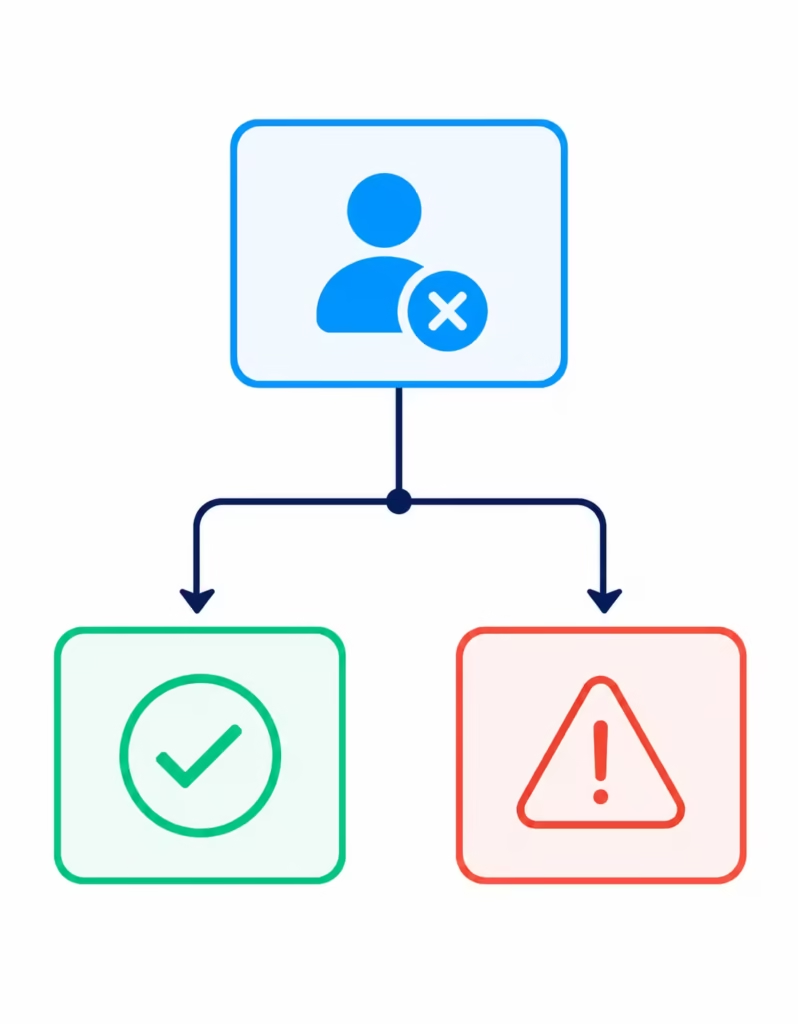
The deposit is the reader’s biggest worry, so let’s map out every possible ending. There are only three ways this goes.
If You Close the Account in Good Standing
Good standing means your balance is paid off and you’ve met all the terms. In this case, the issuer returns your full deposit. You’ll typically get it back as a check or bank transfer within a few weeks of closing, though exact timing varies by issuer.
One thing to know: some issuers hold the deposit for 30 to 60 days after closing. They’re waiting to make sure no final charges or pending transactions come through. That’s normal, not a stall tactic.
If You Default or Miss Payments
Missing a payment triggers the same consequences as any credit card: late fees, possible interest penalty rates, and a negative mark on your credit reports.
Default is more serious. If you stop paying altogether, the issuer can take your deposit and apply it to your unpaid balance. That’s what the collateral was for. And here’s the part people miss: if you owe more than your deposit, you still owe the difference. The deposit caps the issuer’s loss, not yours.
So a default costs you twice. You lose the deposit, and your credit reports show a charge-off or delinquency, which can drag your score down for years.
⚠️ Mistake to Avoid: Don’t treat the deposit as a safety net you can spend your way into. Missed payments get reported even if the issuer later uses your deposit to cover the balance. The credit damage happens either way.
The third path, upgrading to an unsecured card and getting your deposit back, gets its own section below.
Who a Secured Credit Card Is Actually For
This card isn’t for everyone, and it isn’t meant to be permanent. It’s a fit for three specific situations:
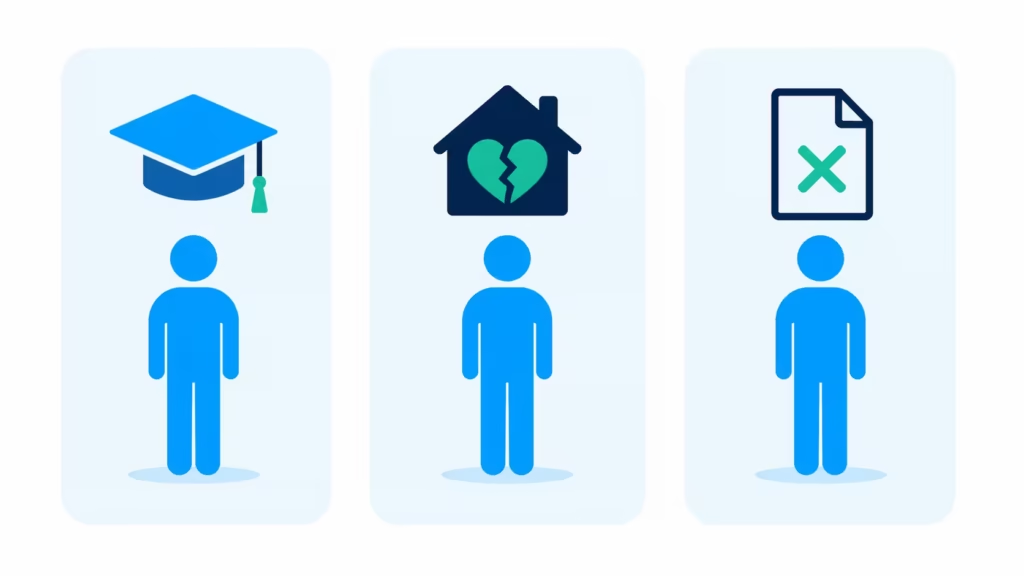
People with no credit history. Young adults, college students, recent immigrants, and international students often have a blank credit file. Lenders can’t approve what they can’t see. A secured card creates the first entry in that file. The Consumer Financial Protection Bureau lists secured cards as one of the main tools for people starting from zero.
People rebuilding after damage. A bankruptcy, a charge-off, a string of missed payments, or the financial fallout of a divorce can all wreck a credit file. Issuers of regular cards will often say no for years after these events. A secured card lets rebuilding start now instead of later.
People who’ve been denied for unsecured cards. A denial is a signal, not a dead end. Rather than applying again and collecting more hard inquiries, a secured card offers a path with much friendlier approval standards.
If you already qualify easily for regular cards, you probably don’t need this one. It exists for the gap between “no” and “yes.”
Can You Be Denied for a Secured Credit Card?
Yes, and knowing this upfront saves you a pointless application. Secured cards have more lenient approval standards, not zero standards.
Real reasons issuers still say no:
- Insufficient income. The issuer must see that you can repay what you borrow. No verifiable income often means no approval, deposit or not.
- An active or pending bankruptcy. Many issuers won’t approve anyone mid-bankruptcy. You usually need the discharge first.
- A past charge-off with the same issuer. If you defaulted on a card with that bank before, it may blacklist you from its products.
- Identity or verification problems. Applications that can’t verify identity, address, or a valid bank account get declined.
Some cards skip the credit check entirely, which removes one barrier, but income and identity checks still apply. One alternative worth knowing: a credit union often has more flexible approval for members than big banks do.
The good news is that decisions are usually fast. Many applications return an instant answer online, so you won’t wait weeks to find out.
Upgrading From a Secured to an Unsecured Card
Nobody wants to stay on a secured card forever, and you’re not meant to. The end goal is “graduation”: the issuer converts your account to a regular unsecured card.
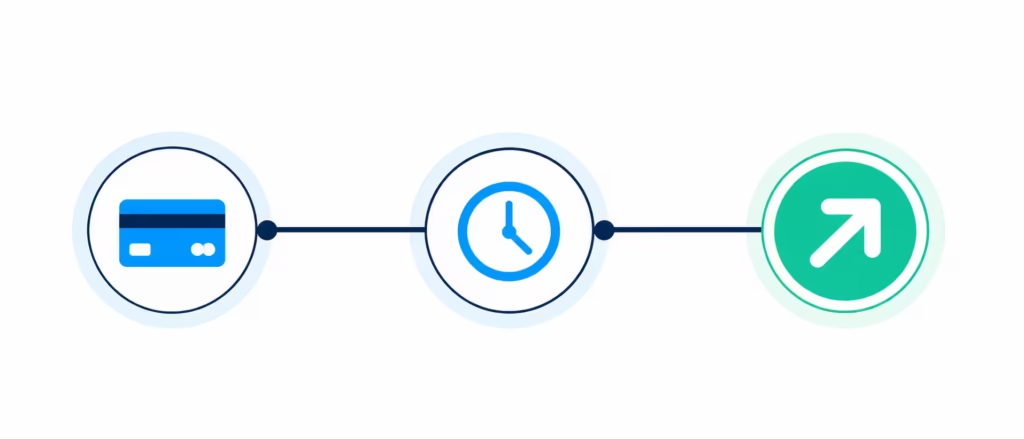
Here’s how it typically works. After a stretch of responsible use, often 6 to 12 months of on-time payments, many issuers automatically review your account. If you pass, they remove the deposit requirement, return your deposit in full, and sometimes raise your credit limit. Your card keeps working without interruption.
Two details make this especially valuable:
- Account age is preserved. When the same issuer upgrades your existing account, its history and open date stay on your credit reports. Closing the secured card and opening a brand-new unsecured card instead would reset that clock.
- You don’t have to wait passively. After several months of clean payment history, you can call or message the issuer and request an upgrade review. Some issuers say yes before their automatic review would have kicked in.
If your issuer never offers graduation, it’s time to make a plan. Once your score qualifies for a no-fee unsecured card elsewhere, pay off the balance. Then, close the secured account and collect your deposit.
Pros and Cons of a Secured Credit Card
Everything above distills into a short decision list.
Pros
- Easier approval when your credit is thin or damaged
- Builds real credit history reported to the bureaus, same as any card
- Refundable deposit that comes back when you close or upgrade in good standing
- A clear path to an unsecured card, often within a year
Cons
- Upfront cash required, typically $200 or more, which is hard when money is tight
- Lower credit limits than most unsecured cards, since the limit tracks your deposit
- Sometimes higher APR and fees than regular cards, though no-annual-fee options exist
- The deposit sits locked away while the account is open, so that cash isn’t available for emergencies
For someone who can’t get approved any other way, the pros usually outweigh the cons. The deposit isn’t a cost; it’s a temporary hold. The credit history you build, by contrast, is permanent.
Frequently Asked Questions (FAQs)
Does a $200 secured credit card work the same as any other card?
Yes. You deposit $200 as collateral, get a $200 credit limit, and spend against that limit like a normal card. Each month you get a statement, pay it off, and the issuer reports your activity to the credit bureaus.
How much should you spend on a $200 secured credit card?
Keep your balance under about $60. Staying below 30% of your limit protects your credit utilization, which is one of the biggest factors in your credit score.
Do I get my deposit back from a secured credit card?
Yes, if you close the account in good standing with your balance paid off. You typically receive it back as a check or bank transfer within a few weeks, though some issuers hold it 30 to 60 days after closure.
Is it a good idea to have a secured credit card?
Yes, if you have no credit history or are rebuilding after damage. It reports to the bureaus like any card, and the deposit is refundable rather than a cost.
How quickly will a secured card build credit?
Many issuers review accounts for graduation to unsecured cards after 6 to 12 months of on-time payments. Credit history builds with every reported monthly payment, so consistency matters more than speed.
Can a secured card hurt your credit?
Yes, if you miss payments or default. Missed payments create negative marks the same as any card, and defaulting lets the issuer keep your deposit while you still owe any remaining balance.
Can I get a $1,000 secured credit card?
Yes. Since your deposit typically equals your credit limit dollar for dollar, depositing $1,000 gets you a $1,000 limit, as long as the issuer’s minimum and income requirements are met.
What are the downsides of having a secured credit card?
You need upfront cash, often $200 or more, that stays locked away while the account is open. Limits are lower than unsecured cards, and some cards carry higher APRs or fees.
What is the easiest secured card to get approved for?
Cards with no credit check and low minimum deposits tend to have the most lenient approval standards, though issuers still verify income and identity. Credit unions often approve members more easily than large banks do.
What happens after 6 months of having a secured credit card?
Many issuers begin reviewing accounts for graduation to an unsecured card around this point if you’ve paid on time. You can also proactively call and request an upgrade review instead of waiting.
Wrapping Up
A secured credit card is a real credit card backed by your own refundable deposit. It works like any other card in your wallet, reports to the credit bureaus the same way, and gives people with no credit or damaged credit a genuine way forward. The deposit sets your limit, comes back when you close or upgrade in good standing, and only disappears if you default.
For readers who can’t qualify for a regular card yet, a no-annual-fee secured card is best. It should report to all three bureaus. Use it lightly and pay it off in full each month. That combination builds history at the lowest possible cost.
If you know someone who was just denied for a card or is starting from zero, share this guide with them. It could be the thing that finally gets their credit moving.