
Most people first hear the name “Experian” after a loan denial, a strange charge on their card, or a friend mentioning a “free credit score” app. That single word sparks a wave of questions. Is Experian the company that decided my rate? Is it my score? Did it just charge me? These worries hit hardest when money is on the line, and the Experian credit bureau sits right at the center of it all.
The fastest fix is simple: learn what Experian tracks, how to pull your free report and score, and how to use its free tools to protect your credit.
This guide walks you through every step, from reading your report to disputing errors, freezing your file, and deciding if Boost is worth your time.
At a Glance
This guide explains what the Experian credit bureau does, how to get a free report and score, dispute errors, freeze or unfreeze your file, and evaluate Experian Boost.
Core Facts:
- Experian is one of three major U.S. credit bureaus, alongside Equifax and TransUnion, and it collects data but does not approve or deny loans itself.
- Full Experian reports are available free every week through AnnualCreditReport.com, and a free Experian.com account also includes a FICO Score 8.
- Experian must investigate most disputes within 30 days, after which the reported item is corrected, deleted, or verified as accurate.
- A credit freeze is free and blocks new lenders from pulling your file until you lift it, while a fraud alert lasts one year and only warns lenders to verify identity.
- Experian Boost is free and adds on-time utility, phone, and streaming payments to your Experian file, which may raise a FICO score based on that data.
- Lenders can pull your Experian data as a hard inquiry, and mortgage lenders typically pull all three bureaus and use the middle score in a tri-merge report.
Best for:
- Readers who want to check, dispute, or freeze their Experian credit file without paying for monitoring services.
- People with a thin or new credit file considering Experian Go, Boost, or authorized user status to start building credit.
- Anyone who received a loan denial or adverse action notice and wants to understand what Experian data the lender saw.
What Experian Actually Is (And What It Isn’t)
Experian is a credit reporting agency, not a lender. It does not approve or deny your loan. It does not set your interest rate. It collects data about how you borrow and pay back money, then sells that data to banks, landlords, and card companies who make their own choices.
Experian is one of the three major credit bureaus in the United States. The other two are Equifax and TransUnion. Each bureau keeps its own credit file on you. The files often look similar, but they are not identical. A lender might report to one bureau, two of them, or all three. That is why your Experian file can show accounts your TransUnion file does not.
Think of Experian as a record keeper. It logs your credit cards, loans, payment history, and public records. It then packages that info into a report. A separate math model, like FICO or VantageScore, turns that report into a three-digit score.
Here is the split that trips people up:
- The bureau (Experian): stores the raw data about your accounts.
- The score: a number calculated from that data using a scoring model.
- The lender: the bank or company that pulls your file and decides yes or no.
So when a credit card issuer says “no,” Experian did not reject you. The lender did, based partly on what your Experian file showed.
What’s Inside Your Experian Credit Report
Your Experian report is a snapshot of your borrowing life. It has four main parts, and each part tells lenders something different.
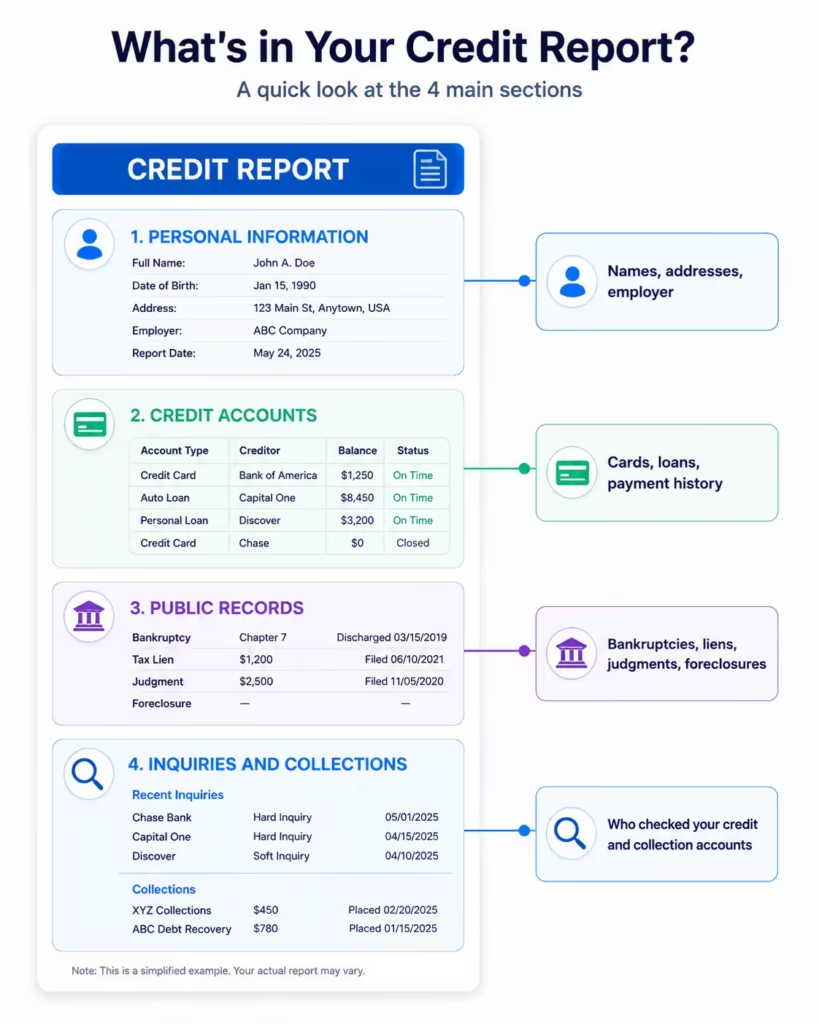
Personal information. This shows your name, current and past addresses, date of birth, and sometimes your employer. It is not used to score you, but wrong info here can be a warning sign of fraud or mixed files.
Credit accounts (tradelines). This is the biggest part. You will see every credit card, mortgage, auto loan, student loan, and personal loan tied to your name. Each account lists the lender, balance, credit limit, monthly payment, and, most important, your payment history month by month.
Public records. Today, this section is much lighter than it used to be. Bankruptcies are still listed. Civil judgments and most tax liens no longer appear on consumer credit reports.
Inquiries. This section lists every company that has pulled your file. There are two kinds:
- Hard inquiry: happens when you apply for new credit. It can shave a few points off your score and stays visible for two years.
- Soft inquiry: happens when you check your own credit, a lender pre-approves you, or an employer runs a background check. It does not affect your score.
Collections. If a lender gave up on collecting a debt and sold it, that debt may show up here. Collections can hurt your score for years.
How to Read Your Report Section by Section
Start at the top with personal info. Read every line. Check your name spelling, birth date, and each address listed. If you see an address you have never lived at, that is a red flag for identity theft or a mixed file.
Next, move to the account list. For each account, ask yourself four questions:
- Do I recognize this account?
- Is the balance close to what I actually owe?
- Is the payment status correct (open, closed, current, late)?
- Are the late payment marks accurate?
Then scan the collections section. Collections are the most common spot for errors. Sometimes the same debt is listed twice. Sometimes the original creditor also lists the account as unpaid, so it looks like two debts instead of one.
Finish with the inquiries list. Look for hard pulls you did not authorize. Any application you did not file yourself deserves a closer look.
💡 Pro Tip: Save a copy of your report as a PDF every time you pull it. Comparing an old report to a new one is the fastest way to spot changes, whether it is a fresh error, a new account, or a suspicious pull.
How to Get Your Free Experian Credit Report and Score
You can get your full Experian credit report for free, in full, every week. You do not need to buy anything, and you do not need a trial.
There are two main free paths:
AnnualCreditReport.com. This is the only site officially backed by federal law for free credit reports. It gives you access to all three bureau reports, including Experian, at no cost. It shows the report itself, not a score. Go to AnnualCreditReport.com and follow the prompts.
Experian.com free account. Sign up for a free account directly at Experian.com. You get your Experian report plus a free FICO Score 8 based on your Experian data. You also get monthly updates and free alerts when something changes on your file.
Here is what to expect at each stop:
| Source | Cost | What You Get | Score Included |
|---|---|---|---|
| AnnualCreditReport.com | Free, weekly | Full Experian report | No |
| Experian.com free account | Free | Full report + FICO 8 | Yes |
| Experian paid plans | Monthly fee | All three bureau reports, more alerts | Yes |
For most readers, the free Experian.com account plus a weekly pull from AnnualCreditReport.com covers everything you need. Paid plans mostly add multi-bureau monitoring, which is nice to have but not required.
To pull your report without paying:
- Visit the site directly. Type the URL yourself. Do not click ads or search results, which can point to look-alike pages.
- Verify your identity. Expect questions about past addresses, loan amounts, and account details. This step keeps your file safe.
- Save or print the report. Once the report loads, download it. Your view session often expires within a short window.
Avoiding Paid Trial Traps
Some sites promise a “free credit score” but ask for your credit card. That is a trial trap. If you forget to cancel within the trial window, your card gets charged every month.
Signs you are on a trial page, not a truly free one:
- The site asks for a credit or debit card during signup.
- The words “7-day trial,” “$1 trial,” or “free for a limited time” appear near the signup button.
- The fine print mentions auto-renewal or monthly billing.
A truly free tool never asks for card info to view your own report or score. If you see that request, close the tab.
If you already signed up for a trial and want out, do these three things:
- Log in and cancel the plan from your account settings.
- Save a screenshot of the cancellation confirmation.
- Watch your card statement for the next two months. If a charge still shows up, dispute it with your card issuer.
⚠️ Mistake to Avoid: Do not sign up for a “credit monitoring” service just to see your Experian score. The free Experian.com account already includes your score. Paid monitoring is only worth it if you want multi-bureau tracking or extra fraud tools.
Why Your Experian Score May Differ From Other Scores
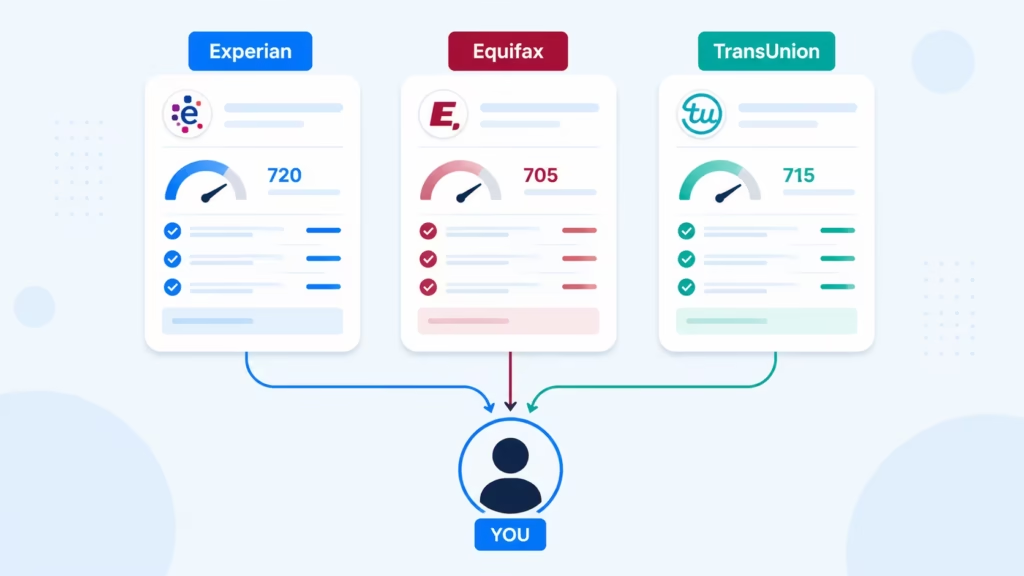
You pull your Experian score and see 720. Your bank app shows 705. A car dealer quotes 688. All three numbers can be correct at the same time. Here is why.
Different bureaus, different data. Not every lender reports to all three bureaus. A store card may report only to Experian. A small credit union may report only to TransUnion. When the underlying data differs, the score based on that data will differ too.
Different scoring models. FICO and VantageScore are the two big model families. Within FICO alone, there are many versions: FICO Score 8, FICO Score 9, and industry-specific versions for auto loans and mortgages. Each version weighs your data a little differently.
Different pull dates. A score is a snapshot. If you paid down a card yesterday and one bureau updated today, that bureau’s score can jump while the others lag.
Different products, different scores. The free FICO 8 on Experian.com is not the same score a mortgage lender pulls. Mortgage lenders use older FICO versions built for home loans. Auto lenders use FICO Auto scores. So the score you see for free may not match what a specific lender sees.
Here is the takeaway: focus on the trend, not the exact number. If your Experian score is climbing month after month, your habits are working, even if another app shows a lower number.
FICO Score vs. VantageScore, Briefly
Both FICO and VantageScore run on the same 300 to 850 range. Both look at payment history, balances, credit age, mix of accounts, and new credit. But they weigh those factors in slightly different ways.
- FICO is used in most lending decisions, especially mortgages and auto loans.
- VantageScore is what many free credit apps show, including some bank apps.
Experian gives you a FICO Score 8 for free in your account. That is the most commonly used FICO version for credit cards and personal loans. It is a solid benchmark, but do not be shocked if a mortgage lender pulls a different FICO version and lands on a different number.
How to Dispute an Error on Your Experian Report
Errors on credit reports are more common than most people think. A Consumer Financial Protection Bureau analysis found credit reporting complaints made up more than half of all complaints the agency received in recent years. Under the Fair Credit Reporting Act, you have the right to dispute anything on your file that is wrong.
Common errors to look for:
- Accounts that are not yours.
- Late payments you actually paid on time.
- Balances or credit limits that do not match your records.
- Closed accounts marked as open.
- The same debt listed more than once.
- Old debts still showing after the seven-year window.
You can file a dispute with Experian in three ways:
Online (fastest). Go to the Experian dispute center at Experian’s dispute page. Sign in, pick the item, and explain the issue. Attach documents if you have them.
By mail. Send a written letter to Experian Dispute, P.O. Box 4500, Allen, TX 75013. Include a copy of your report with the wrong item circled, your ID, and any proof.
By phone. Call the number listed on your Experian report. Phone disputes are fine for simple issues but leave no paper trail, so many readers prefer online or mail.
Whichever path you pick, explain the error in plain words. Attach proof if you have it: a bank statement showing on-time payment, a letter from the lender, a police report if it is fraud. Keep copies of everything you send.
Experian must investigate within 30 days in most cases. That is the 30-day investigation window set by federal law.
What Happens After You File a Dispute
Once your dispute is in, Experian contacts the company that reported the info. That company is called the furnisher. The furnisher has to check its own records and reply.
Three outcomes are possible:
- Corrected. The furnisher agrees the info is wrong. Experian updates your file.
- Deleted. The furnisher cannot verify the info. It comes off your report.
- Verified. The furnisher stands by its records. The info stays.
Experian sends you the results in writing. If the result is a fix, you get a free updated copy of your report so you can see the change.
If Your Dispute Is Denied
A denied dispute is not the end. You still have options.
Gather stronger proof. Sometimes a dispute fails because the first round of documents was thin. Pull bank statements, payment confirmations, or letters from the lender. Then file again.
Add a statement of dispute. Federal law lets you add a short statement (100 words or less) to your file. Future lenders will see your side of the story next to the item.
Escalate to the CFPB. If Experian will not budge and you are sure the info is wrong, file a complaint with the Consumer Financial Protection Bureau. The CFPB forwards your complaint to Experian and tracks the reply.
Contact the furnisher directly. You can also file a dispute with the company that reported the item, not just with Experian. Sometimes fixing it at the source is faster.
Identity Theft and Fraud Alerts on Experian
If you spot an account you did not open, a hard inquiry you did not authorize, or an address you have never lived at, act fast. Identity theft grows worse every month it sits.
Signs your identity may be stolen:
- Bills for accounts you did not open.
- Calls from collectors about debts that are not yours.
- Denied credit for reasons that do not match your history.
- Mail that suddenly stops coming (a thief may have changed your address).
Take these steps in order:
- Place a fraud alert. Log in to your Experian account or visit the Experian fraud alert page. A fraud alert is free and lasts one year. It tells lenders to verify your identity before opening new accounts. Placing an alert at one bureau alerts all three.
- Get a free extra report. After placing an alert, you get another free Experian report so you can scan for more damage.
- File an FTC identity theft report. Go to IdentityTheft.gov, the official site run by the Federal Trade Commission. You get an FTC identity theft report and a step-by-step recovery plan. This report unlocks stronger rights, including a seven-year extended fraud alert.
- File a police report. For serious cases, especially if the thief opened many accounts, file a report with your local police. Bring your FTC report with you.
- Dispute the fake accounts. Use Experian’s dispute center for each unauthorized account. Attach your FTC report as proof.
- Consider a freeze. A fraud alert slows thieves down. A freeze stops them cold. More on that next.
How to Freeze and Unfreeze Your Experian Credit File
A credit freeze, also called a security freeze, locks your Experian file so no new lender can pull it. Without a fresh pull, most lenders will not open a new account. Freezes are free by federal law.
To freeze your Experian file, you have three options:
Online. Sign in at Experian.com/freeze and click the freeze button. The freeze takes effect within minutes.
By phone. Call 888-397-3742. Have your Social Security number and ID info ready.
By mail. Send a written request with proof of ID to Experian Security Freeze, P.O. Box 9554, Allen, TX 75013.
You will get a PIN or use your account login to lift the freeze later. Save that PIN somewhere safe.
When you apply for new credit, you have two choices:
- Lift (thaw) the freeze temporarily. You pick a date range or a specific lender. After that window, the freeze snaps back on. This is the smart choice most of the time.
- Remove the freeze fully. Only do this if you plan to apply for credit often over the next few months.
You can also freeze a minor’s credit file. Kids do not need credit, so a freeze protects them from thieves who steal children’s Social Security numbers. You will need proof you are the parent or guardian.
Credit Freeze vs. Fraud Alert: Which Do You Need
Both tools help, but they work in different ways. Pick based on what problem you are solving.
| Feature | Credit Freeze | Fraud Alert |
|---|---|---|
| What it does | Blocks new credit pulls | Warns lenders to verify ID |
| Cost | Free | Free |
| How long | Until you lift it | 1 year (7 years with FTC report) |
| Best for | Anyone who wants max protection | Suspected fraud, no proof yet |
| Downside | Must lift before applying | Does not block pulls |
If you know your data was stolen and want to slam the door shut, freeze. If you just want lenders to double-check ID for the next year, use an alert. Many people use both.
What Experian Boost Is and How It Works
Experian Boost is a free tool that adds certain bill payments to your Experian file, which may raise your FICO Score. It only affects your Experian data, not Equifax or TransUnion.
Boost looks at bills that normally never show up on credit reports:
- Utility payments (electric, gas, water).
- Phone and internet bills.
- Streaming service subscriptions.
- Rent (through some payment platforms).
You connect your bank account. Boost scans your transactions for eligible bill payments, then adds the on-time payments to your Experian file. That fresh positive payment history can lift scores that use Experian data.
Sign up at Experian.com/boost. You link your bank, review which payments you want to add, and confirm. The FICO Score increase, if any, shows up right away.
Two things to know before you sign up:
- Boost only helps scores calculated from your Experian file. A lender pulling from Equifax will not see any boost.
- Only on-time payments count. Late utility payments will not be added, so Boost cannot hurt you.
Who Actually Benefits Most From Boost
Boost is not magic. Its impact depends heavily on how thin your existing file is.
You are most likely to see a real jump if:
- You have a thin credit file with only one or two accounts.
- You are new to credit and have no long payment history.
- Your only credit issue was one late payment years ago.
You will probably see little to nothing if:
- You already have several long-standing accounts in good shape.
- Your score is already in the high 700s or 800s.
- Your utility bills are often late.
For a young adult with one starter credit card, Boost can bump a score by a meaningful margin. For someone with a 780 score and a mortgage, the change is usually small.
Building Credit From Scratch With Experian
If you have never had a credit card or loan, lenders see a thin credit file or no file at all. Experian offers a few free ways to break that cycle.
Experian Go. This free program creates an Experian file for people with no credit history. You verify your identity, and Experian sets up a starter file. From there, you can add Boost data, become an authorized user, or open a starter card.
Experian Boost. Even without a full credit card, Boost can add utility, phone, and streaming payments to your new file. That gives you a first line of positive payment data.
Become an authorized user. Ask a family member with strong credit to add you as an authorized user on one of their cards. Their card’s history often shows up on your Experian file, which can jumpstart your score. Make sure the card issuer reports authorized users to Experian.
Open a secured card or credit-builder loan. These products are made for people building credit. A secured card asks for a small deposit, then works like a normal card. A credit-builder loan holds your payments in savings and releases them once you pay off the “loan.”
A common starter path looks like this:
- Open an Experian account and enroll in Experian Go if you have no file.
- Turn on Boost to add utility and phone payments.
- Ask to be added as an authorized user on a trusted family member’s card.
- Apply for a secured card. Use it for one small bill each month. Pay it in full.
- After six to twelve months of on-time payments, apply for a basic unsecured card.
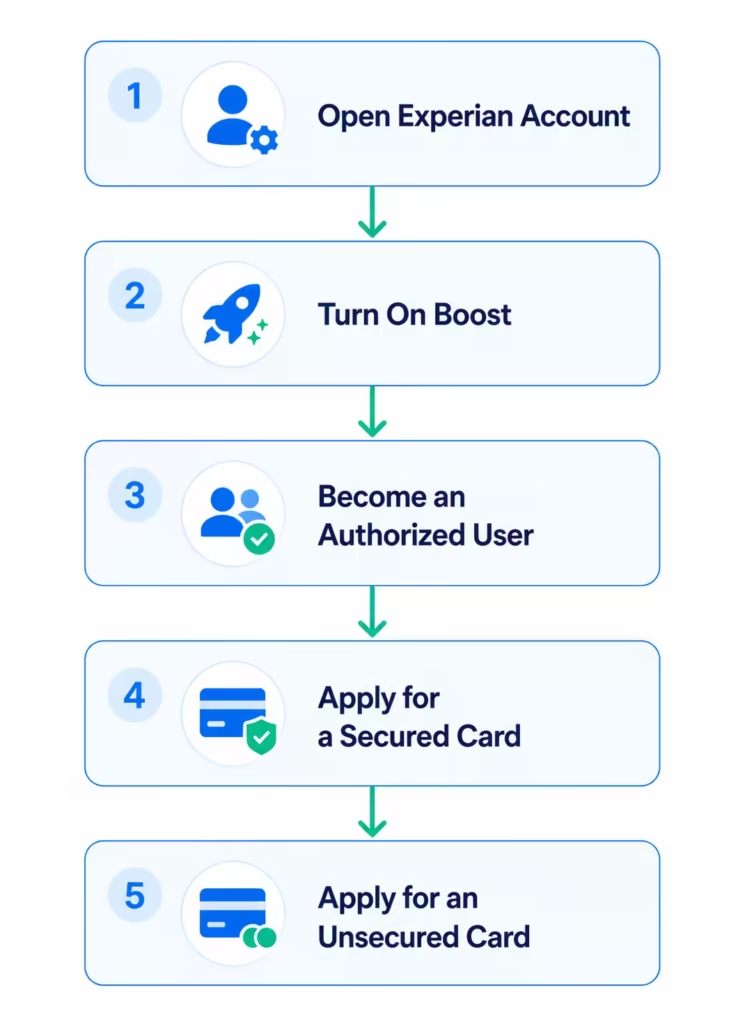
Each step feeds fresh positive data into your Experian file. Within a year, most beginners can move from no score to a fair or good score.
How Lenders Actually Use Your Experian Data
When you apply for a credit card, auto loan, or apartment, the lender or landlord runs a lender credit pull. That pull can hit one bureau or all three. Which bureau they use depends on the lender’s own policies and often on your state.
Here is what a lender does with your Experian data:
- Requests a report. The lender sends your info to Experian and asks for your file plus a score. This is usually a hard inquiry.
- Runs the numbers. The lender feeds your report into its own model. That model looks at score, income, debt, and job history.
- Decides. The lender approves, denies, or sets terms (rate, limit, deposit).
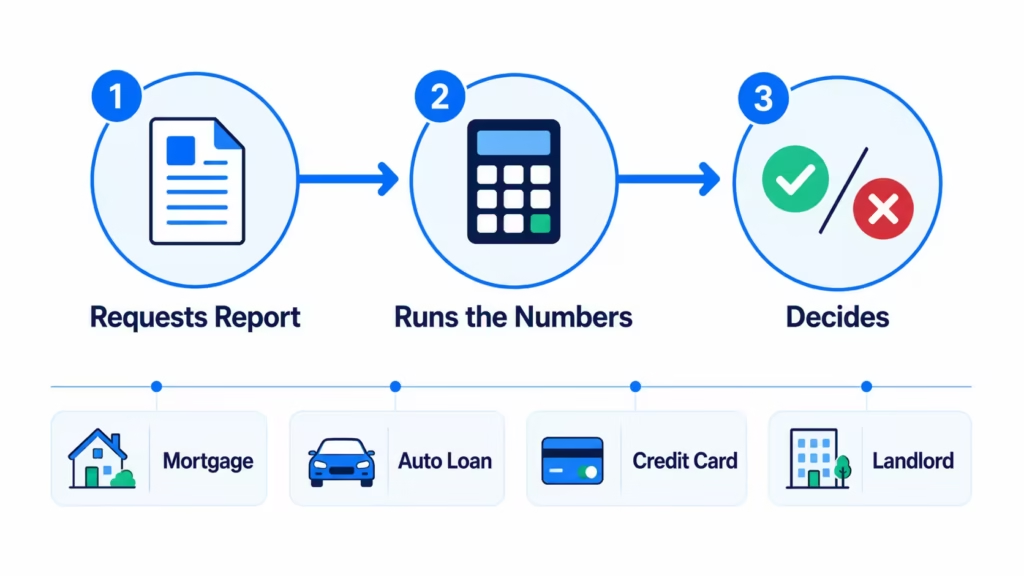
Different loan types often use different bureau reports:
- Mortgage credit check. Mortgage lenders almost always pull a multi-bureau report from all three, then use the middle score. This is called a tri-merge report.
- Auto loans. Many auto lenders pull one bureau, and Experian is a common pick.
- Credit cards. Card issuers usually pull just one bureau. Which one varies by issuer and state.
- Landlords and utilities. They often use a soft pull or a special screening product, not a full lender pull.
If a lender turns you down or gives you worse terms because of your credit, they must send you an adverse action notice. This letter lists the main reasons for the decision, the bureau they used (often Experian), and how to get a free copy of the report they saw. Read that notice carefully. It is a free window into exactly what a lender saw on your file.
📌 Did You Know: Under federal law, you can request a free copy of the exact credit report a lender used to deny you, within 60 days of an adverse action notice. You do not have to wait for your yearly free pull.
Frequently Asked Questions (FAQs)
Is 888-397-3742 a legitimate Experian number?
Yes, 888-397-3742 is Experian’s official phone number for placing or managing a credit freeze. Have your Social Security number and ID information ready before calling.
How do I speak to a live person at Experian?
You can call Experian’s freeze line at 888-397-3742, or use the phone number listed directly on your credit report for other issues. Online disputes and requests through Experian.com are usually faster since phone calls leave no paper trail.
Is Experian a legitimate company?
Yes, Experian is one of the three major U.S. credit bureaus, alongside Equifax and TransUnion. It collects and stores your credit account data but does not approve or deny loans itself.
Do I have to pay for my Experian credit report?
No, you can get your full Experian report for free every week through AnnualCreditReport.com, or sign up for a free Experian.com account to get your report plus a FICO Score 8. Paid plans only add extras like multi-bureau monitoring.
Should I give Experian my Social Security number?
Yes, Experian asks for your Social Security number to verify your identity when you sign up, freeze your file, or place a fraud alert. This step protects your file from being accessed by someone impersonating you.
Is Experian better than TransUnion or Equifax?
No bureau is universally better since each stores slightly different data depending on which lenders report to them. Your score can vary across all three because they use different underlying account information and sometimes different scoring model versions.
Why is Experian charging me $24.99 a month?
That charge is typically a paid monitoring plan you may have signed up for, sometimes through a trial that required a credit card. Free tools like your Experian.com account and AnnualCreditReport.com never require payment or card information to view your report or score.
Can I request the exact report a lender used to deny me?
Yes, under federal law, you can request a free copy of the exact credit report a lender used within 60 days of receiving an adverse action notice. This notice also lists the bureau used and the main reasons for the decision.
Which lenders typically use Experian data?
Auto lenders commonly pull a single bureau report, and Experian is a frequent choice, while credit card issuers usually pick one bureau that varies by company and state. Mortgage lenders almost always pull all three bureaus in a tri-merge report and use the middle score.
How long does Experian have to investigate a dispute?
Experian must investigate most disputes within 30 days under federal law. After the investigation, the reporting company either corrects, deletes, or verifies the disputed item, and you receive written results.
The Bottom Line
Understanding Experian helps clear up confusion about checking, protecting, and improving your credit. This guide covers what Experian tracks, how to get your free report and score, how to find and dispute errors, when to freeze your file, and where Boost can help or not.
Check your Experian file often. The Fair Credit Reporting Act offers strong protections. Freeze your file when you’re not applying for credit. Also, use Boost only if your file is thin.
If you know someone worried about a loan denial, an odd charge, or a stolen identity, share this guide. It could save them hours of stress and real money.