
Falling behind on a Capital One credit card is stressful. The calls start. The balance grows with late fees and interest. You want to settle credit card debt with Capital One for less than you owe, but you don’t know who to call, what to offer, or how to make the deal stick. You might also worry about getting sued before you can work anything out.
The short answer: You can often settle a Capital One card for 40% to 60% of the balance. However, this usually happens only when the account is seriously late. Make sure to get all terms in writing before you pay.
This guide walks you through the full process. You’ll learn when Capital One will actually negotiate, how much to offer, exactly what to say on the call, and how to handle the tax bill that can follow. Let’s get started.
Key Takeaways
This guide explains how to settle credit card debt with Capital One, including negotiation timing by delinquency stage, realistic settlement percentages, call scripts, written agreement requirements, and the tax consequences of forgiven debt.
Core Facts:
- Settlements typically range from 40% to 60% of the balance, with the lowest offers, often 40% to 50%, available 180 days to about a year after the last payment.
- Capital One charges off accounts after roughly 180 days of missed payments, which usually opens the door to lower settlement offers from the recovery department.
- Before 90 days late, settlement is almost never available; the bank may instead offer a hardship program such as a lower interest rate or waived fees.
- Once a debt is sold to a third-party collector, settlements often range between 30% and 50% of the balance, and negotiations shift from Capital One to the debt buyer.
- Forgiven debt of $600 or more is reported on IRS Form 1099-C as taxable income, though the insolvency exclusion via IRS Form 982 may reduce or eliminate that tax if total debts exceed the fair value of assets.
- Structured settlement payment plans over three to six months typically cost more overall, often 55% to 65% of the balance, compared to a lump-sum settlement.
Best for:
- Readers with a Capital One account that is seriously delinquent or already charged off and want to negotiate a reduced payoff directly.
- Readers who received a debt validation letter after their Capital One account was sold to a collection agency.
- Readers facing a lawsuit summons from Capital One who need to understand settlement options alongside legal deadlines.
When Capital One Will Actually Negotiate a Settlement
Timing is everything here. If you call too early, Capital One will tell you no settlement program exists. That’s true, in a way. The bank has little reason to accept less money while it still believes you might pay in full.
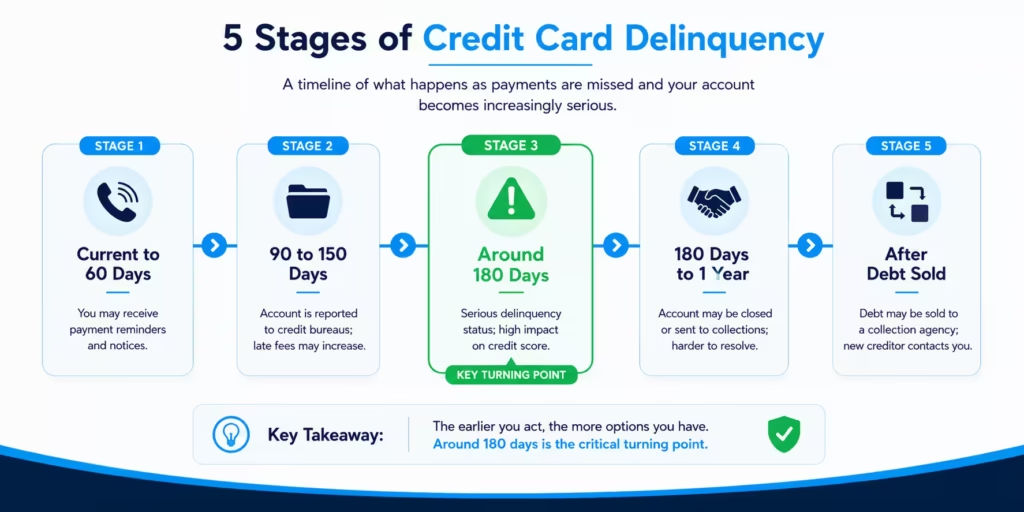
Here’s how the timeline usually breaks down:
- Current to 60 days late. Settlement is almost never on the table. At this stage, the bank may offer a hardship program instead, like a lower interest rate or waived fees.
- 90 to 150 days late. The account sits with the collections department. Some settlement talk is possible now, but offers tend to be high, often 70% or more of the balance.
- Around 180 days late. This is the big one. After roughly six months of missed payments, Capital One must charge off the account. A charge-off (180 days) is an accounting step where the bank marks the debt as a loss. It does not erase what you owe. But it does change the math. The bank would now rather recover something than nothing.
- 180 days to about a year. This is often the sweet spot for a Capital One collections settlement. The recovery department may reach out to you with offers, sometimes as low as 40% to 50% of the balance.
- After the debt is sold. At some point, Capital One may sell the account to a third-party debt collector for pennies on the dollar. Once that happens, you negotiate with the buyer, not the bank. You’ll know this happened because you’ll get a debt validation letter from a company you don’t recognize.
One caution: waiting for a better settlement window is a gamble. Capital One is known for filing lawsuits more aggressively than many other card issuers. If your balance is large and months are passing with no talks, don’t assume you have unlimited time.
Who to Contact Based on Your Account Status
Calling the wrong number wastes weeks. Here’s who actually has the power to make a deal at each stage:
- Less than 90 days late: The general customer service line on the back of your card can discuss hardship options, but not settlements.
- 90 days late to charge-off: Ask for the Capital One recovery department or the collections team directly. These reps handle delinquent accounts and can discuss reduced payoffs.
- After charge-off: The recovery department still owns the account unless it was sold. This is usually the most productive time to call.
- After a sale to a collector: Capital One no longer owns the debt. Any calls to the bank will end with a referral to the collection agency.
A quick way to check your status: pull your free credit reports at AnnualCreditReport.com. The report will show whether the account is still with Capital One or has been transferred or sold.
How Much to Offer: Realistic Settlement Percentages
So, how much will Capital One settle for? There’s no official published number, but real-world outcomes follow a pattern. Most settlements with major card issuers range from 40% to 80% of the balance. Your offer depends on timing and your specific situation.
A realistic settlement percentage offer by stage looks like this:
| Account Stage | Realistic Settlement Range | Notes |
|---|---|---|
| 90–150 days late | 70%–90% | Bank still expects full recovery |
| Near charge-off (150–180 days) | 60%–80% | Some flexibility starts |
| Charged off, still with Capital One | 40%–60% | Best window for a low offer |
| Sold to a debt collector | 30%–50% | Collectors paid little, so they can accept less |
| After a lawsuit is filed | 50%–80% | Bank has leverage; legal costs push offers up |
Several factors push your number lower or higher:
- Your ability to pay. If your file shows hardship (job loss, medical bills), the bank expects less recovery and accepts less.
- Age of the debt. Older, unpaid debt is worth less to the bank.
- The statute of limitations. If the debt is close to the legal deadline for suing in your state, the bank’s leverage drops.
- Lump sum vs. payments. Cash now is worth more to a creditor than promises later.
To set your opening offer, work backward from your budget. Say you owe $10,000 and can realistically scrape together $4,000. Your target might be 45% ($4,500), so open at around $3,000, or 30%.
That leaves room to move up without blowing past your limit. Never open at your maximum. When you negotiate Capital One credit card debt, the first number you say sets the floor, not the ceiling.
💡 Pro Tip: Write your maximum number on a sticky note and keep it in front of you during the call. When a rep pushes back, emotion can make you agree to more than you planned. The note keeps you honest.
Settling Without a Lump Sum – Payment Plan Options
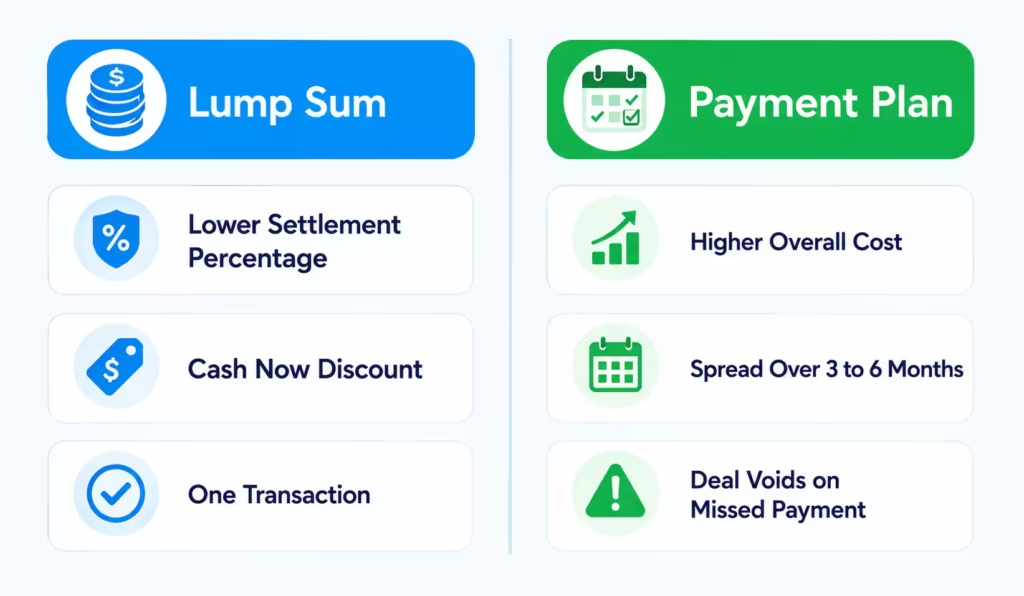
No savings? You can still settle. Capital One will often accept a settlement split into several payments, usually over three to six months. The structure works the same way: you agree on a total reduced amount, then pay it in installments.
Know the trade-offs first:
- You’ll likely pay more overall. A lump-sum settlement might close at 45% of the balance, while the same account on payments might land at 55% to 65%. Quick cash reduces the bank’s risk, so it discounts harder for it.
- The deal dies if you miss a payment. Most structured settlements say the full original balance comes back if you default mid-plan. All your payments then count toward the old total, and you’re back where you started.
- Get the same paperwork. A payment plan settlement needs the same written agreement as a lump sum. Amount, schedule, and what happens to the remaining balance.
Take Michael, a delivery driver who owed $7,800 on a charged-off card. He could only save about $900 a month. Capital One accepted $4,680 (60%) paid as six monthly payments of $780. A lump sum would have cost less, but the plan still cut his debt nearly in half and stopped the collections pressure.
How to Prepare Before You Call
A settlement call goes well when you do the homework first. Walking in unprepared means agreeing to a bad number, or worse, making promises you can’t keep. Spend an hour on these steps before dialing:
- Confirm your exact balance and status. Pull your credit reports and check your last statement. Know whether the account is delinquent, charged off, or sold. You can’t negotiate a number you don’t know.
- Run a quick debt-to-income assessment. Add up your monthly take-home pay and your essential bills: rent, food, utilities, transport. The gap between them is what you can truly offer. Be honest here. Overpromising is how settlement plans collapse.
- Set your target and your ceiling. Pick an opening offer and a hard maximum before the call. If the numbers above $4,000 break your budget, then $4,000 is your ceiling, no matter how the conversation goes.
- Decide lump sum vs. payment plan now. Know which structure you’re proposing before you pick up the phone. Reps can sense hesitation and will steer you toward their preferred terms.
- Set up a note-taking system. Grab a notebook or open a document. You’ll log the date, time, rep’s name and ID, and every number discussed. Some people also record calls where state law allows it (some states require both parties’ consent, so check yours first).
- Have a draft settlement offer letter ready. If the call stalls, or if you prefer paper, a written offer sent to the recovery department starts the same conversation with a record attached.
This prep work turns a scary call into a business transaction. You’re not begging. You’re presenting a solution to a problem the bank also wants solved.
How to Negotiate: The Call Step-by-Step
This is the moment most people dread, and most competitor guides skip. Here’s a structure for the actual conversation, close to script level.
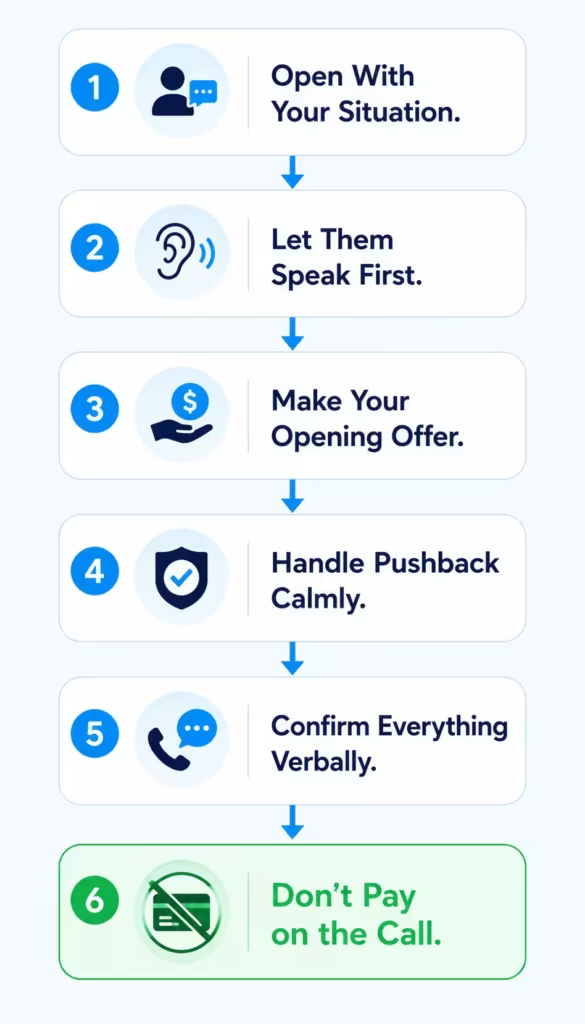
Step 1: Open with your situation, briefly. State your name, account number, and that you’re calling about resolving the balance. Explain your hardship in one or two sentences. Don’t overshare.
“I lost my job in March, and I’ve been unable to keep up with this account. I want to resolve it. I can offer a settlement, but I can’t pay the full balance.”
Step 2: Let them speak first if you can. Sometimes the rep opens with an offer, like “we can settle for 80% today.” That’s their starting point, not their bottom line. Thank them and counter low.
Step 3: Make your opening offer below target. If your target is 45%, open near 30%. Expect the first answer to be no. That’s normal. Capital One debt negotiation is a back-and-forth, not a single exchange.
“I can pull together $3,000 from family to settle this in full. That’s genuinely all I have access to.”
Step 4: Handle pushback calmly. Reps may say the offer is too low, that your account doesn’t qualify, or that the deal expires today. Respond by restating your hardship and your number. Silence is fine too. You don’t need to fill every pause.
- If they counter at 70%, you might move to 35%, then 40%.
- Move in small steps. Each concession should shrink.
- If you hit a wall, ask what they can approve. That question often surfaces the real floor.
Step 5: Confirm everything before hanging up. Once you agree on a number, say everything out loud: the settlement amount, the due date or payment schedule, and that this payment settles the account in full. Get the rep’s name and a reference number.
Step 6: Don’t pay on the call. Say you need the agreement in writing first. Any legitimate deal will still be there after the letter arrives.
⚠️ Mistake to Avoid: Never give a collector or creditor direct access to your bank account during the negotiation call. Agree on terms first, get them in writing, then pay by a method you control.
Getting the Settlement Agreement in Writing
A verbal promise is worth nothing if the account later gets sold or misreported. The written settlement agreement in writing (sometimes called a settlement offer letter) is your proof of the deal.
The letter must state:
- The exact settlement amount
- The payment deadline or installment schedule
- That the payment settles the account in full, with the remaining balance forgiven
- How the account will be reported to the credit bureaus (usually “settled” or “settled for less than the full balance”)
- The account number and both parties’ names
Request the letter before any money moves. If Capital One agrees on the phone, ask them to email or mail the terms. Most will. Review it line by line against your call notes.
If the bank refuses to put it in writing, don’t pay. Say you’ll wait for documentation and call back. A company that won’t write down a deal is telling you something important about whether they’ll honor it.
Making the Settlement Payment Safely
Once the written terms check out, pay exactly as agreed, and protect yourself while doing it:
- Use a method you control. A one-time electronic payment or a money order works well. Avoid post-dated checks and avoid authorizing recurring withdrawals from your main checking account.
- Never pay early or late. The agreement has a deadline. Missing it can void the deal, and the forgiven portion can snap back onto your balance.
- Save proof forever. Keep the settlement letter, payment confirmation, and bank record showing the debit. Store digital copies in at least two places. Years later, a debt buyer may claim you still owe. This paper trail ends that conversation in minutes.
What Happens After You Pay
The payment clears. Now what? Three things should happen, and you need to verify each one.
First, Capital One updates your account to show a zero balance with a status like “settled” or “settled for less than the full amount owed.” This is a credit report derogatory mark, but a resolved one. That’s far better than an open, unpaid charge-off.
Second, the update flows to the three credit bureaus. Creditors typically report monthly, so expect the change to show within 30 to 60 days. Mark your calendar to check.
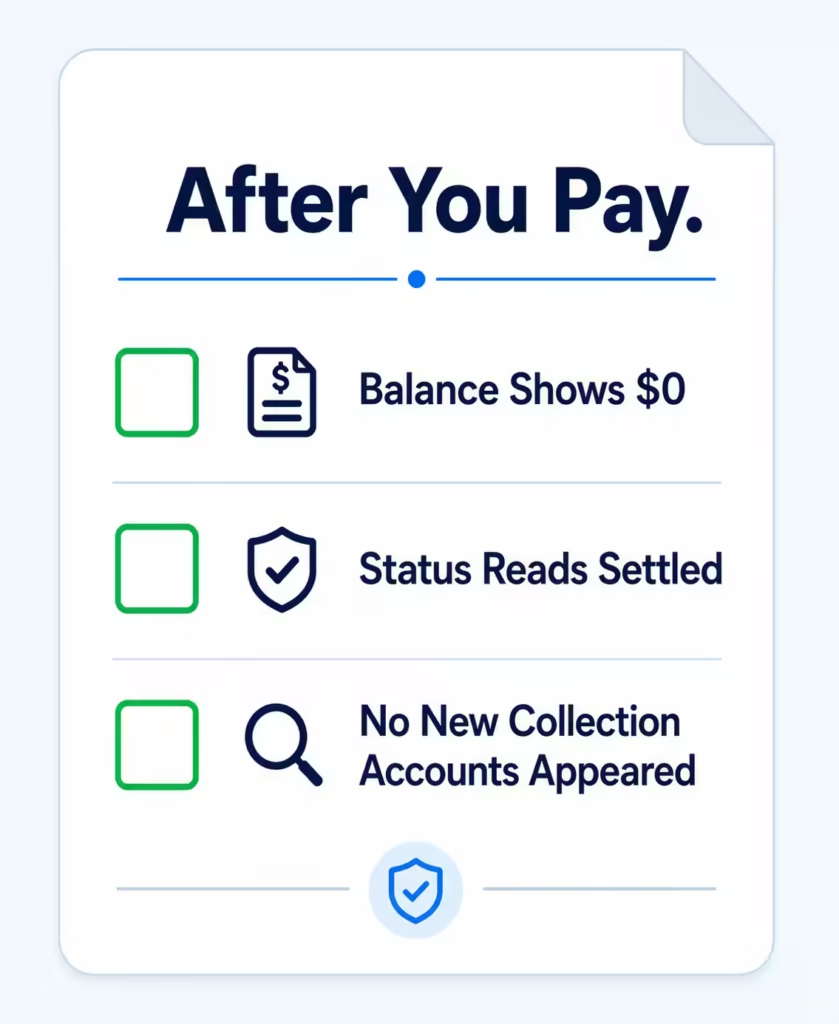
Third, you close the loop. Pull your reports about two months after payment and confirm:
- The balance shows $0
- The status reads “settled” or “paid, settled for less”
- No new collection accounts appeared for the same debt
If the account isn’t updated correctly, act fast. Call Capital One with your settlement letter and payment proof. If that fails, file a dispute with each credit bureau showing the error and attach your documentation. Bureaus generally must investigate within 30 days. Keep the original charge-off settlement paperwork handy through the whole dispute.
How Settling Affects Your Credit Score
Let’s be honest about the cost. Settling hurts your credit. But here’s what most people miss: by the time settlement is realistic, the damage is mostly done.
The score drops come from the missed payments and the charge-off, not from the settlement itself. A card that’s six months past due has already cost you dearly.
The “settled” notation adds a small hit on top. It replaces the ongoing damage from an unresolved Capital One debt. This situation keeps showing as delinquent each month.
Key facts to plan around:
- The mark stays seven years. A settled account remains on your report for seven years from the date you first fell behind and never recovered.
- The sting fades with time. Scoring models weigh recent activity more heavily. A settlement from two years ago hurts far less than one from two months ago.
- A settled debt beats an unpaid one. Future lenders, landlords, and mortgage underwriters prefer resolved debts over open collections. Some mortgage programs require collections to be resolved before approval.
- Rebuilding starts immediately. When your account hits $0, the credit utilization on that card no longer affects your score. Then, each on-time payment on your other accounts helps boost your score again.
Think of settlement as the end of the bleeding, not a new wound.
Tax Consequences: Understanding Form 1099-C
Here’s the surprise that blindsides people the following spring: forgiven debt usually counts as taxable income.
The logic is simple. When a lender lets you off the hook for money you borrowed, the IRS treats that forgiven amount like money you received.
As the IRS explains in Topic 431, canceled debt is generally taxable unless an exclusion applies. If $600 or more is forgiven, the creditor must send you and the IRS a Form 1099-C, Cancellation of Debt, early the next year.
A concrete example makes this real. Say you owed $15,000 and settled for $6,000:
- Forgiven amount: $9,000
- That $9,000 gets reported on a 1099-C as income
- If you’re in the 22% tax bracket, the added tax could run roughly $1,980
That’s still a good deal. You cleared $15,000 of debt for about $8,000 total. But only if you planned for the tax bill. Do you pay taxes on settled debt? Usually yes, so set aside 20% to 25% of the forgiven amount the moment your settlement clears. Parking that money in a savings account the day you settle turns next April into a non-event.
The Insolvency Exclusion
Many people settling debt can legally skip this tax entirely through the insolvency exclusion, and most guides bury or skip it.
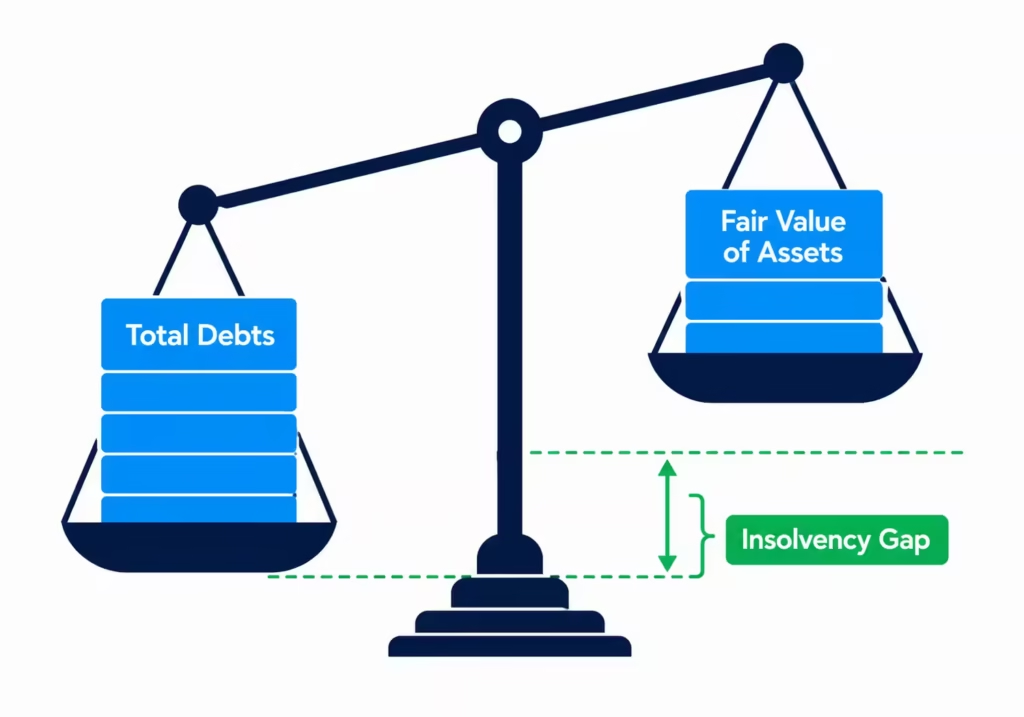
Insolvency means your total debts exceed the fair value of everything you own, measured the moment before the debt was canceled. If you owed $40,000 across all debts and your assets (car, savings, home equity, belongings) totaled $30,000, you were insolvent by $10,000. You could exclude canceled debt up to that $10,000 gap from your income.
To claim it, you file IRS Form 982 with your tax return and check the insolvency box. The IRS’s Publication 4681 walks through the worksheet for the calculation.
When is a tax pro worth the fee? If the forgiven amount is big, or if you’re unsure about your assets, consider getting help. Retirement accounts and home values can be tricky.
Also, if you settled several debts in one year, spending $200 to $400 on a CPA who knows Form 982 can save you thousands. For a small, simple settlement, tax software with the insolvency worksheet often handles it fine.
Direct Negotiation vs. Credit Counseling vs. Debt Settlement Companies
You have three real paths to resolve this debt, and picking the wrong one costs money and time.
Path 1: Negotiate directly with Capital One
Best when you have one or two cards, some savings or income for a payoff, and the patience to make calls. It costs nothing in fees, you stay in control, and everything in this guide applies. For most readers, this is the right starting point.
Path 2: A nonprofit credit counseling agency
These agencies set up debt management plans (DMPs). You make one monthly payment to the agency, and it pays your creditors, often at reduced interest rates negotiated in advance.
This is not settlement; you repay the full principal over three to five years. It fits people whose problem is high interest and chaos, not an unpayable balance. Look for agencies affiliated with the NFCC or FCAA, and expect small setup and monthly fees.
Path 3: A for-profit debt settlement company
These firms tell you to stop paying your creditors and pile money into a dedicated account instead. Once enough builds up, they negotiate. The fees run steep, often 15% to 25% of the enrolled debt. Worse, the months of non-payment can trigger lawsuits and wreck your credit before any deal happens.
The Consumer Financial Protection Bureau (CFPB) warns that these companies charge expensive fees and typically encourage you to stop paying your bills, which is exactly the period when creditors sue.
A simple decision rule: if you can fund a settlement within six months, do it yourself. If you could repay the full balance with lower interest and structure, call a nonprofit counselor.
Only consider a settlement company if you really can’t handle the calls yourself. Even then, check its total fees against the cost of direct negotiation, which is free.
If Your Capital One Debt Was Sold to a Collection Agency
Sometimes you call Capital One and hear: “We no longer own this account.” The debt was sold, usually to a debt buyer like a large collection firm. Your negotiation partner just changed.
How to know it happened:
- You received a letter from an unfamiliar company claiming you owe it money
- Your credit report shows the Capital One account at $0 with “transferred” or “sold,” plus a new collection entry
- Capital One reps refer you to the new owner
Before you negotiate a cent with the new owner, make it prove the debt is yours and the amount is right. Under the Fair Debt Collection Practices Act (FDCPA), a debt collector must send you a validation letter within five days of first contacting you.
This letter should show the amount owed and the name of the original creditor. You then have 30 days to dispute and demand verification. Send that dispute in writing, by certified mail, and keep copies.
Once validated, the good news is that debt buyers buy accounts for much less than face value. They often accept lower settlements, usually between 30% and 50%. The same rules from this guide apply. Get it in writing. Pay safely. Save the records. One difference: never assume a deal with the collector updates Capital One’s old entry correctly. Check your reports afterward for both tradelines.
If Capital One Has Already Filed a Lawsuit
A summons in the mail feels like the end. It isn’t. You can still settle, but the clock just became the most important thing in your life.
First rule: answer the summons. Every lawsuit comes with a response deadline, often 20 to 30 days depending on your state. If you ignore it, Capital One wins a default judgment automatically, no matter how good your settlement talks were going. A judgment unlocks the tools you fear most: wage garnishment, bank account levies, and property liens, depending on state law.
Second rule: settlement stays possible after filing. The bank sued to collect money, not to make a point. Call the law firm listed on the summons (the bank’s attorneys now handle the account) and open Capital One debt negotiation there.
Many lawsuits end in a settlement or a stipulated payment agreement filed with the court, sometimes even on the courthouse steps. Expect offers to run higher now, since the bank has legal costs sunk into the case.
Third rule: know when to get help.
Consult a consumer attorney if:
- The balance is large.
- The debt may be past your state’s statute of limitations.
- The amount seems incorrect.
- You were never properly served.
Many offer free consultations, and legal aid organizations help low-income defendants at no cost. A one-hour consultation can be the difference between a dismissal and a garnishment.
Common Mistakes That Sabotage a Capital One Settlement
Everything in this guide distills into a handful of avoidable errors. People blow up otherwise good deals in these five ways:
- Agreeing verbally and paying on the spot. Without the written terms, the bank’s system may keep showing a balance. The account could be sold again. This means your payment becomes partial credit instead of fully resolving the issue. No letter, no payment.
- Paying before confirming the deal in writing. A payment made on a verbal promise can be applied as a regular payment, restarting interest and leaving the rest of the balance alive.
- Offering too much, too soon. Opening at 70% when 45% was reachable costs you thousands. Open below your target and move in small steps. Patience is literally money here.
- Ignoring a lawsuit while negotiating. Friendly phone talks with a collector do not pause a court deadline. Answer the summons first, then negotiate.
- Forgetting the tax bill. The forgiven part of a Capital One debt settlement is often taxable income, reported on Form 1099-C. So, set aside 20% to 25% of that amount right away. Also, check if the insolvency exclusion can eliminate it.
One more trap worth naming: pay for delete. That’s the idea of paying in exchange for the negative mark being erased from your credit report. Original creditors like Capital One almost never agree to this, and bureaus discourage it. A “settled” notation is the realistic best outcome. Anyone selling you a guaranteed deletion is selling you a fantasy.
Frequently Asked Questions (FAQs)
Will Capital One let me settle my credit card debt?
Yes, but usually only once your account is seriously delinquent. Capital One usually won’t negotiate until an account is 90 days late. Settlements are more likely around the 180-day charge-off point.
How much does Capital One usually settle for?
Most Capital One settlements land between 40% and 60% of the balance. The lowest offers, sometimes 40% to 50%, typically come 180 days to a year after your last payment.
Will Capital One settle for 50%?
Yes, 50% is a realistic target once your account is charged off, usually around 180 days late. Your exact number depends on your hardship, the debt’s age, and whether you offer a lump sum or payments.
How to get Capital One to settle for less?
Open your offer below your actual target, for example around 30% if your goal is 45%. Wait until the account is charged off, propose a lump sum instead of payments, and document any financial hardship.
Does Capital One have a hardship program?
Yes, but it’s different from settlement. Hardship programs, like a lower interest rate or waived fees, are offered to accounts under 60 days late, before settlement talks typically begin.
What is the 6-month rule for Capital One?
Capital One must charge off an account after roughly 180 days, or six months, of missed payments. This charge-off marks the debt as a loss on the bank’s books and often opens the door to lower settlement offers.
Will a debt collector settle for 20%
Once Capital One sells your debt to a collector, settlements usually drop. They often range from 30% to 50%. This happens because buyers pay much less than the account’s face value. A 20% offer is aggressive but worth trying as an opening number before moving up.
Is it better to pay off or settle debt?
Paying off debt fully preserves your credit better and avoids taxable forgiven income. Settling costs less money overall but adds a “settled” mark to your credit report and can trigger a taxable Form 1099-C on the forgiven amount.
What to never say to debt collectors?
Don’t confirm debt ownership unless you’ve checked it first. Also, avoid giving direct bank access over a call. Never agree to pay before you get the terms in writing. Also avoid offering your maximum amount as your opening number.
How to negotiate a settlement with Capital One?
State your hardship briefly, then open with an offer below your real target, such as 30% when aiming for 45%. Confirm all terms verbally, get them in writing before paying, and pay only through a method you control, like a money order.
Wrapping Up
Settling a Capital One card comes down to timing, preparation, and paperwork. Wait for the right delinquency window. Open below your target. Negotiate with the recovery department or current owner. Never pay without written terms. Plan for the 1099-C tax hit and check the insolvency exclusion.
Direct negotiation often works best for readers. It skips settlement company fees completely. Follow these steps, and you can settle credit card debt with Capital One on terms you control.
If someone you know is drowning in card debt and afraid to pick up the phone, share this guide with them. It could save them thousands.