
You’re about to click “Pay with Afterpay” at checkout, but a small worry stops you. Will this show up on your credit report? Will splitting a $200 pair of sneakers into four payments help you build credit, or could one late payment quietly hurt your score? The confusion around Afterpay and credit bureaus is real, especially when friends, ads, and TikTok all say different things.
Here’s the straight answer: Afterpay does not report your regular Pay in 4 activity to Equifax, Experian, or TransUnion.
But there’s more to the story. Here’s a quick guide on how Afterpay can impact your credit. We’ll cover what happens if you miss a payment and suggest better tools for building your credit.
Key Takeaways
This guide explains whether Afterpay reports to credit bureaus, covering Pay in 4 versus Pay Monthly reporting differences, the missed payment to collections timeline, and safer alternatives for building credit.
Core Facts:
- Afterpay does not report standard Pay in 4 activity, including on-time and late payments, to Equifax, Experian, or TransUnion.
- Afterpay’s signup process triggers only a soft credit check, which does not affect your credit score or appear to other lenders.
- Pay Monthly is a separate installment loan issued by First Electronic Bank with APRs from 0.00% to 35.99%, and it can involve a hard credit check and bureau reporting.
- Missed Pay in 4 payments trigger late fees, capped at 25% of the order value or $68, but do not directly report to credit bureaus.
- An unpaid account sent to a collection agency after about 90 days can appear on a credit report and may lower a score by 50 to 100 points or more.
- Affirm began reporting payment activity to Experian and TransUnion for loans starting after April 1, 2025, unlike Afterpay’s continued non-reporting policy for Pay in 4.
Best for:
- Readers deciding whether to use Afterpay who want a clear answer on credit bureau reporting before checkout.
- Current Afterpay users concerned about a missed or upcoming payment and its potential credit impact.
- Readers comparing BNPL providers like Afterpay and Affirm to understand which ones affect credit reports.
Does Afterpay Report to Equifax, Experian, or TransUnion?
No. Afterpay does not report your standard Pay in 4 activity to any of the three major credit reporting agencies. On-time payments and occasional late payments do not affect your Equifax, Experian, or TransUnion files. The soft check at signup also stays off your records.
The company confirms this position on its own help center. Afterpay says it “does not currently report to credit bureaus in the United States.” It will only begin this when there is clear proof that BNPL data helps responsible users instead of hurting them.
There’s one important exception. If your account becomes severely delinquent and gets sent to a third-party collection agency, that agency can report the debt. We’ll cover that path in detail later. For now, the takeaway is simple: routine use of Pay in 4 stays invisible to the bureaus.
Does Afterpay Run a Credit Check?
Yes, but it’s a soft check. When you sign up or place an order with Pay in 4, Afterpay runs a soft credit check to help decide your spending limit. This soft pull does not lower your score and is not visible to other lenders reviewing your file.
Afterpay looks at other signals too, such as your repayment history inside the app, the value of the cart, and how long you’ve had an account. That’s why your spending limit can shift up or down over time, even without any change to your traditional credit file.
Soft Check vs. Hard Check, Explained
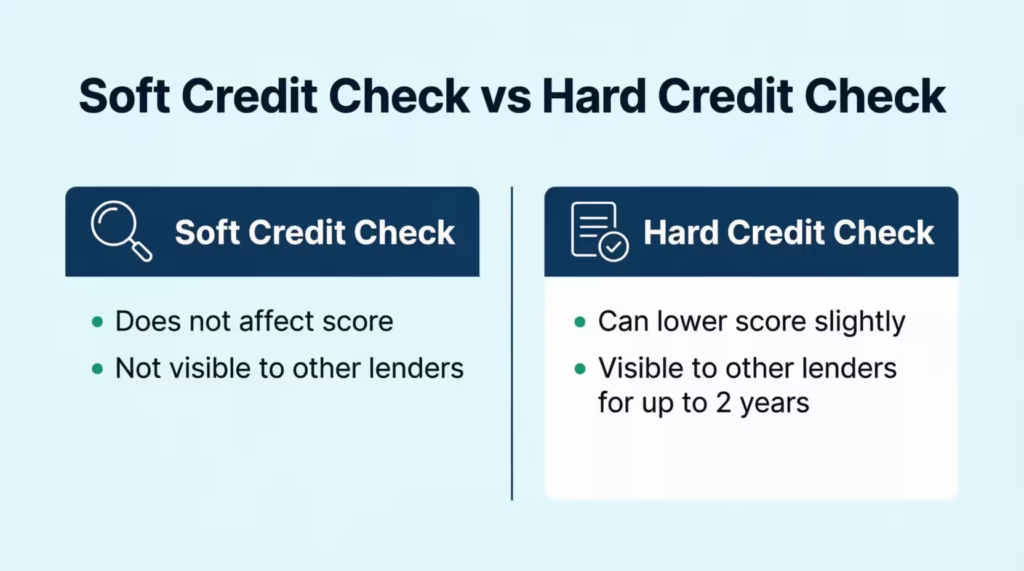
A soft credit check is a light look at your credit information. It happens for things like pre-approval offers, background checks, or your own credit report pull. It does not affect your credit score, and lenders reviewing your report later will not see it.
A hard inquiry is different. A hard credit check happens when a lender does a full review to decide on a new loan or credit card. It can shave a few points off your FICO score, and it stays visible on your report for up to two years.
With Afterpay, the standard Pay in 4 signup triggers only a soft check. But if you apply for the longer Pay Monthly product, a hard inquiry may take place because that’s a real installment loan. Knowing which action triggers which type of check helps you avoid surprises on your report.
How Afterpay’s Pay in 4 Plan Handles Credit Reporting
Pay in 4 is Afterpay’s flagship product, and it works simply. You split a purchase into four equal payments made every two weeks over roughly six weeks. There is no interest, and there is no routine credit reporting.
Because the loan is short and small, bureaus have historically not tracked this kind of activity in the same way they track credit cards or auto loans. So even a perfect payment history through Pay in 4 will not show up in your payment history on Equifax, Experian, or TransUnion. It will not add to your length of credit history either.
The flip side is also true. If you’re a few days late on a Pay in 4 installment, that late payment does not go to the bureaus. Instead, Afterpay charges a late fee and pauses your account. Payments are simply not reported, so you cannot build credit with its products.
📌 Did You Know: Afterpay caps total late fees at 25% of your original order value or $68, whichever is lower. So a $40 impulse buy can never rack up more than $10 in late fees, no matter how long it stays unpaid.
How Afterpay’s Pay Monthly Plan Differs
Pay Monthly is not the same product as Pay in 4, and this is where many users get caught off guard. Pay Monthly is a true installment loan with terms of 6 or 12 months, and it involves a hard credit check when you apply.
The loans behind Pay Monthly are underwritten and issued by First Electronic Bank, not by Afterpay directly. APRs range from 0.00% to 35.99% based on your credit profile and the merchant you’re buying from, per Afterpay’s own product page.
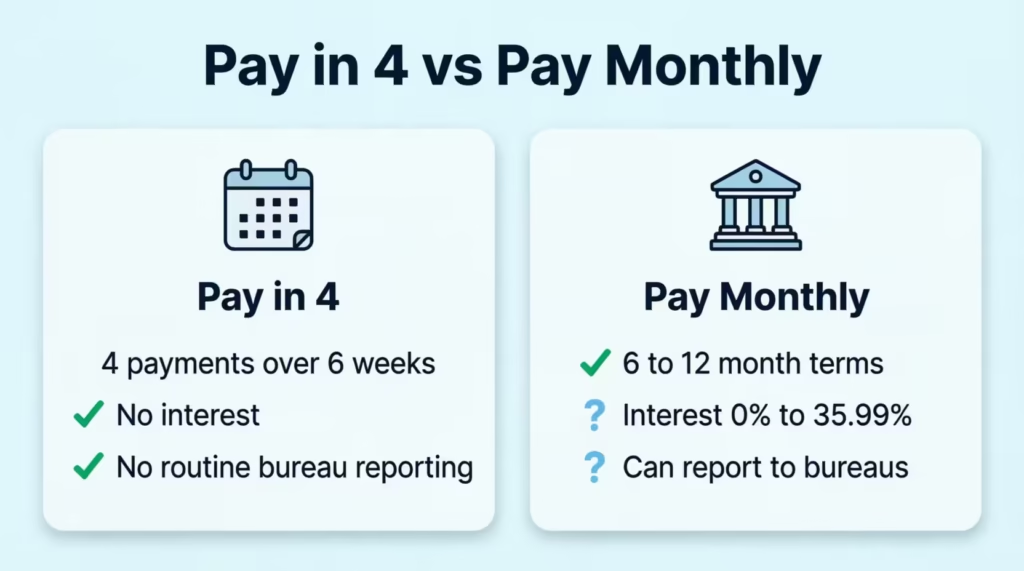
Because Pay Monthly is a formal loan, it can be reported to credit bureaus. When you apply, you agree to let First Electronic Bank pull your credit report and share your account activity, which means on-time payments, missed payments, and the loan balance itself may all appear on your file. That’s very different from Pay in 4, so if you see the Pay Monthly option at checkout, treat it like any other loan application, not like a casual BNPL split.
Will Making On-Time Afterpay Payments Help Your Credit Score?
No. Paying every Pay in 4 installment on time will not help your credit score. Afterpay doesn’t share standard payment history with the bureaus. So, your FICO and VantageScore models miss out on seeing your good behaviour. Your score reflects only the accounts that are actually reported.
This is one of the biggest misconceptions about BNPL. Traditional credit builders work because lenders report your activity every month. Secured credit cards, credit-builder loans, and standard credit cards all report payment updates to at least one bureau. This helps build a positive payment history, which can boost your score.
Afterpay Pay in 4 sits outside that reporting loop. So if your goal is to build credit, using Afterpay for a $150 order and paying it off perfectly gives you zero score benefit. You’d get the same credit-building effect from not using it at all.
⚠️ Mistake to Avoid: Do not use Afterpay as a “credit-builder” strategy. Months of on-time Pay in 4 payments will not raise your score, and that’s time you could have spent building history with a reporting product instead.
What Happens If You Miss an Afterpay Payment?
Missing one Afterpay payment does not automatically hit your credit report. Instead, the impact starts inside your Afterpay account.
Afterpay immediately pauses your account so you cannot place new orders. A late fee is added: usually $10 for the first missed payment, plus additional fees of about $7 every seven days the balance stays unpaid. Total late fees are capped at 25% of the original order value or $68, whichever is smaller.
Your spending limit may also drop. Some users see their limit fall to zero until the past-due balance is cleared. But at this early stage, nothing is being reported to the bureaus. You still have time to fix it before the situation escalates.
Timeline From Missed Payment to Collections
Here’s the realistic path a missed Afterpay payment can take. Knowing this timeline helps you judge how urgent the situation really is.
| Time Since Missed Payment | What Happens | Credit Report Impact |
|---|---|---|
| Day 1 (missed) | Account paused, first late fee added, limit may drop | None |
| Days 2 to 29 | Late fee reminders, additional $7 fees every 7 days | None |
| Around 30 days overdue | Account marked as seriously past due internally | None |
| Around 90 days overdue | Debt may be referred to a third-party collection agency | Possible, if the agency reports |
| After collections referral | Collection agency decides whether to report to bureaus | May appear as a collections account |
The bureau report is not guaranteed even after 90 days. It depends on the collection agency’s own policy. But once it lands on your file, the damage can last for years.
Can an Afterpay Account in Collections Hurt Your Credit Score?
Yes, and this is the one scenario where Afterpay can genuinely damage your credit. If your unpaid balance is sold or given to a collection agency, it might show up on Equifax, Experian, or TransUnion if they report the debt.
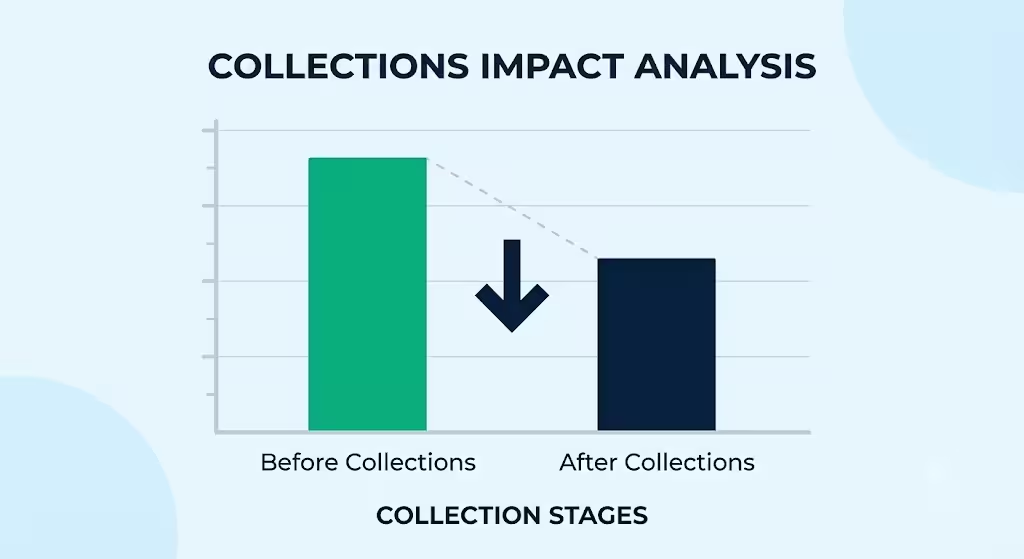
A collections account is a serious negative mark. It signals to future lenders that you did not repay a debt, and it can drop a good credit score by 50 to 100 points or more, depending on the rest of your file. FICO and VantageScore both weigh recent collections heavily, especially if you had a clean history before.
The score hit is usually worst in the first year. But the entry itself sticks around much longer, which is why avoiding this stage matters more than trying to recover from it.
How Long a Collections Mark Stays on Your Report
A collections account can appear on your credit report for up to seven years. This starts from the date of the original missed payment. This is according to the Fair Credit Reporting Act, as explained by the Consumer Financial Protection Bureau.
The good news is that the impact usually softens over time. Newer scoring models, like FICO 9 and VantageScore 4.0, completely ignore paid collections. Even older models consider a collection that’s five years old to be less important than a newer one. Still, seven years is a long window, so treating collections as a last-resort scenario is smart planning.
How Afterpay Compares to Affirm and Other BNPL Providers on Credit Reporting
Not all BNPL services handle credit reporting the same way, and this is where the “BNPL never affects credit” myth falls apart.
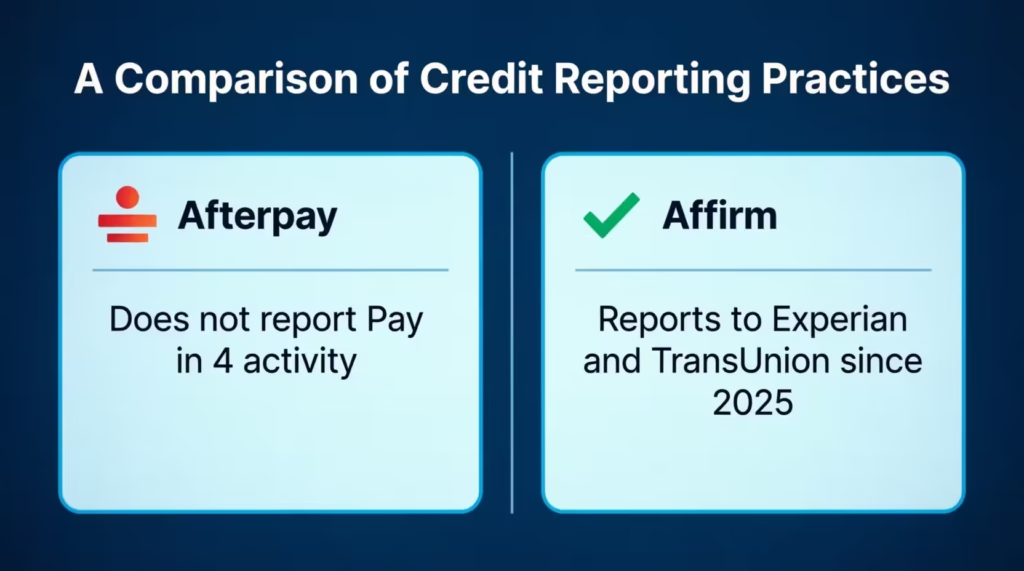
Affirm has taken a very different path from Afterpay. Starting April 1, 2025, Affirm began reporting all pay-over-time loans, including its Pay-in-4 product, to Experian, according to Experian’s own announcement of the policy change. That means on-time payments, late payments, and missed payments on Affirm loans can now shape a user’s credit file. Affirm also reports to TransUnion.
Klarna has been slower and keeps most Pay in 4 activity off major credit files in the U.S. Afterpay is now the closest competitor to Klarna on this issue. So the practical rule is: check each BNPL provider’s reporting policy before you assume it acts like any other. “BNPL” is a category, not a single set of rules.
Why Some BNPL Companies Report and Others Don’t
The industry is genuinely split on this. Short BNPL loans, usually lasting six weeks, don’t fit well into traditional credit bureau models. These models are made for long-term revolving accounts and installment loans. That legacy is one reason many BNPL providers stayed off the bureaus for years.
Some companies, like Afterpay, also argue that reporting could unfairly hurt responsible users. A well-paid six-week loan may appear as a “closed short-term account” in older scoring models. This can suggest risk rather than good behaviour. Others, like Affirm, think transparency matters more. They believe new BNPL-specific scoring models from FICO and VantageScore will make reporting fairer in the long run.
How to Check If Afterpay Appears on Your Credit Report
You don’t have to guess. You can pull your credit reports for free and check for yourself.
Follow these steps:
- Visit AnnualCreditReport.com, the only federally authorized site for free credit reports from Equifax, Experian, and TransUnion. All three bureaus now offer free weekly reports.
- Log in and request one report from each bureau. Reviewing all three matters because Afterpay-related collections could show up on just one of them.
- Search each report for anything tied to “Afterpay,” “Afterpay US Services,” or the name of a collection agency you don’t recognize. Collection accounts usually appear in a “Collections” or “Negative Accounts” section.
- Also check the “Inquiries” section. Soft credit checks may show as a soft pull that only you can see, while a hard inquiry from Pay Monthly would be listed with other hard inquiries.
- If you spot something incorrect, file a dispute directly with the bureau that shows the entry.
Doing this once every few months is a smart habit, especially if you use BNPL often.
What to Use Instead If You Want Afterpay-Style Purchases to Build Credit
If your real goal is to build credit while spreading out payments, you need a tool that actually reports to the bureaus. A few categories work well.
Secured credit cards are one of the easiest starting points. You put down a small refundable deposit, use the card for everyday purchases, and pay the balance in full each month. The issuer reports your payment history to all three bureaus, so responsible use directly builds your file.
Credit-builder loans are another strong option. Offered by many credit unions and online lenders, they hold a small loan amount in a savings account while you make monthly payments. Once you finish paying, you get the money back. Every on-time payment gets reported, which is ideal for building payment history from scratch.
Reporting BNPL alternatives are the closest match to Afterpay’s checkout experience. Affirm is now the clearest example. On-time Affirm payments can boost your credit profile because they report to Experian and TransUnion. Afterpay doesn’t offer this benefit.
💡 Pro Tip: Pick just one credit-building tool to start. Opening several new accounts at once can add hard inquiries and lower the average age of your accounts, which can slow your progress.
Frequently Asked Questions (FAQs)
Does Afterpay report to credit bureaus?
No. Afterpay does not report standard Pay in 4 activity to Equifax, Experian, or TransUnion. The only exception is an unpaid account sent to a collection agency, which may report the debt separately.
Does Afterpay go on your credit report?
Routine Pay in 4 use, including on-time and short-term late payments, never appears on your credit report. It only shows up if your account becomes severely delinquent and is handed to a collection agency.
Do lenders see Affirm on a credit report?
Yes, for loans starting after April 1, 2025, Affirm reports payment activity to Experian and TransUnion. This differs from Afterpay, which keeps standard Pay in 4 activity off all three bureaus.
Can banks see if you use Afterpay?
No. The soft credit check Afterpay runs at signup is not visible to other lenders or banks reviewing your file. Only a hard inquiry, like the one triggered by Pay Monthly, shows up to other lenders.
Will my credit score go down if I use Afterpay?
Using Pay in 4 responsibly won’t lower your score, since payments aren’t reported. Your score can drop only if an unpaid balance escalates to collections, which can cut a score by 50 to 100 points or more.
Does Afterpay make your credit score go up?
No. Even perfect on-time Pay in 4 payments won’t raise your score, because Afterpay doesn’t report that activity to any bureau. You’d get the same credit-building result from not using it at all.
Does Afterpay count in a credit check?
Signing up for Pay in 4 triggers only a soft credit check, which doesn’t affect your score or count against you. Applying for Pay Monthly triggers a hard inquiry instead, which can appear on your report for up to two years.
Is Afterpay Pay Monthly reported differently than Pay in 4?
Yes. Pay Monthly is a real installment loan issued by First Electronic Bank, and it can report on-time payments, missed payments, and your balance to bureaus. Pay in 4 carries no such reporting.
What happens if I never pay off Afterpay?
Afterpay can pause your account and charge late fees capped at 25% of the order value or $68. After about 90 days of nonpayment, the debt may be sent to a collection agency, which can report it to your credit file.
How long does using Afterpay affect credit score?
A collections mark from an unpaid Afterpay account can stay on your credit report for up to seven years from the missed payment date. The score impact is usually worst in the first year and lessens over time.
Final Thoughts
Afterpay stays largely off your credit report as long as you use Pay in 4 responsibly and never let a payment slide into collections. The credit check during signup is a soft inquiry.
On-time payments don’t help build credit. Missed payments only affect your credit if the debt goes to a collection agency after about 90 days. Pay Monthly, however, works like a real loan and can be reported.
To boost your score, keep it simple: use Afterpay for convenience. But if you want to improve your score, go for a secured card or a credit-builder loan.
If you know someone about to use Afterpay for a big purchase, or a friend rebuilding credit after a rough patch, share this guide with them on social media. It could save them from a surprise collections mark, or from wasting months hoping BNPL will lift a score it was never designed to move.