
Paying rent every month feels like a huge financial commitment that goes nowhere on your credit report. Many renters are drawn to Flex because it promises to split rent and help build credit at the same time, but the details around Flex rent reporting to credit bureaus are often confusing, and some online sources still share outdated information from years ago.
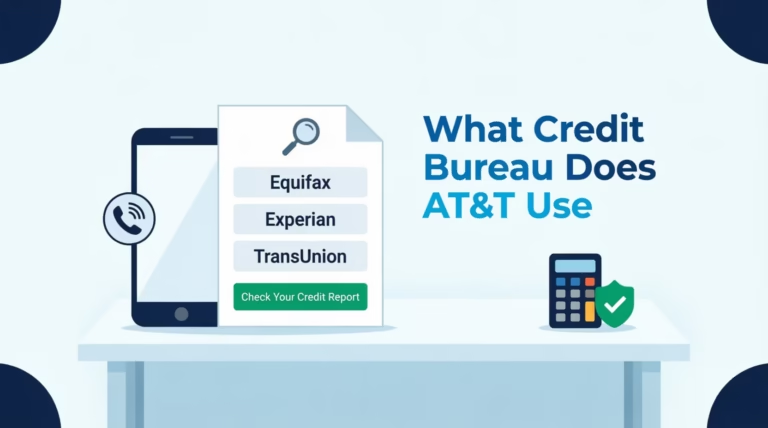
Flex currently reports on-time rent payments to TransUnion only, not to all three major credit bureaus.
In this guide, we’ll explain how reporting works. We’ll also cover the costs, the time it takes to appear, and if it’s the right credit-building tool for your goals.
Key Takeaways
This guide explains whether Flex reports rent payments to credit bureaus, covering which bureau receives the data, the July 2024 policy change, reporting timelines, backdating, and how to enable or disable the feature.
Core Facts:
- Flex reports on-time rent payments to TransUnion only; it does not report to Experian or Equifax.
- Since July 2024, Flex reports only on-time payments — late or missed rent payments are no longer sent to credit bureaus.
- Rent reporting is an opt-in feature available only to Flex Rent members who split their rent payments, not those who pay in full.
- Flex sends payment data to TransUnion on the 21st of each month, and reported payments typically appear on a credit report within 30 days.
- Existing Flex customers who enable reporting can receive up to 12 months of backdated on-time payment history on their tradeline.
- To exclude a given month from reporting, users must turn off the feature by the 20th of that month.
Best for:
- Renters already using Flex to split rent who want added credit-building with no extra reporting fee.
- Renters with a thin credit file whose lender or scoring model uses TransUnion or VantageScore 4.0.
- Renters who want the protection of on-time-only reporting with no risk from late payments.
Does Flex Report Rent Payments to Credit Bureaus?
Yes, Flex does report rent payments to credit bureaus, but only to one of them. Flex currently sends on-time rent payment data to TransUnion. It does not report to Experian or Equifax at this time.
This is one of the most confusing points online. Some blog posts and older articles claim Flex reports to all three bureaus. That’s not accurate today. Flex’s own help center confirms that the rent reporting service sends payment data only to TransUnion, as noted on the Flex Help Center.
Why does this matter? If your lender only checks Experian, Flex reporting won’t move the needle for that specific application. Auto lenders, credit card issuers, and apartment screening companies each pull from different bureaus. Some pull one, some pull all three. Before you sign up hoping for a fast credit boost on a specific loan, check which bureau your lender uses.
Flex has said it may expand to other bureaus in the future. So it’s worth checking the current policy at the time you enable the feature. Bureau coverage is the kind of detail that can shift quietly, and you don’t want to base a big financial decision on a claim you read a year ago.
📌 Did You Know: Not every lender pulls the same bureau. Mortgage lenders often pull all three, but auto lenders and credit card issuers frequently pull just one. Ask your lender which one they use before assuming Flex will help.
How Flex Rent Reporting Works
Flex rent reporting is an opt-in feature inside the Flex Rent membership. It’s not automatic. Signing up for Flex doesn’t turn on credit reporting by itself. You have to switch it on inside the app before any of your rent activity reaches TransUnion.
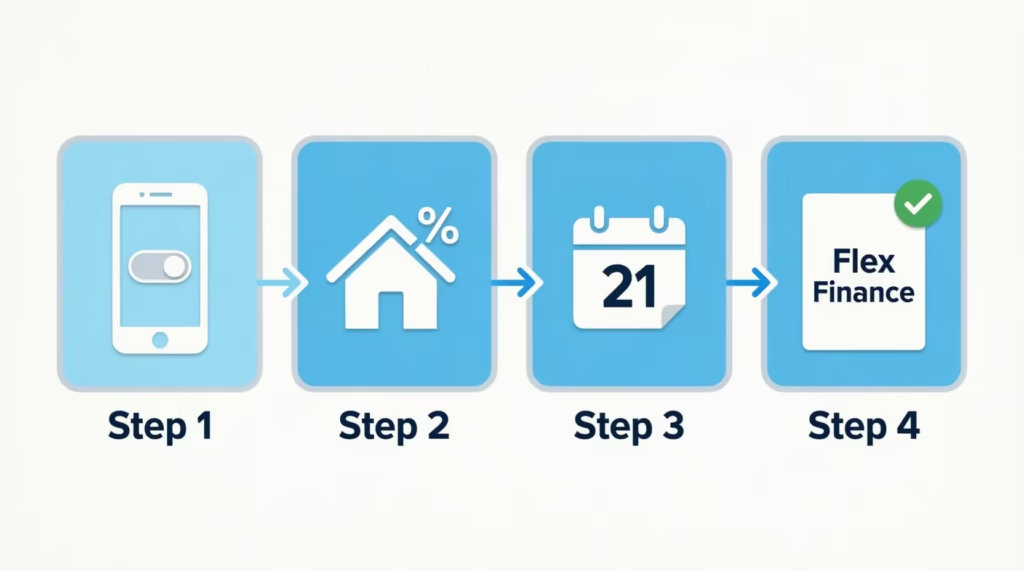
Once turned on, Flex sends your on-time rent payment data to TransUnion each month. The tradeline that appears on your credit file is labeled “Flex Finance.” That’s the name lenders and credit tools will see when they pull your report.
Flex reports rent payments on the 21st of each month. That means your reporting cycle follows a clear monthly rhythm. Once the reporting is on, each qualifying on-time payment gets added to your credit file as part of a rolling payment history.
This matters because a tradeline on your credit file is how rent reporting actually helps you. Without the tradeline, your rent payments live in your bank statements but never touch your credit history. With it, your on-time payment record becomes part of the data that scoring models look at.
Eligibility Requirements
Not every Flex user can turn on rent reporting. You must be a Flex Rent member who splits rent payments. If you use Flex to pay your rent in full each month rather than splitting it, the rent reporting feature isn’t available to you.
You also need to actively enable the feature inside the app. Being eligible doesn’t switch it on. The toggle lives in your Flex settings, and it stays off until you turn it on yourself.
Cost of Rent Reporting
The rent reporting feature itself is included in your Flex Rent membership. There’s no separate add-on fee just to have your payments reported.
That said, the broader Flex membership does have its own fees. Flex charges a monthly membership fee for the rent-splitting service, and payment processing fees may also apply depending on how you fund your payment. So while reporting is technically “free” once you’re a member, the total cost of being a Flex user isn’t zero. Weigh the full membership cost against the credit-building benefit before deciding.
Does Flex Report Late or Missed Rent Payments?
No. Flex does not report late or missed rent payments to credit bureaus. Only on-time payments are reported through the rent reporting feature.
This is one of the biggest fears renters have before signing up. The worry makes sense. Traditional credit accounts can hurt your score badly when a payment is late, so people assume rent reporting works the same way. With Flex today, that’s not the case. If you miss a payment or pay late, that information isn’t sent to TransUnion through the credit reporting service.
One important clarification: this policy only covers what shows up on your credit report. Missing a Flex payment can lead to other problems. You might face fees, service suspension, or issues with your landlord if your rent doesn’t clear on time. Your credit score won’t drop from late payments due to current rules. But you still want to keep your Flex payments up to date for other reasons.
For most renters, this makes Flex a low-risk way to add positive payment history to their credit file. You get the upside of on-time reporting without the downside of a late-payment hit.
What Changed in July 2024
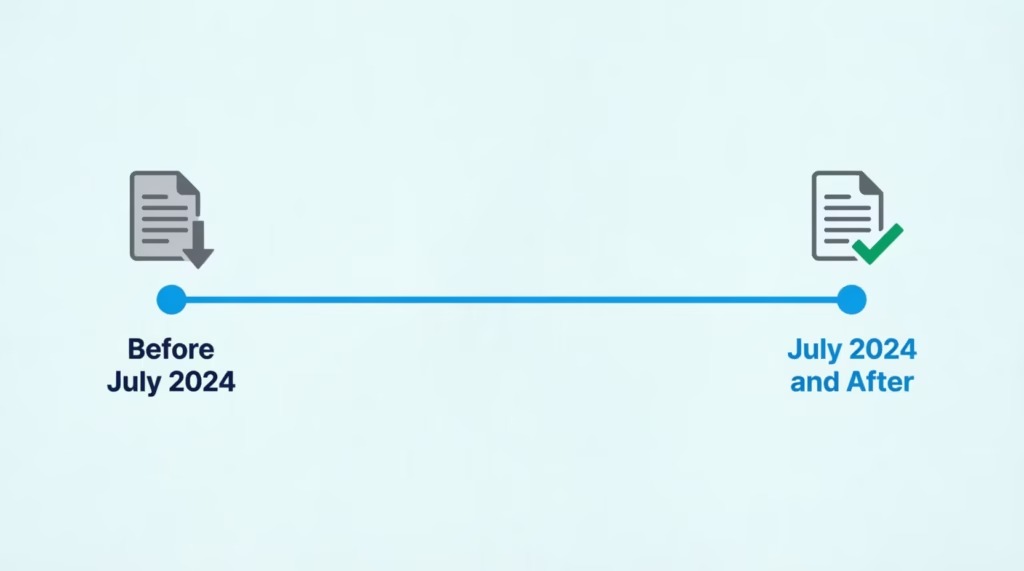
The current on-time-only policy is fairly new. Before July 2024, Flex reported both good and bad payment history. That meant late payments could hurt your credit under the old rules.
In July 2024, Flex updated its credit reporting policy to report only on-time payments, as confirmed on the Flex Help Center policy page. This is why older articles and outdated advice still warn that Flex could hurt your credit. Those warnings applied to the pre-July 2024 policy and no longer reflect how the service works today.
Some users also noticed that older “Flex on behalf of BRB” tradelines disappeared around the policy shift. If you had one of those old entries and it’s no longer visible, the policy update is the likely reason.
How to Turn On Flex Rent Reporting
Turning on rent reporting takes just a few taps inside the Flex app. Follow these steps:
- Open the Flex app and sign in to your account. If you don’t have it yet, you can download it from the Apple App Store or Google Play.
- Confirm you’re on a Flex Rent split-payment plan. If you pay rent in full through Flex, rent reporting isn’t available for your account.
- Go to your account settings and look for the rent reporting toggle.
- Switch the toggle on. This activates reporting for future qualifying on-time payments.
Once it’s on, you don’t need to do anything else each month. Flex handles the reporting cycle automatically as long as your payments stay on time and your membership stays active.
💡 Pro Tip: Turn on rent reporting at the start of a month rather than mid-month. This helps your first full payment fall into a clean reporting window and gets the tradeline established sooner.
How to Turn Off Reporting and the Monthly Cutoff Date
You can turn off Flex rent reporting anytime. Head back to your account settings and switch the rent reporting toggle off.
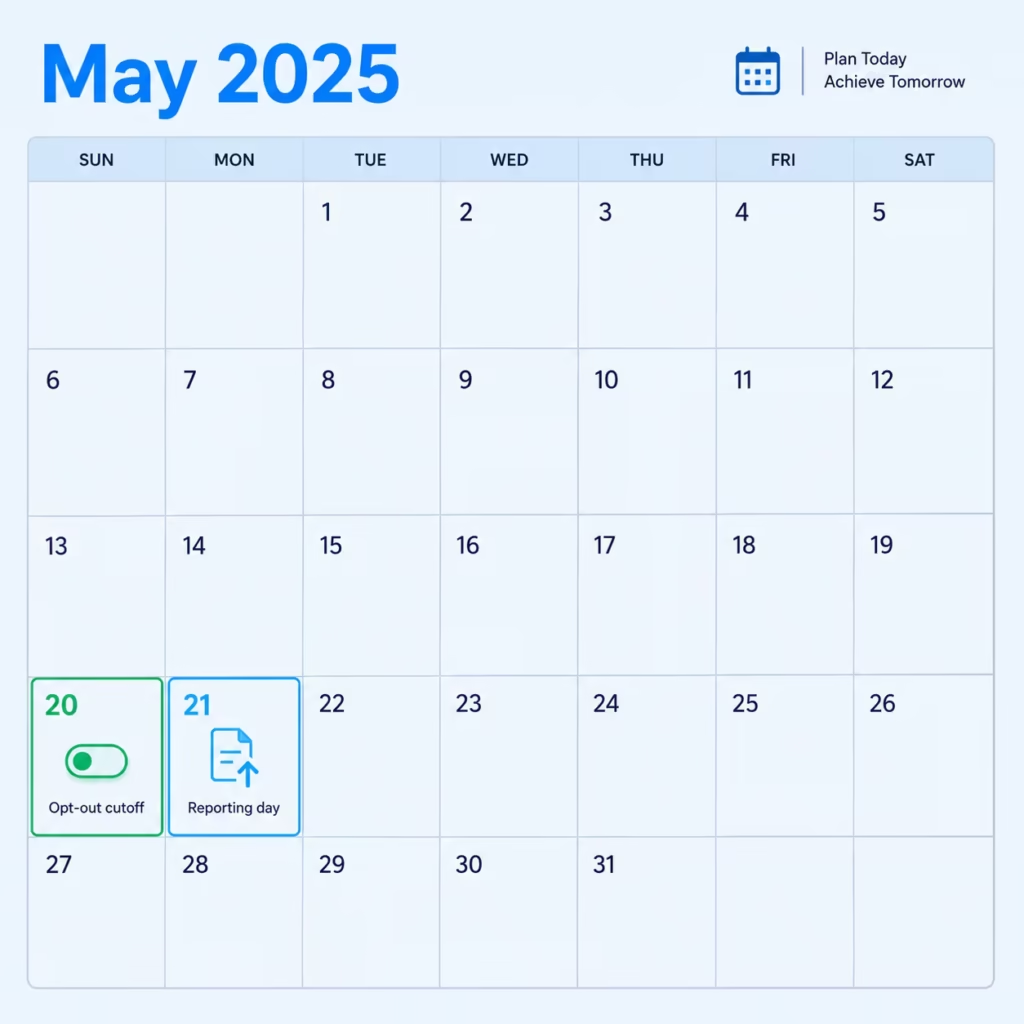
There’s one deadline to know. To exclude a given month’s payment from being reported, you need to turn reporting off by the 20th of that month. Miss the 20th, and that month’s payment will still be sent to TransUnion.
For example, if you want to stop reporting for March, switch the toggle off by March 20th. If you flip it off on March 22nd, the March payment will still be included in that month’s reporting cycle. April and later months won’t be reported after that.
Since Flex only reports on-time payments now, the stakes of missing the cutoff are much lower than they used to be. You can’t accidentally add a negative mark. But if you want full control over what shows up on your credit file, the 20th of the month is the date to remember.
How Long Until Flex Payments Show Up on Your Credit Report
It usually takes up to 30 days for on-time rent payments to appear on your credit report after Flex sends them. Flex reports on the 21st of each month, so your first reported payment should show up on your TransUnion credit file within about a month of that date.
After the first tradeline shows up, Flex continues sending payment data on the same monthly cadence. Each qualifying on-time payment adds one more month of positive history to your credit file. Over time, this builds a longer track record that scoring models can look at.
Set your expectations for the timeline. If you enable reporting today, don’t check your credit file tomorrow expecting changes. Give it a full cycle plus the 30-day update window. If you don’t see anything after that, then it’s time to double-check the feature is turned on and your account is on a split-rent plan.
How to Verify Flex Is Reporting on Your Credit Report
Once you’ve given it enough time, checking whether Flex is actually reporting is simple. Look for a “Flex Finance” account listed under subscriber “Flex” on your TransUnion credit report. That’s the tradeline Flex creates when reporting is active.
You can pull a free copy of your TransUnion credit report every week from AnnualCreditReport.com, the only federally authorized source for free credit reports. Check your TransUnion report. Look for the Flex Finance tradeline. Make sure the payment history matches what you’ve paid in the app.
If you don’t see the tradeline after 30 days from your first eligible payment, first confirm reporting is toggled on inside the Flex app. If everything looks correct in the app but nothing appears on your report, reach out to Flex support.
Will Flex Rent Reporting Actually Raise Your Credit Score?
A guaranteed score increase isn’t something any rent reporting service can promise, and Flex is no different. Whether your score moves up depends on your overall credit profile, how thin or thick your file already is, and which scoring model your lender uses.
Some users see a small dip when the Flex Finance tradeline first appears. New tradelines can lower the average age of accounts on your credit file, which is one factor scoring models look at. This dip is usually small and short-lived. Over time, the positive payment history typically outweighs the initial age drop.
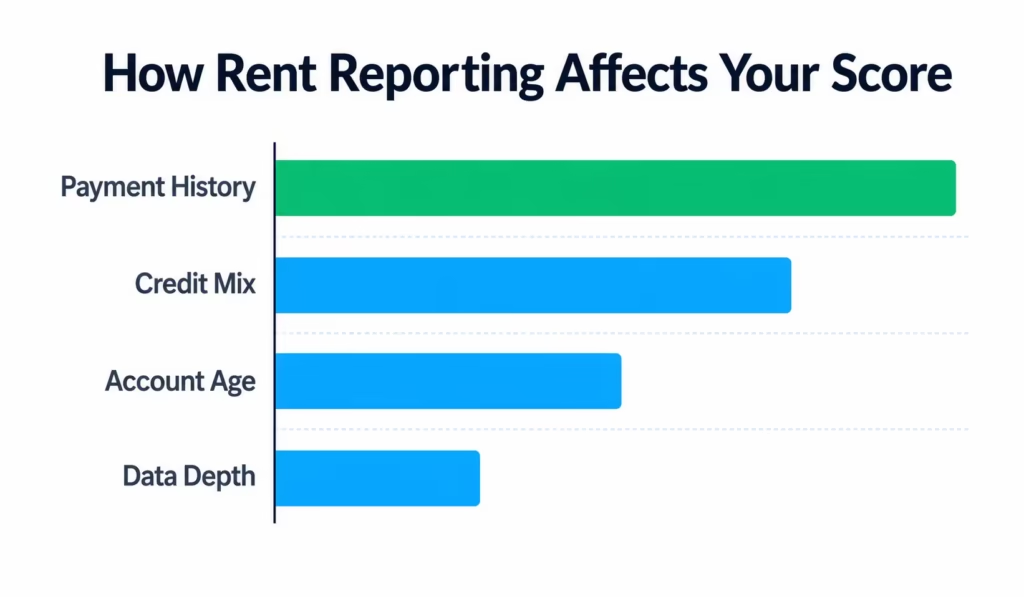
Rent payment history can influence a few key scoring factors. Payment history is the single biggest factor in most models, and on-time rent payments feed directly into that. The tradeline also adds to your credit mix by putting a rental account alongside credit cards, loans, and other accounts.
Newer models like VantageScore 4.0 factor in rent payment history when it’s reported to the bureaus. This is a form of alternative credit data, and it’s especially useful for renters with a thin credit file who need more data points to build a solid score.
One caveat: not every lender uses VantageScore 4.0. Many still rely on older FICO models that don’t fully incorporate rental data yet. So the score bump you see on a free credit tracker might not perfectly match what a specific lender sees when they pull your file.
⚠️ Mistake to Avoid: Don’t cancel other credit-building tools right after enabling Flex rent reporting. Rent data helps most when it’s part of a broader credit profile, not a standalone fix.
What Happens to Your Past Flex Payments (Historical Reporting)
Existing Flex customers who opt into rent reporting can get up to 12 months of prior on-time payments included in their credit file. This is often called backdated or historical reporting.
If you’ve been paying rent through Flex for months or even years, that history doesn’t have to go to waste. When you turn on reporting,
Flex can include up to a year of your past on-time payments as part of the initial tradeline. That gives your credit file a longer stretch of positive payment history from day one, rather than starting fresh from the month you opted in.
This is why some existing customers see rent history from before they thought reporting started. It’s not a mistake. It’s the backdating feature working as designed.
A few things to keep in mind. The backdating applies only to on-time payments. Late or missed payments from your past won’t be added to your report.
The amount of backdated history you get depends on how long you’ve been an active Flex Rent split-payment customer, but it can be up to 12 months. And once your history is added, it becomes part of your permanent credit file just like any other tradeline.
Flex vs. Other Rent Reporting Services
Flex is one of several ways to get rent onto your credit report, and it’s not always the best fit for every renter. The biggest difference is bureau coverage.
Flex reports only to TransUnion. Services like Esusu, RentTrack, LevelCredit, and Boom report rent to all three major bureaus (TransUnion, Equifax, and Experian). If your goal is to appear on all three credit reports, a multi-bureau service will do that faster than Flex alone.
Cost structures also vary. Flex bundles rent reporting with its rent-splitting membership. This means you pay for the split-payment service, and reporting is included. Dedicated rent reporting services typically charge a flat monthly or annual fee just for reporting. They usually don’t include any rent-splitting features. Some also offer to add historical rent payments for a one-time upfront fee.
Here’s a quick comparison to help you weigh options:
| Service | Bureaus Reported | Includes Rent Splitting | Reports Late Payments |
|---|---|---|---|
| Flex | TransUnion only | Yes | No (on-time only) |
| Esusu | All three | No | Varies by landlord setup |
| RentTrack | All three | No | Varies by setup |
| LevelCredit | All three | No | Varies by setup |
Which one wins depends on your goals. If you already need Flex to split rent, adding its included reporting is a low-friction bonus. If you don’t need to split rent and want broad bureau coverage, a dedicated multi-bureau service will likely give you a bigger score boost.
Who Flex Rent Reporting Is a Good Fit For
Flex rent reporting works best for renters who fit a specific profile. It’s not a one-size-fits-all credit-building tool.
Good fit if:
- You already use Flex to split your rent each month. The reporting feature adds credit-building on top of a service you’re already paying for.
- You want a low-effort way to build credit without opening new credit cards or loans.
- You have a thin credit file, so adding more positive payment data points will strengthen your profile.
- Your lender or scoring model pulls TransUnion or uses VantageScore 4.0, which factors in rental data.
- You want protection from late-payment risk, since only on-time payments are reported.
Poor fit if:
- Your lender specifically pulls Experian or Equifax. Flex won’t help with those bureaus.
- You don’t need Flex’s rent-splitting service and would be paying membership fees just for the reporting feature. A dedicated multi-bureau service will likely cost less and reach more bureaus.
- You want a service that reports both positive and negative history, which some renters view as more comprehensive for building a strong track record.
- You’re chasing a fast score jump before a specific loan application. Rent reporting builds slowly, and the impact on any single application isn’t guaranteed.
If you fall in the good-fit group, turning on the feature is a smart, low-risk move. If you’re in the poor-fit group, another rent reporting service or a different credit-building strategy might work better for you.
Frequently Asked Questions (FAQs)
Does Flex report to all three credit bureaus?
No. Flex only reports on-time rent payments to TransUnion. It does not report to Experian or Equifax. If your lender pulls a different bureau, Flex reporting won’t affect that specific credit check.
Does Flex report late or missed rent payments?
No. Since the July 2024 policy change, Flex only reports on-time payments. Late or missed payments won’t hurt your credit score, though you may still face fees or landlord issues for missing a payment.
How much does Flex rent reporting cost?
Rent reporting itself is free with a Flex Rent membership. However, Flex charges its own membership fee for rent-splitting, plus possible payment processing fees, so it isn’t cost-free overall.
Can I get credit for past rent payments with Flex?
Yes. Existing Flex Rent members can get up to 12 months of backdated on-time payment history added when they opt into reporting, giving the new tradeline a longer track record immediately.
How long does it take for Flex to show up on my credit report?
Up to 30 days after Flex sends the data. Flex reports on the 21st of each month, so your first tradeline should appear roughly a month after your first eligible on-time payment.
What is the Flex Finance tradeline?
It’s the account name that appears on your TransUnion credit report once Flex reporting is active, listed under subscriber “Flex.” You can verify it by pulling your free TransUnion report at AnnualCreditReport.com.
Is Flex rent reporting only for people who split their rent?
Yes. Rent reporting is only available to Flex Rent members who split their rent payments. If you pay rent in full through Flex, the reporting feature isn’t available on your account.
Will Flex rent reporting raise my credit score?
It depends on your credit profile and which scoring model your lender uses. VantageScore 4.0 factors in rental data; many FICO models don’t. Some users see a small, temporary dip when the new tradeline first appears.
How do I turn off Flex rent reporting before it affects a specific month?
Turn the toggle off by the 20th of that month. If you disable it on the 22nd, that month’s payment will still be reported because Flex’s cutoff is the 20th.
Wrapping Up
Flex reports on-time rent payments to TransUnion only, not to all three credit bureaus, and only when you opt into the feature as a split-rent member. Since the July 2024 policy update, late payments aren’t reported anymore. This makes the service a safer way to boost your positive rent history on your credit file.
Use Flex if you split rent through the app. This works best for a single bureau. If you want broader credit-report coverage, pair it with a multi-bureau service.
If a friend rents and wonders if rent reporting impacts credit scores, share this guide. It might help them avoid fees for a service that doesn’t meet their needs.