
You’re about to buy a car or a home, and you’ve heard that comparing loan offers is the smart move. But you’re worried. Won’t five lenders pulling your credit wreck your score? That fear is exactly why rate shopping exists as a protected practice.
Here’s the short answer: when you apply for the same type of loan within a short window, credit scoring models count all those credit checks as one.
This guide walks you through the exact rules, the safe time frames, and the steps to compare lenders with total confidence.
Key Takeaways
This guide explains what rate shopping means, including the FICO and VantageScore deduplication windows, which loan types qualify, a step-by-step shopping process, and what to avoid before closing.
Core Facts:
- Rate shopping means requesting loan quotes from multiple lenders within a short window so applications for the same loan type count as one hard inquiry instead of several.
- Newer FICO versions use a 45-day deduplication window with a 30-day buffer, older FICO versions use 14 days, and VantageScore uses a flat 14-day rolling window.
- Staying within a 14-day shopping window protects borrowers under any FICO version or VantageScore, since 14 days is the shortest window across all models.
- Rate shopping protection applies to mortgages, auto loans, and student loans, but does not apply to credit card applications, which are each scored as separate inquiries.
- A batch of rate-shopping inquiries typically lowers a credit score by roughly 5 to 10 points total, and the effect fades from scoring after about 12 months.
- Mortgage lenders re-check credit shortly before closing, and any new inquiries or debt found at that stage receive no rate-shopping protection.
Best for:
- Borrowers preparing to apply for a mortgage, auto loan, or student loan who want to compare multiple lenders.
- Readers concerned that requesting several loan quotes will significantly damage their credit score.
- Anyone who has already applied to lenders over a longer period and wants to understand the resulting credit impact.
What Is Rate Shopping?
Rate shopping means getting loan quotes from multiple lenders within a short period of time so you can compare offers and pick the cheapest one. Instead of accepting the first rate you’re offered, you collect several quotes, line them up, and choose the best deal.
The rate shopping definition applies to installment loans. These are loans you repay in fixed monthly payments over a set term. The three main types are mortgages, auto loans, and student loans. If you’ve ever wondered what does rate shopping means in practice, it’s simple: applying with three, four, or five lenders for the same loan, close together in time.
Each application triggers a hard inquiry, which is a formal credit check. Normally, hard inquiries can lower your credit score a little. But scoring models are built to recognize comparison shopping.
They know that applying with five mortgage lenders doesn’t mean you want five mortgages. It means you want one, at the best price. So they group those inquiries together and count them as a single event, as long as you shop within the allowed window.
How Rate Shopping Affects Your Credit Score
A single hard inquiry usually has a small effect. One inquiry typically lowers a score by fewer than five points, and the impact fades within about a year.
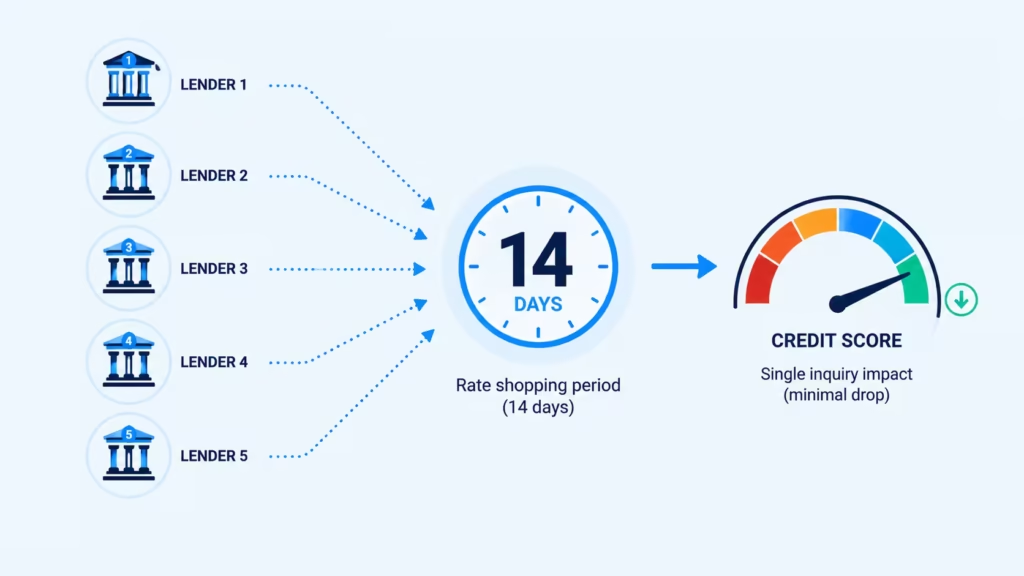
The real magic is deduplication. When scoring models see several inquiries for the same loan type inside a set window, they merge them into one for scoring purposes. So a batch of five mortgage credit pulls can cost your score the same as one.
That means a typical shopping spree has a credit score impact of roughly five to ten points total, not five to ten points per lender. The exact window, though, depends on which scoring model is used.
FICO Deduplication Window
FICO powers the majority of lending decisions in the U.S., so its rules matter most. FICO’s window depends on the version:
- Newer FICO versions: 45 days
- Older FICO versions: 14 days
Newer FICO scores also include a 30-day buffer. Inquiries for mortgages, auto loans, and student loans made in the past 30 days aren’t counted at all. Most lenders today use newer versions with the 45-day window, but you can’t always be sure which version your lender pulls.
VantageScore Deduplication Window
VantageScore works differently. It uses a flat 14-day rolling window, with no separate buffer period. Any inquiries inside that span get grouped together, and it applies broadly across installment loan types.
Here are the two models side by side:
| Scoring Model | Shopping Window | Extra Rule |
|---|---|---|
| Newer FICO versions | 45 days | Recent loan inquiries ignored for 30 days |
| Older FICO versions | 14 days | None |
| VantageScore | 14 days (rolling) | No buffer period |
The Safe Window to Use
You won’t know in advance which model or version a lender will check. So don’t gamble on the longer window.
The practical answer: finish all your loan applications within 14 days. That keeps you protected under every version of FICO and under VantageScore, no matter what gets pulled. Two weeks is plenty of time to gather quotes, and it removes all the guesswork.
Rate Shopping vs. Applying for New Credit Randomly
There’s a big difference between rate shopping and just applying for credit here and there. It comes down to timing, not intent.
If you spread mortgage applications out over several months, each lender’s credit pull gets scored as its own separate hard inquiry. Your credit scoring model has no way of knowing those inquiries were all part of one search for the best deal. It just sees a pattern of new credit checks appearing over time, and each one can ding your score.
Rate shopping within the deduplication window works differently. When many inquiries for the same loan type come in during that 14-day window, FICO and VantageScore treat them as one scoring event. You get the benefit of comparing several lenders while your credit score only reflects the impact of one inquiry.
The key thing to understand: your intent doesn’t protect your score. Timing does. You can compare offers and look for the best rate, but if you take months instead of a short time, the scoring models won’t see it as rate shopping. They’ll treat it as a series of unrelated applications.
A Quick Example
Picture two borrowers, each contacting three mortgage lenders.
Borrower A reaches out to one lender in January, a second in March, and a third in April. Because those inquiries fall outside any deduplication window, each one is scored separately. That’s three separate hits to their credit score.
Borrower B contacts all three lenders within 10 days. Because those inquiries fall inside the window, the scoring models treat them as a single event. That’s one hit to their credit score, even though they compared the same number of lenders.
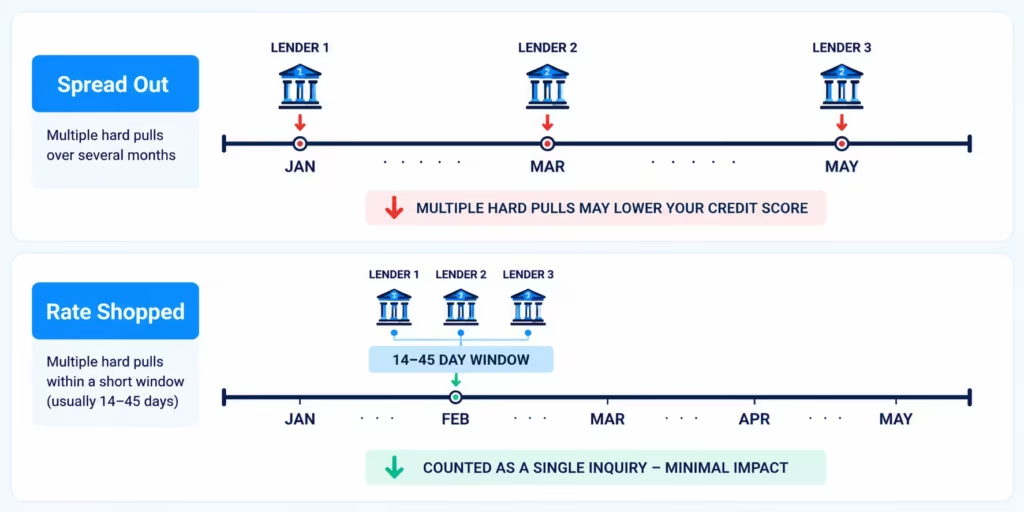
Same number of applications. Same goal. Very different outcome for their credit, based entirely on when each inquiry happened.
Does Rate Shopping Hurt Your Credit?
Not in any meaningful way, as long as you stay inside the window. Comparing lenders costs your score a handful of points, and the effect is temporary. Inquiries stop affecting your FICO score after 12 months.
There’s a big difference between “hurts a little for a short time” and “hurts your credit.” Rate shopping falls firmly in the first camp. A five-point dip that fades in months is nothing next to the cost of a bad rate. On a $300,000 mortgage, even a 0.25% rate difference can mean tens of thousands of dollars over the life of the loan.
Consider Maria, a high school teacher buying her first car. She got quotes from four auto lenders over nine days. Her score dipped about seven points, then recovered within a few months. The lowest quote saved her $1,100 in interest. The people who truly get hurt are the ones who skip shopping out of fear and overpay for years.
Which Loan Types Are Protected
Rate shopping protection covers the three big installment loans:
- Mortgage loans (including refinance applications)
- Auto loans
- Student loans
These are all installment products with a fixed balance and a set payoff schedule. Because they work the same way, scoring models treat them alike: multiple applications signal one borrowing decision, not a spending spree.
Why Credit Cards Aren’t Protected
Credit cards are the dangerous exception. Neither FICO nor VantageScore deduplicates credit card applications. Every card application is scored as its own separate hard inquiry, even if you apply for three cards on the same day.
Why? A credit card is revolving credit with no fixed payoff. Applying for five cards could mean you plan to use five cards, so the models treat each application as a real risk signal.
⚠️ Mistake to Avoid: Never apply for several credit cards at once expecting rate-shopping protection. It doesn’t exist for cards. Each application dings your score on its own.
How to Rate Shop, Step by Step
Knowing the rules is half the job. Here’s the process that puts them to work:
Step 1: Check your credit first. Pull your reports before any lender does, so you can spot errors and know roughly what rate tier you’re in. You can get free weekly reports from all three bureaus at AnnualCreditReport.com, the official site authorized by federal law.
Step 2: Decide how many lenders to contact. More quotes mean more data, but also more work. (The next section covers the ideal number.)
Step 3: Gather all quotes within 14 days. Block out one or two weeks and treat it like a sprint. Batch your applications close together, ideally within a few days of each other.
Step 4: Request official loan estimates, not verbal quotes. A rate quoted over the phone means nothing. Ask each lender for a written loan estimate, the standardized form that lists the rate, fees, and terms. For mortgages, lenders must send one within three business days of your application.
Step 5: Compare the full offers and choose. Use the comparison checklist in the next major section before you commit.
How Many Lenders to Shop With
More quotes pay off. In its most recent published study on this question, Freddie Mac found that borrowers who applied with two lenders saved around $600 a year, while those who applied with four or more saved roughly $1,200 a year.
The sweet spot for most borrowers is three to five lenders. That range captures most of the savings without turning the process into a second job. Include a mix: a big bank, a credit union, and an online lender often price the same borrower very differently.
What to Compare Beyond the Interest Rate
The interest rate gets all the attention, but the cheapest rate isn’t always the cheapest loan. Run every offer through this checklist:
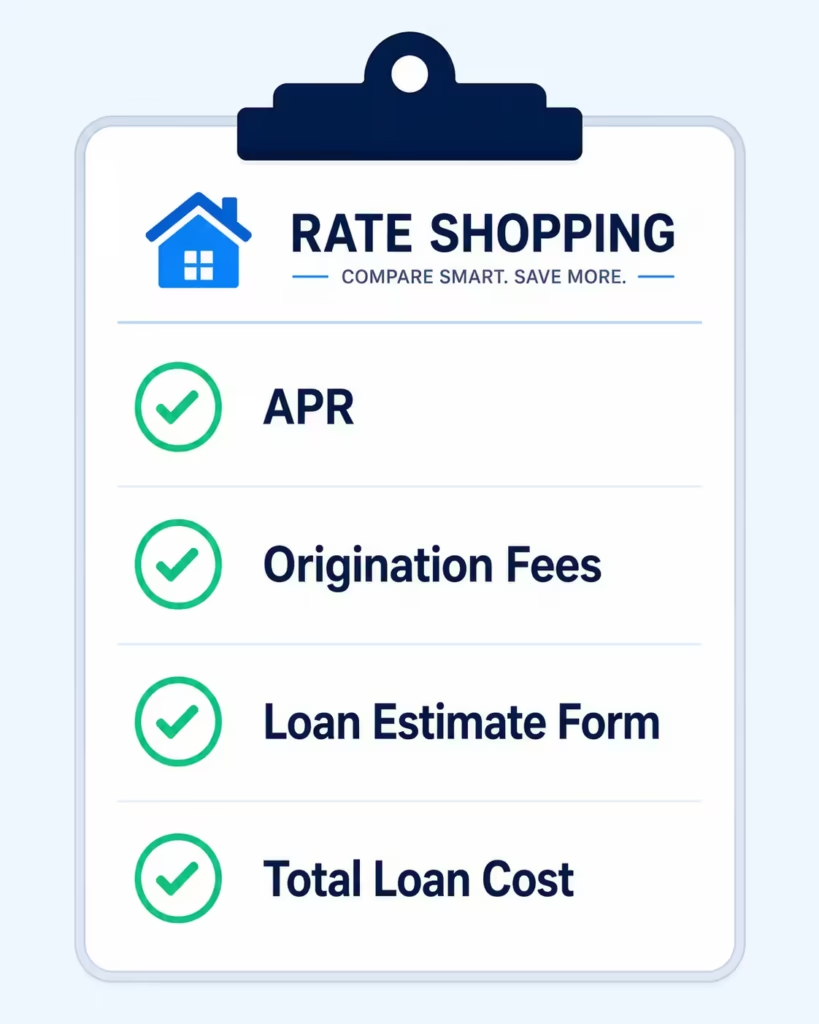
- APR (annual percentage rate). This folds fees into the rate, so it’s the truer cost of borrowing. A loan with a 6.9% rate and high fees can carry a higher APR than a 7.0% loan with low fees.
- Origination fees and closing costs. These upfront charges can run into thousands of dollars and quietly erase a lower rate’s savings.
- The loan estimate form. This standard document puts every offer in the same format, which makes side-by-side comparison easy. Compare page by page, not just the headline rate.
- Total cost over the life of the loan. A lower monthly payment can hide a longer term and far more interest overall. Multiply the payment by the number of months to see the real price.
💡 Pro Tip: When two offers look close, ask each lender for a “no-closing-cost” version of the same loan. It forces the fees into the rate and makes the APR comparison truly apples to apples.
How Lenders See Multiple Inquiries on Your Report
Deduplication protects your score, but it doesn’t hide anything. Each individual inquiry still appears on your credit report, listed separately, for up to two years. The credit bureaus show the raw list; the scoring model is what merges them.
For installment loans, this rarely matters. A mortgage underwriter who sees five mortgage inquiries in one week reads it correctly: you shopped around, as any careful borrower should. It won’t hurt your approval.
The pattern matters more outside rate shopping. A report filled with unrelated questions, such as credit cards and personal loans, can seem like financial stress during manual underwriting. Keep your credit activity focused, and the optics take care of themselves.
What to Avoid During the Rate-Shopping Window
Smart shopping can be undone by what you do between applying and closing. Until your loan is funded:
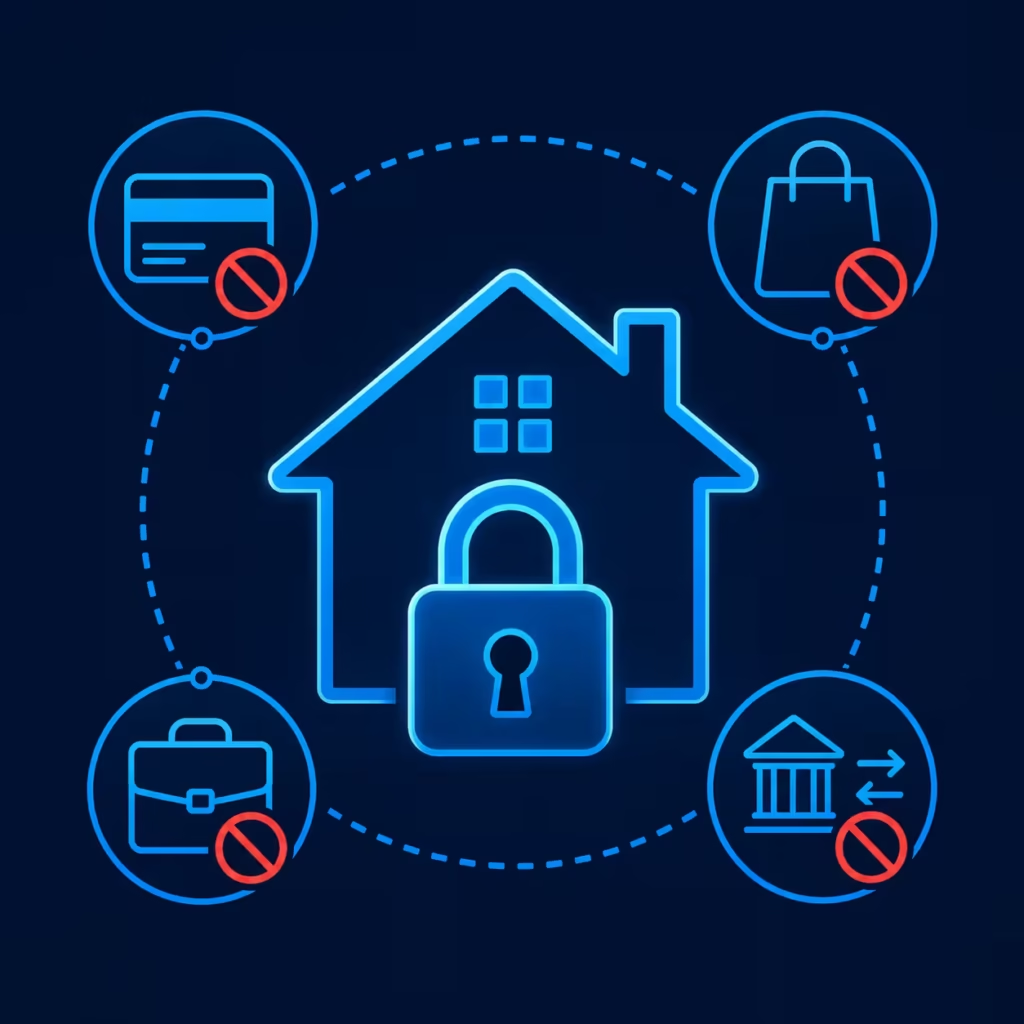
- Don’t open new credit accounts. That store card for a furniture discount creates a fresh inquiry and new debt, right when lenders are watching most closely.
- Don’t make large purchases or take on new debt. Big charges raise your debt-to-income ratio, a key approval number.
- Don’t change jobs if you can avoid it. Lenders verify employment right up to the end, and a sudden change can stall or sink an approval.
- Don’t move large sums between accounts without a paper trail. Unexplained deposits trigger extra documentation requests.
The Pre-Closing Credit Re-Check
Here’s why those rules carry real weight. Mortgage lenders pull your credit again shortly before closing, often within days of it. This final check looks for new inquiries, new accounts, and bigger balances since your original application.
Anything new found at this stage gets no rate-shopping protection. A fresh credit card or a car loan can change your score, your debt load, or both.
The result can be a higher rate, a demand for more documentation, or in the worst cases, a withdrawn offer days before you get the keys. Keep your finances completely frozen until the loan closes and the money is in place.
What to Do If You Already Rate Shopped Outside the Window
If you’ve already applied to lenders over a longer stretch of time than you meant to, here’s the good news: it’s not the disaster it might feel like.
A single hard inquiry typically only costs a few points, usually in the 5 to 10 point range. Even if some of your questions fell outside the protected window and were scored differently, you’re probably facing a small, temporary dip rather than any long-term harm.
That impact also fades fast. Inquiries no longer impact your FICO or VantageScore after 12 months. However, they stay on your credit report for up to 24 months. So the score effect is already on a countdown from the moment it happens, whether or not the timing worked out the way you planned.
There’s nothing you need to actively do to fix this. It’s not like a missed payment that requires cleanup. The inquiries will simply age out of your score calculation on their own.
The only exception is if an inquiry shouldn’t be there. For example, this happens if a lender checked your credit without your permission or if you see an inquiry from a company you never applied to.
That’s a sign of a possible error or identity theft, and it’s worth disputing directly with the credit bureau. But if the only issue is that your rate shopping stretched a little longer than the ideal window, that’s not something to dispute. It’s just something to let resolve with time.
Frequently Asked Questions (FAQs)
What is the definition of rate shopping?
Rate shopping means requesting loan quotes from multiple lenders within a short window, usually two weeks, so you can compare offers and pick the cheapest one. It applies to mortgages, auto loans, and student loans.
Does rate shopping affect credit score?
Yes, but only slightly. A batch of loan applications within the shopping window typically costs 5 to 10 points total, not per lender, and the effect fades within about a year.
Does mortgage shopping hurt your credit?
No, not in any meaningful way if you apply within 14 days. Multiple mortgage inquiries in that window get merged into a single scoring event instead of counting separately.
What is a rate shopping window?
It’s the time period scoring models use to group multiple loan inquiries into one. FICO’s window ranges from 14 to 45 days depending on the version, while VantageScore uses a flat 14-day window.
How many lenders should I get quotes from?
Most borrowers should contact three to five lenders. Freddie Mac found that getting quotes from four or more lenders saved borrowers around $1,200 a year compared to just $600 with two.
Does rate shopping protection apply to credit cards?
No. Every credit card application is scored as its own separate hard inquiry, even if you apply for several cards the same day, because credit cards aren’t treated as installment loans.
What credit score do I need to qualify for a mortgage?
A 0.25% rate difference on a $300,000 mortgage can cost tens of thousands of dollars over the life of the loan. That makes comparison shopping worthwhile regardless of your credit score.
What happens if I already applied to lenders outside the shopping window?
A single inquiry that falls outside the window typically costs just 5 to 10 points and stops affecting your score after 12 months. No action is needed to fix it unless the inquiry is unauthorized or inaccurate.
The Bottom Line
Rate shopping is one of the few true free lunches in personal finance: scoring models reward comparison instead of punishing it. Stick to installment loans, finish every application within 14 days, compare APR and total cost rather than rate alone, and keep your credit quiet until closing.
Most borrowers get the best results by securing three to five quotes within two weeks. This approach captures maximum savings and limits the score impact to just a few temporary points.
Know someone who’s nervous about applying with multiple lenders before a big purchase? Share this with them. It could save them thousands.