
You log into your credit card app, and there it sits: a current balance figure that looks a little different from the number on your last statement. Which one is real? Which one should you pay? The uncertainty gets worse when you spot a third number called available credit sitting right next to it.
Your credit card balance shows what you owe right now. It includes posted purchases, interest, and fees. It also subtracts any payments or credits you’ve made.
Below, you’ll get a plain-English breakdown, day-by-day examples, and clear rules for which balance to pay so you never get surprised by interest again.
Key Takeaways
This guide explains what a credit card’s current balance means, how it differs from statement balance and available credit, and which balance to pay to avoid interest charges.
Core Facts:
- Current balance is the real-time total owed, calculated as previous balance plus new purchases, fees, and interest, minus payments and credits.
- Paying the statement balance in full by the due date avoids interest, since most cards offer a grace period of 21 to 25 days.
- The current balance can be higher than the statement balance because it includes new charges made after the billing cycle closed.
- Available credit equals credit limit minus current balance minus pending charges, and pending transactions reduce it before they post.
- Card issuers typically report the statement balance, not the current balance, to the credit bureaus once per month.
- A negative current balance means the issuer owes the cardholder money, often from overpayment, a refund, or a reversed fee.
Best for:
- Cardholders confused about which number, current balance or statement balance, they need to pay to avoid interest.
- People trying to understand why their balance changes daily between purchases, payments, and posted interest.
- Anyone wanting to lower reported credit utilization by making a payment before the statement closing date.
What Current Balance Means on a Credit Card
The meaning of “credit card balance” is simple once you strip away the jargon. It is the real-time total of what you owe the card issuer, based on all transactions that have already posted to your account. Think of it as a live scoreboard. Every time a purchase clears, a payment posts, or interest is added, the current balance updates.
This figure is different from a snapshot. It moves. If you buy coffee this morning and that charge posts tonight, tomorrow’s current balance will be higher than today’s. If you pay $200 and that payment clears, the balance drops by $200.
The word “current” is the key. It reflects the account activity as of the moment you’re looking at it. It does not reflect what your bill was on the last statement date, and it does not reflect what you owe after pending charges finish processing. It is a live picture of posted activity only.
Where to Find Your Current Balance
You’ll usually spot the current balance in a few common places:
- Mobile app home screen. Most issuers (Chase, Capital One, Citi, Discover, American Express) put it front and center once you log in.
- Online account dashboard. Sign in through a web browser, and it appears at the top of your account summary page.
- Automated phone system. Call the number on the back of your card, enter your account details, and the system will read the current balance out loud.
- Text or email alerts. If you turn on balance alerts, your issuer can text you the current figure daily or weekly.
Paper statements do not show the current balance. They show the balance as of the statement closing date, which is a fixed number from the past. To see the real-time figure, you need a digital source.
💡 Pro Tip: Turn on daily or weekly balance alerts in your issuer’s app settings. Watching the live number helps you catch fraudulent charges within hours instead of weeks.
How Current Balance Is Calculated
The math behind how the current balance is calculated is basic addition and subtraction. Card issuers take your previous balance and adjust it every time something posts to your account.
The formula looks like this:
Previous balance + new posted purchases + fees + interest charges – payments – credits = current balance
Every entry on that list has to actually post to the account before it counts. A purchase you swiped an hour ago may not show up yet, because it is still pending. Once the merchant finalizes the charge (usually within 1 to 3 business days), it posts, and the current balance jumps.
Interest posts once per billing cycle, typically on your statement closing date, if you carried a balance from the prior month. Fees like annual fees, late fees, or cash advance fees post on the day they are assessed. Payments reduce the balance as soon as they clear, which can take anywhere from a few hours to 2 business days depending on how you paid.
What’s Included in Your Current Balance
The current balance rolls up every posted item on your account. That includes:
- Posted purchases. Groceries, gas, subscriptions, online orders, anything you’ve charged that the merchant has finalized.
- Balance transfers. Any amount you moved from another card that has posted.
- Cash advances. Money pulled from an ATM using your credit card, plus any cash advance fee.
- Interest charges. If you carried a balance last cycle, the finance charge posts and gets added in.
- Fees. Annual fees, foreign transaction fees, late payment fees, and over-limit fees all count.
- Adjustments. Any correction the issuer makes to your account.
Payments and refunds are also part of the calculation, but they reduce the number instead of increasing it. When your $500 payment clears, the current balance drops by $500.
What’s Not Included (Pending Transactions and Holds)
Pending items do not count toward your current balance yet. They live in a separate section of your account, usually labeled pending transactions or recent activity.
Common pending items include:
- Recent swipes at merchants. A purchase made today at a restaurant or store often stays pending for 1 to 3 business days.
- Gas station pre-authorizations. Pumps often place a $1 or $100 hold before the real charge posts.
- Hotel and rental car holds. These can lock up hundreds of dollars for days or weeks as a security deposit.
- Online orders not yet shipped. Many retailers only finalize the charge when the item ships.
These pending amounts affect your available credit (the room you have to spend), but they do not touch the current balance until they post. That gap is why the two numbers can look confusing side by side.
Why Your Current Balance Changes Day to Day
If you check your account daily, you’ll notice the number moves around. That is normal. Here is a realistic example of what happens over one week for Sarah, a marketing coordinator who uses her card for everyday spending.
| Day | Activity | Current Balance |
|---|---|---|
| Monday | Starting balance | $1,200 |
| Tuesday | $85 grocery purchase posts | $1,285 |
| Wednesday | $45 gas purchase posts, $12 subscription fee posts | $1,342 |
| Thursday | $500 payment clears | $842 |
| Friday | $60 restaurant charge posts | $902 |
| Saturday | $150 online order posts, $25 refund from returned item posts | $1,027 |
| Sunday | No new activity | $1,027 |
Notice how the balance jumped, dropped, and jumped again in seven days. Each posted item shifted the total. If Sarah had checked only on Monday and then Sunday, she would have seen a $173 difference without knowing why. Watching the daily flow explains it.
Your current balance can also shift for reasons that are not new spending. Interest posting on your statement date, a monthly annual fee installment, or a delayed refund can all move the number. If a change looks wrong, scroll through your posted transactions list to find the entry that caused it.
⚠️ Mistake to Avoid: Do not assume every balance jump means fraud. Pending charges often post 2 to 3 days after you swipe, so a Tuesday coffee run can show up on Thursday’s current balance and feel like a mystery charge.
Current Balance vs. Statement Balance
This is the comparison that trips up the most people. The current balance vs statement balance difference comes down to timing.
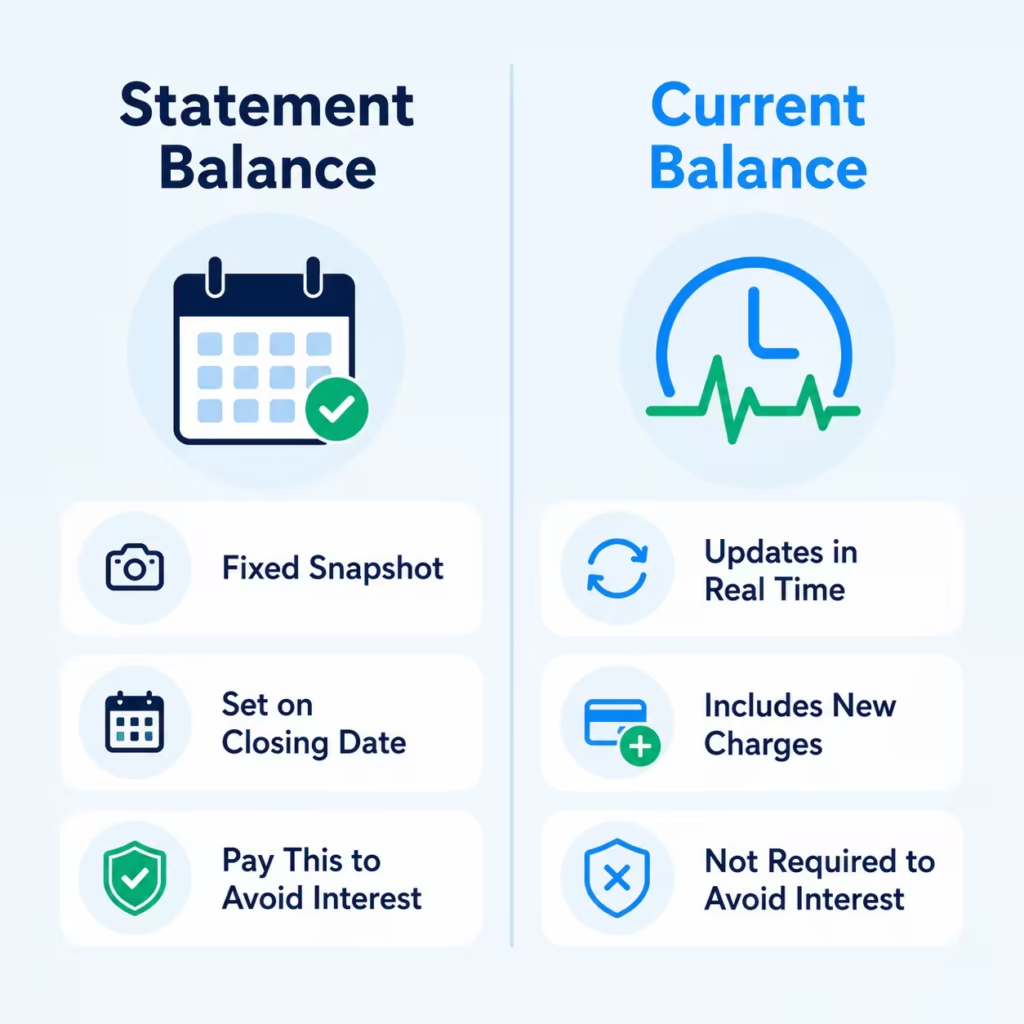
Statement balance is a frozen snapshot. It is the total you owed on the day your billing cycle closed. That number gets printed on your statement, sent to you, and stays fixed until the next statement closes. It does not change no matter how much you spend or pay afterward.
Current balance is the live number. It updates every time something posts to the account after the statement date.
Here is the difference in action. Say your statement closes on the 5th of the month with a statement balance of $800. That $800 is what you owe for the last cycle. Between the 5th and the 20th, you charge $300 in new purchases and make a $200 payment. On the 20th:
- Your statement balance is still $800 (the frozen number from the 5th).
- Your current balance is $900 ($800 + $300 – $200).
Both numbers are correct. They just measure different things. The statement balance answers “what did I owe at cycle close?” The current balance answers “what do I owe right this second?”
Your payment due date is tied to the statement balance, not the current balance. That distinction matters for interest, which we’ll cover in a later section.
Current Balance vs. Available Credit
These two numbers work together, but they measure opposite things.
Current balance is what you owe. Available credit is what you can still spend before hitting your credit limit.
The basic relationship is:
Credit limit – current balance – pending charges = available credit
Say your credit limit is $5,000. Your current balance is $1,500, and you have $200 in pending charges. Your available credit is $3,300.
If you pay down the balance, available credit goes up. If you charge more, available credit goes down. Pending charges also reduce available credit temporarily, even though they haven’t hit the current balance yet. That is why a gas station’s $100 pre-authorization can shrink your spending room for a day or two even though you only bought $40 of fuel.
Watch both numbers if you use your card heavily. A low available credit figure means you’re getting close to your limit, which can trigger declined transactions and hurt your credit utilization ratio.
Current Balance vs. Credit Limit
The credit limit is the ceiling. It is the maximum amount the issuer will let you borrow on that card. It does not move (unless you request an increase or the issuer adjusts it).
The current balance is how much of that ceiling you’re currently using. If your limit is $10,000 and your current balance is $2,000, you’re using 20% of your credit line.
These two numbers together create your credit utilization ratio, which credit scoring models watch closely. More on that in the credit score section below.
Current Balance vs. Minimum Payment Due
The minimum payment is the smallest amount you can pay by the due date to keep the account in good standing. It is not the same as your current balance, and it is usually much smaller.
Most issuers calculate the minimum payment as a small percentage of your statement balance (often 1% to 3%), plus any interest and fees, with a floor of around $25 to $40. If your statement balance is $1,200, your minimum payment might be $35 or $40.
Paying only the minimum keeps you current with the issuer. It does not stop interest. Any unpaid portion of the statement balance starts racking up finance charges at your card’s APR, which can easily be 20% or higher.
Three payment options every cardholder faces each month:
- Pay the minimum. Avoids late fees and credit damage, but interest keeps piling up.
- Pay the statement balance in full. Keeps you in the grace period and avoids interest entirely.
- Pay the current balance in full. Wipes the account clean, including any new charges since the statement closed.
The right choice depends on your goal. If avoiding interest is the priority, keep reading.
Which Balance You Should Pay to Avoid Interest
Here is the rule, straight and simple: pay the statement balance in full by the payment due date. That single habit protects your grace period and keeps interest at zero.
The Consumer Financial Protection Bureau explains that a grace period is the window between the end of a billing cycle and the payment due date, and if you pay the full new balance by that due date, the issuer typically will not charge interest on new purchases.
Most cards offer a grace period of 21 to 25 days. During that window, if you pay the statement balance in full, new purchases from the current cycle do not accrue interest yet. Miss it once, and you often lose the grace period until you pay the balance in full for two straight cycles.
You do not have to pay the current balance to avoid interest. The current balance may be higher than the statement balance because of new charges made after the cycle closed. Those new charges are not due yet. They will show up on the next statement and get their own grace period, as long as you keep paying each statement balance in full.
Paying the current balance in full is fine (and useful if you want a $0 balance reported to credit bureaus), but it is not required to stay interest-free.
📌 Did You Know: If you carry any balance from month to month, most cards eliminate the grace period entirely on new purchases. That means interest starts accruing the day each new charge posts, not the day of the next statement.
Does Current Balance Affect Your Credit Score?
Not directly. Card issuers report to the credit bureaus (Experian, Equifax, TransUnion) once per month, and the number they report is usually your statement balance from the most recent closing date, not your live current balance.
That reported balance drives your credit utilization ratio, which is one of the biggest factors in your credit score. Experian data shows the average U.S. credit card utilization ratio held steady around 29% in recent reporting, and lower is generally better. People with the highest scores often keep utilization under 10%.
Here is where the current balance sneaks in. If you make a large mid-cycle payment before the statement closes, your statement balance (and the amount reported) drops. That lowers your reported utilization for the month.
Practical example: your limit is $5,000, and you typically end the cycle with a $2,000 balance (40% utilization). If you make a $1,500 payment three days before the statement closes, the reported balance falls to $500, and your utilization drops to 10%. Same spending, better credit-reporting outcome.
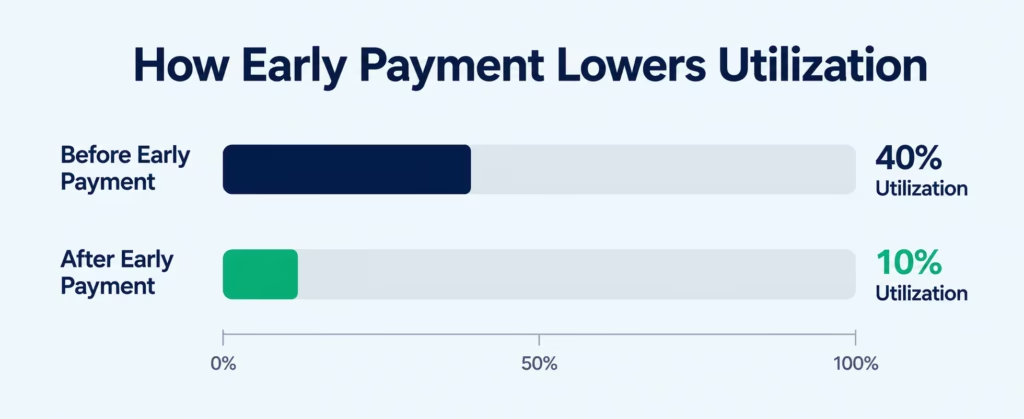
Watching your current balance in the days leading up to your statement date gives you a chance to make that pre-statement payment. It is one of the fastest ways to improve utilization without changing how you spend.
What Does a Negative Current Balance Mean?
A negative current balance (a number with a minus sign, like -$75.42) means the issuer owes you money, not the other way around. Your account is in credit.
Common reasons this happens:
- Overpayment. You paid more than you owed. If your statement balance was $500 and you accidentally paid $575, your current balance shows -$75.
- Refund posted after payment. You paid the bill, then a store refunded a purchase from the previous cycle. The refund credits your account beyond zero.
- Reward redemption. Some cards apply cash-back rewards as a statement credit, which can push the balance negative.
- Fee reversal. The issuer refunded an annual fee or late fee after you already paid.
A negative balance is not bad. You do not owe anything, and no interest accrues. Your next purchases will simply eat into the credit before you owe anything again. If your balance is -$75 and you charge $100 in groceries, your new current balance will be $25.
If you want the money back instead of using it toward future spending, you can call your issuer and request a refund check or ACH transfer. Under federal rules, if you send a written request, the issuer must refund a credit balance over $1 within seven business days.
Frequently Asked Questions (FAQs)
Is current balance the money I owe?
Yes, current balance is the total amount you owe your card issuer right now. It includes posted purchases, fees, and interest, minus any payments or credits already applied.
Why do I have a current balance on my credit card?
You have a current balance any time you’ve made purchases, transfers, or cash advances that haven’t been fully paid off. It updates constantly as new transactions post and payments clear.
Can I withdraw my current balance from my credit card?
No, your current balance isn’t cash sitting in an account. You can only take a cash advance up to your card’s cash advance limit, which is usually a smaller portion of your total credit limit and comes with extra fees and immediate interest.
Will paying my statement balance hurt my credit score?
No, paying your statement balance in full doesn’t hurt your credit score. It’s the recommended habit since it keeps you interest-free while your issuer reports that balance to the credit bureaus.
Is my statement balance the same as my current balance?
Not usually. Statement balance is a fixed snapshot from your last billing cycle close, while current balance updates in real time as new charges and payments post.
Does current balance affect my credit score?
Not directly. Issuers report your statement balance once a month to the credit bureaus, so paying down your balance before the statement closes can lower your reported utilization and improve your score.
Do I pay the current balance or statement balance to avoid interest?
Pay the statement balance in full by the due date to avoid interest. This protects your grace period, so new charges made after the statement closed won’t be due or charged interest until the next cycle.
What happens if I pay off my current balance instead of my statement balance?
Paying the current balance in full clears everything, including charges made after your last statement closed. It’s not required to avoid interest, but it does bring your balance to $0 right away.
How long does it take for a charge to move from pending to the current balance?
Most pending charges post to your current balance within 1 to 3 business days. Until they post, they show as pending and only affect your available credit, not your current balance.
Wrapping Up
Understanding the current balance of your credit card comes down to three key habits:
- Check your live account activity regularly.
- Keep an eye on your statement balance to avoid interest.
- Make mid-cycle payments to manage your credit utilization.
The current balance shows what you owe right now. The statement balance shows what you must pay to avoid interest. Available credit shows what’s left to spend.
To follow the CFPB’s grace period rules, pay your statement balance in full by the due date each time.
If you know someone who’s ever stared at their credit card app wondering which number to trust, share this guide with them. It could save them hundreds in interest this year.